
Reviewed · TOURS IN BERLIN
Berlin: Street Art and Alternative Tour
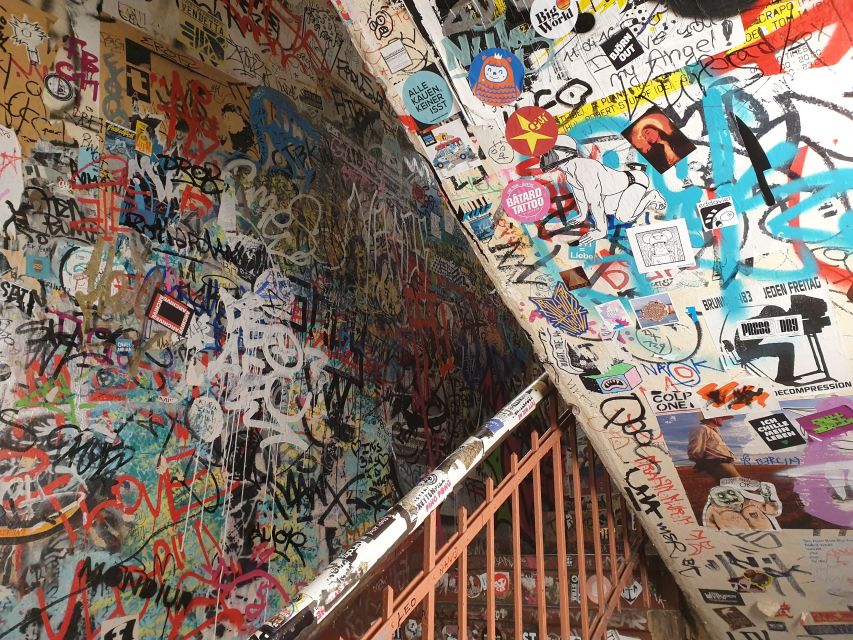
Berlin’s street art makes the city’s Cold War scars easier to read. This three-hour walk links murals, political art, squats, redevelopment, and the old East-West divide, with time in Kreuzberg and at the East Side Gallery. You are not just looking at painted walls. You are learning why these walls became public arguments.
I like the way the tour connects art to the fall of the Wall and the city’s later gentrification. I also like the small-group format and the chance to take the tour in French or Italian, with guides such as Antonella, Iacopo, Martin, and Marie praised for clear explanations and a warm manner. The main drawback is practical: you must buy a 24-hour AB public transport ticket, and the meeting point can change with the option you book.
Key points at a glance
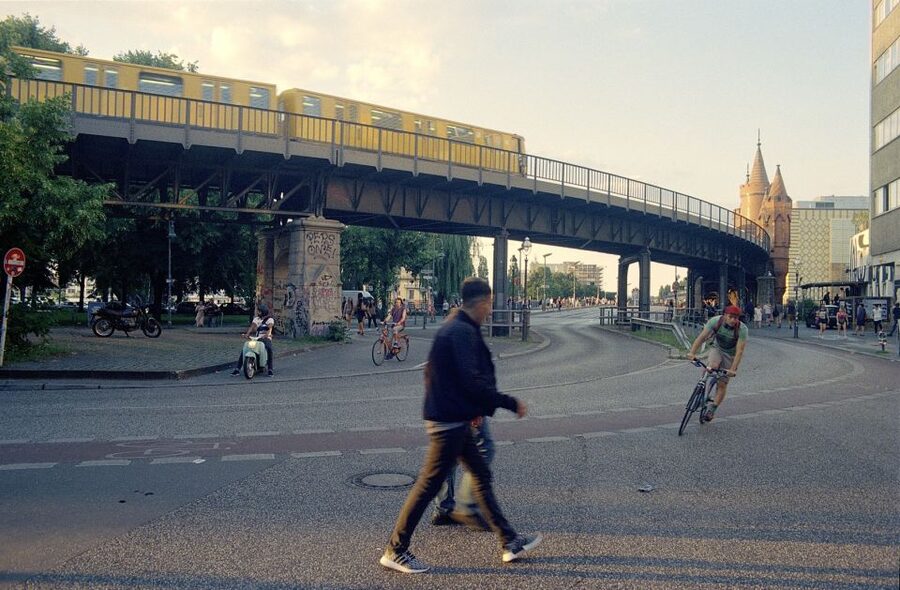
- Kreuzberg on foot: Explore Berlin’s alternative quarter, where street art sits beside the social and economic changes that shaped the district.
- East Side Gallery: See the famous open-air gallery along a surviving section of the Wall and connect its paintings to Berlin’s divided past.
- Art with context: Learn how urban art grew alongside political protest, the post-1989 revival, and the current pressure of gentrification.
- French or Italian guidance: Choose a live guide in one of these languages, with past guides including Antonella, Iacopo, Martin, and Marie.
- Three hours outdoors: Wear comfortable shoes and prepare for a walking route that uses public transport.
- Good value for curious visitors: At $31, the tour costs less than many private city walks while giving you a focused look at a side of Berlin that is easy to miss.
Why Berlin’s street art needs a history lesson
Berlin’s walls are not simply decoration. They record arguments about identity, housing, power, memory, and who gets to shape a city.
The division between East and West created unusual conditions. The Wall cut through neighborhoods, separated families, and left large areas marked by conflict. After 1989, Berlin had a new problem: how to rebuild a city that had been split for decades. Artists, musicians, squatters, political groups, and young residents helped give abandoned and damaged areas a new purpose.
This tour places street art inside that story. A mural may look striking on its own, but the guide helps you ask better questions. Who made it? What was the artist reacting to? Why was this wall available? What changed after the Wall fell?
I like this approach because it prevents the walk from becoming a hunt for pretty pictures. You will see color, but you will also hear about the economic and social shifts that made Berlin a center of alternative culture in the 1990s.
Other street art to go and find in Berlin:
- Berlin: City Street Art Guided Walking Tour
★ 4.8 · 886 reviews - Berlin: 3-Hour Street Art Tour
★ 4.7 · 778 reviews - Berlin Street Art & Graffiti Walking Tour
★ 5.0 · 109 reviews
Starting in Kreuzberg, Berlin’s alternative quarter
Kreuzberg is the heart of the walking experience. The district has long been linked with working-class communities, immigrant life, political activism, and alternative culture. Its streets show how old Berlin and new Berlin now press against each other.
Expect to walk past large painted works, smaller pieces tucked into corners, and art placed along ordinary streets. Some pieces may be easy to spot. Others can be modest and easy to miss if you are moving quickly through the district.
That is where the guide matters. Marie, one of the guides associated with the tour, was praised for answering questions and adding current anecdotes. Martin was also noted for explaining Berlin with affection and making history accessible. These details suggest the experience depends strongly on who leads your group, but the format is designed around conversation rather than a silent parade of murals.
Kreuzberg is also a good place to discuss gentrification. The same alternative identity that made the district attractive has helped change it. Art can challenge a neighborhood’s power structure, but it can also help make an area fashionable and more expensive.
You will not get a neat answer to that tension. That is a strength. Berlin’s street art is often political, but the city around it keeps changing. A work that once challenged authority can later become part of the image used to market a district.
From Cold War border to public art gallery
The tour frames Berlin’s alternative culture as a direct result of the city’s unusual past. The Cold War border was not an abstract line on a map. It ran through daily life and left physical wounds in the city.
After the Wall fell in 1989, Berlin entered a period of major change. Empty buildings and unused spaces created room for new forms of art and community life. The 1990s revival brought energy, experimentation, and a strong sense that the city could be remade.
Street art became part of that process. Buildings and walls offered surfaces for political messages, personal expression, and visual claims to space. The guide’s job is to connect those works to the larger story rather than treat them as isolated attractions.
You may hear about the movement from division to reunification, then from alternative culture to redevelopment. That progression gives the tour its shape. It also helps you understand why Berlin can feel both creative and unsettled.
The language here matters. This is not a tour that treats the Wall only as a memorial. It also looks at what happened after the political event, when residents had to live with the costs and opportunities of a newly reunited city.
Reaching the East Side Gallery
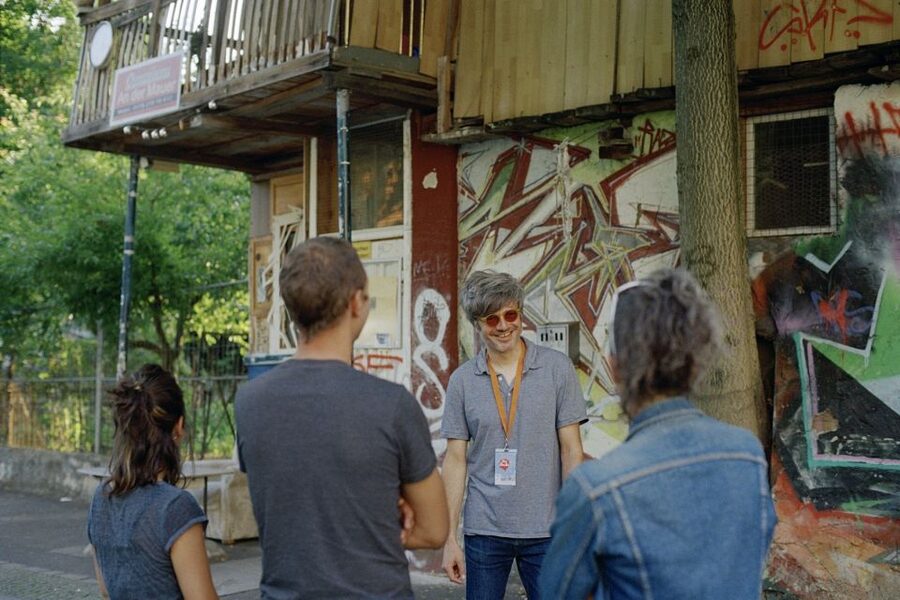
The East Side Gallery is the most recognizable stop named in the tour. It occupies a long surviving section of the Berlin Wall and is known for its painted panels.
The gallery gives you a direct look at how the Wall changed from a tool of division into a public art site. That transformation is powerful, but it is also worth keeping your expectations in check. The East Side Gallery is a well-known place, so it can feel more formal and more visited than the smaller works encountered in Kreuzberg.
That contrast is useful. In Kreuzberg, art may appear in side streets, courtyards, and less obvious corners. At the East Side Gallery, the Wall itself is the subject and the canvas. One setting feels scattered and local; the other presents a clear, concentrated line through Berlin’s past.
The guide can help you read the paintings as part of a political moment rather than as a row of colorful backdrops. You will also see why preservation matters. Paint on an old wall is exposed to weather, time, and human interference, while the surrounding city continues to develop.
The tour does not promise every famous artwork in Berlin. Instead, it offers a selected look at the city’s street art culture and the meaning behind it. That makes the East Side Gallery more useful as part of a story than as a standalone photo stop.
Same base, a different kind of day out:
- Berlin: Reichstag, Dome and Government District Guided Tour
★ 4.7 · 18,288 reviews - Berlin: 1-Hour City Tour by Boat with Guaranteed Seating
★ 4.3 · 16,993 reviews - Berlin: Boat Tour Along the River Spree
★ 4.4 · 11,252 reviews - Discover Berlin Half-Day Walking Tour
★ 5.0 · 9,624 reviews
A route that makes public transport part of the day
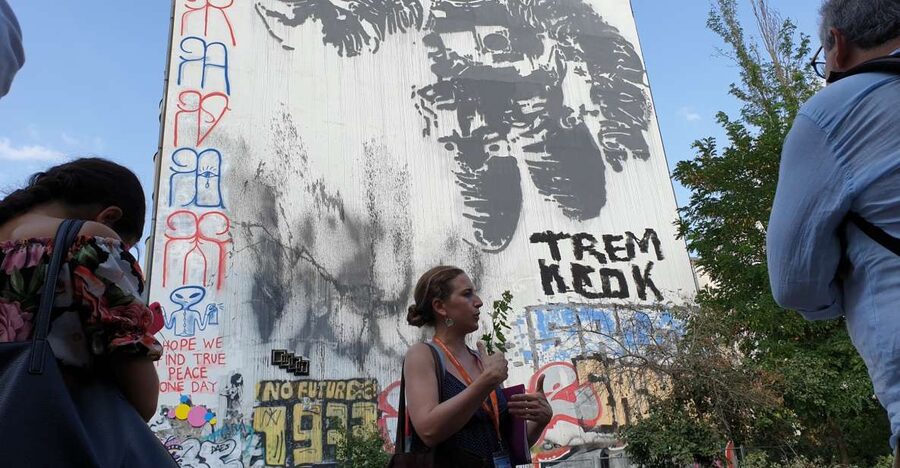
The tour lasts three hours and requires a 24-hour AB public transport ticket. That extra cost is important when you calculate the real price.
At $31 per person, the walking tour is fairly priced for a small-group experience with a live guide. Once you add the transport ticket, the total cost rises, but the ticket may still be useful for other rides during the same day. You should buy it before the tour begins so you are not distracted by ticket machines or route questions.
The meeting point may vary depending on the option you select. Check the exact details carefully before leaving your accommodation. One participant specifically wondered why the meeting point was not set directly at Kottbusser Tor because the walk began there, so do not assume that the advertised neighborhood and the actual meeting place are always identical.
This is not a problem if you plan ahead. It is a problem if you arrive in Berlin expecting to walk straight to Kreuzberg without checking the final instructions.
Comfortable shoes are essential. Three hours on city streets is not a brutal hike, but you will be standing, walking, looking up, and stopping often. Berlin weather can also make an outdoor art walk less pleasant, so dress for the conditions even though the tour information only specifically requires comfortable footwear.
What the guide adds to the art
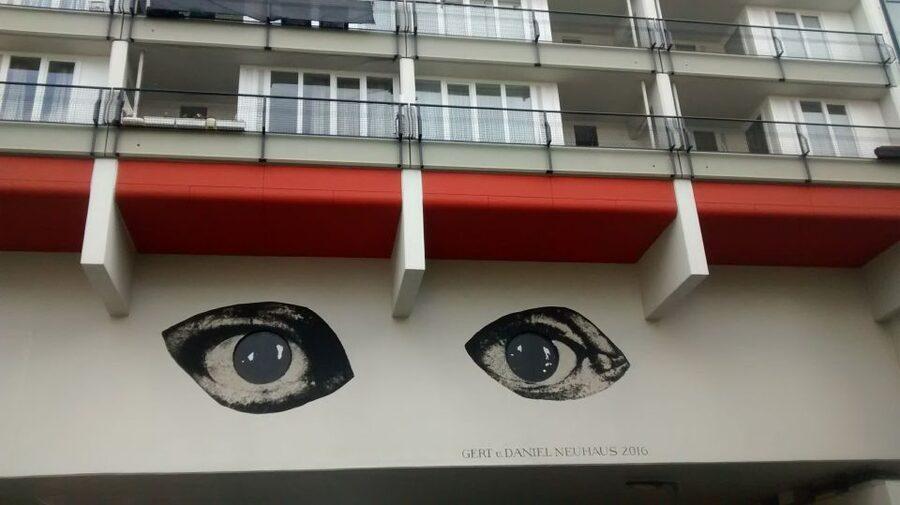
A street art walk can fail when it becomes a list of artist names and dates. This experience seems strongest when the guide turns the route into a conversation about Berlin today.
The guide languages are French and Italian. If you are more comfortable discussing history and politics in one of those languages, that is a real advantage. The descriptions of Antonella and Iacopo emphasize their passion and preparation, while comments about Martin and Marie point to clear explanations, questions, and a personal connection with Berlin.
Those qualities matter because the subject is not simple. You may want to ask why a work was painted, how a district changed, or what gentrification means for the people who live there. A friendly guide can make space for those questions.
The best part of this format is the link between small details and larger events. A small piece hidden along a street may open a discussion about who controls public space. A giant mural may lead to the Wall, reunification, and the city’s changing identity.
Do not expect a formal art-history lecture. This is a walking tour with history, architecture, social issues, and urban art mixed together. That blend suits you if you want to understand Berlin’s alternative side rather than study technique alone.
Who will get the most from this tour
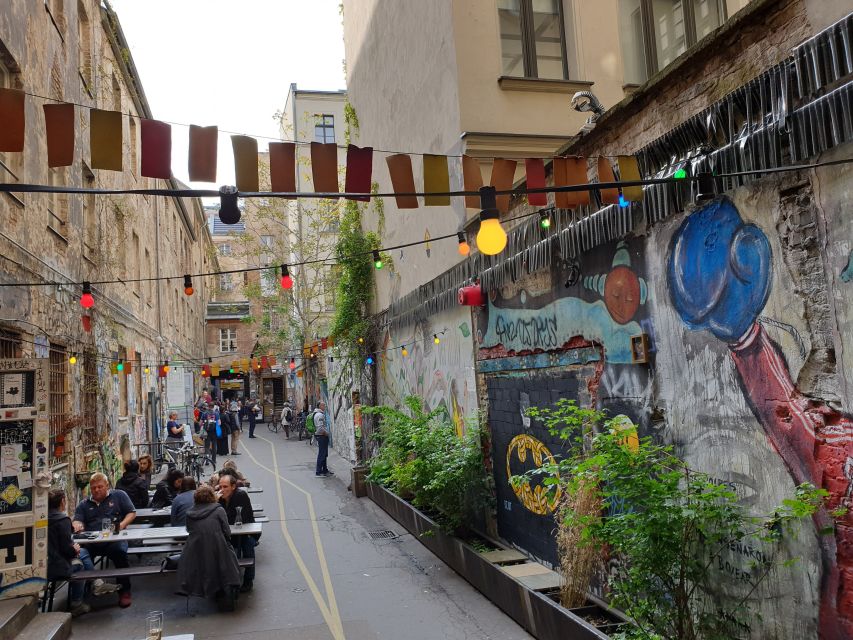
I would choose this experience if you are visiting Berlin for the first time and want a guided introduction to Kreuzberg and the East Side Gallery. It gives you a useful framework for exploring the city on your own afterward.
It also suits repeat visitors who have already seen the Brandenburg Gate, Museum Island, and the main memorials. Berlin has enough layers that you can spend a full visit on major sights and still miss the streets where recent social history is most visible.
The tour is especially helpful if you enjoy:
- Political and social history
- Urban art and architecture
- Small-group walking tours
- Alternative neighborhoods
- Guided discussion rather than sightseeing alone
- French or Italian commentary
It may be less suitable if you want a relaxed, art-only outing with little historical discussion. It may also disappoint you if you expect a fixed gallery itinerary with every famous Berlin mural. The route focuses on meaning and local context, so the exact works encountered can matter less than the story connecting them.
Families with young children should consider the three-hour length and the need to use public transport. The tour details do not specify a child-focused format, so adults should decide if the historical and political material fits their group.
Timing, price, and planning advice
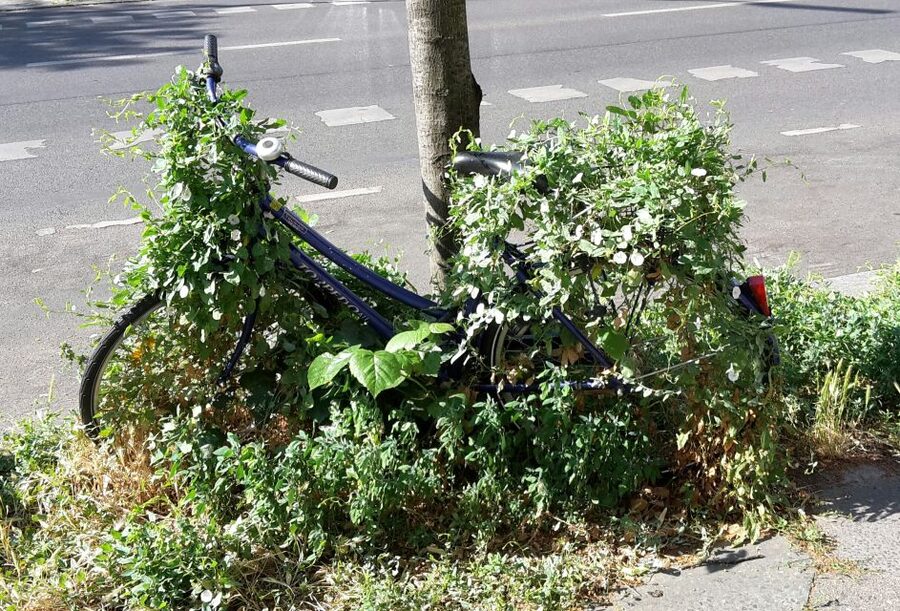
Three hours is enough time to cover meaningful ground without turning the day into an all-day commitment. You can schedule it alongside other Berlin plans, but leave room around it for public transport and the possibility of lingering at the East Side Gallery.
The $31 price is good value if you would otherwise walk through Kreuzberg without understanding what you are seeing. It pays for access to a local explanation, not just the route itself. That distinction is important in Berlin, where much of the city’s most interesting art is free to look at but difficult to interpret from a quick glance.
The small-group setup should also make it easier to ask questions than on a large bus tour. Group size is not specified, so I would not assume an intimate private experience. Still, the format is built around walking and live commentary rather than a recorded audio guide.
Reserve now and pay later is available, and cancellation is free up to 24 hours before the start for a full refund. Those policies are useful if your Berlin plans are still shifting, but the practical details still matter more: confirm the meeting point, check the starting time, and buy the AB ticket.
The main strengths and limits
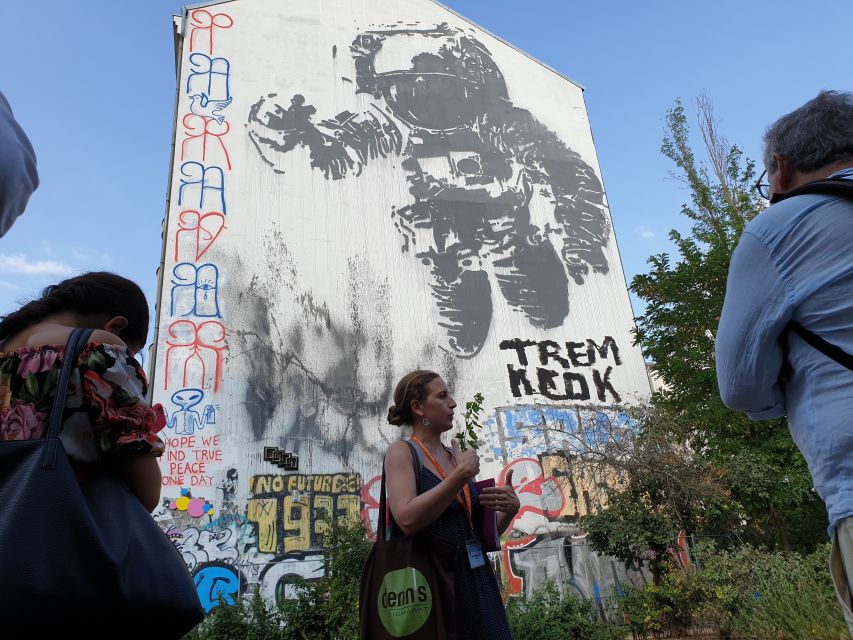
The strongest feature is the link between street art and social change. You are not asked to admire murals without context. The tour explains how Berlin’s divided past, the post-1989 period, alternative culture, and gentrification fit together.
The second strength is the language choice. French- and Italian-speaking guides make this a smart pick for visitors who want to discuss complicated subjects without relying on English.
The East Side Gallery adds a memorable landmark, while Kreuzberg supplies the less polished and more changeable side of the city. Together, they give you two different ways to think about public art.
The main limitations are the additional transport cost, the changing meeting point, and the fact that the route is outdoors. The tour also depends on the individual guide. The available guide comments are highly positive, but you should still expect a personal walking tour rather than a standardized museum presentation.
Should you book the Berlin Street Art and Alternative Tour?
Book it if you want Berlin explained through its walls, neighborhoods, and political changes. The tour is a strong choice for curious adults, repeat visitors, and anyone who prefers local context to a checklist of famous sights.
The $31 price is reasonable, especially if you value a French- or Italian-speaking guide and a small-group walk. Just budget for the 24-hour AB ticket, confirm the meeting place, and wear shoes that can handle three hours on foot.
Skip it if you want only famous landmarks, a short photo stop, or a tightly scripted art survey. For everyone else, this is a useful way to see why Berlin’s street art is tied so closely to the city’s past and its unsettled present.
FAQ
How long does the tour last?
The tour lasts three hours.
What languages are available?
The live guide is available in French or Italian.
Which parts of Berlin does the tour explore?
The tour focuses on Kreuzberg and includes the East Side Gallery. The wider explanation also refers to urban art in Friedrichshain and Mitte.
Is public transportation included?
No. You need to purchase a 24-hour AB public transport ticket for the tour.
What should I bring?
Bring comfortable shoes, since the experience is a three-hour walking tour.
How much does the tour cost?
The listed price is $31 per person. The public transport ticket is not included.
Can I cancel for a refund?
Yes. You can cancel up to 24 hours in advance for a full refund.
Just added in Berlin
- Private One way Airport Transfer Berlin Airport To Berlin★ 3.5 · 17 reviews
- Private Walking Tour: Berlin Wall, Cold War and Checkpoint Charlie★ 5.0 · 37 reviews
- Modern Berlin Private Walking Tour: Diverse, Vibrant and Exciting German Capital★ 5.0 · 13 reviews
- Private Day Trip to Potsdam from Berlin by Train★ 4.5 · 27 reviews
- City Explorer: Potsdam Private Day Trip★ 4.5 · 10 reviews
- Berlin Private Custom 5-Hour Tour by Car★ 5.0 · 30 reviews
- Private Half-Day Sightseeing Tour in Berlin★ 3.5 · 6 reviews
- Berlin Private Custom Tour in a Minivan, East and West★ 5.0 · 123 reviews
Tours in Berlin, compared.
Reichstag, Dome and Government District Guided Tour
Read our review →
1-Hour City Tour by Boat with Guaranteed Seating
Read our review →
Reichstag, Plenary Chamber, Cupola & Government Tour
Read our review →
Browse the lists this tour appears in