
Reviewed · MUSEUMS
Berlin: Samurai Museum Entry Ticket
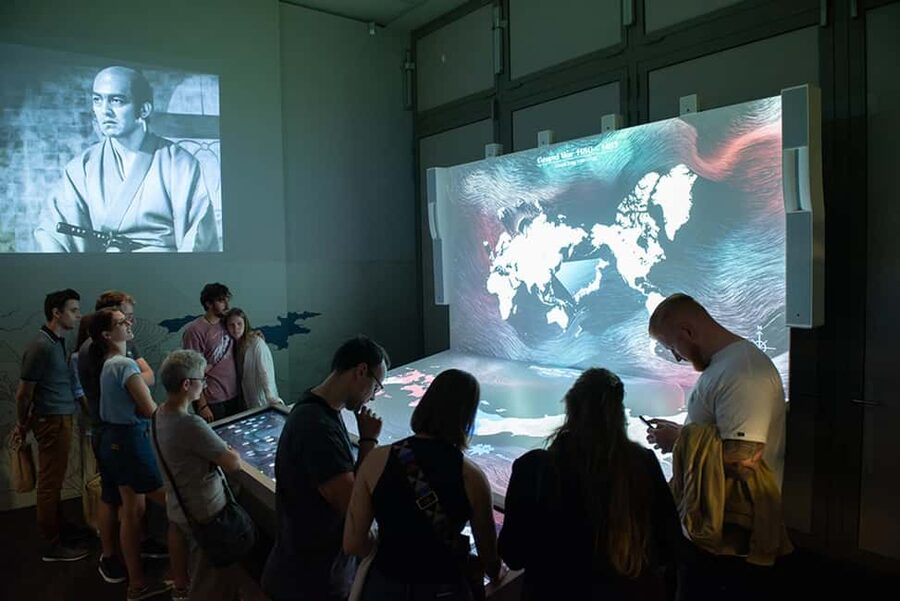
Berlin’s Samurai Museum brings old Japan to life with authentic armor, weapons, and art set beside projections, touchscreens, holograms, and playful digital guides. The collection covers the samurai world from the sixth to the nineteenth century, so you get both real objects and a lively way to understand them.
I especially like the close look at Japanese swordsmithing and the full-size tea house and Noh theater built in Japan. The main caution is that this is a self-guided museum visit, not a walking tour with a personal expert, and the digital effects may appeal more to families than to visitors seeking a quiet antiques gallery.
Key points at a glance
- A 900-object display in central Berlin: See armor, swords, weapons, art, and everyday objects from the Peter Janssen Collection.
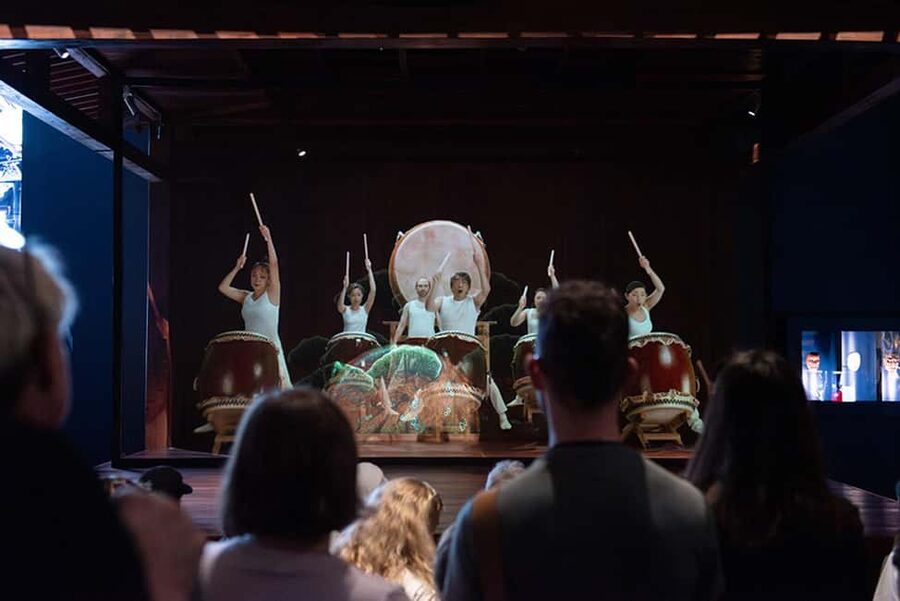
- Interactive storytelling: Touchscreens, projections, a holographic drum performance, and a fox called Kitsune make the exhibits easy to follow.
- A real Japanese tea house: Built in Japan with traditional materials, it explains the careful steps behind the tea ceremony.
- A full-size Noh theater: Learn about one of Japan’s most distinctive performing arts through projected scenes and performances.
- Flexible admission: Your ticket is valid for 1 to 14 days, with the exact visit time selected through availability.
- Easy Mitte location: Reach the museum by U-Bahn, S-Bahn, tram, or bus, then pair it with Museum Island, Alexanderplatz, or a café stop.
What the Berlin Samurai Museum actually offers
The museum presents samurai culture through a private collection of more than 4,000 objects assembled by Peter Janssen. The public display includes around 900 historical pieces, giving you a sizable but manageable look at Japanese arms, clothing, art, ceremony, and craftsmanship.
The dates stretch from the late Kofun period through the early Meiji period, roughly the sixth to the nineteenth century. That long span matters because samurai culture changed greatly over time. You are not looking at one fixed costume or one narrow period. You can trace how armor, weapons, design, and social traditions developed across many centuries.
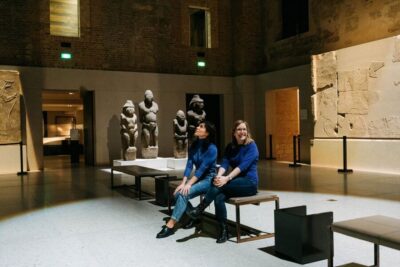
The museum mixes genuine objects with modern interpretation. You might examine an old piece of armor, then use a touchscreen or projection to learn how it was used. This approach makes the collection more approachable than a room filled with labels alone, especially if you are new to Japanese history.
The displays are available in German and English. Staff can help you at the entrance, and the museum is designed for individual visits rather than a set group itinerary. You can move at your own pace, pause at the subjects that interest you, and spend less time on sections that do not hold your attention.
Other museums and galleries in Berlin:
- Berlin: Jewish Museum Berlin Entrance Ticket
★ 4.5 · 8,393 reviews - Berlin: Natural History Museum Entrance Ticket
★ 4.6 · 3,382 reviews - Berlin: Neues Museum Entry Ticket
★ 4.6 · 3,261 reviews
The armor and weapons display
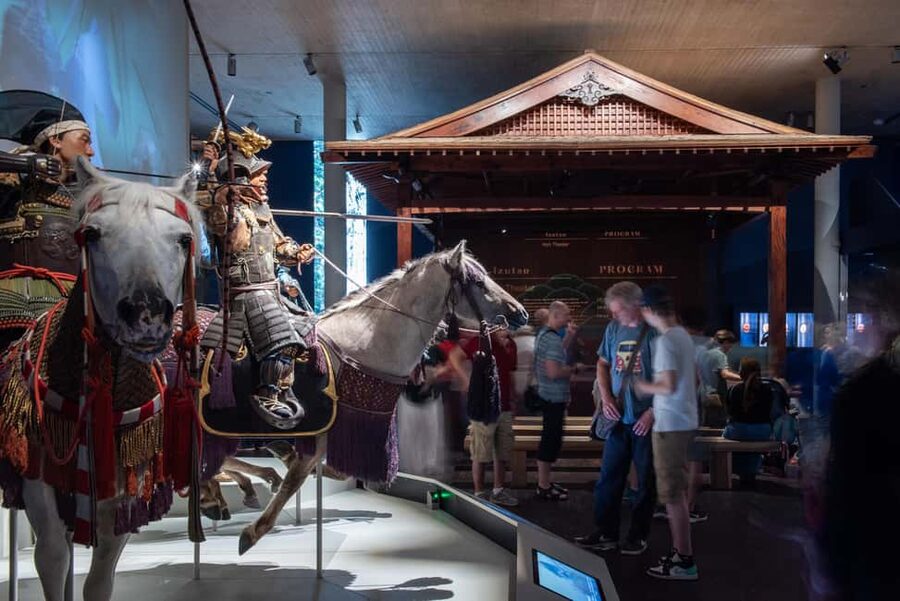
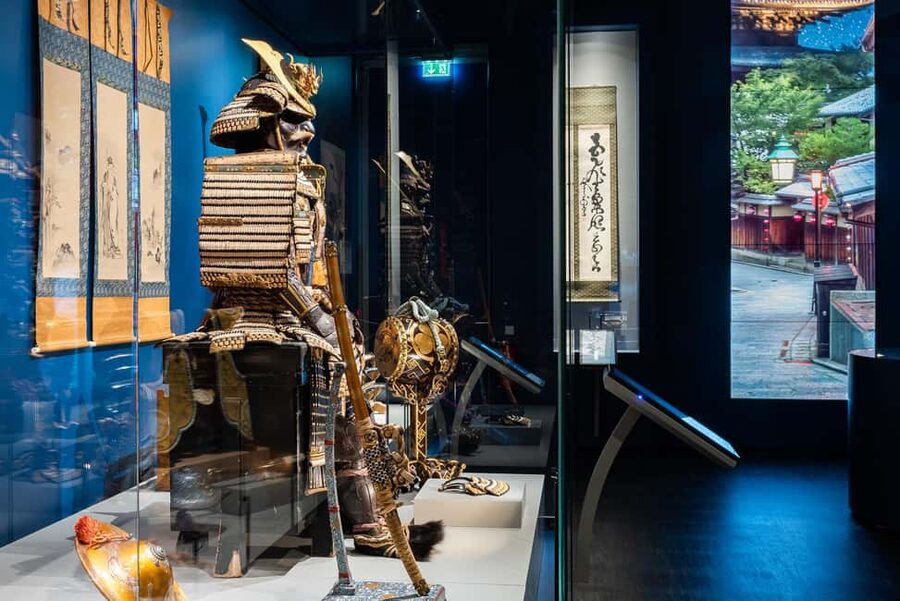
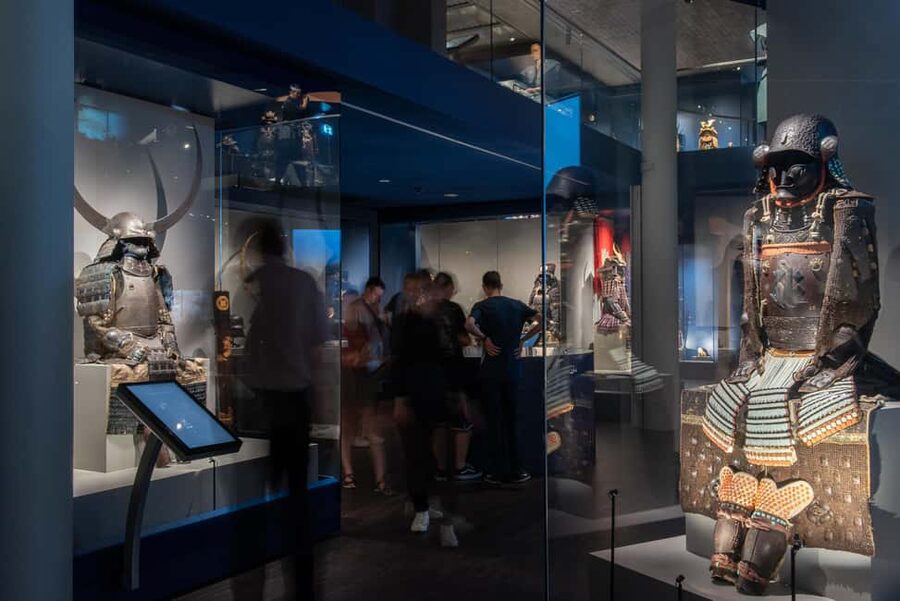
The armor is the natural starting point for many visitors. Samurai armor was practical, but it was also highly personal and symbolic. Materials, decoration, helmets, and clan details could communicate rank and identity. The museum gives you a chance to see these objects at close range rather than only in photographs.
One important piece is a seventeenth-century suit of armor connected with the Matsudaira clan. That single object helps connect the visual display to the political world of Japan’s warrior families. Look closely at the construction and decoration, because the value is not only in the overall shape. Small details reveal the work involved in making protective equipment that also had to look impressive.
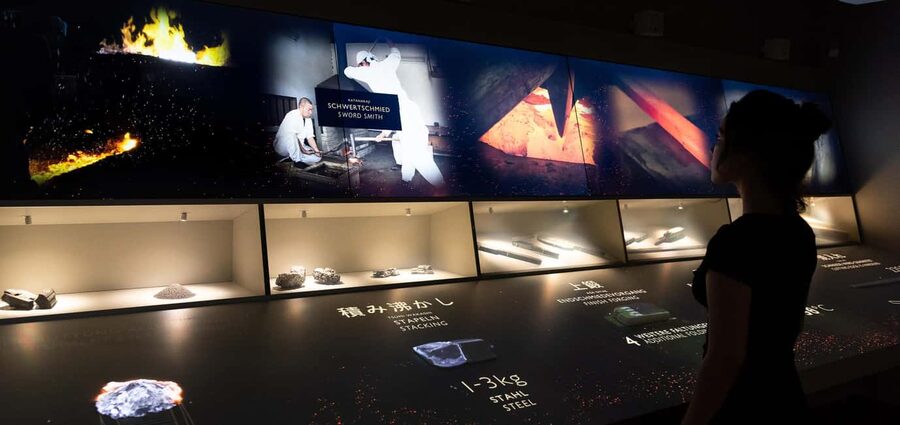
The sword collection gives the museum another strong focus. Displays explain the work of swordsmiths and the production of legendary blades. You learn that a Japanese sword is not simply a weapon, but also an example of specialized metalwork, patience, and controlled technique.
This section is especially useful for visitors who know little about swords. The interactive elements can show processes that are difficult to understand from a blade sitting behind glass. You will not be making a sword yourself, but the presentation helps you see why swordsmithing became such a respected craft.
The collection also includes other weapons and samurai equipment. The range helps you understand that the samurai world was not defined by one famous sword alone. Armor, transport, ceremony, household objects, and visual art all formed part of the culture.
A tea house and the traditions of ceremony
The museum’s tea house was built in Japan using traditional materials and techniques, then reconstructed in Berlin. It gives the visit a change of pace after the weapons displays.
The tea ceremony is presented as a careful sequence rather than a casual drink. Projections explain the process and the ideas behind it, helping you understand how a simple room, selected utensils, and precise movements can carry centuries of meaning.
A highlight of the collection is a group of tea utensils linked to the era of Sen no Rikyū, who lived from 1522 to 1591. These pieces connect the tea house to one of the most important figures in Japanese tea culture.
You should not expect a full tea ceremony included with the entry ticket. Instead, you get an introduction to the setting, objects, and methods through the museum’s displays. That makes this section a good choice for first-time visitors who want context without committing to a separate cultural activity.
It is also one of the museum’s more thoughtful features. The samurai were not only warriors in armor. Their world was tied to art, ceremony, architecture, theater, and refined daily practices. The tea house makes that broader point clearly.
Noh theater and digital performances
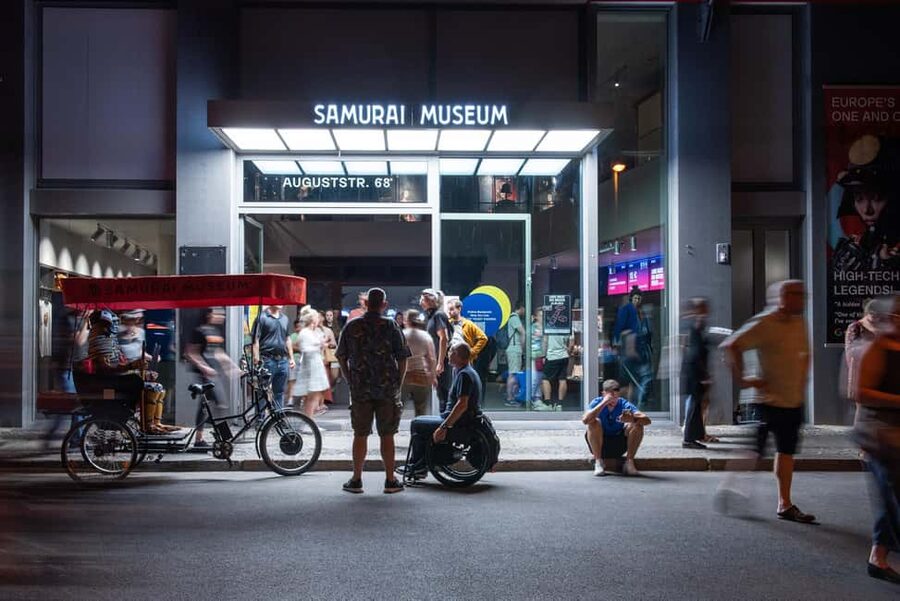
A spacious Noh theater forms another major part of the visit. Like the tea house, it was built in Japan with traditional methods before being installed in Berlin. You can sit with the idea of a theater that has crossed continents, while projections show how Noh performance works.
Noh theater is known for its restrained movement, masks, music, and formal structure. The museum uses projected performances to give you a sense of the art form without requiring a separate theater visit or prior study.
The museum also presents a holographic drum performance. This is a more theatrical use of technology than the artifact cases, and it helps keep the visit lively for younger children. The effect may feel less satisfying to visitors who prefer original performances, but it does provide a quick visual introduction to Japanese musical tradition.
The balance between real structures and digital explanation works well here. You can see the physical theater, then use the projection to imagine it in use. That connection gives the architecture more meaning than a simple display of an empty stage.
A few more things to do in Berlin worth a look
- Berlin: Berlin Story Bunker Entry Ticket
★ 4.6 · 6,759 reviews - Berlin: Illuseum Berlin Entrance Ticket
★ 4.1 · 3,970 reviews - Berlin: Madame Tussauds Admission Ticket
★ 4.6 · 3,941 reviews - Berlin: Charlottenburg Palace Entry Ticket
★ 4.4 · 2,076 reviews
Ninja, yōkai, and the fox called Kitsune
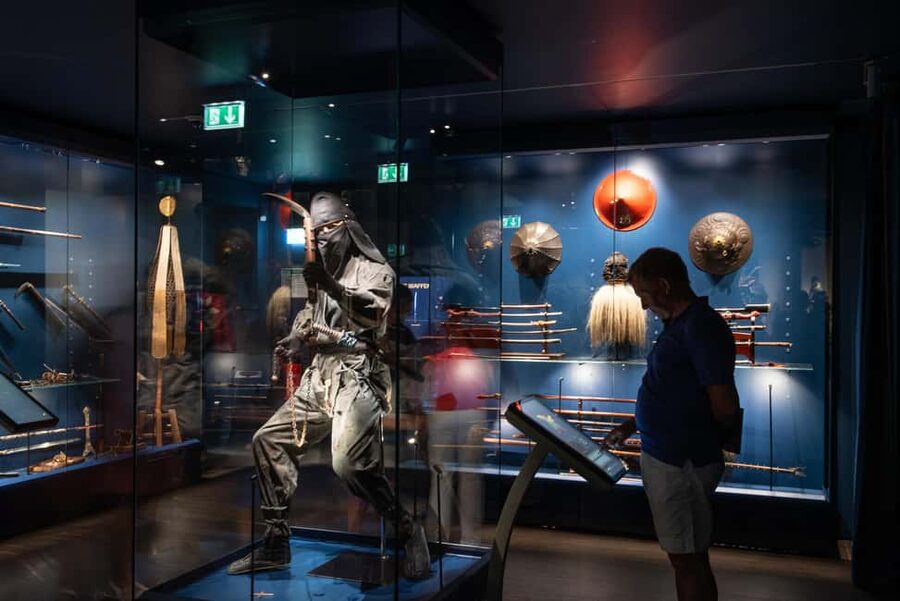
The museum reaches beyond the samurai to include ninja traditions and yōkai, the supernatural creatures of Japanese folklore. Interactive installations introduce techniques and stories in a playful way.
A fox character named Kitsune asks questions as you move through the exhibition. This feature gives children a reason to pay attention to the information rather than simply race from one display to the next. The character has a look that fans of Japanese animation may recognize, though the museum presents it as part of its own digital guide system.
The family appeal is clear. Children can engage with touchscreens and questions while adults examine the historical objects. The museum does not force you to choose between education and entertainment, though the digital effects can make some rooms feel more like an attraction than a traditional museum.
I would recommend allowing time for both sides of the experience. Do not rush only toward the holograms. The objects are the foundation of the visit, and the technology is most useful when it helps explain what you are seeing.
How much time should you allow?
The ticket is valid for 1 to 14 days, with starting times based on availability. This flexible arrangement is useful if your Berlin schedule is still moving around. You can choose a suitable day and time rather than locking yourself into a tightly fixed tour plan.
No visit length is specified, so your pace will depend on how closely you read labels and use the interactive stations. A quick look at the main displays will take less time than a careful visit that includes the swordmaking explanations, tea house, theater, and digital performances.
For planning, I would treat the museum as a focused Mitte activity rather than an all-day outing. Pair it with nearby sights, lunch, or a walk through central Berlin. If your children want to try every interactive feature, the visit may take longer than an adult who mainly wants to see the collection.
The ticket allows you to skip the ticket line. At the entrance, go directly to the barrier and show the ticket on your phone. Keep in mind that food, drinks, pets, luggage, and large bags are not allowed inside.
Getting there in Berlin Mitte
The Samurai Museum is on Auguststraße in Mitte, in the central part of Berlin. Its location works well with a day that includes Alexanderplatz, Museum Island, or other sights in the city center.
For the U-Bahn, use U6 to Oranienburger Tor or U8 to Rosenthaler Platz. S-Bahn options include S1, S2, S25, and S26 to Oranienburger Straße. Trams M1 and M5 also stop at Oranienburger Straße, while M8 serves Rosenthaler Platz.
Bus 142 stops at Tucholskystraße, and bus M41 stops at Abgeordnetenhaus. Check your route before setting out, since Berlin’s transport connections can make one stop more convenient than another depending on where your day begins.
Once you arrive, the surrounding streets offer cafés, restaurants, and shops. That makes the museum easy to place between other activities. You do not need to build an entire day around it, but you can turn the visit into a pleasant central Berlin stop.
Is the $15 ticket good value?
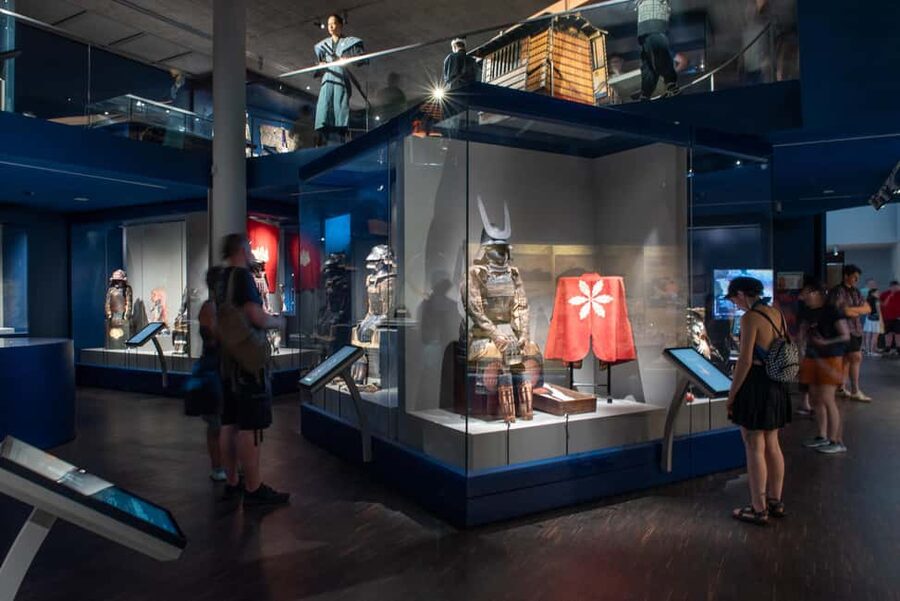
At $15 per person, the ticket is reasonably priced for a central Berlin museum with a large historical collection and several custom-built installations. The value is strongest if you enjoy both original objects and technology-based interpretation.
You are paying for more than a standard room of cases. The admission includes access to the sword and armor displays, the tea house, the Noh theater, projections, touchscreens, holographic music, and the Kitsune guide. The variety helps justify the price for families or mixed-interest groups.
The value is less clear if your only goal is to study rare objects in silence. The interactive approach is part of the museum’s identity, and the digital features are not an optional extra. Visitors who prefer a conventional art museum may find the presentation busy.
The flexible ticket improves the deal if your schedule changes. With validity of 1 to 14 days, you have some freedom to choose the best day and time offered. Free cancellation up to 24 hours before the visit and reserve-now, pay-later booking also reduce the risk of committing too early.
Who will enjoy this museum most?
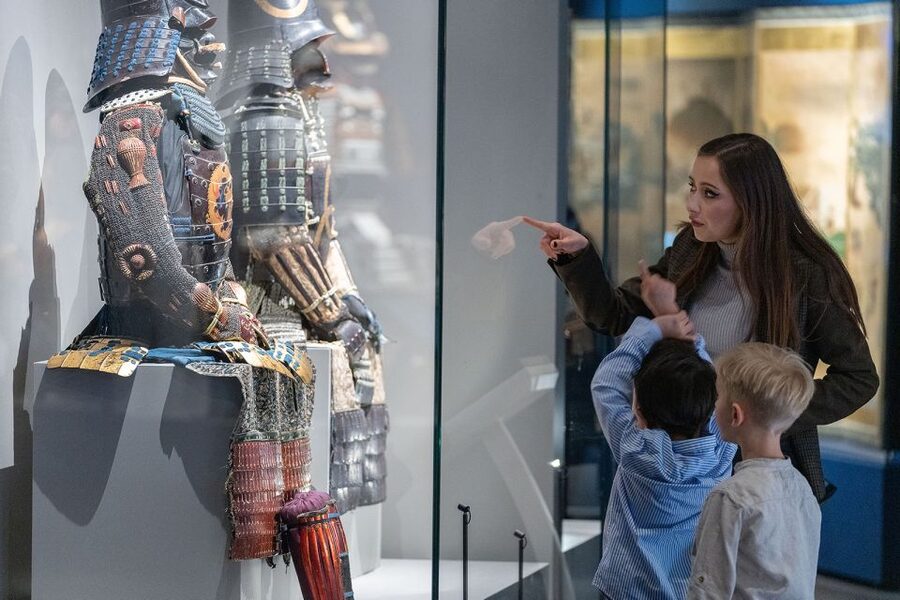
Families are a strong match. Children can follow Kitsune, answer questions, use interactive displays, and watch projected performances while adults focus on the historical material. The museum’s hands-on approach gives younger visitors more to do than simply read case labels.
History fans will appreciate the date range and the chance to see actual armor, swords, and tea objects. Art lovers may be especially interested in the craftsmanship, Noh theater, architecture, and decorative details.
The museum also suits visitors with limited knowledge of Japan. You do not need to arrive with a background in samurai history. The blend of visual effects and short explanations gives you several ways to understand the subject.
It is wheelchair accessible, which makes it practical for visitors who need step-free access. Since large bags and luggage are not allowed, plan to visit after storing anything bulky elsewhere.
A few practical drawbacks to keep in mind
This is not a guided tour, so you should not expect a named guide or a live lecture throughout the museum. The ticket provides entry, and the interpretation comes through objects, screens, projections, and installations.
The flexible validity period may require attention when booking. It is described as valid for 1 to 14 days, but the available starting times determine when you can enter. Check the selected date and time carefully before heading over.
The museum’s mixture of ancient objects and modern effects will not suit every taste. I like the energy, but I can also understand why someone seeking a quiet, traditional collection might prefer a more conventional museum.
Finally, the exhibition catalog is not included. If you want a printed reference to take home, you will need to arrange that separately.
Should you book the Samurai Museum?
Book it if you want an accessible introduction to samurai culture with real armor, swords, tea objects, architecture, theater, and modern interpretation in one place. The $15 price is fair, especially for families and visitors who enjoy interactive exhibits.
I would be more cautious if you want a formal guided tour or a quiet specialist collection with minimal technology. For most people spending time in Mitte, though, the museum is an easy addition to a day near Alexanderplatz and Museum Island. Choose your time, show your phone ticket at the entrance, and give yourself enough room to explore both the artifacts and the digital displays.
FAQ
Where is the Samurai Museum Berlin located?
The museum is on Auguststraße in Berlin-Mitte, near central sights including Alexanderplatz and Museum Island.
How much does entry cost?
The listed price is $15 per person.
How long is the ticket valid?
The ticket is valid for 1 to 14 days. Available starting times depend on the date and time you select.
Is the museum wheelchair accessible?
Yes, the museum is wheelchair accessible.
Can I skip the ticket line?
Yes. Go directly to the entrance barrier and show your ticket on your smartphone.
Which public transport reaches the museum?
You can use U6 to Oranienburger Tor, U8 to Rosenthaler Platz, or S1, S2, S25, and S26 to Oranienburger Straße. Trams M1, M5, and M8, plus buses 142 and M41, also serve nearby stops.
Are pets allowed inside?
No. Pets are not allowed.
Can I bring food, drinks, luggage, or large bags?
Food and drinks are not allowed, and luggage or large bags cannot be brought inside.
Can I cancel my ticket?
Yes. You can cancel up to 24 hours in advance for a full refund. You can also reserve now and pay later.
Just added in Berlin
- Private One way Airport Transfer Berlin Airport To Berlin★ 3.5 · 17 reviews
- Private Walking Tour: Berlin Wall, Cold War and Checkpoint Charlie★ 5.0 · 37 reviews
- Modern Berlin Private Walking Tour: Diverse, Vibrant and Exciting German Capital★ 5.0 · 13 reviews
- Private Day Trip to Potsdam from Berlin by Train★ 4.5 · 27 reviews
- City Explorer: Potsdam Private Day Trip★ 4.5 · 10 reviews
- Berlin Private Custom 5-Hour Tour by Car★ 5.0 · 30 reviews
- Private Half-Day Sightseeing Tour in Berlin★ 3.5 · 6 reviews
- Berlin Private Custom Tour in a Minivan, East and West★ 5.0 · 123 reviews
Museums, compared.



Skip-the-Line: Berlin Wall Museum at Checkpoint Charlie
Read our review →
Browse the lists this tour appears in