
Reviewed · OLD TOWN WALKING TOURS
Trier: Guided Old Town Highlights and History Walking Tour
Trier’s story is unusually easy to read in the streets. A Roman gateway, a medieval market, a grand cathedral, and the former home of Karl Marx all fit into a compact walk. I like the way this tour links the Porta Nigra to daily Roman life, rather than treating it as just a photogenic pile of stone. I also like the short length and low price, which make it an easy first activity in Trier.
The main limitation is language: this is a German-language tour, so it is not the right pick if you need English explanations. The 90-minute route also gives you a strong orientation rather than a detailed look inside every sight.
Key points at a glance
- Roman Trier begins at the Porta Nigra: Learn how the city developed under Roman rule and what ordinary life may have looked like.
- A compact route covers major sights: The walk includes the Porta Nigra, Trier Cathedral, Main Market, medieval architecture, and Karl Marx’s former residence.
- Patrick and Herbert bring different strengths: Patrick is praised for answering questions and making history entertaining, while Herbert is noted for humor, personal warmth, and keeping children interested.
- The tour costs $16 per person: That is a sensible price for 90 minutes with a live guide, especially if you want context before exploring alone.
- Families can save on young children: Children from birth through age five join free.
- You finish with local tips: Ask your guide for suggestions on restaurants and bars after the walk.
Starting beside Trier’s Roman gateway
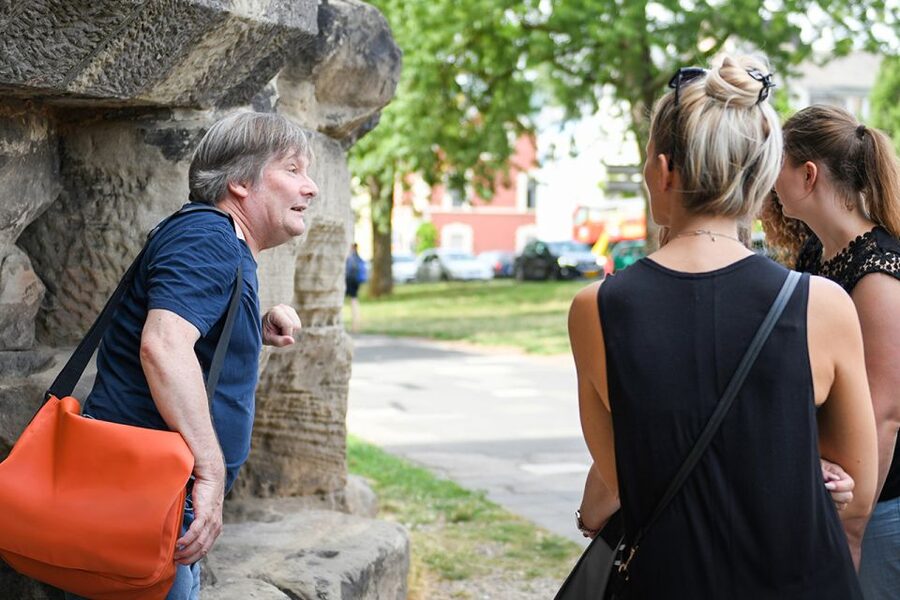
Meet your guide in front of the Mercure Hotel, opposite the Porta Nigra. This is a practical meeting point because the massive Roman gate is hard to miss, and it places you right beside one of Trier’s defining sights.
The Porta Nigra was built by the Romans as early as AD 170. Its name means Black Gate, a reference to the darkened stone that developed over time. The structure gives you an immediate sense of Trier’s age, but the useful part of the tour is the explanation behind it.
Your guide connects the monument to the city that grew around it. You’ll hear about Trier’s Roman origins and the way the city functioned under Roman rule. That focus on daily life matters. Dates and emperors can blur together, while questions about streets, work, trade, public buildings, and ordinary routines help you picture the city as a living place.
The tour may also help you read the Porta Nigra in a more practical way. Instead of seeing only an ancient entrance, you can consider why a city needed gates, how people moved through them, and what such a structure told visitors arriving from the road.
More Old Town Walking Tours across Germany
- Dresden: Semperoper and Old Town Tour
★ 4.8 · 5,735 reviews - Nuremberg: Old Town Guided Walking Tour
★ 4.6 · 2,416 reviews - Munich: Old Town & Viktualienmarkt City Walk in German
★ 4.7 · 2,304 reviews
Following Trier from antiquity to the Middle Ages
Trier is useful for understanding how European cities change without wiping away their earlier layers. Roman foundations gave the city its first major shape, but later centuries added churches, market buildings, homes, and civic spaces.
As you walk, your guide points out medieval architecture and shows how the city developed toward the present day. The value here is not a long list of dates. It is the chance to compare styles as you move through the center. Ancient stonework, religious buildings, and later urban details appear within a short distance of one another.
The 90-minute duration keeps the pace manageable. You are not committing half a day to a lecture with a lot of standing around. At the same time, you should not expect every building to receive a full explanation. This is a broad introduction, best used to decide which places deserve a longer visit later.
A guide like Patrick can add to that format with clear answers and a touch of humor. Feedback about his tours describes explanations that are both well founded and entertaining, with questions handled confidently. That combination is useful in a city where the layers of history can otherwise feel like a wall of information.
Reading the cathedral and Main Market
Trier Cathedral is one of the major stops on the route. Its presence gives the walk a different mood from the Roman opening. The Porta Nigra speaks of empire, roads, and city defenses. The cathedral points you toward centuries of religious and political importance.
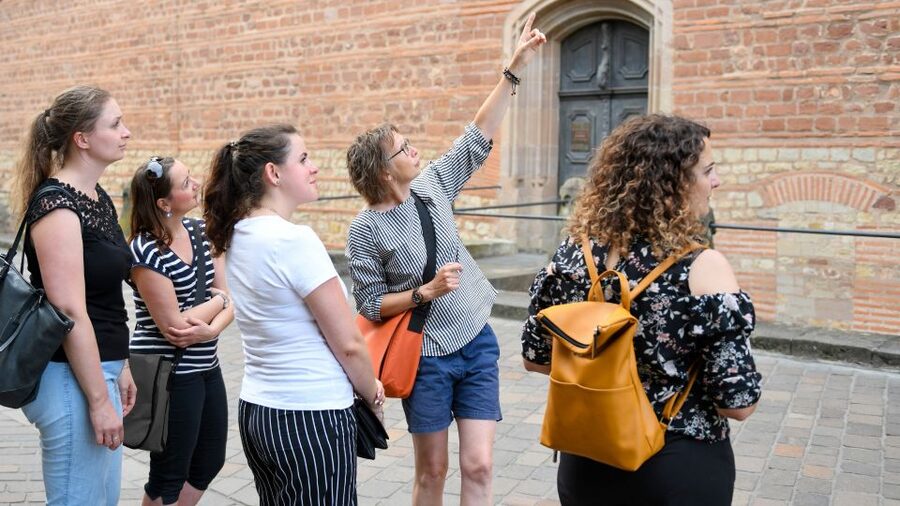
The tour helps place the cathedral within Trier’s wider story rather than presenting it as an isolated church. You can admire its architecture while learning how the city’s identity shifted after Roman rule. The exterior alone offers plenty to discuss, though this walking tour is not presented as a full interior visit.
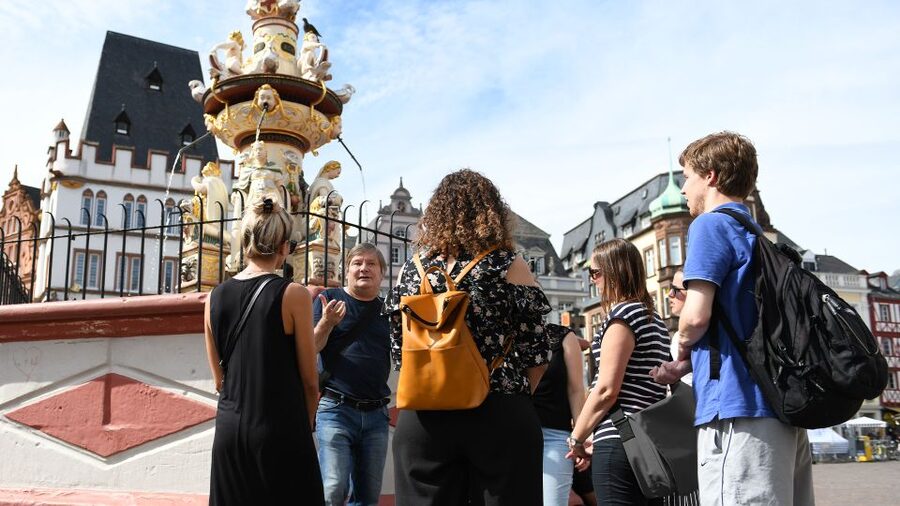
The Main Market adds another change of scene. Market squares are often where a city’s practical and public life meet, and Trier’s central square gives you a useful way to understand the town as more than an archaeological site. It connects history with everyday movement, shops, food, and city life.
I like this pairing of cathedral and market because it keeps the tour from becoming too focused on ruins. You get religious architecture, civic space, and Roman remains in one short route. If you are new to Trier, that variety helps you get your bearings fast.
Finding Karl Marx in a Roman city
The tour also takes you to the residential house associated with Karl Marx, one of the most influential philosophers and political thinkers of the modern era. This is a striking contrast with the Porta Nigra. One stop reaches back to Roman Trier; another brings you to the home of a man whose ideas shaped modern political debate.
The point is not simply to attach a famous name to a building. Marx gives the tour a human link to the city’s more recent past. You can consider Trier as the birthplace and home of a person whose work traveled far beyond Germany.
The experience is particularly useful if you want more than ancient monuments. Many city tours focus on Roman remains and skip the people who shaped later history. This route keeps both periods in view, showing how Trier’s story continues well after antiquity.
The home is included as a point of interest on the walk, but the information provided does not promise a full museum visit or extended time indoors. If Karl Marx is your main reason for visiting, check what you want to see separately. For a general city orientation, the stop adds welcome variety.
More Historical Tours across Germany
- Leipzig: City History Canal Sightseeing Tour on a Motorboat
★ 4.7 · 6,232 reviews - Berlin: Natural History Museum Entrance Ticket
★ 4.6 · 3,382 reviews - Leipzig: 1.5-Hour Historical Walking Tour in German
★ 4.7 · 2,217 reviews - Berlin: World Heritage Cruise to Potsdam
★ 4.5 · 1,435 reviews
How the guides shape the experience
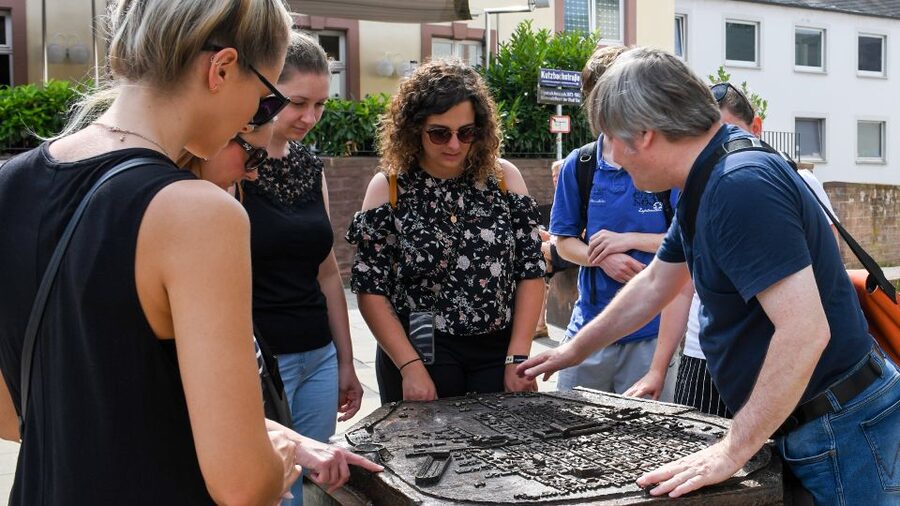
The guide matters a great deal on a short walking tour. Ninety minutes leaves little room for a dull presentation, and the strongest feedback about this experience centers on the guides’ ability to make the material clear, humorous, and personal.
Patrick is associated with an entertaining style and strong command of the subject. He is also praised for explaining things carefully and answering questions. That matters if you prefer a tour that responds to the group instead of simply delivering a fixed speech.
Herbert is described as bringing extensive knowledge, plenty of moments of humor, and a personal touch. His style appears to work well for families, with children finding the tour engaging rather than tiring. That is a useful clue if you are traveling with young people and want history presented in a relaxed way.
You should keep one important detail in mind: the tour is offered in German. Even an excellent guide cannot solve a language mismatch. If you understand German well enough to follow spoken history, the humor and questions can add real value. If not, you may get more from an English-language alternative, even if it costs more.
Is $16 good value for 90 minutes?
At $16 per person, this is a modest investment for a live introduction to central Trier. The real value is not admission to a major attraction. It is the guide’s ability to connect several sights that you could photograph on your own but might not fully understand.
For a first visit, I would consider the price reasonable. You get a route through some of the city’s most important landmarks, historical context, and the chance to ask for restaurant and bar suggestions afterward. That last point is small but useful. A local guide can help turn a general sightseeing walk into a better evening plan.
The value is strongest if you use the tour as a starting point. Pay attention to the places that catch your interest, then return later for a slower look. You can also use the guide’s recommendations when choosing where to eat or have a drink.
The value is weaker if you already know Trier well or want long visits inside individual monuments. This is an overview, not a specialist seminar. You are paying for structure, explanation, and orientation.
Children aged zero to five can join free, which improves the price for families. The route lasts one and a half hours, so it is also easier to fit around lunch, museum visits, or other plans than a longer city tour.
Who should book this Trier walk?
I would recommend it to first-time visitors who want a clear introduction before exploring on their own. It suits people who enjoy history but prefer stories and connections over a dense academic lecture.
It is also a good choice for:
- Families looking for a manageable city activity
- Visitors interested in both Roman and modern history
- Anyone who wants to see the main central sights in one walk
- People who like asking guides for food and drink suggestions
- Short-stay visitors with limited time in Trier
- German speakers who want a local, live explanation of the city
You may want something else if you need an English tour, mobility details that are not provided here, or extended interior visits. The available information confirms the route and guide language, but it does not give a full accessibility description or promise entry to every sight.
The walk is also less suitable if you want a quiet, self-guided experience. The whole point is having someone explain what you are seeing and answer questions as the route unfolds.
Practical details before you reserve
The meeting point is in front of the Mercure Hotel opposite the Porta Nigra. Plan to arrive with enough time to identify the hotel and guide before the start, since the area is centered on a major landmark but can still feel busy when you are watching for a particular person.
The activity lasts 1.5 hours and includes a walking tour with a live German-speaking guide. No transport is included, and the information provided does not list admission tickets to separate attractions.
You can cancel up to 24 hours in advance for a full refund. A reserve-now, pay-later option is also available, which can help if your Trier plans may change. Check the current start times before booking, since the tour’s schedule depends on availability.
The guide can also offer suggestions for restaurants and bars after the walk. Ask at the end rather than trying to fit a long dining conversation into the route.
Should you book this tour?
Book it if you want a short, affordable introduction to Trier and you can follow German. The route brings together the Porta Nigra, Roman daily life, medieval architecture, Trier Cathedral, the Main Market, and Karl Marx’s former home without demanding half a day.
I especially like the balance between famous sights and human stories. Patrick’s question-friendly style and Herbert’s humor and family appeal add confidence that the tour will feel like a guided conversation rather than a list of dates.
Skip it if you need English, want detailed interior access, or already have a strong grasp of Trier’s center. For everyone else, $16 is a fair price for the context that turns a walk through old streets into a clearer story of how Trier became the city you see today.
FAQ
Where does the Trier walking tour meet?
Meet your guide in front of the Mercure Hotel, opposite the Porta Nigra.
How long does the tour last?
The walking tour lasts 1.5 hours.
What language is the tour offered in?
The live tour guide speaks German.
Which Trier sights are included?
The route includes the Porta Nigra, Trier Cathedral, the Main Market, medieval architecture, and the residential house associated with Karl Marx.
How much does the tour cost?
The listed price is $16 per person.
Can young children join the tour?
Yes. Children aged zero to five can join free.
Can I cancel or pay later?
You can cancel up to 24 hours in advance for a full refund. A reserve-now, pay-later option is also available.
More Walking Tours across Germany
- Discover Berlin Half-Day Walking Tour
★ 5.0 · 9,624 reviews - Berlin: Third Reich and Cold War 2 Hour Walking Tour
★ 4.9 · 6,830 reviews - Munich: Third Reich & WWII Walking Tour
★ 4.6 · 6,181 reviews - Berlin: Discover Berlin Walking Tour
★ 4.9 · 5,998 reviews
Just added in Germany
- Berchtesgaden: Via Ferrata Beginner Tour of Schützensteig★ 4.7 · 15 reviews
- Berlin: Energizing 2-Hour Morning Segway Tour★ 4.7 · 35 reviews
- Berlin: Thrilling E-Scooter Adventure Tour★ 4.4 · 66 reviews
- Beelitz-Heilstätten: Baum&Zeit Tree Top Walk Entry Ticket★ 4.9 · 7 reviews
- Beer Bike & Party Bike: Unforgettable Berlin City Tour incl. pickup★ 5.0 · 5 reviews
- Bayreuth: German City Walking Tour (Tourist Info)★ 4.7 · 202 reviews
- Bavaria: Beginner Canyoning Tour★ 4.5 · 10 reviews
- Bayreuth: Christmas city tour in German★ 4.9 · 12 reviews
Old Town Walking Tours, compared.

Old Town & Viktualienmarkt City Walk in German
Read our review →
The Night Watchman Old Town Walking Tour in German
Read our review →
New Old Town and Highlights German-Language Tour
Read our review →

Browse the lists this tour appears in