Reviewed · TOURS IN BERLIN
Berlin Battlefield Tour – Operation Berlin 1945
The final battle for Berlin was fought along ordinary streets, bridges, and government squares. This tour turns those places into a battlefield map, tracing the Soviet push toward the Reichstag and the German defense that ended with the collapse of Nazi Germany.
I like the small-group format and the use of maps and then-and-now photographs, which help you match wartime scenes to modern Berlin. I also like the focus on command decisions and individual courage, rather than a simple list of dates. Guide Jochen has earned special praise for making the subject vivid.
The main drawback is price. At $57 per person, this costs more than many general Berlin walks, and the tour covers a lot of ground on foot. It is also held rain or shine, so shoes and weather gear matter.
Key points about the Berlin battlefield walk
- The route follows the final assault: Walk from Berlin Hauptbahnhof toward Moltke Bridge, Platz der Republik, the Reichstag, and Weidendammer Brücke.
- The Reichstag is the central goal: Learn why the building became the main Soviet objective, both militarily and symbolically.
- Maps and then-and-now images add useful context: These tools help connect today’s open public spaces with the fighting of April and May 1945.
- The tour examines both Soviet and German decisions: You hear about strategy, street combat, desperation, and the German attempt to break out.
- It lasts 150 minutes: Expect a serious walking tour, not a quick photo stop at the Reichstag.
- Weather is part of the bargain: The tour runs in rain or shine, with umbrellas available throughout the year.
Why the last battle of Berlin works as a walking tour
Berlin’s final battle is easier to understand on foot than from a textbook. The action moved through bridges, government grounds, streets, and crossings that still shape the center of the city. As you walk, the route shows how close the main objectives were and how difficult the final attacks became.
The tour places special weight on the last days of the war in Europe. You hear how Soviet commanders planned their advance, how German commanders responded, and how soldiers and civilians faced a city breaking apart around them. The emphasis is not only on weapons and troop movements. It also covers bravery, fear, sacrifice, and the confusion of a battle fought block by block.
This is a useful choice if you already know the broad outline of World War II but want to understand the physical setting. It is also suitable if you are new to the subject and want a clear route through a complicated sequence of events.
The guide may refer to the sound and force of weapons such as the MG42, along with artillery fire and close street fighting. These details are used to help you picture the conditions, not to turn the tour into a theatrical show. The focus remains on military events and the human cost of the battle.
Other trips people book in Berlin:
- Berlin: Reichstag, Dome and Government District Guided Tour
★ 4.7 · 18,288 reviews - Berlin: 1-Hour City Tour by Boat with Guaranteed Seating
★ 4.3 · 16,993 reviews - Berlin: Boat Tour Along the River Spree
★ 4.4 · 11,252 reviews
Meeting at Berlin Hauptbahnhof
The walk begins outside the MEININGER Hotel Berlin Central Station at Ella-Trebe-Straße 9, on the south side of Berlin Hauptbahnhof. This is a practical starting point if you are arriving by train or staying near the station.
Arrive about 10 minutes early. The guide is meant to be easy to spot with a blue umbrella outside the hotel. One unfortunate meeting problem has been reported when a guide arrived without the expected umbrella, so take a moment to check the meeting instructions before you leave your hotel and keep the tour phone number handy.
The starting point is not itself a battlefield stop. It gives the group a clear place to meet before walking toward the first viewing point. Since the tour is outdoors from the beginning, wear comfortable shoes and bring water. A snack is sensible too, especially if you prefer not to walk for two and a half hours without eating.
The opening viewpoint and the road to Moltke Bridge
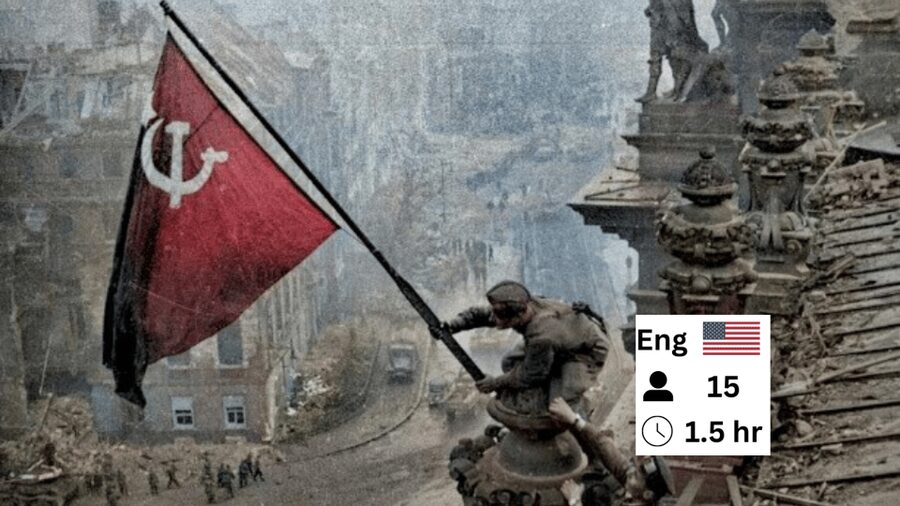
The first part of the route includes a viewpoint and a guided walk of about 20 minutes. The purpose is to set the wider scene before the group reaches the key battle sites. Your guide begins explaining how the Soviet assault closed in on central Berlin and how the final fighting differed from earlier campaigns.
The first viewpoint can help you understand distance and direction, which are essential in a battle fought across a dense urban center. Listen for how the guide connects locations, commanders, and objectives. This is where the tour begins to turn isolated landmarks into one connected military operation.
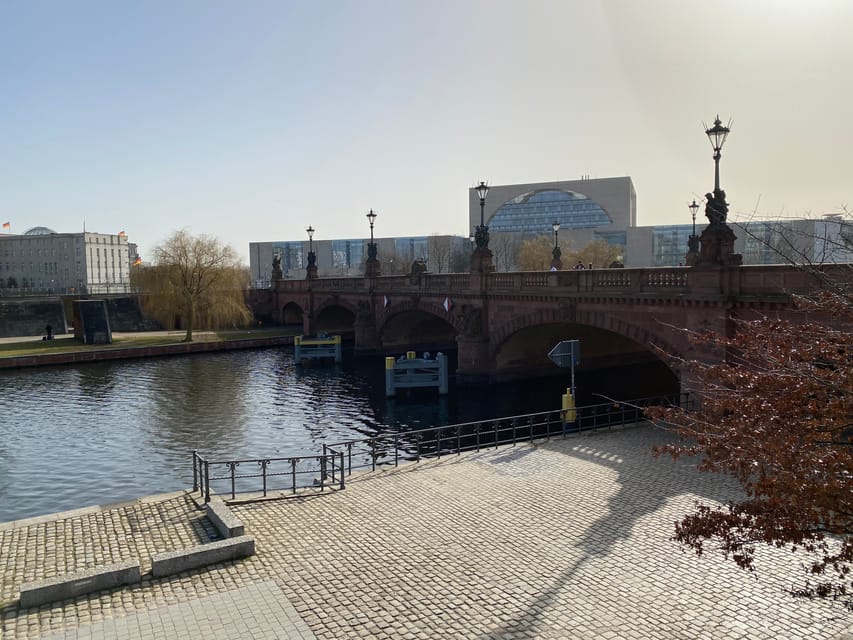
You then reach Moltke Bridge, known in German as Moltkebrücke. Allow about 20 minutes here, including walking and explanation. The bridge was strategically important because it provided access toward the government quarter and the Reichstag area.
A bridge may look like a simple crossing today. In battle, it becomes a choke point, route of advance, and defensive line at once. The guide explains why this crossing mattered and how the fight for access to the government district unfolded.
This stop is especially useful for anyone interested in military planning. You can see why controlling a bridge affected the next stage of the attack. It also helps explain why the final assault was not a single dramatic charge, but a chain of difficult advances through defended positions.
Platz der Republik and the approach to the Reichstag
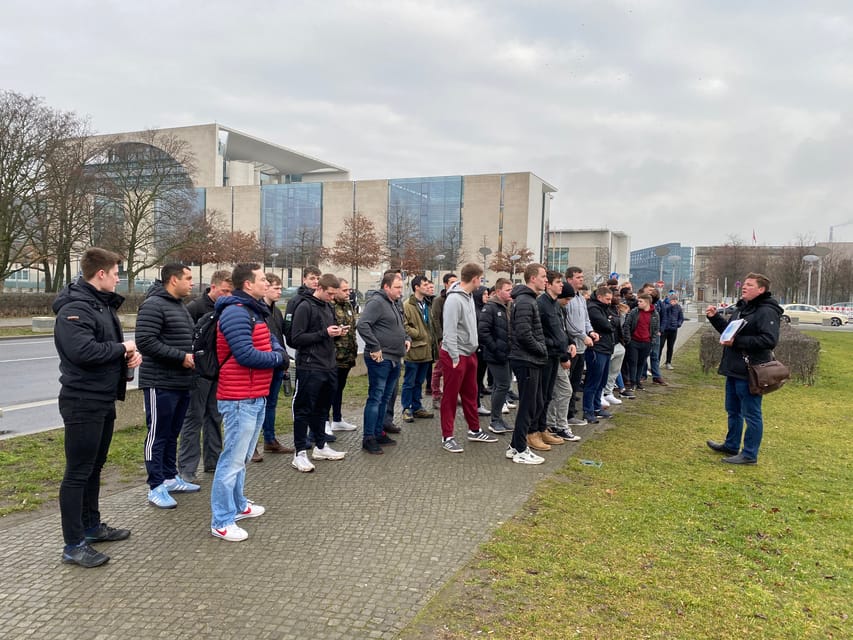
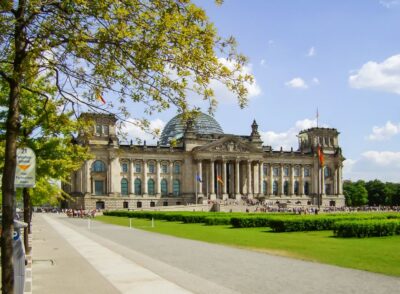
From Moltke Bridge, the tour continues toward Platz der Republik, with about 20 minutes set aside for walking and explanation. This open space in front of the Reichstag allows the guide to describe the Soviet approach and the importance of the government quarter.
The square is valuable because it gives you room to think about the scale of the final objective. Earlier parts of the route focus on access and movement. Here, the subject becomes the concentration of power represented by the buildings ahead.
The guide explains the decisions made by Soviet and German commanders as the attack reached this area. You will hear about the pressure on German defenders, the Soviet need to capture a symbolic target, and the way battlefield choices shaped the final hours of the war.
I would pay close attention to the distinction between military value and symbolic value. The Reichstag mattered as a physical objective, but it also represented the Nazi state in the eyes of the advancing Soviet forces. That combination made its capture especially important.
Same base, a different kind of day out:
- Discover Berlin Half-Day Walking Tour
★ 5.0 · 9,624 reviews - Berlin: Hop-on Hop-off Bus Tour with Live Commentary
★ 4.3 · 8,579 reviews - Berlin: Government District around the Reichstag Guided Tour
★ 4.7 · 8,447 reviews - Berlin: Reichstag, Plenary Chamber, Cupola & Government Tour
★ 4.6 · 8,422 reviews
The Reichstag assault and the disputed flag story
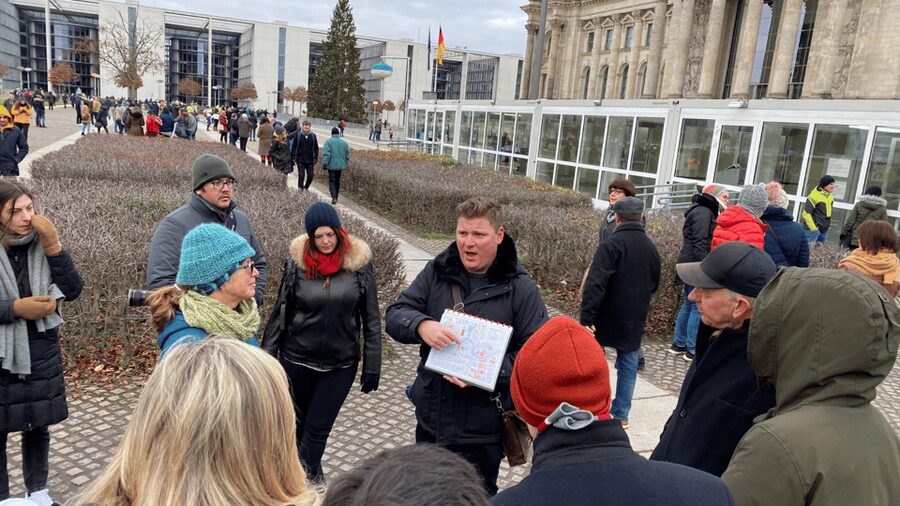
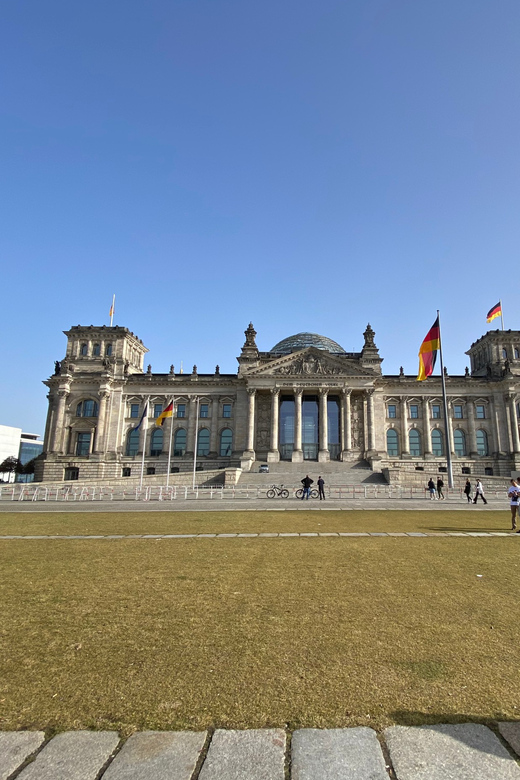
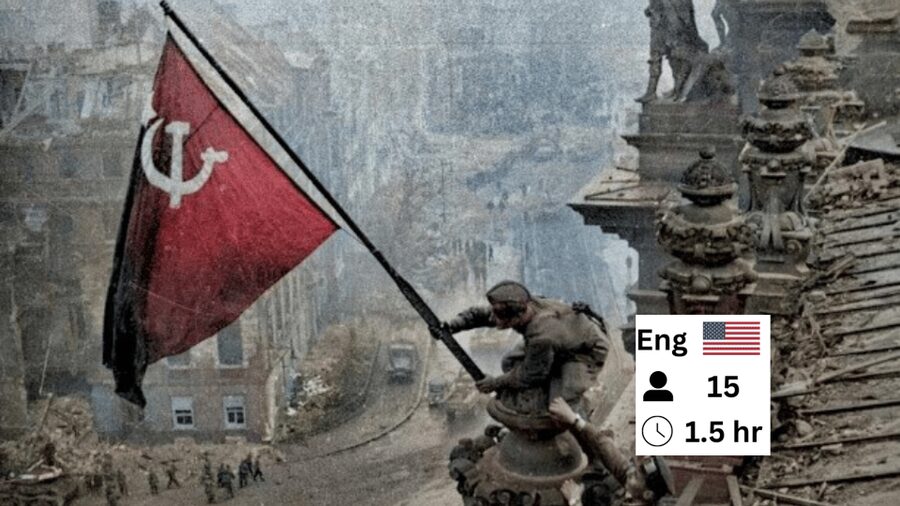
The Reichstag is the main focus of the walk. The group spends about 30 minutes on a guided visit and exterior viewing, though the supplied details do not promise entry into the building. The guide concentrates on the assault, the fighting around the structure, and the moments leading up to the Soviet flag raising.
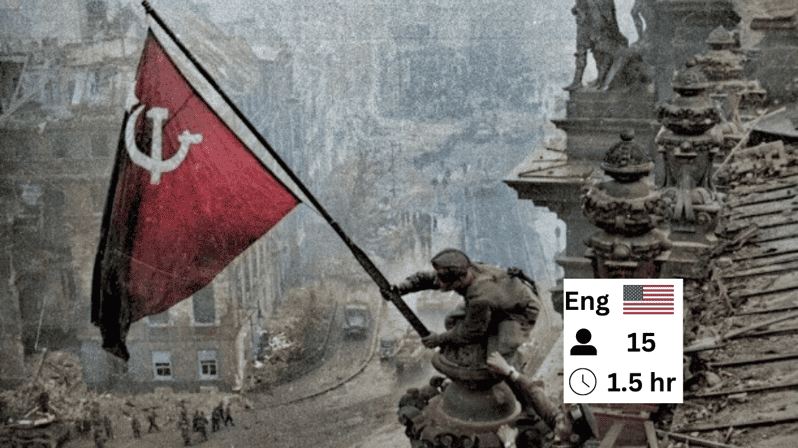
The tour also presents a critical look at the familiar story of the Soviet flag over the Reichstag. Its description promises the version of events that Russian official accounts have often left out. That means you should expect discussion of competing claims, timing, staging, and the way wartime images became political symbols.
This is one of the most distinctive parts of the experience. Many Berlin tours mention the Reichstag as a photo stop. Here, the building is treated as the endpoint of a military operation, and the flag story becomes part of a larger question: how do governments shape the way victory is remembered?
The guide also covers the soldiers who fought through the final defenses and the cost of taking the building. The emphasis is on the people inside the battle, not only the commanders who planned it. You hear about courage and sacrifice, but also the confusion and destruction that made the final assault so brutal.
Do not expect a quiet architectural tour. The Reichstag section is about combat, propaganda, and the collapse of the German war effort. It may be uncomfortable at times, but that is part of its value.
Weidendammer Brücke and the German break-out
The final major stop is Weidendammer Brücke, or Weidendammer Bridge. The group walks there for about 20 minutes and finishes at the bridge after roughly 20 more minutes of guided sightseeing and discussion.
This stop shifts the story from the Soviet assault to the desperate German break-out. The bridge became part of the final attempts to escape the encircled center of Berlin. Your guide describes the desperation, hope, and carnage that gathered around this late-stage effort.
The bridge makes a strong ending because it shows that the battle did not simply stop when the Reichstag was taken. Soldiers and civilians still faced danger, and German forces tried to break out as the city fell. The result was not a clean finish, but a confused and deadly collapse.
Ending here also gives the tour a different emotional tone from the Reichstag section. At the Reichstag, the story centers on capture and symbolism. At Weidendammer Brücke, it is about survival, failed plans, and people trying to escape an impossible situation.
The tour ends at the bridge, not back at the station. Plan your next move from central Berlin rather than expecting a return walk with the group.
What the guide adds to the experience
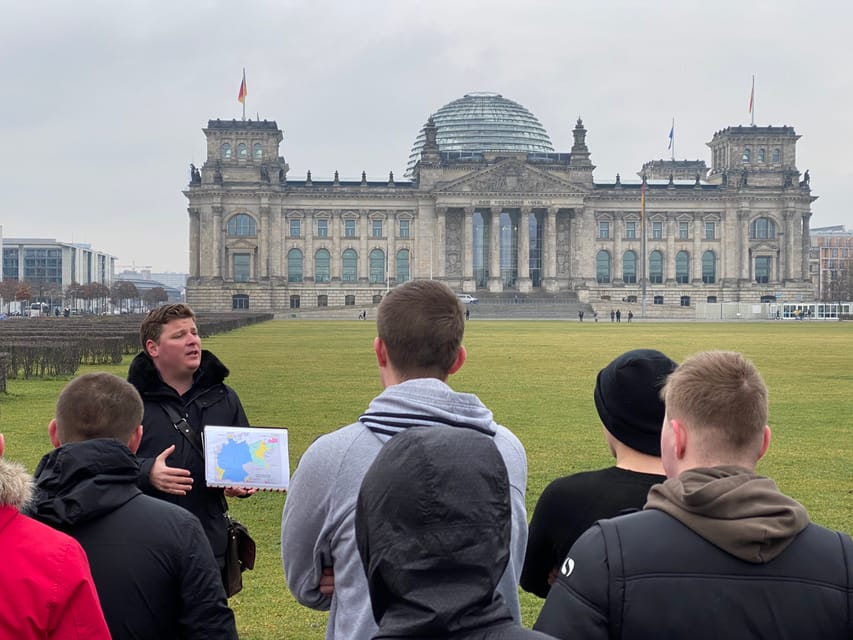
This subject depends heavily on the guide. The sites themselves do not come with large battlefield signs explaining every action, so the quality of the storytelling matters.
Jochen is one guide whose work has drawn particularly strong praise. His strength is described as an ability to bring the battle to life while explaining the subject with impressive command of the details. A good guide should help you follow the timeline, identify the competing objectives, and understand why a bridge or square mattered at a particular moment.
The tour is offered in English. You should expect a live explanation rather than an audio guide, and the small-group setting gives the experience a more personal feel than a large city walk.
Maps and then-and-now photographs are included. These are more than decoration. Berlin changed greatly after the war, so older images help you see buildings, roads, and open spaces in relation to the wartime city.
The experience also promises a look at both Soviet and German decision-making. That balance is important. A useful battlefield tour should not treat one side as a faceless force or reduce the other side to a single story. Here, you get discussion of strategy, orders, resistance, and the human consequences of those decisions.
Price, pace, and practical value
The price is $57 per person. That is a serious charge for a 150-minute walking tour, particularly in a city with many lower-priced history walks. One assessment of the tour found the cost high compared with other Berlin options.
The value depends on your interests. If you want a general introduction to Berlin, you can probably find cheaper tours that cover more of the city. If you specifically want the Battle of Berlin, the Reichstag assault, and the final German break-out explained in one focused route, the price is easier to justify.
You are paying for a specialist subject, a small group, a live English-speaking guide, maps, and then-and-now photographs. The route also covers several important locations without requiring public transport between them.
The pace is moderate but steady. You will walk between five main points, and the total experience lasts 150 minutes. There are no stated meal or transport breaks, so bring water and a snack. Comfortable shoes are essential, especially in wet weather.
The tour is described as wheelchair accessible, which is useful information for planning. Still, because the experience involves outdoor walking between several locations, you may want to confirm the exact route conditions before booking if you have specific mobility needs.
Rain, clothing, and meeting-day advice
The tour operates rain or shine. Umbrellas are provided throughout the year if it rains, but you should still bring an umbrella or raincoat and wear suitable shoes.
A wet day can make a battlefield walk less comfortable, particularly when the group is standing outdoors listening to a detailed explanation. On the other hand, poor weather may help you think about how exposed soldiers and civilians were during the final fighting. Either way, do not book this as a casual stroll in dress shoes.
Bring:
- Comfortable walking shoes
- Water
- A snack
- Rain gear
- An umbrella if the forecast looks uncertain
Arrive 10 minutes early at the south side of Berlin Hauptbahnhof. Look for the guide outside the MEININGER Hotel and check for the blue umbrella. Because a missing visual marker has caused confusion before, confirm the meeting point and keep your phone available until the group has gathered.
Who should book Operation Berlin 1945?
I would choose this tour if you have a strong interest in World War II, military history, or the final days of Nazi Germany. It suits visitors who want a focused subject rather than a broad overview of Berlin’s monuments.
It is also a good fit if you learn best by seeing places in sequence. The route explains how Moltke Bridge, Platz der Republik, the Reichstag, and Weidendammer Bridge related to one another. That physical connection is hard to get from a book or museum display alone.
You may want to skip it if you dislike long discussions of combat, death, and destruction. The tour does not present the final battle as a tidy victory story. It deals with fear, sacrifice, desperation, and the human cost of an urban assault.
The price may also put you off if you are looking for a budget walk. At $57, this is a specialist purchase. You should book it for the subject and the guide-led interpretation, not simply because it includes a stop at the Reichstag.
Should you book this Berlin battlefield tour?
Book it if you want to understand how the final battle moved through central Berlin and why the Reichstag became such a powerful target. The strongest features are the focused route, the detailed military context, the discussion of the disputed flag story, and the guide’s use of maps and old photographs.
I would be more cautious if your schedule is tight, the forecast is poor, or you are mainly interested in architecture. This is a serious outdoor history walk, not a quick landmark visit.
For a World War II enthusiast, the tour offers a direct way to connect Berlin’s present-day streets with the fighting of 1945. For everyone else, the $57 price deserves careful thought. If the subject matters to you, the depth and specialist focus can make it worthwhile.
FAQ
Where does the tour begin?
It begins in front of the MEININGER Hotel Berlin Hauptbahnhof at Ella-Trebe-Straße 9, 10557 Berlin. The hotel is on the south side of Berlin Central Station.
Where does the tour finish?
The tour finishes at Weidendammer Brücke. It does not return to the starting point.
How long does the tour last?
The experience lasts 150 minutes, or two and a half hours.
What language is the tour offered in?
The live tour guide speaks English.
Is the tour wheelchair accessible?
Yes, the activity is described as wheelchair accessible.
Does the tour run in bad weather?
Yes. It takes place rain or shine. Umbrellas are available throughout the year, but you should also bring rain gear or an umbrella.
What should I bring?
Bring comfortable shoes, water, snacks, and rain protection. The activity information also recommends an umbrella.
Is the Reichstag visit inside the building?
The tour includes a guided visit and sightseeing at the Reichstag, but the provided details do not promise entry inside the building.
What is included in the price?
The price includes an expert tour guide, a small-group tour, then-and-now photographs, maps, and umbrellas in rainy weather.
Can I cancel or pay later?
You can cancel up to 24 hours in advance for a full refund. You can also reserve now and pay later.
Just added in Berlin
- Private One way Airport Transfer Berlin Airport To Berlin★ 3.5 · 17 reviews
- Private Walking Tour: Berlin Wall, Cold War and Checkpoint Charlie★ 5.0 · 37 reviews
- Modern Berlin Private Walking Tour: Diverse, Vibrant and Exciting German Capital★ 5.0 · 13 reviews
- Private Day Trip to Potsdam from Berlin by Train★ 4.5 · 27 reviews
- City Explorer: Potsdam Private Day Trip★ 4.5 · 10 reviews
- Berlin Private Custom 5-Hour Tour by Car★ 5.0 · 30 reviews
- Private Half-Day Sightseeing Tour in Berlin★ 3.5 · 6 reviews
- Berlin Private Custom Tour in a Minivan, East and West★ 5.0 · 123 reviews
Tours in Berlin, compared.
Reichstag, Dome and Government District Guided Tour
Read our review →
1-Hour City Tour by Boat with Guaranteed Seating
Read our review →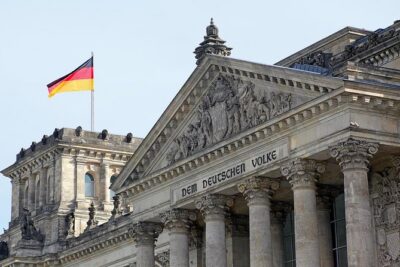
Reichstag, Plenary Chamber, Cupola & Government Tour
Read our review →