
Reviewed · THIRD REICH & WWII TOURS
Nuremberg Third Reich Tour in Spanish
Nuremberg’s old center hides a difficult story: the same city once tied to medieval imperial power became Hitler’s favorite stage for Nazi propaganda. This three-hour Spanish-language walk follows that shift through churches, civic buildings, synagogue memorials, wartime ruins, and the site connected with the Nuremberg Trials.
I like the route’s clear shape, from medieval antisemitism to the Nazi period and the city’s postwar response. I also like that Federico brings plenty of historical detail while keeping the walk lively, even in hot weather. The main drawback is its serious subject matter and steady pace, with no indoor museum visit included.
Key points to know before you book
- A walk from medieval Nuremberg to modern human rights: The route links the 1349 pogrom, Nazi persecution, wartime destruction, and the city’s later democratic renewal.
- Spanish-speaking guidance by Federico: Expect a guide who explains how Nuremberg’s past was used by National Socialism rather than treating each stop as an isolated sight.
- Nine central stops in about three hours: The tour covers churches, the town hall, the former synagogue site, the opera house, the former gate area, and the Street of Human Rights.
- A small fee for a full historical framework: At $19.70 per person, the value comes from the guide’s interpretation and the amount of ground covered, not from admission tickets.
- A practical afternoon start: The walk begins at 3:30 pm at Hauptmarkt and finishes near the central train station.
- A reflective final stop: The Street of Human Rights gives the tour a modern ending instead of leaving the story at war, guilt, and destruction.
Why Nuremberg became a Nazi showcase
Nuremberg was not chosen by Hitler at random. For centuries, it had carried enormous symbolic weight in the Holy Roman Empire. Imperial assemblies, known as the Diets of Nuremberg, brought emperors and prince electors together here.
National Socialism seized that old prestige and repackaged it. Hitler presented Nuremberg as the heir to Germanic tradition, a city where medieval imperial power could be joined to the new Nazi state. The result was a city used as a stage for propaganda, mass political gatherings, antisemitic legislation, and the presentation of Nazi rule as part of a much older national story.
That is the central idea you will keep meeting on this walk. Nuremberg was not simply a place where Nazi events happened. It was chosen because its medieval identity could be twisted into political theater.
The route also brings in Julius Streicher, one of the regime’s most aggressive antisemites. Streicher owned and promoted the weekly newspaper Der Stürmer, and his connection to Nuremberg helps explain how local identity, public messaging, and anti-Jewish hatred became tangled together.
More Third Reich and WWII Tours in Nuremberg
- Nuremberg: Walking Tour of Former Nazi Party Rally Grounds
★ 4.7 · 1,665 reviews - Nuremberg: Historischer Kunstbunker WWII Art Bunker Tour
★ 4.8 · 921 reviews - Nuremberg Old Town and Nazi Party Rally Grounds Walking Tour in English
★ 4.5 · 504 reviews
Hauptmarkt and Frauenkirche: beginning with the 1349 pogrom
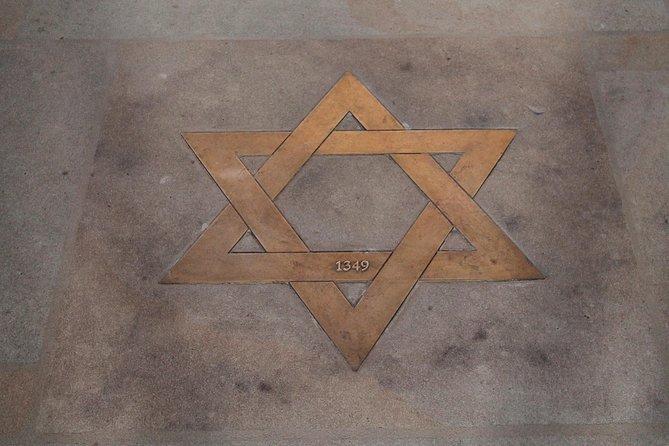
The meeting point is Hauptmarkt 14, beside the Frauenkirche. This is a useful place to begin because the square is both a familiar central sight and a setting for one of the darkest chapters in medieval Nuremberg.
Here, the tour discusses the Jewish quarter and the pogrom of 1349. The subject is important because it prevents a common mistake: treating antisemitism as something that began with the Nazis. The walk places medieval persecution first, then shows how later political movements adapted and intensified older prejudices.
You will spend about 15 minutes at the Frauenkirche, with no admission ticket required. The stop is brief, so expect an explanation of the site and its historical meaning rather than a long church visit.
For you, this opening gives the rest of the tour a stronger frame. It shows that Nazi antisemitism did not appear from nowhere, while also making clear that medieval persecution and modern racial ideology were not identical. That distinction matters.
St. Sebaldus Church and the long road to National Socialism
The next stop is St. Sebaldus Church, another major church in the old center. The focus here is antisemitism from the Middle Ages through the rise of National Socialism.
This is one of the route’s most useful connecting points. Instead of dividing history into neat blocks, the guide traces how ideas about Jews changed over time and how older religious hostility could be turned into modern political racism.
You should expect another 15-minute stop. The church itself is free to visit, but the value of this part is the explanation outside or around the site. If you want a detailed interior tour of St. Sebaldus, this walk is not designed for that. It uses the building as a marker in a larger story.
I especially like this part of the route for anyone who wants causes and connections rather than a simple list of dates. Federico’s strength, based on the way the tour is described, is keeping those links moving at a good pace.
Nuremberg Town Hall and Hitler’s relationship with the city
At the Nuremberg Rathaus, the subject shifts directly to Hitler and his relationship with Nuremberg. This stop lasts about 15 minutes.
The town hall helps explain the public and civic side of the city’s Nazi identity. Nuremberg was presented as the German city par excellence, one of the places most loyal to the regime. The guide connects Hitler’s personal interest in the city with its older imperial image and its later role as a propaganda center.
This is also where the tour’s theme becomes easier to see. Churches and medieval associations were not left in the past. They were drawn into a modern political message designed to make dictatorship appear traditional, legitimate, and nationally rooted.
The stop is entirely about context, so it will suit you if you want to understand why Nuremberg mattered to the regime. It may feel less satisfying if you are looking for a preserved Nazi interior or a large collection of physical objects.
Other trips into the same period in Nuremberg:
- Nuremberg Old Town and Nazi Rally Grounds Walking Tour
★ 4.7 · 377 reviews - Berlin: Third Reich and Cold War 2 Hour Walking Tour
★ 4.9 · 6,830 reviews - Munich: Third Reich & WWII Walking Tour
★ 4.6 · 6,181 reviews - Berlin’s Best: 2 Hour Walking Tour Third Reich and the Cold War
★ 5.0 · 5,486 reviews
The former main synagogue and Kristallnacht
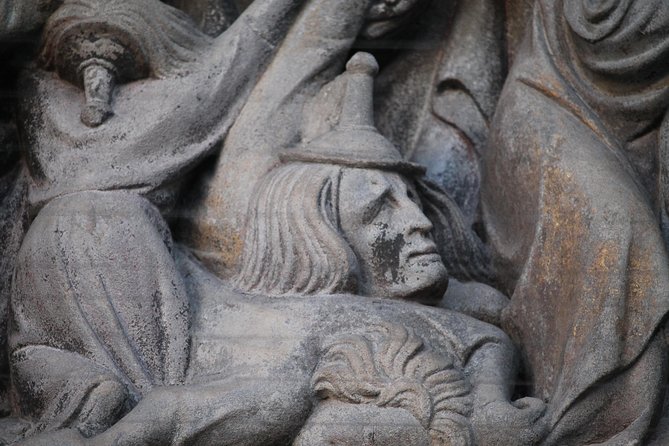
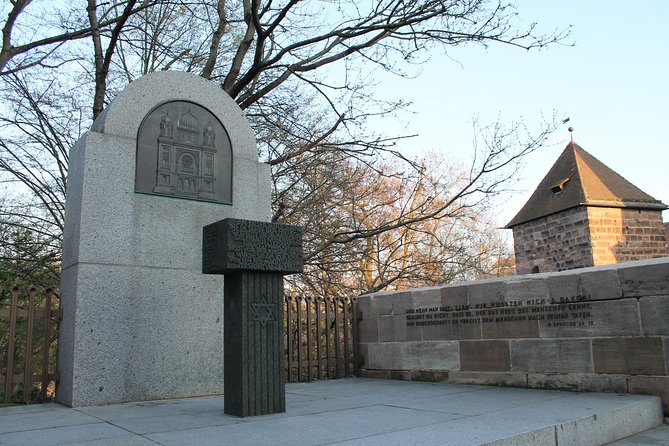
The memorial at the former main synagogue is a short stop of about 10 minutes. Here, the guide explains the synagogue’s destruction and the Night of Broken Glass, known in German as Kristallnacht.
This is a crucial point in the walk because it moves the story from ideology and propaganda to organized violence against Jewish people. The site is not just another old-center landmark. It marks the destruction of a religious community and the open escalation of persecution.
The stop is free, and the route does not require a separate museum ticket. That keeps the tour affordable, but it also means you should not expect a full exhibition with extensive displays. The interpretation comes through Federico’s Spanish-language explanation and the physical setting.
For Spanish-speaking visitors, this may be one of the most valuable stops because the guide can explain difficult terms and events in a fluent, connected way rather than leaving you to piece together a translated panel.
Katharinenkirche: ruins, liberation, and rebuilding
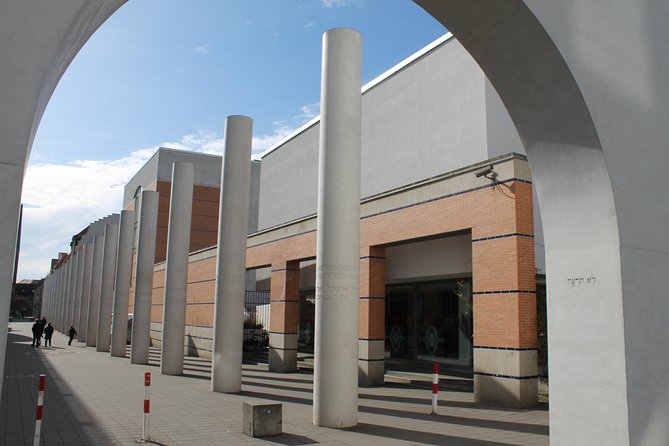
The ruins of Katharinenkirche bring the tour into the wartime period. The discussion covers the battle and liberation of Nuremberg, followed by the reconstruction of the city.
You will spend about 10 minutes here. The ruined church gives the subject a visible form. Earlier stops focus mainly on persecution, ideology, and public power. At Katharinenkirche, you see what war did to Nuremberg itself.
The reconstruction theme is also important. The city’s postwar story was not only about repairing buildings. It involved deciding what to preserve, what to rebuild, and how to live with places connected to Nazi rule and wartime destruction.
This stop may feel quick, especially if you want a long architectural visit. Still, its position in the route works well. After the discussion of Nazi propaganda and persecution, the ruins show the physical consequences of the conflict and prepare you for the tour’s final movement toward remembrance and human rights.
St. Lorenz and the concentration camp connection
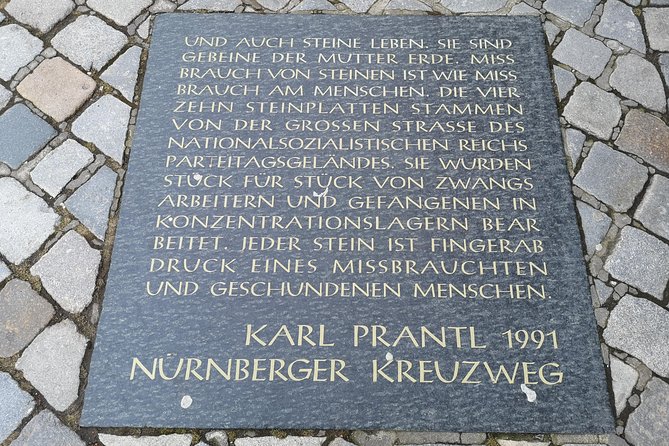
At St. Lorenz, the tour examines the church’s Via Crucis and its relationship to the Nuremberg Concentration Camp. The stop lasts around 10 minutes.
The connection between a major church and the concentration camp gives the guide another way to discuss how religious imagery, civic identity, and Nazi persecution overlapped in the same city. The route does not take you to the concentration camp memorial itself, so you should not book this walk as a substitute for a dedicated camp visit.
That limitation is worth stating clearly. This tour provides a city-centered framework. It explains how Nuremberg functioned as a political and symbolic center, but it cannot offer the time or setting required for a full concentration camp memorial visit.
Still, the stop adds an important layer. You are not only hearing about rallies and leaders. You are being directed toward the human cost behind the official image of Nuremberg.
The State Theater and culture under National Socialism
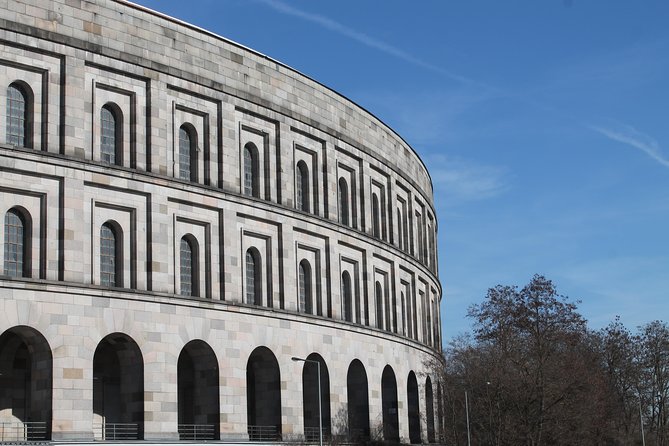
The Nuremberg State Theater is the next stop, with about 10 minutes devoted to the opera house and its connection with National Socialism.
This part of the route broadens the story beyond government buildings and religious sites. Opera, theater, and public culture could be used to support the image a regime wanted to project. The subject shows that propaganda did not operate only through speeches and rallies. It also shaped the cultural life presented to the public.
As with several other stops, the emphasis is historical interpretation rather than entry. No admission ticket is included or required for the walk. You will see the building as part of the city route and learn how it fits into the political story.
This is a good stop for anyone interested in the relationship between art and power. It also keeps the tour from becoming too narrowly focused on military history.
Charterhouse Gate and the Nuremberg Trials
At Charterhouse Gate, the tour turns to the Nuremberg Trials. This is one of the most important stops, and it receives about 15 minutes.
The trials changed the meaning of the city. Nuremberg had been used to glorify the Nazi state. After the war, it became associated with the legal effort to prosecute leading Nazi figures and establish responsibility for crimes committed by the regime.
The stop helps complete the arc begun at Hauptmarkt. The walk starts with a city whose medieval identity was used to support Nazi power. It ends this section with the city connected to an international attempt to confront that power through law.
You should know that this is not a courtroom interior tour. The route offers historical context at the city site, rather than a long museum visit. If the trials are your main interest, you may want to set aside separate time for a more focused museum experience. Within this walk, though, the stop gives the whole route a strong turning point.
Street of Human Rights: a different ending for Nuremberg
The final stop is the Street of Human Rights, or Straße der Menschenrechte, at Kartäusergasse 1. The tour ends here after about 10 minutes.
This is a thoughtful choice of final location. The story does not finish with the Nazi regime, the bomb damage, or the trials. It ends with the city’s attempt to express a different civic ideal through human rights.
The route’s end is near the central train station, about a 10-minute walk from the starting point. That makes it convenient if you are continuing by train or heading back toward central Nuremberg.
I like this ending because it asks you to consider what a city does after its past has been exposed. Nuremberg cannot erase its Nazi role, but it can choose which values to put forward in the present. The Street of Human Rights makes that choice visible.
What the $19.70 price really covers
At $19.70 per person, this is a low-cost guided walk for roughly three hours. You are not paying for attraction admissions, since the listed stops are free. You are paying for the Spanish-language structure, the guide’s explanations, and the way the sites connect.
That is good value if you want a clear introduction to Nuremberg’s Nazi history without committing to a longer museum program. Nine stops in three hours gives you broad coverage, from the 1349 pogrom through the trials and human rights memorial.
The tradeoff is time at each location. Most stops last 10 to 15 minutes, so the tour cannot explore every building in detail. I would see it as a city orientation with serious historical content, not as a substitute for every specialized museum or memorial in Nuremberg.
The maximum group size is 30 people. That is not a private walk, but it is limited enough to keep the group manageable. Federico’s ability to keep the tour dynamic matters here, especially when the subject requires both accuracy and sensitivity.
Practical details for a smoother afternoon
The tour begins at 3:30 pm at Hauptmarkt 14. It lasts approximately three hours and finishes on the Street of Human Rights near the main train station.
Bring comfortable walking shoes and allow room in your afternoon for a steady outdoor route. The tour requires good weather, and hot conditions can make a three-hour historical walk tiring. One review specifically praised how enjoyable the experience remained despite the heat, but you should still carry water and dress for the forecast.
The booking confirmation arrives at the time of booking. A mobile ticket is provided, and the meeting area is near public transportation. Service animals are allowed, and most people can take part.
Free cancellation is available up to 24 hours before the start time for a full refund. Changes or cancellations inside that window are not accepted for a refund. If poor weather or too few bookings causes cancellation, you are offered another date or a full refund.
Who will get the most from this Spanish tour?
This walk is a strong choice if you want to understand how medieval Nuremberg was turned into a Nazi symbol. It suits Spanish-speaking visitors who prefer a live explanation to reading English or German panels, and it works well as an early historical orientation to the city.
You will probably appreciate it most if you like connections between places and events. The guide moves from religious buildings to civic power, persecution, war, trials, and human rights. The route is not just a parade of famous addresses.
It is less suitable if you want a slow church tour, extensive time indoors, or a dedicated visit to the concentration camp memorial. It is also not the right choice for anyone hoping to avoid difficult subjects. Antisemitism, synagogue destruction, Nazi crimes, and wartime death are central to the walk.
The guide’s name is given as Federico, sometimes written Frederico. His approach is described as well documented, flexible, dynamic, and capable of making a large amount of information feel approachable. That matters because the route covers a lot in three hours.
Should you book the Nuremberg Third Reich Tour in Spanish?
Book it if you want a reasonably priced, Spanish-language walk that explains why Nuremberg became so important to National Socialism and how the city later confronted that past. The route is especially useful on a first visit because it ties together places you might otherwise see as separate old-town sights.
You should choose a different or additional experience if your priority is the concentration camp itself, the interior of the Nuremberg Trials courtroom, or long visits inside museums. For the best value, use this tour as your historical framework, then return to the subjects that matter most to you.
At $19.70, with a three-hour route, a maximum of 30 people, and a strong final stop at the Street of Human Rights, it offers a thoughtful introduction at a fair price. The afternoon timing also makes it easy to fit around other sightseeing.
FAQ
How long does the Nuremberg Third Reich Tour in Spanish last?
The tour lasts approximately three hours.
What time does the tour start?
It starts at 3:30 pm.
Where does the tour begin?
The meeting point is Hauptmarkt 14, 90403 Nürnberg, Germany.
Where does the tour end?
The tour ends at the Street of Human Rights, Kartäusergasse 1, 90402 Nürnberg, near the central train station and about a 10-minute walk from the starting point.
Is the tour conducted in Spanish?
Yes. A Spanish-speaking guide is included.
How many people can join the tour?
The maximum group size is 30 people.
Can I cancel for a full refund?
Yes, if you cancel at least 24 hours before the experience start time. Cancellations made less than 24 hours in advance are not refunded.
Just added in Nuremberg
- Nuremberg’s Mystery Morning: Breakfast & Escape Game★ 4.4 · 57 reviews
- Nuremberg: The Old Town in Evening Light – IN GERMAN★ 4.7 · 353 reviews
- Nuremberg Old Town and Nazi Rally Grounds Walking Tour★ 4.7 · 377 reviews
- Nuremberg Old Town and Nazi Party Rally Grounds Walking Tour in English★ 4.5 · 504 reviews
- Nuremberg: Hop-On Hop-Off Bus Tour★ 4.3 · 763 reviews
- Nuremberg: Historischer Kunstbunker WWII Art Bunker Tour★ 4.8 · 921 reviews
- Nuremberg: PLAYMOBIL®- FunPark★ 4.7 · 863 reviews
- Nuremberg: Walking Tour of Former Nazi Party Rally Grounds★ 4.7 · 1,665 reviews
Third Reich & WWII Tours, compared.
Third Reich Berlin: Hitler and WWII Walking Tour
Read our review →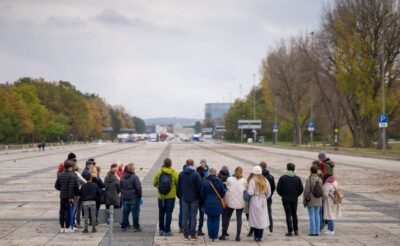
Walking Tour of Former Nazi Party Rally Grounds
Read our review →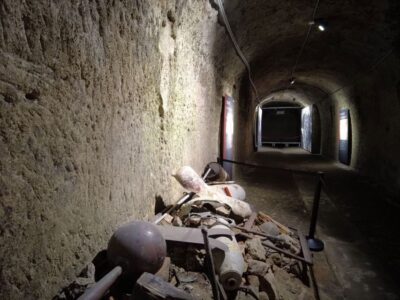
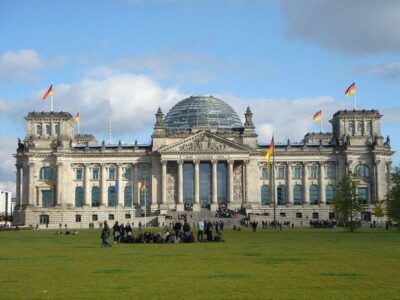
Berlin Third Reich Sites: Half-Day Walking Tour
Read our review →
Birthplace of the Third Reich Guided Walking Tour
Read our review →Browse the lists this tour appears in