
Reviewed · MUSEUMS
Berlin: Natural History Museum Entrance Ticket
Berlin’s Museum für Naturkunde makes its biggest impression in the Dinosaur Hall, where the towering Giraffatitan brancai rises above the room. Nearby, you’ll find Archaeopteryx and Tristan Otto, one of the few original T. rex skeletons in Europe. It is a fine pick for families, curious adults, and anyone who likes science with a dramatic centerpiece.
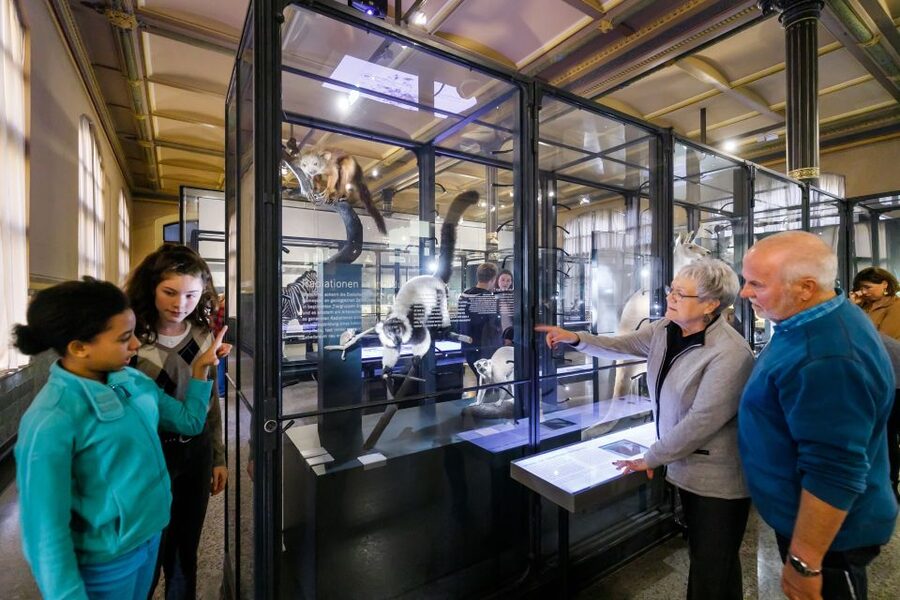
I like the mix of blockbuster fossils and serious research collections. The alcohol-preserved specimens and Biodiversity Wall, with more than 3,000 species, give the visit more depth than a dinosaur-only stop. The main caution is that some displays have limited English text, and the downloadable audio guide works best if you bring headphones.
Key points to know before you go
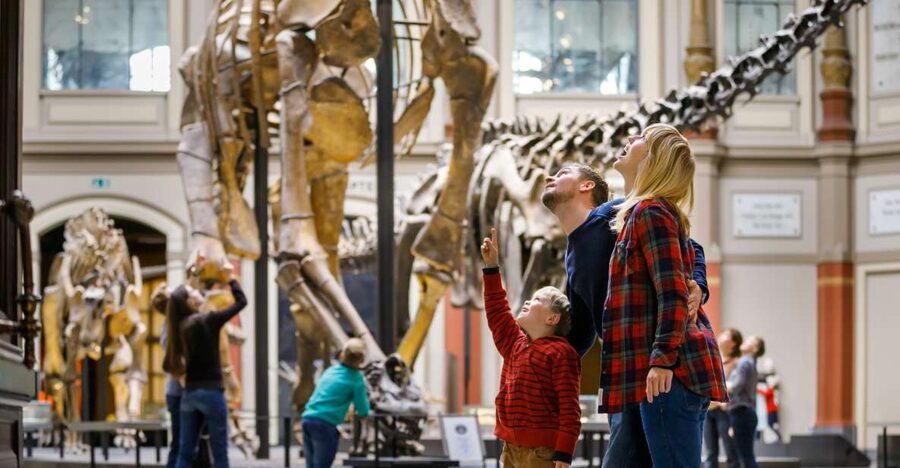
- Giraffatitan brancai fills the Dinosaur Hall: The world’s tallest mounted dinosaur skeleton gives you an immediate sense of scale.
- Archaeopteryx is the quiet star: This precious fossil is displayed in a protective case and is a major piece of natural history.
- Tristan Otto is a real T. rex skeleton: It is one of the few original Tyrannosaurus rex skeletons in Europe.
- The wet collection is scientifically unusual: Around one million animals are preserved in alcohol, representing about 80 tonnes of material.
- The Biodiversity Wall packs in 3,000 species: It turns a large scientific idea into something you can understand at a glance.
- Bring a phone and headphones: Audio content is available online in English and several other languages, but there is no physical audio guide.
Berlin’s dinosaur hall delivers the first big moment
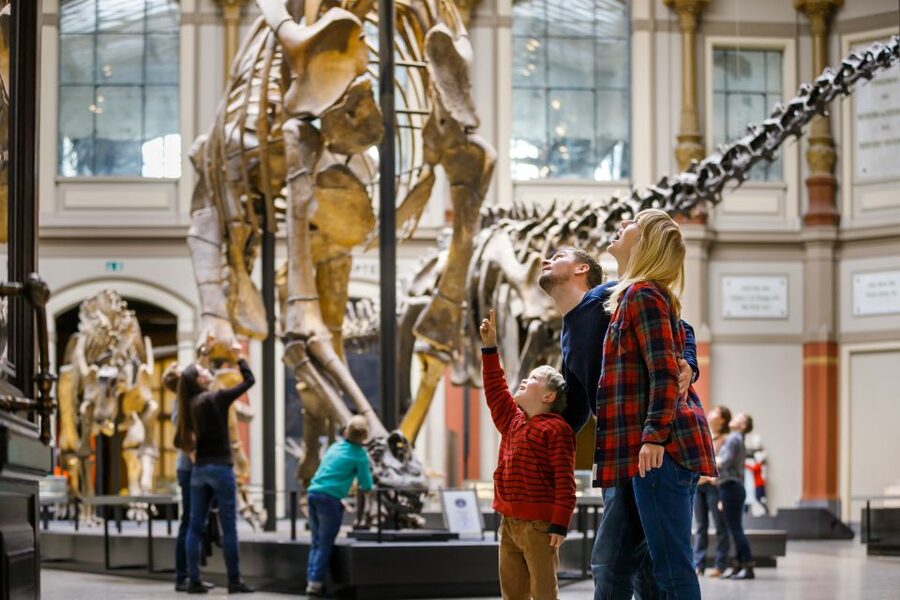
The museum begins with a scene made for people who came to see dinosaurs. Giraffatitan brancai rises in the center of the Dinosaur Hall, its long neck reaching high above you. The skeleton is described as the tallest mounted dinosaur skeleton in the world, and the scale is the point: even a child who has seen dinosaur pictures all week can grasp something new when the bones tower overhead.
The hall presents life as it might have appeared during the Upper Jurassic period, about 150 million years ago. You can look at the skeletons as dramatic objects, but the museum also keeps the scientific side in view. Fossils are not simply old bones behind glass. They continue to raise questions about how animals lived, moved, and changed.
The setting is particularly good for families because the largest displays give children an easy way into the subject. You do not need a background in paleontology to understand the basic thrill of seeing a creature reconstructed from fossil evidence. Adults get more from the labels, the research context, and the chance to look closely at details that are easy to miss from across the room.
The museum is not enormous by the standards of London’s Natural History Museum. That can be a benefit if you are visiting Berlin with children or have only part of an afternoon. It also means you should set your expectations correctly. This is a focused museum visit, not an all-day institution with endless galleries.
Other museums and galleries in Berlin:
- Berlin: Jewish Museum Berlin Entrance Ticket
★ 4.5 · 8,393 reviews - Berlin: Neues Museum Entry Ticket
★ 4.6 · 3,261 reviews - Skip-the-Line: Berlin Wall Museum at Checkpoint Charlie
★ 4.1 · 2,041 reviews
Archaeopteryx rewards a slower look
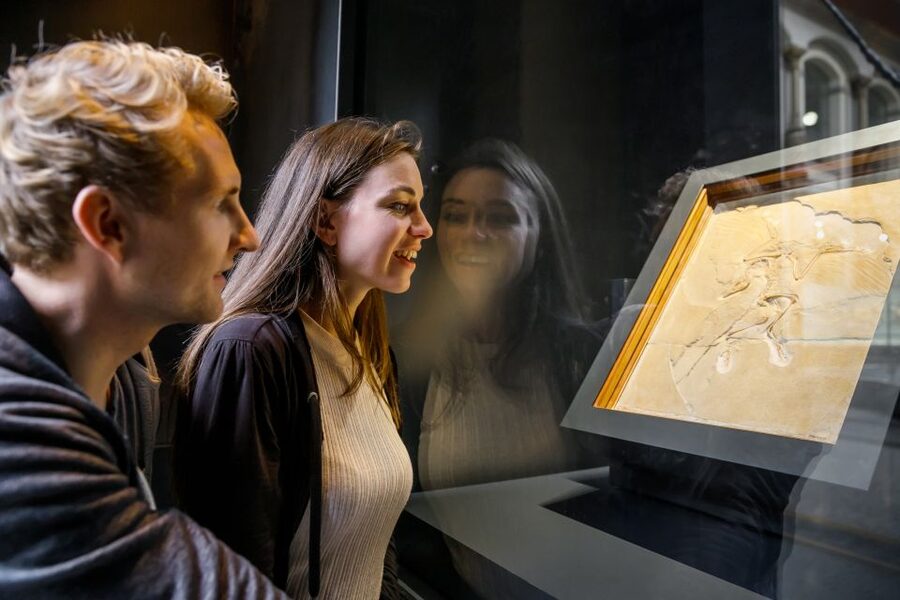
At the back of the Dinosaur Hall, a safety showcase holds Archaeopteryx lithographica. The museum presents it as the Mona Lisa of natural history, a bold comparison, but understandable. The fossil is famous because it helps connect dinosaurs and early birds, and its importance goes far beyond its small size.
This is one place where rushing hurts. The large dinosaur skeletons grab your attention first, while Archaeopteryx asks you to stop and study a delicate fossil surface. If you are interested in evolution, this may be the object that gives the museum its lasting value.
The display can be easy to overlook when the room is busy. I would make a point of finding it rather than assuming the biggest skeletons are the whole story. The museum’s collections contain more than 30 million items, and Archaeopteryx is a good reminder that the most valuable specimen is not always the largest one.
Some descriptions are available in English, but the language coverage is not perfectly consistent across every case. QR codes and online material can help, though a few visitors have found that scanning them is less smooth than expected. If you want the scientific background, use the audio content or read the English panels carefully where they are provided.
Tristan Otto gives the museum a modern celebrity
Tristan Otto is the other major fossil draw. This T. rex skeleton is one of the few original skeletons of its kind in Europe, which gives the display a different feeling from a replica or a reconstruction. The name is easy to remember, and the animal’s size makes it a natural highlight for children and adults alike.
The T. rex display has a strong visual presence, with lighting that helps separate it from the rest of the hall. It is the sort of exhibit you may want to see once from a distance, then again up close. From farther away, you get the full animal. Nearby, you can focus on the structure of the bones and the way the skeleton has been mounted.
This is also where the museum’s mix of science and showmanship works well. The dramatic presentation brings you in, while the fossil itself gives the display real substance. If your group includes someone who is only willing to visit a museum for dinosaurs, Tristan Otto may be the exhibit that makes the ticket worthwhile.
The wet collection shows a less familiar side of science
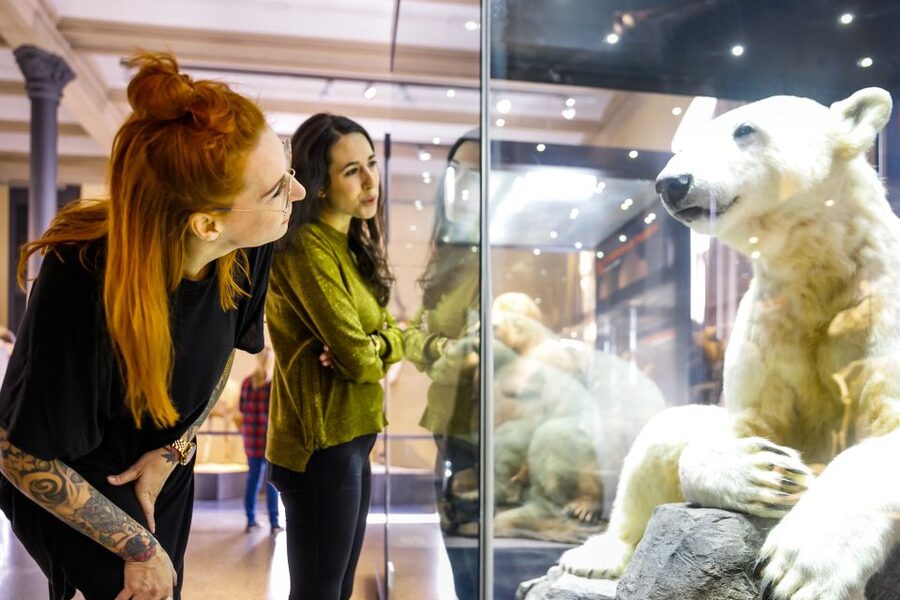
The East Wing changes the mood. Here, you can see a genuine research collection containing about one million animals preserved in alcohol. The collection represents roughly 80 tonnes of material, a scale that is hard to picture until you consider what it means: this is not a small row of unusual jars, but a working scientific resource.
Some people will find this section fascinating. It gives you a look at the less polished side of natural history, where specimens are saved for study rather than arranged only for public display. You get a better sense of how researchers compare species, document biodiversity, and keep evidence for future work.
Others may prefer the dinosaurs and minerals. The preserved animals can feel more clinical, and one person may find the idea of taxidermy or stored specimens uncomfortable. That is worth knowing before you arrive, especially if you are visiting with young children who are sensitive to displays of real animals.
Still, this collection gives the museum its intellectual weight. The dinosaur hall tells a story about the distant past. The wet collection shows how scientists study life in the present and preserve it for questions that have not yet been asked.
Other history to see in Berlin:
- Berlin: World Heritage Cruise to Potsdam
★ 4.5 · 1,435 reviews - Berlin Historical Highlights Walking Tour
★ 4.9 · 657 reviews - Berlin Private Complete History All Day Walking Tour
★ 5.0 · 474 reviews - Berlin: Historic Boat Sightseeing City Center Tour
★ 4.5 · 415 reviews
The Biodiversity Wall turns numbers into a picture
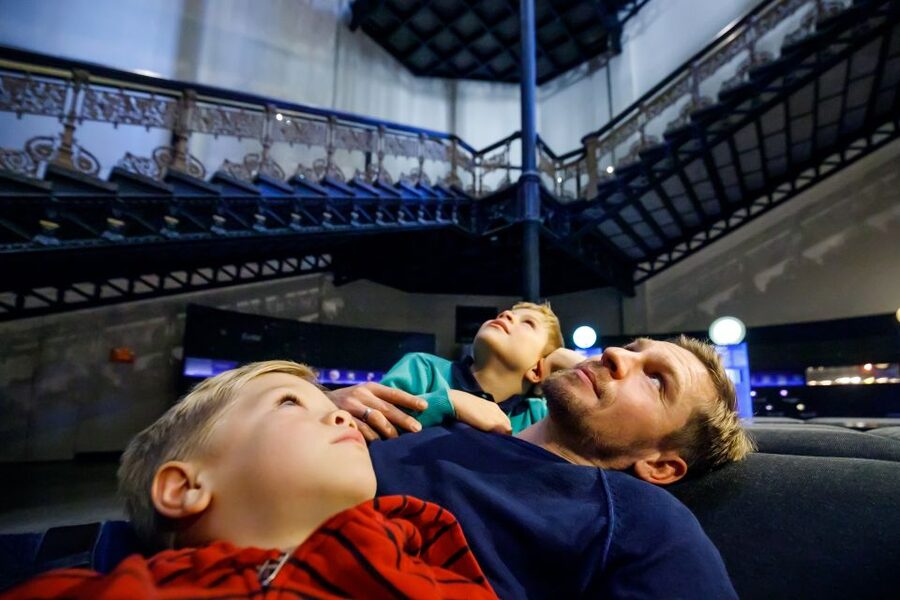
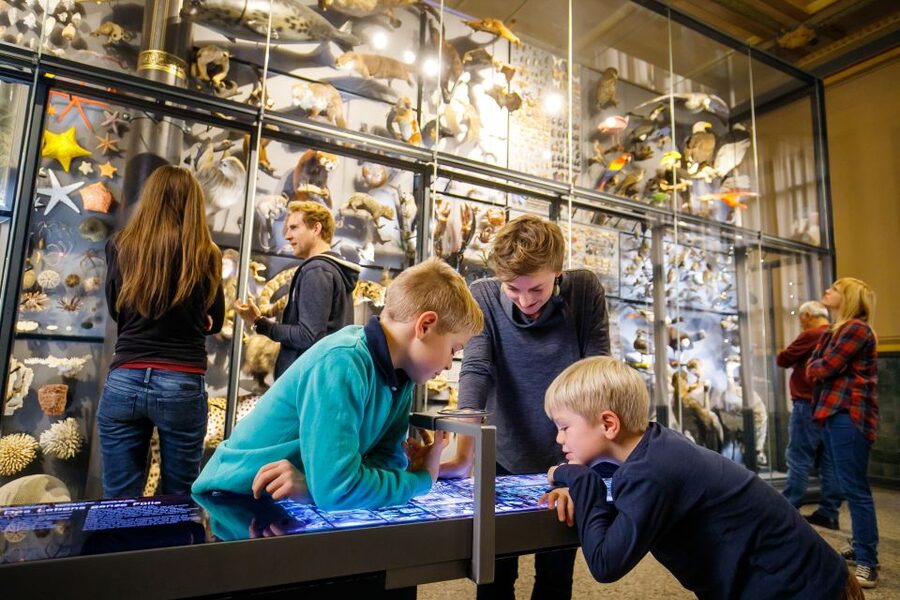
The Biodiversity Wall displays more than 3,000 different species in one view. That number can sound abstract in a label, but a wall filled with specimens makes the idea much easier to grasp. You see variety, similarity, and difference gathered together rather than explained only in a paragraph.
I like this section because it moves the museum beyond extinct giants. Dinosaurs are the headline attraction, but biodiversity is one of the museum’s central concerns. The display asks you to think about how many forms of life exist, how they relate to one another, and what is lost when species disappear.
For children, the wall can work as a visual search game. For adults, it may prompt a slower look at the museum’s wider purpose. The subject is serious, but the presentation is direct enough to hold attention without requiring a lecture.
The museum’s scientists use the collections to study major questions about life on Earth and the problems facing the future. You do not need to read every scientific label to understand the basic point: natural history museums preserve evidence, then use that evidence to make sense of change.
Minerals, taxidermy, and Earth science fill out the visit
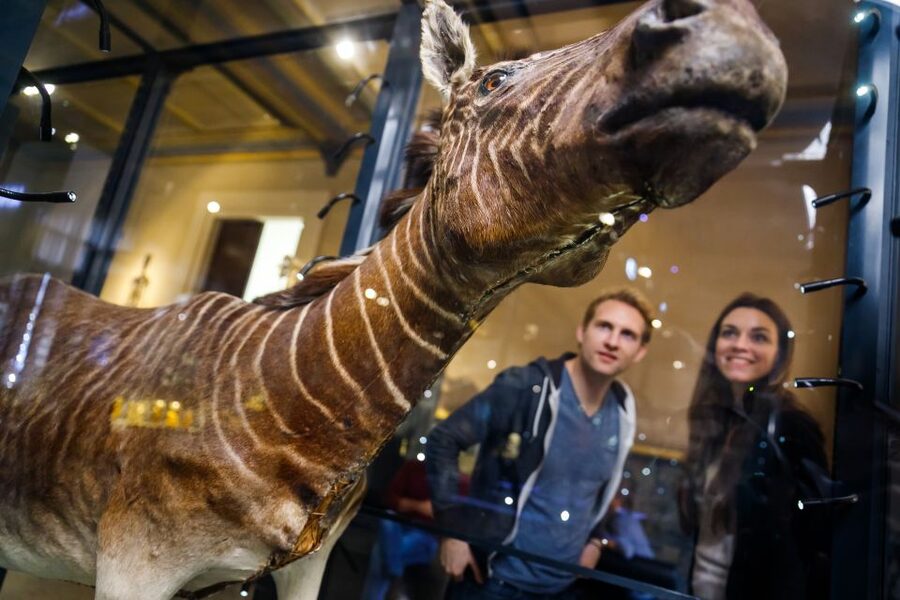
The museum has more to offer than dinosaurs and preserved animals. Mineral displays and Earth-related sections add variety, and the museum also presents taxidermy specimens, including examples connected to extinct species. If your interest is broad, these rooms prevent the visit from feeling like a single-theme fossil show.
The Earth sections have made a particularly strong impression on many visitors, and the mineral collection is worth allowing time for. I would not rush from the T. rex straight to the exit. The contrast is part of the appeal: one room presents enormous prehistoric animals, while another asks you to look at rocks, minerals, and the physical evidence that shapes our planet.
The layout divides the museum into themed areas, which helps you understand what each room is trying to do. At the same time, the museum can feel a little hard to follow. Even with maps, you might lose the best route through the displays, and one floor or area may occasionally be closed during building work or changes.
That unevenness is a fair trade for a museum that continues to change. Temporary exhibitions, lectures, guided tours, workshops, and education programs add material beyond the standard ticket, but they are not included in this admission. Check what is open if you have a particular program in mind.
Plan your timing around the ticket, not just the visit
The booking information lists a valid period of 30 minutes to one hour, with available starting times shown when you check dates. Treat that as your entry window rather than a promise that the entire museum can be seen in half an hour. A quick visit can cover the major dinosaur displays, but a careful visit should allow longer if your schedule permits.
Some people can see the main highlights in about 30 minutes. That is realistic if you focus on Giraffatitan, Archaeopteryx, Tristan Otto, and a few surrounding cases. If you want the mineral displays, Biodiversity Wall, wet collection, and Earth sections too, you will need to move at a slower pace.
The ticket includes skip-the-ticket-line entry, which matters during busy periods. The museum can reach full capacity, and arriving without a timed reservation may mean waiting outside. I would book ahead, especially for weekends, school holidays, and wet-weather afternoons when indoor museums are an easy Berlin choice.
The entrance is at Invalidenstraße 43, 10115 Berlin. Bring your passport or ID card. If you have a reduced ticket, carry proof of your age or status, since it may be requested at the door.
The audio guide is useful, but prepare your phone
Audio content is included through a website rather than a physical audio device. It is available in English, French, German, Italian, Japanese, Polish, Portuguese, Russian, Spanish, and Turkish. You need to log in to the website, so your phone is part of the museum kit.
Bring headphones. Without them, you may have to hold your phone to your ear, use its speaker in a public gallery, or skip the guide altogether. Free Wi-Fi is available, but it is still wise to have your phone charged before entering.
The audio content can help fill gaps where English labels are limited. Most or many cases have some English information, but coverage is not perfectly uniform. If English access matters to you, do not assume every display will have a full translation.
This is also a practical point for families. One adult can listen while children look at the specimens, but stopping to scan every label may slow the group down. I would use the audio guide selectively, choosing the major exhibits rather than trying to activate it for every case.
How much value do you get for $12?
At about $12 per person, the ticket is fairly priced if you care about dinosaurs, fossils, or science museums. The large skeletons alone create a strong first impression, but the Archaeopteryx, Tristan Otto, wet collection, biodiversity display, minerals, and Earth material give the admission more substance.
The value depends on how you visit. If you spend only 30 minutes on the dinosaur hall, the price may feel less convincing, particularly if you expected a huge London-style museum. If you give yourself time to see the other collections, the ticket becomes easier to justify.
The downloadable audio content improves the value, since a physical audio guide is not included and there are no guided tours with standard admission. Special programs and temporary events cost extra or may require separate arrangements, so do not assume they are part of this ticket.
The ticket also reduces one practical risk: being stuck in a long entry line or turned away during a full-capacity period. That convenience is useful in Berlin, where a museum visit often becomes the backup plan when the weather turns poor.
Who will enjoy this museum most?
Families with young children are a natural match. The dinosaur skeletons are easy to understand at a glance, the museum has activities and displays that can hold a child’s attention, and the visit is short enough to adapt to a limited attention span. A four-year-old may not follow every scientific explanation, but the scale and shapes give children plenty to look at.
Adults who enjoy fossils, evolution, geology, or collections will find more than a child-focused attraction. Archaeopteryx and the research collection give the museum enough substance for a serious visit, while the T. rex and giant skeletons keep the presentation lively.
It also suits mixed groups. One person can focus on dinosaurs, another on minerals, and someone else on biodiversity or preserved animals. The main limitation is language. If you need full English text at every case, use the audio website and allow time for it.
Wheelchair users can visit, as the museum is wheelchair accessible. Cloakroom use is included, which is handy if you arrive with coats or small bags, but keep your phone and headphones with you for the online audio.
My advice on booking this ticket
Book this experience if you want a reasonably priced museum visit built around major fossils, with enough scientific material to reward more than a quick photo stop. It is especially suitable for families, dinosaur fans, and adults who like seeing how a museum’s public displays connect to active research.
Do not book it expecting the size of London’s Natural History Museum or a fully interactive children’s center. Some exhibits feel dated, interactive features are limited, and the route through the building can be unclear. The English information is good in places but not complete enough to ignore the audio option.
For the best visit, reserve an entry time, bring identification, charge your phone, pack headphones, and start with the Dinosaur Hall. Then make time for Archaeopteryx, Tristan Otto, the Biodiversity Wall, minerals, and the East Wing collection. At $12, that fuller route gives you the strongest value.
FAQ
Where is the Museum für Naturkunde Berlin?
The main entrance is at Invalidenstraße 43, 10115 Berlin, Germany.
How much does admission cost?
The listed price is $12 per person.
How long is the ticket valid?
The listed validity is 30 minutes to one hour, with starting times shown when you check availability. The museum itself may take longer to explore if you visit the wider collections.
Does the ticket include a guided tour?
No. Guided tours, special programs, and special events are not included.
Is an audio guide included?
Downloadable audio content is included through a website. A physical audio guide is not included.
Which languages are available for the audio content?
Audio content is available in English, French, German, Italian, Japanese, Polish, Portuguese, Russian, Spanish, and Turkish.
Should I bring headphones?
Yes. You need your own phone to access the downloadable audio content, and headphones make it much easier to use inside the museum.
What identification do I need?
Bring a passport or ID card. If you have a reduced ticket, you also need proof of your age or status.
Is the museum wheelchair accessible?
Yes, the museum is wheelchair accessible.
Can I cancel the booking?
You can cancel up to 24 hours in advance for a full refund. The reserve-now, pay-later option lets you book without paying immediately.
Just added in Berlin
- Berlin: Energizing 2-Hour Morning Segway Tour★ 4.7 · 35 reviews
- Berlin: Thrilling E-Scooter Adventure Tour★ 4.4 · 66 reviews
- Beer Bike & Party Bike: Unforgettable Berlin City Tour incl. pickup★ 5.0 · 5 reviews
- Beelitz-Heilstätten: Baum&Zeit Tree Top Walk Entry Ticket★ 4.9 · 7 reviews
- AXE THROWING EXPERIENCE IN BERLIN★ 4.7 · 24 reviews
- Alternative Berlin / Street art tour – Private group★ 5.0 · 6 reviews
- Berlin: Alternative & Street Art Tour★ 4.5 · 6 reviews
- Berlin: 2.5-Hour Beer & Sunset Sightseeing Boat Cruise★ 4.6 · 61 reviews
Museums, compared.

Skip-the-Line: Berlin Wall Museum at Checkpoint Charlie
Read our review →
Browse the lists this tour appears in