
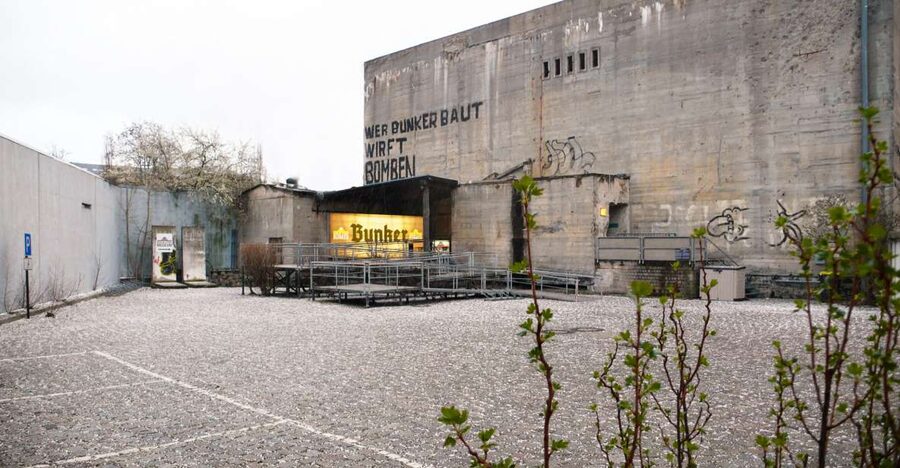
Reviewed · TOURS IN BERLIN
Berlin: Berlin Story Bunker Entry Ticket
Berlin Story Bunker puts you inside a real World War II bunker for a long, serious look at Berlin’s past. The main exhibition follows the city from Imperial times through Hitler’s rise, the Nazi dictatorship, the war, and the fall of the Berlin Wall. At the end, a Führerbunker replica gives the subject a stark physical focus.
I like the chronological layout, which helps you connect political events with daily life and wartime destruction. I also like the freedom to move at your own pace, with an audio guide available in 11 languages and plenty of written material to read. The drawback is simple: this is a lot of information in a large, sometimes warm bunker, so two hours can feel rushed and some images are graphic.
Key points to know before you go
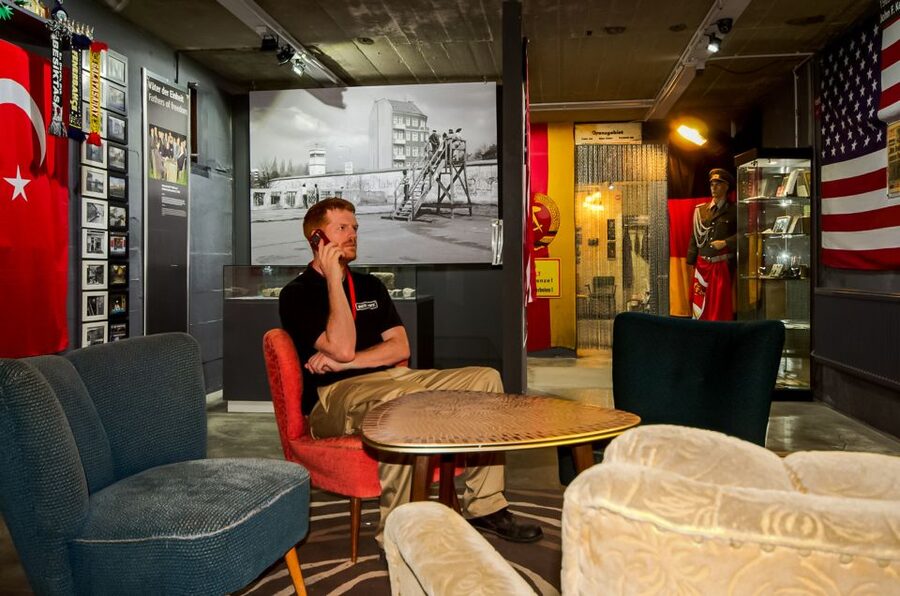
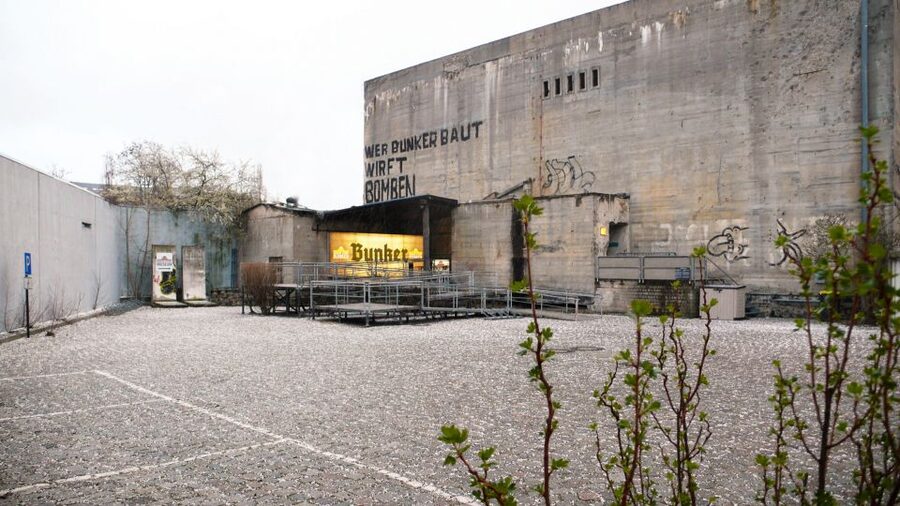
- A real bunker setting: The Berlin Story Museum occupies a large World War II bunker near Anhalter Bahnhof and Potsdamer Platz.
- A long historical route: Follow more than 800 years of Berlin’s story, ending with the Berlin Wall era.
- Hitler’s rise and fall: The exhibition traces his life, political rise, dictatorship, war, and death.
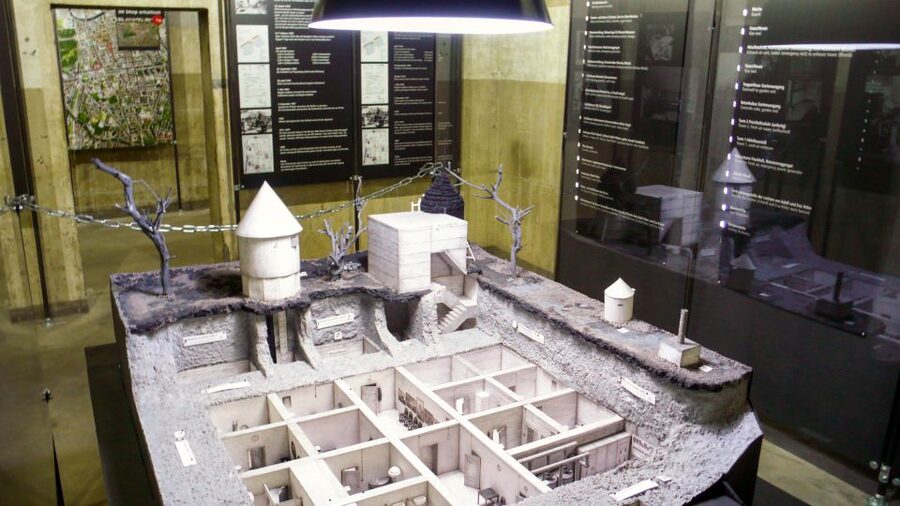
- A full-scale bunker focus: See a model of Hitler’s Führerbunker and learn about the final days of the Nazi regime.
- Plan for several hours: Two hours covers the main route, but three to six hours may suit you if you read the panels and watch the films.
- Quiet, self-guided viewing: The audio guide lets you set your own pace, though the number system can take a little practice.
Entering the bunker near Anhalter Bahnhof
The Berlin Story Bunker is at Schöneberger Str. 23a, close to Anhalter Bahnhof and within reach of Potsdamer Platz. You enter through the ticket office, then make your way into an exhibition set inside a huge wartime bunker.
That setting shapes the visit from the first few minutes. This is not a bright museum built around elegant rooms or a large collection of delicate objects. The bunker gives the exhibition a hard, enclosed feel, which suits the subject but can also make the visit tiring. The rooms are generally large, and fans are present, yet the air may feel warm. If enclosed spaces bother you, take your time and use the available seating.
The entrance ticket is listed at about $21 per person. That is a fair price if you give the museum several hours, especially since the fee includes the audio guide. It is less compelling if you intend to spend only 45 minutes, because the exhibition is built around a large amount of text, photographs, film, and audio.
The ticket is valid for one day, so you have room to plan the visit around the rest of your Berlin sightseeing. Last entrance is at 5:30 PM. Check the current opening details before setting off, since arriving late would leave little time for such a large display.
A few more things to do in Berlin worth a look
- Berlin: Jewish Museum Berlin Entrance Ticket
★ 4.5 · 8,393 reviews - Berlin: Illuseum Berlin Entrance Ticket
★ 4.1 · 3,970 reviews - Berlin: Madame Tussauds Admission Ticket
★ 4.6 · 3,941 reviews
Berlin’s story begins before the Nazi era
The route places National Socialism in a wider story rather than presenting Hitler’s rule as an isolated event. You begin with Berlin’s earlier development, including the Imperial period, then move forward through political and social change.
The museum presents Berlin’s history at around 50 stations, using large installations, photographs, and short film sequences. The chronological order is one of the strongest features because it gives you a clear path through complicated events. You can see how the city’s role changed as Berlin became the center of German political power.
This opening section matters because it gives context. The Nazi period did not appear from nowhere, and the museum’s early material helps explain the city and country that Hitler entered. You will find plenty to read, so resist the urge to rush toward the bunker model. The earlier stations help the later material make sense.
The displays are written in German and English, and the audio guide provides another way to follow the story. You can choose Spanish, English, French, German, Italian, Danish, Dutch, Russian, Hebrew, Portuguese, or Ukrainian. The wide language range is useful for mixed-language groups, though Chinese is not listed among the available options.
Following Hitler’s rise and dictatorship
The central route follows Hitler from childhood through his political rise and death. It covers the creation of the Nazi movement, the growth of his power, and the machinery of a dictatorship that led to war and mass suffering.
This section asks you to spend time with the evidence rather than offering a quick overview. Photographs, posters, newspapers, short films, and large information panels build the story step by step. Some material is graphic. That is appropriate to the subject, but families should decide in advance how much younger children are ready to see.
The exhibition does not soften the Nazi regime or turn it into a collection of military dates. It addresses racism, fascism, propaganda, persecution, and the human cost of the war. For that reason, the experience can feel heavy. You are not simply collecting facts for a sightseeing checklist. You are being asked to consider how a modern city became the center of a murderous political system.
I would give this portion at least an hour if you want to read the main panels and listen to the audio stops. If you enjoy history and stop for every photograph, you could spend far longer. One useful approach is to listen to the audio guide for the broad explanation, then choose the panels that interest you most rather than trying to read every word immediately.
A large exhibition, not a hands-on attraction
It is worth setting the right expectation. The Berlin Story Bunker is not mainly an interactive museum with many objects to handle or activities to try. It is a text-heavy historical exhibition supported by visual installations, photographs, films, and audio.
That format works well if you like to read and build your own understanding. It works less well if you need a quick, object-led museum visit. One visitor expected something more like a traditional bunker experience and found the presentation more museum-like than interactive. That is a useful warning: come for the scale of the information and the setting, not for a large collection of original artifacts.
The audio guide gives you a helpful outline, but you do not have to follow it in lockstep. You can walk ahead, pause, or skip sections. The device is generally straightforward, though entering a number can occasionally send you to a three-digit stop instead of the intended one. Using the next-button function as you move through a section may be easier.
A self-guided visit is a real advantage here. You can spend ten minutes on a photograph that catches your attention or move more quickly through material you already know. A staff-led explanation is not required, although a guide can help some visitors make sense of a large and serious subject.
Same base, a different kind of day out:
- Berlin: Reichstag, Dome and Government District Guided Tour
★ 4.7 · 18,288 reviews - Berlin: 1-Hour City Tour by Boat with Guaranteed Seating
★ 4.3 · 16,993 reviews - Berlin: Boat Tour Along the River Spree
★ 4.4 · 11,252 reviews - Discover Berlin Half-Day Walking Tour
★ 5.0 · 9,624 reviews
The war years and Berlin as the Nazi center of power
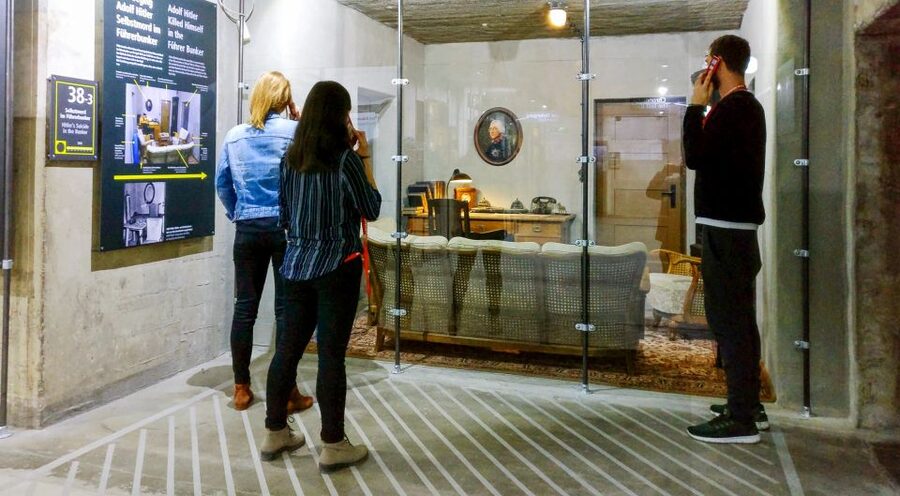
As the route reaches World War II, the story becomes more immediate. Berlin’s place as the center of Nazi power is explained through images and information about the regime, the war, and the city’s destruction.
The museum connects government decisions with the physical reality of Berlin. Photographs show the city before, during, and after the war, while film sequences help break up the long stretches of reading. You will also see newspapers, posters, and other printed material that show how propaganda and public life were shaped.
There are not countless original objects to examine, so do not judge the exhibition by the number of artifacts in glass cases. Its strength is the amount of visual documentation and the way the material is arranged along a timeline. The bunker itself adds weight to the visit, but the information panels carry most of the historical work.
For me, the most useful part is the way the museum keeps returning to cause and consequence. You are shown more than the image of Berlin in ruins. You are led through the political conditions, decisions, and violence that produced that destruction. The pace can feel intense, yet that density is also why the museum rewards a slow visit.
The Führerbunker replica and the final days
One of the most anticipated areas is the model of Hitler’s Führerbunker. It sits on the lower floor and provides a physical reference for the place where Hitler spent his final days.
The model is not a reason to treat the site as a curiosity. Its value is that it helps you understand the confined setting at the end of the Nazi regime. After several floors of political history, war photographs, and written explanation, the replica gives the final chapter a concrete shape.
The lower bunker area is also where the atmosphere may feel strongest. The setting is enclosed, and the subject is grim. Some people may find it unsettling or mildly claustrophobic, while others will appreciate the direct connection between the museum’s location and the history being presented.
Keep your expectations measured. The attraction does not claim to give you access to the original Führerbunker. You see a model and related material within the wider exhibition. The original structure was destroyed, and the replica is used to explain the historical setting rather than present a preserved room.
After 1945 and the Berlin Wall
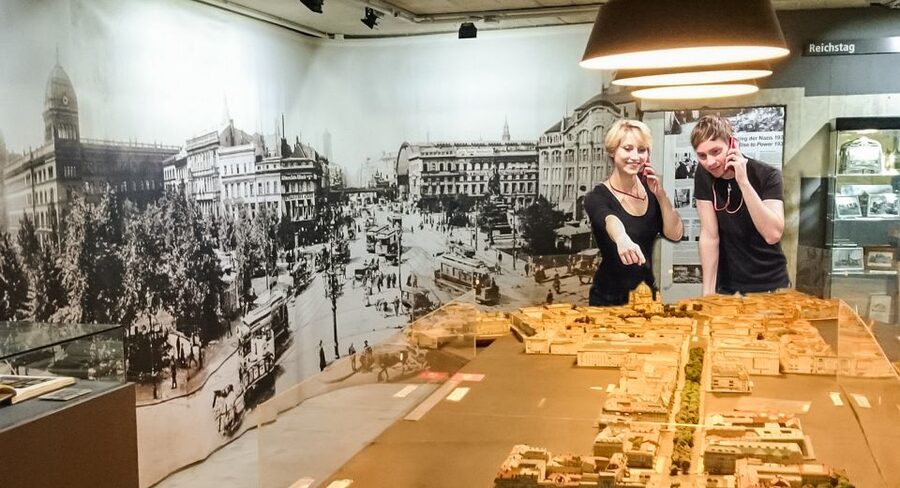
The museum does not stop with Hitler’s death. The route continues through postwar Berlin and reaches the period of the Berlin Wall, giving you a longer view of the city’s divided and changing identity.
This final stretch is important because it shows that Berlin’s story did not end in 1945. The city remained shaped by the war, occupation, division, and reunification. Short films and photographs help link the ruined capital of 1945 with the Berlin of the Wall era.
If you are especially interested in Cold War Berlin, you may want to leave enough time for this section rather than using all your energy on the Nazi-era material. The earlier sections naturally draw more attention, but the later story helps explain why Berlin feels so layered when you walk through it today.
The exhibition’s full route covers more than 800 years of Berlin’s history. It cannot treat every period with equal depth, but it gives you a useful broad frame before concentrating heavily on National Socialism and World War II.
How long should you allow?
Two hours is the minimum I would suggest if you want more than a quick walk-through. That gives you time for the main story, some audio stops, and the major visual displays.
Three to four hours is a more comfortable plan. You can listen carefully, read many of the panels, pause at the films, and spend time with the Führerbunker area without watching the clock. If you read nearly everything, six hours is possible, and some people may still want more time.
The length depends on your habits. A visitor who listens to the audio and scans the main panels may finish in around two hours. A history enthusiast who studies the photographs, posters, newspapers, and films can easily remain for half a day.
Bring comfortable shoes. You will spend a lot of time walking and standing, with stairs included. Water is sensible, particularly because the interior can feel warm. There is a cafe and toilets on site, which makes a longer visit easier.
Practical rules and who will enjoy it most
Photography and video recording are not permitted inside. Cameras are also listed as not allowed, so plan to keep your phone or camera packed away rather than expecting to take reference pictures. This rule is reasonable given the graphic subject matter and helps preserve a quiet, respectful atmosphere.
Pets are not allowed, and the museum is not suitable for people with mobility impairments. The combination of stairs, walking, and the bunker layout matters when deciding if this is right for your group.
I think the museum suits:
- Adults and older children with a serious interest in German history
- People who want a clear account of Hitler’s rise and the Nazi regime
- Visitors willing to read a large amount of material
- Families with history-minded children who can handle difficult images
- Anyone looking for a self-guided visit rather than a fixed group tour
It may not suit you if you want a light museum stop, a short attraction between other bookings, or an exhibition focused mainly on original objects. The subject is also too intense for some younger children, especially in the sections with graphic photographs.
Is the $21 ticket good value?
At roughly $21, the ticket offers good value if you use the day well. The price includes entry and the audio guide, and the amount of material can fill several hours. Compared with a short attraction, it is not cheap, but the visit is unusually long and detailed.
Your best value comes from allowing enough time. A rushed 90-minute visit will show you the main shape of the exhibition but leave much of the written material untouched. If you can spare three or four hours, the cost feels more justified.
The option to reserve and pay later, plus free cancellation up to 24 hours in advance, gives you some planning flexibility. The ticket also lets you skip the ticket line. These details are useful during a busy Berlin day, though the bigger question remains how much time you can give the museum.
Should you book Berlin Story Bunker?
Book it if you want a serious, detailed account of Berlin under National Socialism, World War II, and the years that followed. The real bunker setting, long timeline, wide language choice, and Führerbunker model make this more than a quick historical display.
I would set aside at least three hours, wear comfortable shoes, and prepare for difficult photographs and a lot of reading. If you have only an hour, choose a smaller museum or accept that you will see only part of this one.
For the right audience, the Berlin Story Bunker is one of Berlin’s most useful history stops. It asks for time and attention, but it gives you a clear route through some of the darkest chapters in the city’s past.
FAQ
Where is the Berlin Story Bunker?
The meeting point is the ticket office at Schöneberger Str. 23a, 10963 Berlin, near Anhalter Bahnhof and Potsdamer Platz.
How long is the Berlin Story Bunker visit?
The ticket is valid for one day. Allow at least two hours for the main route, while three to six hours may be better if you want to read most of the material.
What does the ticket include?
The ticket includes entrance to the Berlin Story Bunker and an audio guide.
Which audio guide languages are available?
Audio guides are available in Spanish, English, French, German, Italian, Danish, Dutch, Russian, Hebrew, Portuguese, and Ukrainian.
What can I see inside?
You can see installations, photographs, short films, information panels, material about Berlin’s history, and a model of Hitler’s Führerbunker.
Is photography allowed inside?
No. Photography and video recording are not allowed inside, and cameras are listed among the items not permitted.
What time is the last entrance?
The last entrance is at 5:30 PM.
Is the museum suitable for people with mobility impairments?
No. The activity is not suitable for people with mobility impairments.
Can I cancel the booking?
You can cancel up to 24 hours in advance for a full refund. A reserve-now-and-pay-later option is also available.
Just added in Berlin
- Berlin: Energizing 2-Hour Morning Segway Tour★ 4.7 · 35 reviews
- Berlin: Thrilling E-Scooter Adventure Tour★ 4.4 · 66 reviews
- Beelitz-Heilstätten: Baum&Zeit Tree Top Walk Entry Ticket★ 4.9 · 7 reviews
- Beer Bike & Party Bike: Unforgettable Berlin City Tour incl. pickup★ 5.0 · 5 reviews
- AXE THROWING EXPERIENCE IN BERLIN★ 4.7 · 24 reviews
- Alternative Berlin / Street art tour – Private group★ 5.0 · 6 reviews
- Berlin: Alternative & Street Art Tour★ 4.5 · 6 reviews
- Berlin: 2.5-Hour Beer & Sunset Sightseeing Boat Cruise★ 4.6 · 61 reviews
Tours in Berlin, compared.
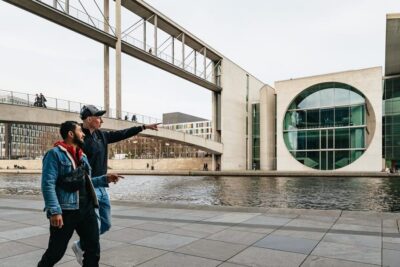
Reichstag, Dome and Government District Guided Tour
Read our review →
1-Hour City Tour by Boat with Guaranteed Seating
Read our review →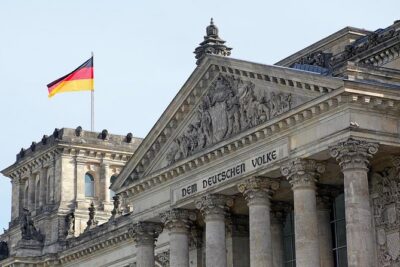

Reichstag, Plenary Chamber, Cupola & Government Tour
Read our review →

Browse the lists this tour appears in