
Reviewed · MUSEUMS
DDR Museum Berlin Admission Ticket
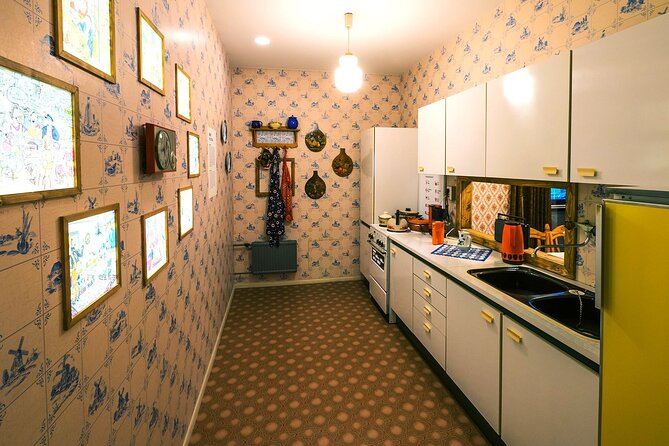
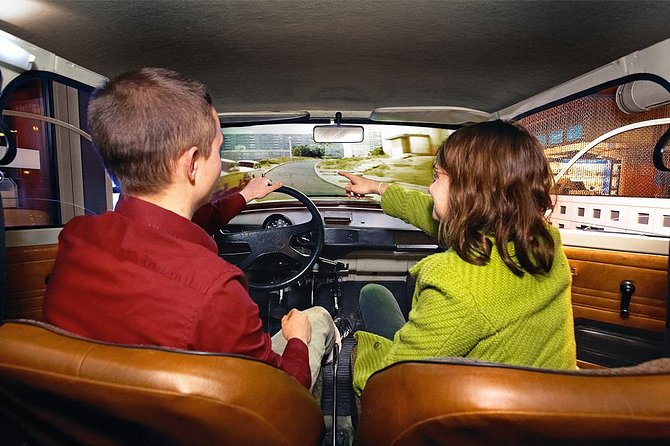
The DDR Museum puts you inside everyday life in socialist East Germany, not just behind glass panels. I like the reconstructed apartment, where cupboards, appliances, television, and cramped rooms show how ordinary life worked, and I like the chance to sit in a Trabant and view East Berlin through a driving simulation.
I also like the self-guided format, since you can linger over politics or move quickly through household displays. The central location opposite Berlin Cathedral is a real plus. The catch is space: the museum is small and often crowded, and some hands-on features still involve reading a fair amount of text.
Key points to know
- A recreated East German apartment shows kitchens, bedrooms, furniture, appliances, and the limits of life in government-assigned housing.
- The Trabant exhibit lets you sit inside the famous East German car and use a simulated drive through Berlin.
- Hands-on displays cover voting, school, work, shopping, politics, surveillance, and everyday routines.
- English information is available throughout much of the museum, making the visit practical for international visitors.
- Plan on one to two hours, though readers who stop for every film and panel could stay longer.
- Go early or later in the day if you want more room around the displays.
What the DDR Museum helps you understand
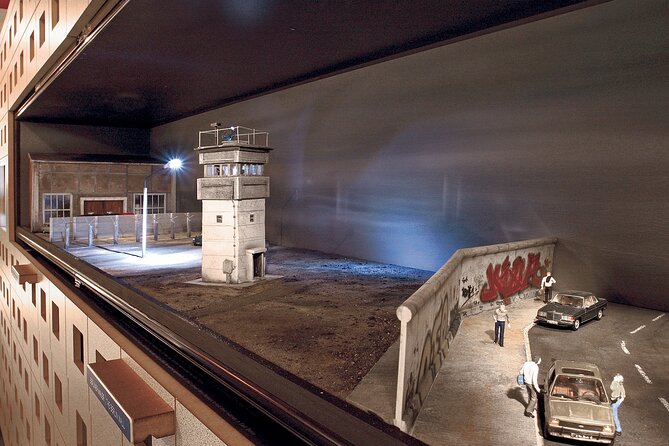
The German Democratic Republic, or GDR, existed from 1949 until 1990 in the Soviet-controlled eastern part of Germany. The DDR Museum focuses on the years from 1949 to 1989, when East Germany operated under a socialist government led by the Socialist Unity Party.
That political story matters, but the museum’s most useful idea is simple: it shows how politics reached into ordinary life. You see the home, the school, the workplace, the shops, the car, the television, and the ballot box. The result is less about memorizing dates and more about seeing how a system felt in daily practice.
I find this approach helpful if you already know something about the Berlin Wall and the Cold War but want a clearer picture of life behind the Iron Curtain. It also works if your knowledge is limited. You can start with familiar objects, such as furniture or kitchen equipment, then connect them to housing policy, shortages, propaganda, and state control.
The museum does not require a guide. You move at your own pace through the exhibition, opening drawers, watching films, reading panels, and entering reconstructed rooms. That freedom is useful, but it also means you need to decide how much time to give each subject.
Other museums and galleries in Berlin:
- Berlin: Jewish Museum Berlin Entrance Ticket
★ 4.5 · 8,393 reviews - Berlin: Natural History Museum Entrance Ticket
★ 4.6 · 3,382 reviews - Berlin: Neues Museum Entry Ticket
★ 4.6 · 3,261 reviews
Entering the museum beside Berlin Cathedral
The museum is at Karl-Liebknecht-Strasse 1, directly opposite Berlin Cathedral on the River Spree. This puts it in one of central Berlin’s most convenient sightseeing areas, close to other major sights and public transportation.
You make your own way there. Hotel pickup and drop-off are not included, and the experience is an admission ticket rather than a guided walk through the city. You select a date and time slot when booking, then use the mobile ticket for entry.
Allow a little patience at the door. Most of the time, the mobile admission is straightforward, but some ticket holders have had trouble with electronic passes or vouchers that did not display a usable QR code or barcode. If your phone ticket does not scan, show it clearly to the staff and keep the booking confirmation available. It is worth checking the ticket instructions before leaving your hotel.
The museum is open daily from 9 a.m. to 9 p.m. during the stated operating period. Those long hours give you room to fit it around the cathedral, Museum Island, or an evening meal. Since the rooms can become crowded, I would choose an early visit or a later slot rather than the busiest middle of the day.
Recreated homes show the private side of the GDR
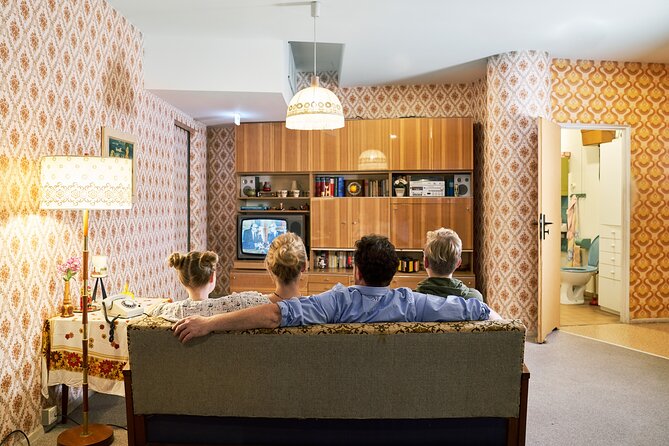
The strongest part of the museum is the domestic section. Instead of looking at isolated objects, you walk through reconstructed living spaces that suggest how families actually used them.
The East German living room includes the original Carat living room cupboard, period furnishings, kitchen equipment, and a television showing programming and propaganda. These details are valuable because they make the political system visible without relying only on political language. The television, for example, was part of the home but also carried the official message of the state.
The kitchen reconstruction is especially useful. It shows how much life could be organized around a limited amount of space and a government-assigned apartment. You can examine household goods and appliances, then consider what it meant to live in a home where housing choices were not simply a matter of finding a larger place in a different neighborhood.
Some displays use drawers, doors, and compartments that you open yourself. That design is appealing for children and keeps adults active instead of walking past a long wall of objects. Still, do not expect every interactive feature to be a complex simulation. At times, interaction means pulling out a drawer to reveal a label or short explanation.
You will also find reconstructed bedrooms and a living room. The museum is compact, so these rooms do not form a full apartment building or large historical set. Their value comes from the small clues: furniture, room size, appliances, and the way the displays connect household life to state policy.
Sit in a Trabant and see East Berlin from the road
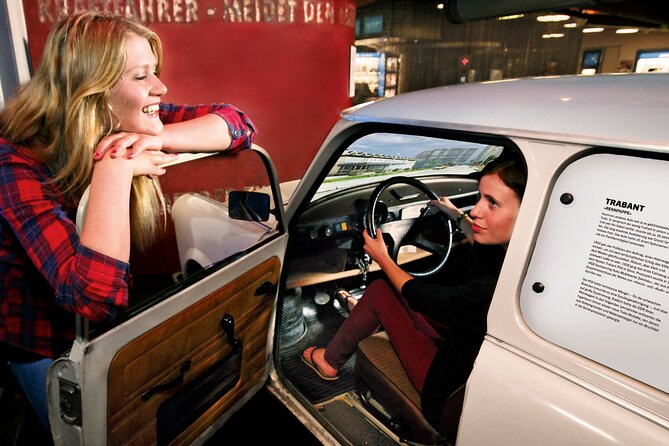
The Trabant is one of the museum’s most popular stops. This small car became a familiar symbol of East Germany, and sitting inside it gives the transport section an immediate physical appeal.
The exhibit goes beyond showing the vehicle. You can use a driving simulation with films of everyday scenes and a virtual trip through a GDR housing estate. That links the car to the streets and neighborhoods where people lived, rather than treating it as a single nostalgic object.
For children, this is likely one of the easiest parts of the museum to enjoy. Adults who remember these cars, or who have seen them in photographs of the former Eastern Bloc, get a more direct sense of their modest size and design.
The simulator can attract a line, especially when the museum is full. If you want to spend time with it, do not assume you can walk straight up and take a turn. Crowds affect how long each feature takes, and tight exhibition spaces can make it difficult to move freely around popular displays.
A few more things to do in Berlin worth a look
- Berlin: Berlin Story Bunker Entry Ticket
★ 4.6 · 6,759 reviews - Berlin: Illuseum Berlin Entrance Ticket
★ 4.1 · 3,970 reviews - Berlin: Madame Tussauds Admission Ticket
★ 4.6 · 3,941 reviews - Berlin: Charlottenburg Palace Entry Ticket
★ 4.4 · 2,076 reviews
Politics, voting, and the reach of the state
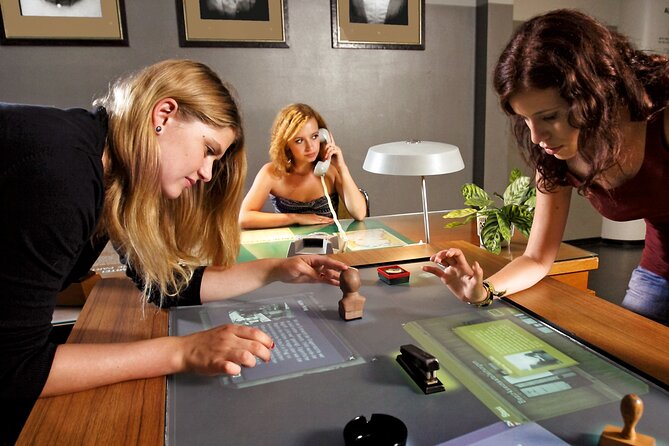
The DDR Museum also explains the political structure of East Germany. You learn about the Socialist Unity Party and how the government shaped public life through official institutions, propaganda, and surveillance.
One hands-on display lets you take part in a GDR election. This is a useful feature because it turns an abstract political system into an action you perform. The exhibit helps you consider the difference between the appearance of participation and the limits placed on political choice.
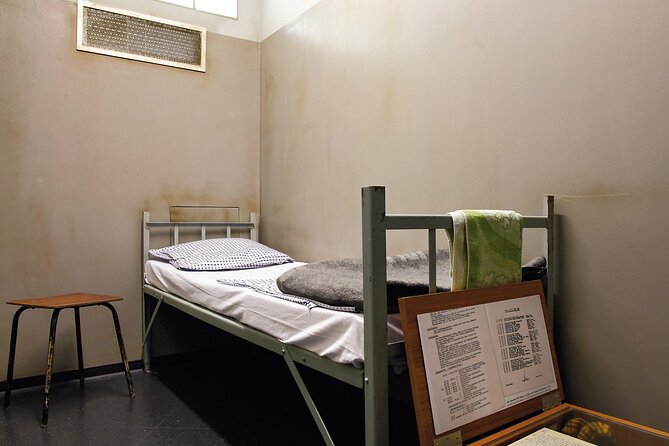
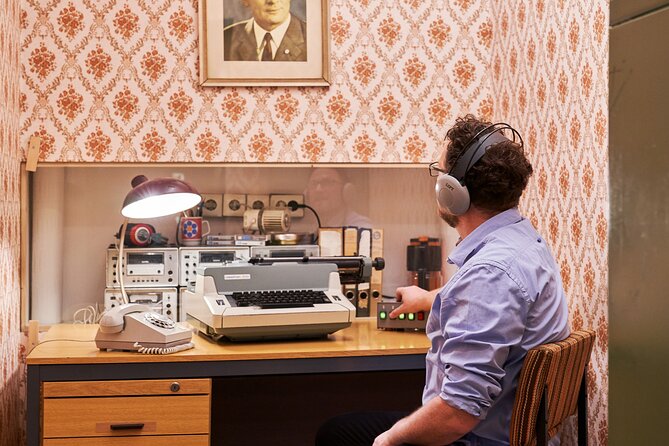
A simulated Stasi interrogation adds a darker note. The Stasi, or Ministry for State Security, monitored people suspected of opposing the government and gathered information on daily life. The interrogation display gives the subject a personal scale, though it is presented as part of an interactive museum rather than as a full historical investigation.
The museum is designed to be accessible and family-friendly, so some visitors may find the playful elements sit uneasily beside subjects such as surveillance and political repression. I think that is worth keeping in mind before you visit. This is an educational attraction with interactive features, not a quiet memorial or a specialist archive.
The approach works well for a first introduction. If you want a detailed account of dissidents, prison life, the Berlin Wall, or the end of the GDR, you should pair this visit with another Berlin museum or memorial. The DDR Museum concentrates on daily life and broad social systems.
Why the museum works for families, and where it may not
Children can open drawers, enter rooms, sit in a Trabant, watch films, and try displays that respond to touch or movement. That is a better fit for a family than a museum made entirely of long written panels.
At the same time, the museum still asks children to read. Interactive does not mean screen-based entertainment at every stop. Many displays include written explanations, and the amount of information can be tiring for younger children if adults do not select a few subjects to focus on.
I would describe the museum as suitable for mixed-age groups, especially families with children who can read independently or who enjoy pressing buttons and exploring objects. It is also useful for adults who want a quick, concrete introduction to East German life.
The subject deserves care. The museum’s accessible style makes difficult history easier to approach, but it can also feel too light if you are looking for a solemn treatment of dictatorship and repression. Your expectations matter. Come for a hands-on introduction to everyday GDR life, not a complete account of every political crime or personal experience.
Crowds, heat, and the right amount of time
The museum is relatively small. That is part of its appeal, since you can see the main sections in roughly one to two hours without giving up half a day. It is also the main source of frustration.
When several school groups or family parties arrive at once, the narrow areas around the interactive exhibits can become congested. You may have to wait to open a drawer, read a panel, or sit in the Trabant. In a crowded room, it is easy to miss small details because another person is standing directly in front of the display.
The interior can also become very warm. Air conditioning is not available, and heat combined with a full museum can shorten your visit. If you are sensitive to heat or dislike close crowds, use the long opening hours to choose a quieter time.
For a fast visit, one hour covers the main rooms and headline exhibits. I would allow two hours if you want to read the English text, watch the films, try the interactive displays, and consider the political material. You do not need to rush, but you should not expect a full-day museum.
A useful plan is to begin with the main historical and household displays, then return to the features that interest you most. That way, a queue at the simulator or a crowded room does not control your whole visit.
Is the $16.26 admission good value?
At about $16.26 per person, the ticket is not the cheapest short museum visit in Berlin. The value depends on how actively you use the exhibition.
If you spend only 45 minutes taking a quick look, the price may feel high, especially because the museum is compact. If you stay for close to two hours, watch the films, read the English panels, explore the apartment, and use the interactive features, the cost is easier to justify.
I like that the ticket offers a set date and time while still letting you explore independently. You are paying for access to a deliberately designed experience, not for a guide or a long list of included extras. Food, drinks, transportation, and hotel transfers are not part of the price.
The admission is strongest for families and first-time visitors who value physical exhibits. If your main interest is academic Cold War history, you might want a larger museum with more documents and extended text. If you want to understand how state policy affected homes, transport, media, and ordinary routines, the price can be fair.
Free cancellation is available if you cancel at least 24 hours before the start time. Cancellations made within 24 hours are not refunded, and changes inside that period are not accepted.
Who should book this Berlin museum visit?
I would choose this museum for a first visit to Berlin if you want history that you can touch and operate. It gives you a practical sense of GDR life without requiring a long guided lecture.
It suits:
- Families looking for an indoor activity with hands-on features
- Adults interested in the Cold War and the former East Germany
- Visitors who want an English-friendly museum in central Berlin
- Anyone curious about homes, cars, television, shopping, work, and housing under socialism
- People with only one or two hours between other Museum Island sights
I would hesitate if you dislike crowds, need a quiet museum, or expect a large exhibition with extensive original documents. I would also set aside more time if the subject of political repression is your main interest, since the museum treats it as one part of a wider daily-life display.
Should you book the DDR Museum?
Book it if you want an accessible and interactive look at East Germany, especially if a recreated apartment, a Trabant, films, and hands-on political displays sound more useful to you than rows of formal exhibits.
Choose an early morning or late afternoon slot to improve your chances of moving freely. Give yourself one hour for the highlights and two hours for a careful visit. The museum is small, but its best objects invite you to stop, open, sit, watch, and think.
I would not call it a complete portrait of the GDR. I would call it a practical starting point that makes the period easier to picture. For many visitors, that is enough to make the $16.26 admission worthwhile.
FAQ
Where is the DDR Museum located?
The museum is at Karl-Liebknecht-Strasse 1 in central Berlin, opposite Berlin Cathedral on the banks of the River Spree.
How long does a visit to the DDR Museum take?
The expected visit lasts about one to two hours. You can see the main exhibits in less time, but two hours allows more time for films, reading, and interactive displays.
What are the opening hours?
The listed opening hours are 9 a.m. to 9 p.m., Monday through Sunday, during the stated operating period.
Is the DDR Museum suitable for children?
Yes. The museum is designed as a family-friendly experience with interactive displays, reconstructed rooms, films, and a Trabant simulation. Children should be prepared for some reading alongside the hands-on features.
Is information available in English?
Yes. English information is available throughout the exhibits, including written explanations and display text.
Is the ticket mobile?
Yes. The admission includes a mobile ticket. Keep the booking confirmation available in case the electronic pass does not scan easily at the entrance.
Is transportation or hotel pickup included?
No. You make your own way to the museum. Hotel pickup, hotel drop-off, food, and drinks are not included.
Can I cancel the booking for a refund?
Yes. You can receive a full refund if you cancel at least 24 hours before the experience start time. Cancellations or changes made within 24 hours are not accepted for a refund.
What does the admission ticket include?
The ticket includes admission to the DDR Museum. It gives you access to the interactive exhibits covering East German daily life from 1949 to 1989, including the reconstructed home, Trabant display, political exhibits, films, and simulated experiences.
Just added in Berlin
- Berlin: Energizing 2-Hour Morning Segway Tour★ 4.7 · 35 reviews
- Berlin: Thrilling E-Scooter Adventure Tour★ 4.4 · 66 reviews
- Beelitz-Heilstätten: Baum&Zeit Tree Top Walk Entry Ticket★ 4.9 · 7 reviews
- Beer Bike & Party Bike: Unforgettable Berlin City Tour incl. pickup★ 5.0 · 5 reviews
- AXE THROWING EXPERIENCE IN BERLIN★ 4.7 · 24 reviews
- Alternative Berlin / Street art tour – Private group★ 5.0 · 6 reviews
- Berlin: Alternative & Street Art Tour★ 4.5 · 6 reviews
- Berlin: 2.5-Hour Beer & Sunset Sightseeing Boat Cruise★ 4.6 · 61 reviews
Museums, compared.

Skip-the-Line: Berlin Wall Museum at Checkpoint Charlie
Read our review →
Browse the lists this tour appears in