Reviewed · TOURS IN BERLIN
Individual city tour Berlin for max. 8 persons
Berlin’s story is written across its streets, and this private three-hour tour gives you a fast, useful introduction to the main chapters: Prussian power, Nazi rule, wartime destruction, division, reunification, and modern Berlin. You’ll ride in an air-conditioned vehicle with only your own group, rather than joining a large coach.
I like the flexible pickup, since you can give the operator your Berlin address and preferred start time. I also like the small maximum of eight people, which makes it easier to ask questions and keep the day moving. The main drawback is pace. With this many landmarks packed into three hours, several stops are photo opportunities or guided drive-bys rather than long visits.
Key points at a glance
- Private pickup anywhere in Berlin: Give the operator your exact address and desired start time.
- A compact route through Berlin’s biggest sights: See the Brandenburg Gate, Reichstag, Museum Island, Checkpoint Charlie, the Berlin Wall, and more.
- Up to eight people per vehicle: The fixed group price works best when shared by a full family or friend group.
- An English-language tour: The experience is offered in English, with guide Katherine named in one especially warm account.
- Mostly an outside orientation tour: Admission fees are not included, and the short duration favors views, explanations, and photographs over interior visits.
- Good value for larger parties: At the listed $447.44 per group, eight people pay about $55.93 each before any admissions or food.
Why this short Berlin tour works

Berlin can feel scattered at first. Its major sights are spread across former East and West Berlin, with broad avenues, government buildings, museums, memorials, shopping streets, and remnants of the Wall all competing for your attention.
This tour solves that problem by using private transportation to connect the dots. In about three hours, you’ll see enough of the city to understand its basic shape and decide where you want to return for a longer visit.
The route is especially useful at the beginning of a Berlin stay. You’ll get a broad introduction instead of spending your first day trying to navigate between distant sights. The guide can also explain how individual places fit together, something that is harder to grasp when you visit one monument at a time.
The fixed cost is easiest to justify for a group of six to eight. At the full capacity of eight, $447.44 works out to roughly $56 per person. For four people, it is about $112 each. A couple would pay the full group price between them, so this makes less financial sense unless private transport and personal attention are priorities.
A few more things to do in Berlin worth a look
- Berlin: 1-Hour City Tour by Boat with Guaranteed Seating
★ 4.3 · 16,993 reviews - Berlin: City Sightseeing Hop-On Hop-Off Bus Tour
★ 4.1 · 4,233 reviews - Berlin: 1-Hour City Sightseeing Cruise
★ 4.4 · 2,210 reviews
Brandenburg Gate and the former border
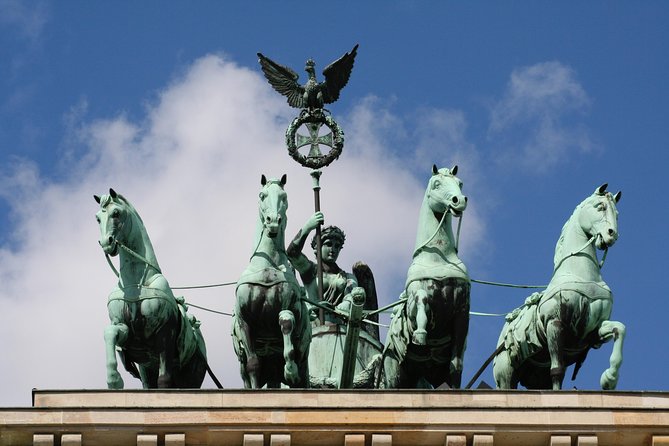
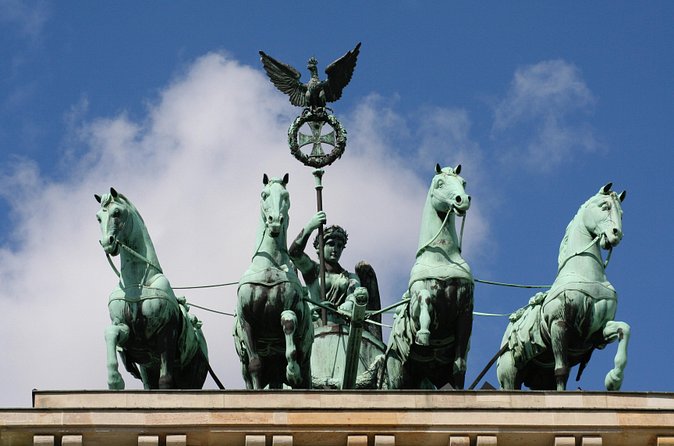
The Brandenburg Gate is the natural opening to a Berlin tour. This neoclassical landmark once sat beside the Berlin Wall and became a powerful image of division, then reunification. You’ll have time for a souvenir photograph in the former border strip.
The listed stop lasts only about five minutes, so think of it as a first look rather than a full visit. You won’t have time for a long walk around Pariser Platz or a detailed architectural study. Still, the Gate’s location makes it a useful place to begin: the former border zone, government quarter, Reichstag, and historic boulevard are all close by.
Unter den Linden and Berlin’s royal center
The route continues along Unter den Linden, Berlin’s grand historic boulevard. Its name refers to the lime trees lining the avenue, and the street links several important buildings in the old center.
You’ll see the equestrian statue of Frederick the Great, Humboldt University, the Kronprinzenpalais, the German Historical Museum, and the site of the Nazi book burning. This is one of the most useful parts of the tour for understanding how Berlin’s cultural and political life developed around a single central avenue.
The book-burning site is easy to miss because it is marked by an underground memorial rather than a large monument. A guide’s explanation helps you recognize the location and understand why this quiet section of the boulevard matters.
You’ll also pass the Berlin State Opera, recently restored after extensive work. The building’s connection with conductor Daniel Barenboim gives the stop a link to Berlin’s current musical life, not only its imperial past.
Alexanderplatz and Berlin Cathedral views
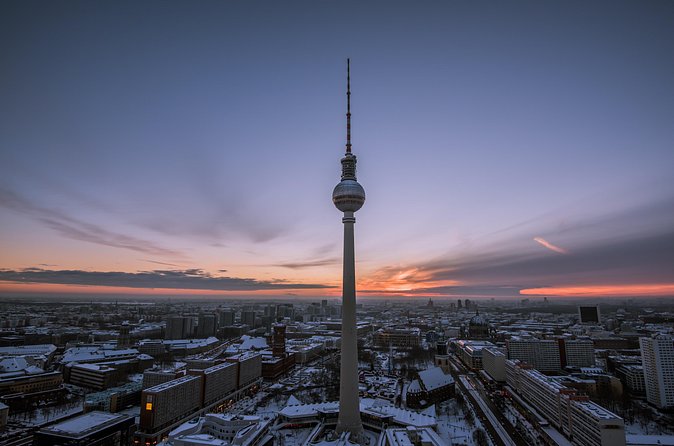
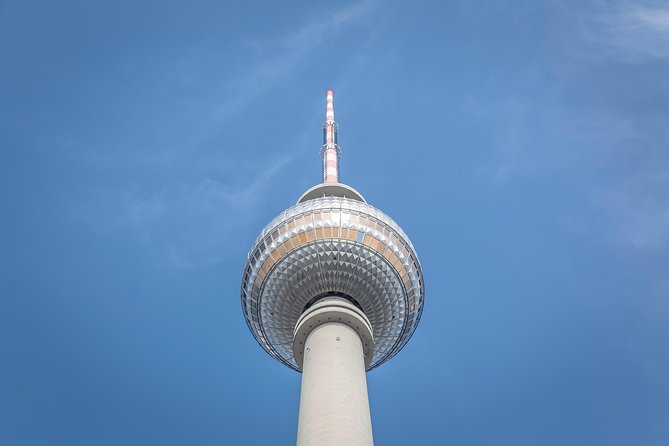
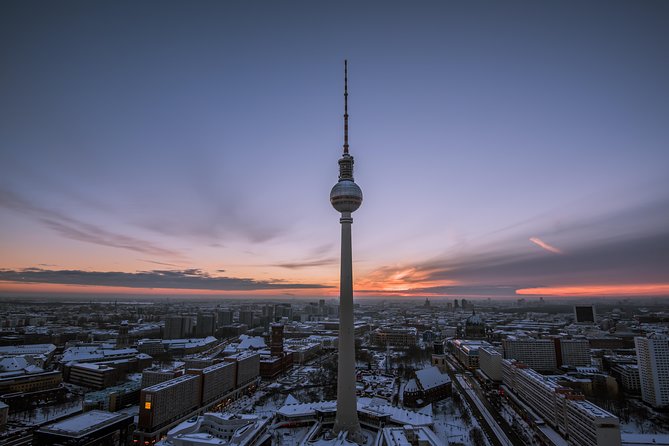
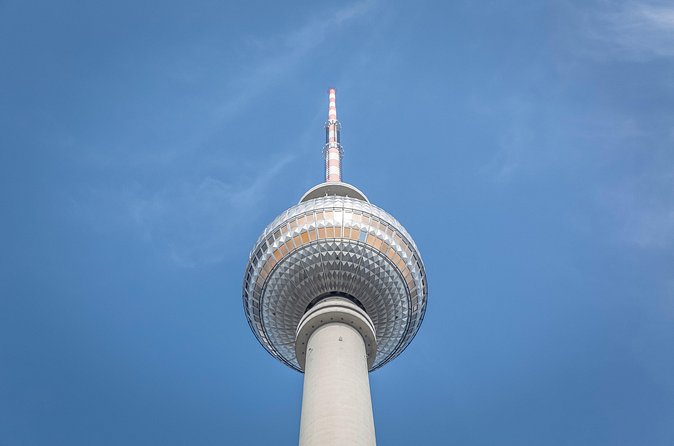
The route includes Berlin’s tallest tower, one of the city’s most familiar landmarks. Its location near Alexanderplatz makes it easy to spot from many parts of the center, and it gives you a quick sense of the former East Berlin skyline.
You’ll also see the reconstructed palace with its Baroque façade. Once connected with Prussian princes, kings, and emperors, the building now houses museums. From this area, you get a good view of Berlin Cathedral as well.
This section brings several periods together in a small area: royal Berlin, wartime destruction, East German rebuilding, and the city’s modern museum life. You’ll see a lot from the vehicle, but do not expect to tour the palace or cathedral interiors. Entrance fees are not included, and the experience is built around seeing and understanding the exterior sights.
Same base, a different kind of day out:
- Berlin: Reichstag, Dome and Government District Guided Tour
★ 4.7 · 18,288 reviews - Berlin: Boat Tour Along the River Spree
★ 4.4 · 11,252 reviews - Discover Berlin Half-Day Walking Tour
★ 5.0 · 9,624 reviews - Berlin: Hop-on Hop-off Bus Tour with Live Commentary
★ 4.3 · 8,579 reviews
Reichstag and the government quarter
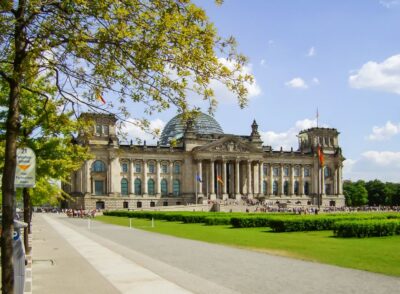
The Reichstag is one of Berlin’s most important political buildings. It has served as the home of the German parliament both before and after the country’s division, and its story reflects the dramatic changes that shaped the city.
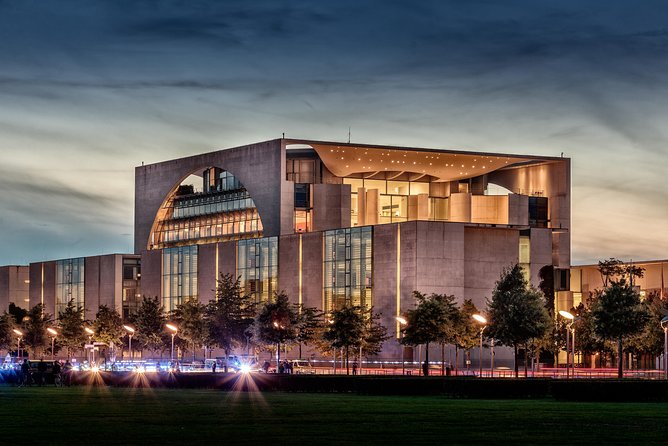
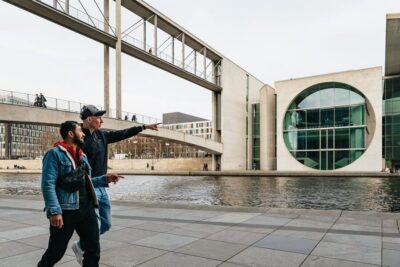
From here, you can also see the Federal Chancellery and other government buildings. The area feels open and modern, a sharp contrast to the older streets around Unter den Linden.
The value of this stop is the context. You are not simply looking at an impressive stone building. You are seeing the center of Germany’s present-day government near places that witnessed dictatorship, war, division, and reunification.
The short format has a clear limit: there is no included visit to the Reichstag interior or its glass dome. If that is high on your list, you’ll need to arrange it separately.
Museum Island and the city’s oldest center
Museum Island is a UNESCO World Heritage Site with five major museums. The Pergamon Altar and the Nefertiti bust are among the best-known treasures associated with the island, though entrance to the museums is not part of this tour.
A drive past Museum Island works well as a first orientation. You can see where Berlin’s major collections are gathered and return later if you want to spend several hours inside. Do not try to combine a full museum visit with this three-hour route. Even one major museum deserves more time than this schedule allows.
Nearby, you’ll reach Nikolaiviertel, the oldest part of central Berlin. Around the medieval Nikolaikirche, the area now has pedestrian lanes, cafés, and a more relaxed feel. It offers a welcome change from the large avenues and formal public buildings elsewhere on the route.
Gendarmenmarkt and the western boulevard
The tour also takes in the French Church at Gendarmenmarkt, often regarded as one of Berlin’s most beautiful squares. The church connects to the story of French religious refugees who settled in Berlin.
This is a small but worthwhile piece of the city’s social history. Berlin was shaped not only by kings and governments, but also by people who arrived from elsewhere and formed new communities.
In the western part of the city, you’ll see the elegant shopping boulevard modeled after the Champs-Élysées. The street offers department stores, boutiques, cafés, and restaurants. It is a very different face of Berlin from the old Jewish quarter, the Wall, or the government district.
Potsdamer Platz and modern Berlin
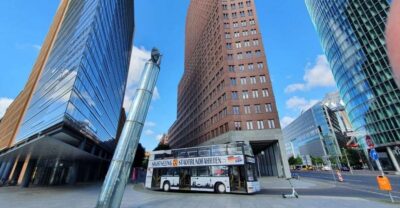
Potsdamer Platz was once among Europe’s busiest squares. War and the Berlin Wall left the area divided and largely empty, but it was later rebuilt as a modern district filled with shops, restaurants, cinemas, and ambitious buildings by internationally known architects.
This is a useful stop if you want to see how Berlin reinvented itself after reunification. The architecture is modern and sometimes bold, with wide spaces and large commercial blocks rather than the older street pattern found around Museum Island.
The trade-off is that the area can feel less personal than the historic center. You’ll see a major example of post-reunification development, but you won’t get the intimate streets and older buildings found elsewhere on the route.
The Berlin Wall, Checkpoint Charlie, and the Jewish quarter
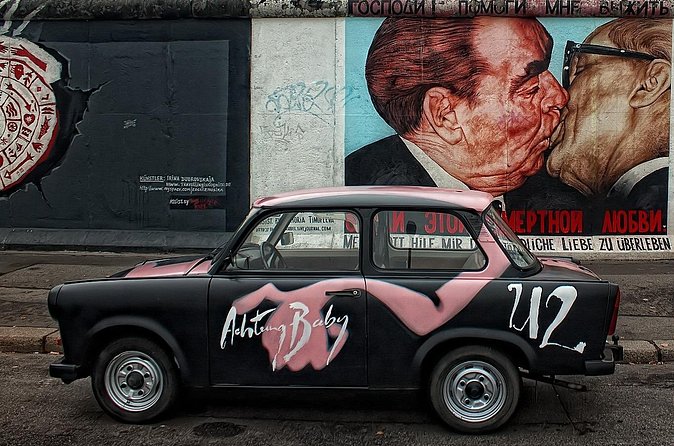
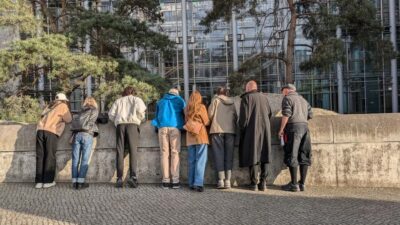
One of the strongest parts of the tour is the visit to the longest preserved section of the Berlin Wall. It is covered with graffiti made by artists from around the world, turning a former barrier into a public gallery.
This is the kind of place where a guide adds real value. The paint is visually striking, but the Wall’s meaning can be lost if you treat it only as a photo background. The route gives you a chance to connect the remaining structure with Berlin’s divided past.
Checkpoint Charlie is another brief stop, listed at about five minutes. It was the city’s most famous border crossing and has become one of Berlin’s best-known symbols of the Cold War.
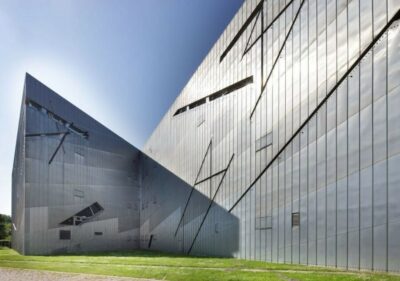
You’ll also visit Scheunenviertel, the former Jewish quarter, where old Berlin courtyards and narrow lanes offer a more human-scale view of the city. The stop is listed at about ten minutes, so you’ll get an introduction rather than a long neighborhood walk.
These three places work well together. The Wall shows physical division, Checkpoint Charlie recalls the controlled crossing between East and West, and Scheunenviertel brings you back to the communities that shaped Berlin before the war.
Tiergarten, embassies, and the Kaiser Wilhelm Memorial Church
The Berlin Embassy District mixes older prewar messages with newer buildings in many styles. It gives you another look at the city’s changing identity, this time through diplomacy and international architecture.
You’ll also see the Victory Column, placed at the intersection of Berlin’s major east-west and north-south axes. It recalls Prussian military victories and provides a striking marker in the middle of the city.
In western Berlin, the Kaiser Wilhelm Memorial Church remains partly in ruins as a reminder of the destruction caused by the Second World War. This is one of the city’s most moving exterior sights because the damaged tower was preserved beside a newer church.
The route also includes Bellevue Palace, the official residence of the German president. It was once a summer palace for the Prussian kings. Together, Bellevue, the Victory Column, the embassy district, and the Memorial Church show how western Berlin developed around parks, government, diplomacy, and commerce.
What the three-hour format really means
The schedule is ambitious. You’ll see a long list of landmarks, but the vehicle is doing much of the work. Some places receive only a few minutes, while others are viewed from the road or from a nearby stopping point.
That is not a flaw if you want a city overview. It is a limitation if you want to enter museums, linger at memorials, or spend time in cafés and neighborhoods.
I would use this as a first-day orientation, especially if you have limited time in Berlin or are traveling with family members who cannot manage a long walking route. The air-conditioned vehicle also helps create a more comfortable sightseeing rhythm than covering the same ground on foot.
The tour is offered in English and uses a mobile ticket. Pickup is available at the Berlin address of your choice, but you need to provide the exact location and preferred start time when booking.
Guide quality and group comfort
The private format is one of the strongest features. Only your group participates, so the pace can be more personal than a large sightseeing bus. You can ask questions about a building, request clarification, or focus more on the periods that interest you.
One account specifically names Katherine as the guide. She led a group ranging in age from 17 to 77 and was praised for her friendly manner, clear storytelling, and willingness to answer questions. That detail matters if your party includes several generations. The tour is designed in a way that can work for both younger visitors and older adults, since most of the sightseeing takes place from the vehicle with short stops.
Service animals are allowed, the route is near public transportation, and most people can participate. Bottled water and snacks are not included, so bring your own refreshments if you need them. Entrance fees are also extra.
Free cancellation is available up to 24 hours before the local start time. Changes or cancellations inside that window are not accepted for a refund.
Should you book this Berlin tour?
Book it if you want a private orientation to Berlin with pickup, a compact schedule, and room for your own questions. It is especially good for a full group of six to eight, for families with mixed ages, or for anyone who wants to see both former East and West Berlin without planning the transport.
Skip it if your main goal is museum time, long walks, or close study of individual memorials. The route covers a lot, but it does so quickly, and admissions are not included.
For a full group, the price is fair for private transport and a dedicated guide. For only two people, it is a much bigger spend. In that case, book only if the comfort, flexibility, and personal route matter more to you than the lowest possible cost.
FAQ
How long does the Berlin city tour last?
The tour lasts approximately three hours.
How many people can join the private tour?
The vehicle and private activity are available for a maximum of eight people.
Is pickup available?
Yes. Pickup is offered at the Berlin location of your choice. You need to provide the exact address and desired start time.
Is the tour offered in English?
Yes. English is one of the offered languages.
Which major Berlin sights are included?
The route includes the Brandenburg Gate, Reichstag, Museum Island, Berlin Cathedral views, the Berlin Wall, Checkpoint Charlie, Scheunenviertel, Potsdamer Platz, the Victory Column, Kaiser Wilhelm Memorial Church, and many other central landmarks.
Are entrance fees included?
No. Entrance fees are not included in the tour price.
Are food and drinks provided?
No. Snacks and bottled water are not included.
Is this a shared group tour?
No. This is a private activity, and only your own group participates.
Can I cancel for a full refund?
Yes. You can cancel at least 24 hours before the experience start time for a full refund. Cancellations or changes made less than 24 hours in advance are not accepted for a refund.
Just added in Berlin
- Private One way Airport Transfer Berlin Airport To Berlin★ 3.5 · 17 reviews
- Private Walking Tour: Berlin Wall, Cold War and Checkpoint Charlie★ 5.0 · 37 reviews
- Modern Berlin Private Walking Tour: Diverse, Vibrant and Exciting German Capital★ 5.0 · 13 reviews
- Private Day Trip to Potsdam from Berlin by Train★ 4.5 · 27 reviews
- City Explorer: Potsdam Private Day Trip★ 4.5 · 10 reviews
- Berlin Private Custom 5-Hour Tour by Car★ 5.0 · 30 reviews
- Private Half-Day Sightseeing Tour in Berlin★ 3.5 · 6 reviews
- Berlin Private Custom Tour in a Minivan, East and West★ 5.0 · 123 reviews
Tours in Berlin, compared.
Reichstag, Dome and Government District Guided Tour
Read our review →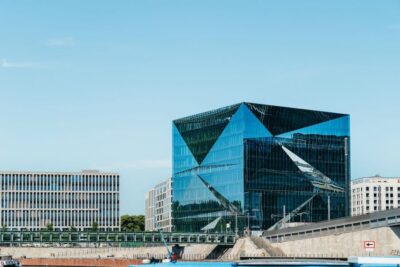
1-Hour City Tour by Boat with Guaranteed Seating
Read our review →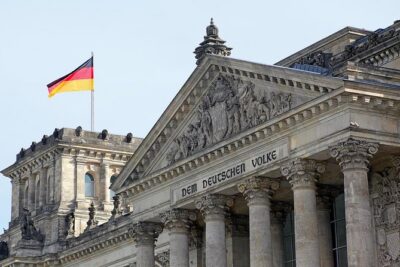
Reichstag, Plenary Chamber, Cupola & Government Tour
Read our review →