
Reviewed · RICKSHAW & PEDICAB TOURS
Daily First Rickshaw promotion in Combi Vehicle public Group 90€
Berlin is a large city with its story scattered across wide streets and grand squares. This four-hour rickshaw ride ties many of the major pieces together, from Alexanderplatz and Museum Island to Checkpoint Charlie, the Holocaust Memorial, and Brandenburg Gate. You sit close to the sights while your guide handles the traffic and navigation.
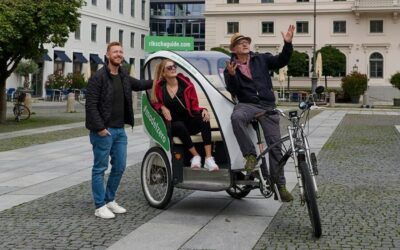
I like the small private format, which gives you room to ask questions and request photo stops. I also like the comfort: blankets, bottled water, WiFi, and a roof make the ride practical in changing Berlin weather. The possible drawback is simple: the rickshaw is designed for a maximum of two people, so a larger party needs additional rickshaws and may not share one vehicle.
Key points to know before booking
- A four-hour route covers Berlin’s essential center: You see major imperial, Nazi-era, Cold War, and reunification sites in one outing.
- The rickshaw gets close to monuments: You can stop for photographs without committing to a long walk between each sight.
- Levi is one of the named guides: He is described as friendly, clear, flexible, and skilled at taking photographs.
- The ride suits less mobile visitors: You only need a few steps to enter the rickshaw, and you can often view sights without getting out.
- An early start is a smart choice: A 9:00 a.m. departure was specifically recommended for quieter conditions.
- The price is per vehicle, not per person: At $216.74 for up to two people, the value improves when two people share the ride.
Berlin by rickshaw, a useful first look at the city
The great strength of this tour is efficiency. Berlin’s major sights are not packed into one compact old town. Instead, they sit across several districts and former political zones. By rickshaw, you can cover ground while keeping the visit relaxed.
Your guide drives you from place to place and explains what you are seeing along the way. This matters in Berlin, where a plain-looking street corner can mark a major change in the city’s past. The route links Prussian monuments, Nazi-era memorials, Cold War sites, and the rebuilt center of modern Germany.
The rickshaw also changes the pace. You are not rushing behind a group or spending the whole morning checking a map. You can stop for pictures, stay seated near the monuments, and ask for more detail when a particular site catches your attention.
The published meeting point is Weinbergsweg 6 in Berlin, and the ride ends back there. The listed route begins at the Fernsehturm in Alexanderplatz, so confirm the exact pickup arrangement when you book. The activity is offered in English and includes mobile ticketing.
Other short rides around Berlin:
- Berlin: Private Guided E-Rickshaw Tour
★ 4.9 · 157 reviews - Individual City Tour – Rickshaw Sightseeing in Berlin
★ 5.0 · 120 reviews - Berlin Express: Private 1-Hour E-Rickshaw Ride
★ 5.0 · 116 reviews
Alexanderplatz and the Fernsehturm
The route begins with Berlin’s most recognizable modern landmark, the 365-meter Fernsehturm. It rises above Alexanderplatz and is easy to spot from many parts of the city. The tower itself is not included as an admission visit, so this tour uses it as a landmark and starting point rather than an observation-deck experience.
From Alexanderplatz, the rickshaw passes the Red Town Hall, Marien Church, and Neptune Fountain. This opening stretch gives you a quick look at the contrast that defines central Berlin: socialist-era planning, older church architecture, civic buildings, and reconstructed public spaces all sit close together.
I like beginning here because the Fernsehturm gives you an instant sense of direction. If you want to visit the tower’s viewing platform, you will need a separate ticket and extra time outside this tour. The short stop is mainly for orientation and photographs.
Museum Island and Berlin’s royal center
Museum Island receives about 15 minutes, with free admission to the outdoor area. The UNESCO-listed complex includes the Berlin Cathedral, the City Palace, the Altes Museum, the Bode Museum, and the Neues Museum.
You will not have time to tour the museums during this stop. That is an important limitation, since each building can take hours on its own. Instead, your guide gives you the broad picture and points out the buildings that shaped Berlin’s cultural and political center.
The rickshaw works well here because the buildings are impressive from the outside. You can stop for photographs and get close to the cathedral and museum facades without wearing yourself out before the rest of the route. If ancient art, Egyptian collections, or nineteenth-century architecture are high on your list, plan a separate museum visit.
Bebelplatz and the book burning memorial
The next stop, Bebelplatz, brings you to one of Berlin’s most serious historical sites. The square forms part of the Forum Fridericianum, a group of important buildings that includes the State Opera, Humboldt University, the State Library, and St. Hedwig’s Cathedral.
Bebelplatz is also known for the Nazi book burning on May 10, 1933. Books judged un-German were destroyed here in a public show of control. The site asks you to think about censorship, hate, and the speed with which public life can be bent toward intolerance.
You get around 10 minutes here. That is enough for an explanation and a short look, but not a long museum visit. I would treat this as a focused history stop, not a casual photo break. The square is visually elegant, which makes the darker story behind it all the more important to understand.
Same base, a different kind of day out:
- Berlin: Reichstag, Dome and Government District Guided Tour
★ 4.7 · 18,288 reviews - Berlin: 1-Hour City Tour by Boat with Guaranteed Seating
★ 4.3 · 16,993 reviews - Berlin: Boat Tour Along the River Spree
★ 4.4 · 11,252 reviews - Discover Berlin Half-Day Walking Tour
★ 5.0 · 9,624 reviews
Gendarmenmarkt and the old royal city
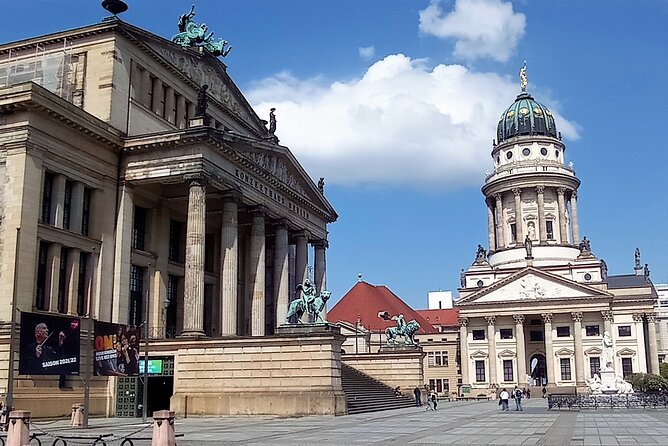
Gendarmenmarkt is one of Berlin’s most handsome squares. The former Royal Concert Hall sits between the German Cathedral and French Cathedral, with statues and formal buildings completing the setting.
A rickshaw stop lets you take in the whole arrangement without walking several blocks. Your guide can point out the different buildings and explain how the square fits into Berlin’s older royal and civic story.
The stop lasts about 10 minutes and admission is free. That is enough to appreciate the architecture and take pictures, though you should not expect an interior tour. Construction or public events can sometimes affect the appearance of any major square, so the experience here is primarily about the exterior view.
Checkpoint Charlie and the former Wall zone
Checkpoint Charlie is the tour’s clearest Cold War stop. The former crossing point became a symbol of the Berlin Wall, which divided the city for 28 years. The wall fell in 1989, but the site still points to the years when Berlin was split between East and West.
The rickshaw is especially useful along this section because the former border strip stretches across the city. You can cover more ground than on foot and pause at surviving pieces or memorial markers along the route.
The scheduled stop is only about five minutes. That makes it a quick orientation point rather than a full study of Berlin’s division. If the Cold War is your main interest, you will want more time at dedicated wall museums and documentation centers. For a first visit, though, this stop gives the political meaning of the city’s division without taking over the entire afternoon.
Topography of Terror and the buildings beside it
The Topography of Terror documentation center focuses on Nazi persecution and the institutions that carried it out. It sits beside the former border area, creating an intense connection between two of Berlin’s darkest chapters: Nazi dictatorship and Cold War division.
The stop also includes views of Martin-Gropius-Bau, an exhibition building known for major art shows. The nearby Prussian Landtag, a late nineteenth-century building, adds another layer of political history.
You receive about 10 minutes here, with free admission. The short timing means your guide will provide context rather than lead you through the full documentation center. If you want to read the exhibits carefully, return later with at least an hour or two.
This is one of the places where a good guide matters most. Berlin’s memorials can feel abstract when you see them without explanation. Clear narration helps connect the sites to the people, institutions, and choices behind the events.
Potsdamer Platz and modern Berlin
Potsdamer Platz shows how quickly Berlin can change. After reunification in 1990, the area became one of Europe’s largest construction sites. The postwar wasteland was rebuilt with high-rise offices, entertainment spaces, and the Sony Center.
The stop is a useful counterpoint to the historic squares earlier in the ride. Here, the story is about reunification, investment, design, and Germany’s attempt to build a shared future after decades of division.
You get around 10 minutes, which is enough to see the main complex and take photographs. It is not a shopping or restaurant visit. If you enjoy modern architecture, ask your guide to point out the most notable structures before moving on.
The Holocaust Memorial and a difficult history
The Memorial to the Murdered Jews of Europe is made up of large concrete slabs arranged across an open field near Brandenburg Gate. It commemorates the six million Jews murdered under National Socialism.
This is not a stop to rush through. The changing height of the slabs creates an unsettled feeling as you move among them, though the tour’s 10-minute schedule limits how much time you have to explore. You may remain in the rickshaw for part of the visit or step out for a closer look.
The memorial is free to view. The underground information center is a separate experience and is not listed as part of this tour. If you want names, family stories, and personal records, plan a later visit there.
I value the place in this route because it comes after the Topography of Terror. The sequence helps you connect state power, propaganda, persecution, and murder. Your guide’s explanation can give shape to what might otherwise be a quiet but confusing stop.
Brandenburg Gate and the government district
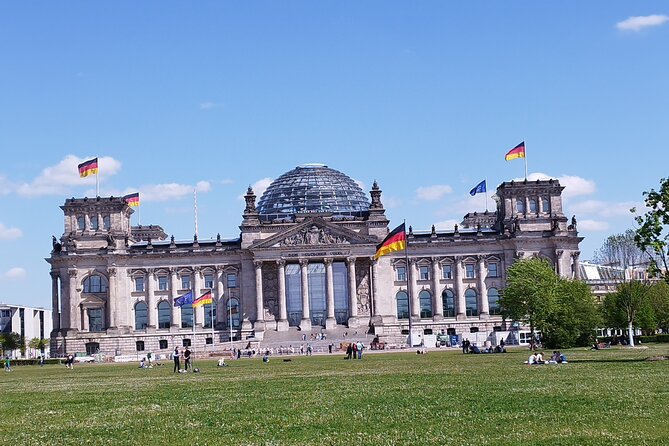
Brandenburg Gate is the grand closing landmark of the route. Once a city gate and later a symbol of division, it now represents a reunited Berlin. The columns and Quadriga are among the most photographed sights in Germany.
The route then continues toward the Memorial to the Murdered Sinti and Roma, the Reichstag and Bundestag, and the Chancellery. These sights bring the tour into present-day government Berlin, where national politics continues beside memorials to past crimes.
The listed stop lasts about 10 minutes. You should expect an exterior visit and photographs, not entry into the Reichstag or government buildings. Admission is not included for interior attractions.
This final section helps the route finish on a broader note. You see how Berlin has placed memorials, public institutions, and major national symbols close together. The city does not hide its difficult past, and the rickshaw allows you to see several parts of that conversation in one ride.
Why the private rickshaw format works
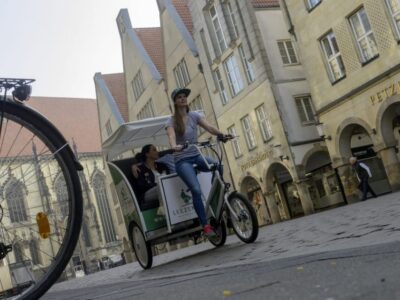
A rickshaw is not the fastest way to cross Berlin, but speed is not the main point. You sit in the open air, stay close to street life, and can stop when a building or memorial deserves attention.
The small capacity is a major advantage for couples or two friends. You can ask about your own interests instead of listening to a fixed script meant for a large group. Levi, one of the named guides, is described as flexible and willing to adjust the tour around particular interests. The guide has also been praised for taking photographs, which is useful when you want a picture of both people together.
The format is also practical for less mobile visitors. You need only a few steps to enter the vehicle, and you can get close to monuments without walking between every stop. Still, you should confirm your personal mobility needs before booking, since the supplied information does not describe wheelchair access or vehicle dimensions.
The included blanket matters more than it may sound. Berlin weather can change quickly, and one ride continued through rain with the roof and blanket helping keep the passengers comfortable. Bottled water and WiFi are included, as are alcoholic beverages. Those inclusions are unusual for a sightseeing ride, though you should use good judgment with alcohol during a moving city tour.
Price, group size, and timing
The listed price is $216.74 per group of up to two people, while the promotion is described as a daily first rickshaw offer at 90 euros. Because the pricing information uses two figures, check the live price and currency before paying.
At the standard listed price, two people pay about $108 each for four hours. That is not a budget sightseeing ride, but it can be fair if you value a private guide, door-to-door movement between central sights, frequent photo stops, and reduced walking. You are paying for time and flexibility, not entry tickets.
The tour is booked on average five days ahead, so planning several days in advance is sensible. A 9:00 a.m. start was specifically recommended because the sights are less crowded early in the day. That timing also leaves your afternoon open for a museum, a meal, or a longer visit to one of the memorial sites.
Larger groups need extra rickshaws. The vehicle is listed for a maximum of two people, so do not assume a family or group of friends can all ride together. Tips are not included.
Who should book this Berlin tour?
I would choose this ride for a couple seeing Berlin for the first time, especially if you want a broad introduction before deciding where to return. It is also a good match for anyone who finds long walking tours tiring or wants help connecting sites that are spread across the center.
You should also consider it if history is your priority. The route moves from Prussian Berlin to Nazi Germany, the Cold War, reunification, and the modern government district. The four-hour format gives you the city’s main framework.
I would think twice if you want long interior visits, detailed museum time, or a very inexpensive city tour. Most stops last between five and 15 minutes, and admission to the Fernsehturm or museum interiors is not included. The tour gives you orientation and context, then leaves you to return to the places that interest you most.
Should you book the rickshaw tour?
Book it if you want to see a lot of central Berlin with little walking, value a private conversation with your guide, and prefer a relaxed ride over a crowded coach. The combination of Levi’s flexible guiding style, close access to monuments, photo stops, and weather protection gives the experience a personal feel.
Skip it if your main goal is spending hours inside museums or memorial centers. For most first-time visitors, though, this is a useful opening tour. Start early, confirm the pickup details at Weinbergsweg 6, verify the current euro or dollar price, and save time later for the sites that deserve more than a 10-minute look.
FAQ
How long is the Berlin rickshaw tour?
The tour lasts approximately four hours.
How many people can ride in one rickshaw?
The activity has a maximum of two travelers per rickshaw. Additional rickshaws can be arranged for larger groups.
Where does the tour start and finish?
The meeting point is Weinbergsweg 6, 10119 Berlin, Germany. The activity ends back at the meeting point.
Is the tour offered in English?
Yes. The tour is offered in English.
Are attraction tickets included?
Admission is not included for the Fernsehturm. The listed stops at Museum Island, Bebelplatz, Gendarmenmarkt, Checkpoint Charlie, Topography of Terror, Potsdamer Platz, the Holocaust Memorial, and Brandenburg Gate are described as free outdoor stops. Interior visits are not part of the listed route.
Can I cancel the booking for a full refund?
Yes, if you cancel at least 24 hours before the experience start time. Cancellations made less than 24 hours before the start time are not refunded, and changes within that period are not accepted.
Just added in Berlin
- Private Walking Tour: Berlin Wall, Cold War and Checkpoint Charlie★ 5.0 · 37 reviews
- Modern Berlin Private Walking Tour: Diverse, Vibrant and Exciting German Capital★ 5.0 · 13 reviews
- Private One way Airport Transfer Berlin Airport To Berlin★ 3.5 · 17 reviews
- Private Day Trip to Potsdam from Berlin by Train★ 4.5 · 27 reviews
- City Explorer: Potsdam Private Day Trip★ 4.5 · 10 reviews
- Berlin Private Custom 5-Hour Tour by Car★ 5.0 · 30 reviews
- Private Half-Day Sightseeing Tour in Berlin★ 3.5 · 6 reviews
- Berlin Private Custom Tour in a Minivan, East and West★ 5.0 · 123 reviews
Rickshaw & Pedicab Tours, compared.
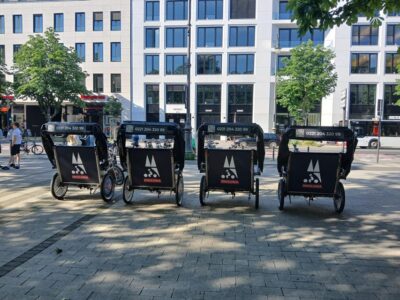
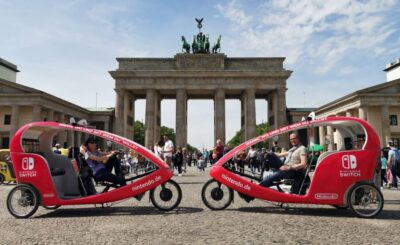

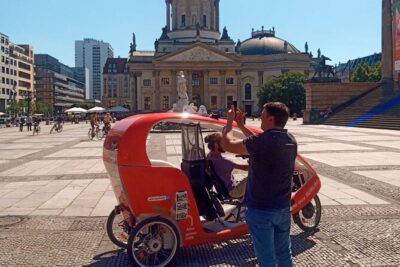
Individual City Tour – Rickshaw Sightseeing in Berlin
Read our review →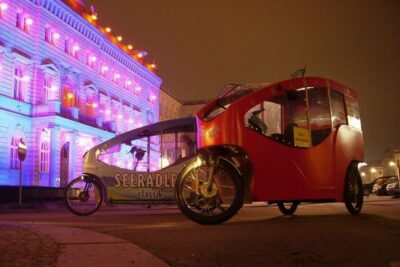
Browse the lists this tour appears in