
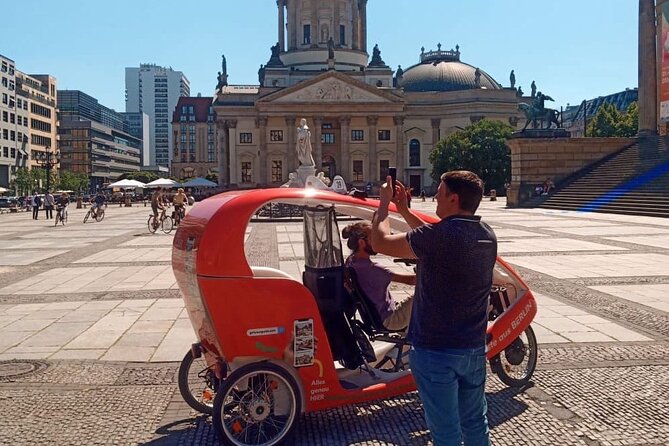
Reviewed · RICKSHAW & PEDICAB TOURS
Individual City Tour – Rickshaw Sightseeing in Berlin
Berlin’s major sights are spread across a wide area, and this private rickshaw tour gives you a clever way to connect them without spending the day marching between monuments. You move from Alexanderplatz through the old center, across the former East-West divide, and into Tiergarten before finishing at Brandenburg Gate.
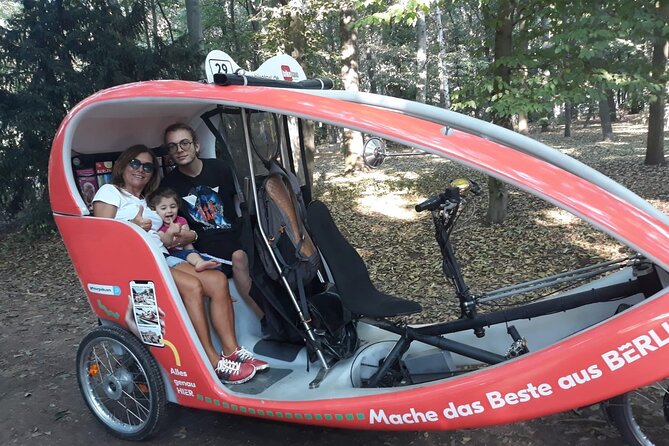
I like the private format, since your guide can slow down for photos, answer questions, or change the route. I also like the practical comfort: blankets are included for cold weather, and guides such as Leo have supplied hot water bottles on freezing days. The main catch is that one to three hours is enough for an overview, not full visits inside the museums and monuments.
Key points to know before booking
- A private Berlin overview: Only your own party joins the rickshaw, so the pace and route can be adjusted.
- A long list of central sights: The route can include Alexanderplatz, Museum Island, Checkpoint Charlie, Potsdamer Platz, Tiergarten, and Brandenburg Gate.
- Useful for limited mobility: The rickshaw reduces walking and guides can help passengers get on and off.
- Good in cold weather: A warm blanket is included, and hot water bottles have also been provided on cold rides.
- Hotel pickup has a limit: Pickup within 2 kilometers of Museum Island is free. Beyond that, the charge is 5 euros per kilometer.
- Best as a first look: Use it to get your bearings, then return later to the museums or memorials that catch your interest.
Why a rickshaw works well for Berlin
Berlin is not a compact old town where every sight sits around one square. Its landmarks are scattered across former royal, Prussian, Nazi, Cold War, and modern government districts. You can cover a lot by public transport, but you lose time changing trains and walking to each stop.
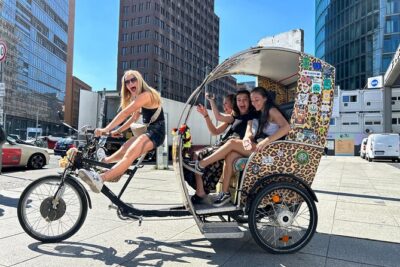
A rickshaw gives you a more direct view of the city. You are outside, close to street life, and able to pull over near many sights. The vehicle can use cycle lanes and reach places that are less convenient for cars or buses. That makes it useful for a first full day in Berlin, especially if you want to see the main landmarks before choosing where to spend more time.
The tour is private, so you do not need to fit your questions into a large group schedule. If your teenager is curious about one part of Berlin, or your family wants more time with the Cold War story, the guide can adjust the conversation. If you already plan to visit a museum the next day, you can ask to spend less time there and avoid repeating the same ground.
The advertised price is $53.21 per person. That is strongest value when several people share the private vehicle and use the ride as a city orientation. A one-hour trip gives you a quick survey. A two or three-hour ride makes better use of the route, since Berlin’s central sights are spread out and the guide has time to explain what you are seeing.
Other short rides around Berlin:
- Berlin: Private Guided E-Rickshaw Tour
★ 4.9 · 157 reviews - Berlin Express: Private 1-Hour E-Rickshaw Ride
★ 5.0 · 116 reviews - Rickshaw Sightseeing City Tours Berlin – Rikscha Tours
★ 4.0 · 55 reviews
Alexanderplatz and Berlin’s oldest center
The meeting point is the Weltzeituhr, or World Time Clock, at Alexanderplatz. It is an easy landmark and a natural place to begin. Alexanderplatz has changed from a medieval edge of Berlin into the public heart of the former East German capital, so it gives your guide a useful starting point for explaining the city’s split past.
From here, the rickshaw heads toward Nikolaiviertel, the oldest settlement area of the Berlin-Cölln twin city. Almost destroyed in the Second World War, the quarter was rebuilt for Berlin’s 750th anniversary. Its restored streets offer a sharp contrast with Alexanderplatz’s broad modern scale.
This opening section is especially good for orientation. You are not just ticking off a monument. You are seeing how Berlin shifted from medieval settlement to royal capital, divided Cold War city, and modern capital. The five-minute stops listed for these sights are photo and explanation pauses, not full guided visits.
Museum Island and the courtyards of Hackesche Höfe
Museum Island was commissioned by Prussian kings and has been a UNESCO World Heritage site since 1999. The Berlin Cathedral and the new Berlin Palace are nearby, so even a short stop gives you a strong view of Berlin’s grand cultural and royal center.
Museum admission is not included. That is important: the rickshaw tour shows you the setting and explains the area, but you need separate time and tickets if you want to enter the museums or cathedral. I would use this ride to decide which buildings deserve a longer visit later.
Next comes Hackesche Höfe, a group of connected courtyards in the old Spandauer Vorstadt district. The courtyards mix decorative facades with small shops, passages, and urban corners that are easy to miss from a bus. This is one of the places where a rickshaw has a real advantage, since the route can bring you close to details rather than leaving you at a distant curb.
The courtyards also break up the monument-heavy part of the tour. After royal buildings and museums, you get a more local-feeling stretch of Berlin’s historic center. The exact time here is brief, so think of it as a preview rather than a shopping or café stop.
The Palace of Tears and Bebelplatz
At the Palace of Tears, you see the former exit hall of the border crossing at Friedrichstraße station. The name comes from the farewells that took place there when people left East Berlin. Inside, the old control counters remain, offering a physical reminder of how ordinary train travel could become an emotional and political ordeal.
The listed stop is short, and the tour does not include a separate admission fee. Still, this is one of the most meaningful pauses because the building connects big Cold War politics with the personal experience of saying goodbye.
Bebelplatz shifts the focus to the Nazi period. It is surrounded by important buildings linked to Berlin’s cultural and royal past, but its most painful reminder is the empty library memorial. The underground room recalls the book burning of May 10, 1933, when works by Jewish, socialist, and other targeted writers were destroyed.
Your guide can connect Bebelplatz to the changing idea of culture in Berlin. It is a handsome square with a difficult story, and the rickshaw format gives you time to hear the explanation without requiring a long walk between sites.
A few more things to do in Berlin worth a look
- Berlin: 1-Hour City Tour by Boat with Guaranteed Seating
★ 4.3 · 16,993 reviews - Berlin: City Sightseeing Hop-On Hop-Off Bus Tour
★ 4.1 · 4,233 reviews - Berlin: 1-Hour City Sightseeing Cruise
★ 4.4 · 2,210 reviews - Berlin City Hop-on Hop-off Tour with Optional Cruise
★ 3.5 · 1,155 reviews
Gendarmenmarkt and Checkpoint Charlie
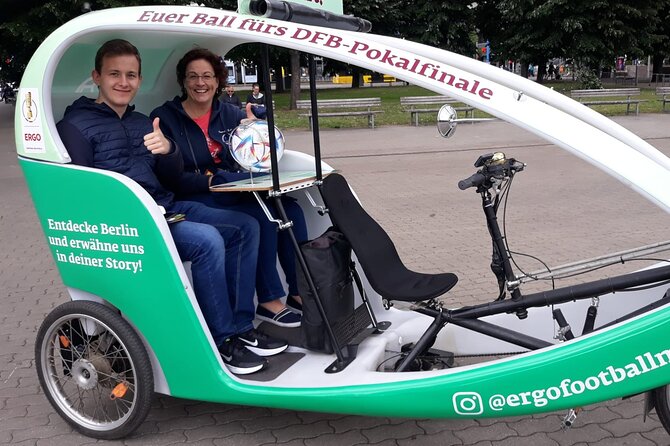
Gendarmenmarkt is one of Berlin’s grandest squares, framed by a concert hall and two churches with prominent towers. It shows the formal side of the city, with architecture planned to impress and create a sense of order.
The tour then moves to Checkpoint Charlie, the former border crossing between East and West Berlin. The site recalls the divided city, escape attempts, and the tense relationship between the two political systems. Today, it is also one of Berlin’s busiest photo stops, so a guide’s context matters. Without explanation, the checkpoint can look like a simple tourist prop. With context, it becomes part of the larger story of walls, controls, and failed escapes.
You should keep your expectations sensible here. These short stops are for seeing and understanding the setting. They are not substitutes for a museum visit or a long walk through the surrounding streets.
Topography of Terror and Potsdamer Platz
At the Topography of Terror, you pass one of the longest remaining sections of the Berlin Wall in its original condition. The site deals with the institutions of Nazi persecution, and the surviving wall section adds another layer to Berlin’s difficult twentieth-century story.
Potsdamer Platz then brings you into a very different Berlin. Once a major traffic junction, it was damaged by war and later cut apart by the city’s division. The modern buildings you see today grew after reunification, while traces of the older square remain part of the area’s story.
This pairing is useful because it shows how quickly Berlin can change from memorial site to modern commercial district. I would pay close attention to the guide’s timeline here. The same few city blocks can illustrate Nazi rule, wartime destruction, Cold War separation, and post-1990 rebuilding.
Thirty minutes through Tiergarten
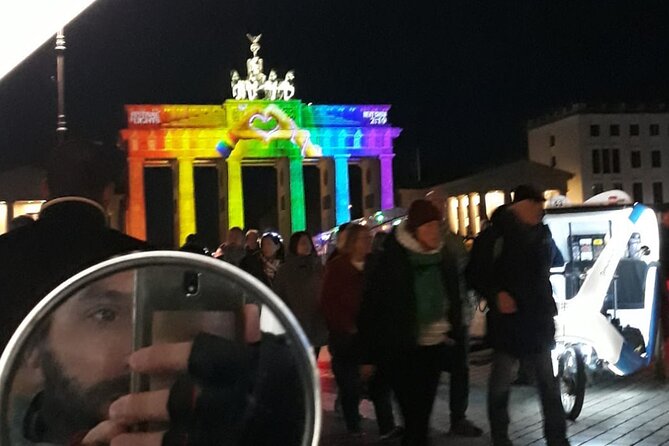
Tiergarten is the longest scheduled section of the tour, with about 30 minutes through Berlin’s central park. This is where the ride feels most like a sightseeing journey rather than a series of quick curbside stops.
The route passes the Victory Column, Bellevue Palace, the Federal President’s office, the House of World Cultures, the Carillon, and the Soviet Memorial. You also travel through the park itself, with its bridges and broad green spaces.
The park gives your eyes a break from stone facades and traffic. It also helps explain Berlin as a modern capital with a large public park at its center. Since the rickshaw keeps you moving, you can cover more ground than on foot while still seeing the paths and bridges at close range.
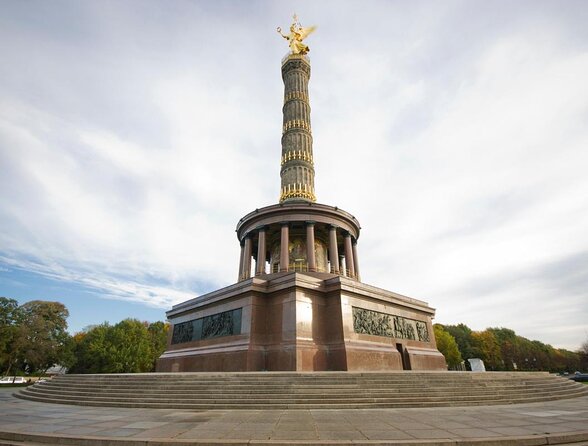
The Victory Column commemorates three Prussian victories and is topped by the golden figure of Victoria. The monument is often linked with the Love Parade, but the details near its base, including the gilded cannons, reward a closer look. Admission is not included if you want to go inside or climb it.
Bellevue Palace, once a royal residence, has served as the German Federal President’s official residence since 1994. Again, this is an exterior sightseeing stop rather than an interior tour. The value is in placing the building within the modern government district and the wider story of Berlin’s political center.
Government District and Brandenburg Gate

The government quarter was built mainly around the year 2000 along the Spreebogen. The historic Reichstag building is part of this area, and the contrast between old architecture and newer government buildings is one of the clearest signs of reunified Berlin.
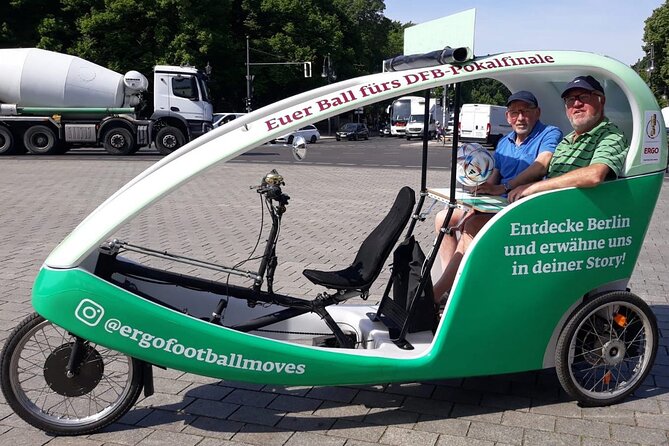
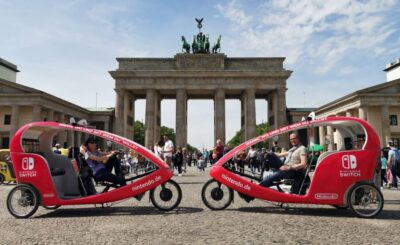
The ride ends at Brandenburg Gate, Berlin’s most famous landmark. Built as the end of Unter den Linden, it is the only surviving city gate in Berlin. Its meaning has changed repeatedly: royal entrance, symbol of division during the Cold War, and later a national symbol of unity.
Ending here makes sense. The gate ties together much of the tour’s story, from Prussian power to the divided city and reunification. It is also a good place to continue on foot, though this activity itself returns to the meeting point at Alexanderplatz rather than ending permanently at the gate.
Leo, flexible guiding, and the human side of the ride
The guide most often identified with this experience is Leo. He is described as a strong driver and an excellent English speaker who explains Berlin’s past clearly and handles questions patiently. He has also used old photographs to show how buildings and streets changed over time.
That personal approach matters on a private tour. You can ask about Adolf Hitler and Eva Braun, Cold War border controls, Berlin’s architecture, or the practical question of what to visit next. The guide can also adapt when a child, teenager, or history-minded family member takes special interest in one subject.
The rickshaw has proved useful for people with bad knees, leg problems, or walkers. One solo passenger was helped getting on and off and was able to bring a walker. The activity says most people can participate, but you should still explain any mobility needs when arranging the ride.
Families can also make good use of the format. Children get movement, short stops, and a sense of adventure, while adults receive history and orientation. The private setting avoids making everyone else wait while your group stops for a photo or asks one more question.
Cold weather, pickup, and practical limits
Berlin’s weather can make an open vehicle a questionable choice, but the tour provides a warm blanket in cold weather. On especially cold rides, hot water bottles have also been supplied. That is a thoughtful touch, but you should still dress warmly, since a blanket does not change the outdoor temperature.
Music is available by request, and drinks can be ordered separately. The tour is offered in English and includes an expert guide. Service animals are allowed, and the meeting point is close to public transportation.
Free pickup is available from hotels or other locations within 2 kilometers of Museum Island. Beyond that radius, the additional charge is 5 euros per kilometer. Confirm the pickup cost before setting your plan, especially if your hotel is well outside the central area.
The tour has a mobile ticket and confirmation at booking. Free cancellation is available up to 24 hours before the start time. Changes or cancellations inside that 24-hour window are not accepted for a refund.
Who should book this Berlin ride?
I would choose this tour if you want a fast, personal introduction to Berlin, have limited walking stamina, or prefer a guide who can adjust the route to your interests. It is also a good fit for three generations traveling together, since the ride reduces strain without turning the outing into a standard bus tour.
It works best early in your stay. Use the ride to locate the main districts and note which places deserve a longer visit. Museum Island, the Palace of Tears, Bebelplatz, and the Topography of Terror all reward extra time beyond the five-minute sightseeing pauses.
I would not choose it as your only Berlin history experience. The tour covers a great deal, but several stops are necessarily brief, and admission to Museum Island and the Victory Column is not included. If you want detailed museum visits, long memorial walks, or time inside every landmark, plan separate visits.
Should you book it?
Book it if you value a private route, close-up sightseeing, and a guide who can explain Berlin while you cover a lot of ground. The $53.21 price is reasonable when shared by a small private party, particularly if hotel pickup, reduced walking, and flexible pacing matter to you.
Choose a two or three-hour ride if your schedule allows. The one-hour option can show you the outline of Berlin, but the longer versions give the guide more room for questions, photos, Tiergarten, and the city’s layered twentieth-century story. For a first look at Berlin, especially in cold weather or with mixed ages and mobility levels, this is a practical and enjoyable way to begin.
FAQ
How long does the rickshaw tour last?
The tour lasts approximately one to three hours. The exact duration depends on the option booked and the route arranged for your private party.
Is this a private tour?
Yes. Only your own group participates, so the guide can adjust the pace and route to your interests.
Where does the tour start?
The listed starting point is the World Time Clock at Alexanderplatz 1, 10178 Berlin.
Does the tour return to the starting point?
Yes. The activity ends back at the meeting point.
Is hotel pickup available?
Yes. Pickup is free from hotels or other locations within 2 kilometers of Museum Island. Further distances cost 5 euros per kilometer.
Is the tour offered in English?
Yes. The experience is offered in English.
Are blankets provided?
Yes. A warm blanket is provided in cold weather. Hot water bottles have also been supplied on especially cold rides.
Are admissions to museums and monuments included?
No. Admission is not included for Museum Island or the Victory Column. The tour mainly provides exterior sightseeing and guided explanations.
Just added in Berlin
- Private One way Airport Transfer Berlin Airport To Berlin★ 3.5 · 17 reviews
- Private Walking Tour: Berlin Wall, Cold War and Checkpoint Charlie★ 5.0 · 37 reviews
- Modern Berlin Private Walking Tour: Diverse, Vibrant and Exciting German Capital★ 5.0 · 13 reviews
- Private Day Trip to Potsdam from Berlin by Train★ 4.5 · 27 reviews
- City Explorer: Potsdam Private Day Trip★ 4.5 · 10 reviews
- Berlin Private Custom 5-Hour Tour by Car★ 5.0 · 30 reviews
- Private Half-Day Sightseeing Tour in Berlin★ 3.5 · 6 reviews
- Berlin Private Custom Tour in a Minivan, East and West★ 5.0 · 123 reviews
Rickshaw & Pedicab Tours, compared.
Browse the lists this tour appears in