Reviewed · TOURS IN BERLIN
Wall Tour Berlin – Fates, Heroes & Love Stories
Berlin’s Wall Tour follows one of the city’s most painful borders on foot, from the former ghost station at Nordbahnhof to Mauerpark. The strongest part is its focus on individual lives, including escapees, border guards, families, and people caught in political revenge. I also like that you see the border strip itself rather than only hearing a classroom-style lecture.
The tour costs just $19.66 and includes a long run of stops with no extra admission fees. The main concern is reliability: two separate reports describe groups waiting at the meeting point without a guide, followed by poor contact. I would confirm the appointment shortly before setting out.
Key points at a glance
- Ghost stations at Nordbahnhof: Begin with Berlin’s sealed underground stations and the strange transport system created by the Wall.
- A close look at the border strip: Bernauer Strasse shows how buildings, streets, churches, and homes were swallowed by the frontier.
- Personal escape stories: Hear about tunnel escapes, Conrad Schumann’s famous jump, and people who died trying to reach freedom.
- Mauerpark finish: End near the former Wall line, where the story moves from construction and fear to the Wall’s fall.
- Good value at $19.66: You get about two hours of guided history without paying separate entrance fees.
- Important booking caution: The group is capped at 25, but two no-show reports make last-minute confirmation sensible.
Starting at Nordbahnhof, where the city went underground
Meet at Elisabeth-Schwarzhaupt-Platz, near the entrance to the Nordbahnhof S-Bahn station on Gartenstrasse. The opening image is memorable: you symbolically jump over the former Wall line before hearing why Berlin’s underground stations became known as ghost stations.
During the Cold War, some train routes from West Berlin passed beneath East Berlin. Trains continued through certain stations without stopping, while East German guards watched the platforms. The dark, sealed stations became a strange reminder that the division did not stop at street level.
This first stop is short, only about five minutes, so arrive ready. The tour does not begin with a long introduction or a museum visit. It gets quickly to the physical places where the division shaped ordinary movement through the city.
From here, you enter the Berlin Wall Memorial area. The guide gives you the basic political setting: how a city could be cut apart, why the border hardened, and how the Wall grew from a sudden barrier into a heavily guarded border system.
Other trips people book in Berlin:
- Berlin: Reichstag, Dome and Government District Guided Tour
★ 4.7 · 18,288 reviews - Berlin: 1-Hour City Tour by Boat with Guaranteed Seating
★ 4.3 · 16,993 reviews - Berlin: Boat Tour Along the River Spree
★ 4.4 · 11,252 reviews
Bernauer Strasse shows how the Wall was built
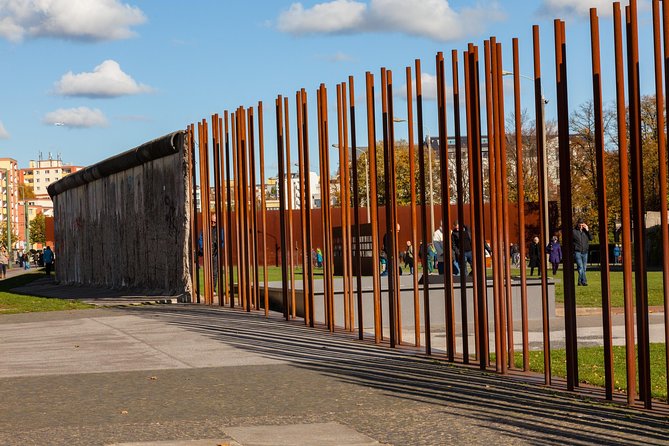
The section along Bernauer Strasse is the heart of the tour. Here you learn about the construction of the border strip, not just the familiar concrete slabs seen in photographs.
On June 15, 1961, East German leader Walter Ulbricht publicly insisted that no wall was planned. Less than two months later, on August 13, the border was sealed. Streets were blocked, transport routes were broken, and a fortified frontier began to take shape.
The ten-minute construction stop helps explain the Wall as a system. It was not simply one barrier. The border included fences, patrol routes, watchtowers, controlled areas, and obstacles designed to stop people from crossing. Seeing the preserved section makes that layout easier to understand than reading about it on a plaque.
You also get a sense of how abruptly daily life changed. Neighbors who had lived close to one another could suddenly be separated. A short walk became an international crossing, and a familiar street could become a fatal zone.
The tour then moves to the memorial window, where the guide discusses people who died trying to cross. At least 140 people died at the Berlin Wall between 1961 and 1989, though the precise total remains uncertain. This is one of the heavier parts of the walk, and it is handled through specific human stories rather than a list of statistics.
The viewing platform gives you the clearest overall picture
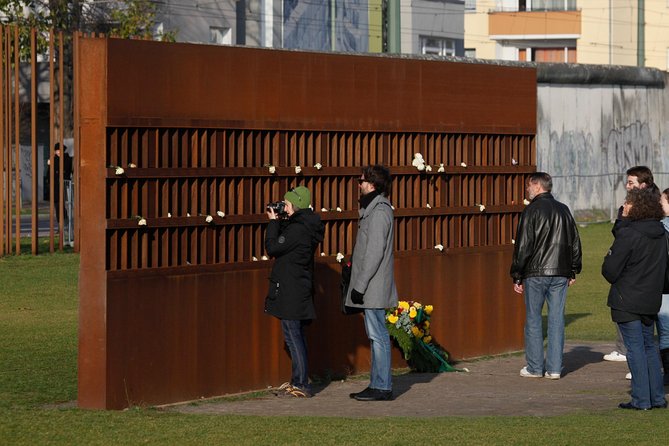
At the viewing platform, you can look across the former border strip on Bernauer Strasse. This is an important pause because the Wall’s remains can otherwise feel scattered.
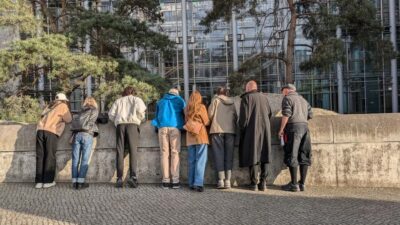
From above, the relationship between the street, buildings, open ground, and border structures becomes clearer. You can see why Bernauer Strasse has such importance: the buildings stood in East Berlin, while their entrances and windows faced West Berlin.
The fifteen-minute stop is longer than most of the others, giving you time to look and listen. It is also one of the better moments to ask a question, since the guide has more room to explain how the border worked.
The setting is outdoors, and the route is a walking tour rather than a seated museum program. Wear shoes suited to pavement and open paths. The tour requires good weather, so rain or other poor conditions may lead to a new date or a refund.
The Reconciliation Church carries a painful local story
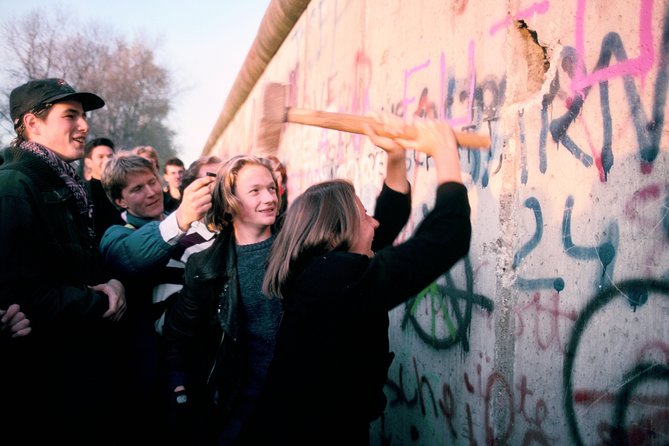
Near Ackerstrasse, the route reaches the Chapel of Reconciliation. The original Church of Reconciliation once stood inside the border strip, even though people from East and West Berlin had worshipped there together before the Wall closed the area.
Its position became impossible after the border was sealed. The church was isolated, and its fate shows how the Wall damaged more than homes and transport. It also cut through religious communities and familiar public spaces.
This stop lasts only about five minutes, but its value is clear. You see how a political frontier could swallow a building used by both sides. The setting adds a quieter note to the tour after the grim discussion of deaths and escapes.
The route also explains passenger agreements designed to make the Wall slightly more permeable. These arrangements between West Berlin’s Senate and the East German government affected how people could move across the division.
The guide also discusses the use of children and young people for East German propaganda. That subject may feel especially uncomfortable, but it helps show that the Wall was supported not only by concrete and armed guards. It was also defended through education, public messaging, and pressure on the young.
Same base, a different kind of day out:
- Discover Berlin Half-Day Walking Tour
★ 5.0 · 9,624 reviews - Berlin: Hop-on Hop-off Bus Tour with Live Commentary
★ 4.3 · 8,579 reviews - Berlin: Government District around the Reichstag Guided Tour
★ 4.7 · 8,447 reviews - Berlin: Reichstag, Plenary Chamber, Cupola & Government Tour
★ 4.6 · 8,422 reviews
Bernauer Strasse turns homes into escape routes
One of the most disturbing parts of the walk concerns the residential buildings along Bernauer Strasse. Their windows and exits opened toward West Berlin, but the buildings themselves were in East Berlin.
After the border closed, these homes became escape points. People tried to reach the West by climbing, jumping, or using other desperate methods. Hundreds jumped from windows because of fear and despair, and some died.
The guide points out the human consequences rather than treating the buildings as scenery. Photographs and videos are available for you to examine at your own pace, which gives this portion a slower, more personal rhythm.
This is also where the tour’s subject matter becomes hardest for some people. The stories involve death, state control, frightened families, and decisions made under extreme pressure. If you prefer a light sightseeing walk, this is not the right choice. If you want a serious account of what division did to ordinary people, it is one of the tour’s most meaningful sections.
The route does not turn every story into a grand political lesson. Instead, it keeps returning to homes, windows, streets, and names. That approach helps you understand the Wall as something that entered private lives.
Tunnel escapes reveal the ingenuity of resistance
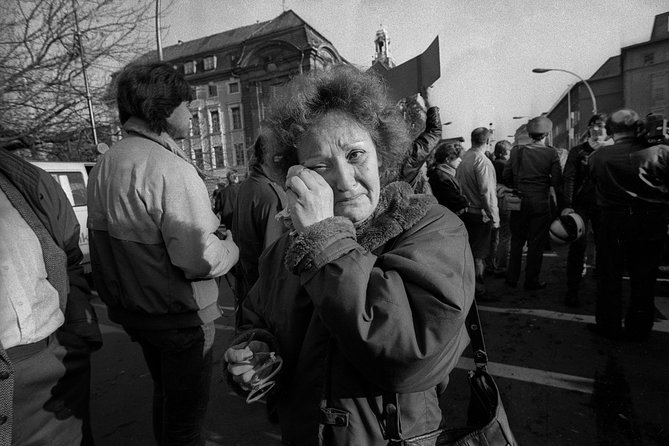
The 1960s produced many attempts to escape through tunnels. One famous tunnel near the border house forms the next major stop.
The guide explains how people planned these escapes and how the East German government used the story for propaganda. That detail matters because the Wall was also a battle over information. Successful escapes could embarrass the government, while official stories tried to reshape what the public believed had happened.
Tunnel stories can sound like adventure tales when told without context. Here, the danger remains central. Digging, entering, and emerging near the border all carried serious risks, and the people involved had to rely on secrecy and trust.
The tour then turns to the best-known photograph of border escape: Conrad Schumann jumping over barbed wire while serving as an East German border guard. The guide traces Schumann’s life and explains that he remained wanted until the end of the German Democratic Republic.
Schumann’s story adds a useful complication. Not every person who crossed the Wall was a civilian already living under its restrictions. Even a border guard could decide, in a split second, that remaining on the East German side was no longer possible.
Kidnappings and loudspeakers show the wider Cold War
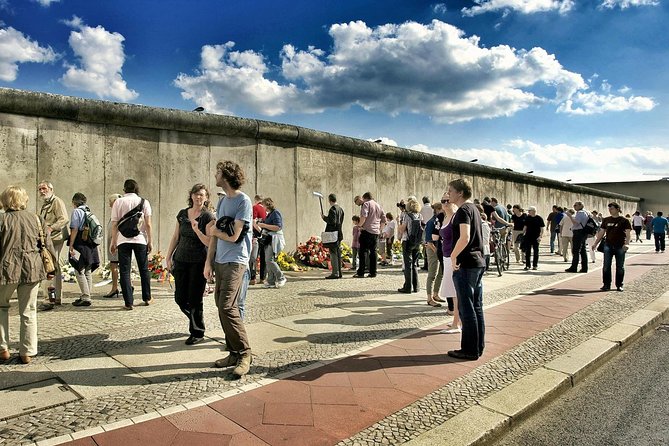
The tour does not stop at people trying to escape from East to West. It also covers kidnappings ordered by East Germany, particularly cases involving former National People’s Army and People’s Police employees who had gone to the West.
Criminal groups carried out some of these operations. One kidnapping ended in death. This part of the walk broadens the picture of the border, showing that pressure did not end once someone crossed into West Berlin or West Germany.
It is a less familiar subject than escape tunnels, which makes it useful for anyone who already knows the basic Wall story. The guide presents the border as a system that reached beyond checkpoints and concrete.
You also hear about the loudspeaker conflict between East and West Berlin. Both sides used loudspeakers to make life difficult for the other, adding an audible layer to the political struggle.
That detail may sound small beside killings and kidnappings, but it helps you picture the daily strain of Cold War Berlin. The confrontation was not always a dramatic chase. Sometimes it was a constant public nuisance, with each side trying to dominate the sound of the city.
Mauerpark connects the Wall to its final days
The tour ends at Mauerpark, near Bernauer Strasse and Oderberger Strasse. The final stop looks at the fall of the Wall and the events that led to its opening.
Ending here works well because the route has moved from closure to release. You have seen the border built, strengthened, defended, and used to control lives. Now the story turns to how the system began to come apart.
The endpoint is convenient for continuing your day. From Bernauer Strasse and Oderberger Strasse, you can take the M10 tram toward Berlin Central Station. The walk therefore finishes in a useful part of the city rather than leaving you at an isolated memorial.
The tour does not promise a long museum visit at the end. Its strength is the guided route itself, with brief stops that build one connected story. If you want more time with exhibits, photographs, and preserved structures, plan a separate visit to the Berlin Wall Memorial.
Is $19.66 good value for two hours?
At $19.66 per person, the price is low for a two-hour guided walk through one of Berlin’s most important historical areas. There are no admission charges at the listed stops, so most of what you pay goes toward the guide and the structure of the route.
I consider the price especially fair if you want context as you walk. You can visit the Wall Memorial on your own, but it is easy to miss how ghost stations, residential buildings, tunnel escapes, the church, and the border strip connect.
The group can include up to 25 people. That is not a tiny private walk, and the experience may feel less personal at the maximum size. Still, the many short stops should keep the group moving and prevent one location from becoming crowded for too long.
The tour is booked about 30 days ahead on average, which suggests you should not assume there will always be a last-minute place. A mobile ticket keeps the practical side simple, and confirmation is provided at booking.
There is one serious caution. Two separate reports describe groups arriving at the correct meeting point and finding no guide, followed by delayed or impolite communication. That is a small evidence base, but it is too specific to ignore. Save the meeting details, keep the operator’s contact information available, and confirm shortly before the start.
Free cancellation is available up to 24 hours before the start time. Inside that window, the payment is not refunded. The experience may also be canceled for poor weather or because too few people book it, in which case you can receive a different date, another experience, or a full refund.
Who will get the most from this Wall walk?
I would choose this tour if you want the Berlin Wall explained through personal stories and real locations. It suits first-time visitors who need a clear introduction, as well as people who know the broad story but want details about tunnels, kidnappings, ghost stations, and propaganda.
It is also a good fit if you prefer outdoor history to a long indoor lecture. The route keeps you moving, and the viewing platform offers a useful break from walking.
Families with older children or teenagers may find the material thought-provoking, but the tour is not gentle. Deaths, suicide, political abuse, and forced separation are central subjects. Younger children may struggle with the tone.
The tour is near public transport, and most people can participate. The supplied details do not promise a fully step-free route, so anyone with specific mobility needs should confirm the path before booking. It is best to arrive at the exact meeting point at Elisabeth-Schwarzhaupt-Platz, not simply somewhere near the Wall Memorial.
Should you book Wall Tour Berlin?
Book it if you want a focused, low-cost walking lesson that ties Berlin’s Wall Memorial to personal stories. The mix of ghost stations, homes facing the border, the Reconciliation Church, tunnel escapes, Conrad Schumann, and Mauerpark gives the two hours a clear shape.
Skip it if you want a relaxed sightseeing stroll, a private guide, or a guaranteed museum-style experience with plenty of time at each exhibit. The subject is serious, the group may reach 25 people, and the no-show reports call for extra confirmation.
My practical call is yes, with one condition: confirm the appointment before you leave for the meeting point. At $19.66, the historical value is strong, but reliable operation matters just as much as an interesting route.
FAQ
Where does the Wall Tour Berlin begin?
The tour begins at Elisabeth-Schwarzhaupt-Platz, 10115 Berlin, near the entrance to the Nordbahnhof S-Bahn station on Gartenstrasse.
Where does the tour end?
It ends at Mauerpark near Bernauer Strasse and Oderberger Strasse, in Berlin’s Pankow district. From there, you can take the M10 tram to Berlin Central Station.
How long does the tour last?
The tour lasts approximately two hours.
What does the tour cost?
The listed price is $19.66 per person.
How many people can join the tour?
The activity has a maximum group size of 25 people.
Can I cancel for a full refund?
Yes. You can cancel at least 24 hours before the start time for a full refund. Cancellations or changes made within 24 hours are not refunded, and poor weather or an insufficient number of bookings may lead to a new date or a full refund.
Just added in Berlin
- Private One way Airport Transfer Berlin Airport To Berlin★ 3.5 · 17 reviews
- Private Walking Tour: Berlin Wall, Cold War and Checkpoint Charlie★ 5.0 · 37 reviews
- Modern Berlin Private Walking Tour: Diverse, Vibrant and Exciting German Capital★ 5.0 · 13 reviews
- Private Day Trip to Potsdam from Berlin by Train★ 4.5 · 27 reviews
- City Explorer: Potsdam Private Day Trip★ 4.5 · 10 reviews
- Berlin Private Custom 5-Hour Tour by Car★ 5.0 · 30 reviews
- Private Half-Day Sightseeing Tour in Berlin★ 3.5 · 6 reviews
- Berlin Private Custom Tour in a Minivan, East and West★ 5.0 · 123 reviews
Tours in Berlin, compared.
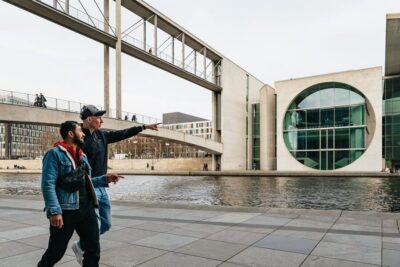
Reichstag, Dome and Government District Guided Tour
Read our review →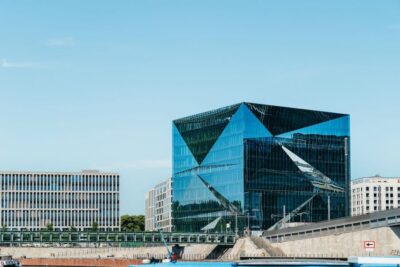
1-Hour City Tour by Boat with Guaranteed Seating
Read our review →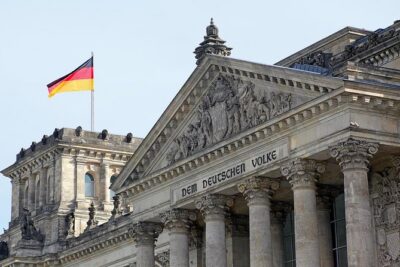
Reichstag, Plenary Chamber, Cupola & Government Tour
Read our review →