
Reviewed · CLASSIC CAR & TRABI TOURS
Berlin Self-Drive Trabi Tour with Guide
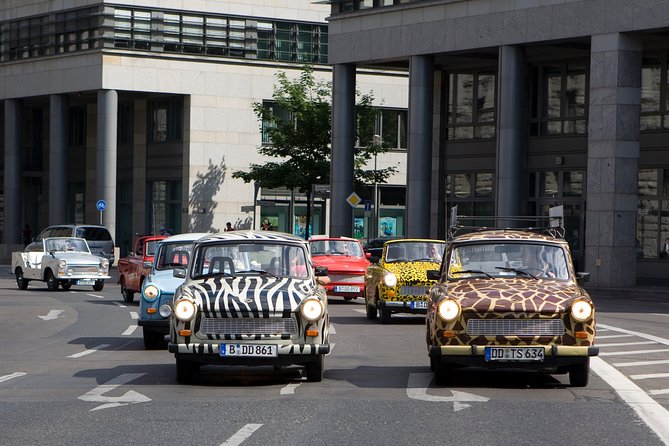
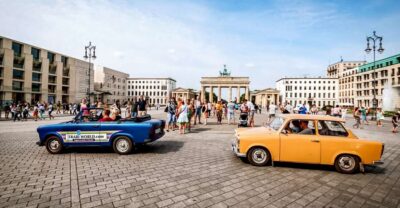
Berlin is more fun when you are part of the traffic, and this tour puts you in a tiny, noisy Trabant, the much-loved car of East Germany. You follow a guide through central Berlin in a colorful convoy, passing the Brandenburg Gate, Berlin Wall murals, Oberbaum Bridge, and Checkpoint Charlie while the engine rattles below you.
I like two things here: you get a fast orientation to major Berlin sights, and you get to drive an object that tells its own Cold War story. Guides such as Thomas, Matthias, Axel, and George have been praised for calm instruction, humor, and useful commentary.
The catch is simple: this is not a relaxed sightseeing bus. The manual gearbox can be fiddly, the car is loud, and the guide speaks through a radio system that may crackle. Arrive at least 15 minutes early, and book only if you feel comfortable driving an older stick-shift car.
Key points for your Berlin Trabi decision
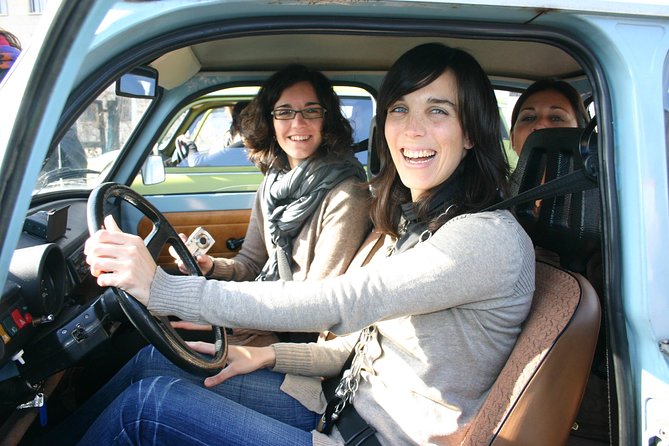
- You drive the car yourself: Each Trabant carries up to four people, but the driver must be at least 18 and show a license for a manual car.
- The route covers major Berlin landmarks: Expect Potsdamer Platz, Brandenburg Gate, Unter den Linden, Berlin Cathedral, Rotes Rathaus, the TV Tower, East Side Gallery, Oberbaum Bridge, and Checkpoint Charlie.
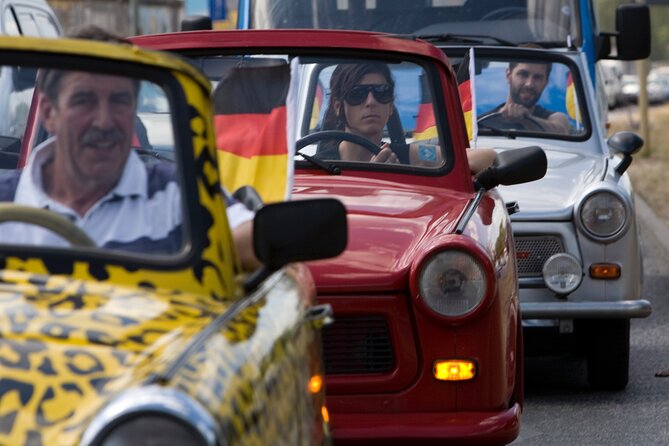
- The convoy becomes part of the spectacle: People often photograph the little cars as they rattle through the city.
- The experience lasts about 75 minutes: That makes it a lively city introduction, not a full museum or walking tour.
- The cars are authentic but demanding: Noise, vibration, smoke, and a touchy clutch are part of the experience.
- The group stays small: The maximum is 12 people, with a guide leading the convoy and stopping if cars fall behind.
Why a Trabant changes the way you see Berlin
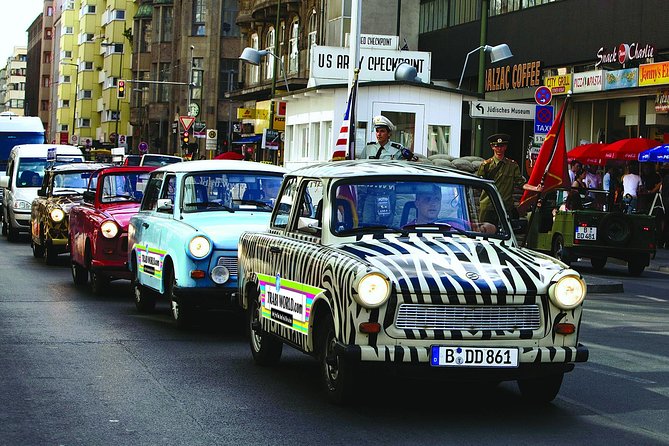
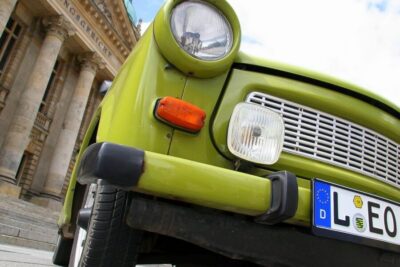
A Trabant is not a polished classic car. It is small, basic, slow-moving, and full of personality. For decades, it was one of the most recognizable cars in East Germany. Driving one through the former East Berlin turns a normal city tour into a piece of living history.
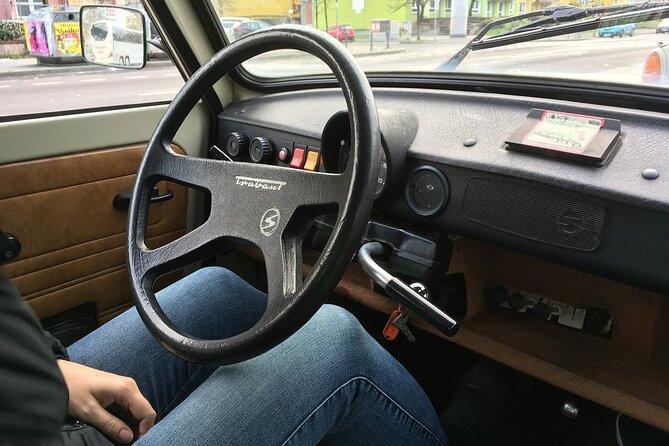
You are not simply looking at the Berlin Wall from a coach window. You are gripping a thin steering wheel, working a standard gearbox, and listening to the engine buzz as you pass places shaped by the division of Germany. That physical connection is the main reason to book this tour.
The route also gives you a useful first look at Berlin. In about an hour and 15 minutes, you cover a wide area, from Potsdamer Platz in the west to the East Side Gallery and Oberbaum Bridge farther east. You will not have time to explore each place properly, but you can mark the sights you want to revisit on foot.
The experience has a playful side, too. A line of brightly colored Trabants is hard to miss. People on the pavement may take pictures, and you become part of the city scene rather than just passing through it. That attention can be amusing, though anyone who dislikes being noticed may prefer a quieter tour.
Other rides in something old:
- Berlin: 75-minute Trabi Safari
★ 4.8 · 2,854 reviews - Leipzig: 90-Minute Trabi City Tour
★ 4.9 · 728 reviews - Dresden: Guided Sightseeing Tour in Classic Trabi Car
★ 4.9 · 642 reviews
Starting at TrabiWorld Berlin on Zimmerstrasse
The meeting point is TrabiWorld Berlin at Zimmerstrasse 97-100, close to public transportation and within walking distance of Checkpoint Charlie. The tour ends at the same place, which makes planning easy.
Arrive early. The practical advice is 15 minutes before departure, and one late arrival caused enough trouble for the participant to warn others not to repeat it. The listed start time is 11:30 a.m., so give yourself room for public transportation delays, finding the entrance, and completing the paperwork.
The base has bathrooms and a shop, though the surrounding area may look untidy. Do not judge the whole outing by the storefront. The useful feature is its location: you can visit Checkpoint Charlie before or after the drive, and you are close to several central sights and squares.
The first 10 minutes are for welcome and instruction. You receive a basic explanation of the car, its standard gearbox, and its four-stroke engine. The operator can provide an automatic gearbox only after prior consultation, so do not assume one will be available on the day.
Learning the Trabant gearbox before city traffic
The driving is part of the attraction, but it is also the main test. The clutch and gear lever feel less forgiving than those in a modern car. Some people find the car easier than expected after a short practice, while others struggle to change gear and decide to stop.
If you know how to drive a manual car, you have a clear advantage. Even then, expect a short adjustment period. The Trabant is loud and vibrates noticeably, and its controls do not have the smooth feel of a newer vehicle.
The guide leads from the front of the convoy. A radio system carries instructions and commentary, but you generally cannot speak back through it. Static, engine noise, and the car’s rattling cabin can make some comments difficult to hear.
This arrangement works best when you concentrate on driving first. You may miss a sentence or two about a monument, and that is normal. The guide keeps an eye on the convoy and pulls over when needed. A phone number is provided in case you get separated.
For a nervous driver, that support matters. Guides described as Thomas, Matthias, Axel, and George have been singled out for patient instruction, calm handling, and friendly commentary. The exact guide depends on the day, but the role is the same: keep the group together and help you manage the car safely.
Potsdamer Platz and the modern face of Berlin
One of the first major sights is Potsdamer Platz, an important square and traffic intersection in central Berlin. It is a useful place to begin understanding how dramatically Berlin changed after reunification.
The area is associated with modern redevelopment, but its position also connects to the old divided city. From the seat of a Trabant, that contrast feels especially sharp. You are riding in an East German car among modern buildings and busy city streets.
Do not expect to stop and wander around Potsdamer Platz. The value here is the passing view and the guide’s orientation. Use the tour to note places you want to return to later, rather than trying to study every building while handling the gearbox.
A few more things to do in Berlin worth a look
- Berlin: Reichstag, Dome and Government District Guided Tour
★ 4.7 · 18,288 reviews - Berlin: Government District around the Reichstag Guided Tour
★ 4.7 · 8,447 reviews - Berlin: Hidden Backyards Guided Walking Tour
★ 4.8 · 5,360 reviews - Berlin: 1-Hour Boat Tour with Bilingual Live Guide
★ 4.7 · 3,629 reviews
Brandenburg Gate and Unter den Linden
The route continues toward the Brandenburg Gate, Berlin’s famous neoclassical monument. It is one of the city’s essential symbols and a major marker of Berlin’s political past.
Seeing it from a moving convoy gives you a quick sense of its place in the city. The guide provides commentary as you pass, but the radio and engine noise may compete for your attention. If you want detailed architectural information, plan a separate visit on foot.
Unter den Linden, the grand boulevard leading through central Berlin, adds another strong visual stretch. Here, the tour shifts from the divided city to Berlin’s historic central axis. You are moving through a district of major public buildings, museums, and monuments while driving a car designed for a very different era.
This part is best treated as an overview. You will get your bearings fast, then return later for a slower walk if a particular building catches your eye.
Berlin Cathedral, Rotes Rathaus, and the TV Tower
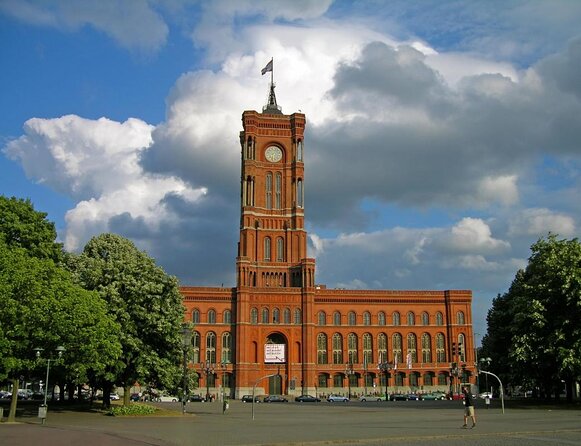
The route takes in Berlin Cathedral, a major landmark on Museum Island, and Rotes Rathaus, the red town hall dating from 1870. These stops help show the variety of central Berlin, from grand religious architecture to civic buildings.
The Berlin TV Tower then gives the convoy a striking reference point. Rising above Alexanderplatz, it is one of the easiest buildings to recognize from across the city. The drive does not replace a visit to the tower or the nearby square, but it helps you understand how the central districts fit together.
The advantage is range. In a short ride, you see several parts of Berlin that would take longer to connect on foot. The disadvantage is that there is little time to pause. Keep your camera ready, but do not expect a long photo stop at each landmark.
East Side Gallery and the Berlin Wall
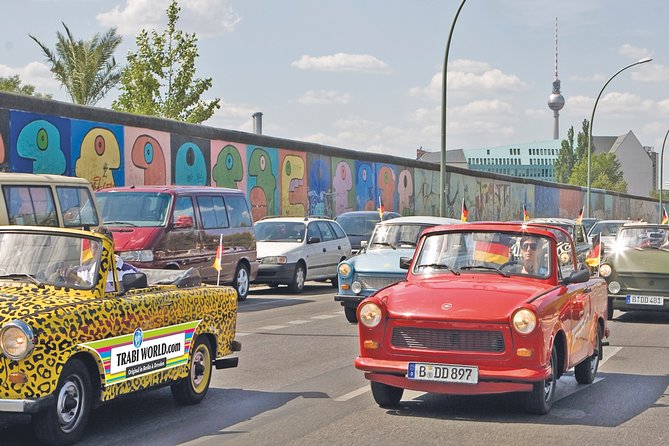
The clearest historical stop is the East Side Gallery, an open-air gallery painted on a 1,316-meter remnant of the Berlin Wall. The tour allows about five minutes here.
That is enough to recognize the Wall, see a few murals, and understand the scale of the remaining section. It is not enough to walk the full length or study the artwork carefully. If the East Side Gallery is a priority, return later with more time.
The Trabant adds meaning to this part of the route. The car is closely linked with life in East Germany, so arriving in one at a section of the former Wall is more than a photo opportunity. It connects the object you are driving with the political world that produced it.
The short stop also keeps the tour moving. You spend most of the time driving rather than standing around, which suits people who want a lively experience. If you prefer long historical explanations, combine this tour with a dedicated Berlin Wall visit.
Oberbaum Bridge and Checkpoint Charlie
The route includes Oberbaum Bridge, the double-deck bridge crossing the River Spree. Its brick towers and unusual profile make it one of Berlin’s most memorable crossings.
A bridge stop is not listed as a long walking break, so expect to see it from the car and hear about it from the guide. The convoy format gives you a moving view that is different from the usual pedestrian approach.
Checkpoint Charlie comes near the end of the route and is also close to the starting point. The former border crossing is one of Berlin’s best-known Cold War sites. It can feel highly commercial around the checkpoint, so use your time here as an orientation rather than a complete history lesson.
Because the tour ends back at TrabiWorld Berlin, you can return to Checkpoint Charlie afterward at your own pace. That is one of the practical advantages of the meeting point.
What the ride feels like in real terms
You should expect noise, vibration, and the smell of an old motor. Some people love the smoke, sound, and rough mechanical feel because they make the drive authentic. Others find the car tiring or uncomfortable.
The Trabant’s limitations are part of the joke and part of the history. It is often described as closer to a lawn mower and garden shed than a modern car. That is not a criticism of the tour. It is a fair warning about what you are buying.
The pace is generally easy enough for the convoy to stay together, but you still need to watch traffic and manage the controls. The guide gives directions and checks that no one is left behind. One car may be directly behind the guide, while cars at the back have to follow more carefully.
The experience suits confident drivers best. If you are already tense about manual driving, the tour may feel like work rather than fun. If you are willing to laugh at a few clumsy gear changes, the imperfect car is likely to become the highlight.
Price, group size, and who gets the best value
At $95.58 per person, this is not the cheapest way to see Berlin. You are paying for the car, the guide, the small group, and the unusual access to a piece of East German culture.
The value depends on what you want. If you only need a list of landmarks, a walking route or public transportation will cost less and let you spend more time at each sight. If you want an activity that combines driving, history, and city orientation, the price is easier to justify.
The group is capped at 12 people, and each car carries up to four. That keeps the convoy manageable and gives the guide a better chance to watch the group. Children up to 17 are free when accompanied by at least one adult, but the driver must be 18 or older. Any required child seat must be supplied by you.
The maximum total weight per car is 770 pounds, or 350 kilograms. That matters for a full car, so check the combined weight of everyone who plans to ride together.
The tour is offered in English, and service animals are allowed. Most people can take part, but driving a manual car is the key practical requirement.
Smart ways to prepare before you book
Arrive 15 minutes early and bring your driver’s license for a manual vehicle. Wear something comfortable, and be ready for a noisy ride rather than a quiet sightseeing experience.
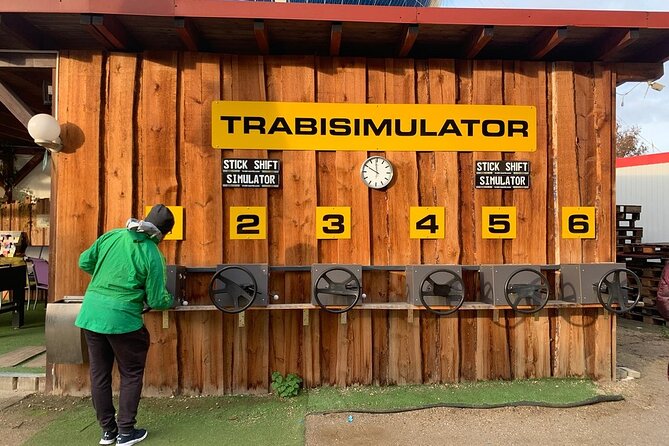
If you are uncertain about the gearbox, use any available simulator or practice opportunity before the tour. A little familiarity with clutch control can make the first minutes much easier.
Do not plan a meal during the activity. Food and drinks are not included, and the tour returns to the meeting point after the drive. You can eat before or after, with Checkpoint Charlie and nearby sights within walking distance.
The activity is non-refundable and cannot be changed after booking. Only reserve when you are confident about the date, the driving requirement, and your ability to attend.
Should you book this Berlin Trabi tour?
Book it if you want a hands-on Berlin experience rather than a standard sightseeing circuit. It is especially good for drivers, car enthusiasts, Cold War history fans, families with older children riding as passengers, and anyone who enjoys a little mechanical chaos.
Skip it if you want quiet commentary, long stops, automatic driving, or detailed time at each monument. The tour moves quickly, the radio can be hard to hear, and the Trabant asks you to participate.
For most suitable visitors, the payoff is high. You drive an iconic East German car, cover a large part of Berlin, and see the city from a viewpoint no bus or walking tour can copy. Just accept the rattles, learn the clutch, arrive early, and enjoy being the most photographed car on the street.
FAQ
How long does the Berlin Trabi tour last?
The tour lasts approximately 1 hour and 15 minutes, including the short welcome and driving briefing.
Where does the tour start and finish?
It starts at TrabiWorld Berlin, Zimmerstrasse 97-100, 10117 Berlin, and ends back at the same meeting point.
What time does the tour start?
The listed start time is 11:30 a.m. You should arrive at least 15 minutes early.
Do I need a manual driving license?
Yes. Every driver must provide evidence of a license for a non-automatic car. An automatic gearbox is available only after prior consultation.
How many people can ride in one Trabant?
Each vehicle can carry a maximum of four people. The total weight per vehicle cannot exceed 770 pounds, or 350 kilograms.
What happens if I need to cancel?
The experience is non-refundable and cannot be changed for any reason. If you cancel or request an amendment, the amount paid will not be refunded.
Just added in Berlin
- Berlin: Energizing 2-Hour Morning Segway Tour★ 4.7 · 35 reviews
- Berlin: Thrilling E-Scooter Adventure Tour★ 4.4 · 66 reviews
- Beelitz-Heilstätten: Baum&Zeit Tree Top Walk Entry Ticket★ 4.9 · 7 reviews
- Beer Bike & Party Bike: Unforgettable Berlin City Tour incl. pickup★ 5.0 · 5 reviews
- AXE THROWING EXPERIENCE IN BERLIN★ 4.7 · 24 reviews
- Alternative Berlin / Street art tour – Private group★ 5.0 · 6 reviews
- Berlin: Alternative & Street Art Tour★ 4.5 · 6 reviews
- Berlin: 2.5-Hour Beer & Sunset Sightseeing Boat Cruise★ 4.6 · 61 reviews
Classic Car & Trabi Tours, compared.

Browse the lists this tour appears in