Reviewed · TOURS IN BERLIN
Berlin: 4-Hour Guided Highlights Tour in Spanish
Berlin’s past is packed into this four-hour walk, from medieval origins to the Cold War and the fall of the Berlin Wall. The route links famous sights with the human stories behind them, including how people lived on opposite sides of the city and the risks some East Germans took to escape.
I like the Spanish-speaking guides, especially the clear, thoughtful approach associated with guides such as Evelyn and Celia. I also like the route itself: Museum Island, Gendarmenmarkt, the Holocaust Memorial, Potsdamer Platz, and the Brandenburg Gate give you a useful first map of central Berlin. The main drawback is simple: four hours on foot can feel long in cold, snow, or rain, so wear proper shoes and clothing.
Key points at a glance
- Berlin’s story unfolds in chronological order, from the city’s origins to reunification.
- The Spanish-only format suits Spanish-speaking visitors who want history explained naturally and fully.
- The Wall section is a major strength, covering why it was built, why it fell, and the dangers of crossing.
- The route includes major central sights, including Museum Island, Berliner Dom, Gendarmenmarkt, Potsdamer Platz, and the Brandenburg Gate.
- A planned break helps, with about half an hour available during the walk for coffee, a restroom visit, and rest.
- You can book a private group or hotel pickup, though the standard meeting point is beside the TV Tower in Alexanderplatz.
Starting beside Berlin’s TV Tower
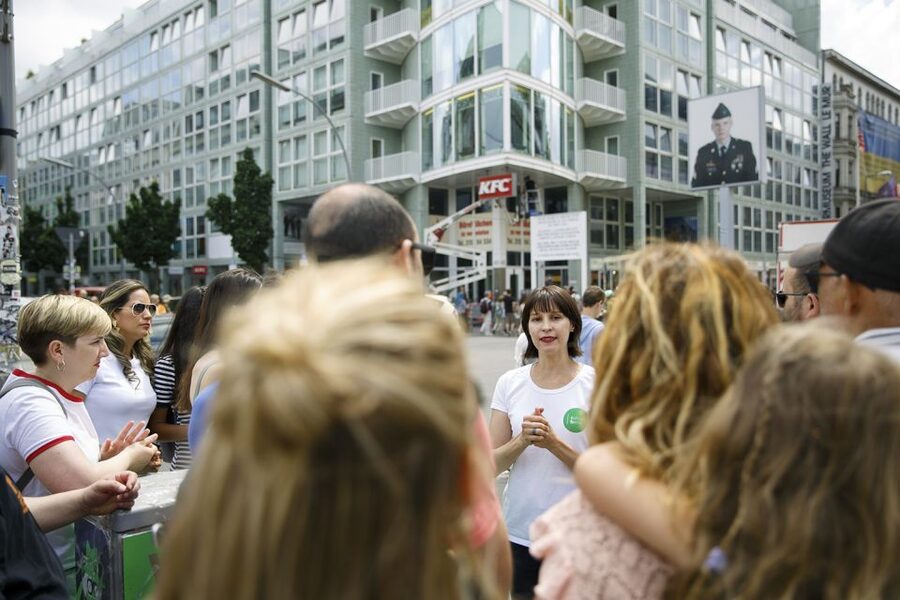
The tour begins at Alexanderplatz, beside the city’s famous TV Tower. Look for the green flag marked tours en español, next to the only entrance to the Fernsehturm, between the tower and Alexanderplatz railway station, near Espresso House.
This is a practical meeting point. Alexanderplatz is one of Berlin’s main transport hubs, so it is easy to reach by train, tram, or city transit. You should arrive ready to walk, since the experience is primarily a walking tour rather than a bus tour.
The opening section introduces Berlin’s origins in the San Nicolas neighborhood. This gives the day a useful starting point. Instead of beginning only with modern Berlin and its twentieth-century tragedies, you first get a sense of how the city began and developed.
You should not expect a quiet, extended visit at every landmark. This is a highlights route, designed to connect many important places in one morning or afternoon. The payoff is a broad first look at central Berlin. The tradeoff is that the tour cannot give every site the time of a museum visit.
A few more things to do in Berlin worth a look
- Berlin: Reichstag, Dome and Government District Guided Tour
★ 4.7 · 18,288 reviews - Berlin: Government District around the Reichstag Guided Tour
★ 4.7 · 8,447 reviews - Berlin: Hidden Backyards Guided Walking Tour
★ 4.8 · 5,360 reviews
Museum Island and the Berliner Dom
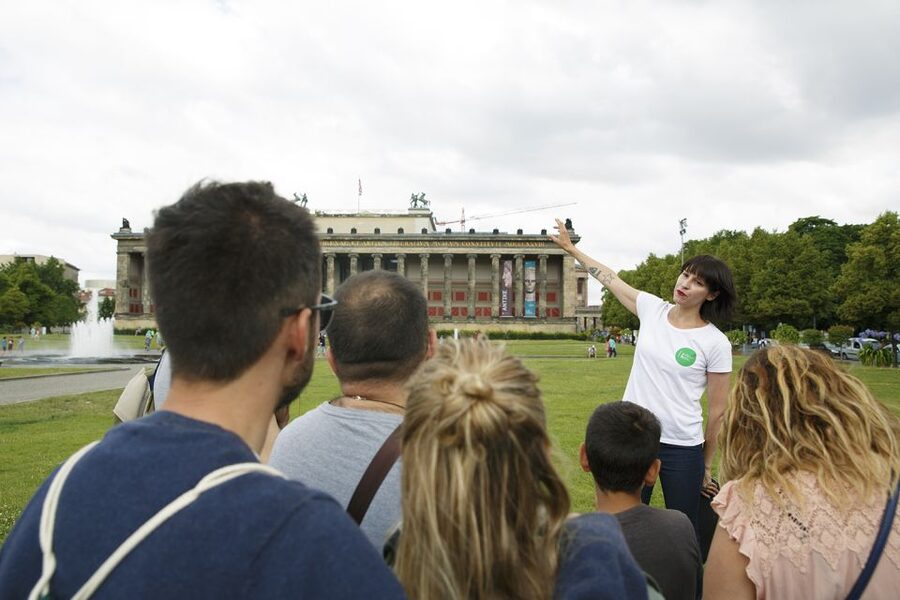
From the old San Nicolas area, the walk continues toward Museum Island, a UNESCO World Heritage Site. The island is home to several major museums and the impressive Berliner Dom, Berlin’s large cathedral with its unmistakable dome.
The value here is the setting. You are not simply ticking off a cathedral and moving on. Museum Island helps explain Berlin as a capital of art, royal power, scholarship, and public culture. Your guide can place the buildings around you into the city’s larger story, which is useful when you later explore the museums on your own.
The Berliner Dom is one of the route’s best photo stops, even if the tour does not include an interior visit. You can admire its exterior while hearing about the area around it. If you want to tour the cathedral or visit one of the museums, plan a separate visit for another time. Four hours is not enough for both a walking overview and detailed museum sightseeing.
I like this part for first-time visitors because it gives you a strong visual anchor. After the tour, you will know where Museum Island sits and why it deserves more of your time. If your schedule is tight, that orientation can save you from wandering without a plan.
Unter den Linden and Berlin’s royal center
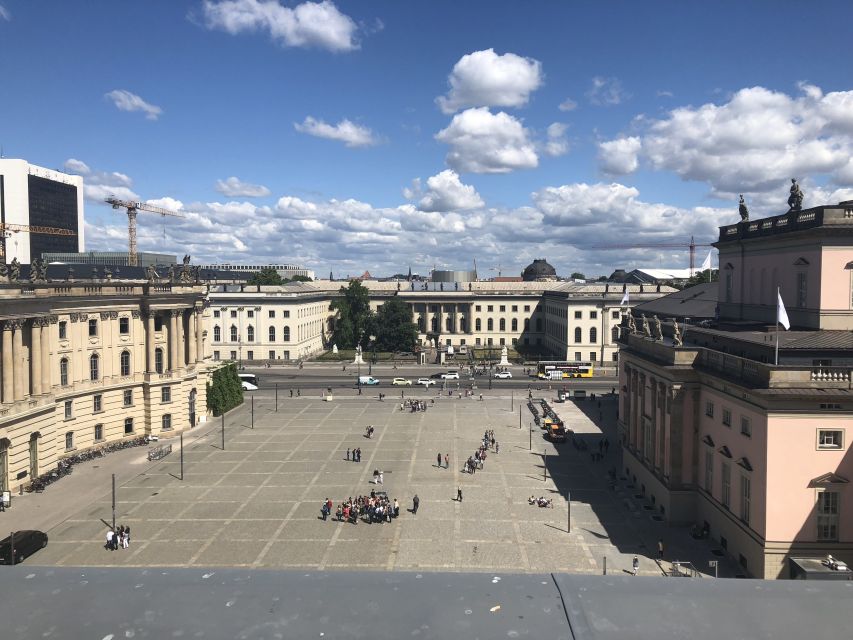
The route follows Kaiser’s Avenue and Unter den Linden, Berlin’s grand central boulevard. Along the way, you pass Humboldt University, the former Royal Library, and the State Opera.
This stretch shows Berlin in its grand imperial and intellectual mode. The buildings are not just attractive facades. They point to the city’s role as a center of government, education, music, and royal life.
A good guide makes this section more than a procession of names. Celia, for example, is especially good at connecting dates and buildings with broader questions, including how Berlin changed before and after the Wall. Evelyn has also been praised for clear explanations and patience with slower walkers. That patience matters on a long route with family members or mixed fitness levels.
Unter den Linden is also a reminder that Berlin is not one single kind of city. Within a short walk, you move from old urban roots to monumental royal architecture, then toward the political landmarks of the twentieth century. The guide’s commentary helps those shifts make sense.
Gendarmenmarkt and the planned rest
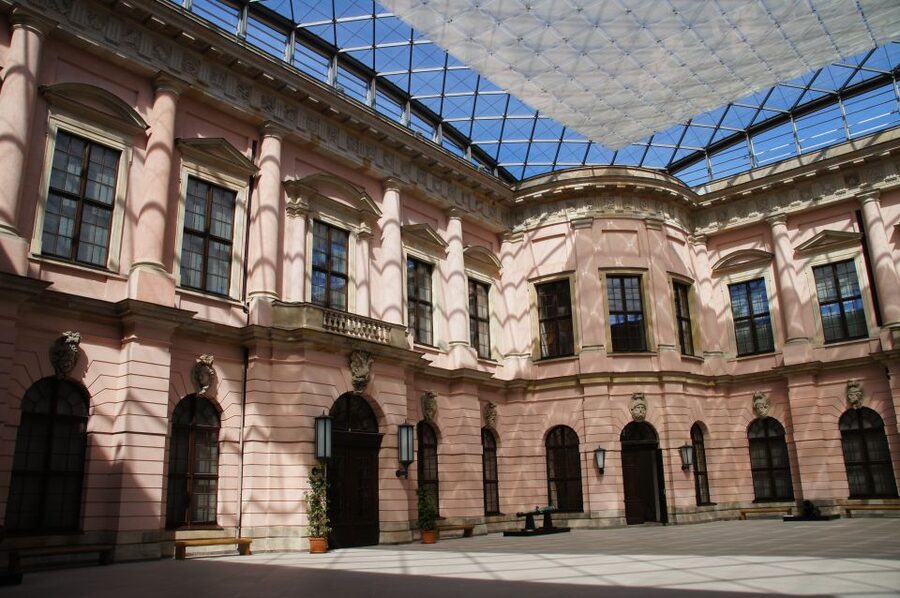
Gendarmenmarkt is one of Berlin’s most handsome squares and a natural place to pause for photos. The square’s formal design gives you a welcome change from the long avenues and busy central streets.
You should use this stop to catch your breath and take pictures, but do not treat it as the main rest break. The overall experience is active, and a full half-day of walking can wear you down, especially in winter.
The tour includes a break of roughly half an hour. You can use it for coffee, the restroom, or a short rest. That pause is a small but important part of the day. It keeps the history from becoming a blur and makes the route more manageable for families and slower walkers.
Bring comfortable clothes and sensible footwear. The tour runs every day, rain or shine, beginning at 10:00 in front of the TV Tower. Berlin weather can change quickly, and winter conditions can be harsh. A warm coat and shoes with good grip are more useful here than anything stylish but flimsy.
Same base, a different kind of day out:
- Berlin: 1-Hour City Tour by Boat with Guaranteed Seating
★ 4.3 · 16,993 reviews - Berlin: Boat Tour Along the River Spree
★ 4.4 · 11,252 reviews - Discover Berlin Half-Day Walking Tour
★ 5.0 · 9,624 reviews - Berlin: Hop-on Hop-off Bus Tour with Live Commentary
★ 4.3 · 8,579 reviews
Facing the Nazi era near the Gestapo site
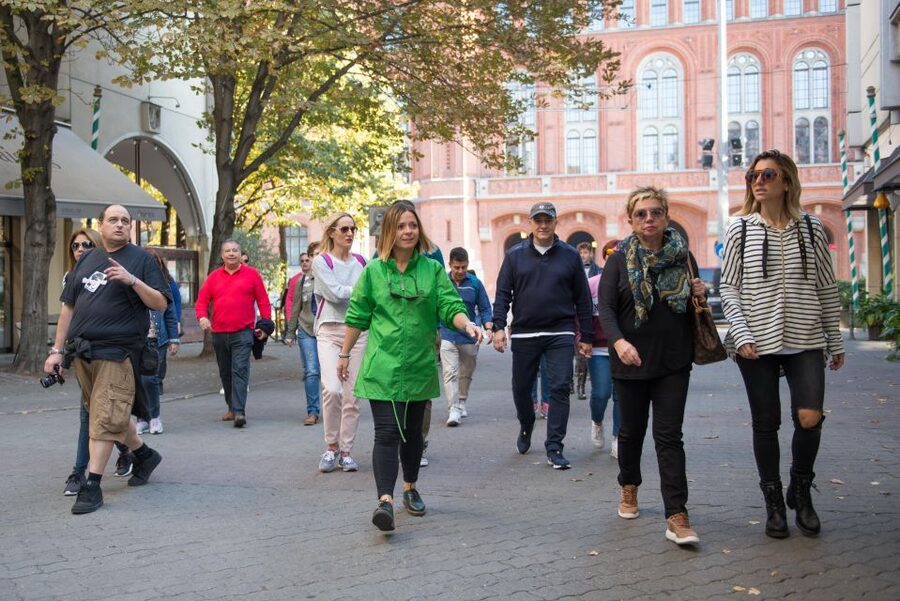
The historical tone becomes darker as the walk turns to Hitler’s rise to power and the remains of the Gestapo Headquarters. This section is important because it places Berlin’s later division in the context of the dictatorship and the Second World War.
The remains are not a grand monument. Their power comes from what they represent and from the chance to discuss how terror was organized through government institutions. Your guide can help you understand the connection between political power, repression, and daily life.
This is a serious part of the tour, and the quality of the explanation matters. A guide who simply lists dates will leave you with a flat account. A guide who encourages questions and reflection can help you see how ordinary streets became part of a system of persecution.
You should expect a sober experience here. The route is not designed as light entertainment, and that is appropriate. The guide’s role is to explain difficult history clearly without turning it into a spectacle.
The Holocaust Memorial and its difficult questions
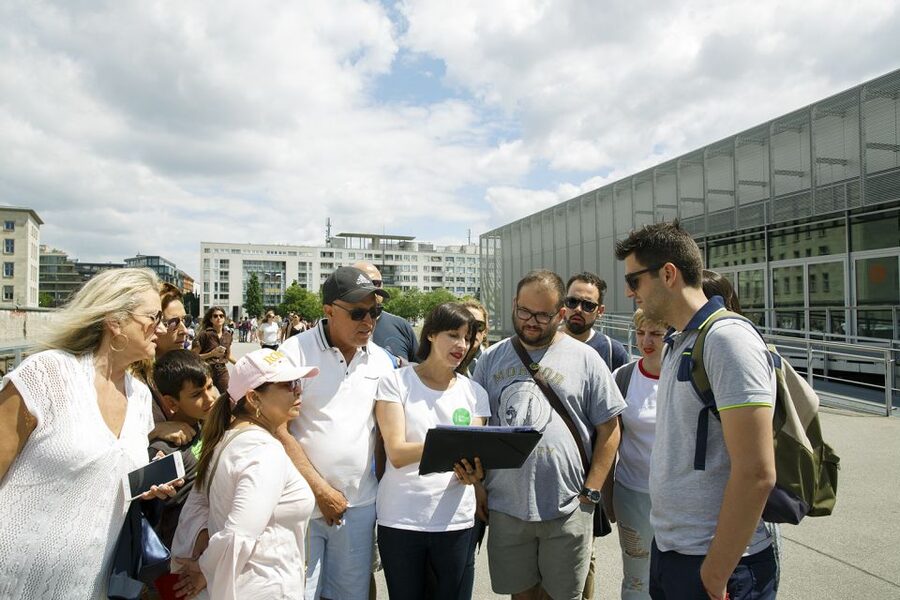
The tour continues to the Memorial to the Murdered Jews of Europe. The field of concrete blocks creates a powerful place for remembrance and discussion.
The memorial is best experienced with time to look, move through the space, and think. On a walking tour, your time there is limited, so do not expect the kind of detailed visit offered by a dedicated museum program. Still, the stop gives you essential context for understanding modern Berlin and the city’s effort to confront its crimes.
This is another place where a human, careful guide makes a difference. The tour description includes discussion and reflection rather than only a quick photo stop. You should be prepared for an emotionally heavy section, especially if you are visiting several memorials and museums during your stay.
Understanding why the Berlin Wall was built
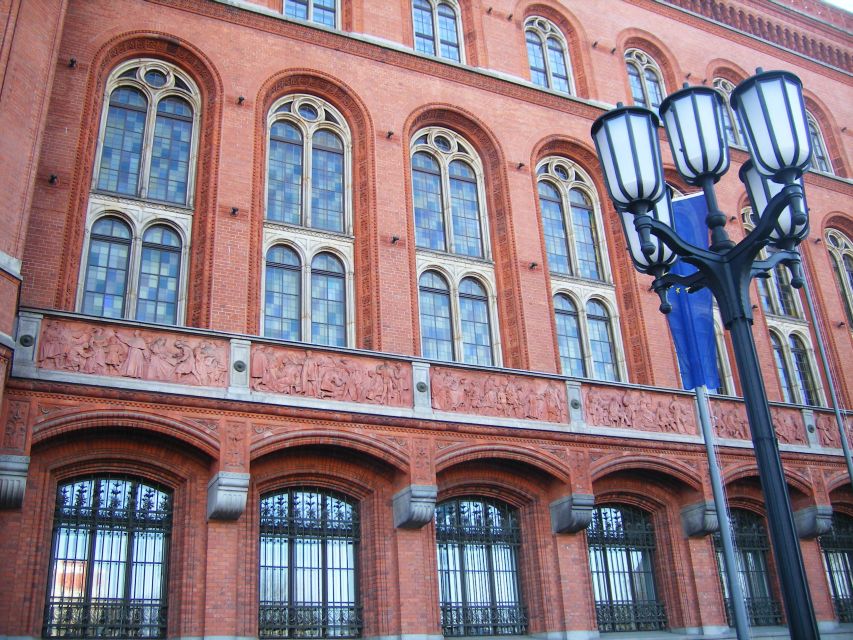
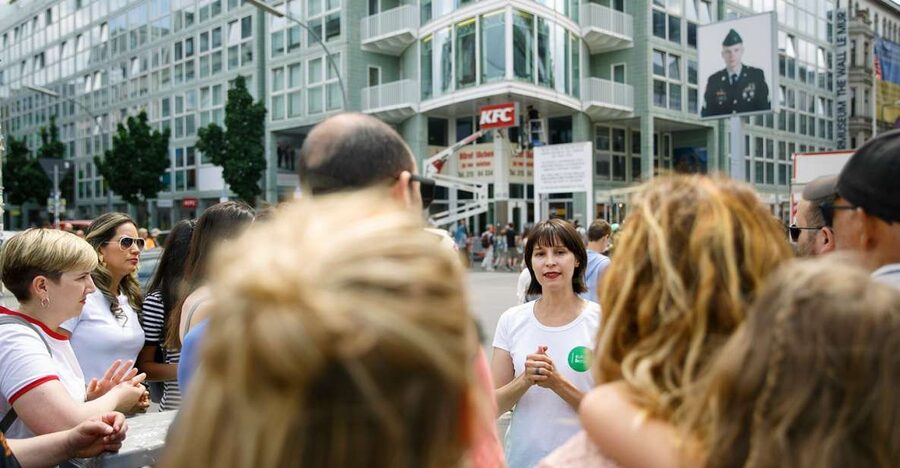
The Wall section is the heart of the tour for many people. You learn why the Wall was constructed, how it divided East and West Berlin, why it eventually fell, and what everyday life was like for people living on each side.
That last point is especially useful. The story is not limited to dates such as 1961 or 1989. You hear about the practical effects of division: families separated, movement controlled, and daily routines shaped by a border running through the city.
The tour also covers East Germans who risked their lives to reach West Berlin. These stories put a human face on a political system. They explain why crossing the border was not a simple act of changing neighborhoods, but a dangerous decision with potentially fatal consequences.
I like that the route presents the Wall as both a physical structure and a social reality. You are not only told that Berlin was divided. You are asked to picture how people worked, studied, visited family, and made plans under that division.
The tour cannot cover every Wall site in Berlin. If you want extensive surviving sections, watchtowers, or a museum devoted entirely to the Wall, you will need another visit. What this experience gives you is a clear framework. Afterward, other Wall locations will make more sense.
Potsdamer Platz and the new Berlin
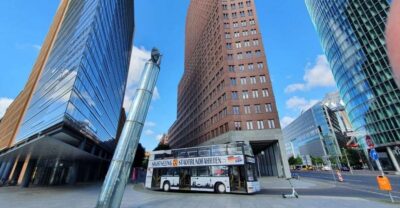
Potsdamer Platz shows the city’s post-reunification side. Once cut by the Wall, the area became a symbol of the modern city that grew after Berlin was reunited.
The contrast is striking. Earlier, you have seen royal buildings, wartime remains, and memorials. Here, the architecture is modern and forward-looking. The stop helps you see how quickly Berlin changed after 1989 and how the former border shaped redevelopment.
For some people, Potsdamer Platz will be less emotionally powerful than the Holocaust Memorial or the Wall stories. That is fair. Its value is visual and historical rather than intimate. It shows what reunification looked like in bricks, glass, offices, and public space.
The guide can also help you avoid a common mistake: thinking that Berlin’s modern architecture appeared without a past. Potsdamer Platz is most interesting when you understand what was missing there for decades and why rebuilding the area mattered.
Ending at the Brandenburg Gate
The tour ends at the Brandenburg Gate, Berlin’s most famous symbol. It is a fitting final stop because the gate has witnessed royal rule, dictatorship, division, and reunification.
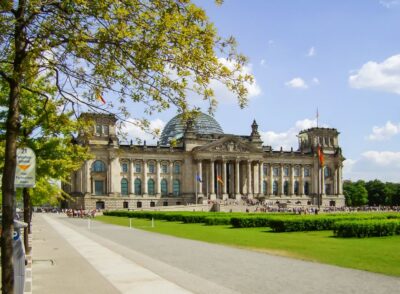
Ending here also makes practical sense. The Brandenburg Gate is close to other major sights, including the Reichstag area and Unter den Linden, so you can continue exploring after the guide leaves. It is a good place to pause, take photographs, and review the route you have just walked.
The Brandenburg Gate is heavily photographed, but context keeps it from feeling like a postcard-only stop. After hearing about Berlin’s divided years, the gate becomes a symbol of a city that was once cut apart and later reunited.
What $29 buys you
At $29 per person, this is a strong-value introduction to central Berlin. You receive four hours with a live Spanish-speaking guide and a route that covers many of the city’s most important sights.
The price is especially attractive if you want history explained in Spanish rather than pieced together from plaques, guidebooks, and phone apps. You are paying for structure and interpretation, not admission to museums. Entry tickets to attractions are not included, so budget separately if you plan to return to Museum Island or enter the cathedral.
You should also consider the amount of ground covered. A four-hour route that includes Alexanderplatz, San Nicolas, Museum Island, Unter den Linden, Gendarmenmarkt, the Nazi-era sites, the Holocaust Memorial, Potsdamer Platz, and the Brandenburg Gate offers a lot for the money. It is not a slow, specialized tour of one neighborhood, but it is an efficient way to get oriented.
A private group is available if you want a more personal format. Hotel lobby pickup is also an option. These choices may suit families, groups with special timing needs, or anyone who prefers not to organize the meeting point. The standard meeting point remains simple and central if you do not need those extras.
Who will enjoy this walk most?
I would choose this tour for a first visit to Berlin, particularly if Spanish is your preferred language. It gives you a usable mental map and explains the city’s central story before you spend time on individual museums or neighborhoods.
It also suits families and mixed-age groups. The guide Evelyn has been especially patient with slower walkers, and the built-in break makes the day easier. Still, you need to be comfortable walking for much of four hours.
This is a good choice if the Berlin Wall and twentieth-century history are high on your list. It is less suitable if you want a food tour, a museum interior tour, or a short sightseeing ride with little walking.
The tour runs in all weather. A cold, snowy day does not cancel the history, but it can change your enjoyment of the route. On poor-weather days, dress for the conditions and keep your expectations realistic.
The experience has a 4.8 rating from 164 reviews, and the strongest themes are easy to understand: clear explanations, approachable guides, useful historical context, and a route that stays interesting. Guides such as Evelyn, Celia, and Constantino are mentioned for their clarity, warmth, and ability to keep the experience moving.
Should you book it?
Book this tour if you want a Spanish-language introduction to Berlin’s major sights and difficult history at a reasonable price. The route is broad, the guide gives the city a human context, and the Wall section should help you understand Berlin beyond its famous photographs.
Skip it if you dislike long walks or prefer to explore one museum or neighborhood in depth. For most Spanish-speaking first-time visitors, though, this is a smart first-day choice. It gives you the basic map, the major landmarks, and enough historical background to make the rest of your Berlin stay more rewarding.
FAQ
Is the tour conducted in Spanish?
Yes. The tour is offered only in Spanish and includes a live Spanish-speaking guide.
How long does the tour last?
The walking tour lasts four hours.
Where does the tour begin?
It begins beside the TV Tower, or Fernsehturm, in Alexanderplatz. Look for a green flag marked tours en español beside the tower’s only entrance, between the TV Tower and Alexanderplatz railway station, near Espresso House.
What time does the tour begin?
Tours run every day and begin at 10:00 in front of the TV Tower. You should check availability for the exact starting time when booking.
Which Berlin sights are included?
The route includes the San Nicolas neighborhood, Museum Island, the Berliner Dom, Unter den Linden, Humboldt University, the former Royal Library, the State Opera, Gendarmenmarkt, the remains of the Gestapo Headquarters, the Holocaust Memorial, Potsdamer Platz, and the Brandenburg Gate.
Does the tour explain the Berlin Wall?
Yes. The guide explains why the Wall was built, why it fell, how people lived with the division, and how some East Germans risked their lives to cross into West Berlin.
Is there a break during the tour?
Yes. The tour includes a break of about half an hour for coffee, a restroom visit, and rest.
Is the tour wheelchair accessible?
Yes, the activity is listed as wheelchair accessible.
Can I book a private group?
Yes. A private group option is available.
Can the tour pick me up at my hotel?
Yes. Hotel lobby pickup is available as an optional service.
Just added in Berlin
- Private One way Airport Transfer Berlin Airport To Berlin★ 3.5 · 17 reviews
- Private Walking Tour: Berlin Wall, Cold War and Checkpoint Charlie★ 5.0 · 37 reviews
- Modern Berlin Private Walking Tour: Diverse, Vibrant and Exciting German Capital★ 5.0 · 13 reviews
- Private Day Trip to Potsdam from Berlin by Train★ 4.5 · 27 reviews
- City Explorer: Potsdam Private Day Trip★ 4.5 · 10 reviews
- Berlin Private Custom 5-Hour Tour by Car★ 5.0 · 30 reviews
- Private Half-Day Sightseeing Tour in Berlin★ 3.5 · 6 reviews
- Berlin Private Custom Tour in a Minivan, East and West★ 5.0 · 123 reviews
Tours in Berlin, compared.
Reichstag, Dome and Government District Guided Tour
Read our review →
1-Hour City Tour by Boat with Guaranteed Seating
Read our review →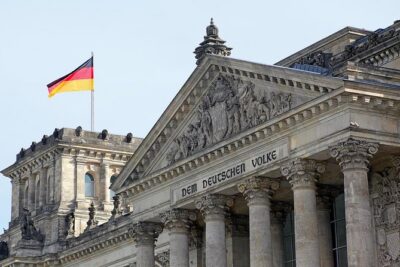
Reichstag, Plenary Chamber, Cupola & Government Tour
Read our review →