

Reviewed · GERMANY
Tickets to the Meissen Porcelain Factory
Meissen porcelain is not made by machine alone. At the factory, human hands still shape the clay, repair tiny figurine parts, and apply the decoration, so you can watch a cup or elaborate figure take form at close range. The process is quiet, careful, and far more intricate than the finished objects suggest.
I especially like two things here: the workshops show the complete production chain, not just a display case, and the museum places pieces from 1710 to today in chronological order. The main consideration is time: to hear the audio-guided workshop tour, arrive before 3 PM, and you will want several hours if you also plan to browse the shops and cafe.
Key points at a glance

- Watch porcelain take shape: See molding and throwing, figurine repair, and both underglaze and overglaze decoration.
- Follow 300 years of design: The Museum of Meissen Art displays works from 1710 to the present.
- Use the audio guide: Commentary is offered in 15 languages, including English, Spanish, Chinese, French, German, Italian, Japanese, and Russian.
- Look closely at figurines: A single figure can contain many separate porcelain parts, each repaired and finished by hand.
- Leave room for shopping: The boutique and outlet center offer a chance to compare current pieces and reduced-price items.
- Add a small personal touch: Recent information indicates that spontaneous porcelain painting may be available, letting you create a Meissen piece of your own.
Why the Meissen factory is more than a china shop

The appeal here is watching a finished object become understandable. A delicate cup can look simple on a shelf, but the factory shows the stages behind it: shaping the clay, drying and firing, adding details, and applying color at different points in the process.
That practical view gives the museum displays more meaning. When you later see a small flower, raised ornament, or painted figure, you have already seen how much handwork it requires. I find that makes the high level of care easier to appreciate, even if you are not planning to buy anything.
The visit is also a good choice if you want something different from castles, churches, and grand civic buildings. Porcelain is a major part of Meissen’s identity, and this experience connects working craft with design history. It is not simply a guided look at merchandise.
The factory is open for a full day of exploration, but the actual workshop visit has an important cutoff. You should arrive before 3 PM if you want to take part in the audio-guided demonstration. That detail matters because the museum and shops may still be open later, but the central production presentation may no longer be available.
A few more things to do in Germany worth a look
- Dresden: Semperoper Tickets and Guided Tour
★ 4.7 · 12,102 reviews - Berlin: Jewish Museum Berlin Entrance Ticket
★ 4.5 · 8,393 reviews - Berlin: Berlin Story Bunker Entry Ticket
★ 4.6 · 6,759 reviews
Starting at the Museum Ticket Office
Your meeting point is the Museum Ticket Office for Groups at Talstrasse 9, 01662 Meissen. The ticket includes entry to both the demonstration workshop and the museum, while food, drinks, and transportation are separate.
At $18 per person, the price is reasonable if you use the ticket as a half-day or full-day visit. You are not paying only for a short demonstration. The admission covers access to working craft displays, a large historical collection, and the chance to spend time in the boutique, outlet center, and cafe.
If your schedule is tight, plan the workshop first. You can then visit the museum at your own speed. If you arrive late, you risk missing the part of the experience that explains how the objects are made, which is the strongest reason to come.
The audio guide is included. Available languages are English, Spanish, Chinese, Czech, Danish, Dutch, Finnish, French, German, Italian, Japanese, Polish, Russian, and Swedish. That broad choice makes the visit easier for mixed-language groups, and you are not dependent on a live guide conducting the tour in one language.
Seeing a cup made step by step
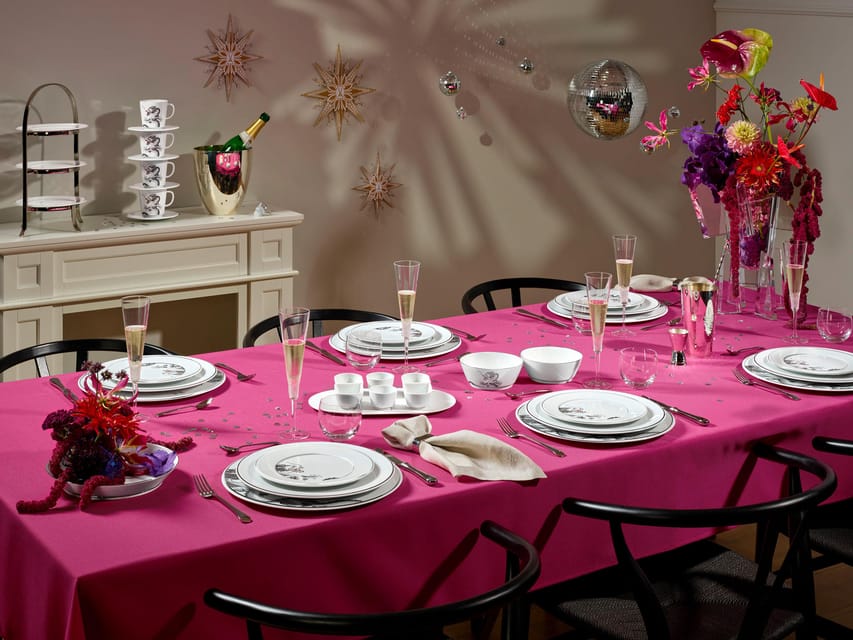
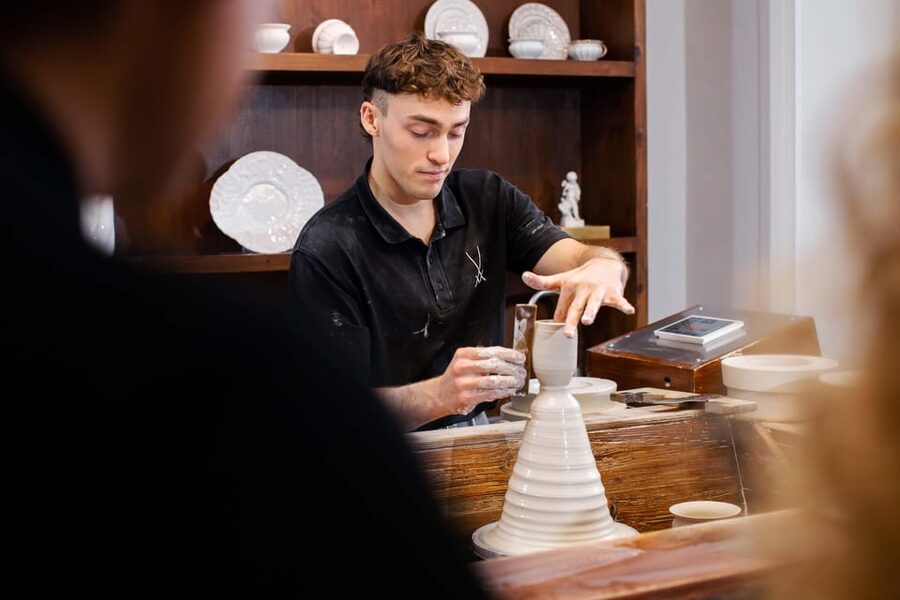
The demonstration workshops focus on the practical stages of porcelain production. You can watch molding and throwing, the basic shaping work that gives cups and other pieces their form.
This is a useful part of the visit because it shows the difference between an object’s design and its construction. A cup may appear to be one clean shape, but its final look depends on accurate molding, even walls, and careful handling before decoration begins.
The demonstrations also help explain why handcraft matters. The factory has modern demands, but the human hand remains central to the process. You see skill expressed through small corrections and repeated movements rather than through a single dramatic moment.
The audio guide should help you follow what is happening without needing to stand beside a staff member. Since the workshop includes several stages, listen for how each one prepares the piece for what comes next. The value is in seeing the sequence as a whole.
Do not rush through this section. The workshop is the place to look closely at the workers’ hands and tools. It is also where the factory feels most like a working place rather than a museum.
Figurines and the art of repairing
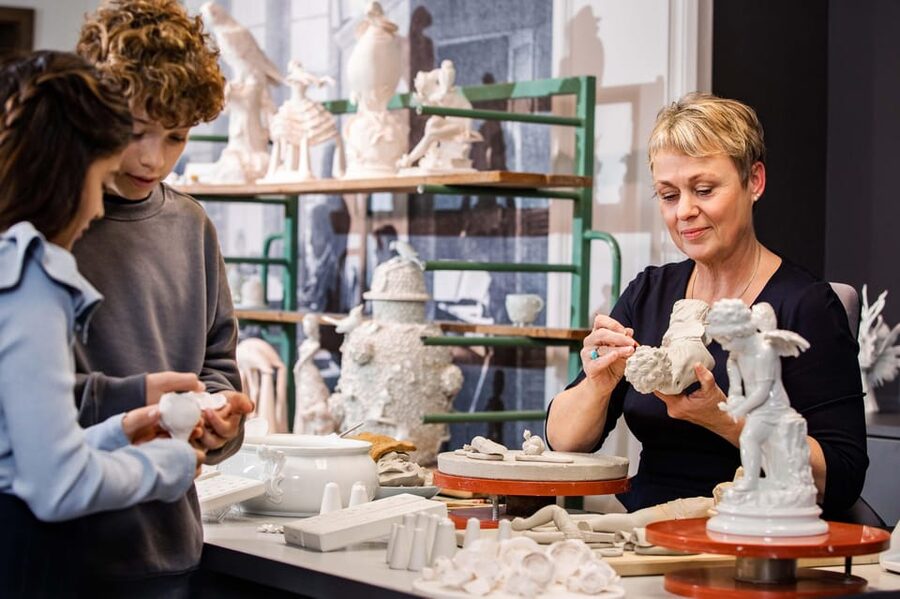
Figurines receive special attention through the stage known as repairing. This is where individual porcelain elements are assembled, refined, and corrected so that the finished figure looks like one complete object.
The factory makes clear that a typical figurine can contain many separate pieces. That fact changes the way you see the displays. A small hand, flower, fold of clothing, or decorative detail may have been made separately and joined with great care.
I find this section especially useful for anyone who thinks of porcelain as fragile decoration without much technical depth. The figures show how sculpture, modeling, and fine repair work meet in a single object.
Look at the figurines in the museum after seeing the workshop. You will have a better sense of why certain poses and details demand so much labor. The demonstration gives you the process, while the collection shows the finished result at its best.
This is also the part most likely to interest children and casual visitors, since the work can be understood visually even if you know little about porcelain. The scale and detail make the process easy to follow.
Same base, a different kind of day out:
- Berlin: Reichstag, Dome and Government District Guided Tour
★ 4.7 · 18,288 reviews - Berlin: 1-Hour City Tour by Boat with Guaranteed Seating
★ 4.3 · 16,993 reviews - Hamburg: Sex and Crime in St. Pauli Tour for Ages 18+
★ 4.7 · 15,447 reviews - Hamburg: 1.5-Hour Harbor and Speicherstadt Day Cruise
★ 4.6 · 14,200 reviews
Underglaze and overglaze decoration
Decoration is presented in two main stages: underglaze and overglaze work. The distinction matters because color and design are not added in one simple step.
The workshop lets you see how painted decoration fits into the larger production cycle. You can watch the difference between work applied before later firing and decoration added afterward. The result is a clearer idea of why a finished piece can show such controlled color and fine detail.
This section rewards close attention. Porcelain decoration is easy to admire from a distance, but the workshop lets you consider the decisions behind it. A pattern has to follow the shape of the object, and the painter has to work with a material that will change through the firing process.
The museum then gives you hundreds of examples to compare. I recommend looking for changes in color, shape, and ornament as you move through the collection. The point is not only to identify the prettiest pieces. It is to see how taste and design shifted over time.
Three centuries inside the Museum of Meissen Art

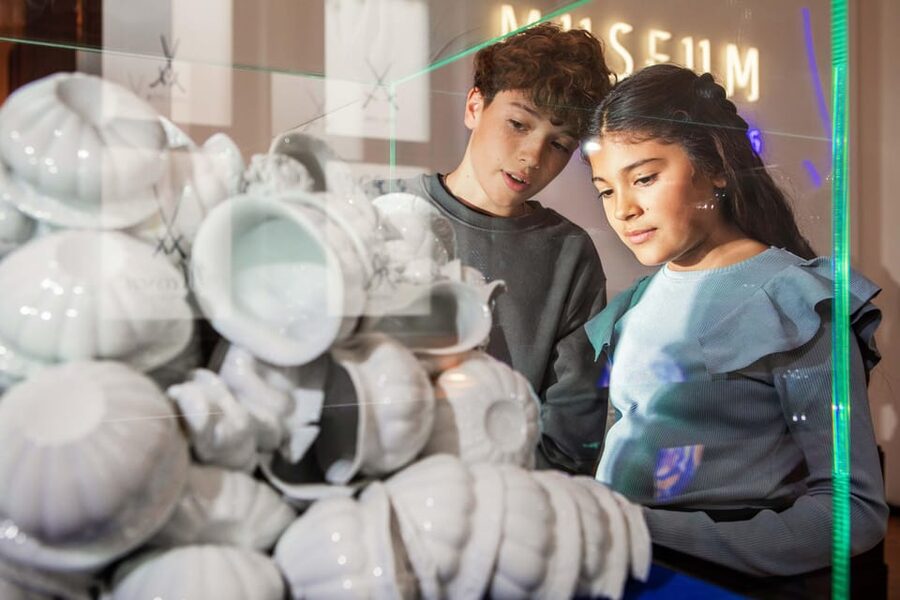
The Museum of Meissen Art covers porcelain from 1710 to the present day. The works are arranged chronologically, so you can follow design changes in a clear order rather than moving randomly from one display to another.
That arrangement is a real advantage. A collection this large could feel disconnected, but a time sequence gives you a simple question to carry through the rooms: how did Meissen’s look change from one period to the next?
The collection is drawn from the manufactory’s extensive holdings. You will see pieces from different periods, which helps place the current work in a long line of design. The museum is not limited to one famous style or one type of object.
I would allow enough time to look beyond the most obvious showpieces. Cups, figures, and decorative objects can reveal different sides of the factory’s work. Some pieces catch your eye for their ornament, while others are more useful for showing a change in form or technique.
The museum is also where the visit becomes less about production and more about taste. The workshop explains how porcelain is made. The gallery asks you to consider what designers and makers chose to create across three centuries.
A possible hands-on porcelain painting option

Recent information about the experience indicates that you may be able to paint porcelain spontaneously and take home a personal Meissen item. If this option is available on your date, it adds a more active element to the visit.
This is worth asking about when you arrive, especially if you are visiting with children or want something beyond looking at displays. A self-painted piece is not the same as buying a finished object, and that difference gives it more personal value.
Do not build your entire schedule around this activity, since the supplied details do not give fixed times or guarantee availability. Treat it as a useful extra to check on the day.
Shopping at the boutique and outlet center
The boutique is the place to see Meissen porcelain as a current product rather than only as museum history. After watching the work involved, you can judge the finished pieces with a better understanding of the labor behind them.
The outlet center gives you another way to shop. It may suit you if you like the style but need to watch your budget. Still, outlet shopping is not a promise that every item or design will be available, so go with an open mind rather than a specific piece in mind.
Shopping is optional, and you do not need to buy anything to make the admission worthwhile. The museum and workshop provide the main content. The stores work best as a final stop, when you have already seen how the objects are produced.
If you do buy something, plan carefully for carrying it. The provided information does not specify shipping services or packing arrangements, so ask the staff about those details before committing to a larger or fragile purchase.
A cafe break on Meissen porcelain

The cafe offers a snack served on Meissen porcelain. Food and drinks are not included in the $18 admission, but the cafe gives you a chance to use the product in an everyday setting rather than viewing it behind glass.
That small detail adds charm to the visit. After seeing workers shape and decorate porcelain, drinking or eating from it helps connect the craft to ordinary use. It also gives you a natural pause between the workshop, museum, and shops.
The information provided does not list the cafe menu, prices, or dietary choices. If those details matter to you, check on arrival. You should also remember that the cafe is an extra cost, not part of the ticket.
How much time should you allow?
The ticket is valid for one day, and the attraction is open for long hours on most dates. In practical terms, I would treat this as a half-day visit at minimum, with a full day possible if you take your time in the museum, shop, eat at the cafe, and try the painting option if available.
Arriving before 3 PM is the key planning point. You need that margin for the audio-guided workshop, and a morning or early afternoon arrival leaves room for the museum afterward.
Opening hours vary by season:
- Through December 21, 2025, the site is open daily from 9 AM to 6 PM.
- From December 22 to 30, 2025, hours are 9 AM to 5 PM.
- On December 31 and January 1, hours are 10 AM to 4 PM.
- The attraction is closed December 24, 25, and 26.
- From January through March 2026, hours are 10 AM to 5 PM.
- From April 2026 onward, hours are 9 AM to 6 PM.
- On January 14, 2026, the Meissen Theme World closes at 3 PM.
Check the date-specific hours before setting out. The workshop cutoff and seasonal changes make a late arrival a poor gamble.
Who will get the most from this visit?
I would recommend the factory to anyone interested in applied art, design, sculpture, painting, or traditional handwork. It also works well for families because the production stages are visual and concrete, especially the many-piece construction of figurines.
You do not need prior knowledge of porcelain. The audio guide provides support in many languages, and the chronological museum layout gives you an easy structure to follow.
The visit may be less satisfying if you want a quick attraction that takes less than an hour. The value comes from connecting several parts: workshop, museum, shopping, and cafe. Skip the museum and you lose much of the design story. Skip the workshop and you lose the clearest look at the craft.
People who dislike shopping should not worry. The boutique and outlet center are optional, and the ticket still offers plenty to see without a purchase.
Pets are not allowed, so plan accordingly.
Is the $18 ticket good value?
For $18, I see solid value in the combination of experiences. You get the demonstration workshop and museum admission, with an audio guide included. The displays cover 300 years, and the workshop shows several distinct stages rather than offering one quick demonstration.
The ticket is especially good value if you arrive early enough for the workshop and stay to examine the museum. It is less useful if you arrive near the afternoon cutoff or only want to browse the shop.
Food, drinks, transportation, and any purchases cost extra. That is normal for this type of attraction, but it means you should not treat the ticket as an all-inclusive day package.
Free cancellation up to 24 hours before the visit and the option to reserve now and pay later make advance planning less risky. Those policies are useful if your schedule may change, but the main decision should still be your available time.
Should you book the Meissen Porcelain Factory?
Book it if you want to see how a famous porcelain tradition works from the inside, not just admire finished pieces. The strongest plan is to arrive before 3 PM, watch the workshop, follow the museum’s timeline from 1710 onward, then decide how much time to give the cafe and shops.
I would be less quick to recommend it for a rushed itinerary or for anyone who only wants a short photo stop. But if you value skilled handwork, historic design, and a chance to see the making process close up, $18 buys a substantial visit. Ask about porcelain painting when you arrive, and keep enough space in your day to enjoy the museum rather than racing through it.
FAQ
Where is the Meissen Porcelain Factory located?
The meeting point is the Museum Ticket Office for Groups at Talstrasse 9, 01662 Meissen, Germany.
What does the ticket include?
The ticket includes entry to the demonstration workshop and the Museum of Meissen Art.
Does the ticket include food and drinks?
No. Food and drinks are not included, though a cafe offers a snack served on Meissen porcelain.
How long is the ticket valid?
The ticket is valid for one day.
What time should I arrive for the workshop?
Arrive before 3 PM to take part in the audio-guided tour of the demonstration workshop.
Which languages are available for the audio guide?
The audio guide is available in Spanish, Chinese, Czech, Danish, Dutch, English, Finnish, German, Italian, Polish, Russian, Japanese, Swedish, and French.
Is the attraction open every day?
Opening hours vary by season, but the attraction is generally open daily. It is closed December 24, 25, and 26, with special hours on December 31 and January 1.
Are pets allowed?
No. Pets are not allowed.
Can I cancel my booking?
Yes. You can cancel up to 24 hours in advance for a full refund. You can also reserve now and pay later.
Just added in Germany
- Berchtesgaden: Via Ferrata Beginner Tour of Schützensteig★ 4.7 · 15 reviews
- Berlin: Energizing 2-Hour Morning Segway Tour★ 4.7 · 35 reviews
- Berlin: Thrilling E-Scooter Adventure Tour★ 4.4 · 66 reviews
- Bayreuth: German City Walking Tour (Tourist Info)★ 4.7 · 202 reviews
- Beelitz-Heilstätten: Baum&Zeit Tree Top Walk Entry Ticket★ 4.9 · 7 reviews
- Beer Bike & Party Bike: Unforgettable Berlin City Tour incl. pickup★ 5.0 · 5 reviews
- Bayreuth: Christmas city tour in German★ 4.9 · 12 reviews
- Bayreuth: Private Guided Walking Tour★ 5.0 · 15 reviews