
Reviewed · MUSEUMS
Berlin: DDR Museum Tickets
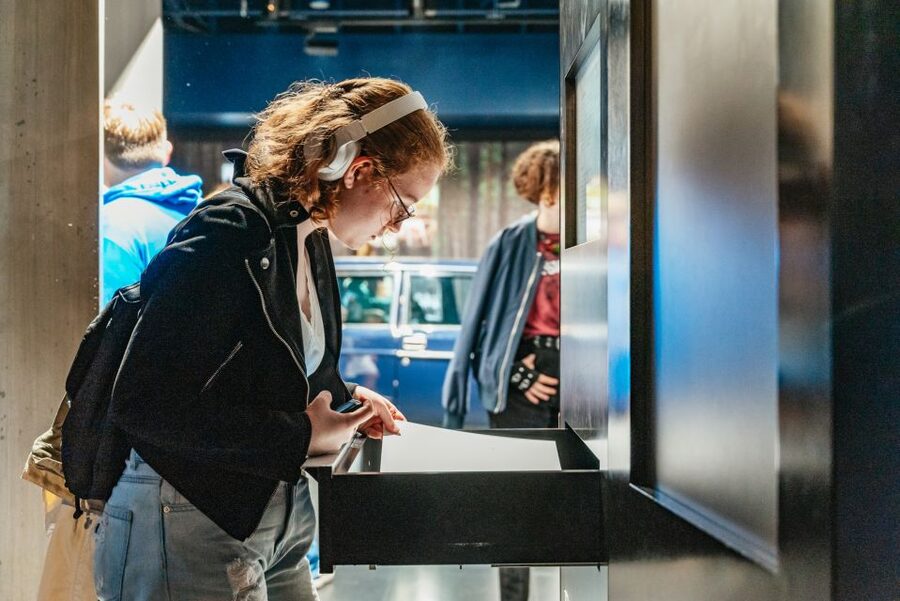
East Germany becomes surprisingly tangible at Berlin’s DDR Museum. You do not just look at objects behind glass. You open drawers, switch on a television, smell spices, inspect a pressure cooker, and sit inside a Trabant while a simulated drive carries you through prefabricated districts.
I like the reconstructed apartment, which turns politics into everyday life, and the hands-on exhibits, which work well for families and teenagers. The main drawback is crowding. On busy days, the museum’s narrow sections can make it hard to read every panel or try each exhibit.
Key points to know before you go
- Open every day from 9am to 9pm: The long hours make it easy to fit into a full Berlin sightseeing day.
- Opposite Berlin Cathedral: The entrance is on the Spree riverbank, in a very central location.
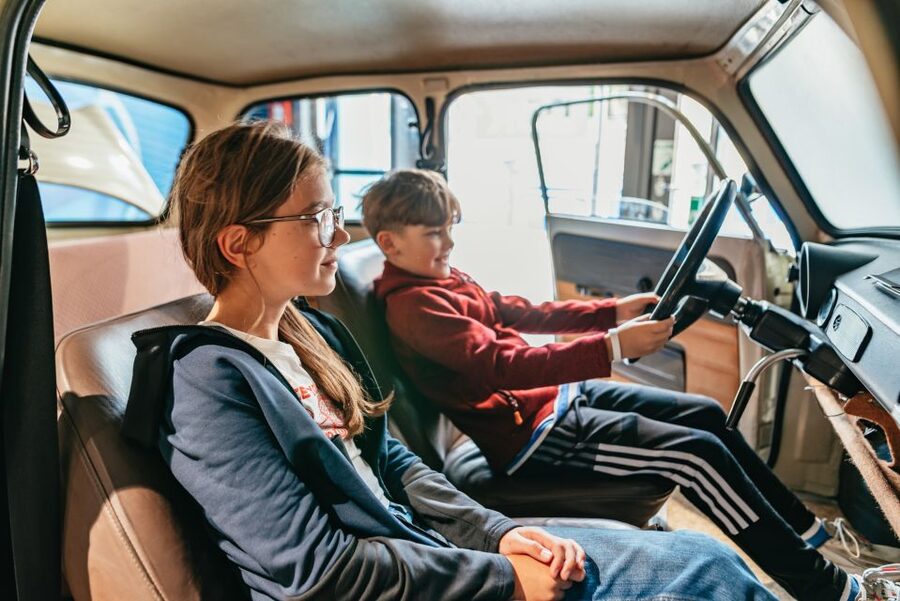
- A real Trabant simulator: Sit behind the wheel, turn the ignition, and take a playful virtual drive through East German housing districts.
- A reconstructed DDR apartment: Open cupboards, inspect household goods, and see how an ordinary East German home was arranged.
- Self-guided and hands-on: No museum guide is included, but information is available in German and English.
- Plan for 1.5 to 3 hours: A quick visit can take about 90 minutes, while careful readers and families may stay much longer.
Why the DDR Museum feels different
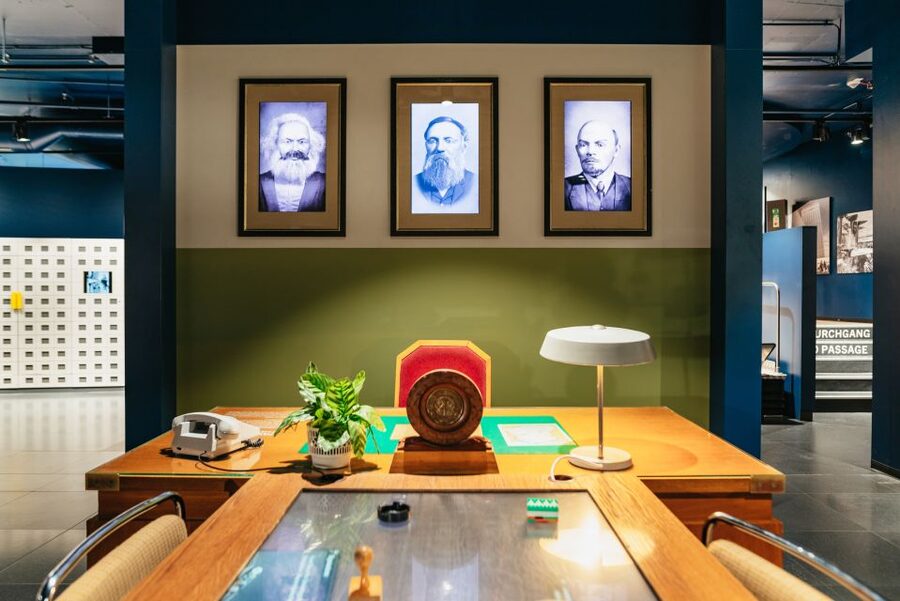
Many museums ask you to keep your distance. This one asks you to touch things. That simple choice changes the visit from a display of political artifacts into a look at ordinary routines.
The DDR, or Deutsche Demokratische Republik, existed from 1949 until German reunification in 1990. The museum uses objects and room settings to show what life was like under the East German communist system. Politics is present, but the focus often returns to shopping, housing, entertainment, work, schooling, travel, and family life.
I find that approach useful because historical systems can feel remote when you only see dates and official speeches. A wall cupboard, television, spice jar, or cramped room can explain daily limits more clearly than a long paragraph.
The museum is not large, so you are not signing up for an all-day commitment. Still, the amount of text and the number of interactive stations can stretch the visit. If you stop to read carefully and try the displays, allow around two hours. Families who let children investigate every drawer may spend three hours.
More Museums across Germany
- Berlin: Jewish Museum Berlin Entrance Ticket
★ 4.5 · 8,393 reviews - Berlin: Natural History Museum Entrance Ticket
★ 4.6 · 3,382 reviews - Berlin: Neues Museum Entry Ticket
★ 4.6 · 3,261 reviews
Finding the entrance beside Berlin Cathedral
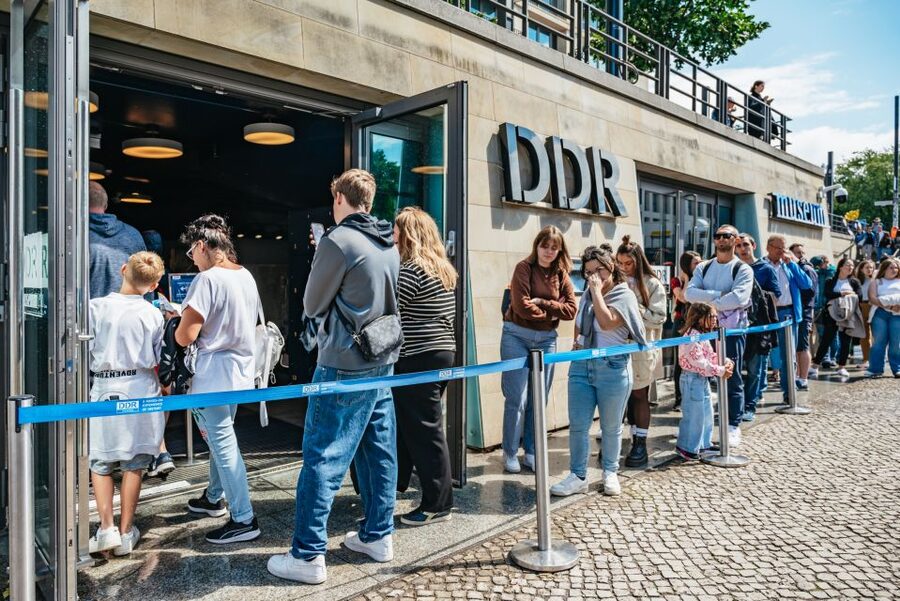
The entrance is on the bank of the Spree, opposite Berlin Cathedral. This is one of the easiest museum locations in central Berlin to add to a sightseeing route, since the cathedral and Museum Island are right across the water.
The location also gives you a useful visual introduction. You are looking across the river at one of Berlin’s grand historic areas before stepping into an exhibition about the former East Germany. That contrast is part of the appeal.
The ticket is listed at about $15 per person. For Berlin, that is a fair price if you plan to spend at least 90 minutes inside. It offers more than a quick collection of objects because the displays are built for participation. You can explore at your own pace rather than follow a fixed tour group.
An advance ticket is useful on busy days. Entry is valid for one day, and you can cancel up to 24 hours ahead for a full refund. The reserve now and pay later option can also help if your Berlin schedule is still shifting.
Entering the reconstructed DDR apartment
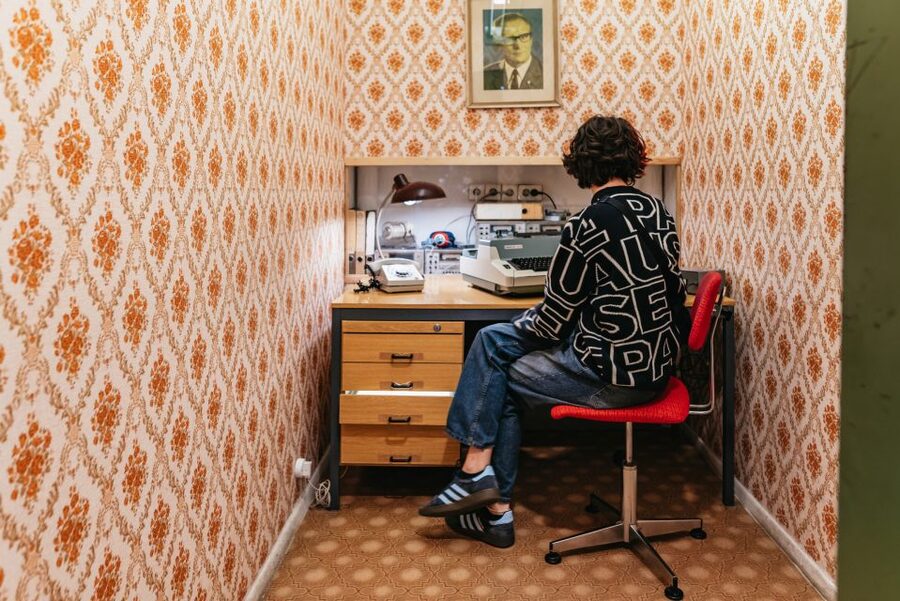
The apartment is the museum’s strongest section for many people, and I can see why. It gives you a room-by-room sense of East German domestic life rather than presenting isolated objects without context.
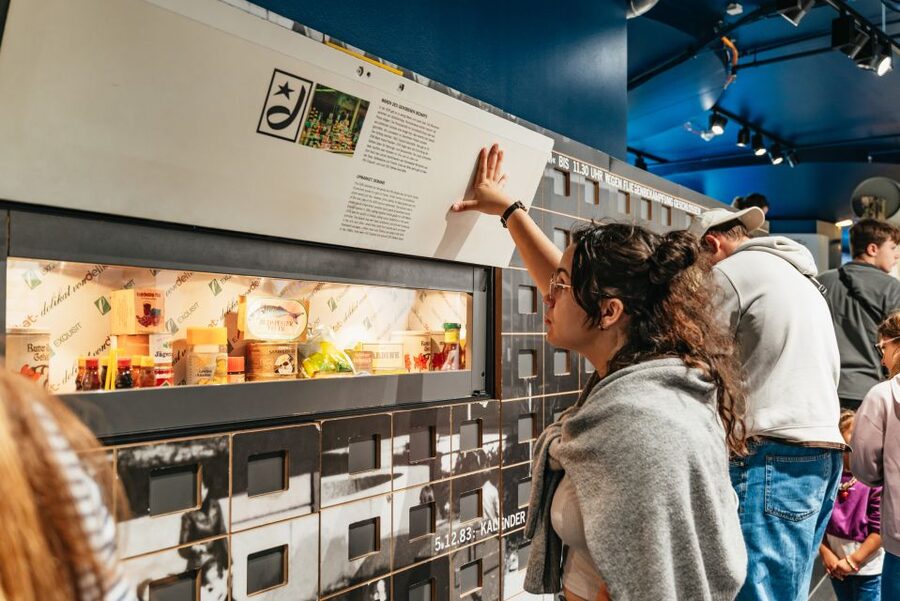
You can open cupboards and drawers, look inside a Karat wall unit, examine kitchen equipment, and inspect everyday goods. The furniture is not treated as precious decoration. It is there to be handled and understood.
The Karat wall cupboard is especially useful because it was such a recognizable piece of DDR-era furniture. It helps you picture the living room as a working family space, not just a period set. Turn on the television and sit with the room’s objects around you. The experience asks you to consider what people owned, what they lacked, and how much of their home life was shaped by limited choice.
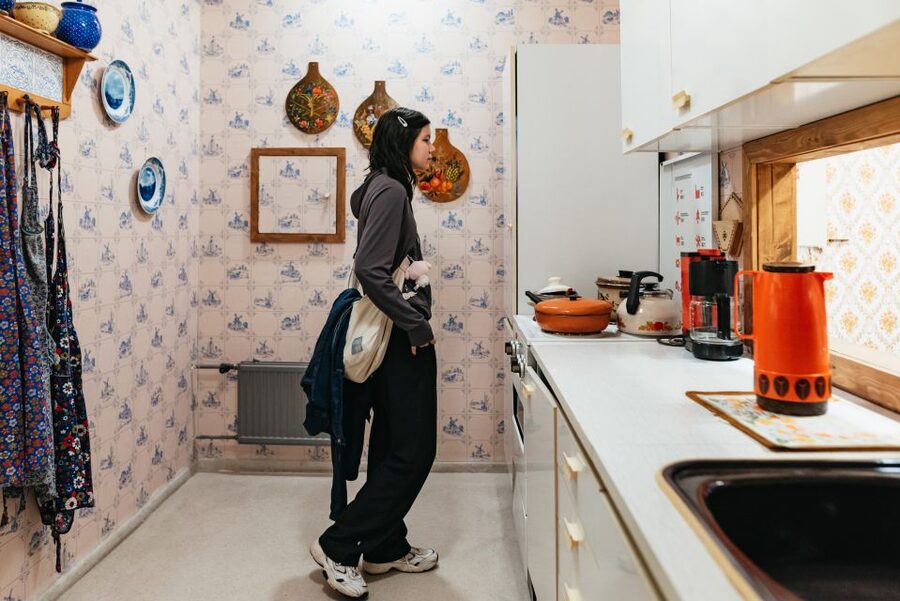
The kitchen details add another layer. You might smell spices on the shelf and see a pressure cooker on the stove. Small items like these make the setting feel less like a political exhibit and more like someone’s actual home.
Do not rush through this part. Look inside the storage spaces, read the notes, and compare the practical objects with the official story of life in the DDR. The apartment is particularly good for children because it gives them a clear task: open, inspect, and discover.
Taking the Trabant for a virtual drive
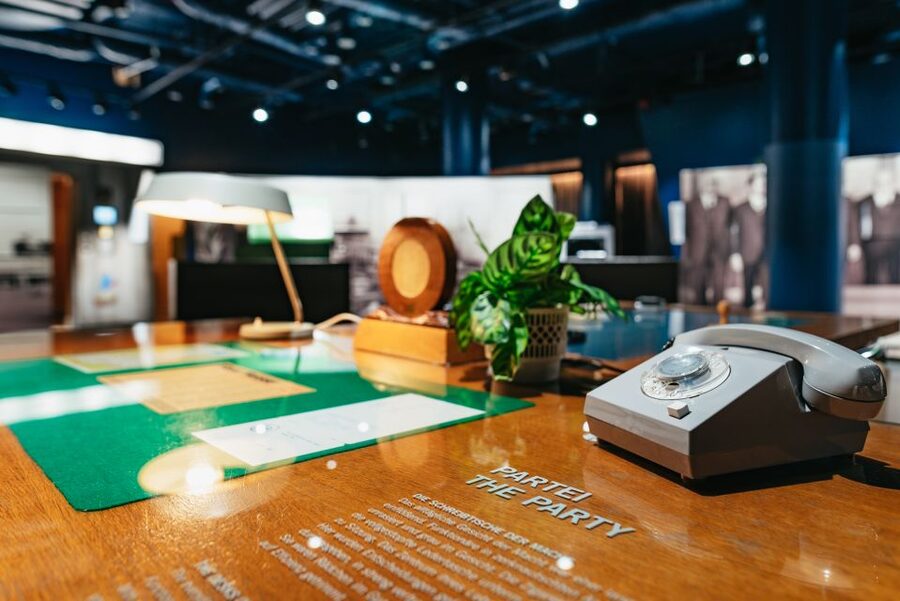
The original Trabant is the museum’s biggest crowd-pleaser. You can climb inside, turn the ignition, and use the simulator for a virtual drive through prefabricated housing districts.
The experience is playful, but it also says something about transport and urban life in East Germany. The Trabant was not simply an old car. It was a familiar part of daily life and a symbol of the limited consumer choices available under the DDR system.
The simulator includes the distinctive sounds of a Trabant, which adds humor and atmosphere. Children often focus on the driving, while adults may pay more attention to what the car represents. You get both sides of the experience without needing a long explanation.
This station can attract a line, especially during busy periods. If you see a short wait, try it early. If the area is crowded, you may prefer to explore the apartment or nearby exhibits and return later.
The virtual drive is not a substitute for a full museum visit, but it is an effective way to pull younger visitors into the subject. Even adults who are less interested in political history tend to find the car memorable.
A few more things to do in Germany worth a look
- Dresden: Semperoper Tickets and Guided Tour
★ 4.7 · 12,102 reviews - Berlin: Berlin Story Bunker Entry Ticket
★ 4.6 · 6,759 reviews - Hamburg: Hamburg Dungeon Admission Ticket
★ 4.7 · 5,745 reviews - Munich Hop-On Hop-Off Tour: 1-Day or 2-Day Ticket
★ 4.3 · 4,161 reviews
News, cinema seats, and East German entertainment
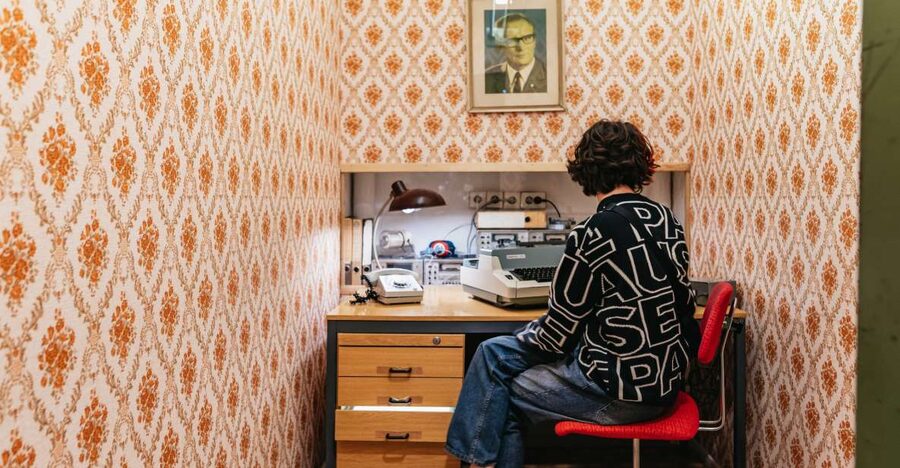
The museum also looks at how information and entertainment reached people in the DDR. You can watch news reports while sitting in an original cinema stall. That setting encourages you to think about the role of state media and the way public information was presented.
The exhibition does not limit itself to serious political material. You can also learn about music and dance, including Lipsi, East Germany’s answer to rock and roll. This helps create a broader picture of life. A society is not only its government offices, border controls, and political slogans. It is also music, leisure, television, fashion, and social habits.
The presentation is generally light enough for first-time visitors, but the subject still has a serious edge. A display about official media can be entertaining in form while pointing to the limits on open information. Give yourself time to read the explanatory panels rather than treating the interactive features as a quick arcade.
There is plenty of text throughout the museum. The information is available in German and English, and the panels are generally arranged in a readable way. If you want to understand the political sections, slow down and read. If you are visiting with young children, you can focus on the objects and return to the more detailed material yourself.
From prefabricated districts to a prison cell
One unusual feature is the simulated trip through prefabricated housing districts, accompanied by typical Trabant sounds. It gives you a sense of the large residential areas built during the DDR period and connects the car display to the wider setting of East German urban life.
The museum also includes a former East German prison cell. This is a more sobering part of the visit. It shifts the mood from household routines and nostalgic objects to the question of freedom and state control.
That change in tone matters. The museum can be fun and tactile, but it should not reduce the DDR to retro furniture and an amusing old car. The cell and political displays remind you that daily life also existed within a restrictive system.
I would give this section your full attention. It is not a long visit, but it can be one of the most memorable stops because the space is so plain. A cramped cell communicates something that a wall of statistics may not.
The overall presentation is mainly from a Western perspective. It does not need to be treated as the final word on every aspect of East German life. Use it as an accessible introduction, especially if you want a basic understanding before visiting other Berlin sites connected with the Cold War and the Berlin Wall.
How long to spend inside
A short visit takes about 90 minutes. That works if you want the main apartment displays, the Trabant, and a selection of the political and cultural sections.
Plan on two hours if you want to read a good portion of the panels and try most of the interactive features. Families may need closer to three hours, especially if children want to open every cupboard and repeat the driving simulator.
The museum does not force you along one strict route. You can move between sections and return to areas that were crowded earlier. This helps when the museum is busy, though it also means you need to keep track of what you have already seen.
The experience is mostly spent standing and moving through exhibits. One visitor found it tiring after a full day of sightseeing. My practical advice is to visit earlier in the day if your legs are already worn out, or make this your first major museum stop rather than the final activity after hours on foot.
Choosing the right time to visit
The DDR Museum is open Monday through Sunday from 9am to 9pm. On December 24 and December 31, it closes earlier, from 9am to 4pm.
The long daily opening window is valuable because you can visit before breakfast sightseeing, in the afternoon, or after other museums close. Still, late opening does not always mean a quiet visit. Rainy days, Saturdays, school holidays, and other peak periods can bring heavy crowds.
Crowding affects this museum more than it might affect a large art gallery. The interactive displays are concentrated in a relatively compact space, so several people trying to read the same panel can slow you down.
If you have flexibility, aim for a quieter period. If you arrive during a rush, do not assume you need to leave. Move to another section and return later. The open layout makes that possible.
Is the museum good for children?
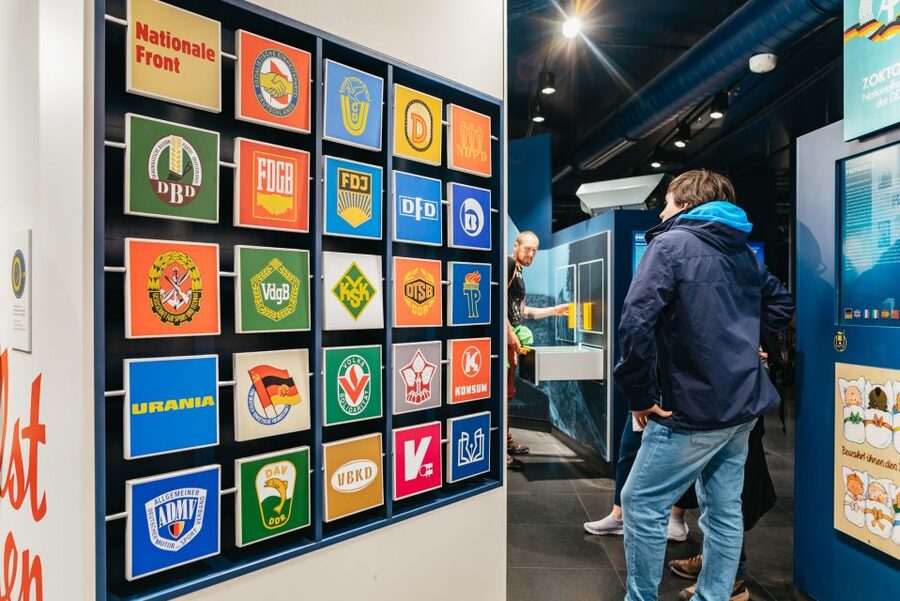
Yes, particularly for children who learn best by handling objects and pressing buttons rather than reading long labels. The Trabant simulator, television, cupboards, and reconstructed rooms give young visitors clear things to do.
Children up to age five enter free. Older children can still get a lot from the museum, but adults should explain the difference between a fun interactive exhibit and the difficult political reality behind it.
Teenagers may appreciate the car and technology displays, though the amount of reading can test their patience. The museum works best when you let them explore first, then point out the details that connect the objects to life in a controlled economy.
The visit can also work well across generations. Older visitors who remember the period may recognize furniture, appliances, or cultural references, while younger family members see the same era as something unfamiliar. That contrast can lead to useful conversations after the visit.
What is missing from the ticket
Entry includes access to the DDR Museum. A museum guide is not included, so this is a self-guided visit.
The written information is available in German and English. One useful improvement would be a standard audio guide, especially for people who find it tiring to read in a crowded room. If you prefer a guided explanation at every stage, this ticket may feel basic.
On the other hand, self-guided entry gives you freedom. You can spend ten minutes in the apartment, skip a panel that does not interest you, or return to the Trabant without waiting for a group. That flexibility suits independent visitors.
Pets are not allowed. Children up to five enter free, but the supplied information does not list other child, student, or senior rates, so check the current booking details if those categories matter to your budget.
Who will get the most from this visit?
I would recommend the DDR Museum to first-time Berlin visitors who want an approachable introduction to East German life. It is also a good choice if you are curious about ordinary homes, consumer goods, cars, television, and leisure rather than only major political events.
Families should put it high on the list because the hands-on format gives children a reason to pay attention. History-minded adults will appreciate the household details and the sections on media, housing, and political control.
You may want to choose another museum if you are looking for a quiet, highly academic experience or a guided lecture. This is an active exhibition with lots of objects, touch points, and people moving through small areas.
It is also worth knowing that the museum is not a complete account of every East German experience. It offers a compact, accessible look at daily life and the political system around it. Pair it with other Berlin sites if you want a larger study of the Cold War, the Wall, and reunification.
Should you book the DDR Museum?
At about $15, I consider this good value if you allow at least 90 minutes and take time with the displays. The apartment, Trabant simulator, household objects, media sections, and prison cell give you several different ways into the subject.
Book it if you want history you can handle, if you are visiting with children, or if you want a central indoor activity with flexible opening hours. Try to avoid the busiest periods if reading every panel matters to you.
Skip it only if you dislike interactive museums, standing for long periods, or self-guided exhibits with substantial text. For most visitors interested in Berlin’s divided past, this is a lively and memorable way to understand what everyday life behind the Wall could look and feel like.
FAQ
Where is the DDR Museum located?
The entrance is on the bank of the Spree, opposite Berlin Cathedral in central Berlin.
How much does entry to the DDR Museum cost?
The listed price is about $15 per person. Children up to age five enter free.
How long is the DDR Museum ticket valid?
The ticket is valid for one day. The museum visit itself usually takes about 1.5 to 3 hours, depending on how much you read and how many interactive displays you try.
What are the opening hours?
The museum is open Monday through Sunday from 9am to 9pm. On December 24 and December 31, it is open from 9am to 4pm.
Is a museum guide included?
No. The ticket includes entry only, and no museum guide is included. Information is available in German and English.
Can I cancel the booking?
You can cancel up to 24 hours in advance for a full refund. A reserve now and pay later option is also available.
Just added in Germany
- Berchtesgaden: Via Ferrata Beginner Tour of Schützensteig★ 4.7 · 15 reviews
- Berlin: Energizing 2-Hour Morning Segway Tour★ 4.7 · 35 reviews
- Berlin: Thrilling E-Scooter Adventure Tour★ 4.4 · 66 reviews
- Bayreuth: German City Walking Tour (Tourist Info)★ 4.7 · 202 reviews
- Beelitz-Heilstätten: Baum&Zeit Tree Top Walk Entry Ticket★ 4.9 · 7 reviews
- Beer Bike & Party Bike: Unforgettable Berlin City Tour incl. pickup★ 5.0 · 5 reviews
- Bavaria: Beginner Canyoning Tour★ 4.5 · 10 reviews
- Bayreuth: Christmas city tour in German★ 4.9 · 12 reviews
Museums, compared.

Skip-the-Line: Berlin Wall Museum at Checkpoint Charlie
Read our review →

Browse the lists this tour appears in