
Reviewed · GERMAN-LANGUAGE TOURS
Osnabrück: Altstadt-Highlights (Stadtführung)
The clever part of this Osnabrück tour is its tight route: in about one hour, you move from one edge of the old town to the other while covering the town hall, St. Mary’s Church, the cathedral, the cloister, and the curious medieval city scales. I especially like the focus on the Peace of Westphalia and the unusual Hexengang, details that give the walk more substance than a simple photo stop. I also like that the tour brings you close to the cathedral and cloister when opening hours allow.
The main tradeoff is the pace. One hour leaves little room for long stops, private questions, or unhurried photographs. The stated language is German, and one group reported that its tour ran for about an hour and a half, so allow some flexibility rather than planning a tight connection immediately afterward.
Key points to know before you go
- The route covers the old town from end to end: You get a quick orientation rather than a single-site visit.
- The town hall connects Osnabrück to European peace history: The Peace of Westphalia is a central part of the story.
- The medieval city scales add an unusual stop: Learn why merchants could not simply weigh their own goods.
- The cathedral and cloister are included when open: Entry depends on cathedral opening times.
- The guide speaks German: This matters if you need detailed historical explanations in another language.
- Weather will not cancel the walk: Wear suitable clothing, since the tour runs in all conditions.
Why this one-hour Osnabrück walk works
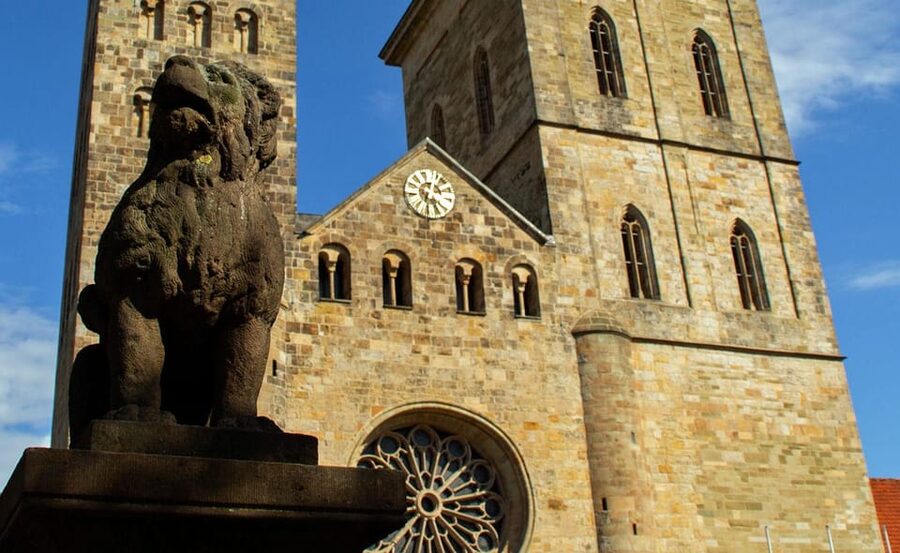
Osnabrück is a city where a short walk can cover several different layers of the past. Medieval trade, church life, European diplomacy, local customs, and modern civic identity all appear within a compact old-town route.
This tour is built for you if your schedule is tight. At $15 per person, it costs about what you might pay for a modest museum visit, but it gives you a guide who links several places together. That connection is the real value. Instead of seeing the town hall, cathedral, and market area as separate sights, you get one continuous explanation of how they fit into Osnabrück’s story.
I would not choose it as the only activity for a full day in the city if you want long interior visits or time to explore every corner. I would choose it as a first look, especially if you have arrived by train, are staying nearby, or want a clear introduction before exploring on your own.
The tour has a current rating of 4.7 from 42 ratings. The strongest pattern is clear: the guide is praised for being informative, well organized, friendly, and able to keep the walk lively. A German-speaking guide led one group with children particularly well, while another guide made the best of poor weather. Those details matter because a compact historical walk can feel dry if the presentation is stiff.
More Old Town Walking Tours across Germany
- Dresden: Semperoper and Old Town Tour
★ 4.8 · 5,735 reviews - Nuremberg: Old Town Guided Walking Tour
★ 4.6 · 2,416 reviews - Munich: Old Town & Viktualienmarkt City Walk in German
★ 4.7 · 2,304 reviews
Meeting at Bierstraße behind the town hall
The meeting point is Bierstraße 28, 49074 Osnabrück, behind the town hall and opposite the Tourist Information office. That location is practical because the tour begins near one of Osnabrück’s main historic landmarks, not out on the edge of town.
Arrive with the address saved on your phone. The wording behind the town hall and opposite the Tourist Information office is more useful than relying on a broad old-town map. Once you find the town hall area, you should be close to the start.
The route then moves through the historic center. The walk is wheelchair accessible, which makes the compact format useful for many people who prefer not to commit to a long city stroll. Still, the tour takes place outdoors and includes historic streets, so weather-appropriate clothing is important.
There is no promise of sunshine here. The walk runs in all wind and weather conditions. Bring a coat or rain protection when needed, and choose shoes that work on old-town paving. In bad weather, the cathedral and cloister may provide a welcome indoor pause when they are open, but much of the experience remains outside.
The town hall and the Peace of Westphalia

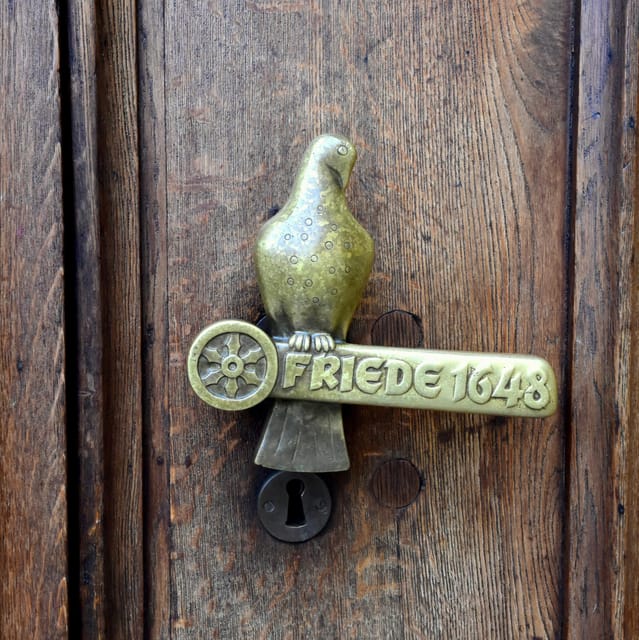
The town hall is one of the tour’s main anchors. It is not treated simply as a grand building for a quick photograph. You learn about Osnabrück’s part in the Peace of Westphalia, the series of agreements that ended the Thirty Years’ War in 1648.
That subject gives the walk a wider European frame. Osnabrück was not just a regional market town. Its town hall became linked with negotiations that helped bring a long and destructive conflict to an end. A short explanation here can change how you look at the building. Its importance comes from the decisions connected with it, not just its architecture.
The tour is especially useful if you know the name Peace of Westphalia but want to understand why Osnabrück is associated with it. The guide places the city inside that story without turning the whole walk into a lecture on European diplomacy.
Because the tour lasts about an hour, expect a clear overview rather than a long study of the treaties, negotiators, or political background. If peace history is your main reason for visiting, you may want extra time afterward to look around the town hall area independently. For a first introduction, the stop gives you an important piece of context early in the route.
The medieval city scales between the town hall and St. Mary’s Church
The medieval city scales are among the most distinctive stops. They sit between the town hall and St. Mary’s Church, in a position that reflects Osnabrück’s old commercial life.
For merchants bringing goods to market, weighing was not a private matter left entirely to the seller. The city scales served as an official point where goods could be checked. That helped create a common measure for trade and gave buyers more reason to trust the amount being sold.
This is the sort of detail I like on a city tour because it makes the past practical. You are not just told that Osnabrück was involved in commerce. You learn how a merchant’s goods passed through the market system and why an official weighing place mattered.
The stop also connects with Osnabrück’s role in the Hanseatic League. The city’s trading past forms part of the tour’s wider story, showing how its old-town streets were tied to commerce beyond the immediate region.
The scales may not take long to see, but the question behind them is memorable: why could merchants not simply weigh their own goods? The answer gives you a better feel for medieval business rules than a list of dates would. It is a small feature with a useful lesson.
St. Mary’s Church provides another historic reference point along this part of the route. The tour does not promise a lengthy church visit here, so think of it as part of the old-town setting and the explanation of how religious and commercial buildings stood close together.
More German-Language Tours across Germany
- Hamburg: Night Watchman’s Tour of St. Pauli in German
★ 4.7 · 4,818 reviews - Bremen: Walking Tour in German with Night Guard
★ 4.7 · 2,922 reviews - Leipzig: 1.5-Hour Historical Walking Tour in German
★ 4.7 · 2,217 reviews - Leipzig: 2-Hour Guided Walking Tour in German
★ 4.8 · 1,612 reviews
Osnabrück Cathedral and the cloister
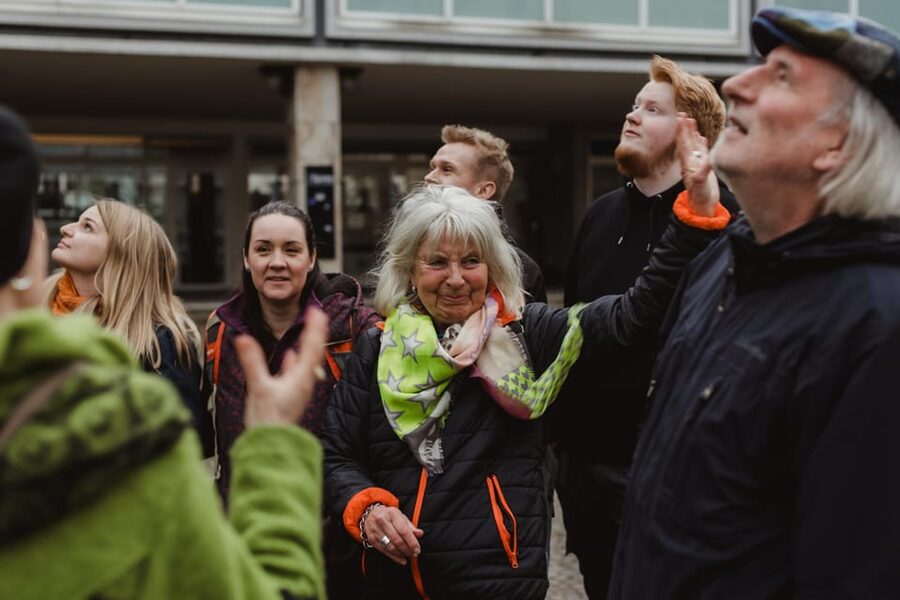
At times when the cathedral is open, the tour includes a visit to Osnabrück Cathedral and its cloister. This is an important qualification. Cathedral access depends on opening times, so you should not treat the interior visit as guaranteed at every departure.
When access is available, the change from open streets to the cathedral grounds gives the tour a different rhythm. You move from public squares and market history into a place shaped by worship, church administration, and centuries of local life.
The cloister is particularly worthwhile because it offers a quieter, more enclosed setting than the streets outside. You get to see the cathedral up close rather than viewing it only as part of the skyline. The tour’s wording highlights the chance to experience both the cathedral and cloister directly, not merely hear their names during a passing explanation.
Keep your expectations measured. This is still a short city walk, not a dedicated cathedral tour. You may get a concise explanation and a chance to look around, rather than a full architectural or religious study. If the cathedral is closed, the guide can still cover its place in Osnabrück’s story from outside, but the indoor portion will not be available.
The Hexengang and Osnabrück’s wider story
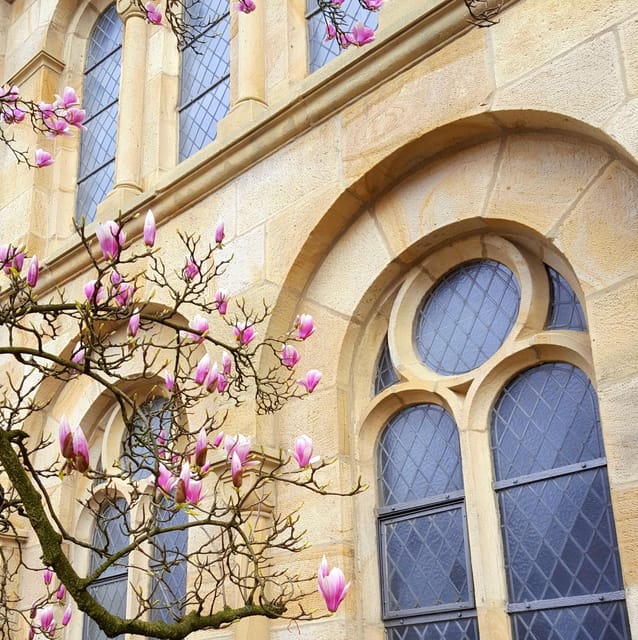
The tour also introduces the so-called Hexengang. The name alone gives this passage a touch of mystery, but the useful part is hearing how it fits into Osnabrück’s past. You should expect an explanation of the place and its historical meaning rather than a theatrical performance.
This is where the guide’s role matters most. A short walk can point out a narrow route, a church, or an old civic feature without giving you any reason to remember it. The guide turns such details into part of a larger story about the city.
The tour also reaches beyond medieval trade and church history. You hear about Osnabrück’s past from the Hanseatic League to VfL, the city’s football club. That range keeps the presentation from becoming a single-period history lesson.
The mention of VfL is useful because it connects the historic center with modern local identity. You are not given only castles, churches, and old merchants. The city’s story continues into the present, including the football culture that matters to local people.
Do not expect a detailed football history. The point is the sweep of the tour: Osnabrück’s identity has changed over time, and the guide places older landmarks alongside a modern symbol of the city.
A guide-led walk that keeps its shape
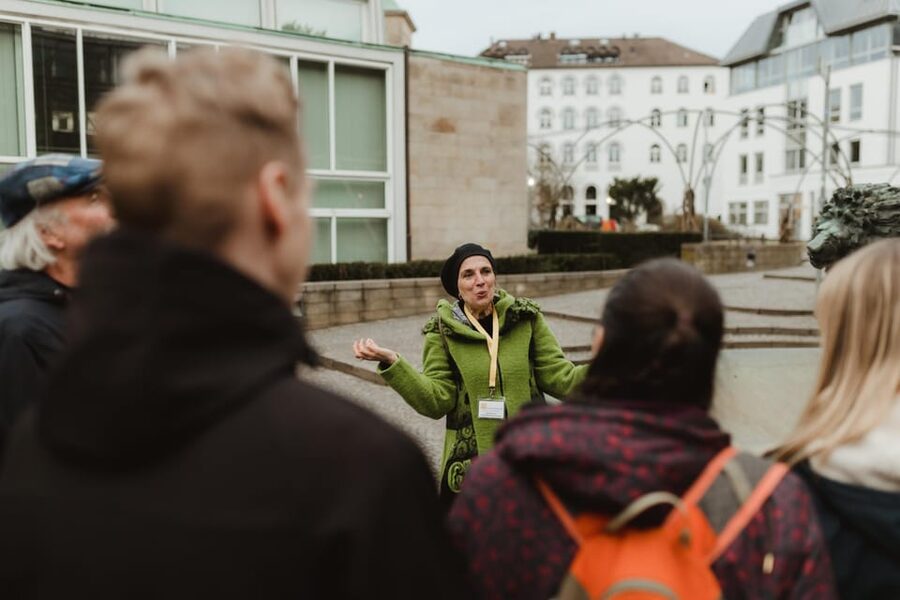
The strongest feature of the experience is the guide’s delivery. The walk is structured, informative, and designed to fit a small amount of time. Several ratings describe the guide as competent, sympathetic, and engaging, with a pleasant voice and a good way of handling children.
That is important for families. Children may not follow a long explanation of diplomatic treaties, but a walk that moves between visible places, trade customs, church spaces, and local football has more variety. The guide’s ability to include children can make the difference between a useful family activity and a slow hour of adult history.
The tone also seems flexible. One group found the guide relaxed rather than constantly checking the clock, and the walk lasted about an hour and a half instead of exactly one hour. That can be a benefit if you want more explanation, but it is a planning issue if you have a train, meal booking, or another timed activity.
You should also know that the tour is in German. The supplied details name no alternative language and no specific guide by name, so book it only if German is suitable for you. The guide’s motivation and presentation may make the walk pleasant, but language remains the basic factor in how much you will understand.
What $15 buys you
At $15 per person, this is a reasonable purchase for a guided introduction to Osnabrück. You are paying for a live guide, a planned route, historical interpretation, and cathedral and cloister access when the building is open.
The price works best for you if you value context. You can walk around the old town for free, but you may miss why the city scales mattered, why the town hall has international importance, or how the cathedral fits into the city’s story. A guide turns those places into connected stops.
The value is less certain if you already know Osnabrück well or speak German only at a basic level. The tour is also too short for anyone wanting extended time inside the cathedral or a slow architectural study.
There is no included gratuity. A tip is optional and separate from the ticket price. The booking also allows cancellation up to 24 hours in advance for a full refund, and you can reserve now and pay later, which helps if your route through northern Germany is still taking shape.
Who should book this tour?
I would recommend it first to a first-time visitor with limited time. You get a fast orientation and several of the city’s main historical points without giving up half a day.
It also suits:
- Families wanting a short, organized activity
- Visitors interested in the Peace of Westphalia
- People curious about medieval trade and the city scales
- Anyone who wants to see the cathedral and cloister when open
- Visitors who prefer a guide rather than reading signs alone
- People using Osnabrück as a short stop in northern Germany
I would be more cautious if you need an English-language tour, want guaranteed cathedral entry, or dislike walking outdoors in poor weather. I would also leave extra time afterward if the guide’s relaxed style turns the one-hour route into something closer to an hour and a half.
Final call: book it for a focused first look
Book the Osnabrück Altstadt Highlights tour if you want the city explained quickly and in person. The best parts are the town hall’s Peace of Westphalia connection, the practical story behind the medieval scales, and the chance to enter the cathedral and cloister when opening times permit.
Skip it if you need another language, a long interior visit, or a slow photography walk. At $15, the tour earns its price through the links between the sights, not through a large number of stops. For a compact German-language introduction to Osnabrück, it is a sensible choice.
FAQ
How long does the Osnabrück old-town tour last?
The advertised duration is one hour. One group’s walk lasted about an hour and a half, so allow some extra time if you have a scheduled departure or reservation afterward.
What language is the tour conducted in?
The live tour guide speaks German. No other tour language is listed.
Where does the tour meet?
The meeting point is Bierstraße 28, 49074 Osnabrück, behind the town hall and opposite the Tourist Information office.
Does the tour include Osnabrück Cathedral and the cloister?
Yes, cathedral and cloister access is included when the cathedral is open. Entry depends on cathedral opening times.
Is the tour wheelchair accessible?
Yes, the activity is listed as wheelchair accessible.
What happens if the weather is bad?
The tour runs in all wind and weather conditions. Wear clothing suitable for the forecast, including appropriate protection for rain or cold.
Just added in Germany
- Berchtesgaden: Via Ferrata Beginner Tour of Schützensteig★ 4.7 · 15 reviews
- Berlin: Energizing 2-Hour Morning Segway Tour★ 4.7 · 35 reviews
- Berlin: Thrilling E-Scooter Adventure Tour★ 4.4 · 66 reviews
- Beer Bike & Party Bike: Unforgettable Berlin City Tour incl. pickup★ 5.0 · 5 reviews
- Bayreuth: German City Walking Tour (Tourist Info)★ 4.7 · 202 reviews
- Beelitz-Heilstätten: Baum&Zeit Tree Top Walk Entry Ticket★ 4.9 · 7 reviews
- Bavaria: Beginner Canyoning Tour★ 4.5 · 10 reviews
- Bayreuth: Christmas city tour in German★ 4.9 · 12 reviews
German-Language Tours, compared.
Old Town & Viktualienmarkt City Walk in German
Read our review →

The Night Watchman Old Town Walking Tour in German
Read our review →

Browse the lists this tour appears in