
Reviewed · TOURS IN NUREMBERG
Tour del tercer Reich por Núremberg en español
Nuremberg was not chosen by chance as the Nazi Party’s showcase city. Hitler presented it as heir to old Germanic power, then used its medieval image, grand rallies, and public ceremonies to sell the regime’s story. This three-hour Spanish tour follows that link from propaganda to persecution and, finally, the Nuremberg Trials.
I like the clear historical arc, which connects the city’s Nazi Party congresses with the laws and antisemitism formed here. I also like the focus on the Nuremberg Trials and Street of Human Rights, giving you a chance to consider how the city confronted the crimes committed in its name.
The main consideration is pace. Three hours is enough for a strong introduction, not every detail of Nuremberg’s complicated past. You should also expect a serious subject, with discussion of antisemitism, the Nazi regime, concentration camps, and mass demonstrations.
Key points
- Meet at Frauenkirche in Hauptmarkt: Look for the white and red umbrellas in front of the church’s main entrance.
- Follow Nuremberg’s Nazi-era role: Learn why Hitler treated the city as the symbolic heir to Germanic traditions.
- Connect propaganda with persecution: The tour covers the Nazi Party congresses, mass demonstrations, the Nuremberg Laws, and antisemitism.
- Discuss the Nuremberg Trials: Walk the Street of Human Rights and examine the city’s response to its past.
- Hear the story in Spanish: The guide is live and Spanish-speaking, with Federico named as the guide for this experience.
- Plan for a three-hour walk: Comfortable shoes are recommended, and the tour ends back at Hauptmarkt.
Why Nuremberg Became Hitler’s Chosen Stage
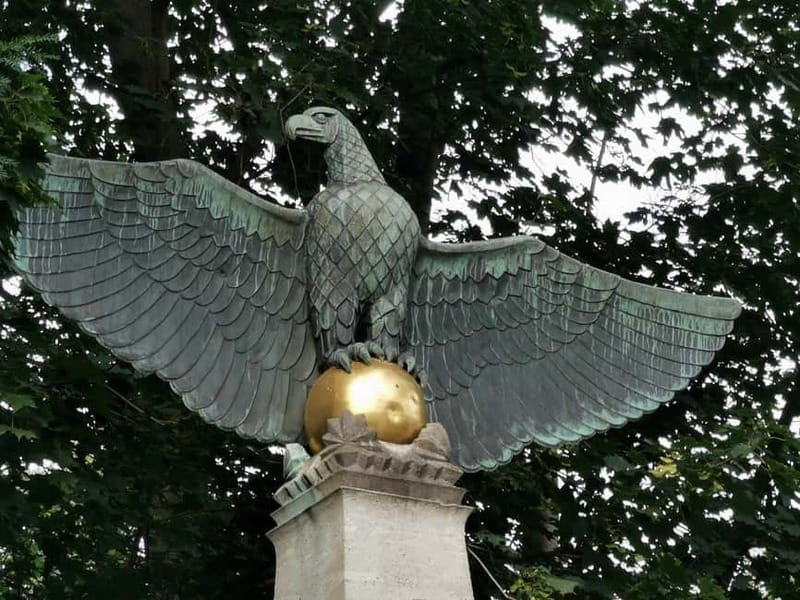
Nuremberg had a powerful image long before the Third Reich. For centuries, it was linked with the Holy Roman Empire and German imperial tradition. Hitler exploited that reputation, presenting the city as the rightful guardian of an older, stronger Germany.
That idea mattered because Nazi propaganda was not built only on speeches. It used places, ceremonies, symbols, and carefully staged crowds. Nuremberg offered the medieval setting and political importance the regime wanted. The city could be presented as both historic and obedient, an ideal backdrop for public displays of Nazi power.
Your guide uses this background to explain why Nuremberg acquired the title of Germany’s model city under the regime. The point is not simply that important Nazi events happened here. It is that the city’s identity was deliberately used to make the regime appear legitimate.
I find this opening especially useful if you are seeing Nuremberg after visiting its old town. The contrast can be uncomfortable, but it helps you understand that the Nazi story did not take place in some separate location. It was built onto a city with a long civic and imperial past.
Other trips people book in Nuremberg:
- Nuremberg: City Tour with the Bimmelbahn Train
★ 4.4 · 2,475 reviews - Nuremberg: Old Town Guided Walking Tour
★ 4.6 · 2,416 reviews - Nuremberg: Tunnels and Secret Passages in the City Wall Tour
★ 4.8 · 2,334 reviews
The Nazi Party Congresses and Mass Demonstrations
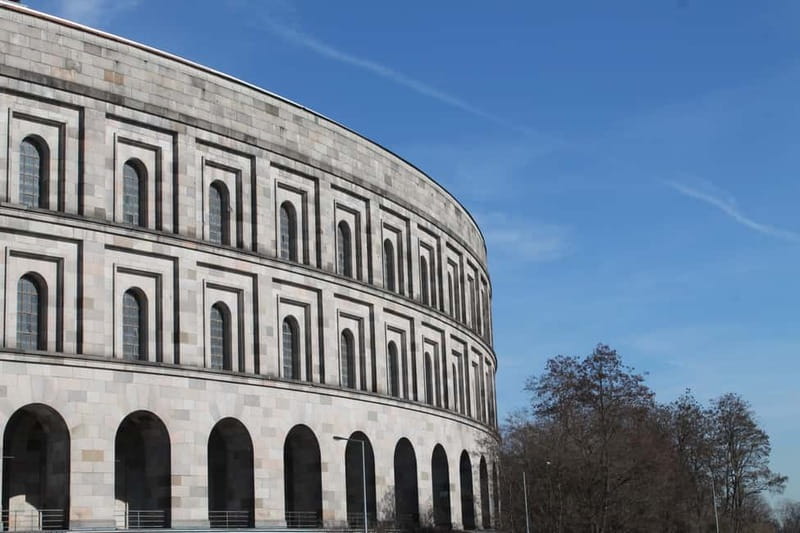
The tour looks at Nuremberg as the city of Nazi Party congresses. These were not ordinary political meetings. They were carefully organized public performances, designed to show order, unity, and strength.
Mass demonstrations helped turn politics into spectacle. Uniforms, banners, marching, speeches, and huge crowds created a visual message that the regime wanted people to accept. Your guide explains how these events worked as propaganda and why Nuremberg was so useful for them.
This part of the tour is valuable because it shifts attention away from Hitler as a single figure. You learn how the wider regime used public space and organized participation to shape public opinion. It also helps explain the link between the city’s symbolic past and the modern machinery of dictatorship.
Do not expect every surviving structure or rally ground to receive equal time. The tour has only three hours and covers several subjects. Still, the congresses provide an important foundation for understanding what follows: racial law, antisemitism, war crimes, and legal reckoning.
The Nuremberg Laws and Julius Streicher
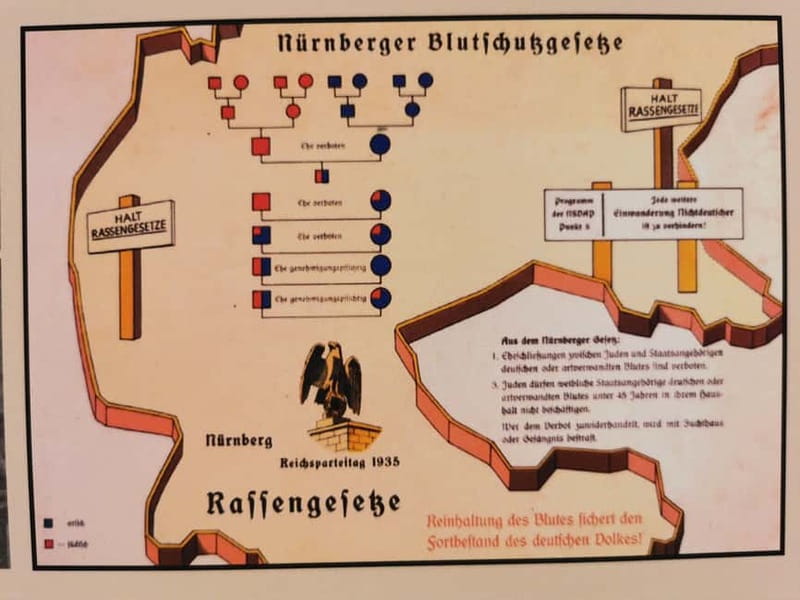
Nuremberg was also connected with the legal and media machinery of Nazi antisemitism. The tour covers the Nuremberg Laws, written here by Wilhelm Frick, and the role of Julius Streicher.
Streicher was one of the regime’s strongest promoters of antisemitism. He owned and promoted the weekly newspaper Der Stürmer, which helped spread hateful propaganda. Including his work in the tour makes an important point: persecution was not driven only by government offices. Newspapers and repeated public messages helped normalize prejudice.
I appreciate this part because it shows how words can prepare the ground for discrimination and violence. The laws did not appear in isolation. They were supported by a system that defined who belonged, who did not, and what rights could be removed.
The subject is disturbing, and the tour does not treat it as a simple story of political events. You should be ready for direct discussion of antisemitism and the Jewish community in Nuremberg. That seriousness is one reason this experience suits adults and older students better than families looking for a light city walk.
Nuremberg’s Jewish Quarter and Antisemitism
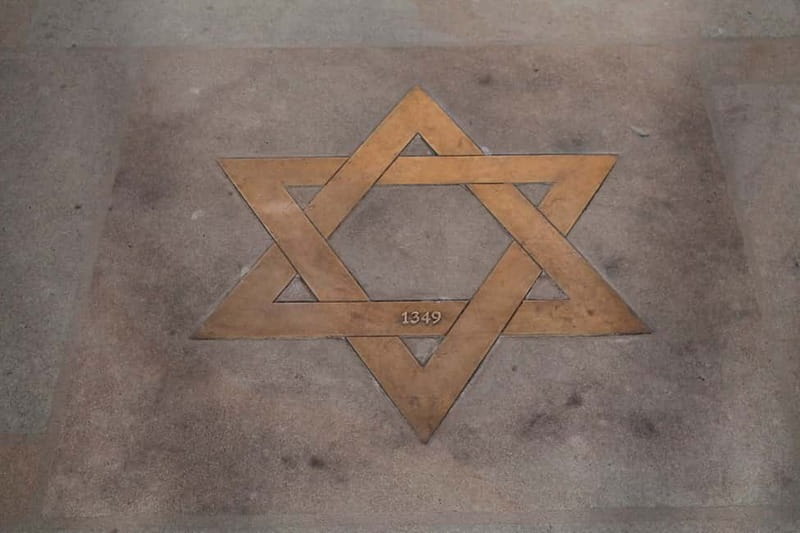
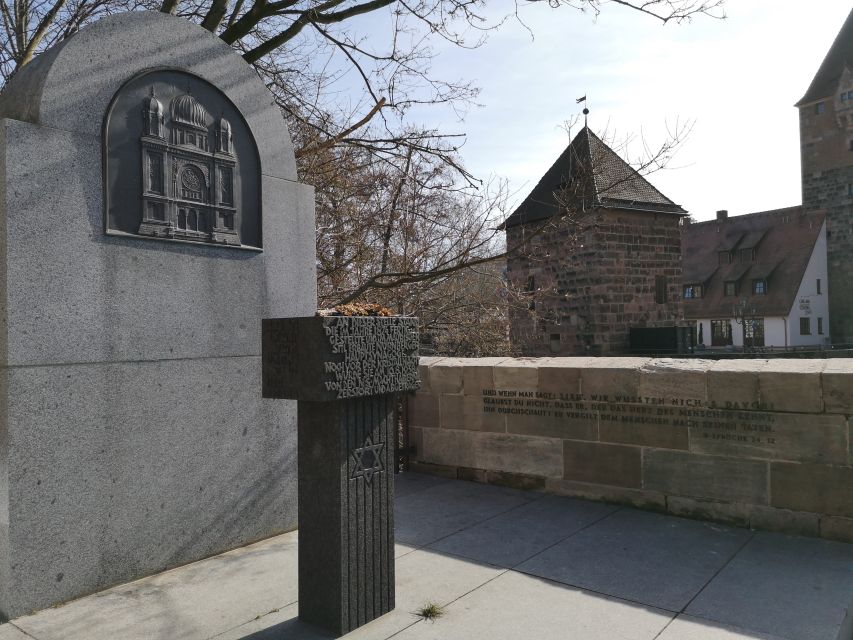
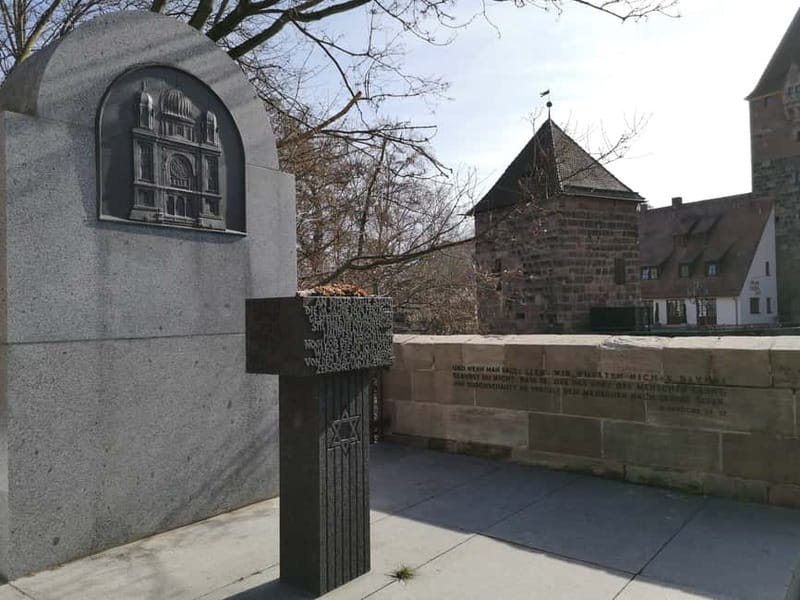
The tour includes Nuremberg’s Jewish quarter and the history of antisemitism in the city. This widens the focus beyond Nazi buildings and famous political figures.
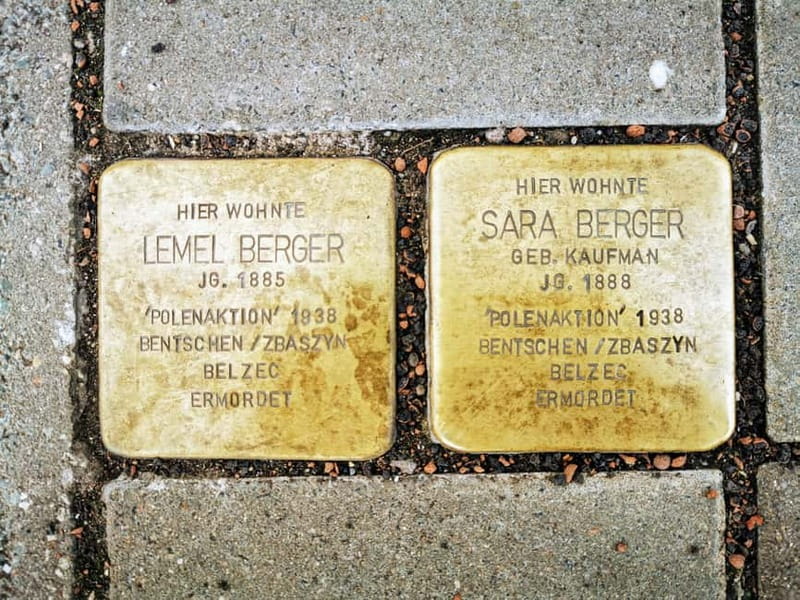
Learning about a Jewish quarter helps you consider the people affected by the city’s policies, rather than seeing Nuremberg only through the actions of Nazi leaders. The subject also gives context to the later laws and propaganda. Antisemitism had older roots, and the Nazi regime used and intensified those prejudices for its own purposes.
The supplied information does not specify the exact streets or surviving buildings included, so you should not book this expecting a fixed list of architectural stops. Instead, think of this portion as part of the guide’s explanation of how Jewish life and anti-Jewish policies fit into Nuremberg’s wider story.
A Spanish-speaking guide can be especially helpful here. Historical language about discrimination, persecution, and legal exclusion can be difficult even in your first language. Being able to ask questions and follow the explanation in Spanish may make the material easier to absorb.
Same base, a different kind of day out:
- Nuremberg: Medieval Dungeons Guided Tour
★ 4.8 · 1,726 reviews - Nuremberg: Walking Tour of Former Nazi Party Rally Grounds
★ 4.7 · 1,665 reviews - Medieval Tour in Nuremberg in Spanish
★ 5.0 · 1,374 reviews - Nuremberg: Historischer Kunstbunker WWII Art Bunker Tour
★ 4.8 · 921 reviews
Zeppelin Field and the Physical Scale of Propaganda
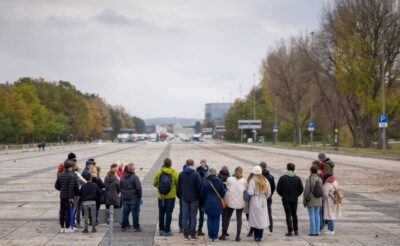
Zeppelin Field is one of the key Nazi-era places covered by the tour. Its importance lies in the scale of the demonstrations held there and the way the regime used architecture and open space to create a sense of power.
A place like this can be hard to understand from photographs alone. The scale of a field built for mass political events helps explain how the government tried to overwhelm individuals with numbers, ceremony, and visual order.
The tour’s value here is interpretive. You are not simply being shown a location and told that a rally happened there. You are asked to connect the physical setting with the propaganda purpose behind it.
The information provided does not promise entry into every structure or a detailed architectural inspection. Keep your expectations focused on a guided historical explanation. Comfortable shoes are a sensible choice, since this is a three-hour walking experience and the full route includes several themes and locations.
The Nuremberg Trials and the Street of Human Rights
The Nuremberg Trials form the tour’s essential counterpoint to the Nazi congresses. The same city that had been used to display obedience and power became the setting for the prosecution of leading Nazi figures after the war.
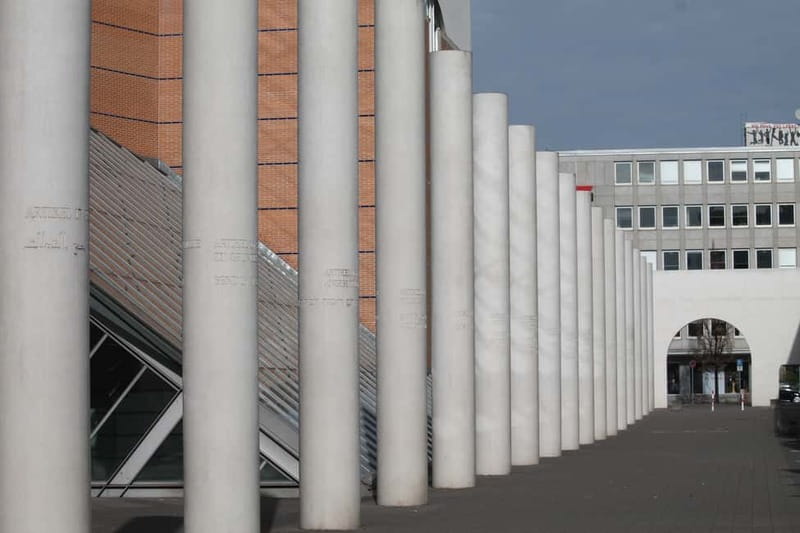
Your guide explains the importance of the Trials and includes a walk along the Street of Human Rights. That pairing gives the tour a strong closing idea: Nuremberg is not presented only as the regime’s showcase city, but also as a place that had to face what happened there.
The Street of Human Rights brings the subject into the present. It represents an effort to affirm human rights after a period in which law had been twisted into a tool of exclusion and persecution. This makes the stop more than a memorial pause. It gives you a way to think about the difference between law used to protect people and law used to strip people of protection.
I particularly like this part for first-time visitors. You get a clear answer to an important question: why does Nuremberg matter beyond its role as a Nazi rally city? The Trials and the Street of Human Rights show how the city became linked both with Nazi crimes and with the postwar effort to establish responsibility.
Flossenbürg and the Limits of a Three-Hour Tour
Flossenbürg concentration camp is also included among the subjects covered. The supplied details do not say that the tour travels to the camp, so you should understand this as a discussion or point of historical coverage rather than assume a separate visit outside Nuremberg.
That distinction matters. A three-hour city tour cannot cover every related site in person. The guide can place Flossenbürg within the broader story of Nazi imprisonment and persecution, but this experience is not a substitute for a dedicated concentration camp memorial visit.
Even so, the reference adds weight to the tour. It reminds you that the history of Nuremberg’s rallies and laws led far beyond speeches and ceremonies. The regime’s propaganda and legal discrimination were connected to a system of imprisonment, forced labor, and mass murder.
If your main goal is a detailed visit to a concentration camp, choose a program specifically built around that site. If your goal is to understand how Nuremberg fits into the larger Nazi system, this tour gives you useful context.
Federico’s Spanish Explanations
Federico is identified as the guide for this tour, and the strongest praise focuses on his cultural background, historical information, and clear teaching style. The feedback describes him as especially strong at explaining the most important moments of the Third Reich in Nuremberg, using information and documentation to make the subject easier to follow.
That is exactly what this experience needs. A tour about the Nazi era can become a list of names and dates unless the guide explains how the pieces connect. You want someone who can move from medieval symbolism to propaganda, from propaganda to antisemitic law, and from law to the Trials without losing the thread.
The guide also received praise for being friendly and presenting the subject in a didactic, pleasant way. That balance matters. The topic must remain serious, but a clear and human delivery helps you stay engaged for three hours.
The feedback also includes a Portuguese-language response praising Federico’s kindness, sympathy, and ability to explain the subject in a pleasant, educational manner. The tour itself is in Spanish, so Spanish is the language to expect. If you need another language, this is not the right choice.
What $19 Gets You
At $19 per person, this is a low-cost way to give your Nuremberg visit historical structure. The price includes a professional guide and guided tour, but not food, drinks, or hotel transfers.
The value depends on how much context you want. You could walk through parts of the city independently, but the most important sites are easier to understand when someone explains why Nuremberg was selected, how the rallies worked, and how the Trials changed the city’s meaning.
The private-group format is another advantage. It gives your party a more personal setting than a large public walk, and it may make it easier to ask questions about difficult subjects. The available information does not state the maximum group size, so you should confirm the exact arrangement when checking availability.
The price does not buy a museum ticket, meal, or transport service. It buys three hours of guided interpretation. For someone interested in the Third Reich, that is a fair trade, especially with a Spanish-speaking guide.
Meeting at Frauenkirche and Returning to Hauptmarkt
The meeting point is in front of the main entrance of Frauenkirche in Hauptmarkt. Look for the white and red umbrellas. This is a useful location because it is a clear central landmark, but give yourself enough time to find the correct umbrellas in the square.
The tour ends back at the same meeting point. That makes planning easier. You can continue exploring the old town, arrange lunch nearby, or return to your accommodation without working out a separate pickup point.
Hotel pickup and drop-off are not included. Food and drinks are also not included, so handle those before or after the walk. Comfortable shoes are recommended, and the experience is listed as wheelchair accessible.
Starting times vary, so check availability for the date of your visit. The duration is three hours, which is long enough to require a little planning around meals, museum visits, and transport connections.
Who Should Book This Spanish Tour
I would choose this tour if you want a focused introduction to Nuremberg’s Nazi-era role and prefer to learn in Spanish. It suits first-time visitors who want a clear framework before exploring related museums or memorial sites on their own.
It also works well for couples, families of adults, or a private group that wants to ask questions without joining a large public party. The Spanish language and private format are the main reasons to choose it over a general city walk.
I would be more cautious if you want a light sightseeing tour. The subject includes antisemitism, the Nuremberg Laws, concentration camps, Nazi mass demonstrations, and war crimes. It asks for attention and emotional readiness.
You should also choose another experience if your priority is a full visit to Flossenbürg or a detailed museum program. This tour covers many connected subjects in three hours, so its strength is the broad explanation, not exhaustive time at one site.
Should You Book It?
Book this tour if you want to understand why Nuremberg became the symbolic center of Nazi propaganda, how antisemitism entered law and public life, and how the Nuremberg Trials reshaped the city’s meaning.
At $19 per person, with free cancellation up to 24 hours ahead and the option to reserve now and pay later, the financial risk is modest. The best reason to book, though, is the combination of a Spanish-speaking guide, a private group, and a route that connects Zeppelin Field, the Nazi congresses, the Jewish quarter, the Trials, and the Street of Human Rights.
Skip it if you want a casual old-town stroll or a dedicated concentration camp visit. For a serious, affordable introduction to Nuremberg’s Third Reich history, it is a strong choice.
FAQ
How long does the tour last?
The tour lasts three hours.
What language is the tour in?
The live tour guide speaks Spanish.
Where does the tour begin?
It begins in front of the main entrance of Frauenkirche in Hauptmarkt. Look for the white and red umbrellas.
Where does the tour end?
The tour ends back at the meeting point in Hauptmarkt.
Is the tour private?
Yes. The group type is listed as a private group.
Is the tour wheelchair accessible?
Yes, the activity is listed as wheelchair accessible.
What places and subjects does the tour cover?
It covers the Nazi Party congresses, National Socialist demonstrations, the Nuremberg Trials, the Street of Human Rights, the Jewish quarter, antisemitism, Zeppelin Field, and Flossenbürg concentration camp among other subjects.
Does the tour include hotel pickup and drop-off?
No. Hotel pickup and drop-off are not included.
Are food and drinks included?
No. Food and drinks are not included.
What should you bring?
Bring comfortable shoes.
How much does the tour cost?
The listed price is $19 per person.
Can you cancel the booking?
Yes. You can cancel up to 24 hours in advance for a full refund.
Just added in Nuremberg
- Tour en español al Campo Zeppelin★ 5.0 · 8 reviews
- Stein: Public guided tour of the “Old Mine” museum★ 4.5 · 18 reviews
- “Rotes Bier” and “Blaue Zipfel”. A historical-culinary walk★ 4.4 · 190 reviews
- Nuremberg: Old Town Guided Tour By Bus★ 4.4 · 198 reviews
- Nürnberg kennenlernen: Highlights in der Altstadt★ 4.7 · 189 reviews
- Nuremberg: Bar and Club Tour with Free Shots and Free Entry★ 3.8 · 23 reviews
- Nürnberg Bachelor(ette) Party with Night PubCrawl★ 4.2 · 5 reviews
- Nuremberg: Tour of Former Nazi Party Rally Grounds★ 5.0 · 43 reviews
Tours in Nuremberg, compared.
Tunnels and Secret Passages in the City Wall Tour
Read our review →
Walking Tour of Former Nazi Party Rally Grounds
Read our review →
Browse the lists this tour appears in