
Reviewed · TRAIN EXPERIENCES
Nuremberg: City Tour with the Bimmelbahn Train
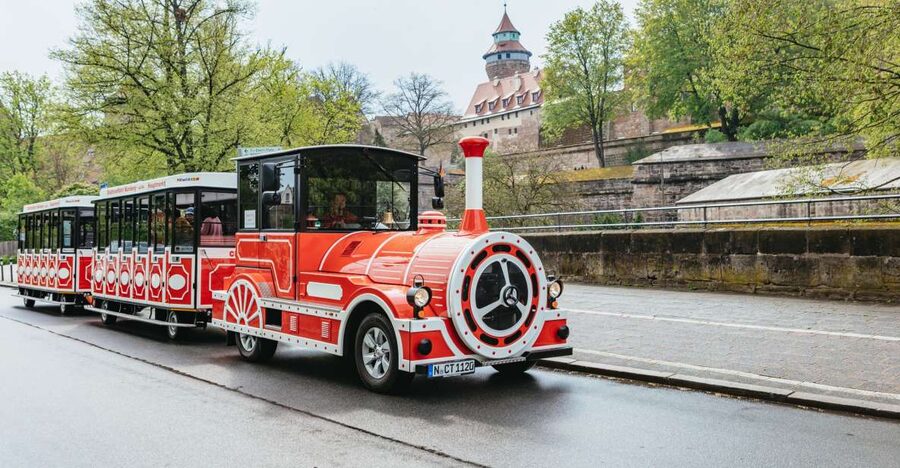
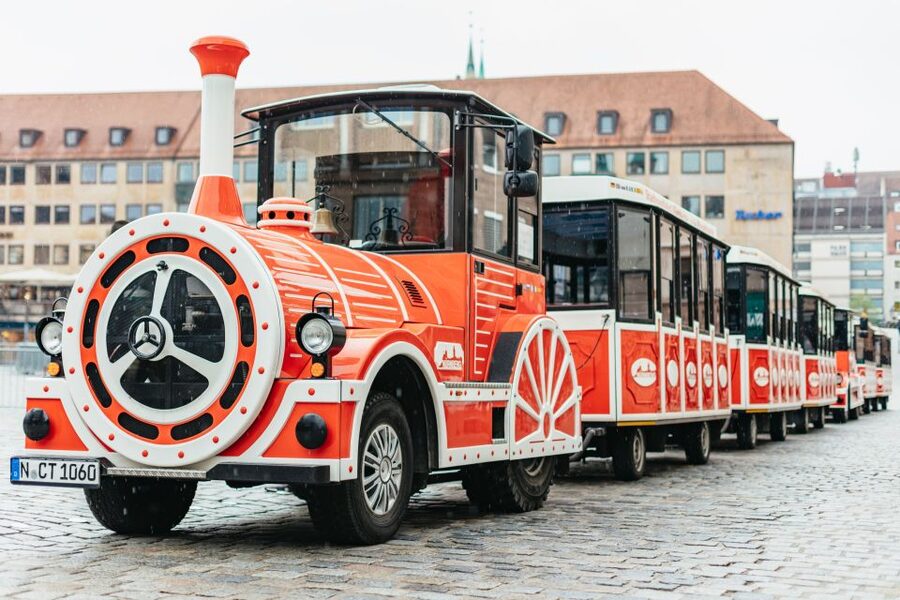
Nuremberg’s little Bimmelbahn train gives you a fast introduction to the city from the comfort of a seat. In 40 minutes, you roll out from the main Market Square, pass the gold Schöner Brunnen, cross or pass near Maxbrücke, and see St. Lawrence Church, the Hospital of the Holy Spirit, and the Imperial Castle. The audio guide keeps the ride informative, while the slow-moving train lets you look up at the old town instead of watching your feet on the pavement.
I like two things especially: the compact route makes sense on a short visit, and the seven-language audio system is useful for mixed-language groups. It also gives you a practical list of places to revisit on foot. The main drawback is comfort: seats can feel cramped, windows may fog or collect rain, and the train can become hot in summer or chilly in colder weather.
Key points to know before you ride
- A 40-minute city sampler: See Nuremberg’s central sights without committing to a long walking tour.
- A useful starting point: Begin at the Market Square, then return there ready to explore on foot.
- Seven audio languages: German, English, French, Italian, Spanish, Russian, and Chinese are available.
- Good for limited mobility: You remain seated while the train covers much of the old center.
- Strong value at $12: The price is modest for a quick orientation, especially on a one-night visit.
- Allow time before departure: Show your QR code at the sales stand and arrive at least 15 minutes early.
Why this train works well in Nuremberg
Nuremberg’s old center is compact, but it is packed with details. A walking route can quickly turn into a stop-start shuffle through crowds, especially around the Market Square and during the Christmas market. The Bimmelbahn gives you a simple first look before you decide where to spend your limited sightseeing time.
I see this as an orientation ride rather than a full history tour. You will not get a detailed visit inside the Imperial Castle, and you will not stop for long at each church or bridge. Instead, you get the city’s basic shape, a recorded explanation of the main sights, and a chance to mark places that deserve a closer visit.
That distinction matters. If you have several days in Nuremberg and enjoy walking, you can see much of the route yourself. But if you have only one night, are traveling with children, are visiting in poor weather, or have someone in your group who cannot walk far, the train earns its place.
The price is another reason it works. At $12 per person, it costs less than many guided city activities and provides a useful overview without taking half a day. You are paying for a short, focused ride, not a full private tour.
Other journeys by rail from Nuremberg:
- Dachau Concentration Camp Memorial Site Tour from Munich by Train
★ 4.5 · 5,637 reviews - Würzburg: City Tour with the Bimmelbahn Train
★ 4.4 · 1,322 reviews - Regensburg: City Tour with the Bimmelbahn Train
★ 4.3 · 1,010 reviews
Starting at the Market Square and Schöner Brunnen
The ride begins at Nuremberg’s main Market Square, one of the most useful meeting points in the old town. Starting here makes the experience easy to combine with the city’s other highlights. You can ride first, then return to the same area for food, shopping, or a walking visit to the sights you liked best.
One of the first major landmarks is the Schöner Brunnen, a striking 19-meter-high gold fountain. Its name means Beautiful Fountain, and the decorative structure is hard to miss as the train passes through the square.
The audio guide gives you background and points out details that are easy to overlook from street level. The recorded narration is available in seven languages, and English is included. Headphones are provided, though sound quality can vary. Most of the time, the narration is clear, but occasional interference or crackling has been reported, so do not expect the polish of a modern museum audio system.
Your seat also affects what you see. Some of the key sights appear more clearly from one side of the carriage, and the middle seats can give you a less direct angle through the windows. If you want photographs, keep your camera ready and do not wait for a long stop.
Maxbrücke and the old town route
The train continues through the central streets toward Maxbrücke. Bridges in Nuremberg are more than simple crossings. They help you understand how the old center is arranged around the Pegnitz and connect the commercial parts of town with the churches, lanes, and castle area.
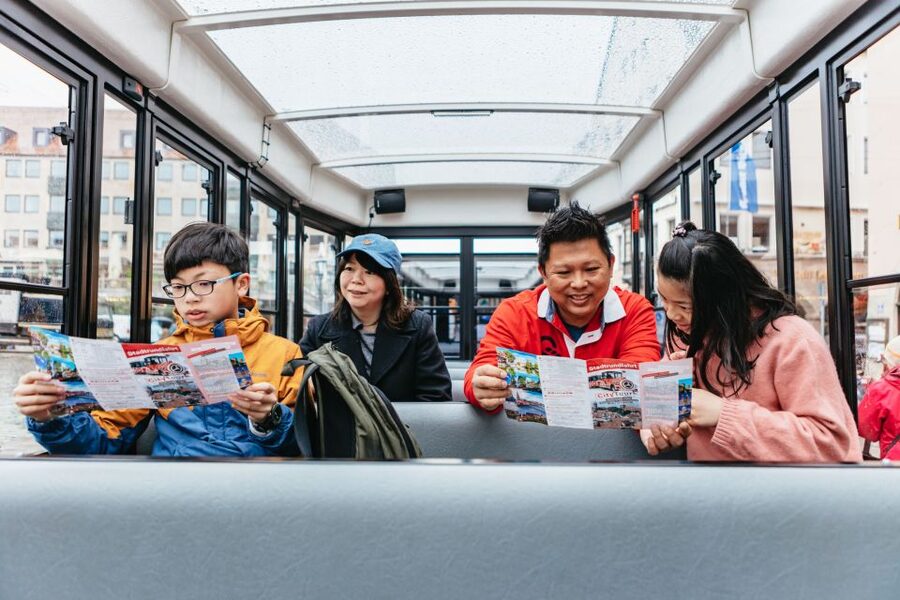
From a train seat, you can take in the architecture without having to navigate traffic or cobblestones. The carriage windows and glass roof help with views above street level, although rain can make the glass less useful. In wet weather, drops on the outside and condensation inside may interfere with photographs.
The audio narration explains the places along the route, but it remains a programmed recording rather than a live guide. That means you get consistent information in your chosen language, but you cannot ask a question or request a longer stop. I would treat the commentary as a helpful framework, then use your own walking time for the details that catch your eye.
The train sometimes slows near points of interest, giving you a better look. Still, this is not a hop-on, hop-off service. You stay aboard for the full circuit, so plan to return later if you want to enter a church, photograph a bridge, or study a building more carefully.
St. Lawrence Church and the Hospital of the Holy Spirit
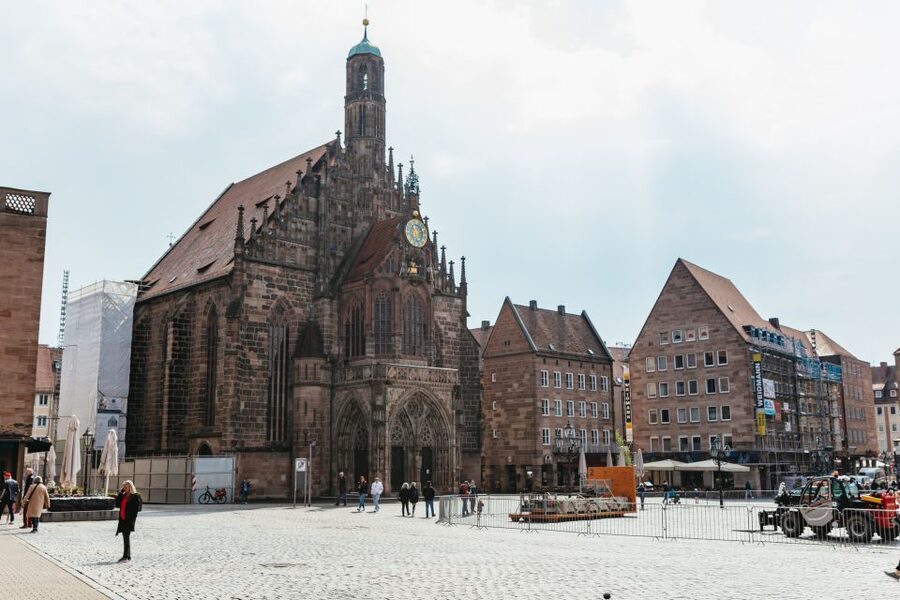
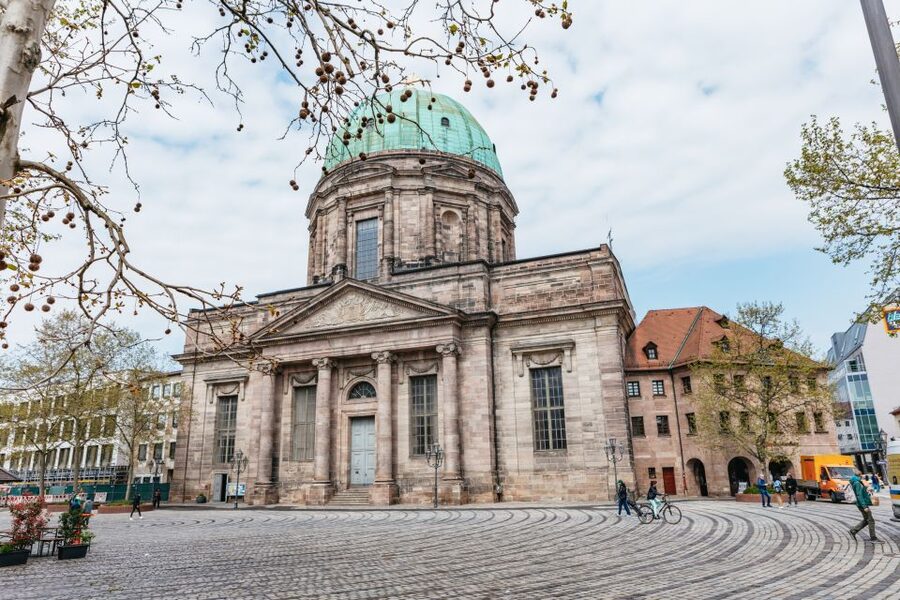
St. Lawrence Church is one of the route’s major visual landmarks. Its scale and position in the old center make it easy to recognize from the train. You get a brief outside view and an explanation through the audio guide, but the train does not turn this into an interior visit.
That is both a strength and a limit. You can see the church as part of the city’s larger story, then decide if it deserves a separate stop. If you enjoy architecture, I would make a note of it and return on foot, since the short ride cannot show every detail of the facade.
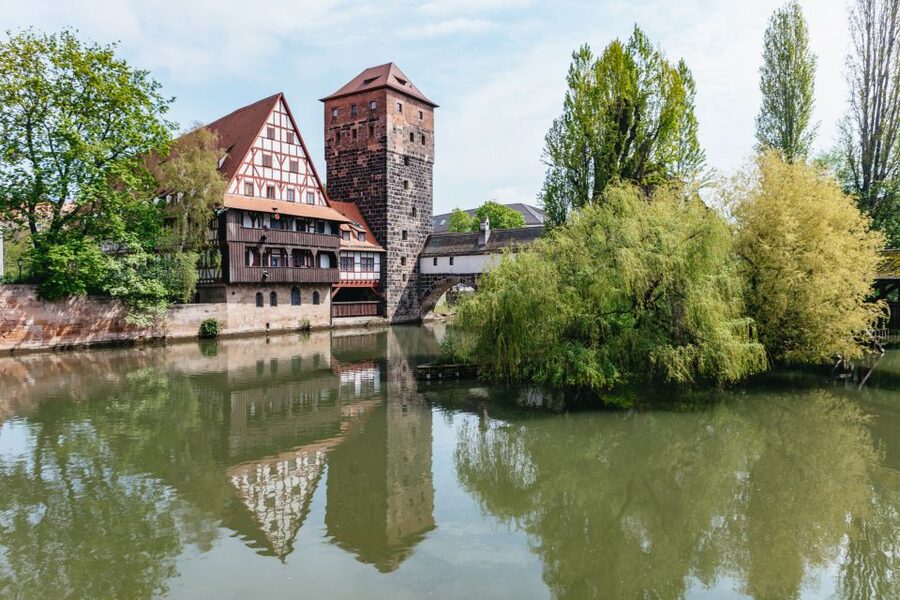
The Hospital of the Holy Spirit adds another layer to the route. Its historic buildings sit over the river and create one of Nuremberg’s most recognizable views. The train gives you a passing look while the narration supplies context, which is useful when you have not yet learned the layout of the old center.
This section shows the real value of the experience. You see several important sites in relation to one another. Instead of visiting each place as an isolated stop, you begin to understand how the streets, river, churches, and market area fit together.
A few more things to do in Nuremberg worth a look
- Nuremberg: Tunnels and Secret Passages in the City Wall Tour
★ 4.8 · 2,334 reviews - Berlin: 1-Hour City Tour by Boat with Guaranteed Seating
★ 4.3 · 16,993 reviews - Leipzig: City History Canal Sightseeing Tour on a Motorboat
★ 4.7 · 6,232 reviews - Cologne: Panoramic City Cruise
★ 4.3 · 5,698 reviews
The Imperial Castle and the best broad views
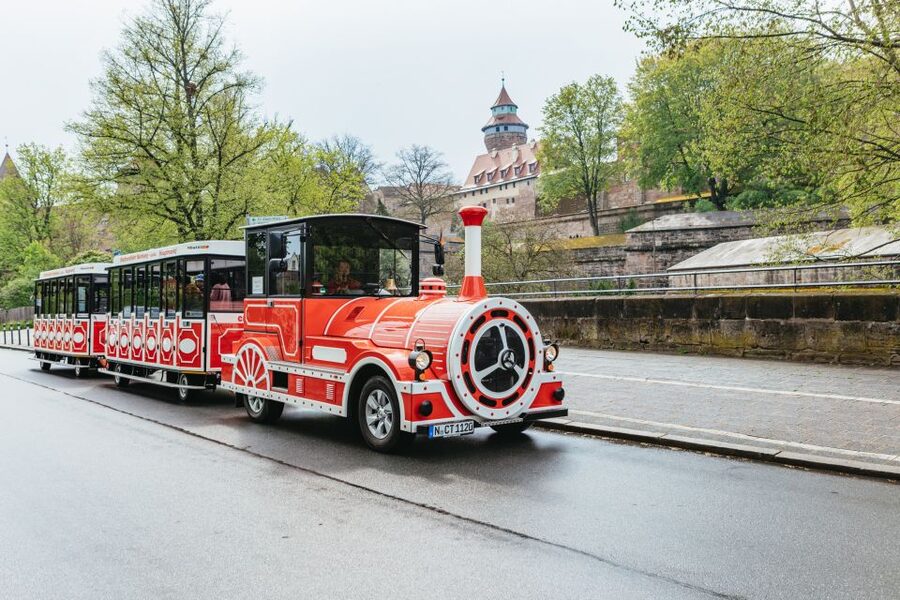
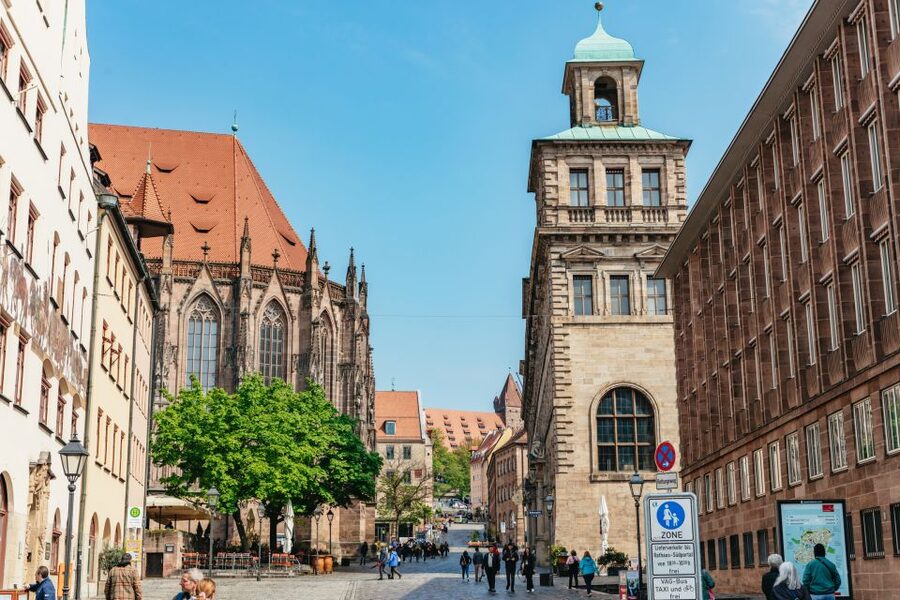
The Imperial Castle is the route’s biggest historical landmark. It is one of Europe’s important medieval fortifications and occupies high ground above the old city. Even from a moving train, it gives the ride a strong sense of destination.
You will not receive a castle admission or a detailed castle visit as part of this activity. The train provides an outside view and historical narration, while your later walking plans must cover the interior and closer look.
I like seeing the castle as part of the city rather than treating it as a separate monument. Its position helps explain Nuremberg’s importance and gives you a clear reason to walk uphill later if you have time. The train saves your legs during the initial orientation, then lets you choose whether the castle deserves a longer visit.
The route also gives you passing views of the old center from several angles. The glass roof and windows help you look above shopfronts and street traffic. In good weather, this is one of the easiest ways to get a broad visual sense of Nuremberg in a short period.
Do not expect every view to be perfect. A seat near the middle may offer a more horizontal angle, and people sitting beside you can limit the view. The carriage may also feel warm in summer, while cold weather can make the ride uncomfortable because you are not fully indoors in the way a bus would be.
The audio guide: useful, but not a live tour

The audio guide is included and comes in German, English, French, Italian, Spanish, Russian, and Chinese. This is a strong feature for families or groups who do not share the same first language.
The narration covers the main buildings, local history, and some of Nuremberg’s legends. It is designed to match the route, so you can listen while looking at the sites outside. English audio is generally easy to follow, and the supplied headphones make the system simple to use.
I would keep expectations practical. This is recorded information, not a conversation with a local guide. Some narration may identify a landmark as being on one side when it is actually on the other, and temporary signs inside the train have reportedly been used to correct such errors. If you are trying to photograph a particular building, look out both sides rather than relying only on the audio directions.
Sound interference is another small risk. Most passengers should be able to follow the commentary, but a faulty headset can reduce the pleasure of the ride. If your audio is unclear at the start, ask for help before the train gets underway.
The driver and conductor also shape the experience. The staff are described as helpful and kind, and the train slows at key points. That personal touch matters, even though the main commentary is recorded.
Comfort, weather, and choosing your seat
The Bimmelbahn is fun because it feels different from a standard bus, but the carriage is not spacious. Seats can be tight at the knees and close beside other passengers. If you are tall or carrying bulky bags, you may find the 40-minute ride less comfortable than expected.
The windows are another tradeoff. They provide views from a sheltered seat, but rain, fog, and reflections can spoil photographs. In warm weather, the train can become hot. In winter, the carriage may feel cold, so bring an extra layer rather than assuming you will be in a heated cabin.
Families should take note of the ride quality. One account describes firm braking, so small children should remain seated and supervised. The short duration helps prevent boredom, and the train’s novelty can make it a good choice for children who would resist a long walking tour.
If the train is boarding in an open area, arrive early enough to complete the ticket exchange and find a seat. The practical instruction is to arrive at least 15 minutes before departure. You show the QR code on your phone or on paper at the sales stand, then receive the original tickets and the corresponding coffee voucher directly at the departure point.
That process can take a little time, especially if several people are waiting. Do not arrive at the last second with a group and expect to board immediately.
Who gets the most value from the $12 price
At $12, the Bimmelbahn is good value for several types of visitor:
- First-time visitors with one day or one night: You get a quick map of the old center and a list of places to revisit.
- People with limited mobility: You can see major sights without walking the full route.
- Families: Forty minutes is long enough to be useful and short enough to hold a child’s attention.
- Cold or wet-weather visitors: The train gives you a break from the elements, though rain can affect the windows.
- Groups with different language needs: Seven audio options make the ride easy to share.
- Cruise, rail, or short-stop visitors: You can fit the tour into a tight schedule.
If you are a strong walker with plenty of time, the value is less clear. You can explore the same central area independently and stop whenever you like. The train is best when convenience, orientation, or reduced walking matters more than depth.
The included coffee voucher adds a small extra benefit, although its exact use depends on the arrangements at the departure point. Think of it as a pleasant bonus, not the reason to book.
How to use the tour as a first step

The smartest plan is to ride early in your stay. During the circuit, note the places that deserve more time. Afterward, return to St. Lawrence Church, the Hospital of the Holy Spirit, the castle, or another part of the old center that caught your attention.
You can also use the ride to avoid wasting time on a poor-weather day. If the windows are clear, you will see a good spread of central Nuremberg. If the weather turns wet, you still receive the audio overview and can save detailed photography for later.
I would not book this as your only Nuremberg activity. It is an introduction, not a replacement for walking through the Market Square, entering the churches, or spending time at the Imperial Castle. But as a first look, it does its job without taking much time or money.
Should you book the Nuremberg Bimmelbahn?
Book it if you want a short, inexpensive orientation with minimal walking. It is particularly useful for a one-night visit, families, older people, mixed-language groups, and anyone who wants to understand the old town before exploring it independently.
Skip it if you have plenty of time, prefer a live guide, or want detailed access to each landmark. The cramped seats, occasional audio problems, uneven views, and weather-sensitive windows are real limitations.
For most short stays, I would ride early, keep the audio guide at a comfortable volume, and use the route as a sightseeing checklist. At $12 for roughly 40 minutes, it is a practical way to get your bearings before Nuremberg’s streets claim the rest of your day.
FAQ
How long is the Nuremberg Bimmelbahn tour?
The advertised duration is 40 minutes. Some departures may run slightly longer or shorter.
Where does the tour begin?
The ride departs from the main Market Square, though the exact meeting point may vary depending on the option booked.
What sights does the train pass?
The route includes the Schöner Brunnen, Maxbrücke Bridge, St. Lawrence Church, the Hospital of the Holy Spirit, and the Imperial Castle.
Is an audio guide included?
Yes. An audio guide is included with the sightseeing ride.
Which languages are available?
The audio guide is available in German, English, French, Italian, Spanish, Russian, and Chinese.
Does the tour include hotel pickup?
No. Hotel pickup and drop-off are not included.
Are food and drinks included?
Food and drinks are not included. You receive the original tickets and a corresponding coffee voucher at the departure point after showing your QR code.
How early should I arrive?
You should arrive at least 15 minutes before departure. Show your QR code, either on your phone or printed, at the sales stand.
Can I cancel the booking?
You can cancel up to 24 hours in advance for a full refund. The reserve-now, pay-later option is also available.
Just added in Nuremberg
- Nuremberg’s Mystery Morning: Breakfast & Escape Game★ 4.4 · 57 reviews
- Nuremberg: The Old Town in Evening Light – IN GERMAN★ 4.7 · 353 reviews
- Nuremberg Third Reich Tour in Spanish★ 5.0 · 355 reviews
- Nuremberg Old Town and Nazi Rally Grounds Walking Tour★ 4.7 · 377 reviews
- Nuremberg Old Town and Nazi Party Rally Grounds Walking Tour in English★ 4.5 · 504 reviews
- Nuremberg: Hop-On Hop-Off Bus Tour★ 4.3 · 763 reviews
- Nuremberg: Historischer Kunstbunker WWII Art Bunker Tour★ 4.8 · 921 reviews
- Nuremberg: PLAYMOBIL®- FunPark★ 4.7 · 863 reviews
Train Experiences, compared.
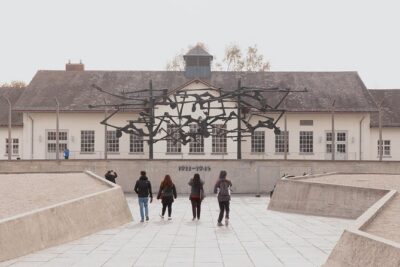
Dachau Concentration Camp Memorial Site Tour from Munich by Train
Read our review →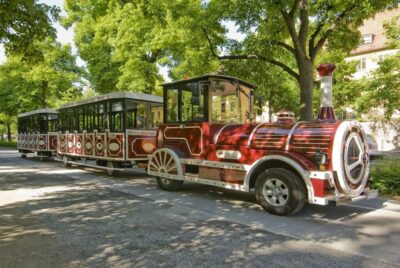
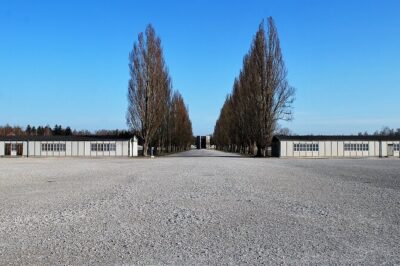
Dachau Small-Group Half-Day Tour from Munich By Train
Read our review →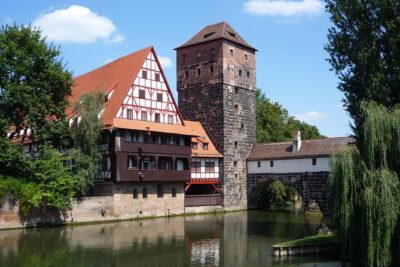
Browse the lists this tour appears in