
Reviewed · MUSEUMS
Berlin: 3D TrickArt Museum – Tickets
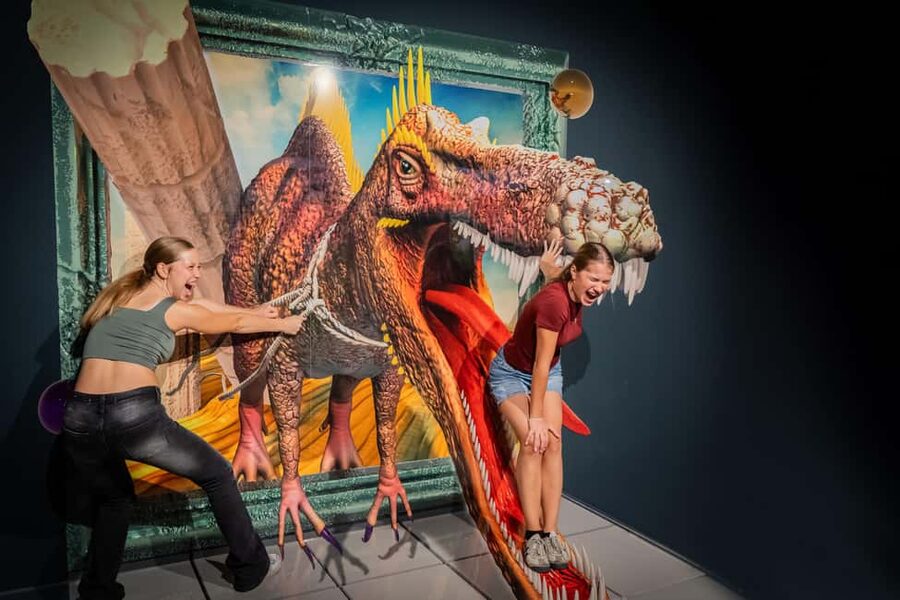
A whale rises from the Spree. Dinosaurs close in. Godzilla breathes fire while you make a last-second escape by helicopter. At Berlin’s ASTER 3D TrickArt Museum, the artwork works best when you step into it and let your camera finish the illusion. I especially like the hands-on format and the chance to create photos instead of simply looking at exhibits.
I also like the friendly staff introduction, which helps you understand where to stand and how to pose. The main drawback is simple: this is a photo experience, not a traditional art museum. If you do not enjoy taking pictures or posing, the $18 admission may feel steep for a visit that can be fairly quick.
Key points to know before you go
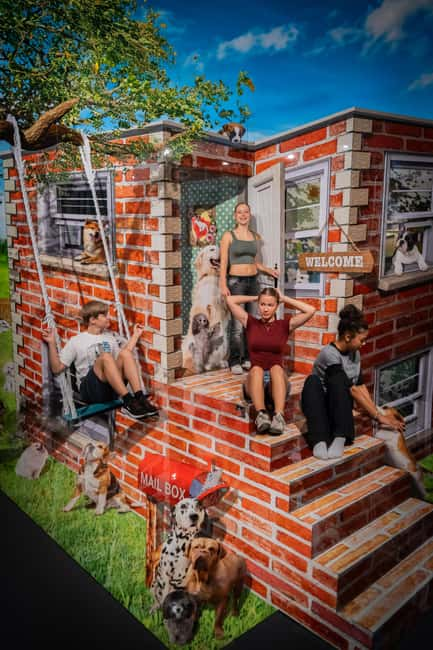
- You become part of the artwork: The painted scenes are designed for you to pose inside them, not view from a distance.
- Bring a charged smartphone: Your phone is the main tool for turning flat images into convincing photographs.
- Expect dinosaurs, Godzilla, and a Spree whale: The scenes lean toward playful fantasy, danger, and comedy rather than serious art.
- A short staff introduction helps: You get basic guidance before starting, so you can find the right angles and positions.
- The museum is air-conditioned: That matters on a hot Berlin day, especially if you are visiting with children.
- The $18 ticket covers the full exhibition: Snacks, drinks, and a phone tripod are extra, while food and drinks from outside are not allowed.
How the 3D TrickArt illusion works
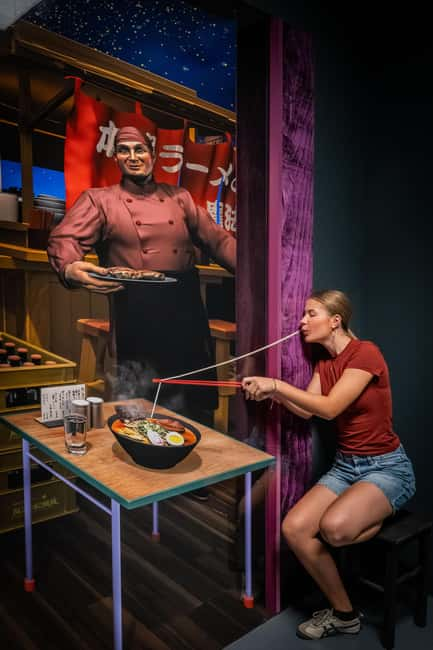
The museum is built around a familiar camera trick. The images on the walls and floor are painted to create depth, but the real effect appears only when you stand in the correct spot and photograph the scene.
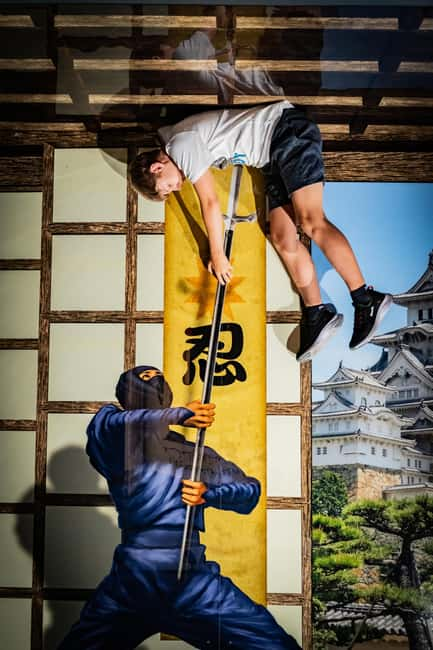
That makes this a participatory outing. You are not just walking through rooms and reading labels. You are testing poses, checking your phone screen, and adjusting your position until the picture looks right. A person standing on a painted ledge can appear to be balancing over a drop. Someone beside a giant creature can look tiny, trapped, or ready to run.
The key point is to think of each display as a small stage. The image gives you the setting, and your body supplies the action. You may need to crouch, lean, reach, point, or pretend to react to something outside the frame. The best photographs usually come from playing along rather than standing stiffly in front of the art.
This format works well for families and groups of friends because the pictures become a shared activity. One person can pose while another takes the photograph, then switch places. You can also make group scenes, although crowded poses may require a little patience and planning.
Other museums and galleries in Berlin:
- Berlin: Jewish Museum Berlin Entrance Ticket
★ 4.5 · 8,393 reviews - Berlin: Natural History Museum Entrance Ticket
★ 4.6 · 3,382 reviews - Berlin: Neues Museum Entry Ticket
★ 4.6 · 3,261 reviews
Starting with Berlin and the Spree whale
One of the more memorable scenes connects the fantasy artwork to Berlin itself. During a boat ride on the Spree, a whale suddenly appears in front of you. The idea is silly in the best way: a familiar Berlin setting is interrupted by a giant sea creature.
This scene gives you a chance to create a photograph that looks like a strange moment from a city sightseeing trip. You might pose as if you are steering the boat, reacting to the whale, or trying to avoid it. The humor comes from the mismatch between everyday Berlin and an impossible event.
I like this kind of display because it is more personal than a generic fantasy background. The scene gives you a small story to act out. You do not need to know anything about art theory, and you do not need a perfect pose. A phone camera and a willingness to look slightly ridiculous are enough.
The setting also makes a useful first stop because it explains the museum’s basic idea. You see how a flat image can appear to have depth once you stand in the intended position. After that, you will know what to look for in the other rooms.
The miniaturization machine and giant-scale scenes
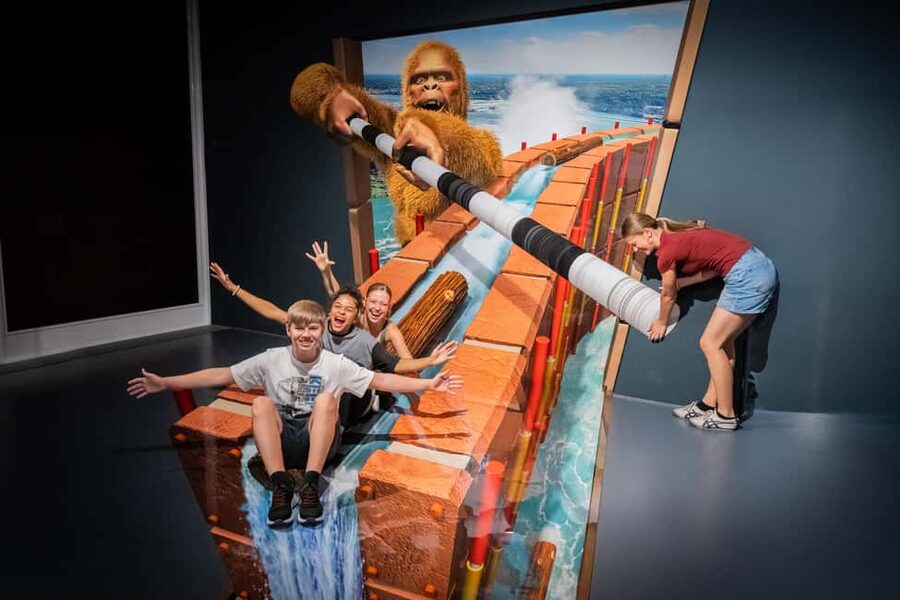
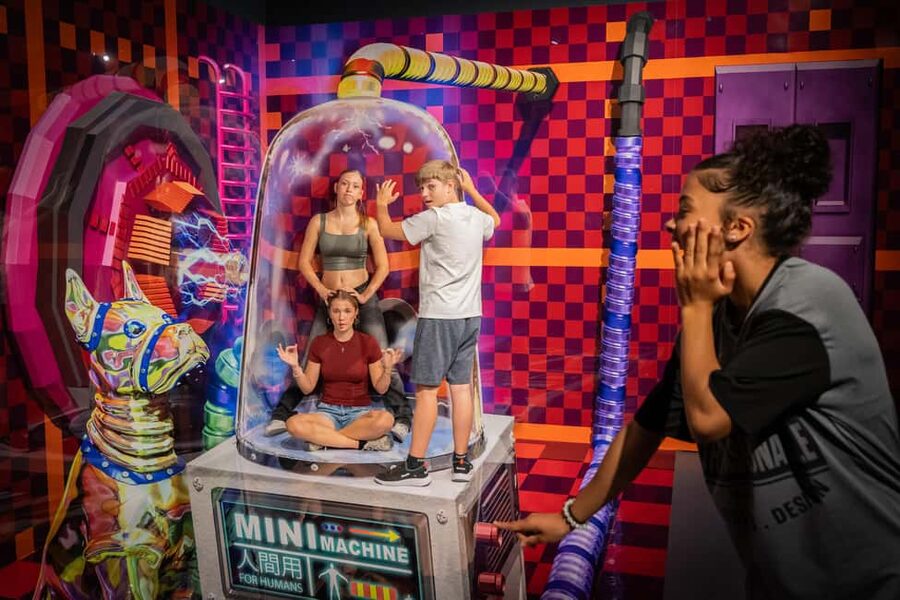
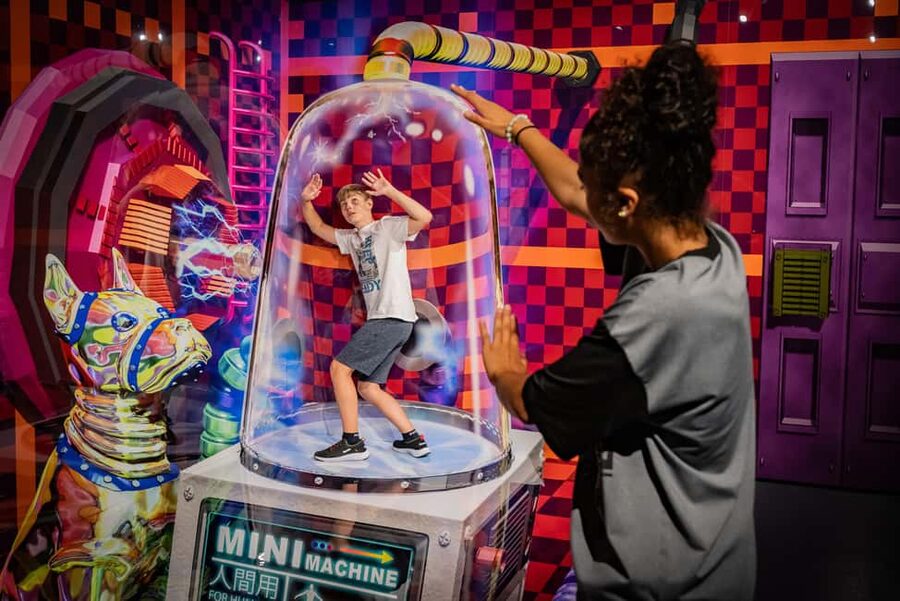
Another scene uses a miniaturization machine to make you appear smaller. This changes the visual joke from danger to scale. The image encourages you to act as if the machine has changed your size, giving your photograph a clear beginning, middle, and punch line.
Scale-based scenes work especially well when you have someone else taking the picture. The photographer can frame your full body against the artwork, then adjust the angle until the illusion reads clearly. A quick glance at the result will tell you if you need to move a step or two.
The museum does not require advanced photography skills, but a little care improves the result. Keep your phone charged, use the main camera if possible, and check the whole frame before moving on. If your picture cuts off a hand, foot, or important part of the scene, the illusion may be harder to understand.
A phone tripod is available to borrow for an additional fee. That can help with group photographs or scenes where everyone wants to appear in the frame. It is not included with the ticket, so bring your own small tripod only if it is allowed by the museum, or plan to ask about the borrowing option when you arrive.
Dinosaurs, fire, and a fast Godzilla escape
The dinosaur scenes bring the most action to the visit. You are almost eaten by not one but two dinosaurs, so the photographs can suggest that you are caught in a narrow escape. These displays are aimed at playful drama rather than realistic fear.
This is likely to be a strong part of the visit for families with children old enough to take part. Kids can act out panic, bravery, or a rescue scene, while adults can join in without needing to take the activity too seriously. The museum is not suitable for children under three, so families with toddlers should plan around that restriction.
Godzilla adds another large-scale fantasy moment. You save yourself from the fire-breathing creature with a helicopter at the last second. The scene gives you a natural action pose: reaching for help, climbing aboard, or looking back at the monster.
You should expect the experience to reward imagination more than quiet observation. If you want polished portraits, you may need several attempts. If you want funny holiday photos, the first take may already be good enough.
A few more things to do in Berlin worth a look
- Berlin: Berlin Story Bunker Entry Ticket
★ 4.6 · 6,759 reviews - Berlin: Illuseum Berlin Entrance Ticket
★ 4.1 · 3,970 reviews - Berlin: Madame Tussauds Admission Ticket
★ 4.6 · 3,941 reviews - Berlin: Charlottenburg Palace Entry Ticket
★ 4.4 · 2,076 reviews
What the staff introduction adds
Before you start, a staff member provides an introduction. That small step matters because 3D illusion art is not always obvious from the entrance. You may see a painted image but not immediately know where to stand or how to use it.
The introduction helps you get your bearings fast. It also gives you a chance to ask about the best way to photograph the scenes, especially if you are visiting with a group. The staff are described as friendly and helpful, which fits the practical nature of the museum. You are not being led through a long historical lecture. You are being shown how to use the displays.
There is no named guide provided for this experience, and this is not a scheduled guided tour. The staff support is more direct and hands-on at the start. After that, you make your way through the exhibition and create the photographs at your own pace.
That independent format is useful if your group has different energy levels. One person can take time with each display while another moves ahead. It also means you are not tied to a guide’s speech or a fixed group schedule.
How long to allow and when to visit
The ticket is valid for one day, with starting times based on availability. That makes the museum easy to fit into a Berlin day, especially if you want an indoor stop between other plans.
The exact time needed is not specified, so I would avoid treating it like a full-day attraction. The main activity is moving through the exhibition, posing, and taking pictures. Your visit may be shorter or longer depending on how many scenes you photograph and how much time your group spends repeating shots.
A quiet visit makes a real difference. When you have space, you can position your phone, try several poses, and help another person without feeling rushed. A less crowded session also gives you more freedom with group pictures.
The museum is air-conditioned, which is useful during warm weather and gives you a comfortable indoor break. Snacks and drinks can be purchased inside, but outside food and drinks are not allowed. That rule is worth remembering if you are visiting with children or planning a long day around the museum.
Is $18 good value?
At $18 per person, the ticket is not the cheapest short indoor attraction in Berlin. The value depends on what you want from the visit.
If you see the museum as a quick look at painted optical illusions, the cost may feel high. If you treat it as a shared photo activity, the price makes more sense. You are paying for access to a full exhibition of interactive scenes, not just a single photo backdrop. A group can also get several different kinds of pictures from the same ticket: comedy, action, fantasy, and Berlin-themed images.
The ticket includes the entire exhibition. Snacks, drinks, and a borrowed cell phone tripod cost extra, so budget for those only if you need them. Your own charged smartphone is enough to take part.
The experience can also have value beyond the visit itself. Unlike a standard indoor display, it gives you photographs to keep and share. That will matter more to some people than others. If you prefer museums with objects, text panels, and a strong historical story, you may find better value elsewhere. If you want a playful activity that produces unusual holiday photos, the price is easier to justify.
Who will enjoy this most
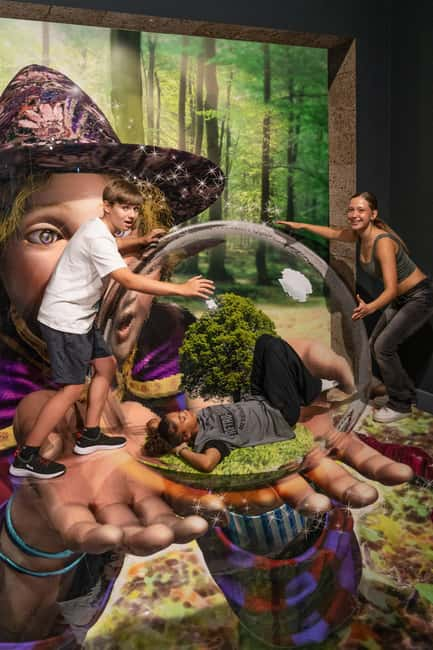
I would recommend the museum most strongly to families with older children, couples, groups of friends, and anyone who likes playful photography. The scenes give you a reason to work together, and the best pictures often come from cooperation.
It is also a sensible rainy-day or hot-weather option because the museum is indoors and air-conditioned. You can take a break from walking without giving up the feeling of doing something active.
The experience is wheelchair accessible, which makes it a practical choice for many visitors. The provided information does not describe every display or route detail, so anyone needing specific access arrangements should confirm those points before booking.
I would be less likely to recommend it to someone visiting Berlin alone who dislikes taking self-portraits. You can still look at the scenes, but much of the fun comes from arranging the photograph and acting out the moment.
Simple tips for better photographs
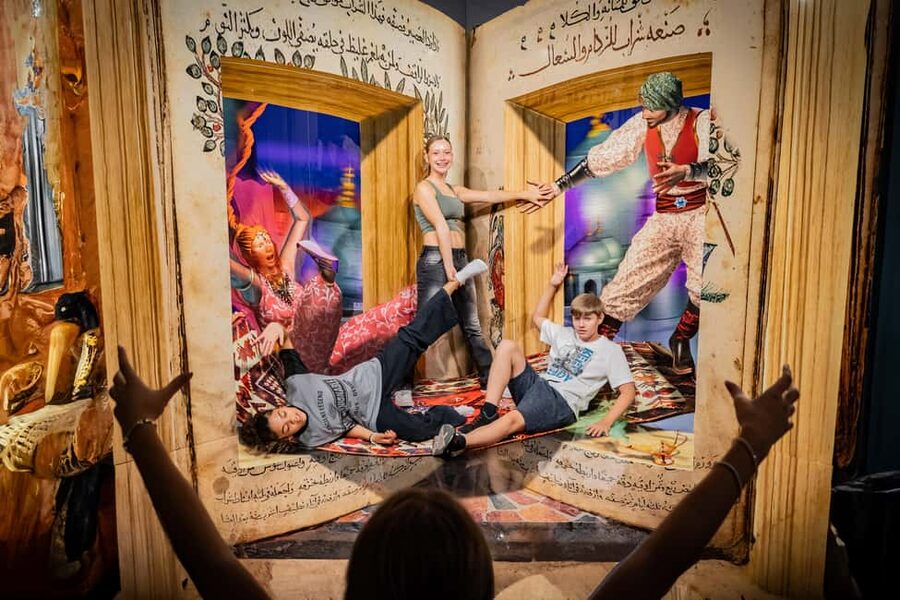
Bring a fully charged smartphone. You do not want to find the best scene and then discover that your battery is nearly empty.
Take a test picture at each display before committing to a pose. The illusion may look obvious from your position but need a small adjustment on the phone screen. Step into the image, check the frame, and then try again.
Give the photographer a clear job. Ask them to capture your full body when the scene depends on scale, or to include the key creature and background when the story needs context.
If you are visiting with friends, take turns. One person should not end up behind the camera for the entire visit. A borrowed tripod may help with group photographs, but it is an extra rather than part of admission.
Finally, lean into the silliness. These photographs work because the situation is impossible. A serious pose can be funny, but a little theatrical reaction usually makes the picture easier to understand.
Should you book the ASTER 3D TrickArt Museum?
Book it if you want an indoor Berlin activity built around photos, imagination, and shared laughs. The friendly introduction, air conditioning, wheelchair access, and wide range of fantasy scenes make it easy to use, while the $18 price is reasonable if you plan to take plenty of pictures.
Skip it if you want a traditional museum, serious artwork, or a long guided tour. The visit depends on your willingness to participate. Bring a charged phone, allow enough time to repeat your favorite shots, and consider the optional tripod if your whole group wants to appear in the pictures.
Free cancellation is available up to 24 hours before the experience, and you can reserve now and pay later. Those options help if your Berlin schedule is still changing.
FAQ
What does the $18 ticket include?
The ticket includes admission to the entire ASTER 3D TrickArt Museum exhibition.
How long is the ticket valid?
The ticket is valid for one day. Starting times depend on availability.
Do I need to bring a camera?
Bring a camera or, more practically, a charged smartphone. Your phone is used to photograph the 3D illusions.
Is a cell phone tripod included?
No. A cell phone tripod can be borrowed for an additional fee.
Can I buy food and drinks at the museum?
Yes. Snacks and drinks are available for purchase, but outside food and drinks are not allowed.
Is the museum wheelchair accessible?
Yes, the experience is listed as wheelchair accessible.
Are young children allowed?
Children under three are not suitable for this activity.
Just added in Berlin
- Private One way Airport Transfer Berlin Airport To Berlin★ 3.5 · 17 reviews
- Private Walking Tour: Berlin Wall, Cold War and Checkpoint Charlie★ 5.0 · 37 reviews
- Modern Berlin Private Walking Tour: Diverse, Vibrant and Exciting German Capital★ 5.0 · 13 reviews
- Private Day Trip to Potsdam from Berlin by Train★ 4.5 · 27 reviews
- City Explorer: Potsdam Private Day Trip★ 4.5 · 10 reviews
- Berlin Private Custom 5-Hour Tour by Car★ 5.0 · 30 reviews
- Private Half-Day Sightseeing Tour in Berlin★ 3.5 · 6 reviews
- Berlin Private Custom Tour in a Minivan, East and West★ 5.0 · 123 reviews
Museums, compared.
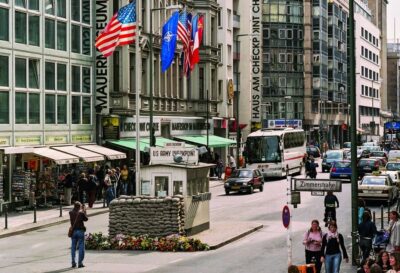
Skip-the-Line: Berlin Wall Museum at Checkpoint Charlie
Read our review →
Browse the lists this tour appears in