Reviewed · TOURS IN BERLIN
Berlin: 2.5-Hour Neighborhood Tour of Neukölln
Neukölln is more than Berlin’s fashionable southern district. This 2.5-hour walking tour traces its unlikely path from Bohemian Protestant refuge to working-class suburb, entertainment center, and multicultural Berlin neighborhood. You’ll see grand civic buildings, social housing, a former prison, and the village-like Richardplatz area in one compact outing.
I like the way the tour connects ordinary streets to major changes in Berlin’s past, rather than treating Neukölln as a string of photogenic stops. I also like the personal feel reported by participants who toured with Tobias, whose relaxed explanations brought out details such as the city crest, urban planning, and the old Kindl brewery site. The main thing to consider is that this is an architecture and history walk, not a food tour or nightlife experience.
Key points
- Rixdorf became Neukölln in 1912: Learn how a name change approved by Wilhelm II was meant to repair the district’s poor public image.
- Richardplatz keeps a village feel: See the Bohemian Exulanten quarter and Bethlehem Church in one of Neukölln’s most distinctive historic settings.
- Rollberg shows working-class Berlin: Study the former proletarian housing district and its unusual atrium houses.
- Civic buildings tell their own story: Visit the town hall, old district court, former prison, and old public pool façade.
- Architecture is the main attraction: The Innstrasse housing complex, Saalbau Neukölln, and Karl-Marx-Strasse arcade reveal different eras of city life.
- Small groups may be possible: The guide can arrange a meeting point, date, and time for your group on request.
Neukölln before the hip cafés
The best reason to take this tour is simple: Neukölln makes sense only when you know what came before its current reputation. The district is often reduced to restaurants, bars, and multicultural street life, but its older identity is much stranger and more layered.
The walk begins with the long story of Rixdorf. The settlement was renamed Neukölln in 1912 with approval from Wilhelm II. The reason was not a small administrative tidy-up. Rixdorf had gained a reputation for frivolous entertainment, and local officials wanted a cleaner public image.
That name change gives you a useful key to the whole neighborhood. Neukölln has repeatedly been reshaped by outsiders’ opinions, political decisions, migration, and changing ideas about respectable city life. A guide can make those shifts easier to see because the evidence is spread across streets and buildings rather than gathered in one museum.
I especially appreciate that the tour does not treat history as a list of dates. The story moves from medieval roots to the Protestant refugees who settled in the area, then through industrial and working-class development to the multicultural district you see today.
Other trips people book in Berlin:
- Berlin: Reichstag, Dome and Government District Guided Tour
★ 4.7 · 18,288 reviews - Berlin: 1-Hour City Tour by Boat with Guaranteed Seating
★ 4.3 · 16,993 reviews - Berlin: Boat Tour Along the River Spree
★ 4.4 · 11,252 reviews
Richardplatz and the Bohemian Exulanten
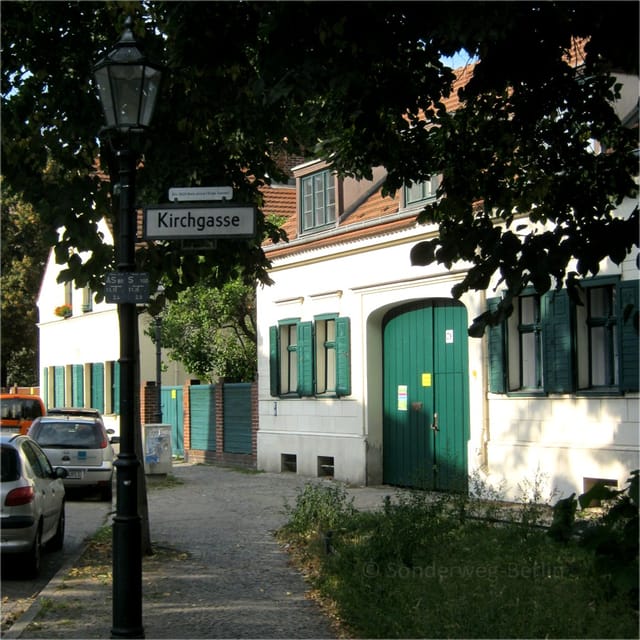
Richardplatz is one of the most rewarding parts of the walk. Here, Neukölln briefly loses its big-city edge and takes on a village-like character. The square helps you picture an earlier settlement before Berlin expanded southward and swallowed the surrounding communities.
The Bohemian Exulanten were Protestant refugees who arrived alongside the German population in the 18th century. Their religious faith and strict moral outlook shaped daily life. That background offers a useful counterpoint to the old image of Rixdorf as a place of loose entertainment.
The district’s past is therefore full of contrasts. Puritan refugee life and popular amusement occupied the same broad area, even if they represented very different sides of its identity. The tour uses that tension well, showing how a neighborhood’s reputation can hide the lives of the people who built it.
You’ll visit Bethlehem Church on Richardplatz, one of the stops that gives this section its focus. The church is tied to the local Protestant story and helps turn an abstract account of religious migration into something rooted in a real place.
This part of the route is especially useful if you want to understand Berlin outside the usual central sights. You are not simply looking at old façades. You are seeing how a small religious settlement became part of a much larger capital.
Town hall, court, and the machinery of local power
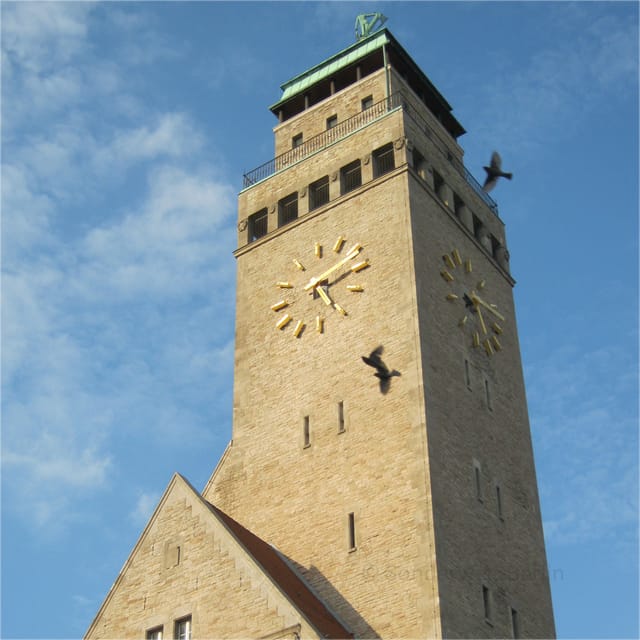
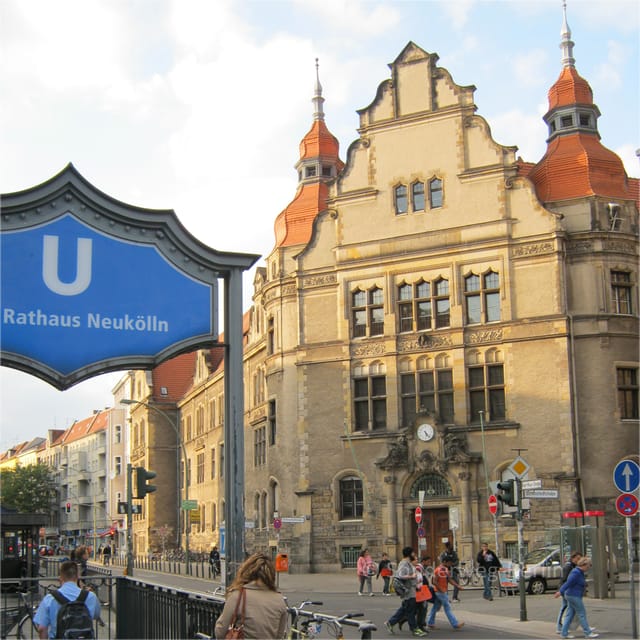
The Neukölln Town Hall provides a change of scale. After the village-like mood of Richardplatz, its grand architecture reminds you that Neukölln became an important urban district with its own civic ambitions.
The building is not just a backdrop for photographs. It represents the point at which local government, population growth, and city pride became visible in stone. The tour also brings in details such as the city crest, which can seem like a minor feature until someone explains what its symbols mean.
Nearby, the old district court and former prison add a more serious note. These buildings show how local authority worked in daily life. Courts and prisons are practical institutions, but they also reveal what a city feared, regulated, and considered worthy of punishment.
I like this part because it keeps the story grounded. You move from church and settlement history to administration and law. The result is a fuller picture of Neukölln than you get from looking only at grand monuments or current street culture.
Do not expect a visit inside every building. The experience is a walking tour, so the value comes from the exterior architecture, the setting, and the guide’s explanation. If you want long interior visits, this may feel too quick.
Rollberg and the reality of working-class housing
The Rollberg district adds social history to the route. You’ll hear how this proletarian residential area developed and see housing that was built for ordinary working people rather than wealthy Berliners.
Housing is one of the best ways to read a city. The size, layout, and arrangement of buildings tell you about population pressure, income, planning ideals, and the role of local government. Rollberg gives the tour a chance to discuss those issues without turning the outing into a lecture.
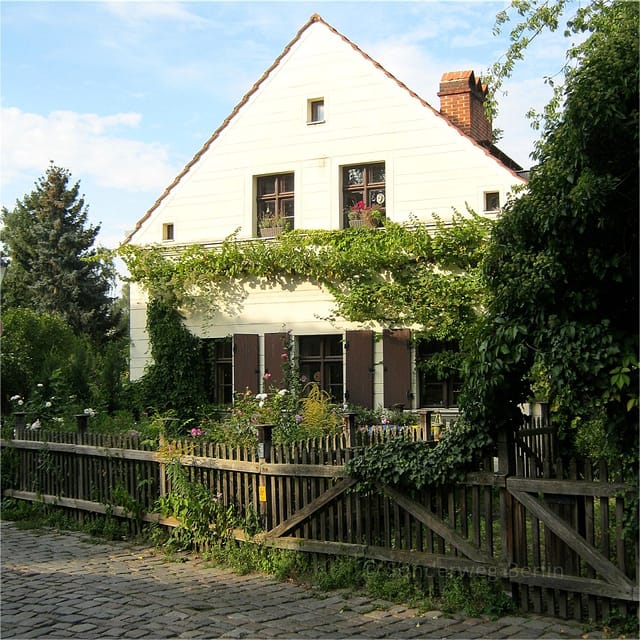
A particularly interesting feature is the group of atrium houses. These buildings were part of the housing complex in the area and offer an architectural answer to the problem of creating shared living space in a dense urban district. Their design is more distinctive than the plain phrase social housing might suggest.
The tour may also include the former brewing area of the Kindl brewery, a detail that links housing and industry. Neukölln’s neighborhoods were not isolated residential zones. Work, production, transport, and home life developed close together.
For me, this is one of the tour’s most useful sections. You see that Berlin’s character was shaped not only by palaces and cultural institutions but also by the places where working families lived. It also gives you a better sense of why Neukölln feels so different from the central museum quarter.
Same base, a different kind of day out:
- Discover Berlin Half-Day Walking Tour
★ 5.0 · 9,624 reviews - Berlin: Hop-on Hop-off Bus Tour with Live Commentary
★ 4.3 · 8,579 reviews - Berlin: Government District around the Reichstag Guided Tour
★ 4.7 · 8,447 reviews - Berlin: Reichstag, Plenary Chamber, Cupola & Government Tour
★ 4.6 · 8,422 reviews
The Innstrasse housing complex
The housing complex on Innstrasse is another architectural highlight. Its value lies in the way it shows a more deliberate approach to urban design. Instead of treating housing as a collection of anonymous blocks, the complex has enough character to reward a close look.
Your guide can point out the features that make it notable and place them in the wider development of Neukölln. That context matters. Without explanation, you might see an unusual façade or courtyard and simply walk on. With the story behind it, the building becomes evidence of changing ideas about comfort, community, and city planning.
This stop is well suited to people who enjoy architecture but do not want a tour limited to famous landmarks. The buildings are part of everyday Neukölln, which makes the experience feel more connected to local life.
At the same time, architecture fans should keep expectations realistic. The attraction is the exterior and the explanation. There is no promise of a private interior visit or a specialist architectural lecture.
The old public pool and Saalbau Neukölln
The façade of the old Neukölln public pool gives you another look at civic life. Public baths were important urban institutions, particularly in periods when private washing facilities were limited. Even without entering, the building’s exterior helps explain how cities used public architecture to address basic needs and promote public health.
This is a good example of the tour’s wider method. It does not focus only on famous churches and government buildings. It also includes places designed for ordinary residents, such as housing and public bathing facilities.
Saalbau Neukölln brings culture into the picture. It represents the district’s interest in performance and public gathering, adding a different layer to the story after the court, prison, and housing stops.
Together, the old pool and Saalbau show how local identity is built through shared institutions. A neighborhood is shaped by where people worship, work, live, seek legal help, bathe, and attend performances. That broad approach is one of the tour’s strengths.
Karl-Marx-Strasse and the changing face of commerce
The arcade on Karl-Marx-Strasse gives the walk a more commercial setting. The street has long been one of Neukölln’s central urban corridors, and the arcade reflects the district’s connection to shopping and everyday business.
This stop helps bridge the gap between historic Neukölln and the district you see now. The neighborhood is not preserved as a museum piece. Its old structures continue to sit beside newer businesses, changing populations, and modern city life.
Karl-Marx-Strasse also helps explain why a walking tour works better here than a quick drive through the area. From a vehicle, you may notice the scale of the street but miss the transitions between buildings. On foot, you can compare civic architecture, housing, commercial space, and older village remnants at a human pace.
Do keep in mind that a 2.5-hour walk covers a lot. The route is designed to give you a strong overview, not a detailed study of every storefront or architectural period. If one building catches your eye, note it for a later return.
A guide who keeps the history human
The guide can make or break a neighborhood tour, and the strongest feedback here centers on Tobias. He led private or very small outings in some cases and was praised for explaining city development, local symbols, and historical background in a relaxed way.
That personal style matters in Neukölln. The district’s story includes religion, class, migration, image-making, law, housing, and entertainment. A stiff presentation could make those subjects feel dry. A guide who explains them with humor and conversation can keep the walk moving.
The experience is offered in German or English. A live guide means you can ask about a building or pause over a detail that interests you, though the amount of discussion may depend on the group and the guide assigned.
The tour provider is Sonderweg-Berlin. A meeting point, date, and time can be arranged for your group on request, which is useful if you are planning a private outing or need the route to fit your schedule.
Is $23 a fair price?
At $23 per person, this is a good value if you want a focused introduction to Neukölln. The tour lasts two and a half hours and includes a guide who connects many separate sites into one story. You are paying for interpretation and local context, not admission to attractions or food.
The price is particularly reasonable for visitors who have already seen central Berlin and want something less predictable. Neukölln offers plenty of material, but it is not always obvious where to look or how to connect one building to the next.
You should budget separately for any food, drinks, or personal purchases. None are included. Since the route is built around outdoor viewing and walking, comfortable shoes and weather-ready clothing are sensible, though those practical items are up to you.
The full value depends on your interests. If you want the major Berlin icons, this is not the right choice. If you enjoy local history, architecture, and the way neighborhoods change over time, the cost is modest for the amount of ground covered.
Who will enjoy this Neukölln walk?
I would recommend it most strongly to:
- First-time visitors making a second Berlin visit: You get away from the usual central circuit without leaving the city.
- Architecture fans: The town hall, Innstrasse housing, Rollberg atrium houses, old pool façade, and Saalbau provide plenty to examine.
- History-minded visitors: The route links Protestant refugees, urban growth, working-class housing, civic government, and the 1912 name change.
- People who prefer local districts to major sights: The tour focuses on streets and buildings used by residents rather than headline attractions.
- Small groups and private parties: Flexible arrangements may allow the outing to be shaped around your group.
- Visitors using wheelchairs: The activity is listed as wheelchair accessible, though you should still confirm the specific meeting point and route when booking.
It may be less suitable if you want a food-focused outing, extensive interior access, or a fast overview of all Berlin. The tour stays within Neukölln and gives the district most of your attention.
Practical details before you book
The tour takes 2.5 hours, so plan for a sustained walking experience. Starting times depend on availability, and the meeting point can vary by booking option.
German and English tours are available. If you have a language preference, select it when booking. You can also request a meeting point, date, and time for your group.
Wheelchair access is listed, but the exact route and meeting location still matter. Ask for those details in advance if you need a fully step-free outing.
The booking terms are flexible: you can cancel up to 24 hours before the start for a full refund, and a reserve now, pay later option is available. Those policies are useful when your Berlin schedule is still shifting.
Should you book this Neukölln tour?
Book it if you want to understand how Neukölln became Neukölln. The best parts are not one spectacular monument but the connections between Richardplatz, the Bohemian settlement, civic buildings, working-class housing, public institutions, and modern commercial streets.
I would choose this tour after seeing Berlin’s central landmarks, or for a first visit if you prefer neighborhoods to postcard sights. Tobias appears to be an especially good choice when available, thanks to his relaxed, personal approach and broad command of local detail.
Skip it if you mainly want food, nightlife, or major interiors. For an affordable, thoughtful walk through one of Berlin’s most layered districts, though, this is a strong pick.
FAQ
How long does the Neukölln neighborhood tour last?
The walking tour lasts 2.5 hours.
How much does the tour cost?
The listed price is $23 per person.
What languages are available?
The live tour guide is available in German and English.
What sights are included?
The route includes the old district court, former prison, Neukölln Town Hall, Rollberg housing district, Innstrasse housing complex, old Neukölln public pool façade, Saalbau Neukölln, the Karl-Marx-Strasse arcade, Bohemian Rixdorf, and Bethlehem Church on Richardplatz.
Is a tour guide included?
Yes. An expert live tour guide is included.
Are food and drinks included?
No. Food, drinks, and personal expenses are not included.
Is the tour wheelchair accessible?
Yes, the activity is listed as wheelchair accessible.
Can I arrange a meeting point for my group?
Yes. A meeting point, date, and time can be arranged for you and your group upon request.
Just added in Berlin
- Private One way Airport Transfer Berlin Airport To Berlin★ 3.5 · 17 reviews
- Private Walking Tour: Berlin Wall, Cold War and Checkpoint Charlie★ 5.0 · 37 reviews
- Modern Berlin Private Walking Tour: Diverse, Vibrant and Exciting German Capital★ 5.0 · 13 reviews
- Private Day Trip to Potsdam from Berlin by Train★ 4.5 · 27 reviews
- City Explorer: Potsdam Private Day Trip★ 4.5 · 10 reviews
- Berlin Private Custom 5-Hour Tour by Car★ 5.0 · 30 reviews
- Private Half-Day Sightseeing Tour in Berlin★ 3.5 · 6 reviews
- Berlin Private Custom Tour in a Minivan, East and West★ 5.0 · 123 reviews
Tours in Berlin, compared.
Reichstag, Dome and Government District Guided Tour
Read our review →
1-Hour City Tour by Boat with Guaranteed Seating
Read our review →
Reichstag, Plenary Chamber, Cupola & Government Tour
Read our review →