
Reviewed · WALKING TOURS
Bamberg Free Walking Tour
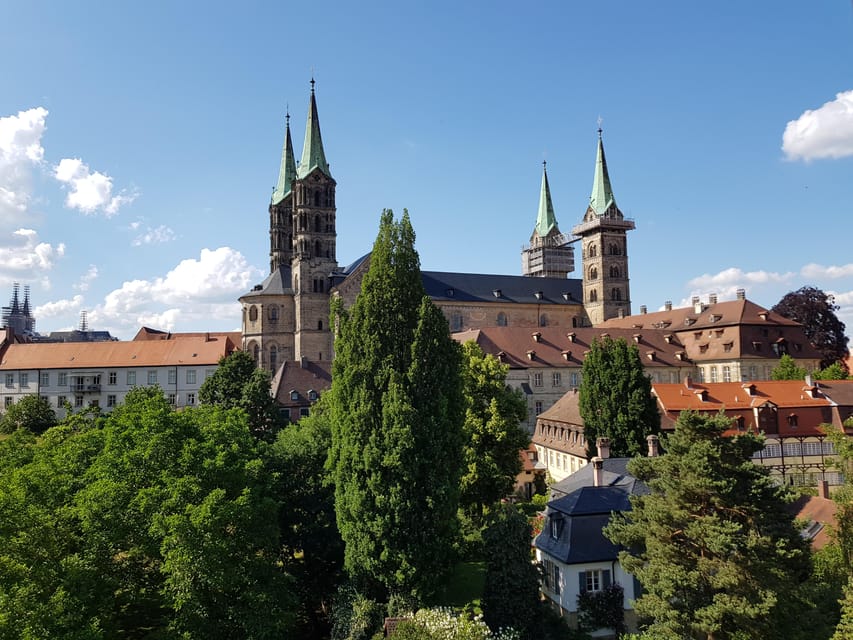
Bamberg’s best introduction is on foot, where a short walk links Little Venice, the Old Town Hall, the cathedral, and the Old Residence. I like that this tour does more than point at handsome buildings. It connects the city’s beer traditions with its fishermen, basketball players, students, bishops, and difficult witch-hunting past. I also like the broad timeline, from the first mention of Castrum Babenberch in 907 to Bamberg’s growth after 1007.
The main consideration is language: the tour is conducted in German, and some material is presented in its original language. The advertised price is only $3.54, but the guides work on tips, so you should plan to reward the guide at the end if the tour gives you a useful start in Bamberg.
Key points at a glance
- Meet by the Centurione statue: Find the black-faced statue near the Lower Bridge and look for the white umbrella with a green logo.
- See Bamberg’s headline sights: The route includes Little Venice, the Old Town Hall, the Romanesque cathedral, the Old Residence, and more.
- Get 1,000-plus years of context: The tour covers Bamberg’s early mention in 907, its rise under the bishops from 1007, and its later Baroque chapter.
- Look beyond the beer: Local life also includes fishermen, basketball players, and students.
- Allow two hours: The walk gives you a useful city overview without taking up the whole day.
- Remember the tip model: The low booking price is not the whole cost. The guides depend on tips for their work.
Why Bamberg works so well on foot
Bamberg rewards a walking tour because its main sights are packed into the UNESCO World Heritage Old Town. You can move from medieval streets to grand ecclesiastical buildings, then toward the river and the old fishing quarter without needing a bus or taxi between each major stop.
I like this format for a first visit because you get a clear map in your head. Instead of seeing isolated monuments, you begin to understand how the old town, river, church power, trade, and everyday life fit together. Two hours is long enough for a proper orientation, but short enough to leave you time for museums, beer halls, shopping, or a second walk on your own.
The tour is also useful if you have only one day in Bamberg. One recent booking described it as perfect for a day, which is a fair assessment of its role. This is not designed to cover every museum interior or side street. It gives you the framework you need to choose what deserves more of your time afterward.
More Walking Tours across Germany
- Discover Berlin Half-Day Walking Tour
★ 5.0 · 9,624 reviews - Berlin: Third Reich and Cold War 2 Hour Walking Tour
★ 4.9 · 6,830 reviews - Munich: Third Reich & WWII Walking Tour
★ 4.6 · 6,181 reviews
Finding the Centurione statue near the Lower Bridge
Your starting point is the Centurione statue, a black-faced statue not far from the Lower Bridge. The clearest practical marker is the white umbrella with a green logo, which should help you pick out the guide in the meeting area.
Arrive with enough time to orient yourself. The meeting point is near one of the city’s key crossings, so it makes sense to identify the Lower Bridge before the tour begins. If you arrive early, you can use the riverfront setting to get your first look at the old town’s relationship with the water.
The location is more than a simple gathering spot. Bridges and river crossings help explain Bamberg’s layout, especially as the walk moves toward the canal-side buildings and the area known as Little Venice. The tour begins in a place where the city’s architectural and waterways story is already visible.
Little Venice and Bamberg’s riverside character
Little Venice is one of the tour’s most appealing stops. The name refers to the row of old fishermen’s houses along the water, where the buildings and river create one of Bamberg’s most recognizable views.
You should expect this part of the walk to focus on scenery as well as local life. The fishermen are an important reminder that Bamberg was not shaped only by bishops, brewers, and grand civic buildings. Working communities along the water helped give the city its daily character.
This is also a good place to pay attention to scale. Bamberg’s old town is not simply a collection of monumental buildings. Its appeal comes from the contrast between modest riverside homes and the larger structures built by civic and religious authorities. Little Venice gives you that human-sized view.
Photography is likely to be easy here, though the tour’s purpose is not a dedicated photo session. Listen first, then take pictures during natural pauses. The route is meant to keep moving, and you will get more from the walk if you let the guide explain how the area fits into Bamberg’s past.
The Old Town Hall and a city built across water
The Old Town Hall is another major stop, and it helps explain Bamberg’s unusual urban arrangement. Its placement in the middle of the water is one of the city’s most memorable architectural details.
The building is valuable on a walking tour because it is easy to admire without understanding why it is there. Your guide can place it within Bamberg’s civic story and point out how the town’s waterways affected its growth. That broader explanation is more useful than a quick photograph and a date.
I would pay close attention here to the difference between civic authority and religious power. The tour’s route includes both the Old Town Hall and the cathedral area, allowing you to compare the city’s public and ecclesiastical identities. The buildings are close enough in the walking route to make that contrast clear.
The tour does not promise an interior visit, so you should treat the Old Town Hall as an exterior sight and historical talking point. If you want to explore inside any building, ask the guide after the walk for suggestions. The guides remain available for questions and advice once the formal tour ends.
Same base, a different kind of day out:
- Berlin: Reichstag, Dome and Government District Guided Tour
★ 4.7 · 18,288 reviews - Berlin: 1-Hour City Tour by Boat with Guaranteed Seating
★ 4.3 · 16,993 reviews - Hamburg: Sex and Crime in St. Pauli Tour for Ages 18+
★ 4.7 · 15,447 reviews - Hamburg: 1.5-Hour Harbor and Speicherstadt Day Cruise
★ 4.6 · 14,200 reviews
Bamberg Cathedral and the power of the bishops
The Romanesque cathedral gives the tour its strongest religious and political focus. Bamberg’s development under the bishops from 1007 is a central part of the city’s story, and the cathedral helps make that history visible.
The walk places the building within more than a thousand years of change. Bamberg was first mentioned in 907 as Castrum Babenberch, then grew into one of Franconia’s most important cities after the bishopric was established in 1007. Those dates are worth remembering because they explain why the city has such a high concentration of historic buildings.
A good guide does not leave this history as a list of years. The value here is seeing how church power affected the city’s status, architecture, and public image. The cathedral’s Romanesque form gives you a strong visual anchor for the earlier chapter of Bamberg’s story.
If you prefer tours with a lot of historical context, this section should suit you. If you mainly want quick photo stops, the amount of background may feel more substantial than expected. The two-hour schedule means you will hear the key story, but you should not expect a full specialist lecture on every architectural detail.
The Old Residence and Bamberg’s Baroque face
The Old Residence adds a later and more decorative chapter to the walk. Its Baroque splendor contrasts sharply with the Romanesque cathedral and the older riverside homes.
This contrast is one of the tour’s strengths. You see that Bamberg was not frozen in one medieval moment. Different periods left their mark, and the route lets you compare the visual language of church power, civic life, and princely comfort.
The Old Residence also helps explain why a city can feel both medieval and grandly formal within a short distance. Your guide can connect the building to the wider development of Bamberg under its bishops, giving the ornate architecture a political setting rather than treating it as decoration alone.
Again, the stated experience is a guided walk, not a guaranteed interior tour. If the rooms of the residence are a priority for you, ask for practical advice after the walk. The guides offer suggestions for things to do in Bamberg and nearby areas, so the tour can help shape the rest of your visit.
The history is not all grand buildings
I appreciate that the route includes Bamberg’s darker past. The city’s Baroque beauty existed alongside the criminal persecution of people accused of witchcraft. That difficult subject keeps the tour from presenting Bamberg as a tidy collection of pretty façades.
This part of the story matters because it shows how power could be used against ordinary people. It also gives you a more honest view of the city’s past. Grand architecture and painful history can exist in the same streets, and a useful city tour should make room for both.
The tour also brings the story into the present by discussing cultural life beyond the usual beer label. Bamberg is associated with Franconian brewing, and beer will naturally enter the conversation. But fishermen, basketball players, and students also shape the city’s identity.
That broader view is a real benefit if you want more than a drinking guide. You will still hear about beer, but the city is presented as a living place with different communities and interests. The result should help you notice more than breweries and historic houses as you continue exploring.
What the two-hour format gives you
Two hours is a sensible length for this route. You have enough time for the main sights and a connected explanation, while still preserving most of your day.
The walk is best treated as an orientation rather than a complete Bamberg program. You will see the main architectural highlights and hear the major historical chapters, but you will not cover every museum, neighborhood, or nearby attraction. That is not a flaw unless you expect a full-day tour.
I would book it early in your stay if possible. Once you know where Little Venice, the Old Town Hall, the cathedral, and the Old Residence are located, you can return to the places that caught your interest. You can also ask the guide for suggestions after the official route ends.
The group size is not specified, so you should not book expecting a private walk or a small group. The experience is presented as a shared guided tour. Wear comfortable shoes, since the value comes from walking through the old town rather than viewing it from a vehicle.
German-language guiding and the role of the guide
The live tour is in German. That is the single biggest booking factor for many people. If you understand German well, the language should allow you to follow the jokes, historical connections, and local references more fully. If you do not, you may find the tour harder to use, since the supplied information does not promise an English-language option or translation.
Recent guide names associated with the experience include Julia and Thomas. One booking praised Julia’s entertaining, informative presentation, while another thanked Thomas for covering what was most important in Bamberg. Guide assignments can change, so you should not assume either person will lead your particular departure.
The guides are available for questions after the formal walk. Use that time well. Ask about places to eat, further sights in town, or things to do around Bamberg. This extra conversation can be especially useful because the tour itself is designed as a city overview.
Price, tips, and the real value
At $3.54 per person, the booking price is unusually low for a two-hour guided introduction. The value is strongest if you want historical context and a practical orientation without committing a large part of your budget.
There is an important catch: the guides work exclusively on a tip basis and ask you to reward their work at the end. The listed price should therefore be treated as a small reservation charge or starting point, not as the full measure of what the guide earns.
I like the model when it is clear from the beginning. It lets you reserve a place while keeping the initial cost low, and it gives you flexibility if your plans change. You can cancel up to 24 hours in advance for a full refund, and you can reserve now while paying later. Starting times vary, so check availability for the day you want.
The fairest way to judge the cost is to consider what you need. If you only want to photograph the main sights, you can walk through the old town independently. If you want someone to connect the buildings, dates, local culture, and darker history in one route, the low starting price makes this an attractive option, provided you remember the tip arrangement.
Who should book the Bamberg walk
I would recommend this experience to a first-time visitor who wants a clear introduction to Bamberg in one morning or afternoon. It is also a good fit for anyone with a single day in town, since the route covers the key sights without taking over your schedule.
History-minded visitors should appreciate the movement from 907 to the bishop-led growth after 1007, then onward to Baroque architecture and the city’s more difficult past. Architecture fans will get a useful comparison between Little Venice, the Romanesque cathedral, the Old Town Hall, and the Old Residence.
The tour is less suitable if you need English guiding, want guaranteed interior access, or prefer a private and highly specialized experience. You should also be comfortable with the tip model. The walk gives you an overview, not a deep examination of each monument.
Should you book it?
Book this Bamberg Free Walking Tour if you want a well-priced German-language introduction to the old town, especially on a short visit. The route brings together the city’s best-known sights, but its real strength is the connection between architecture, bishops, beer, fishermen, students, basketball, and the less comfortable parts of Bamberg’s past.
Skip it if you cannot follow German or if you want an English-language tour with guaranteed access inside the Old Residence or cathedral. For everyone else, the two-hour format offers a practical first look, and the guides’ availability after the walk gives you a chance to shape the rest of your stay.
FAQ
Where does the Bamberg Free Walking Tour meet?
The meeting point is the Centurione statue near the Lower Bridge. Look for the white umbrella with a green logo.
How long does the tour last?
The guided walking tour lasts two hours.
What language is the tour conducted in?
The live tour guide speaks German. Some content is shown in its original language.
Which Bamberg sights are included?
The route includes Little Venice, the Old Town Hall, the Romanesque cathedral, the Old Residence, and other sights in the UNESCO World Heritage Old Town.
How much does the tour cost?
The listed price is $3.54 per person. The guides work exclusively on a tip basis, so you should plan to give a tip at the end of the tour.
Can I cancel or pay later?
You can cancel up to 24 hours in advance for a full refund. You can also reserve your place and pay later, keeping your plans flexible.
Just added in Germany
- Berchtesgaden: Via Ferrata Beginner Tour of Schützensteig★ 4.7 · 15 reviews
- Berlin: Energizing 2-Hour Morning Segway Tour★ 4.7 · 35 reviews
- Berlin: Thrilling E-Scooter Adventure Tour★ 4.4 · 66 reviews
- Bayreuth: German City Walking Tour (Tourist Info)★ 4.7 · 202 reviews
- Beelitz-Heilstätten: Baum&Zeit Tree Top Walk Entry Ticket★ 4.9 · 7 reviews
- Beer Bike & Party Bike: Unforgettable Berlin City Tour incl. pickup★ 5.0 · 5 reviews
- Bavaria: Beginner Canyoning Tour★ 4.5 · 10 reviews
- Bayreuth: Christmas city tour in German★ 4.9 · 12 reviews
Walking Tours, compared.




Third Reich Berlin: Hitler and WWII Walking Tour
Read our review →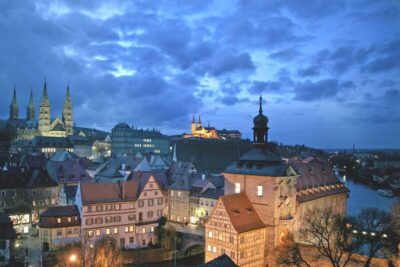
Browse the lists this tour appears in