
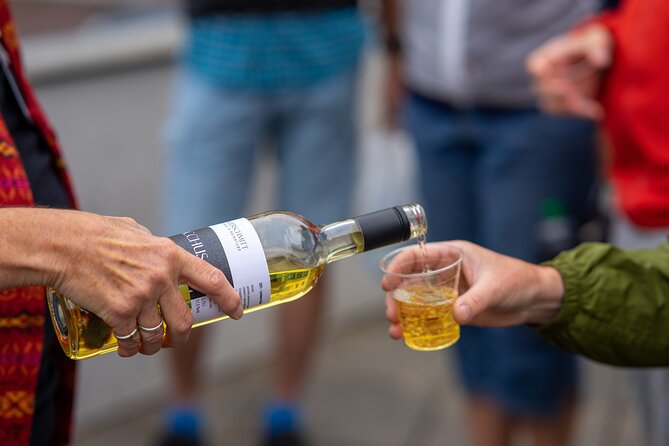
Reviewed · FOOD TOURS
Culinary-historical walk through Bamberg
Bamberg’s food story is really a beer story, but not only that. This two-hour walk links medieval eating habits, market life, wine, smoked beer, local pastries, and the Regnitz river. You get small tastes along the way, then finish with your choice of beer at Eckerts Wirtshaus.
I like the clear historical thread and the route through real city places rather than a single restaurant. I also like the mix of food and drink: you will encounter meat, Bamberg’s two kinds of Hörnla, market aromas, wine, and several beer-related stops. The main catch is simple: this is a German-speaking tour, so it is a poor fit if you need explanations in English.
Key points about Bamberg’s culinary walk
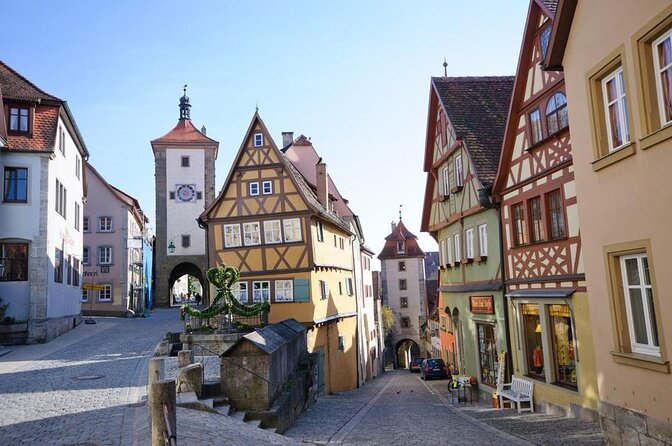
- Seven stops in about two hours, from Am Kranen to Eckerts Wirtshaus.
- Several small tastings, including meat, local Hörnla, wine, and beer-related samples.
- Bamberg’s brewing story takes center stage, with special attention to smoked beer and Schlenkerla.
- A useful surprise: medieval Bamberg was a wine town before its beer fame took hold.
- The route includes the Little Venice area, the weekly market, and views toward Michelsberg.
- The final beer is included, while the tour accepts up to 30 people.
What this Bamberg food tour is really about
Bamberg is often sold as a beer destination, and this walk does not shy away from that. Its opening idea is that a third stream flows through Bamberg, the beer, alongside the two branches of the Regnitz. That gives you the right mood for the afternoon: light, local, and happily focused on what people eat and drink.
Still, the walk is not just a pub crawl. You move through central Bamberg while the guide explains how food and drink shaped daily life. The tour looks at medieval meat consumption, the old market, wine production, fishing, brewing, and the role of traditional inns.
That combination matters. You see the city first, then understand why certain foods and drinks belong here. A plate or glass makes more sense when you know the work, trade, water, and local customs behind it.
The tour begins at 4 pm and lasts about two hours. That is a handy time slot. You can spend the morning and early afternoon seeing Bamberg’s main sights, then use this walk as a bridge into the evening meal. The route ends at Eckerts Wirtshaus, so you can stay for dinner if the setting and menu suit you.
The tour has a maximum of 30 people. That is not a tiny tasting group, but it keeps the experience within a manageable size for a city walk. Expect a shared pace and public explanations rather than a private food consultation.
Other eating walks in Bamberg:
- Bamberg: Guided Historical Culinary Tour
★ 4.6 · 461 reviews - Hamburg: Schanzenviertel Culinary Tour
★ 4.6 · 2,051 reviews - Hamburg: Elbphilharmonie Plaza and HafenCity Food Tour
★ 4.7 · 1,711 reviews
Starting at Am Kranen with medieval food
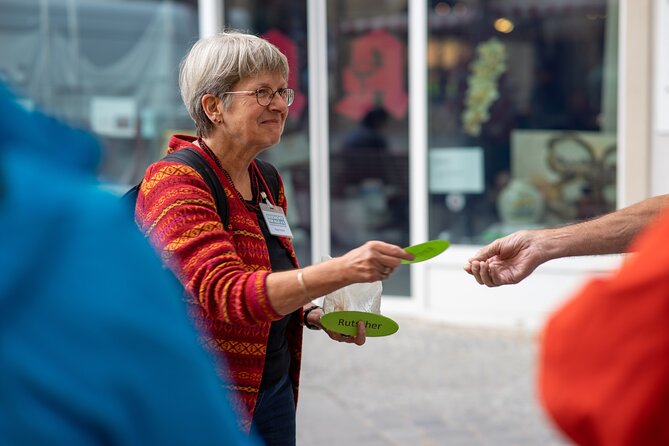
Meet at Alter Schlachthof, Am Kranen 1. The first section introduces medieval eating habits, with meat consumption as the opening subject. A first taste helps turn the history from an abstract lecture into something you can experience directly.
This is a smart beginning. Medieval food can feel remote when it is reduced to dates and old occupations. A sample gives you a physical reference point, even if you do not know much about the period. It also sets up one of the tour’s recurring themes: Bamberg’s culinary identity grew from everyday food, trade, and local production, not just from modern breweries.
You should arrive ready to walk and sample food soon after the 4 pm start. The information provided does not list every tasting or identify exact ingredients, so do not expect a fixed restaurant-style meal at this point. Think of the food as a series of small discoveries spread across the route.
Gruner Markt and the clues hidden in a market
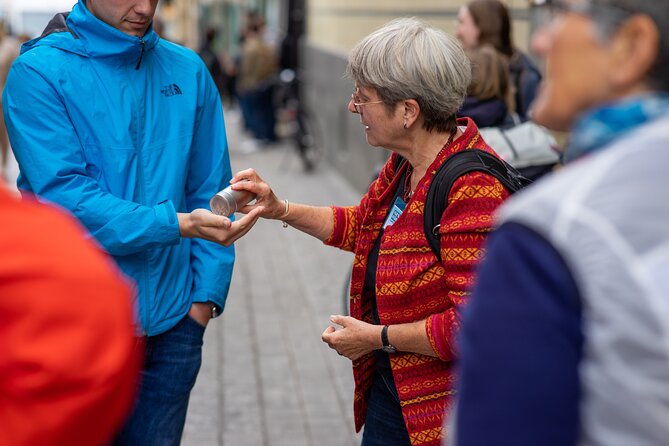
At Gruner Markt, the guide uses guessing games and scent samples to explain Bamberg’s weekly market. This is one of the more hands-on parts of the walk. Instead of only hearing about old market customs, you are asked to identify clues through smell and deduction.
Markets are useful places for understanding a city because they connect food with ordinary life. You get a sense of what people bought, sold, and carried home. Bamberg’s market tradition also helps explain why the city has more to offer than beer alone.
The format should work well for families and for anyone who prefers a little participation during a walking tour. It is also a good reset after the opening history. You are not standing still while a guide lists facts. You are using your senses and making guesses.
The tradeoff is that the market section is short, around 10 minutes. It offers a quick taste of the subject rather than a long look at individual stalls or food producers. If you want a full market tour, this experience will not replace one.
From Bamberg’s old wine culture to today’s beer fame
Near the Igor Mitoraj sculpture Centurione I, the subject shifts to Bamberg’s brewing reputation. Then comes an important correction to the usual beer-first image: in the Middle Ages, Bamberg was a wine town.
You can test that older identity yourself with a view toward the monastery on Michelsberg. The setting adds useful context. Bamberg’s drink culture changed over time, and the city’s present fame is only one chapter of a much longer story.
I particularly like this part because it prevents the tour from becoming a simple celebration of smoked beer. You learn that local taste is not fixed forever. Wine once mattered here, while brewing later became the city’s calling card.
A small wine tasting brings the point into the glass. The supplied details do not specify the wine or the amount served, so keep your expectations modest. The value comes from connecting the taste to Bamberg’s older identity, not from receiving a full wine education.
Other history to see in Bamberg:
- Bamberg: Guided Beer History Tour with Optional Tasting
★ 4.6 · 772 reviews - Leipzig: City History Canal Sightseeing Tour on a Motorboat
★ 4.7 · 6,232 reviews - Berlin: Natural History Museum Entrance Ticket
★ 4.6 · 3,382 reviews - Leipzig: 1.5-Hour Historical Walking Tour in German
★ 4.7 · 2,217 reviews
Untere Brucke and Bamberg’s Little Venice
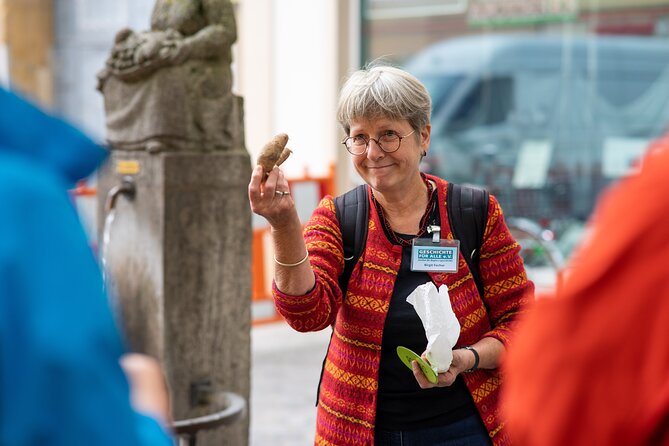
At Untere Brucke, the walk follows the Regnitz and the old fishermen’s houses. This is where Bamberg’s nickname, Little Venice, makes the most sense. The river, bridges, and former fishing homes create a different picture of the city from the brewery image.
The guide tells stories about the Regnitz as a lifeline. That word is well chosen in practical terms: rivers carried people, goods, food, and work. Here, the culinary theme expands beyond what is on a plate. Fishing and river trade helped shape the city’s daily economy.
This stop also gives you a chance to look around instead of focusing only on the next taste. The former fishermen’s houses date from the 17th century, providing a strong visual setting for the talk.
If you have limited time in Bamberg, this section adds real sightseeing value to the tour. You are not being led through a featureless tasting room. You are standing beside one of the city’s most recognizable waterside areas while hearing why the river mattered.
Schlenkerla and the smoky heart of Bamberg
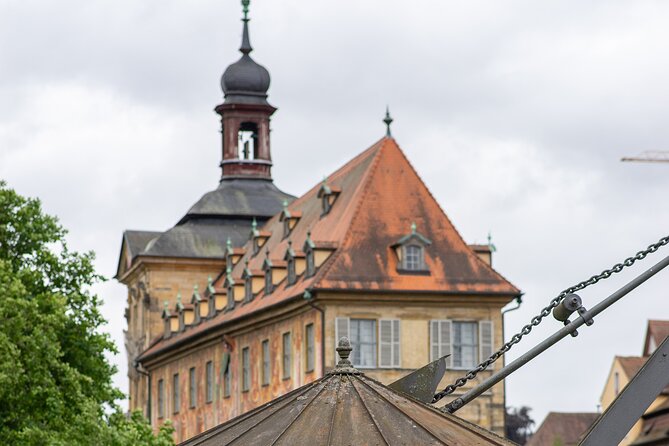
The stop at Schlenkerla Rauchbierbrauerei focuses on Bamberg’s brewing craft. With a view of the historic smoked-beer brewery, the guide explains how brewing became such a central part of the city’s identity.
This is likely the point many people have in mind when booking. Bamberg is strongly associated with Rauchbier, beer made with a smoky character, and Schlenkerla is the name most closely linked with that tradition. The tour does not merely send you into a brewery for a drink. It places the brewery within the wider story of Bamberg’s food culture.
The practical benefit is that you can approach the beer with more context. If you already know you like smoky flavors, this stop will probably feel essential. If you are unsure about them, the historical explanation gives you a reason to try the style rather than dismiss it after one sip.
Do not assume this stop means an extended brewery tour or a full brewing demonstration. The schedule gives it about 10 minutes, and the focus is the history of brewing. It is a city walk with tastings, not a production-site visit.
Pfahlplätzchen and the meaning of go to the cellar
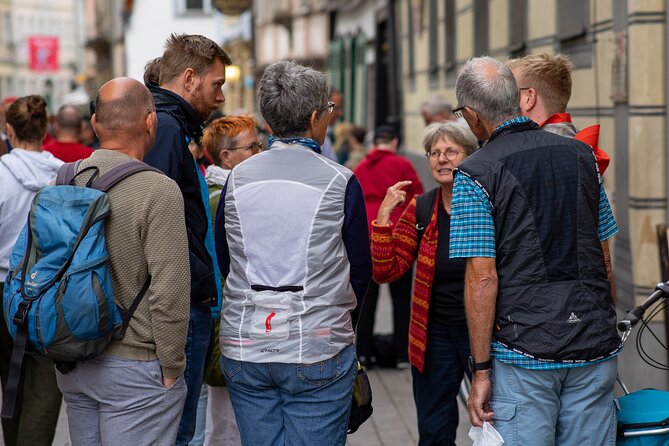
At Pfahlplätzchen, another tasty sample strengthens the group before the final stretch. The guide then uses the local saying go to the cellar as a way into Bamberg’s beer culture.
That phrase works on two levels. You are moving through a city where beer cellars have long formed part of local drinking life, but you are also being encouraged to think about how beer was stored and served. The stop adds a little humor without losing the historical thread.
This is also where the two local Hörnla become relevant to the tour’s food side. Bamberg has both a sweet pastry known as a Hörnla and a potato variety with the same name. The provided details say you encounter two types, making this one of the most distinctive food themes on the walk.
Because the tour uses several small tastes, you should not count on leaving full. The aim is to sample and learn. I would plan a proper dinner afterward, especially if you usually eat early or are booking the experience as your main evening activity.
Ending at Eckerts Wirtshaus with your own beer choice
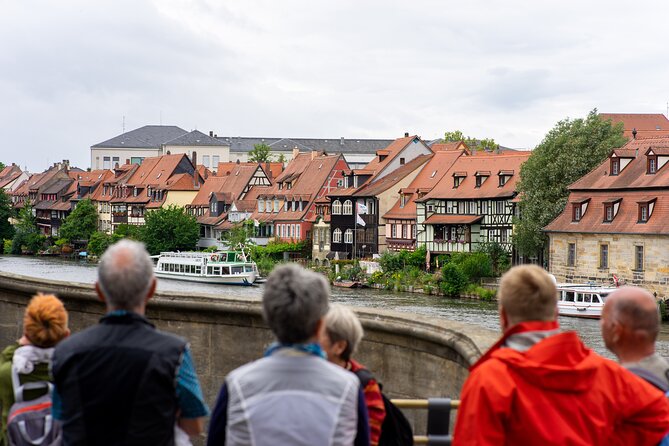
The final stop is Eckerts Wirtshaus at Obere Mühlbrücke 9. Here, you choose a beer and see how Bamberg’s brewing tradition tastes in a classic inn setting. The final beer is included in the tour price.
This ending is one of the strongest parts of the experience. It gives the walk a proper landing place rather than sending you away after the last explanation. You have moved from medieval food to the market, from wine to fishing, and from river life to brewing. Now you can choose a beer with that story fresh in your mind.
A published comment praised the young male guide for presenting plenty of useful and tasty information, then finishing in an excellent local setting. That matches the structure of the walk: the guide’s work matters, but the closing inn gives the experience its most relaxed moment.
You should check the exact beer options with the guide or restaurant on the day, since the supplied details only say that you can choose a beer of your choice. The final stop is included, but the tour information does not say that a full meal is included.
How much value do you get for $28.92?
At $28.92 per person, the tour offers a reasonable package if you want both sightseeing and food samples. You receive about two hours of guiding, several tastings, a route through central Bamberg, and a beer at the final inn.
The value is strongest for first-time visitors. You get an introduction to places that you might otherwise pass without understanding, and the food gives the history a practical edge. If you already know Bamberg’s breweries, markets, and river quarter well, the price may feel less attractive because the walk covers familiar ground at a fairly quick pace.
Do not judge the cost as though it buys a full meal. It does not. Judge it as a guided city walk with tasting stops and a final drink. You will still need to budget for any additional food or drinks after the included beer.
The experience is also useful for itinerary planning. At 4 pm, it can fill the gap between sightseeing and dinner. Ending near Obere Mühlbrücke means you finish in a central part of town, rather than far outside the old city.
Who will enjoy this German-speaking walk?
I would recommend it most strongly to you if you meet several of these descriptions:
- You want Bamberg’s food culture explained in a city setting.
- You like beer but also want wine, market food, pastries, meat, and river history.
- You enjoy small tastings more than one long restaurant meal.
- You are comfortable following a German-speaking guide.
- You want an afternoon activity that ends near dinner time.
- You prefer a shared group walk to a private guide.
It may not suit you if you need English explanations, want a full meal, or expect a long brewery tour. The tour is also not designed as a narrow beer-tasting class. Its appeal comes from the combination of food, place, and local history.
Most people can take part, service animals are allowed, and the route is near public transportation. Confirmation arrives when you book. You can cancel for a full refund up to 24 hours before the 4 pm start, but changes or cancellations inside that window are not accepted.
Should you book Bamberg’s culinary-historical walk?
Book it if you want a compact introduction to Bamberg that connects the city’s river, market, medieval diet, wine past, smoked beer, Hörnla, and traditional inns. The final beer at Eckerts Wirtshaus and the route through Little Venice give it more character than a standard tasting in one venue.
Skip it if the German-only format will make the explanations hard to follow, or if you want enough food to replace dinner. For the right audience, $28.92 is fair value for a two-hour cultural walk with several tastes and a closing drink. Just arrive hungry for context, not for a complete meal.
FAQ
Where does the culinary-historical walk begin?
It begins at Alter Schlachthof, Am Kranen 1, 96047 Bamberg, Germany.
Where does the tour finish?
The tour ends at Eckerts Wirtshaus, Obere Mühlbrücke 9, 96049 Bamberg, Germany.
What time does the walk start?
The scheduled start time is 4:00 pm.
How long does the experience last?
The walk lasts approximately two hours.
Is the tour conducted in English?
No. This is a German-speaking tour.
Is a drink included?
A beer of your choice is included at Eckerts Wirtshaus, the final stop.
How many people can join the tour?
The experience accepts a maximum of 30 participants.
More walking tours in Bamberg
- Bamberg: Guided Walking Tour
★ 4.6 · 3,202 reviews - Bamberg: City Highlights Walking Tour
★ 4.6 · 679 reviews - Bamberg: Private Guided Walking Tour
★ 4.8 · 90 reviews - Bamberg Free Walking Tour
★ 4.7 · 84 reviews
Just added in Bamberg
- Free Walking Tour Bamberg★ 4.5 · 9 reviews
- Private Guided Walking Tour of Bayreuth With A Professional Guide★ 5.0 · 3 reviews
- Bamberg Countryside Breweries Beer Hike Food Experience★ 5.0 · 27 reviews
- Bayreuth Scavenger Hunt and Sights Self-Guided Tour★ 5.0 · 7 reviews
- Bamberg Private Walking Tour With A Professional Guide★ 4.5 · 27 reviews
- Outdoor Escape Game with puzzle backpack Bamberg: The Secret of the Horseman★ 4.7 · 39 reviews
- Witch Trials in Bamberg★ 4.4 · 187 reviews
- Bamberg: Private Guided Walking Tour★ 4.8 · 90 reviews
Food Tours, compared.
Elbphilharmonie Plaza and HafenCity Food Tour
Read our review →
Berlin Center Food Tour with 8+ Authentic Local Tastings
Read our review →

Beer and Food Tour with Dinner & Oktoberfest Museum
Read our review →

Browse the lists this tour appears in