
Reviewed · WALKING TOURS
Bamberg: City Highlights Walking Tour
Bamberg’s most curious sight is also its best opening scene: the Old Town Hall, perched on an artificial island in the Regnitz River. From there, this 75-minute walk threads through narrow streets, medieval buildings, Little Venice, and the old Jewish quarter before reaching the New Residence and its Rose Garden.
I like the way the tour mixes famous photo stops with real local context. You get the half-timbered cottages of Little Venice, but also learn about Bamberg’s Jewish community and the city’s long architectural story. The guide’s approach appears to favor useful anecdotes over a flood of dates, which makes the history easier to remember.
The main limitation is the language: the live tour is in German only. The pace is also brisk enough to cover several parts of the Old Town in just 75 minutes, so you should not expect long visits inside each building.
Key points
- The Old Town Hall sits on an artificial island in the Regnitz River, making it one of Bamberg’s most unusual landmarks.
- Little Venice brings photo appeal, with former fishermen’s cottages lining the water.
- The medieval cathedral and old Jewish quarter add historical depth beyond the usual postcard views.
- The New Residence and Rose Garden provide a strong finish, including views across Bamberg.
- The guide keeps the presentation lively, with an emphasis on anecdotes and manageable amounts of information.
- The tour costs $14 per person, making it a useful introduction before exploring Bamberg on your own.
Starting beside Bamberg’s Old Court
You meet the guide next to the souvenir shop near the entrance of the Old Court. This location puts you close to the historic center from the start, so you do not spend valuable tour time walking in from a modern district or transport stop.
Bring comfortable shoes. Bamberg’s appeal comes from its old streets and compact historic center, and a walking tour is the right way to see details that are easy to miss from a vehicle. You will be moving through narrow streets and between several major sights, so practical footwear matters more than dressing up for the city.
The tour lasts 75 minutes. That is long enough to get a clear picture of Bamberg’s main historic areas, but short enough to fit around a museum visit, lunch, or independent exploring. I would treat it as an orientation walk rather than a complete study of the city.
The tour is wheelchair accessible, which is useful for visitors who need an accessible route. Still, the experience remains a walking tour through an old town, and you may want to confirm the exact route and street conditions when booking if you have specific mobility needs.
More Walking Tours across Germany
- Discover Berlin Half-Day Walking Tour
★ 5.0 · 9,624 reviews - Berlin: Third Reich and Cold War 2 Hour Walking Tour
★ 4.9 · 6,830 reviews - Munich: Third Reich & WWII Walking Tour
★ 4.6 · 6,181 reviews
The Old Town Hall and Bamberg’s most unusual landmark
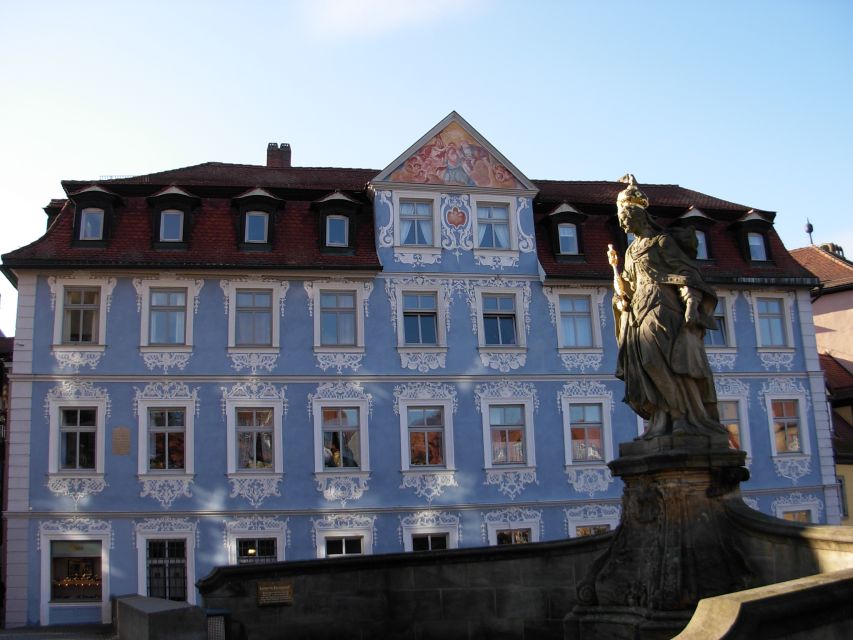
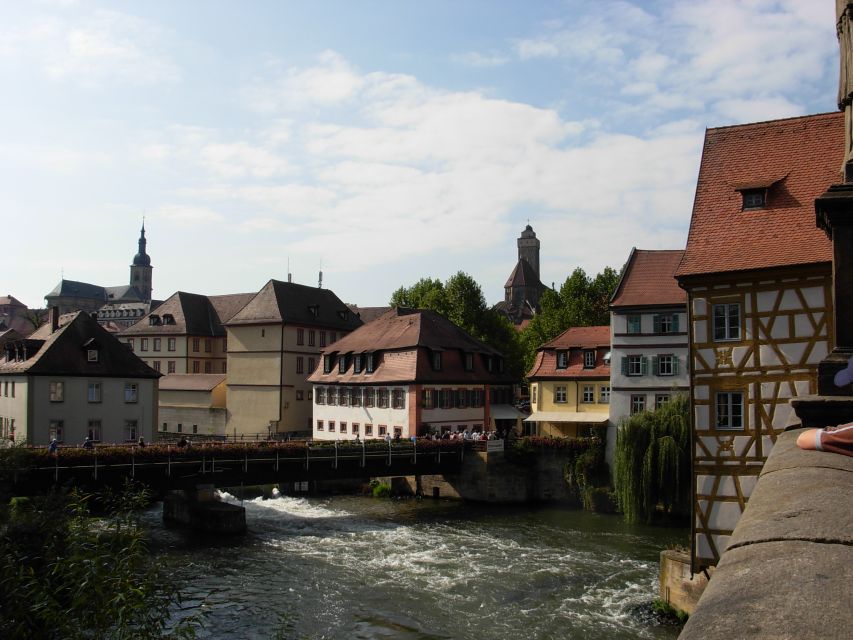
The Old Town Hall is the tour’s natural headline. Its position on an artificial island in the Regnitz River gives it a curious story and a memorable setting. Instead of simply passing a grand civic building, you learn why the town hall was built where it is and how the river shaped Bamberg’s urban form.
This is one of the places where a guide adds real value. A photograph can show you the building, but it cannot explain the decision to construct it on an island or place the building within the city’s medieval development. The tour gives you that link between architecture and local history.
You should have a chance to take photographs around the river and the town hall. The stop works well for first-time visitors because it gives you an immediate sense of Bamberg’s character: old buildings, water, bridges, and an urban plan that feels unlike a standard German city center.
Do not expect a long architectural lecture here. The strongest approach for this tour is a clear explanation, a few good details, and time to look around. The available feedback points to a presentation with useful anecdotes and not too many numbers, which suits this kind of short city walk.
Narrow streets and Bamberg’s medieval center
After the town hall, the walk takes you through Bamberg’s narrow streets and the old town protected as a UNESCO World Heritage Site. That designation matters because it reflects the survival of a large historic urban area, not just one isolated monument.
I like walking tours in places such as Bamberg because the story unfolds between buildings. You see how streets, façades, churches, civic structures, and riverfront areas fit together. A guide can point out the difference between medieval and baroque elements, helping you read the city instead of just collecting photographs.
The tour includes some of Bamberg’s most famous medieval and baroque buildings. You will not have time to study every façade or enter every landmark, but you can use the route to decide where to return later. The city walk is especially useful on a first day, when you are still learning the shape of the center.
The phrase contemporary Bamberg also matters. This is not only a look at old stones and grand residences. The route passes breweries, taverns, and cafés that keep the historic streets in daily use. You see a city where old buildings still frame ordinary life.
The cathedral and Bamberg’s long religious story
The medieval cathedral gives the tour another major point of reference. It is one of the key buildings in Bamberg, and seeing it in the context of the surrounding old town is more useful than treating it as a stand-alone stop.
A short guided explanation can help you understand why the cathedral matters to the city and how it fits the wider story of Bamberg’s rulers, religion, and architecture. The tour promises attention to the building’s medieval character, so expect context rather than an extended interior visit.
This is also where the 75-minute format requires a little discipline. You may have time to admire the cathedral and hear its story, but not to linger at every detail. If the cathedral is your main reason for coming to Bamberg, plan to return after the walk for a slower look.
For many visitors, the cathedral stop will be one of the more serious parts of the route. The Old Town Hall and Little Venice provide easy visual appeal, while the cathedral shows the city’s religious and political weight. Together, they give the tour a better balance.
A few more things to do in Germany worth a look
- Berlin: 1-Hour City Tour by Boat with Guaranteed Seating
★ 4.3 · 16,993 reviews - Leipzig: City History Canal Sightseeing Tour on a Motorboat
★ 4.7 · 6,232 reviews - Cologne: Panoramic City Cruise
★ 4.3 · 5,698 reviews - Berlin: City Sightseeing Hop-On Hop-Off Bus Tour
★ 4.1 · 4,233 reviews
The old Jewish quarter and a less obvious side of Bamberg
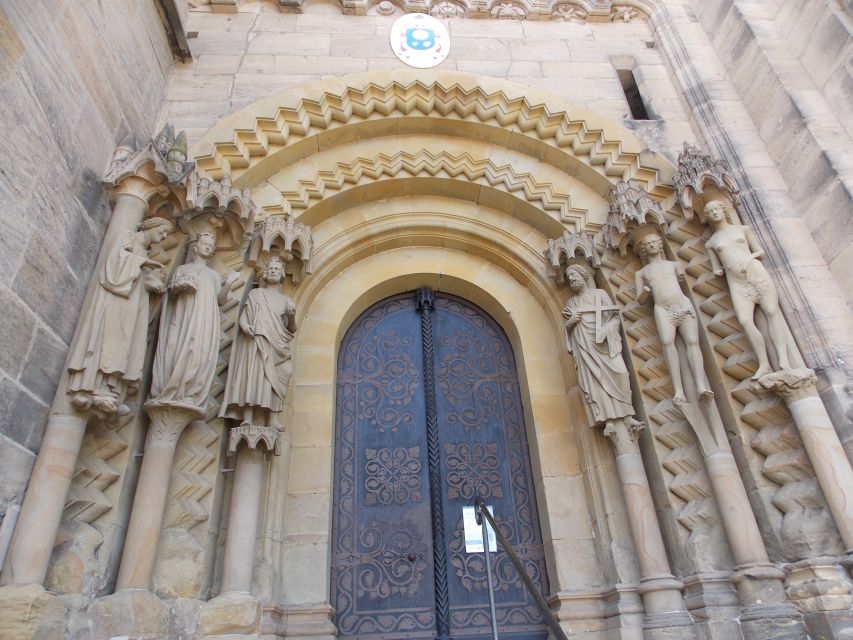
One of the tour’s most valuable features is its attention to Bamberg’s Jewish community and the old Jewish quarter. This moves the walk beyond a simple parade of attractive buildings.
The Jewish community is described as one of the oldest in Germany, giving the stop clear historical importance. You learn about a part of Bamberg’s past that can be missed if you only follow the most photographed streets and churches.
This kind of local history is one reason to choose a guided walk rather than relying only on a map. The physical remains of a historic community may not always announce themselves loudly. A guide can connect the streets you see with the people and institutions that once shaped them.
The subject also adds balance. Bamberg’s history is not only baroque beauty, medieval power, and pleasant river views. It includes communities, change, and a complicated past. The tour’s brief treatment cannot cover everything, but it gives you an important thread to follow if you want to learn more later.
Little Venice and the former fishermen’s cottages
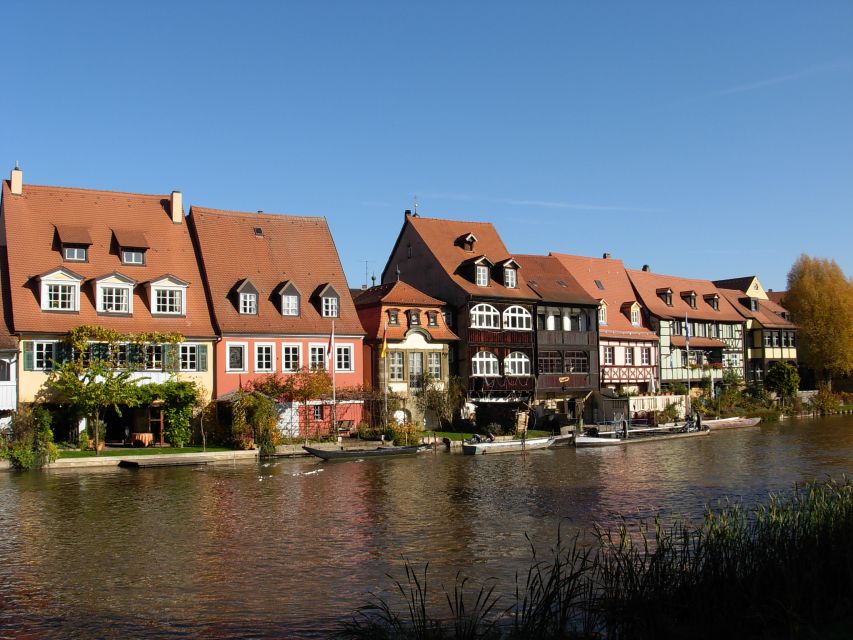
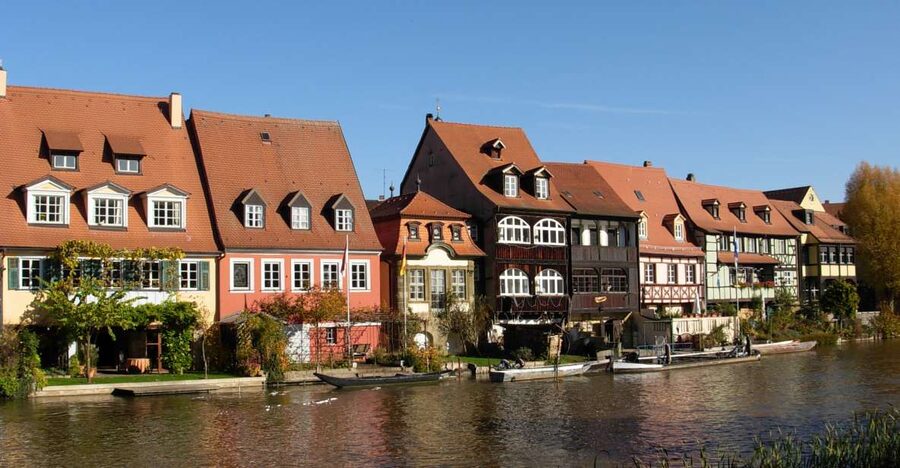
Little Venice is likely to be the most immediately charming part of the route. This stretch along the water features half-timbered cottages that were once home to fishermen. Their position beside the Regnitz gives you one of Bamberg’s most recognizable views.
Bring your camera, but give yourself a moment to look beyond the picture. The cottages are attractive because they show how work and home life once met the river. The area is not simply decorative. Its buildings tell you something about the people who depended on the water.
This is a good stop for visitors who want a gentle change of pace after the heavier history of the cathedral and Jewish quarter. You can take photos, listen to the explanation, and watch the old town shift toward a more intimate riverfront setting.
The possible drawback is that Little Venice can make you want more time than the schedule allows. A 75-minute walk has to keep moving. If you want to linger by the water, return independently after the tour and use the guide’s introduction to choose your favorite angle.
Breweries, taverns, and cafés in the old town
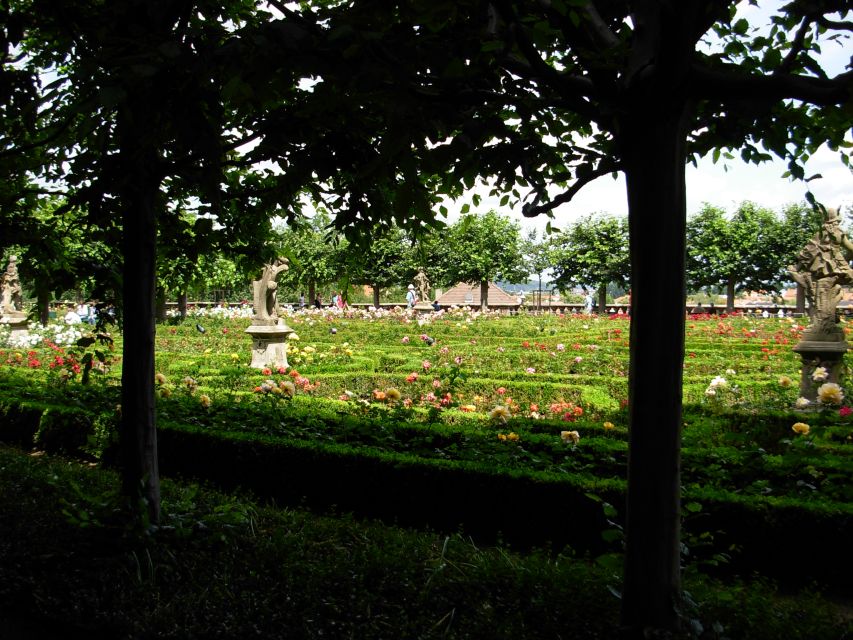
The route passes Bamberg’s breweries, taverns, and cafés. That detail helps connect the historic center to present-day life. You are not walking through a preserved stage set. The old streets still serve as places to eat, drink, meet, and work.
The tour does not include a meal or brewery visit, so think of these places as recommendations by location rather than part of the package. You can note the areas that catch your eye and return after the walk.
This section also gives you a practical advantage. A guide can show you which parts of the old town remain active after the main monuments close. If you are planning lunch, dinner, or a drink in Bamberg, the route gives you a quick sense of where the cafés and taverns fit into the city.
Do not expect a food tour. The focus remains city history and architecture. Still, the passing references to local breweries and taverns make the walk feel more grounded than a route that only covers churches and palaces.
New Residence and the Rose Garden views
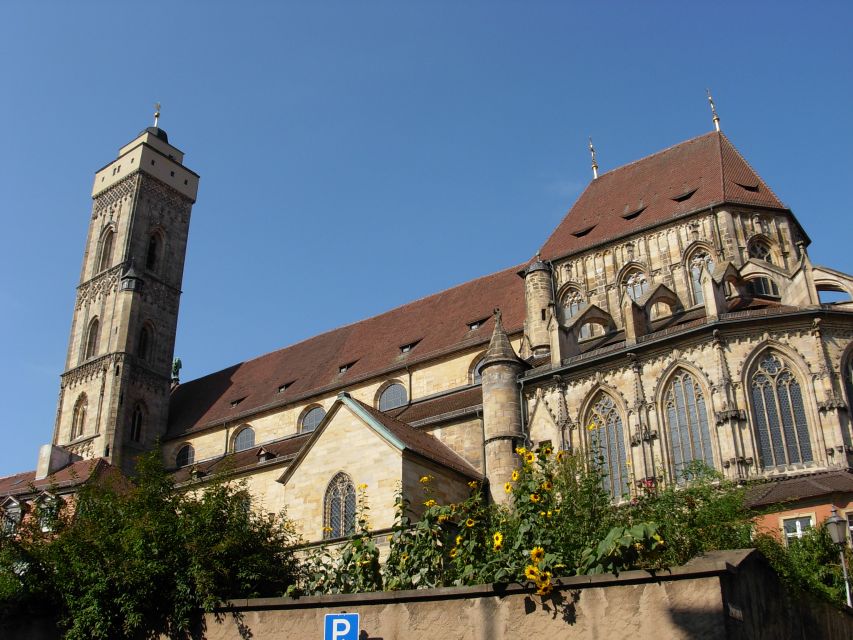
The route heads toward the New Residence and its baroque Rose Garden. This makes a strong final section because the architecture shifts from medieval Bamberg to the formal style of the baroque period.
The Rose Garden provides views over the town, so you finish with a broader look at the city you have just crossed. Earlier stops show you Bamberg at street level, beside the river and among narrow lanes. Here, the view helps you understand the relationship between the old center, the roofs, and the surrounding town.
The New Residence also gives the tour a sense of progression. You begin with a civic building on the river, pass medieval religious and residential areas, and finish at a grand baroque complex with a formal garden. That sequence makes the city’s architectural changes easier to follow.
The garden is not presented as a separate long visit, so do not plan on an extended garden stay during the guided walk. If the views appeal to you, allow extra time after the tour. The guide gives you the setting and the reason to return, while your own visit can be slower.
What the $14 price gets you
At $14 per person, this is a modestly priced introduction to Bamberg. You are paying for a live German-speaking guide and a focused route through several of the city’s most important areas. No admissions, food, or drinks are included, so the value comes from interpretation and efficient orientation.
I consider that a fair price if Bamberg is new to you. In 75 minutes, you see the Old Town Hall, cathedral area, old Jewish quarter, Little Venice, New Residence, and Rose Garden. Doing all of that alone is possible, but you may miss the connections between the places.
The value is strongest for a first visit. You can take notes on where to return, learn the basic shape of the old town, and avoid spending your entire day reading signs or trying to identify buildings. A second-time visitor may prefer a more specialized tour or independent wandering.
The tour has a 4.6 rating from 679 reviews, which suggests a consistently strong experience. The most useful pattern in the feedback is not simply enthusiasm, but the praise for competence, entertainment, and a sensible amount of information. That is exactly what a short city walk needs.
German language, accessibility, and booking flexibility
The live tour is in German. If you understand German, you can expect the guide to explain the sights directly and add local anecdotes. If you do not speak German, you should choose this only if you are comfortable following a tour without English narration.
You can reserve now and pay later, which helps if your schedule in Bavaria is still shifting. Free cancellation is available up to 24 hours before the tour for a full refund. Check the available start times when choosing a date because the duration is fixed at 75 minutes, but the starting time can vary.
Wheelchair accessibility is listed for the activity. Comfortable shoes remain the main packing advice for everyone. The route is short by sightseeing standards, but Bamberg’s narrow historic streets are best handled at an easy, steady pace.
Who should book this Bamberg walk?
I would choose this tour for a first visit, especially if you want a quick orientation before exploring the city on your own. It suits visitors who like architecture, local history, river views, and a guide who keeps the facts usable rather than overwhelming.
It is also a good fit if you have limited time in Bamberg. The route covers the city’s major visual highlights and adds the Jewish quarter, which gives the experience more substance than a simple photo walk.
You should think twice if you need an English-language tour or want long interior visits. You may also prefer independent sightseeing if you already know Bamberg well and would rather set your own pace.
Should you book the City Highlights Walking Tour?
Book it if you want a low-cost, well-focused introduction to Bamberg in German. The Old Town Hall, Little Venice, cathedral, old Jewish quarter, and Rose Garden give you a useful cross-section of the city in just 75 minutes.
Skip it if German is not suitable for you, or if your main goal is an extended visit inside the cathedral or New Residence. For everyone else, the $14 price makes this a practical first step. Wear comfortable shoes, bring a camera, and save time afterward to revisit the riverfront or Rose Garden at your own pace.
FAQ
How long does the Bamberg City Highlights Walking Tour last?
The tour lasts 75 minutes.
How much does the tour cost?
The price is $14 per person.
What language is the tour conducted in?
The live tour guide speaks German.
Where is the meeting point?
Meet the guide next to the souvenir shop near the entrance of the Old Court.
Is the walking tour wheelchair accessible?
Yes, the activity is listed as wheelchair accessible.
What should I bring?
Bring comfortable shoes for walking through Bamberg’s historic streets.
Can I cancel the tour for a full refund?
Yes. You can cancel up to 24 hours in advance for a full refund.
Just added in Germany
- Berchtesgaden: Via Ferrata Beginner Tour of Schützensteig★ 4.7 · 15 reviews
- Berlin: Energizing 2-Hour Morning Segway Tour★ 4.7 · 35 reviews
- Berlin: Thrilling E-Scooter Adventure Tour★ 4.4 · 66 reviews
- Bayreuth: German City Walking Tour (Tourist Info)★ 4.7 · 202 reviews
- Beelitz-Heilstätten: Baum&Zeit Tree Top Walk Entry Ticket★ 4.9 · 7 reviews
- Beer Bike & Party Bike: Unforgettable Berlin City Tour incl. pickup★ 5.0 · 5 reviews
- Bavaria: Beginner Canyoning Tour★ 4.5 · 10 reviews
- Bayreuth: Christmas city tour in German★ 4.9 · 12 reviews
Walking Tours, compared.




Third Reich Berlin: Hitler and WWII Walking Tour
Read our review →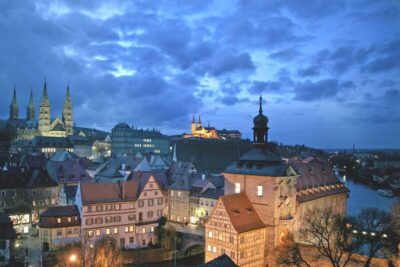
Browse the lists this tour appears in