
Reviewed · WALKING TOURS
Munich: Must-See Attractions Walking Tour
Munich packs a surprising amount into its central square. In two hours, this walking tour links Marienplatz, the Frauenkirche, St. Peter’s Church, and Hofbräuhaus, with the famous Rathaus-Glockenspiel as its clockwork centerpiece. It is a good first look at the city when you want the main sights without giving up half a day.
I like the compact route and the chance to hear about both royal Munich and the city’s darker modern history. I also like that you can choose a private or small-group format, with tours offered in English, French, or Spanish. The main caution is organization: one booking ended badly when the guide did not answer messages or appear at the meeting point, so confirm the location and guide details before setting out.
Key points at a glance
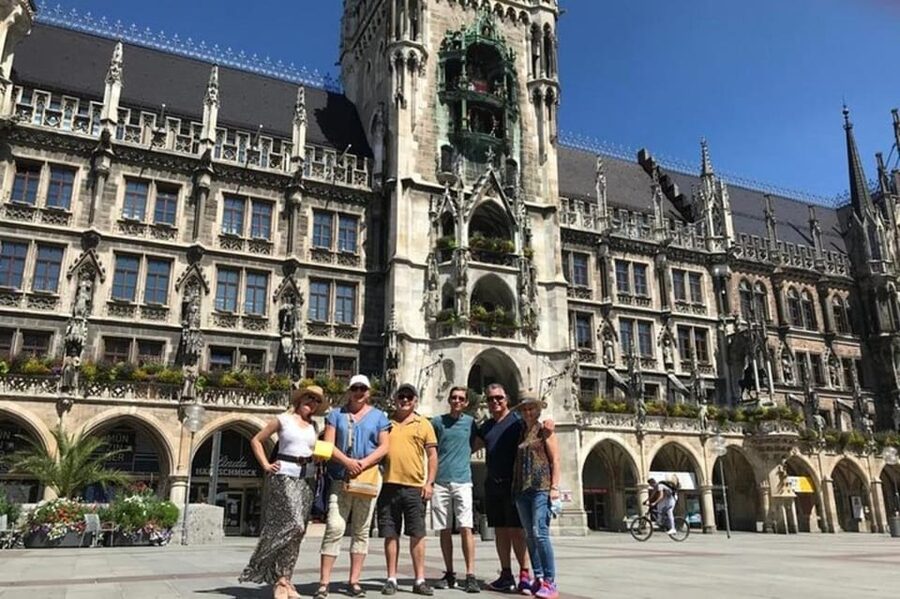
- A two-hour Old Town route: The tour covers Munich’s main central sights on foot, beginning at The Charles Hotel on Sophienstraße.
- The Rathaus-Glockenspiel is the visual highlight: You’ll learn about the 250-year-old mechanical clock and the New Town Hall around it.
- Three major churches in one walk: The Frauenkirche and St. Peter’s Church offer different views of Munich’s religious and architectural past.
- Hofbräuhaus adds local character: You visit the famous beer hall and hear about its connection to Bavarian royal life.
- Guide quality matters: Roberto received especially strong praise for his clear explanations, including thoughtful discussion of World War II.
- Good for a first visit: The route gives you a useful map of central Munich, though it does not include food, drinks, or lengthy interior visits.
Why this short Munich walk works well
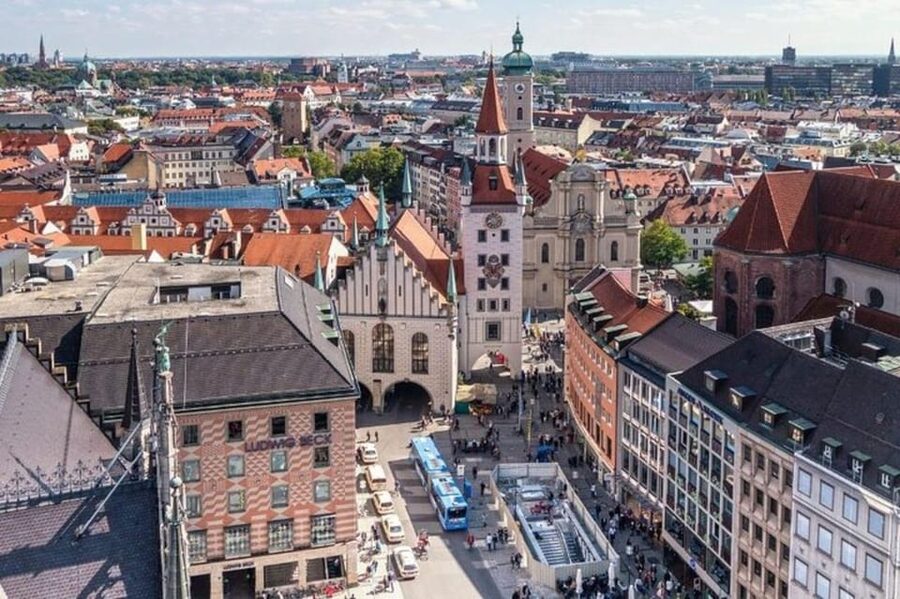
The best feature here is the route itself. Munich’s Old Town is easy to explore on foot, but a first visit can still feel like a jumble of grand buildings, church towers, busy squares, and beer halls. This tour gives those sights an order and a story.
You begin at Sophienstraße 28, in front of The Charles Hotel, then head toward the center. The starting point is not one of the headline attractions, but it gives the guide a clear place to meet you before the walk moves into the city’s historic core.
At $44 per person, the tour is not the cheapest way to stroll around Munich. You could walk through Marienplatz and see several façades without paying anything. The value comes from the live explanation, the short time frame, and the ability to ask questions as you go. A private option can make more sense if you want the guide to adjust the pace or focus on subjects such as church architecture, Bavarian royal life, or World War II.
This is a sightseeing and orientation tour, not a food tour or a museum visit. Food and drinks are not included, and the experience is built around exterior viewing and guided stops. If you want a beer, pretzel, or full meal at Hofbräuhaus, plan to do that after the walk.
Other walks around Munich:
- Munich: Third Reich & WWII Walking Tour
★ 4.6 · 6,181 reviews - Third Reich Walking Tour Munich
★ 4.5 · 4,291 reviews - Munich: Old Town & Viktualienmarkt City Walk in German
★ 4.7 · 2,304 reviews
Marienplatz, Munich’s central stage
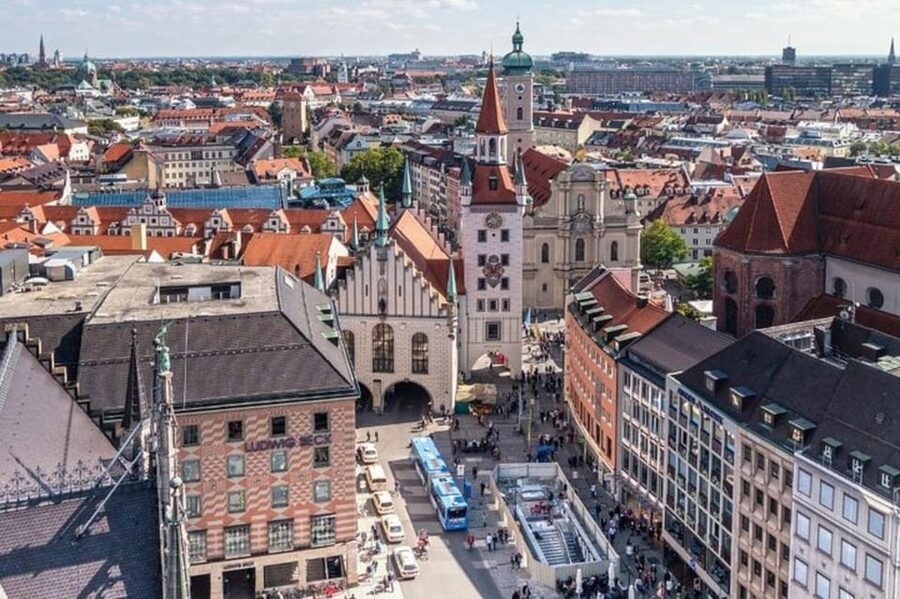
Marienplatz is the natural heart of this experience. It has long served as Munich’s main central square, and today it is the place where the city’s history, shopping streets, public buildings, and daily activity meet.
Your guide uses the square to explain Munich’s development and its importance to the Bavarian capital. This is useful context because the surrounding sights can otherwise feel disconnected. The churches, town hall, and beer hall are not random stops. They each show a different side of the city.
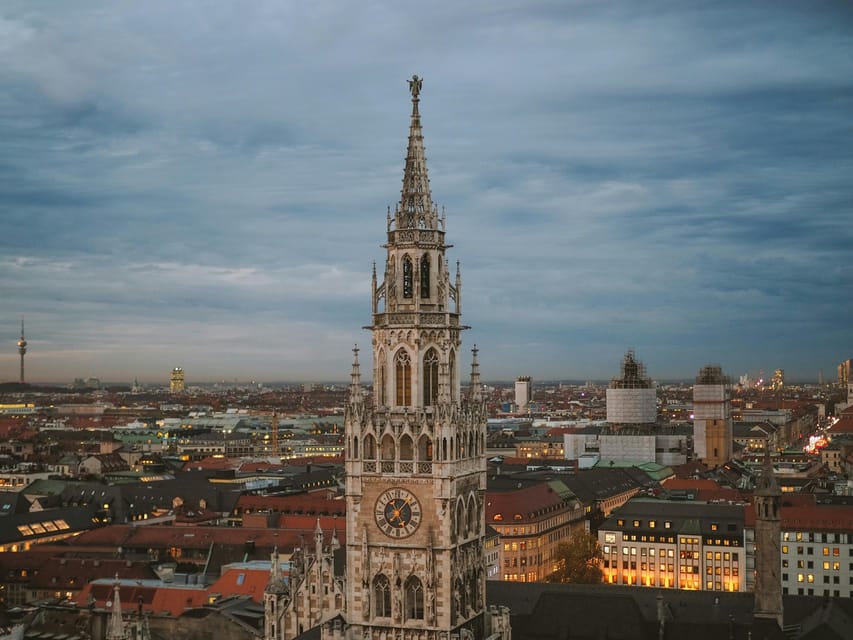
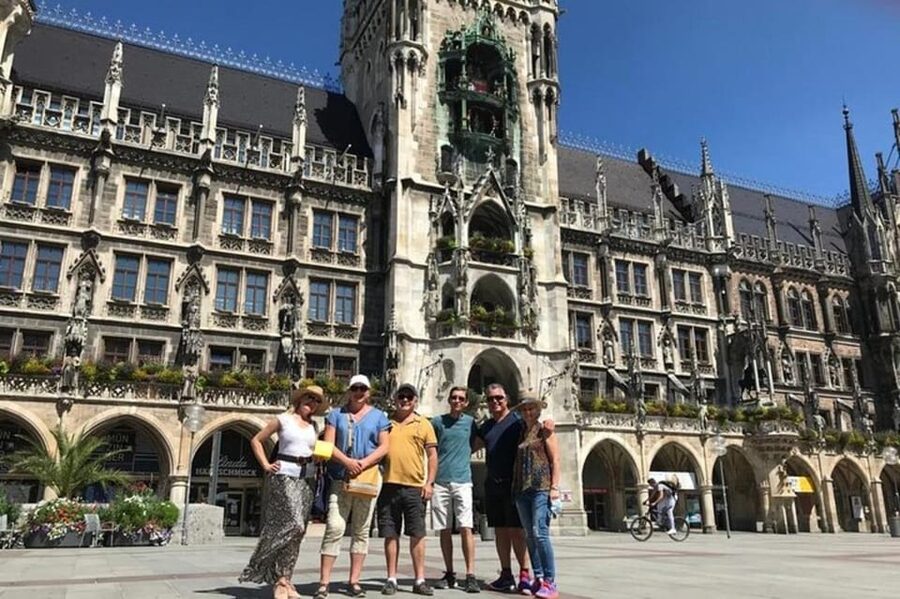
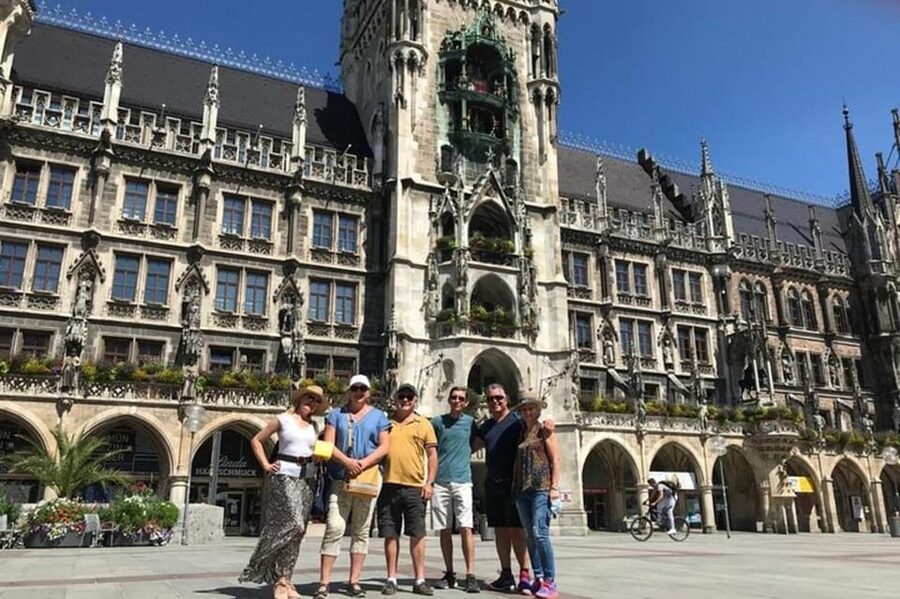
Give yourself time to look up. The square is framed by tall historic buildings, and the New Town Hall dominates the view with its ornate Gothic design. The tour focuses on the building’s role as the seat of Munich’s Town Council, so you get both an architectural reading and a civic one.
Marienplatz can be busy, and the square is not the place for a slow, quiet stroll. A guide can help you focus on the important details instead of simply moving through with your eyes on the crowd. Still, two hours means the stop has to stay focused. You should not expect a long pause for photographs or an extended look at every building around the square.
The Rathaus-Glockenspiel and New Town Hall
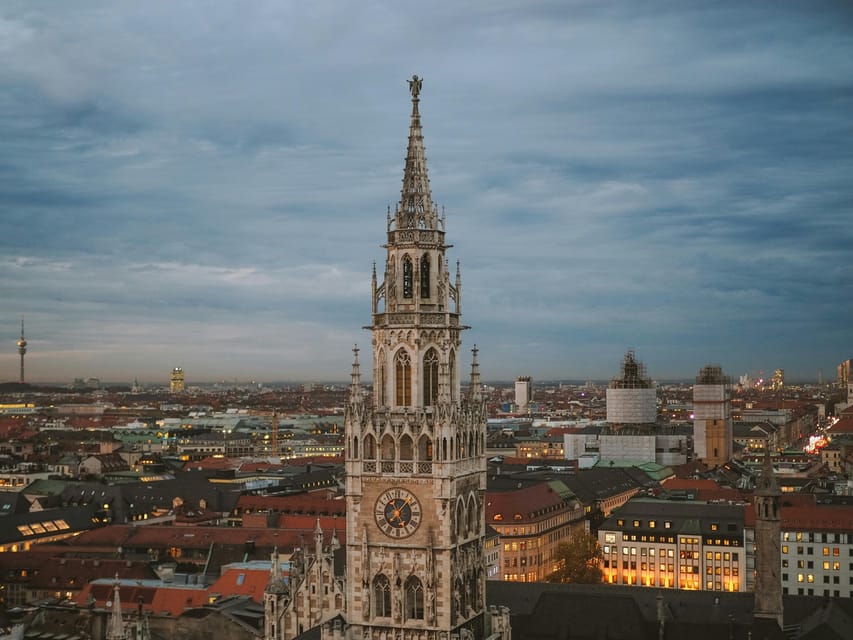
The Rathaus-Glockenspiel is probably the most instantly recognizable sight on the route. This large mechanical clock is about 250 years old and sits high in the New Town Hall tower.
The clock is more than a decorative feature. It gives your guide a chance to explain how Munich presents its past through public architecture and civic ceremony. You’ll hear about the New Town Hall, its design, and its continuing role in city government.
The stop is especially rewarding if you enjoy small mechanical details and city traditions. Look for the figures and moving elements in the clock rather than treating it as just another ornate façade. The tour’s description does not promise a special performance time, so check the start time if seeing the clock operate is important to you.
This is also a practical place to keep your group together. The tower rises above a large public square, and the area can be distracting. Stay close to your guide and listen for the meeting instructions before moving on.
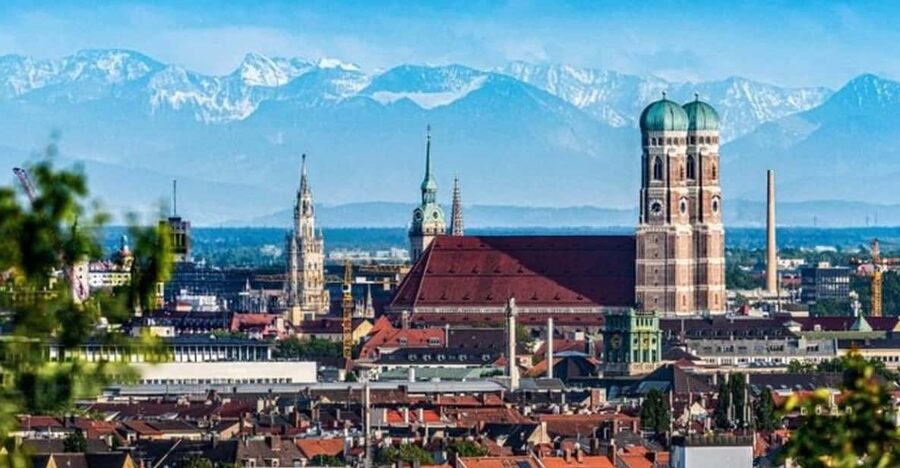
Frauenkirche, Munich’s largest church
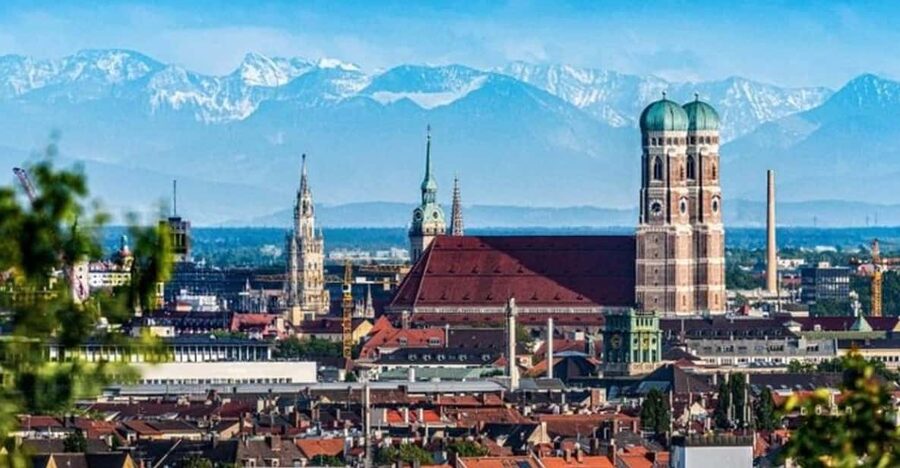
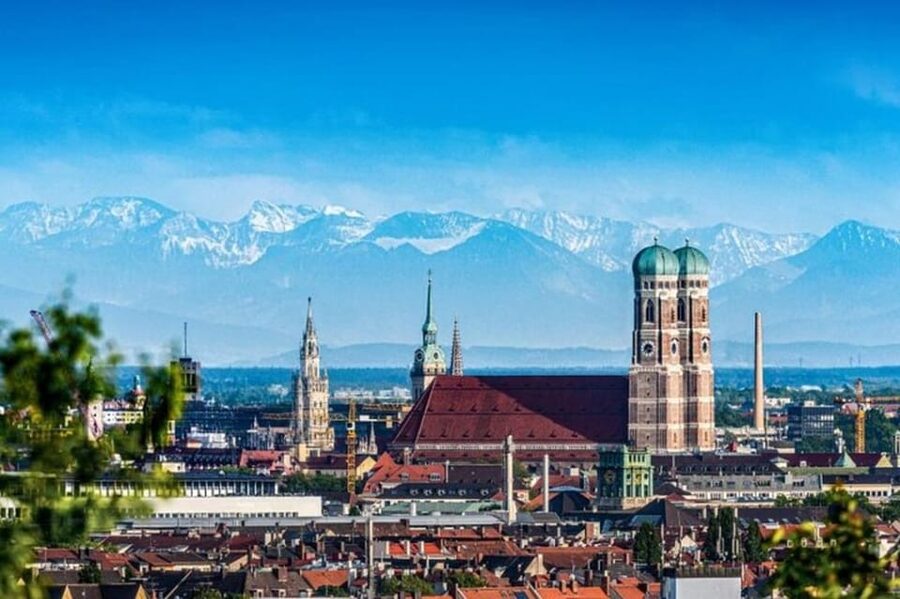
The Frauenkirche is described as Munich’s biggest church, and its twin towers make it one of the city’s clearest visual markers. Even from outside, the building gives you a strong sense of Munich’s scale and religious identity.
The guided visit focuses on the church’s history and importance. If the church is open for entry at the time of your walk, your guide may provide useful context inside, but the supplied details do not promise a full interior tour or guaranteed access. Think of this stop primarily as a guided landmark visit rather than a long church service or architectural study.
I like the contrast between the Frauenkirche and the more intimate St. Peter’s Church later in the route. The Frauenkirche feels grand and immediately recognizable, while St. Peter’s represents an older layer of Munich’s Catholic story. Seeing both helps you understand that the city’s religious buildings are not all telling the same tale.
Because this is a walking tour, comfortable shoes matter. You are moving between several sites, and the route includes regular time on city streets and public squares. Shoes that are fine for a short café stroll may feel less comfortable by the end.
Same base, a different kind of day out:
- From Munich: Neuschwanstein & Linderhof Castle Full-Day Trip
★ 4.5 · 12,494 reviews - Neuschwanstein & Linderhof Castle-Fairytale Day Tour from Munich
★ 4.5 · 7,275 reviews - Dachau Concentration Camp Memorial Site Tour from Munich by Train
★ 4.5 · 5,637 reviews - Neuschwanstein Castle Tour from Munich
★ 4.5 · 5,117 reviews
St. Peter’s Church and Munich’s older Catholic roots
St. Peter’s Church is identified as the oldest Catholic church in Munich. That makes it one of the most important historical stops, even if its exterior is less immediately famous to first-time visitors than the Frauenkirche.
Here, the guide can place the church within the city’s longer religious story. You’ll learn why it matters and how it fits into Munich’s development. The stop gives the tour a useful sense of age, since the church represents an older foundation beneath the later civic buildings and royal associations.
Do not expect the same experience as a dedicated church tour. The schedule also includes Marienplatz, the clock, the New Town Hall, and Hofbräuhaus, so the explanation must remain concise. If religious art, church interiors, or architectural detail is your main interest, ask questions early and consider choosing the private option.
The pairing of St. Peter’s and the Frauenkirche is one of the tour’s strongest choices. You get two major churches without spending the entire afternoon inside ecclesiastical buildings. For many people, that balance is just right.
Hofbräuhaus, beer hall with a royal past
The route continues to Staatliches Hofbräuhaus, Munich’s world-famous beer hall and brewery. This is the stop that gives the walk a more social and distinctly Bavarian flavor.
Your guide explains Hofbräuhaus’s place in Munich’s culture and its connection to royal history. That context is useful because the beer hall can otherwise seem like a simple place to drink beer and eat hearty food. Its story reaches into the city’s public life and Bavarian traditions.
You are not given food or drinks as part of the tour. The visit is guided, so you hear about the hall rather than settling in for a meal during the two-hour route. If Hofbräuhaus is high on your list, return after the tour and allow enough time to eat or have a beer without watching the clock.
This stop also shows why the experience works better as a city introduction than as a formal architecture walk. Munich is not only churches and government buildings. Its beer halls are part of the city’s identity, and Hofbräuhaus gives the route a lively final chapter.
What the guide can add in two hours
A short walking tour depends heavily on the guide. The route is fixed enough to cover the main sights, but the quality of the explanation can change the entire experience.
Roberto is the guide I would try to request. He received particularly strong praise for his personable style and clear grasp of Munich’s history and culture. His discussion of World War II was singled out as especially meaningful, which matters because Munich’s past cannot be reduced to royal palaces, church towers, and beer.
That subject also requires care. The supplied tour details do not promise a dedicated World War II history walk, so you should not book this expecting a full treatment of the Nazi period or wartime Munich. Still, a guide who can connect the city’s monuments to difficult chapters in its past adds real value.
The tour is offered in English, French, and Spanish. If you need a specific language, select it when booking rather than assuming every departure will support all three. A private group is available, while the standard option is private or small-group depending on the choice you make.
Pace, meeting point, and practical planning
The meeting point is in front of The Charles Hotel, a Rocco Forte Hotel, at Sophienstraße 28. Arrive with enough time to identify the hotel entrance and locate your guide. One poor experience involved unanswered WhatsApp messages and no visible guide at the agreed time, so it is sensible to confirm the exact meeting instructions before the tour day.
The listed duration is two hours. That is long enough to see the central sights and get a useful introduction, but too short for lengthy entries, relaxed meals, or detailed visits to every building. You will get the most from it if you treat the walk as a framework for later exploring.
At the end, the tour returns to the provider’s office or leaves you in the city center to continue on your own. This makes the timing convenient for a meal, shopping, another attraction, or a second look at Marienplatz.
Wear comfortable shoes and bring only what you need. The tour includes no food or drinks, so carry water if you need it. The route is central, but the practical challenge is not distance alone. It is keeping up, listening in public spaces, and finding your guide at the beginning.
Cancellation is free up to 24 hours before the start, and you can reserve now and pay later. Those terms help if your Munich schedule is still shifting, though they do not replace checking the exact meeting instructions.
Who should book this Munich tour?
I would recommend it to a first-time visitor who wants the main Old Town sights explained in a short block of time. It suits couples, families, and small groups who prefer a human guide to reading plaques or wandering without a plan.
It is also a good choice for a short stay. If you have only a day or two in Munich, the route gives you a working map of the center and helps you decide where to return. The $44 price is reasonable when the guide is engaged and the group stays small, but the value is less clear if you only want photographs of the façades.
Choose the private format if you care about pace, language, or specific historical questions. It is likely the better fit for a family with different walking speeds or for anyone who wants more time on World War II, church history, or Bavarian royal culture.
I would skip this tour if you want a substantial meal, brewery tasting, tower climb, or museum admission included. None of those is part of the experience. You are paying for a guided walk through the central sights.
Should you book it?
Book this tour if you want a compact, guided introduction to Munich’s Old Town and value explanations as much as photographs. Marienplatz, the Rathaus-Glockenspiel, the Frauenkirche, St. Peter’s Church, and Hofbräuhaus make a strong first-day route.
Before paying, confirm the meeting point and request Roberto if he is available. That small bit of preparation matters because guide communication was the one serious weak spot in an otherwise well-rated experience. For a short visit, a private or small-group departure gives you the best chance of making the two hours feel worthwhile.
FAQ
Where does the Munich walking tour begin?
The tour begins at Sophienstraße 28, in front of The Charles Hotel, a Rocco Forte Hotel.
How long does the tour last?
The walking tour lasts two hours.
What sights are included?
The route includes Marienplatz, the Frauenkirche, St. Peter’s Church, the Rathaus-Glockenspiel, the New Town Hall, and Staatliches Hofbräuhaus.
Is Hofbräuhaus a food or beer tasting stop?
No. The guide visits Hofbräuhaus and explains its cultural and royal connections, but food and drinks are not included.
What languages are available?
The live tour guide is available in English, French, and Spanish.
Is a private tour available?
Yes. A private group option is available, and the standard activity may be private or small-group depending on the option selected.
Who is the guide?
The experience includes a live guide. Roberto is a guide associated with this tour and received especially strong praise for his explanations of Munich’s history and culture.
What should I bring?
Bring comfortable shoes. The experience is a walking tour through Munich’s Old Town.
Can I cancel the booking?
Yes. You can cancel up to 24 hours in advance for a full refund.
Can I pay later?
Yes. The reserve-now, pay-later option lets you book without paying on the day of reservation.
Just added in Munich
- Pub crawl incl. Oktoberfest museum guided tour with beer tasting (private)★ 5.0 · 5 reviews
- South Tyrolean specialties and wine tasting★ 5.0 · 5 reviews
- Short & sweet: Tasting the Viktualienmarkt★ 4.8 · 37 reviews
- Size Matters Beer Tour Munich★ 4.6 · 105 reviews
- Secret Food Tours Munich★ 4.8 · 5 reviews
- Munich: Romantic Wine Experience for Two at Viktualienmarkt★ 4.2 · 14 reviews
- Munich: Resistance against Hitler – Historical Walking Tour★ 5.0 · 5 reviews
- Residence of Munich private tour with skip the line ticket★ 5.0 · 4 reviews
Walking Tours, compared.

Third Reich Berlin: Hitler and WWII Walking Tour
Read our review →
Browse the lists this tour appears in