
Reviewed · OLD TOWN WALKING TOURS
Koblenz: Old Town Tour with the Ehrenbreitstein Fortress
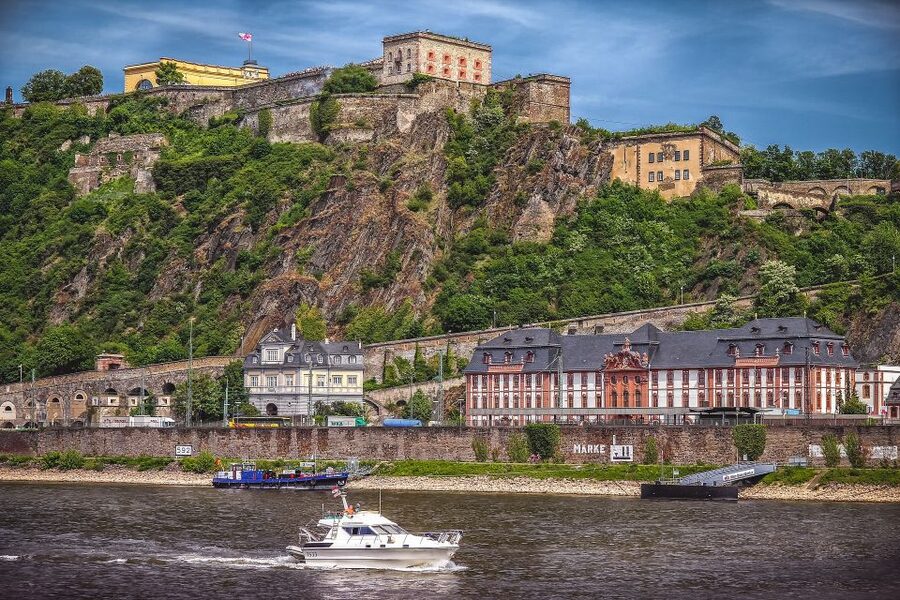
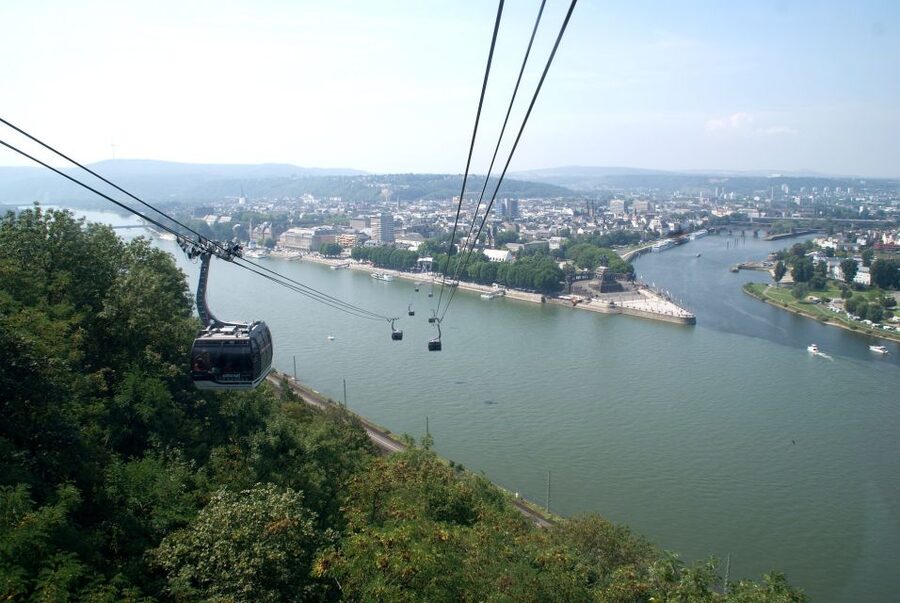
Ehrenbreitstein Fortress gives this Koblenz tour its best opening scene: from 118 meters above the Rhine, you look across the river valley before walking into the city’s old center. I like that the tour combines a major viewpoint with compact streets, churches, fountains, and the famous Deutsches Eck instead of spending all three hours in one museum. I also like the private format, which lets your guide focus on your group and add historical details or quirky stops.
The main consideration is price. At $430 per group, this makes the most sense for a larger family or group that will share the fee. Entrance to Ehrenbreitstein Fortress is extra, and the three-hour schedule gives you a focused introduction rather than a slow, thorough visit to every sight.
Key points at a glance
- Start above the Rhine: Begin at Ehrenbreitstein Fortress, linked to Koblenz by cable car and set 118 meters above the river.
- See Koblenz’s old center: Walk through Münzplatz, the street between the two churches, and several historic squares.
- Private guiding: Your guide stays exclusively with your group and can explain both major landmarks and less expected details.
- Several languages: Tours are offered in English, German, and Italian.
- A useful short visit: Three hours covers the city’s main sights without requiring a full day.
- Best for groups: The $430 price covers up to 20 people, so the per-person cost improves as your group gets larger.
Why the fortress is the right place to begin
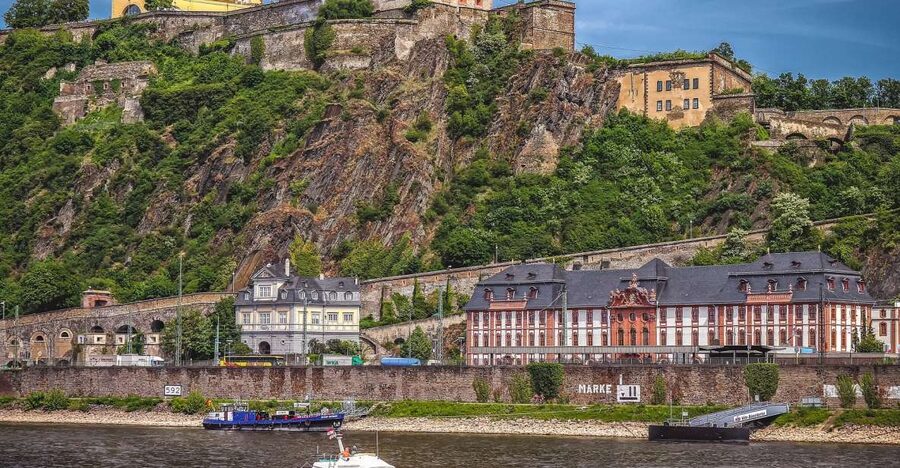
Koblenz sits where the Moselle meets the Rhine, and Ehrenbreitstein gives you the clearest sense of that setting. The fortress rises high above the Rhine, with broad views over the river valley and toward the city. I find this kind of opening useful because it gives you a physical map before the walking portion begins.
The fortress you see today was built between 1817 and 1828 as part of the defenses guarding the Middle Rhine region. It is described as the second-largest fortress in Europe, and its scale helps explain why this was such an important military position.
The site also carries a complicated wartime story. French troops destroyed the earlier fortress in 1801. The destruction inspired the British poet Lord Byron to write about Ehrenbreitstein’s battered walls and its former strength. The later rebuilding created the large defensive complex open to the public today.
Your guide can help connect those dates and events, which is useful because fortress walls alone do not explain much. You’ll hear about the military purpose of the site, its place in the conflicts between France and German territories, and the long effort to rebuild it.
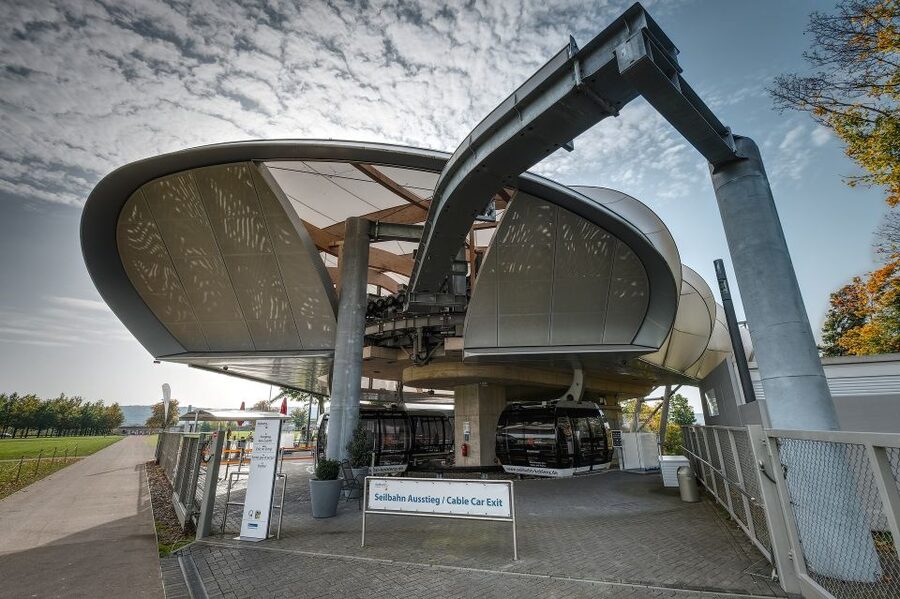
The fortress is connected with Koblenz by cable car. The tour meeting point is at the cable car station on the Koblenz side. That makes the starting point easy to identify, but you should pay attention to the exact meeting instructions when booking, especially if you are coming from a cruise ship or hotel.
Entrance to the fortress is not included in the tour price. Set aside extra money for admission, and allow enough time to reach the cable car station before the scheduled start. The activity lasts three hours, so a late arrival could cut into both the fortress visit and the old town walk.
Other walks through the old centre of Koblenz:
- Koblenz: Old Town Sightseeing Cruise along the Rhine
★ 4.5 · 305 reviews - Dresden: Semperoper and Old Town Tour
★ 4.8 · 5,735 reviews - Nuremberg: Old Town Guided Walking Tour
★ 4.6 · 2,416 reviews
What you can expect inside Ehrenbreitstein Fortress
The fortress portion gives your guide the chance to add detail that is easy to miss when you walk around alone. The walls, position above the river, and military layout are the main attraction. You are not simply stopping at a viewpoint for a photograph, then leaving.
The height is important. At 118 meters above the Rhine, Ehrenbreitstein shows why the location mattered for defense. From here, the river corridor is easy to read, and you can see how a fortified position could watch movement through the Middle Rhine region.
The supplied tour information also connects the fortress with a 1672 episode in which the Archbishop refused requests from both French and German forces to allow troops to pass along the Rhine. That detail gives the place a human and political angle. The fortress was not only stone and artillery. It sat in a region where control of the river mattered to competing powers.
A private guide is especially useful here because your group can ask questions as the story develops. One guide on this experience is described as giving extra details during the fortress visit and making the explanation accessible. The tour also received praise for being tailored to the group, so you can reasonably expect a more personal pace than on a large scheduled walk.
Still, keep your expectations in check. The experience does not include a full-day military history program. You’ll see the major fortress setting and hear its main stories, but the tour must continue into Koblenz’s old town within the three-hour limit.
Münzplatz and the Roman beginning of Koblenz
After the fortress, the tour moves into Koblenz’s old town and reaches Münzplatz. The square takes its name from the electoral coin called Münz. Coins were minted here in the 11th century, giving the square a direct link to the city’s working and political past.
Münzplatz also connects modern Koblenz with its Roman beginning. This is where the Romans founded Castellum apud confluentes, meaning the fort at the confluence. The name Koblenz comes from that location at the meeting of the Rhine and Moselle.
The square’s fountain was built in 1992 for Koblenz’s 2,000-year anniversary. Wili Heinzen designed it, and Sparkasse Koblenz gave it to the city and its residents. That mix of ancient roots and a modern civic gift makes Münzplatz a good place for your guide to explain how the city remembers itself.
I like this stop because it helps you see the old town as more than a collection of pretty buildings. The square carries Roman, medieval, and modern references in one compact spot. You’ll also have time to get your bearings before moving into the church quarter.
The street between Liebfrauenkirche and St. Castor
From Münzplatz, the route follows a romantic street between two churches. The walk is one of the tour’s more atmospheric sections, with historic façades and picturesque squares replacing the fortress’s military scale.
Liebfrauenkirche sits on the highest point of the city and is easy to recognize by its onion domes. The church was built in the 17th century, destroyed in 1944, and rebuilt in 1955. Its story reflects the damage Koblenz suffered during the Second World War and the city’s effort to restore important buildings afterward.
The church also played a major role during the French Revolution, when it was one of the principal parish churches. That gives your guide another chance to connect architecture with political change rather than treating the building as a simple photo stop.
St. Castor Basilica is the oldest church in Koblenz. The Archbishop of Trier built it between 817 and 836 with support from Emperor Louis the Pious. It began as a Carolingian proprietary church, a term that points to the way powerful rulers and church leaders controlled religious foundations in the early medieval period.
I would pay close attention during this part of the tour. The churches are not just separate landmarks. Together, they show how Koblenz developed around religion, regional power, rebuilding, and civic life. The route is also a pleasant change of pace after the fortress, although anyone wanting extended time inside each church may find three hours restrictive.
Same base, a different kind of day out:
- Koblenz: Rhine Valley Castles and Palaces Boat Tour
★ 4.4 · 1,824 reviews - Koblenz: 2-Hour Sightseeing Cruise on the Rhine
★ 4.6 · 839 reviews - Koblenz: Panoramic Cruise on Moselle River to Winningen
★ 4.4 · 283 reviews - From Alken: Return Day Trip by Boat to Cochem
★ 4.6 · 141 reviews
The Schängel fountain and Koblenz’s local character
The tour includes the Schängel fountain near the city hall, one of Koblenz’s best-known symbols. The name Schängel comes from the city’s 20-year allegiance to France between 1794 and 1813.
Carl Burger designed the fountain in 1940, and it was dedicated to the poet Josef Cornelius. Its local meaning is more important than its size. This is the sort of city landmark that helps you understand how residents see their own home, not just how outsiders describe it.
The route’s attention to a fountain and a local nickname is one of its strengths. Major churches and fortresses are easy to find in any guidebook. A local symbol adds a little personality, and the guide can explain why it matters to Koblenz.
This stop also fits the private format well. One guide was praised for including quirky attractions along with places of historical importance. That balance is valuable if you want more than a checklist of grand monuments.
Deutsches Eck and the Kaiser Wilhelm memorial
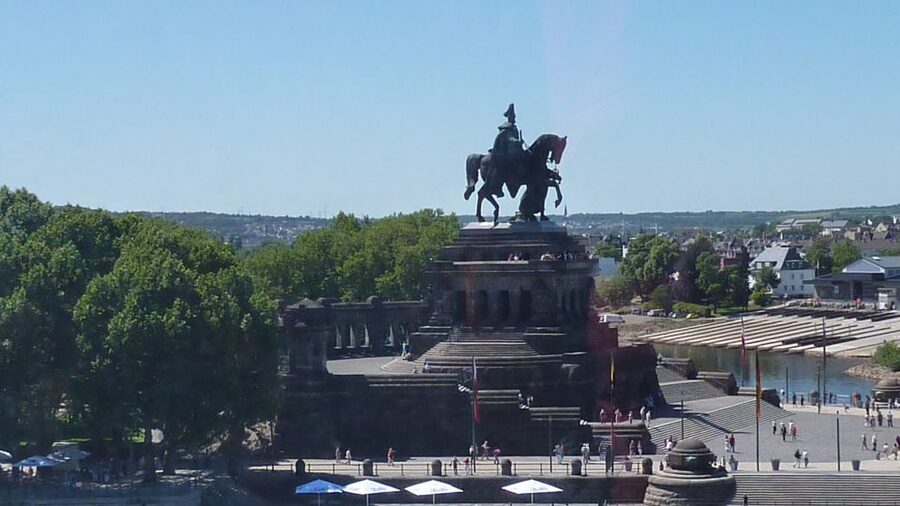
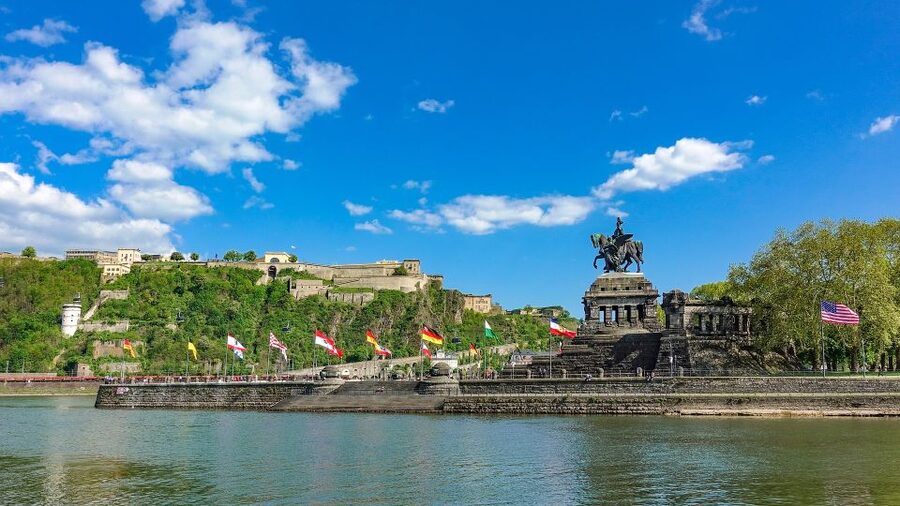
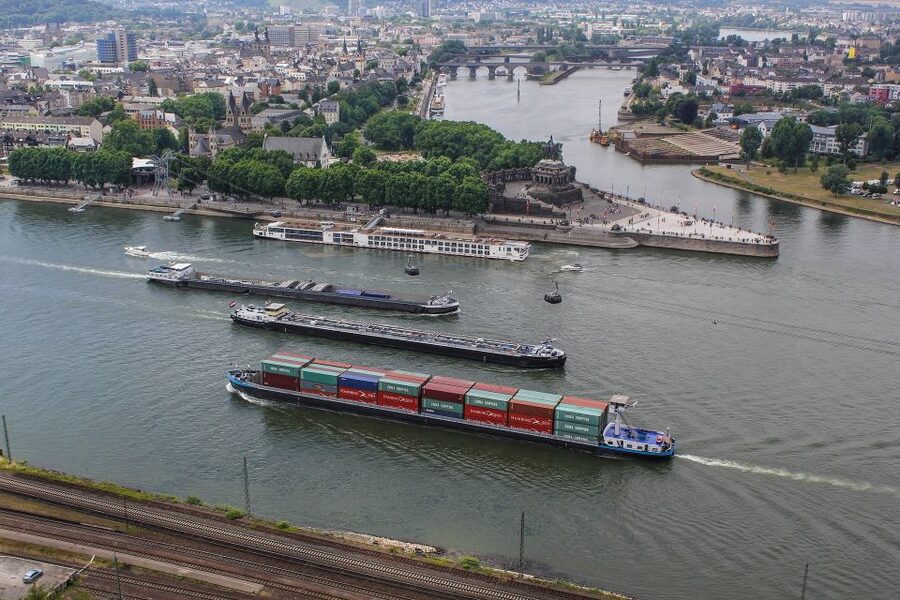
The final major stop is Deutsches Eck, the headland at Koblenz where the rivers meet. The name means German Corner, and the site is closely linked with the Kaiser Wilhelm memorial.
The memorial to Kaiser Wilhelm I was erected in 1897. Kaiser Wilhelm I was the first German Emperor, so the monument carries a strong national message. Your guide can place it within the city’s broader story and explain why this river junction became such a prominent symbolic site.
Deutsches Eck is also a fitting end to the tour because it brings together the main ideas you have encountered. The rivers explain Koblenz’s location. The fortress explains its military importance. The old town explains its civic and religious development. The memorial adds the national politics of a later period.
The experience ends back at the meeting point. That is convenient if you need to return to a ship, hotel, or another appointment, but it also means you should not assume the tour finishes at Deutsches Eck. Confirm the return arrangement and allow time afterward if you plan to continue exploring independently.
How the private format changes the experience
A private group of up to 20 people is a different proposition from a standard walking tour. Your guide is exclusively with your party, and the route can be explained at a pace that suits your group. That matters if some people want extra historical context while others mainly want the main sights and views.
The strongest praise for this experience centers on the guide’s explanations. You can expect a guide who covers places of historical importance but also points out less obvious, quirky attractions. The fortress explanation is another strong point, with extra context beyond the basic dates.
The tour is available in English, German, and Italian. That gives you a practical choice of language, but you should select the preferred language when checking availability. No individual guide name is provided, so the exact guide will depend on the date and language you book.
The three-hour length is a sensible compromise. You can see the fortress, reach the old town, visit major churches and squares, and finish at Deutsches Eck without giving up an entire day. The tradeoff is that you will not have unlimited time for interiors, photographs, shopping, or unscheduled stops.
Is $430 good value?
The cost is $430 for a group of up to 20 people, before the separate fortress entrance fee. For one or two people, that is a costly way to see Koblenz. For a family, reunion group, or cruise party, the calculation changes quickly.
At the full group size, the guiding fee works out to $21.50 per person, before admission. Even with a smaller group, you are paying for private attention, a guide in your chosen language, and a route that combines the fortress with the old town.
I would consider the price worthwhile if you value context and convenience. You do not have to piece together the fortress, Münzplatz, the churches, Schängel fountain, and Deutsches Eck on your own. You also get a guide who can explain how the sights fit together.
I would look elsewhere if you are comfortable exploring independently or mainly want a quick cable car ride and a few photographs. The separate entrance fee and private-tour price make this less attractive for budget-conscious couples.
Cancellation is flexible, with a full refund available when you cancel at least 24 hours in advance. You can also reserve now and pay later, which is useful when your schedule depends on cruise timing or a changing travel plan.
Who should book this Koblenz tour?
I would recommend it most strongly to groups that want a guided introduction in a short window. It works well for families, first-time visitors, and cruise passengers who want the main Koblenz sights without planning every turn.
The tour also suits anyone who enjoys historical explanation. The fortress, Roman origins, medieval churches, French connection, postwar rebuilding, and imperial monument give your guide plenty to discuss.
It may be less suitable if your priority is a slow museum visit, extensive church interiors, or independent photography. The itinerary is focused and fairly full. You will see many important places, but you will not linger everywhere.
Wheelchair access is listed for the activity, which is helpful, though the exact ease of every surface and fortress area is not described. If you have specific mobility needs, confirm the route details before booking.
My verdict: a smart group tour with a strong viewpoint
I like this tour because it gives Koblenz a clear shape in only three hours. Ehrenbreitstein Fortress provides the commanding opening view, while the old town supplies the close-up details: Münzplatz, two important churches, the Schängel fountain, and Deutsches Eck.
Book it if you are sharing the $430 cost with a group and want a guide who can explain both major history and local oddities. Think twice if you are traveling alone or as a couple on a tight budget, since the private price and extra fortress admission may outweigh the convenience.
For a group arriving by cruise or spending only a short time in Koblenz, this is a practical way to cover the city’s essential sights without turning your visit into a rushed scavenger hunt.
FAQ
How long does the Koblenz tour last?
The tour lasts three hours. Starting times depend on availability when you book.
Where does the tour begin?
It begins at the cable car station on the Koblenz side.
Where does the activity end?
The tour ends back at the meeting point.
Is Ehrenbreitstein Fortress entrance included?
No. Entrance fees for Ehrenbreitstein Fortress are not included in the tour price.
How much does the private tour cost?
The price is $430 per group for up to 20 people.
What languages are available?
The live guide is available in English, German, and Italian.
Is this a private group activity?
Yes. The guide is exclusively with your private group.
Can I cancel for a full refund?
Yes. You can cancel up to 24 hours in advance for a full refund.
Just added in Koblenz
- Stein: Guided tour of Count von Faber-Castell’s castle★ 4.9 · 27 reviews
- From Alken: Moselle Valley Sightseeing Cruise★ 4.5 · 10 reviews
- Public guided tour: Production of “wood-cased pencils”★ 5.0 · 4 reviews
- Koblenz: The Living Vineyard, Nature & Wine Enjoyment★ 5.0 · 14 reviews
- Koblenz: Rhine Valley Castle Sightseeing Cruise★ 4.6 · 98 reviews
- Koblenz: Sunset Boat Cruise★ 4.6 · 80 reviews
- Koblenz: City & Rhine Valley Sightseeing Cruise★ 4.7 · 39 reviews
- Koblenz: Private pub crawl with insider guide & free shots★ 5.0 · 5 reviews
Old Town Walking Tours, compared.

Old Town & Viktualienmarkt City Walk in German
Read our review →
The Night Watchman Old Town Walking Tour in German
Read our review →
New Old Town and Highlights German-Language Tour
Read our review →

Browse the lists this tour appears in