
Reviewed · NEUSCHWANSTEIN & CASTLE TOURS
Stein: Guided tour of Count von Faber-Castell’s castle
Count von Faber-Castell’s castle is an unusual place where pencil-making wealth meets German courtly tradition. The outside looks medieval, with Romanesque arches, columns, round towers, and corner towers, but the rooms inside move through several styles, from Gothic and Renaissance to Empire, Classicism, and Art Nouveau.
I like the 90-minute length because it gives the guide time to explain the family and company story instead of rushing you from room to room. I also like the small souvenir and the 15% shop discount on the day of a Monday to Friday tour. The main drawback is the no-photography rule inside, plus long walks through historic areas that are not barrier-free.
Key points to know before you book
- A castle built around a pencil dynasty: See how the Faber-Castell family joined industrial progress with aristocratic life.
- Many styles in one tour: Romanesque, Gothic, Renaissance, Empire, Classicism, and Art Nouveau all appear inside.
- A serious look at difficult history: The tour includes the castle’s role during the Third Reich and its later use by American officers.
- English and German guiding: You can select a live tour in either language, though some material may remain in its original language.
- A useful shop bonus: The ticket includes a souvenir and 15% off purchases at the castle store on weekdays.
- Plan for walking, not just looking: The historic premises are not barrier-free, so sturdy shoes are a wise choice.
Why this castle is more than a pretty house
The Faber-Castell castle in Stein tells two stories at once. One is the story of a noble family, its taste, social position, and changing home. The other is the story of an industrial company that became famous for wood-cased pencils.
That combination gives the tour its purpose. You are not simply inspecting grand rooms. You are seeing how a business family used architecture and household style to express its place in society, while also hearing how the company developed over more than 260 years.
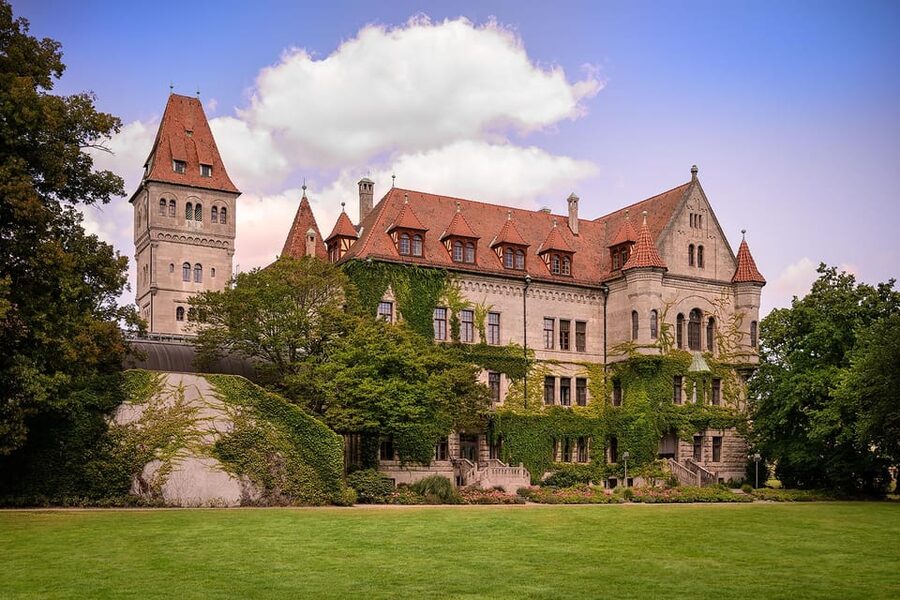
The castle’s exterior sets up the contrast. Romanesque arches and columns give it a medieval appearance, and the round and corner towers make it look older and more defensive than a typical nineteenth-century residence. Inside, the mood changes from room to room as different periods come into view.
I find that mix especially useful for visitors who have already seen traditional palaces in Bavaria. This is not just a royal residence copied from a familiar model. It reflects the rise of a successful industrial family, with a company history tied closely to the house.
Other castles within reach of Koblenz:
- Koblenz: Rhine Valley Castles and Palaces Boat Tour
★ 4.4 · 1,824 reviews - Koblenz: Rhine Valley Castle Sightseeing Cruise
★ 4.6 · 98 reviews - From Munich: Neuschwanstein & Linderhof Castle Full-Day Trip
★ 4.5 · 12,494 reviews
Starting at the Faber-Castell Visitor Center
Your visit begins at the Faber-Castell Visitor Center, also identified as Faber-Castell Erleben. Booking is required, so you should arrive with your reservation ready and allow enough time to find the meeting point.
The tour begins and ends at the same place. That simple setup matters if you are combining the castle with other Faber-Castell activities in Stein, such as the pencil production visit or the Old Mine museum. You will not need to arrange separate transport between stops during this tour.
The experience lasts about an hour and a half. That is long enough for a proper guided visit, but short enough to fit into a wider day in the area. Check the available starting times when you book, since the schedule is not fixed in the information provided here.
Outside: Romanesque arches and castle towers
The first impression comes from the façade. Its arches, columns, and towers create the appearance of a medieval castle, even though the building’s story is tied to a much later industrial age.
This exterior is worth looking at before the group moves indoors. The towers help explain why the building feels like a seat of an old noble family, while the company connection reminds you that its wealth came from manufacturing and trade.
Your guide uses the building to introduce the relationship between the Faber-Castell family and the firm. That is the key idea of the entire visit: this was both a family home and a symbol of a successful enterprise.
The exterior may be most rewarding for anyone interested in architecture. If you mainly want to see how pencils are made, this is the wrong tour by itself. The production facility is a separate experience, and the castle tour focuses on rooms, family history, and changing styles.
Inside: six centuries of decorative taste
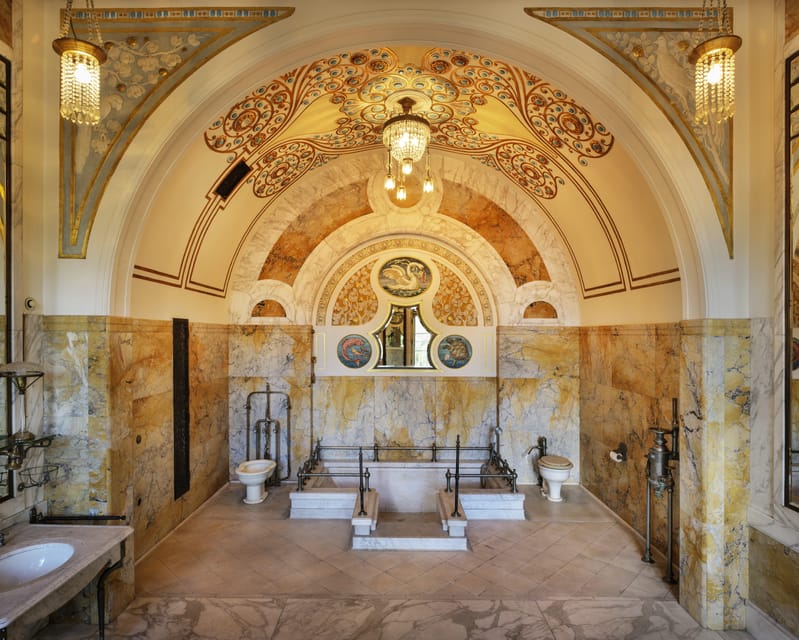
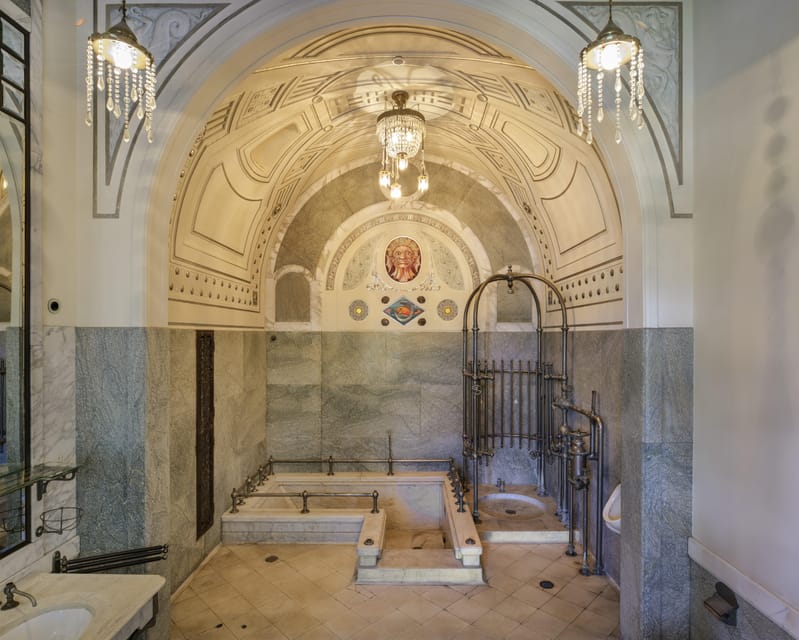
The interior gives you the biggest visual payoff. Rather than following one single design, the rooms show a sequence of styles that includes Romanesque, Gothic, Renaissance, Empire, Classicism, and Art Nouveau.
That variety makes the tour feel more like a guided walk through changing European taste than a visit to one uniform palace. You can compare the formal character of Classicism with the heavier historical references of Gothic and Renaissance design, then notice the different decorative language of Art Nouveau.
A guide is important here. Without explanation, you might see attractive rooms but miss how their styles reflect different periods and family choices. The tour gives you a way to connect the decoration with the people who lived there and the company that supported the household.
The presentation has earned strong praise for clear storytelling and thoughtful answers to questions. The female guide described in the supplied tour material was particularly effective at bringing the Faber-Castell family story to life. No individual guide name is provided, but the guiding language options are German and English.
Some content is presented in its original language. If you book an English tour, you should still be prepared for the possibility that not every piece of material will be translated in the same way.
A few more things to do in Koblenz worth a look
- Koblenz: Historical Sparkling Wine Museum Guided Tour
★ 4.6 · 28 reviews - Koblenz: Private pub crawl with insider guide & free shots
★ 5.0 · 5 reviews - Public guided tour: Production of “wood-cased pencils”
★ 5.0 · 4 reviews - Berlin: Reichstag, Dome and Government District Guided Tour
★ 4.7 · 18,288 reviews
A family history tied to a company
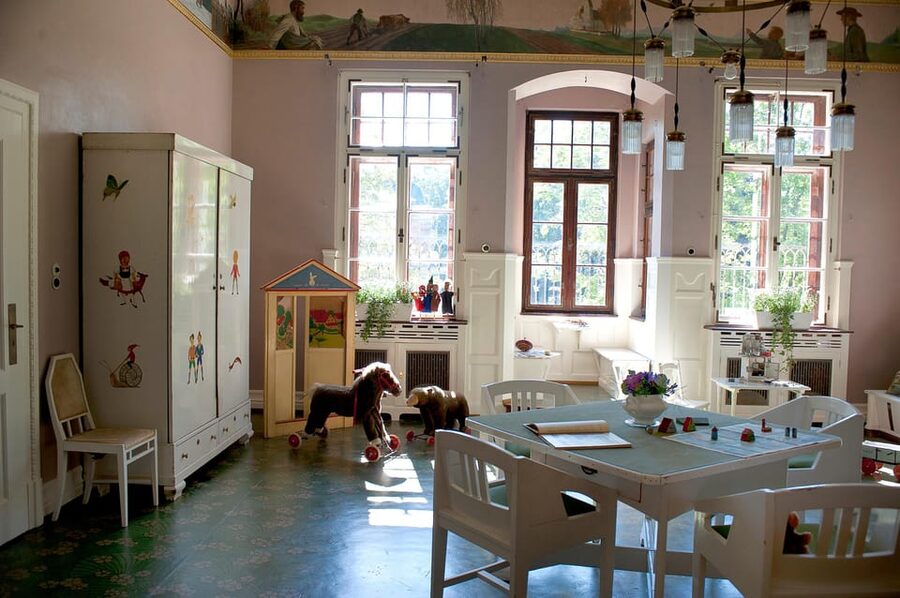
The castle’s exhibition covers the family and company history of Faber-Castell across more than 260 years. That long time span is one of the strongest reasons to choose this experience.
A standard castle visit may focus on architecture and former residents. Here, the family story is linked to a working company whose name remains familiar around the world. You get a clearer sense of how industrial success and social status could develop side by side.
The tour also helps explain why the castle belongs within the larger Faber-Castell visitor program. The company headquarters in Stein offer several related experiences, including the production of wood-cased pencils, the Old Mine museum, and a special tour about the castle as a press camp.
You do not need to take those other tours to appreciate this one. Still, the castle visit makes more sense when you remember that it is part of a living company site rather than an isolated historic property.
Wartime and postwar stories add weight
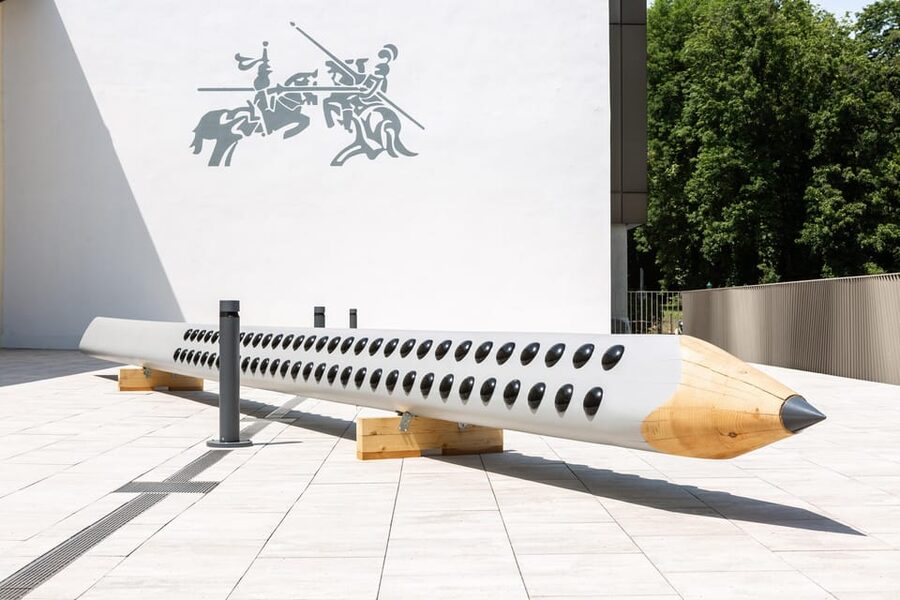
The most useful part of the tour may be the section on what happened during the Third Reich and after the war. The castle was not frozen in its earlier aristocratic role. It had to pass through Germany’s difficult twentieth-century history.
The guide explains how the building was used during the Nazi period and what happened afterward. One striking detail concerns the American forces who used the castle for years as an officers’ mess and recreation space. A wall was removed to make room for a bowling alley.
That detail is memorable because it shows how historic buildings often survive by changing purpose. It also keeps the visit from becoming a polished parade of rooms with no sense of the disruptions around them.
If you prefer only light sightseeing, this part may feel more serious than expected. I consider that a strength. The castle becomes more understandable when you see its later uses, not just its grander past.
The no-photography rule
Photography is not allowed inside the castle. This is the clearest frustration attached to the visit, especially because the rooms contain several architectural styles and details you may want to remember.
You should know this before arriving, rather than discovering it after putting your camera away. You can still pay close attention to the guide’s descriptions and use the exterior façade as the place to study and remember the building visually.
The rule may also help the group keep moving through the rooms. A popular tour can become slow when everyone stops for pictures, and the supplied information indicates that some departures are well attended. Still, if taking interior photographs is central to your enjoyment of historic houses, this limitation should affect your decision.
Walking conditions and practical comfort
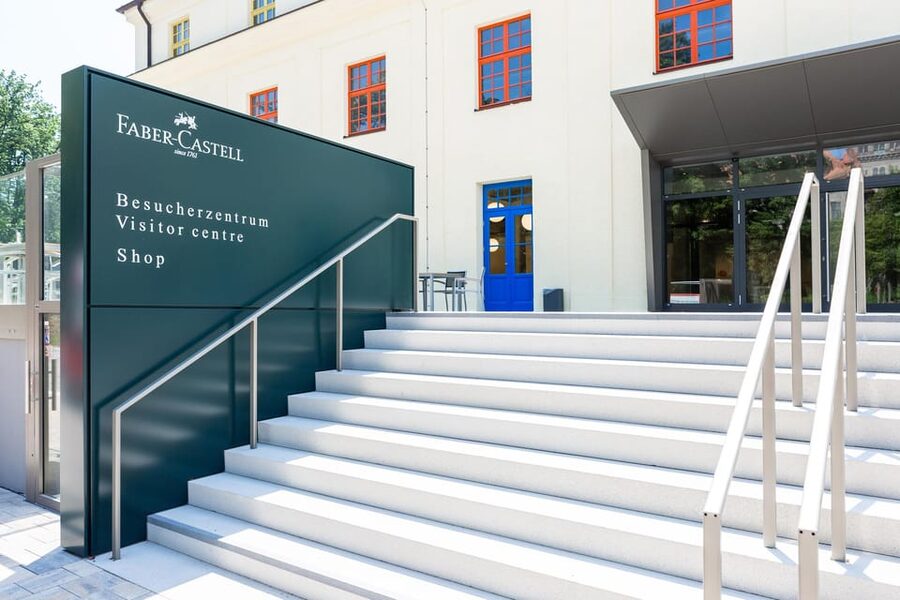
The premises include historic areas that are not barrier-free. You should expect to walk long distances and wear sturdy shoes.
That warning is more important here than it may sound. The castle is not presented as a quick room or two beside the entrance. The tour covers a substantial interior route, and historic buildings can have uneven or awkward areas.
The available information does not specify a detailed step-free route or accessibility arrangements. If you need a fully accessible visit, contact the provider before booking rather than assuming the standard tour will work for you.
For most visitors, comfortable footwear should be enough. The tour is not described as physically strenuous, but the combination of distance and historic premises makes practical clothing a good idea.
What the $14 price includes
At about $14 per person, this is a modestly priced guided castle visit. The value comes from the live guide, the full 90-minute route, the family and company exhibition, and the historical context that would be difficult to gather on your own.
You also receive a souvenir. That is a small extra, but it gives the ticket a little more appeal, especially for anyone already interested in writing instruments or the Faber-Castell brand.
The 15% store discount can improve the value if you plan to buy something at the castle shop. It applies on the day of the tour from Monday through Friday. If your visit falls outside those days, do not count on the discount unless the provider confirms it.
I would not book the tour solely for the shop savings. The discount matters most when you already want a Faber-Castell product, gift, or memento. The tour should be worth the ticket even if you leave the store empty-handed.
Who will enjoy this tour most
I recommend this experience to people who like historic interiors, family stories, industrial heritage, and guided architecture visits. It is also a good choice if you want something different from Bavaria’s better-known royal palaces.
Families with an interest in drawing or school supplies may find the company connection especially appealing. The souvenir and store discount add a practical touch, though the tour itself remains more about history and architecture than about pencil production.
English-speaking visitors can book with an English guide, while German speakers have the same option in German. You should remember that some content may remain in its original language.
I would be more cautious if you want free time to wander or take photographs. The route is guided, the visit has a set duration, and interior photography is prohibited. Visitors with mobility needs should also check access details before paying.
How to fit it into a Faber-Castell day
The castle tour begins and ends at the Faber-Castell Visitor Center, making it easy to pair with another activity at the headquarters. You might add the production tour to focus on how wood-cased pencils are made, or visit the Old Mine museum for a separate look at the site’s past.
Do not assume that this castle visit covers the factory in detail. Its focus is the residence, the family, the architecture, and the castle’s later history. If the making of pencils is your main interest, you will need the separate production experience.
The 90-minute format also gives you room to plan around another booking. Just leave enough time between activities for the walking involved and for the possibility that a group visit may take the full scheduled period.
Should you book the Count von Faber-Castell castle tour?
Book it if you want an affordable, guided look at an unusual Bavarian castle with a strong link to industrial history. The mix of Romanesque exterior details, changing interior styles, family history, company development, wartime use, and the postwar bowling alley story gives the visit more substance than a quick architectural stop.
The best reasons to go are the excellent price, the clear English or German guiding, the 90-minute length, and the chance to see how a business family lived and adapted over time. The souvenir and weekday shop discount are useful extras.
Skip it if interior photographs are essential, if you want a fully barrier-free attraction, or if your main goal is to watch pencil production. For everyone else, this is a well-focused way to understand both the castle and the company behind its name.
FAQ
How long does the castle tour last?
The guided tour lasts approximately 1.5 hours, or 90 minutes.
Where does the tour begin?
The tour begins at the Faber-Castell Visitor Center, also called Faber-Castell Erleben. Booking is required.
Where does the tour finish?
The tour returns to the Faber-Castell Visitor Center.
What languages are available?
Live guiding is available in German and English. Some content may be shown in its original language.
What does the ticket include?
The ticket includes the guided tour of Count von Faber-Castell’s castle, a souvenir, and a 15% discount in the castle store on the day of a Monday to Friday tour.
Is the store discount available every day?
The supplied information specifies the 15% store discount for the day of your tour from Monday through Friday.
Can I take photographs inside the castle?
No. Interior photography is not permitted.
Is the castle barrier-free?
The premises are not barrier-free. You should plan to walk long distances and wear sturdy shoes.
What is the price?
The listed price is $14 per person.
Can I cancel the booking?
You can cancel up to 24 hours in advance for a full refund. A reserve-now-and-pay-later option is also available.
Just added in Koblenz
- From Alken: Moselle Valley Sightseeing Cruise★ 4.5 · 10 reviews
- Public guided tour: Production of “wood-cased pencils”★ 5.0 · 4 reviews
- Koblenz: The Living Vineyard, Nature & Wine Enjoyment★ 5.0 · 14 reviews
- Koblenz: Old Town Tour with the Ehrenbreitstein Fortress★ 4.8 · 4 reviews
- Koblenz: Rhine Valley Castle Sightseeing Cruise★ 4.6 · 98 reviews
- Koblenz: Sunset Boat Cruise★ 4.6 · 80 reviews
- Koblenz: City & Rhine Valley Sightseeing Cruise★ 4.7 · 39 reviews
- Koblenz: Private pub crawl with insider guide & free shots★ 5.0 · 5 reviews
Neuschwanstein & Castle Tours, compared.


Neuschwanstein & Linderhof Castle-Fairytale Day Tour from Munich
Read our review →
Premium Neuschwanstein Castle and Linderhof VIP Tour from Munich
Read our review →

Neuschwanstein Castle and Linderhof Palace Day Trip from Munich
Read our review →
Rhine Valley Castles: 1.5-Hour Boat Tour from Rüdesheim
Read our review →Browse the lists this tour appears in