
Reviewed · HISTORICAL TOURS
Kassel: Historical Walking Tour through Kassel
Kassel’s most interesting feature is its contradiction: the old city was heavily destroyed, yet pieces of its past still appear beside bold postwar buildings. This walk helps you read both versions of Kassel, from the town hall and surviving historic sights to the city’s rebuilt streets.
I like the clear 90-minute format, which gives you a useful first look without taking over your day. I also like the focus on Kassel’s unusual achievements, including Germany’s first permanent theater building, first public museum, and first pedestrian zone.
The main drawback is simple: the tour is only in German. And because so much of historic Kassel disappeared during World War II, you should expect a city story shaped as much by loss and rebuilding as by old stonework.
Key things to know before walking
- Town hall meeting point: Meet at the grand staircase of Kassel’s town hall on Obere Königsstraße 8.
- A city of contrasts: The walk pairs surviving historic buildings with postwar architecture and modern Kassel.
- More than fairy tales: The Grimm brothers’ long connection to Kassel is part of a wider story about German language and culture.
- A strong museum tradition: Kassel’s first public museum and its many distinctive museums help explain the city’s cultural importance.
- Useful for first-time visitors: The route gives you a broad introduction, then points you toward ways to explore further.
- German-language only: A live guide leads the tour, with no other language option listed.
Starting at Kassel’s town hall staircase
The tour begins at the grand staircase of the town hall, at Obere Königsstraße 8. That is a practical meeting point because it places you in the center of Kassel and immediately frames the tour around civic history and architecture.
You are not simply meeting outside a generic shop or transit stop. The town hall is one of the key sights promised by the walk, so the first moments already connect the meeting place with the subject of the tour. Arrive ready to look closely at the building and the surrounding streets before the guide begins.
The route returns to the same place after 90 minutes. I like this arrangement because you can leave luggage plans and onward transport until after the walk. It also makes the tour easy to fit into a day of sightseeing, shopping, museum visits, or a later trip elsewhere in Kassel.
The available information does not give a fixed stop-by-stop list beyond the town hall and the wider city route. That means you should think of this as an orientation walk, not a ticketed visit inside several attractions. The guide’s job is to connect the sights you pass with the city’s long story.
More Historical Tours across Germany
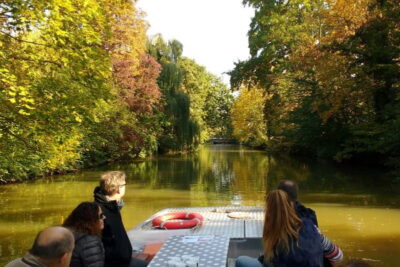
- Leipzig: City History Canal Sightseeing Tour on a Motorboat
★ 4.7 · 6,232 reviews - Berlin: Natural History Museum Entrance Ticket
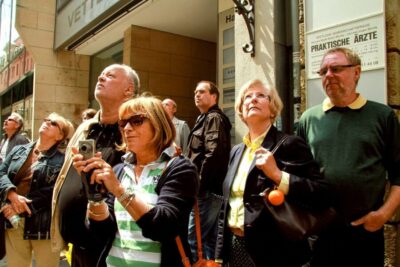
★ 4.6 · 3,382 reviews - Leipzig: 1.5-Hour Historical Walking Tour in German
★ 4.7 · 2,217 reviews
Reading the old Kassel beneath the modern city
Kassel was once described as one of Germany’s most beautiful cities, yet the old Kassel no longer survives as a complete historic center. World War II destroyed much of the city, leaving fewer old buildings than you might expect from a place with 1,100 years of history.
That loss is not treated as a footnote. It is central to understanding what you see. A historic building can carry centuries of memory, while a nearby postwar structure reveals how Kassel chose to rebuild and change after the war.
This gives the walk a useful edge. You will not be shown a perfectly preserved old town and asked to admire it from a safe distance. Instead, you will encounter a city where gaps, new buildings, surviving monuments, and altered streets all tell part of the story.
I find that especially valuable for visitors who arrive expecting a classic German center of narrow lanes and old façades. Kassel offers something different. Its character comes from the conversation between what remains and what came later.
The guide also covers architectural achievements that make Kassel more than a damaged historic city. The first permanent theater building in Germany, the first museum open to the public, and the first pedestrian zone all point to a city willing to try new ideas.
Kassel and the Protestant Reformation
The tour explains Kassel’s major role in the Protestant Reformation. That subject matters because it places the city within a turning point in German and European religious history.
The walk is not presented as a specialist lecture, but this part should help you see Kassel as more than a collection of buildings. Religious change affected civic life, public institutions, architecture, and the way cities understood their place in the wider world.
For you, the value is context. Instead of hearing only when a structure was built, you can connect Kassel’s development with the ideas and conflicts that shaped the city. The Reformation story also gives the older parts of Kassel a clearer place in the history of Hessen.
The supplied details do not identify a particular church visit or promise entry to a religious building. You should therefore expect the subject to be explained as part of the outdoor city walk, rather than assume that an interior tour is included.
Following the Grimm brothers’ Kassel
Jacob and Wilhelm Grimm lived and worked in Kassel for more than 30 years. Most people know them for collecting and publishing fairy tales, but their work reached well beyond stories for children.
In Kassel, the brothers also helped shape the study of the German language. Their connection gives the city an engaging cultural thread, especially for visitors who know the fairy tales but have not considered the scholarly work behind them.
I like this part of the tour because it broadens the usual Grimm story. You are not asked to picture only storybooks and folk characters. You can also place the brothers within Kassel’s intellectual life and its contribution to German language and culture.
The tour does not promise a dedicated museum visit or a specific Grimm interior. Instead, the brothers form part of the city’s wider historical narrative. If you want a more specialized Grimm experience, use this walk to get oriented, then explore Kassel’s museums and cultural sites afterward.
More Walking Tours across Germany
- Discover Berlin Half-Day Walking Tour
★ 5.0 · 9,624 reviews - Berlin: Third Reich and Cold War 2 Hour Walking Tour
★ 4.9 · 6,830 reviews - Munich: Third Reich & WWII Walking Tour
★ 4.6 · 6,181 reviews - Berlin: Discover Berlin Walking Tour
★ 4.9 · 5,998 reviews
Why Kassel’s museums and documenta matter
Kassel has an unusually strong museum identity. The city’s first museum open to the public is one reason its cultural history deserves attention, and the many museums today continue that tradition.
The information for this walk also points to museums that are distinctive, including institutions that are unique in their field. The tour does not include museum admission, so the benefit here is direction. You get a sense of why Kassel’s cultural offering is important and which part of the city’s story you may want to pursue next.
Documenta adds another layer. It helps explain why Kassel is known not just for old history but also for modern and contemporary art. The city’s cultural identity reaches from early public museums to a major modern art event.
That mix is useful for planning. If you have only a short time in Kassel, the walk gives you a framework before you choose a museum. If you have a full day or longer, it can help you connect the outdoor city center with the institutions that make Kassel unusual.
Do not expect the 90 minutes to provide a full tour of the museums or documenta. It is better understood as a compact introduction to the city’s cultural importance, with the option to continue on your own.
The postwar rebuild is part of the sightseeing
Many city walks treat postwar architecture as something to hurry past on the way to older sights. This tour gives it proper attention.
Kassel’s rebuilding changed the city’s appearance and daily movement. The walk helps you see modern streets and buildings not as random replacements, but as the result of decisions made after enormous destruction.
That approach suits Kassel particularly well. Since only a limited number of historic structures survived, a tour focused only on old buildings would leave out much of the city’s real character. Here, the rebuilt city is part of the main story.
You may find some of the architecture less conventionally pretty than the historic buildings you admire in other German cities. That is one of the honest points of the experience. Kassel cannot offer a continuous old center, and the tour does not pretend otherwise.
Instead, you get a more thoughtful view of urban change. You can compare what the city lost with what it created afterward. For me, this makes the walk more useful than a simple list of attractive façades.
What the 90-minute itinerary gives you
The entire activity is a guided walking tour through Kassel, beginning and ending at the town hall. The fixed duration of one and a half hours is long enough to establish the main themes, but short enough to combine with other plans.
The route covers today’s Kassel as well as its 1,100-year history. That broad scope means the guide must move between subjects, from architecture and civic life to the Reformation, the Grimm brothers, museums, documenta, and wartime rebuilding.
You should expect a connected overview rather than a deep examination of a single period. The tour’s strength is range. It shows how several parts of Kassel’s identity fit together.
That makes it especially useful at the start of a stay. I would take it early, then decide which museums, buildings, or neighborhoods deserve more time. It can also work near the end of a visit, when you want to tie together sights you have already seen.
Because the exact sequence of stops is not specified, I would avoid treating the route as a checklist of guaranteed interiors or named monuments beyond the town hall. The promise is a guided look at the breadth of Kassel, not admission to a series of attractions.
The German-only format and who will enjoy it
The guide speaks German, and the activity is offered only in German. That is the most important practical point before booking.
If you understand German well, this format can give you a direct introduction to Kassel’s history, with the guide’s tone and humor carrying as much value as the facts. The feedback connected with the tour describes the presentation as informative, good-humored, and lively. One recurring strength is that even people who live in Kassel have found new things to learn.
That is a good sign for German-speaking visitors who want more than basic sightseeing. The walk is not limited to first-time visitors. Residents and repeat visitors may also enjoy the local details and broader connections.
If your German is limited, you may miss too much of the explanation. The tour does not list an English-language option, translation service, or written alternative. In that case, consider booking only if you are comfortable following a 90-minute guided talk in German.
The tone appears suited to people who like history delivered with humor rather than in a dry academic format. Families with older children may enjoy the Grimm connection and the city’s unusual firsts, though the guide’s language remains German.
Is $15 a fair price for Kassel?
At $15 per person, the tour is priced as an affordable introduction rather than a major paid attraction. You are paying for a live guide, a planned route, and a concise explanation of Kassel’s story.
The value depends mainly on your language ability and interest in context. If you can follow German and want to understand why Kassel looks the way it does, $15 is a sensible spend. You receive a compact orientation that can save time later, especially when choosing among the city’s museums and cultural sights.
The price is less compelling if you want entry to museums, interiors, or a highly specialized architectural tour. Those are not listed as included. You are buying interpretation during a city walk, not admission tickets.
For a solo visitor, the cost is modest. For a family, the total rises, although children aged 0 to 5 can join free without a ticket. Pupils and students should bring valid identification, which may matter when arranging the correct price.
Free cancellation up to 24 hours before the start and the option to reserve now and pay later add flexibility. They do not change the content of the walk, but they can make it easier to fit into a changing German itinerary.
Accessibility and simple planning details
The tour is wheelchair accessible, an important advantage for visitors who need a route designed with access in mind. The supplied information does not provide details about slopes, cobbles, rest stops, or the exact surface of every street, so you may want to ask the provider if those details matter for your needs.
Meet at the grand staircase of the town hall on Obere Königsstraße 8. The walk finishes at the same address, which keeps the logistics simple.
Check the available start times before choosing a date. The tour lasts 90 minutes, but the exact departure time is not fixed in the information provided.
Infants aged 0 to 5 can participate free of charge and do not need a ticket. Pupils and students should carry valid ID.
Should you book this Kassel walking tour?
I would book it if you want a fast, affordable introduction to a city that does not fit the usual old-town postcard. The best reason to go is the way the walk connects Kassel’s surviving history with its destruction, rebuilding, museums, Grimm legacy, Reformation story, and modern cultural life.
I would be more cautious if you speak little or no German, or if you want a detailed visit inside historic buildings. This is an outdoor overview in German, not a museum tour or a specialist architecture course.
For German-speaking visitors, the combination of humor, local detail, and broad historical coverage makes the tour especially useful. Even if you already know Kassel, the city’s unusual achievements and postwar changes may give you a new way to read familiar streets.
FAQ
Where does the Kassel walking tour begin?
The tour begins at the grand staircase of Kassel’s town hall, at Obere Königsstraße 8.
Where does the tour finish?
The walking tour returns to Obere Königsstraße 8, the same location where it starts.
How long does the tour last?
The tour lasts 1.5 hours, or 90 minutes.
What language is the tour offered in?
The activity is offered only in German and includes a live German-speaking guide.
Is the tour wheelchair accessible?
Yes, the activity is listed as wheelchair accessible.
Does the tour include museum admission?
No museum admission is listed as included. The walk introduces Kassel’s museum tradition and cultural attractions as part of the city’s wider story.
Are infants allowed to join?
Yes. Infants aged 0 to 5 can participate free of charge and do not need a ticket.
Do pupils and students need identification?
Yes. Pupils and students should bring a valid ID.
What is included in the price?
The price includes the guided walking tour in German. The listed price is $15 per person.
Can I cancel the tour for a refund?
Yes. You can cancel up to 24 hours in advance for a full refund. You can also reserve now and pay later.
Just added in Germany
- Berchtesgaden: Via Ferrata Beginner Tour of Schützensteig★ 4.7 · 15 reviews
- Berlin: Energizing 2-Hour Morning Segway Tour★ 4.7 · 35 reviews
- Berlin: Thrilling E-Scooter Adventure Tour★ 4.4 · 66 reviews
- Bayreuth: German City Walking Tour (Tourist Info)★ 4.7 · 202 reviews
- Beelitz-Heilstätten: Baum&Zeit Tree Top Walk Entry Ticket★ 4.9 · 7 reviews
- Beer Bike & Party Bike: Unforgettable Berlin City Tour incl. pickup★ 5.0 · 5 reviews
- Bavaria: Beginner Canyoning Tour★ 4.5 · 10 reviews
- Bayreuth: Christmas city tour in German★ 4.9 · 12 reviews
Historical Tours, compared.
City History Canal Sightseeing Tour on a Motorboat
Read our review →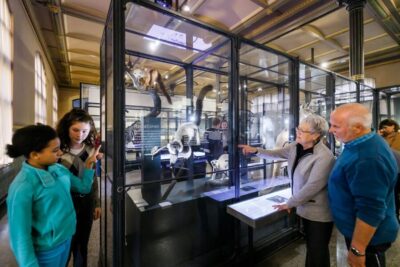
Browse the lists this tour appears in