
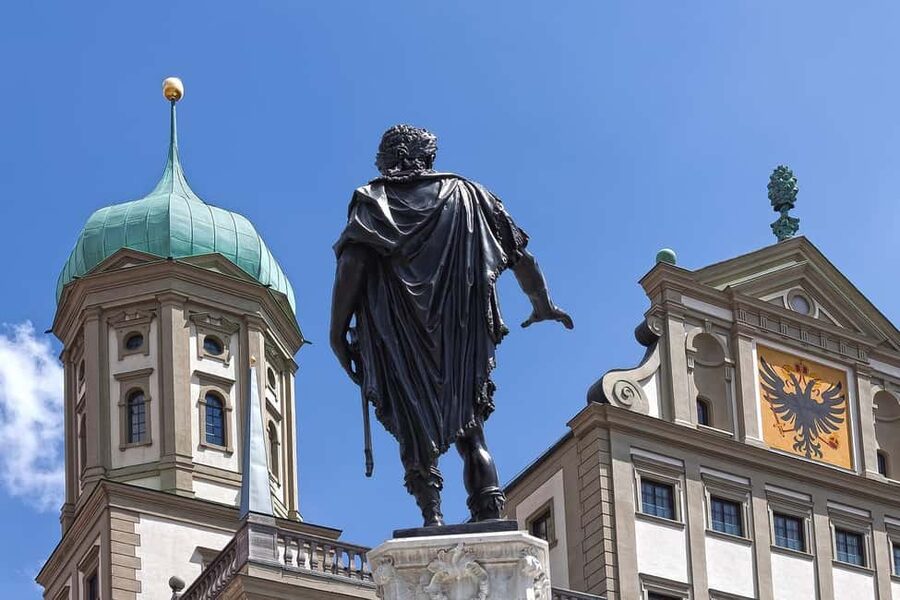
Reviewed · HISTORICAL TOURS
Historical Walking Tour of Augsburg
Augsburg’s story comes into focus quickly on this walk. In one compact route, you move from the grand Renaissance Town Hall to the canal-lined quarter called Little Venice, then on to the homes of Bertolt Brecht and Leopold Mozart. That mix gives you more than a parade of old buildings.
I like the clear route and the chance to understand the Fugger family’s role in European trade. I also like that the tour includes Augsburg Cathedral, including its 12th-century stained glass and detailed bronze door. The main drawback is practical: this is a walking tour with a moderate amount of walking, and it is not suitable for wheelchair users or people with mobility impairments.
Key points at a glance
- A compact Augsburg introduction: See the city’s main central sights in 2.5 hours, beginning and ending at Rathausplatz.
- Elias Holl’s Town Hall: Admire Augsburg’s great Renaissance building and hear about its famous Goldener Saal.
- The Fugger connection: Visit Fugger Square and learn how one of Europe’s most powerful merchant families shaped the city.
- A personal side of Augsburg: Stop at the birthplaces of playwright Bertolt Brecht and Leopold Mozart.
- Cathedral details: Look for Romanesque and Gothic features, 12th-century stained glass, and the bronze door.
- Straightforward planning: Meet at 11 a.m. under the yellow umbrella, with an English-speaking guide and no hotel pickup.
Starting at Augsburg’s Rathausplatz
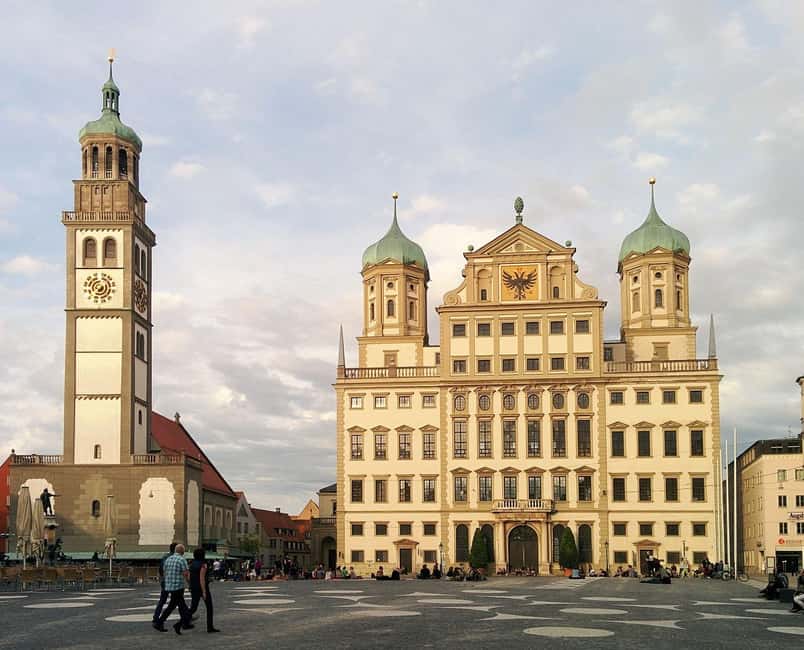
The tour begins at 11 a.m. in Rathausplatz, the natural civic center of Augsburg. Look for the yellow umbrella. This is a useful meeting point because the square puts you beside two of the city’s most recognizable sights, the Town Hall and Perlach Tower.
I like starting here because Augsburg’s history is easy to read from the square. The Town Hall presents the city at its wealthiest and most confident, while Perlach Tower hints at its older defensive past. Your guide, Mike, also referred to as Michael, leads the walk in English and can help place these buildings in the larger story of Augsburg.
The square is not just a place to gather before the tour. It gives you an immediate sense of the city’s scale. You are in the historic center, with important sights close enough to reach on foot. That makes this a good first activity if you have only a short time in Augsburg or want a useful orientation before exploring on your own.
The tour is scheduled for 2.5 hours, so you should expect a steady walk rather than a long stop at every building. Wear shoes you can walk in comfortably, bring water, and dress for the weather. The activity operates in weather other than rain or snow, so conditions still matter.
More Historical Tours across Germany
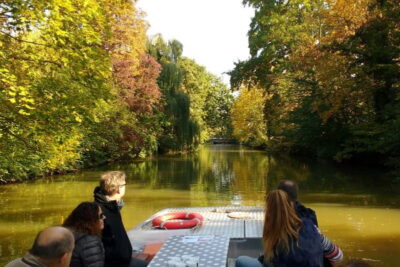
- Leipzig: City History Canal Sightseeing Tour on a Motorboat
★ 4.7 · 6,232 reviews - Berlin: Natural History Museum Entrance Ticket
★ 4.6 · 3,382 reviews - Leipzig: 1.5-Hour Historical Walking Tour in German
★ 4.7 · 2,217 reviews
Reading Augsburg through the Town Hall and Perlach Tower
Augsburg Town Hall is the visual centerpiece of the opening section. Designed by Elias Holl, it is presented as a major Renaissance work, and the famous Goldener Saal is one of its best-known features.
The tour lets you appreciate the building in context rather than treating it as a quick photo stop. Your guide can explain why this civic building matters to Augsburg’s story and how the city’s wealth shaped its public architecture. The focus is on history and interpretation, not only on taking a picture of the facade.
One detail to keep clear when booking is that the advertised access includes Augsburg Cathedral, not a separate admission to the Town Hall or Goldener Saal. You should expect to hear about these features and admire the building during the walk, but do not assume that a full interior visit to the Town Hall is included.
Perlach Tower sits nearby. This former watchtower adds a different note to the square, and the tour presents it as a place connected with panoramic views over the city. The information provided does not promise a tower climb, so treat the view as part of the tower’s character rather than as a guaranteed viewpoint visit.
This pairing works well. The Town Hall shows civic ambition, while the tower recalls Augsburg’s need to watch and protect its streets. In a few minutes, you get two different ways to read the city.
The Fuggers and Augsburg’s merchant power
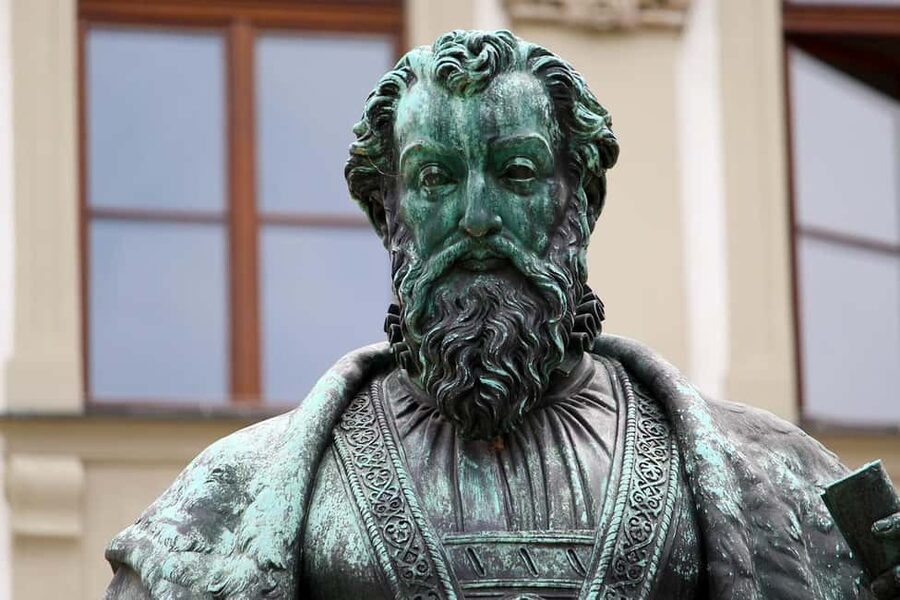
The route continues to Fugger Square, where the guide introduces the Fugger family. This is one of the most valuable parts of the tour for anyone who wants more than a list of monuments.
The Fuggers were among Europe’s most powerful merchant families. Their story gives Augsburg an international dimension. The city was not simply a provincial stop in Bavaria. Its merchants operated at a scale that affected finance, trade, and political life across Europe.
A guide can make this history easier to grasp by tying it to the streets and squares around you. At Fugger Square, you are not studying an abstract family tree. You are standing in a part of the city linked with the family’s public presence and influence.
I especially like this section because it explains why Augsburg contains such grand architecture and such a dense collection of historic sights. Wealth leaves marks on a city, and the Fugger story helps you see those marks.
The tour does not list entry to the Fuggerei as part of the activity. That matters because the Fuggers are also strongly associated with that famous social housing complex. The walk focuses on Fugger Square and the family’s place in Augsburg’s history, so you should not book it expecting a dedicated Fuggerei visit unless your guide confirms otherwise.
Little Venice and Augsburg’s waterways
After the merchant story, the route shifts tone in Little Venice. This picturesque district has canals that recall Venice, though the point here is not to compare the two cities too closely. It is a quieter, more visual stretch of the walk, with water and older buildings changing the feel of the route.
I like having this kind of stop in a history tour. After the formal Town Hall and the economic story of the Fuggers, the canals offer a more relaxed way to experience the old town. They also give you a different view of Augsburg’s physical character.
Bring your camera, since photography is allowed. The tour does not promise a long photography session, and the guide still needs to keep the group moving, but Little Venice should give you a welcome change from major monuments and formal squares.
The name may set up an expectation of a large canal district. The supplied details describe a picturesque area with charming canals, not a full-scale Venetian setting. Think of it as a scenic old-town section within the walking route, not a separate boat ride or an extensive waterfront excursion.
More Walking Tours across Germany
- Discover Berlin Half-Day Walking Tour
★ 5.0 · 9,624 reviews - Berlin: Third Reich and Cold War 2 Hour Walking Tour
★ 4.9 · 6,830 reviews - Munich: Third Reich & WWII Walking Tour
★ 4.6 · 6,181 reviews - Berlin: Discover Berlin Walking Tour
★ 4.9 · 5,998 reviews
Bertolt Brecht’s birthplace and Augsburg’s literary side
The next major stop is the Brechthaus, the birthplace of playwright Bertolt Brecht. The building now serves as a museum devoted to his life and work.
This stop gives the tour a strong cultural turn. Augsburg’s history is not limited to merchants, churches, and civic buildings. Brecht connects the city with modern European theater and literature, and his birthplace gives that story a personal setting.
The provided activity details identify the Brechthaus as a stop, but they do not promise a separate museum entry beyond the guided visit or specify how much time you spend inside. You should expect an introduction to the site and Brecht’s connection with Augsburg. If a full museum visit is important to you, ask the guide what is included on the day.
This is also a good point to notice the range of the tour. In one morning, you move from Renaissance civic power to merchant wealth, then to a major playwright’s early life. That variety keeps the route from feeling like a single-theme architecture walk.
Leopold Mozart Haus and the family behind the music
The Leopold Mozart Haus adds another personal story. Leopold Mozart, the father of Wolfgang Amadeus Mozart, was born in Augsburg, and the building now serves as a museum about the Mozart family’s musical history.
This stop is useful even if you are not a dedicated classical music fan. It connects Augsburg to a family whose name is known around the world, while keeping the focus on a specific place and a specific person. You are not just hearing that Mozart had a connection with the city. You are visiting the birthplace of his father.
As with the Brechthaus, the information supplied does not promise a full museum admission or a long interior visit. The tour includes the site as part of the walking route and explains its importance. If you want to study the exhibits at length, you may need to return independently.
I find this kind of stop valuable because it gives the old town a human scale. Grand buildings tell you about money and institutions. Birthplaces tell you about individuals, families, and the way a city’s past reaches beyond its walls.
Inside Augsburg Cathedral
The final major stop is Augsburg Cathedral, or the Dom. This is the strongest included interior visit on the route because access to the cathedral is specifically part of the activity.
The building combines Romanesque and Gothic elements, giving you a chance to see different periods within one church. Inside, look for the 12th-century stained glass and the detailed bronze door. These are the details worth slowing down for, even on a timed walking tour.
The cathedral provides a fitting close to the route. You have already seen civic power at the Town Hall and commercial power in the Fugger story. The Dom brings in Augsburg’s religious and artistic history.
I would keep your camera ready because photography is allowed, but be respectful inside the church. The tour information does not mention a service schedule or restrictions that might change access, so the exact experience inside may depend on what is happening at the cathedral that day.
The activity ends back at the original meeting point. That is convenient for planning lunch, another museum visit, or onward transport, since you do not have to find your way back from a distant neighborhood.
What the $20 price gets you
At $20 per person, this tour is priced as an affordable introduction to Augsburg. You are paying for a live English-speaking guide, a planned route through the historic center, interpretation at several important sites, and access to Augsburg Cathedral.
The value is strongest if you want structure. You could walk from Rathausplatz to many of these places on your own, but the tour connects them into a single story. The guide explains why the Town Hall, Fuggers, Brecht, Leopold Mozart, and the cathedral belong in the same picture.
The price does not include food, drinks, hotel pickup, or separately advertised museum admissions. That keeps the cost simple, but it also means you should budget for your own refreshments and any extra attractions you choose to visit afterward.
A 2.5-hour tour is long enough to give you a solid first look without taking the entire day. You will need to accept a moderate pace and limited time at individual stops. If you prefer to read every museum label or explore each interior slowly, use the tour as an introduction and return later.
The flexible booking terms help if your schedule is uncertain. You can cancel up to 24 hours in advance for a full refund, and the reserve-now, pay-later option lets you hold a place without paying immediately.
Who will get the most from this walk
I would recommend this experience to first-time visitors who want Augsburg’s main historical themes explained in plain language. It also suits anyone arriving for a short stay and hoping to see the central landmarks without building a route from scratch.
The mix of subjects makes it a good choice for couples, families with older children, and adults with different interests. One person can enjoy architecture, another can follow the Fugger story, and someone else can look forward to Brecht or Mozart.
It is less suitable if you want a museum-heavy outing. The route names the Brechthaus and Leopold Mozart Haus, but the supplied details do not confirm full admission to either museum. It is also not a good fit for wheelchair users or people with mobility impairments, and the moderate walking requirement should be taken seriously.
There is no hotel pickup. You need to reach Rathausplatz yourself by 11 a.m. That is easy to plan if you are staying near the center, but it matters if your accommodation is outside Augsburg or if you are arriving by train with tight timing.
Practical tips for a smoother morning
Wear comfortable shoes with good support. The route includes several historic areas, and the activity specifically warns that it involves a moderate amount of walking.
Bring water and weather-appropriate clothing. The tour runs in weather other than rain or snow, so a cool or cloudy morning does not automatically cancel the plan, but you should dress for the conditions.
Bring a camera. Photography is allowed, and the Town Hall, Perlach Tower, canals, historic houses, and cathedral all offer different subjects.
Plan your own food and drinks. Neither is included, and the tour ends back at Rathausplatz, giving you a practical place to continue your day afterward.
Finally, arrive with a little time to find the yellow umbrella. The meeting point is specific, but the guide needs to locate the group in a public square. Starting calmly is better than arriving at 11 a.m. and searching in a hurry.
Should you book the Augsburg walking tour?
Book it if you want an affordable, English-language introduction that connects Augsburg’s major sights into one readable story. The Fugger history, the Brecht and Mozart birthplaces, and the cathedral’s medieval details give the route more range than a basic old-town stroll.
You may want to skip it if you need step-free access, dislike walking for 2.5 hours, or want guaranteed extended visits inside several museums. For most visitors who want a clear first look at Augsburg, the $20 cost is sensible, especially with cathedral access, a guide, and a route that covers civic, commercial, literary, musical, and religious history in one morning.
FAQ
Where does the Augsburg walking tour start?
The tour starts at Rathausplatz Augsburg. Meet at 11 a.m. and look for the yellow umbrella.
Where does the tour end?
The activity ends back at the original meeting point in Rathausplatz.
How long does the tour last?
The walking tour lasts 2.5 hours.
What language is the tour in?
The live guided tour is conducted in English.
What is included in the price?
The price includes a guided walking tour of Augsburg’s historic landmarks and access to Augsburg Cathedral.
Is food or drink included?
No. Food and drinks are not included.
Is hotel pickup provided?
No. Hotel pickup is not included. You need to make your own way to Rathausplatz.
Can I visit Augsburg Cathedral during the tour?
Yes. Access to Augsburg Cathedral is included.
Is the tour suitable for wheelchair users?
No. The activity is not suitable for wheelchair users or people with mobility impairments.
What happens if it rains or snows?
The tour does not operate when it is raining or snowing. In other weather conditions, dress appropriately for the walk.
Just added in Germany
- Berchtesgaden: Via Ferrata Beginner Tour of Schützensteig★ 4.7 · 15 reviews
- Berlin: Energizing 2-Hour Morning Segway Tour★ 4.7 · 35 reviews
- Berlin: Thrilling E-Scooter Adventure Tour★ 4.4 · 66 reviews
- Bayreuth: German City Walking Tour (Tourist Info)★ 4.7 · 202 reviews
- Beelitz-Heilstätten: Baum&Zeit Tree Top Walk Entry Ticket★ 4.9 · 7 reviews
- Beer Bike & Party Bike: Unforgettable Berlin City Tour incl. pickup★ 5.0 · 5 reviews
- Bayreuth: Christmas city tour in German★ 4.9 · 12 reviews
- Bayreuth: Private Guided Walking Tour★ 5.0 · 15 reviews
Historical Tours, compared.
City History Canal Sightseeing Tour on a Motorboat
Read our review →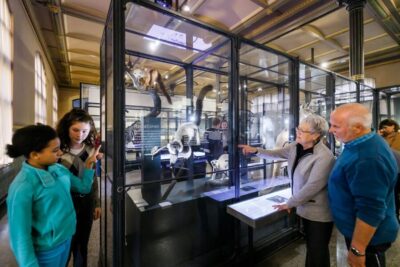
Browse the lists this tour appears in