
Reviewed · WALKING TOURS
Hanover: Guided Walking Tour of the Linden-Limmer District
The most interesting thing about this walk is the way Linden-Limmer changes character from stop to stop. A former royal garden, factory district, brutalist housing project, arts center, arthouse cinema, and pub-lined street all fit into one neighborhood story.
I like the contrast between courtly Hanover and working-class Linden, and I like that the tour goes beyond grand monuments to explain places locals actually use. The main consideration is language: the live tour is in German, and the two-hour route focuses on neighborhood context rather than Hanover’s famous center.
Key points to know
- Royal garden to workers’ quarter: See the former kitchen garden and preserved weavers’ houses while learning how factories changed Linden.
- A clear look at brutalism: The Ihme Center is presented as a disputed building that still interests many young people.
- Industrial heritage with a new purpose: The Faust cultural center occupies a former bed factory and now hosts concerts, exhibitions, and readings.
- Street-level local life: Nedderfeldstraße brings graffiti, pubs, and the Apollo cinema into the story.
- Limmerstraße at its liveliest: The final area is known for kiosks, cafés, restaurants, and the local custom of Limmern.
- Simple, flexible booking: The tour costs $17, lasts two hours, is conducted in German, and allows cancellation up to 24 hours before departure.
Why Linden-Limmer makes a better walk than a standard city tour

Hanover’s Linden-Limmer district is useful for travelers who want to see how a city grows in layers. The neighborhood did not remain a refined garden suburb. It moved from royal supply grounds to industrial center, then to a workers’ quarter, and later to a district with arts venues, cafés, nightlife, and contested modern architecture.
That change gives the walking tour its shape. You are not simply moving from one attractive building to another. You are following the forces that altered everyday life: royal planning, factory production, rail freight, annexation by Prussia, and the rise of local culture.
I find that approach more revealing than a quick list of dates. The guide can point out what remains from each period and explain why Linden looks the way it does today. You should expect a neighborhood tour with social and architectural context, not a parade of famous landmarks.
Other walks around Hanover:
- Hannover: Guided Old Town Walking Tour
★ 4.5 · 338 reviews - Hanover: Crime Walking Tour
★ 4.5 · 243 reviews - Hanover: Flashlight Guided Walking Tour at Night
★ 4.7 · 52 reviews
Starting at TAK and entering old Linden
The meeting point is TAK, Die Kabarett Bühne. Your guide will wait there wearing a Hannover Marketing & Tourismus GmbH card around the neck, which makes the meeting easier in a busy part of town.
From the start, pay attention to the change between formal Hanover and Linden’s more independent identity. The district’s story begins with the courtly period, when land here served the royal household, but it later became closely tied to industry and working people.
The route is only two hours, so the guide will need to keep a steady pace. That is a good length for a first look at the district, especially if you want time afterward to return to Limmerstraße or explore the area on your own. It is less suited to anyone hoping to enter every building or spend long periods inside museums.
The royal kitchen garden and the pavilion from 1749
One of the most useful stops is the former kitchen garden. It once supplied the royal family, so it offers a practical look at court life rather than only the polished public image of a royal residence.
The garden also helps explain the district’s later development. Land that served the court was not always open to ordinary urban use. After Hanover was annexed by Prussia in 1866, the royal kitchen garden area became available for other purposes. A freight station was built there, and a middle-class residential area grew around Lichtenbergplatz.
That single change links political history with city planning. A transfer of power affected where trains, homes, and industry could go. When you walk through the area, you can read the neighborhood as a record of that shift.
The kitchen garden pavilion dates from 1749 and was moved to Lindener Berg in 1913. Its survival gives you a tangible connection to the courtly period. It is a small detail with a large effect: instead of hearing only that the land once served the royal household, you can see a surviving piece of that era.
Weberstraße and the preserved weavers’ houses
The buildings at Weberstraße 20 and 21 preserve another side of Linden’s past. These weavers’ houses are a reminder that work and home were closely linked in the older district.
Their value is not just their age. They show the scale of ordinary housing before Linden was reshaped by large factories and expanding industry. In a neighborhood later associated with workers and heavy production, these houses make the earlier pattern easier to picture.
I like stops such as this because they keep the story from becoming too grand. Royal gardens and industrial firms can dominate a city narrative, but a pair of modest houses brings the focus back to the people who lived and worked here.
The tour also introduces Johann Egestorff and the beginning of factory development. From there, Linden’s direction changed quickly. Machine and textile production helped turn what had been called the most beautiful village in the Kingdom of Hanover into a strongly industrial workers’ quarter.
A few more things to do in Hanover worth a look
- Hanover: Royal Gardens of Herrenhausen Guided Tour
★ 4.6 · 78 reviews - Hannover: Guided Bike Tour for Foodies with Tastings
★ 4.8 · 64 reviews - Hannover: New Town Hall exclusive Guided Walking Tour
★ 4.6 · 49 reviews - Hannover: Private pub crawl with insider-guide & free shots
★ 4.0 · 11 reviews
From Johann Egestorff to an industrial district
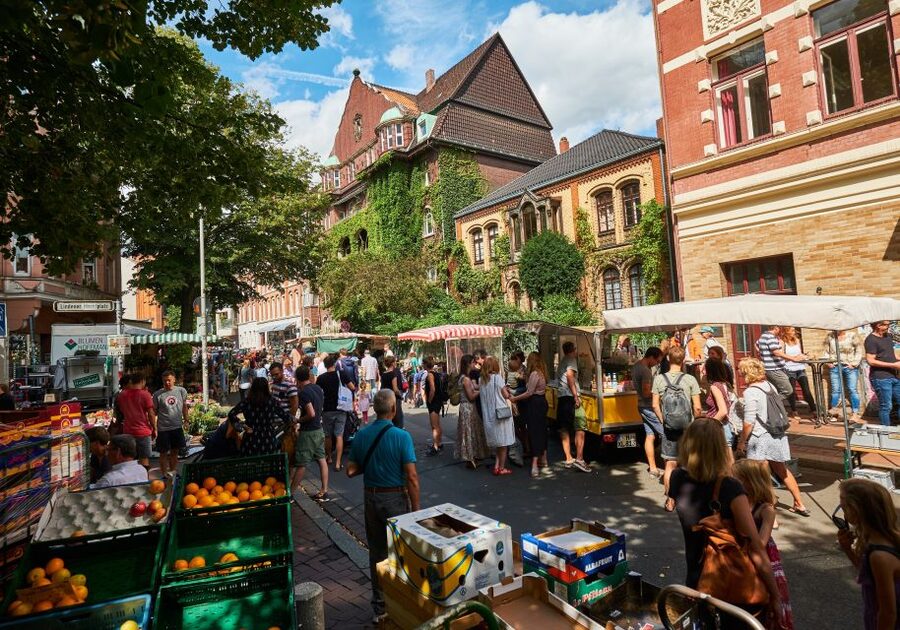
The industrial story is central to the tour. Johann Egestorff is connected with the beginning of factory development in Linden, and his role helps explain why the district became more than a village beside Hanover.
The shift to machine and textile industry affected the whole character of the area. Workplaces grew, the population changed, and housing had to serve factory workers. The district’s identity became practical and industrial rather than courtly or rural.
You may find this part especially useful if you have already seen Hanover’s grand center and want to understand the city beyond its official monuments. Linden tells a different story, one shaped by production, transport, and local communities.
The tour does not present industrial growth as a simple success story. It shows the physical and social result: a neighborhood that developed into a workers’ quarter. That gives the walk a grounded tone and helps explain why Linden still has such a strong identity within Hanover.
The Ihme Center and Hanover’s brutalist argument
The Ihme Center is probably the tour’s most divisive stop. Many Hanover residents see it as an eyesore, while many young people are strongly interested in its brutalist design.
That disagreement is useful. Instead of being told what you should admire, you are given a building that raises a real question: can a structure disliked by many residents still have architectural value?
Brutalism often uses heavy forms, exposed concrete, and a powerful block-like scale. The Ihme Center gives the guide a chance to explain how that approach affects a neighborhood and why it attracts a younger audience today.
Do not expect a universally pretty photo stop. The appeal is the discussion. If you enjoy urban design, disputed buildings, and the way cities reassess older architecture, this may be one of the strongest moments on the walk. If you prefer historic façades and decorative detail, it may be the least attractive stop.
Faust cultural center in the former bed factory
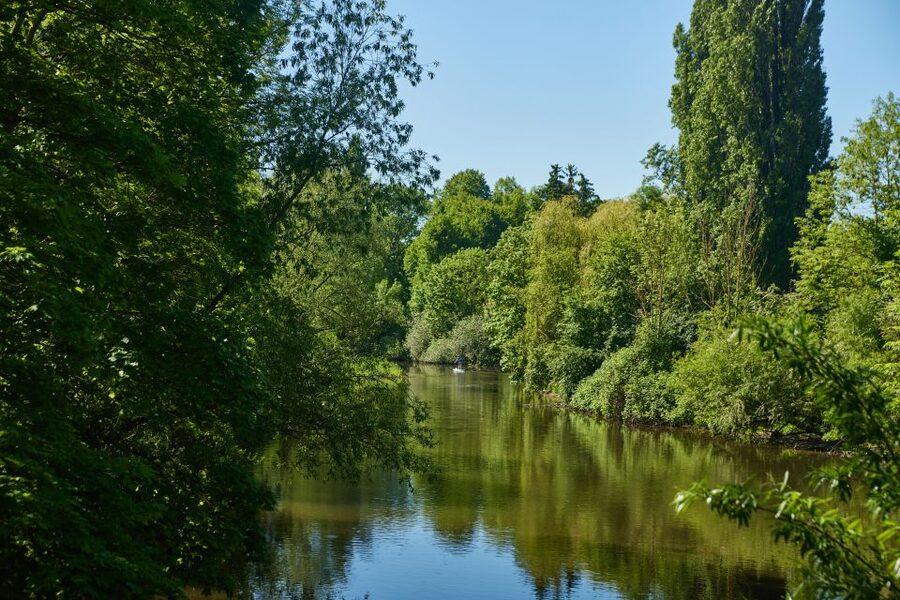
The Faust cultural center occupies the former Werner & Ehlers bed factory. This is a fine example of industrial space receiving a new public purpose.
Today, the site is used for concerts, exhibitions, readings, and other cultural events. The important point is not simply that an old factory survives. Its current use keeps the building connected to the life of the district.
You get a clear sense of how Linden’s industrial past has been reused rather than erased. A place once tied to manufacturing now supports music, art, and public gatherings. That transition mirrors the wider district, where old working spaces share the neighborhood with cafés, nightlife, and creative venues.
The tour may explain the former factory in more detail, but the supplied information does not promise admission to an event or interior access. Think of Faust as an architectural and cultural stop on a walking route, not as a scheduled concert visit.
Nedderfeldstraße, graffiti, pubs, and the Apollo cinema
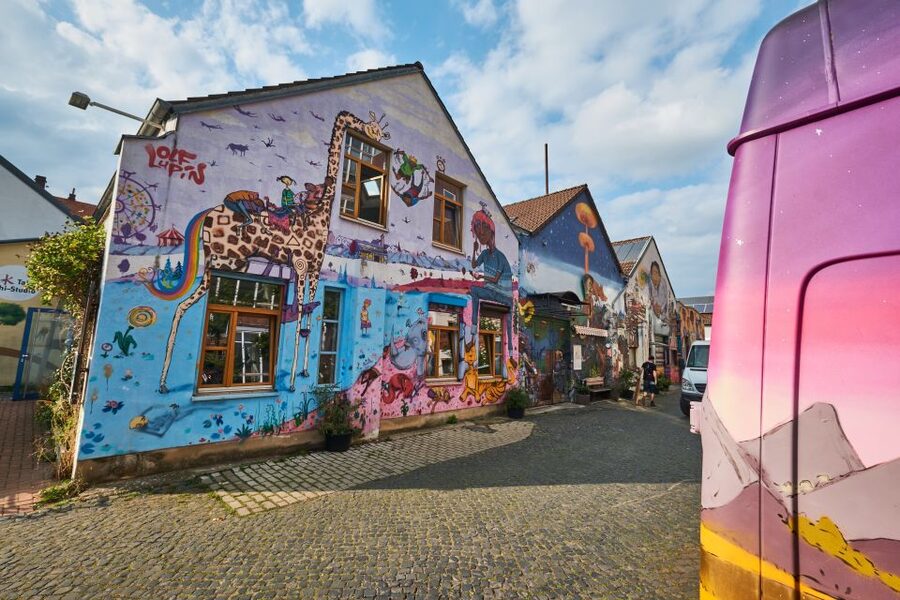
Nedderfeldstraße shifts the mood again. Here, you can see graffiti art and find numerous pubs. It is a more informal part of the walk, showing how local culture appears in public space and everyday nightlife.
The nearby Apollo cinema adds another layer. The guide discusses its place among the first arthouse cinemas in Germany, giving you a small but distinctive piece of cultural history.
This stop is especially good for readers who prefer neighborhood character to polished sightseeing. Graffiti and pubs do not need much explanation to feel immediate, but the guide adds context by connecting them with the cinema and the district’s wider cultural life.
The tour does not promise time for a film, drinks, or a full pub visit. You will be looking at the area as part of the walk. If you like the atmosphere, mark it as a place to return later, since the two-hour schedule will keep you moving.
Limmerstraße and the local meaning of Limmern

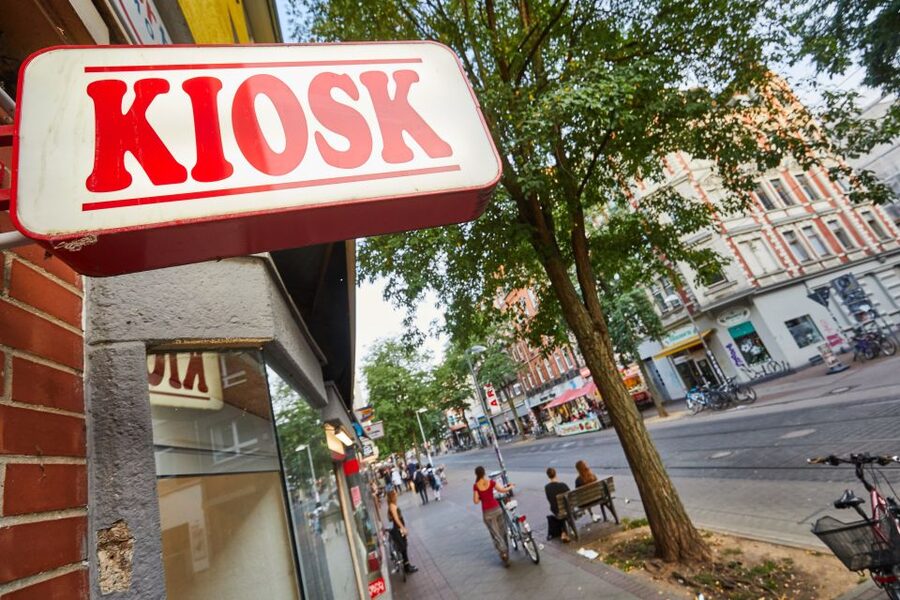
Limmerstraße is the most social part of the route. It has a high concentration of kiosks, restaurants, and cafés, and it is closely associated with Limmern, the local habit of spending time along the street.
This is where the district’s history meets present-day routine. The former workers’ quarter is not presented only as an industrial relic. It is also a place where people eat, meet, stop for a drink, and move through daily life.
For you, Limmerstraße can serve as the practical end of the tour. You can use the information from the walk to decide where to return for food or a café stop. The tour itself does not include meals or drinks, so budget separately if you plan to stay in the area afterward.
I like ending here because it avoids a museum-style finish. After hearing about royal gardens, factories, freight rail, and modern architecture, you reach the street where the neighborhood’s current personality is easiest to see.
What $17 gets you
At $17 per person, this is a strong-value tour if you want local context and prefer walking to a formal museum visit. The fee covers a two-hour guided tour, and the route brings together several periods of Linden’s development.
You are paying for interpretation rather than admission tickets. There is no stated entry to a concert, exhibition, cinema screening, or other paid attraction. The value depends on how much you want a guide to connect the stops.
I would choose this tour early in a Hanover stay if Linden-Limmer is new to you. It can give you enough background to return to the district independently. If you already know the area well, the price may be harder to justify unless you want a focused history and architecture walk.
The booking terms also reduce the risk. You can reserve now and pay later, and you can cancel up to 24 hours in advance for a full refund. Those options are useful if your Hanover plans are still shifting.
Language, access, and the pace of the walk
The live guide speaks German. That is the most important practical point. If you do not understand German, you should not book this expecting an English presentation.
The experience is listed as wheelchair accessible. That is encouraging, though the available information does not describe the exact pavement, slopes, or restroom arrangements. If you need detailed route information, ask before booking rather than assuming every section will feel equally easy.
The duration is two hours. That gives the guide time to cover the district’s main themes without turning the outing into a full-day commitment. Wear comfortable shoes and leave room in your schedule if you want to continue along Limmerstraße afterward.
The group can feel small and relaxed, based on the tone of the available booking feedback. Group size is not specified as a fixed number, so I would treat that atmosphere as possible rather than guaranteed.
Who should book this Linden-Limmer walk
I would recommend it to you if you enjoy:
- Neighborhood history rather than only major sights
- Architecture that invites debate
- Industrial buildings with new cultural uses
- Social history tied to factories, housing, and transport
- German-language tours
- Walking routes that end near cafés, restaurants, and pubs
It is also a good choice for repeat visitors to Hanover. Once you have seen the main central sights, Linden-Limmer gives you a more local view of the city.
I would hesitate if you want a tour in English, if you dislike discussing modern buildings, or if you are looking for royal interiors and formal monuments. The tour includes a royal garden, but it is not a palace tour. Its main subject is change.
The strongest praise attached to the experience centers on a pleasant, relaxed small-group feel and an interesting explanation of the district and its well-known local connections. That matches the tour’s design: it is meant to make a neighborhood readable, not simply to rush you past photo stops.
Should you book it?
Book this walk if you want to understand why Linden-Limmer feels different from Hanover’s historic center. For $17, you get a focused route through royal, industrial, brutalist, and cultural history, ending on one of the city’s liveliest local streets.
The deciding question is German ability. If you can follow a German-speaking guide and enjoy urban history, the tour offers good value and a useful introduction to a district you might otherwise see only from the outside. If you need English, choose another experience. If you want a closer look at how Hanover’s people, buildings, and public spaces have changed, this is a smart two-hour choice.
FAQ
Where does the Linden-Limmer walking tour meet?
The meeting point is TAK, Die Kabarett Bühne. The guide will wear a Hannover Marketing & Tourismus GmbH card around the neck.
How long does the tour last?
The guided walk lasts two hours.
What language is the tour conducted in?
The live tour guide speaks German.
How much does the experience cost?
The listed price is $17 per person.
Is the walking tour wheelchair accessible?
Yes, the activity is listed as wheelchair accessible.
Can I cancel the booking?
Yes. You can cancel up to 24 hours in advance for a full refund.
Can I reserve the tour and pay later?
Yes. The reserve-now, pay-later option lets you book without paying at the time of reservation.
What places are included on the route?
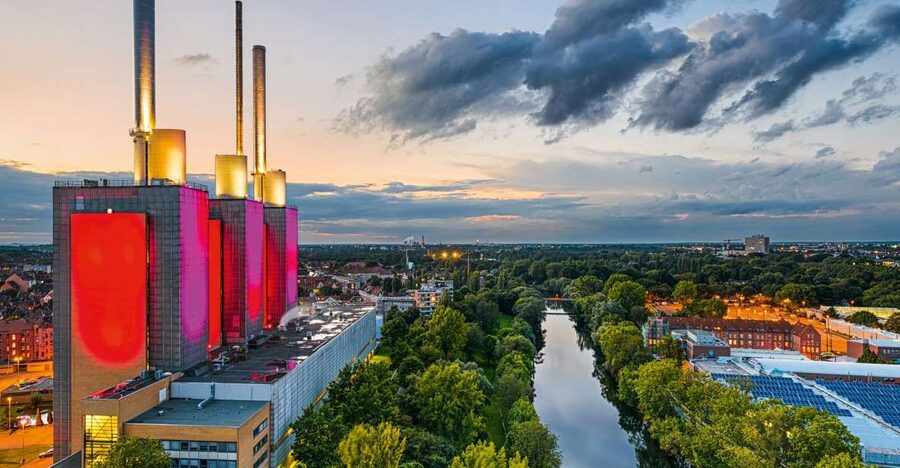
The route includes Küchengarten, the Ihme Center, Hanover’s combined heat and power plant, the Faust cultural center, and Limmerstraße. It also covers the weavers’ houses on Weberstraße, Nedderfeldstraße, and the Apollo cinema.
Who provides the tour?
The experience is provided by Hannover Marketing & Tourismus GmbH.
Just added in Hanover
- Hanover: Night tour with night watchman Melchior★ 4.4 · 72 reviews
- Hanover Center: Outdoor Escape Game★ 4.7 · 13 reviews
- Hanover: Old Town Historical Walking Tour by Geo Epoche★ 4.4 · 11 reviews
- Hanover: Royal Gardens of Herrenhausen Guided Tour★ 4.6 · 78 reviews
- Hanover: Linden-Limmer Krimi-Rätsel-Tour★ 4.5 · 15 reviews
- Hanover: Crime Tour by Bike★ 4.8 · 25 reviews
- Hanover: Flashlight Guided Walking Tour at Night★ 4.7 · 52 reviews
- Hannover: Private pub crawl with insider-guide & free shots★ 4.0 · 11 reviews
Walking Tours, compared.


Third Reich Berlin: Hitler and WWII Walking Tour
Read our review →
Browse the lists this tour appears in