
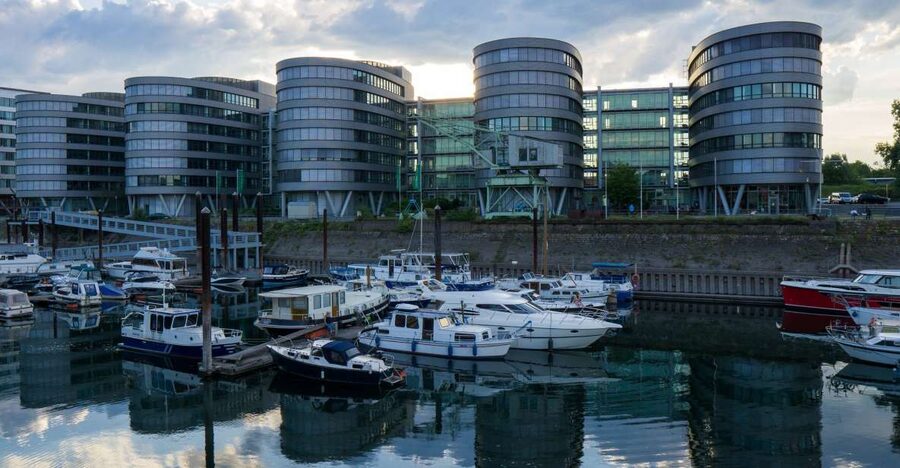
Reviewed · HARBOUR & ELBE CRUISES
Duisburg: Guided Walking Tour through the inner harbour
Duisburg’s inner harbour is a sharp lesson in how a working port can find a new life. Grain freighters once filled these waters, but today yachts, restaurants, museums, and offices occupy the old industrial district. The story is not just about pretty waterfront views. It is about the hard choices behind urban change.
I like the tour’s clear focus on the harbour’s transformation, and I like its modest $16 price for a 90-minute walk. The main consideration is language: the live guide speaks German, so this is best for German speakers or visitors comfortable following a German tour.
- The former bread basket of the Ruhr: Learn how grain handling shaped Duisburg’s inner harbour.
- Norman Foster’s redevelopment plan: See how a mid-1990s vision changed the district.
- Five Boats and the marina: Take in some of the area’s most recognizable modern sights.
- Old meets new: Compare nostalgic warehouse rows with modern office buildings.
- Waterfront atmosphere: Restaurants, yachts, and events now replace much of the old port activity.
- Easy 90-minute format: The walk fits neatly before or after a museum visit or meal.
From grain port to waterfront district
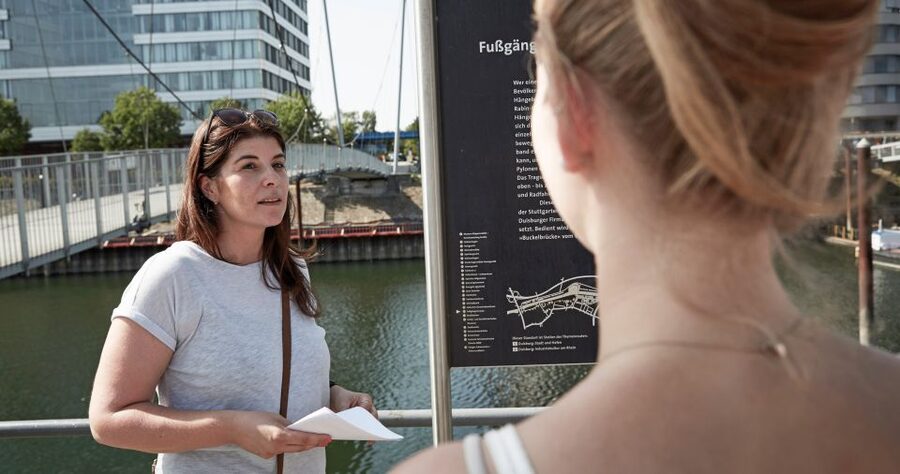
The inner harbour was once known as the bread basket of the Ruhr area. That name reflects its former role: huge quantities of grain moved through the port, feeding the industrial region around Duisburg.
That business declined, and the grain mills began to disappear at the end of the 1960s. Once the mills lost their purpose, the harbour faced a serious problem. Old docks and warehouses can look atmospheric, but atmosphere alone does not keep a district alive.
The tour uses this economic shift as its main story. You are not simply walking past buildings and taking photos. You are seeing the physical result of a city trying to replace a fading industrial purpose with offices, culture, dining, and leisure.
For me, this makes the harbour more interesting than a standard architecture walk. The modern buildings make better sense once you understand what came before them. The yachts are not just decorative. They signal a complete change in how the water is used.
Meeting at the Mercator Fountain
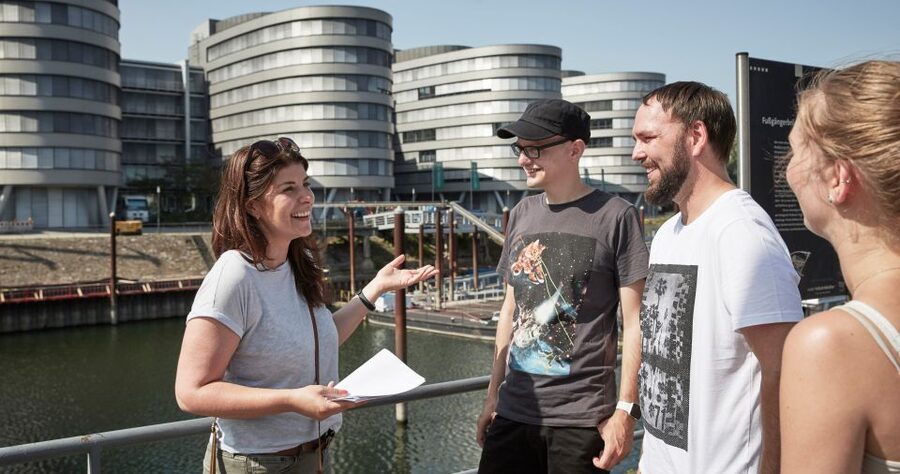
The tour begins in front of the Mercator Fountain, outside Duisburg Town Hall. This central meeting point gives you a simple place to find your guide before the walk begins.
The fountain is linked to Gerardus Mercator, the famous mapmaker associated with Duisburg. The tour information identifies the fountain as the meeting point, but it does not name individual guides, so you should look for the local guide waiting there at the scheduled start time.
The starting point also gives the walk a useful city-center connection. You begin near the civic heart of Duisburg, then move toward the harbour district and its very different character. That change from town hall surroundings to waterfront redevelopment helps frame the larger story.
Arrive ready to walk outdoors. The tour lasts 1.5 hours, and it takes place even when it rains. A waterproof jacket and sensible shoes are practical choices, especially because the experience remains an outdoor walk rather than a museum visit.
More Harbour & Elbe Cruises across Germany
- Hamburg: 1.5-Hour Harbor and Speicherstadt Day Cruise
★ 4.6 · 14,200 reviews - Hamburg: 90-Minute Evening Lights Harbor Cruise
★ 4.5 · 7,728 reviews - Hamburg: Elbphilharmonie Plaza Guided Tour
★ 4.7 · 5,882 reviews
Reading the harbour’s industrial past
As you move through the inner harbour, the guide explains how the port worked when grain handling drove the local economy. The old harbour was a place of loading, unloading, storage, and processing. Its value came from work, not leisure.
That background matters because the current setting can feel surprisingly relaxed. Yachts sit at anchor where working freighters once operated. Restaurants face the water. Office buildings bring a weekday business presence to a district that previously depended on mills and port traffic.
I like this contrast because it gives the walk some substance. You can look at a pleasant marina while also considering what had to disappear before that marina could exist. The tour presents redevelopment as a practical response to economic decline, not simply as a design project.
The exact number of stops is not specified, so you should expect a guided walk through the district rather than a fixed series of formal attractions. The value comes from the guide’s explanation of what you are seeing and how the pieces fit together.
The Five Boats and the new architecture
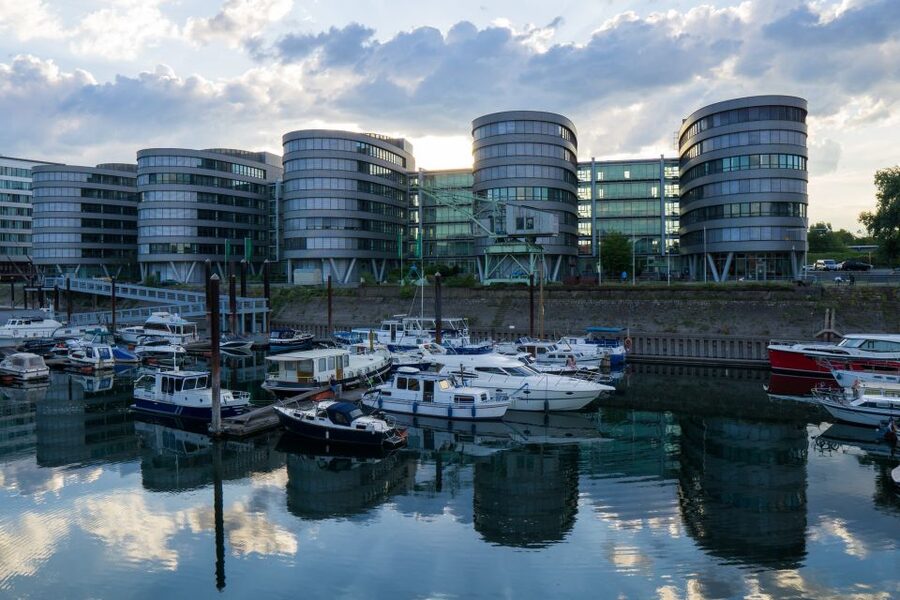
One of the tour’s named sights is the Five Boats, a group of modern buildings that has become part of the harbour’s new identity. Their contemporary design makes a strong contrast with the older warehouse structures nearby.
You will also see other modern architecture as the route passes through the district. The point is not only to admire unusual shapes. The buildings show how Duisburg used new construction to attract offices and new activity to a former industrial zone.
This is where the tour works best for visitors who enjoy cities as living places rather than preserved museum pieces. The inner harbour is still changing and being used. It is not a frozen monument to the past.
At the same time, architecture fans should keep expectations measured. This is a 90-minute walking tour with a broad urban-planning focus, not a specialist design lecture. You will learn why the new buildings matter, but the available information does not promise detailed architectural analysis of every structure.
Norman Foster’s plan and structural change
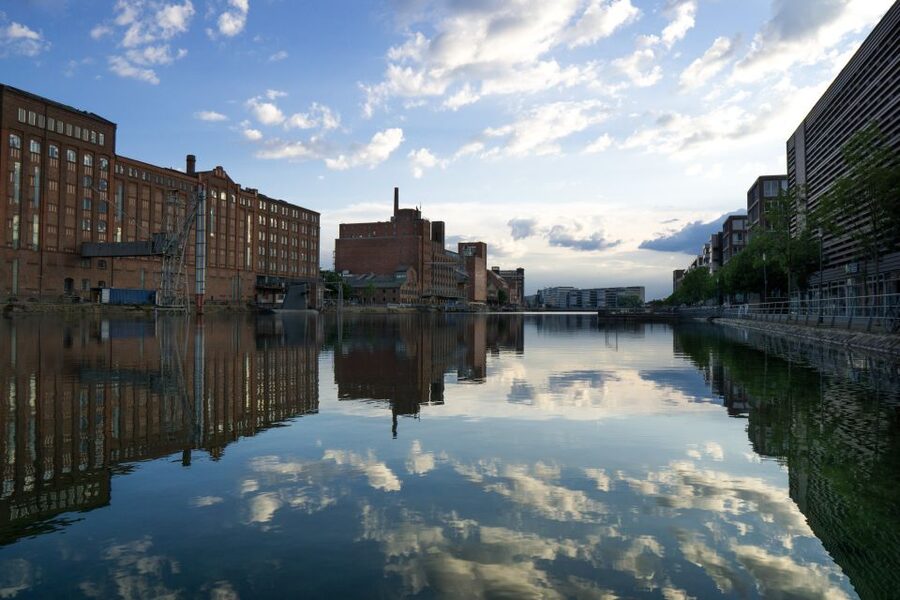
A central part of the walk is the plan by British star architect Sir Norman Foster. His work helped shape the inner harbour from the mid-1990s, when Duisburg needed a new direction for this declining area.
The guide explains how that plan changed the relationship between the city and the water. Former work areas gained new uses, and old warehouse rows were brought into a district with offices, cultural sites, restaurants, and public activity.
This is the most useful idea to carry away from the tour: structural change is visible in bricks, water, and street plans. You do not need a background in architecture or economics to understand the basic story. The old port function faded, and the city built a different reason for people to come here.
I also appreciate that the tour links the harbour to a wider Ruhr area issue. Duisburg is not presented as an isolated waterfront project. Its history reflects the wider shift away from some traditional industrial activities and toward offices, culture, dining, and leisure.
More Walking Tours across Germany
- Discover Berlin Half-Day Walking Tour
★ 5.0 · 9,624 reviews - Berlin: Third Reich and Cold War 2 Hour Walking Tour
★ 4.9 · 6,830 reviews - Munich: Third Reich & WWII Walking Tour
★ 4.6 · 6,181 reviews - Berlin: Discover Berlin Walking Tour
★ 4.9 · 5,998 reviews
Marina views and a Mediterranean feel
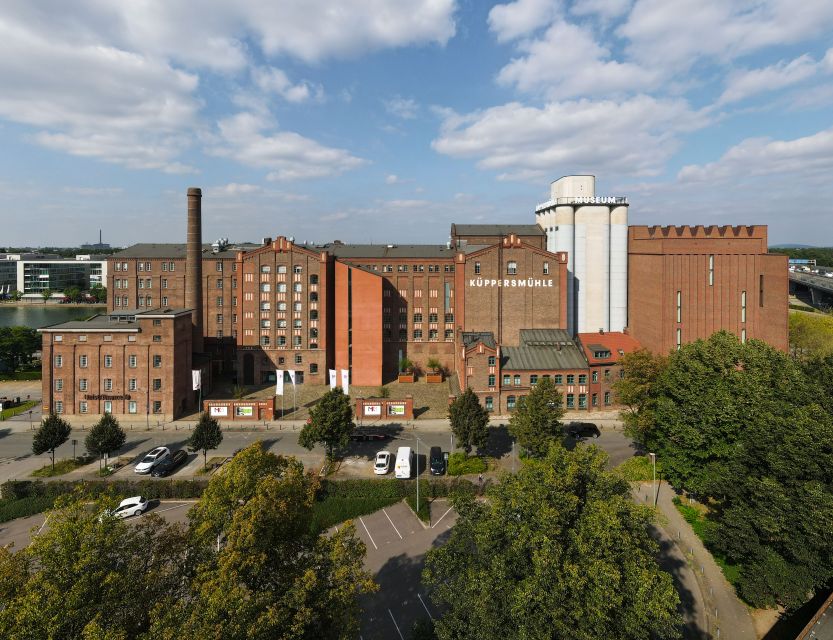
The marina is one of the places where the harbour’s new mood becomes easiest to read. Instead of freighters and grain equipment, you see yachts resting at anchor. The water gives the district a calmer feel than its former industrial role suggests.
Waterfront restaurants add to that change. You can finish the walk with a meal or a drink beside the harbour, although the tour price does not include food or refreshments. The setting is especially useful if you want to slow down after the walk rather than rush directly to another sight.
The tour description compares the area’s atmosphere to the Mediterranean. I would treat that as a mood, not a literal comparison. Duisburg remains a northern German city, and the appeal comes from the combination of water, boats, outdoor seating, and converted industrial buildings.
Weather can affect this part of the experience. The walk operates in rain, so the marina will not feel equally inviting on every day. Still, the rain policy means a poor forecast does not automatically cancel your plans. Bring rain protection and accept that the waterfront may look more practical than picturesque in wet weather.
Museums beside the water
The inner harbour gives you two useful museum options before or after the tour. The Küppersmühle Museum of Modern Art is particularly worth considering if you want to continue with modern design and contemporary culture.
The Cultural and Urban History Museum offers a different angle. It can help place Duisburg’s city story in a wider setting, while the walking tour concentrates on the inner harbour and its redevelopment.
Neither museum is included in the $16 walking tour. That is not a weakness, but you should plan them as separate visits and check their opening arrangements before building your day around them. The tour itself provides outdoor context, while the museums offer indoor time and more focused exhibits.
I like this pairing because it lets you shape the day around your interests. Choose the modern art museum if the new architecture catches your eye. Choose the cultural and urban history museum if you want more city background. Or skip both and use the harbour restaurants for a relaxed finish.
What the $16 price really gives you
At $16 per person, the tour is priced as an affordable introduction to the inner harbour. The fee covers the 1.5-hour guided walk, not museum admission, meals, or other activities.
The value depends largely on how much context you want. You can walk around the harbour on your own and see the marina, buildings, and restaurants. What you cannot easily pick up without a guide is the story connecting the grain port, the loss of the mills, Norman Foster’s plan, and the district’s current role.
That makes the price reasonable for visitors who want more than a quick waterfront stroll. A guide can help you notice the difference between old warehouse rows and newer office complexes, and explain why the harbour looks the way it does.
The rating of 4.3 from six reviews suggests a generally positive response, though the sample is small. The strongest praise centers on the informative and humorous nature of the tour, along with good value. One German participant still enjoyed the walk despite poor weather, which is useful evidence for anyone visiting on a rainy day.
Who will enjoy this walk most
I would recommend this tour to people who like urban history, industrial change, architecture, and waterfront districts. It also suits anyone who wants a short, organized introduction before exploring Duisburg independently.
German speakers will get the most from it because the live tour is in German. If you understand only a little German, the buildings and setting may still interest you, but much of the value lies in the spoken explanation.
The tour is also a practical choice for a mixed-interest group. One person can focus on architecture, another on port history, and another on restaurants and museums. The 90-minute length is short enough to fit into a larger Duisburg visit.
Because the walk is wheelchair accessible, it can work for visitors who need an accessible route. The provided information does not describe the exact surface conditions or restroom arrangements, so you may want to confirm those details when booking if they are important for your day.
A simple way to plan your visit
Start at the Mercator Fountain in front of the town hall. Keep the meeting point clear in your schedule, then allow 90 minutes for the guided walk.
Afterward, choose the part of the harbour that suits your mood. Visit the Küppersmühle Museum of Modern Art, explore the Cultural and Urban History Museum, or sit at one of the waterfront restaurants and watch the marina.
If rain is forecast, do not assume the tour will be called off. It operates in wet weather, so wear suitable clothing and shoes. You can also use the museums as a useful indoor follow-up, subject to their own opening arrangements.
The tour is offered with reserve-now, pay-later booking, and cancellation is free up to 24 hours before the start for a full refund. Those terms help if your Duisburg plans are still shifting.
Should you book the Duisburg inner harbour tour?
Book it if you want the story behind the waterfront, not just a look at the boats. The tour’s best features are its clear focus on industrial change, its connection to Norman Foster’s redevelopment plan, and its low price for a guided 90-minute walk.
Skip it if you need an English-speaking guide, want a long architecture lecture, or prefer to explore indoors. For German-speaking visitors, especially those interested in how cities reuse former industrial areas, this is a practical and fairly priced way to understand one of Duisburg’s most changed districts.
FAQ
Where does the Duisburg inner harbour tour begin?
The guide waits in front of the Mercator Fountain, outside Duisburg Town Hall.
How long does the tour last?
The guided walk lasts 1.5 hours.
What language is the tour in?
The live guide speaks German.
How much does the tour cost?
The listed price is $16 per person.
What will I see during the walk?
You will see the inner harbour, the Five Boats, the marina, modern buildings, museums, restaurants, old warehouse rows, and office complexes.
Does the tour explain the harbour’s industrial past?
Yes. The guide explains how the harbour was once a major grain-handling center known as the bread basket of the Ruhr area.
Does the tour cover Norman Foster’s redevelopment plan?
Yes. The walk explains how Sir Norman Foster’s plan helped change the inner harbour from the mid-1990s.
Is the tour wheelchair accessible?
Yes, the activity is listed as wheelchair accessible.
Does the tour operate in rainy weather?
Yes. The tour takes place even when it is raining.
Can I cancel the booking?
You can cancel up to 24 hours in advance for a full refund. The booking also offers a reserve-now, pay-later option.
Just added in Germany
- Private One way Airport Transfer Berlin Airport To Berlin★ 3.5 · 17 reviews
- Private Walking Tour: Berlin Wall, Cold War and Checkpoint Charlie★ 5.0 · 37 reviews
- Modern Berlin Private Walking Tour: Diverse, Vibrant and Exciting German Capital★ 5.0 · 13 reviews
- Private Day Trip to Potsdam from Berlin by Train★ 4.5 · 27 reviews
- City Explorer: Potsdam Private Day Trip★ 4.5 · 10 reviews
- Berlin Private Custom 5-Hour Tour by Car★ 5.0 · 30 reviews
- Private Half-Day Sightseeing Tour in Berlin★ 3.5 · 6 reviews
- Berlin Private Custom Tour in a Minivan, East and West★ 5.0 · 123 reviews
Harbour & Elbe Cruises, compared.
1.5-Hour Harbor and Speicherstadt Day Cruise
Read our review →
1-Hour Harbor Sightseeing Cruise with HafenCity
Read our review →
Elbphilharmonie Plaza, Highlights & Surroundings
Read our review →
Elbphilharmonie Plaza and HafenCity Food Tour
Read our review →
Browse the lists this tour appears in