
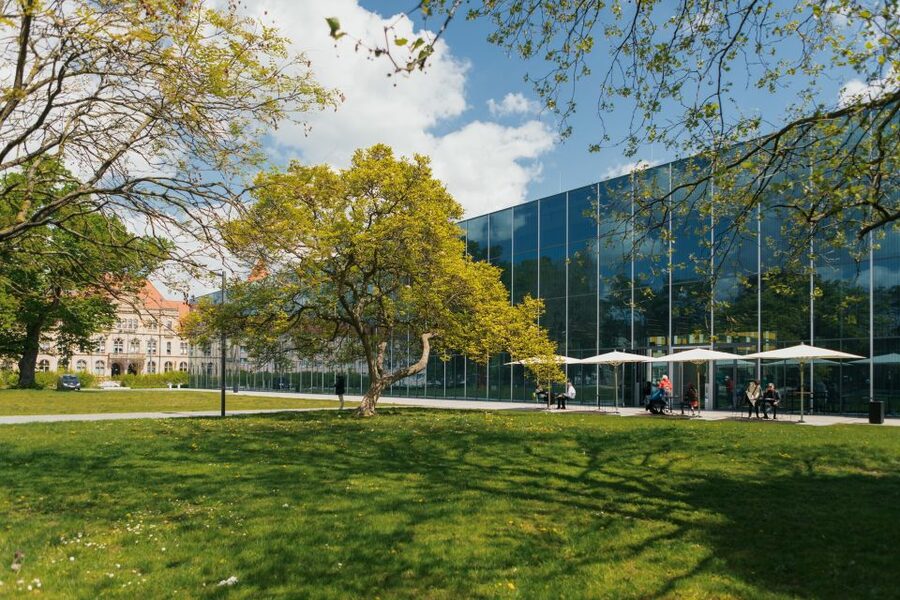
Reviewed · HISTORICAL TOURS
Dessau: Guided Walking Tour through History
Dessau’s story is far bigger than its Bauhaus reputation. In 90 minutes, this walking tour connects the city’s princely past with Walter Gropius, Wassily Kandinsky, Hugo Junkers, Kurt Weill, Moses Mendelssohn, and the Basic Law. I like the way it puts art, politics, industry, and everyday city life on the same route.
I also like the small anecdotes, which give the walk a human scale, and the chance to see Dessau through local eyes rather than only through its best-known modernist buildings. The main consideration is language: the live tour is in German, and the walk goes ahead rain or shine.
Key points at a glance
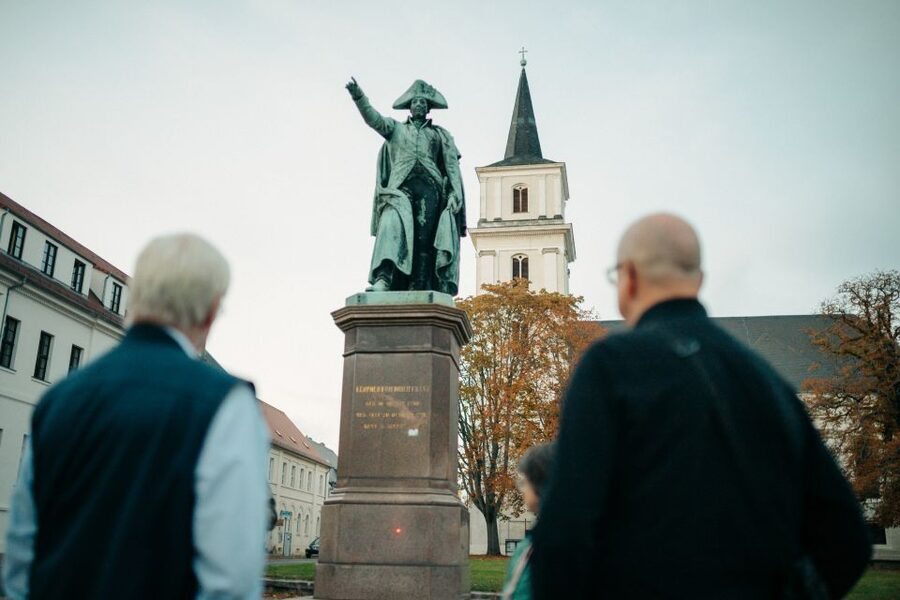
- Eight centuries in 90 minutes: Follow Dessau’s changing story from princely rule to modern design and industry.
- Bauhaus with context: Learn why the famous school came to Dessau and how it fits into the city’s wider past.
- A surprising Basic Law connection: Hear why Dessau has a place in the story of Germany’s constitutional order.
- Local anecdotes matter: The guide adds the small stories that help central streets and public spaces feel more personal.
- A $13 city introduction: The modest price makes this a sensible first activity before exploring Dessau on your own.
- German-speaking and wheelchair accessible: Check the start time, show your voucher at the ticket counter, and dress for the forecast.
Dessau is more than Bauhaus
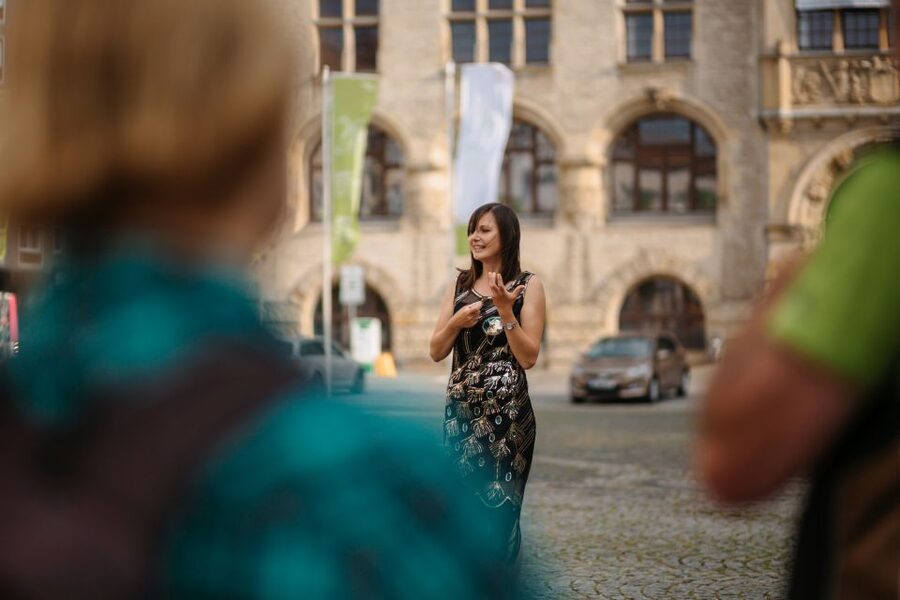
Many people arrive in Dessau because of Bauhaus. That is a good reason to come, but it is only one chapter in the city’s story.
This tour gives you a broader frame. You will hear how Bauhaus came to Dessau, then place that development beside the city’s older political, cultural, and industrial connections. The result is not a single-theme architecture walk. It is a city tour that uses buildings, streets, and public spaces to explain how Dessau changed over roughly 800 years.
I find that approach useful because Bauhaus can seem detached from its setting. The clean lines and famous names are easy to admire, but harder to understand without knowing what came before. This walk helps connect modern design to the city that received it.
The tone also appears to be local and story-led. The most praised part of the experience is the collection of smaller anecdotes. One local participant even learned new things about their own city, which tells you something important: this is not only a basic introduction for first-time visitors. It can also add details that residents and repeat visitors have missed.
More Historical Tours across Germany
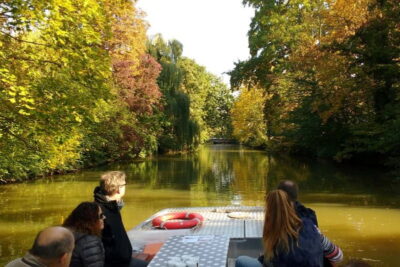
- Leipzig: City History Canal Sightseeing Tour on a Motorboat
★ 4.7 · 6,232 reviews - Berlin: Natural History Museum Entrance Ticket
★ 4.6 · 3,382 reviews - Leipzig: 1.5-Hour Historical Walking Tour in German
★ 4.7 · 2,217 reviews
From princes to reformers: the older Dessau
The tour brings several earlier figures into the same picture, including Prince Leopold III Friedrich Franz and Friedrich Wilhelm Erdmannsdorff. Their names point to a period when Dessau was shaped by court culture, planning, and ideas about how a city should be organized.
You should not expect a specialist lecture on every historical figure. The value is in seeing how older decisions still influence the city center and its public spaces. As you walk, the guide gives those places a voice, linking the physical city with the people who shaped it.
This part should suit you if you enjoy history that begins with streets rather than dates alone. You may hear why a particular space matters, what role it played, or how a person connected with Dessau’s development. The tour’s stated aim is to let figures from different periods speak, so the city becomes a series of contrasts rather than one smooth timeline.
That variety is one of the walk’s strengths. Dessau is not presented as only aristocratic, only industrial, or only modernist. You get a sense of a city repeatedly remade by new ambitions.
Moses Mendelssohn and the city’s wider cultural life

Moses Mendelssohn is another name included in the tour’s story. His connection helps widen the focus beyond architecture and government. Dessau’s cultural identity is presented through people whose influence reached well beyond the city itself.
This is useful context for anyone who wants more than a list of buildings. A good city walk shows you how local places connect to larger ideas, and Mendelssohn’s inclusion suggests that Dessau’s role cannot be measured only by what you see on its streets today.
You will also hear about Kurt Weill, whose name is better known in many places outside his birthplace. That contrast is a recurring theme of the tour: Dessau has produced or shaped figures who became famous elsewhere, while their local connection may be easy to miss.
I like this kind of detail because it changes the way you look at an ordinary street. Instead of asking only what a building looks like, you begin asking who passed through, who grew up nearby, and why the city mattered at a particular moment.
Why Bauhaus came to Dessau
Bauhaus is likely the headline subject for many people booking this walk. The tour explains why the school came to Dessau, rather than treating its presence as an isolated fact.
The details provided for the tour do not promise a full architectural tour of every Bauhaus site. That is worth keeping clear. You are booking a guided city walk through history, not a dedicated Bauhaus design course or a museum visit.
Still, the wider setting can make a Bauhaus visit more rewarding. You will hear how modern design fits into Dessau’s political and social setting, then see how the city’s older identity contrasts with the school’s new ideas. The tour brings urban spaces into the story, so Bauhaus becomes part of a real city rather than a separate attraction.
If your main goal is detailed architecture analysis, you may want another specialist visit as well. If you want a strong introduction before exploring on your own, this 90-minute format makes good sense.
More Walking Tours across Germany
- Discover Berlin Half-Day Walking Tour
★ 5.0 · 9,624 reviews - Berlin: Third Reich and Cold War 2 Hour Walking Tour
★ 4.9 · 6,830 reviews - Munich: Third Reich & WWII Walking Tour
★ 4.6 · 6,181 reviews - Berlin: Discover Berlin Walking Tour
★ 4.9 · 5,998 reviews
Industry, invention, and the Müller family
Hugo Junkers appears among the important figures covered on the route. His inclusion points to Dessau’s industrial and technical side, a useful counterweight to the better-known cultural names.
Max and Wilhelm Müller are also included. The supplied information does not specify their exact contribution, so you should expect the guide to explain their place in Dessau’s story rather than assume a particular subject in advance.
This range of names is one reason the walk seems more useful than a narrow sightseeing circuit. It brings together people connected with design, music, industry, political thought, and local life. You may not remember every name after 90 minutes, but you will leave with a better sense of the forces that shaped the city.
The guide’s job here is to make the connections clear. Without that help, a visitor could easily see separate stories: a famous school, an inventor, a composer, a prince, and a political episode. The tour’s structure joins them into one account of a city that kept changing direction.
The Basic Law connection
The reference to Germany’s Basic Law is one of the tour’s most distinctive hooks. Many visitors would not put Dessau and the Basic Law in the same sentence, so this is a good example of the kind of unexpected local link a city walk can reveal.
The information supplied does not spell out the precise event or location, and that is probably best left for the guide to explain on site. What matters for planning is that the tour goes beyond familiar cultural landmarks and addresses Dessau’s place in modern German public life.
I would pay attention during this part if you are interested in twentieth-century Germany, civic institutions, or the way national stories appear in smaller cities. It gives the walk a political dimension without turning the whole experience into a formal lecture.
It also helps explain why the tour is called a walk through history rather than simply a city-center sightseeing tour. The route is designed to show how local places connect to national events and ideas.
Small anecdotes make the route work
The strongest feature of this experience is its use of anecdotes. The walk is not only about major names and official milestones. It also promises stories that give the city center a more personal character.
That matters during a short tour. In 90 minutes, you cannot examine every building or period in detail. A well-told anecdote helps you remember a place, and it may send you back later for a closer look.
The feedback around the tour points especially to these smaller stories. One participant who lives in Dessau said the tour taught them new things about their own city and asked for more anecdotes. Another described it as informative and said the route included interesting places. Those comments match what I would want from a local introduction: clear information, plus details that are difficult to find in a guidebook.
You should expect the quality of the experience to depend partly on the individual guide’s storytelling. The guide is trained, but no guide’s name is provided in the booking information. If you are hoping to request a particular person, there is no stated option to do so.
What the 90-minute format means for you
Ninety minutes is a practical length. It is long enough to build a connected story, but short enough to fit before lunch, after arrival, or ahead of another Dessau visit.
The pace should leave room for stops and explanations, though the exact starting time and route are not specified. You will want to check availability when booking. The walk is designed for the city center, and its purpose is to bring urban spaces to life rather than rush from one distant attraction to another.
I would use this as an orientation tour. Take note of the places and names that interest you, then return later if you want more time. The tour is not described as including museum admission, a meal, transport, or a separate Bauhaus building visit, so plan those separately.
The price is $13 per person. That is good value if you want local context and a clear introduction to Dessau’s main historical themes. It is less compelling if you only want a quick photo walk or already know the city well and prefer to explore without a guide.
German language, weather, and access
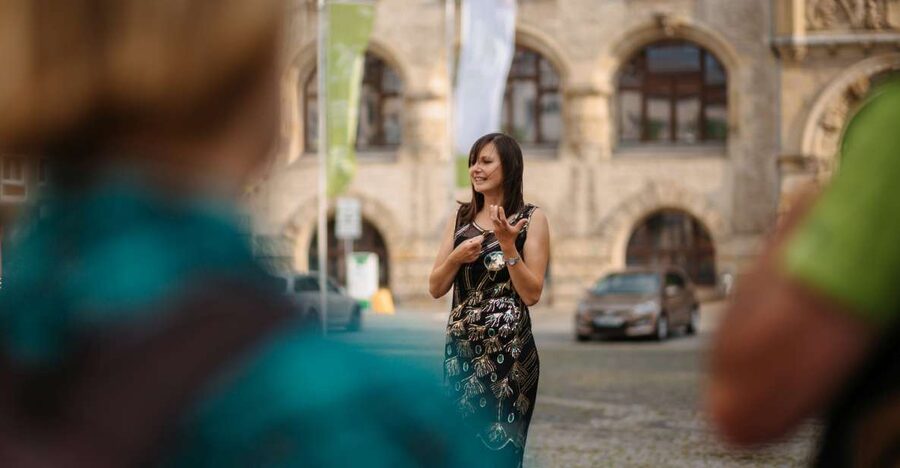
The live guide speaks German. That is the most important practical point before booking. If you understand German well enough to follow a spoken history tour, the language should suit the format. If not, you may miss the anecdotes that give this walk much of its appeal.
The tour runs rain or shine. Bring weather-appropriate clothing and comfortable shoes, and do not treat a poor forecast as an automatic cancellation by the operator. Since the experience takes place on foot and outdoors, weather can affect your comfort even though it does not stop the tour.
The walk is wheelchair accessible, which makes it a useful option for many visitors planning a city-center introduction. The supplied information does not provide details about slopes, paving, rest stops, or accessible toilets, so you may want to ask the provider if those points matter to your needs.
Before the tour begins, show your voucher at the ticket counter. The activity offers free cancellation up to 24 hours in advance, and you can reserve now and pay later, which helps if your Dessau plans are still shifting.
Who should book this Dessau walking tour
I would recommend it to a first-time visitor who wants to understand Dessau before tackling its individual sights. It is also a good fit for anyone curious about how Bauhaus, industry, culture, princely rule, and modern German politics meet in one city.
It may suit residents and repeat visitors, too. The local feedback shows that the anecdotes can add something even when you already know the streets. That is a useful sign for a tour built around lesser-known details rather than only famous monuments.
Families, older visitors, and people using wheelchairs may appreciate the short duration and stated wheelchair accessibility, though the German-only format remains important. Architecture specialists may find the Bauhaus treatment too broad if they want technical detail, building dates, or a focused design analysis.
The best way to think of this experience is as a foundation. It gives you a framework for the rest of your time in Dessau, with enough names and connections to make later sightseeing more meaningful.
Should you book it?
Book this tour if you want a short, affordable introduction to Dessau that goes beyond Bauhaus. The $13 price is reasonable for a trained guide, a 90-minute route, and a broad story that includes the Basic Law, local industry, cultural figures, and the city’s older rulers.
Skip it if you need an English-language tour, a detailed specialist visit to Bauhaus sites, or a fully indoor experience for bad weather. For everyone else, this is a smart first look, especially if small local anecdotes matter as much to you as major landmarks.
FAQ
How long does the Dessau walking tour last?
The tour lasts 1.5 hours, or 90 minutes.
What language is the tour in?
The live tour guide speaks German.
How much does the tour cost?
The listed price is $13 per person.
What historical subjects does the tour cover?
The tour covers Dessau’s 800-year history, including Bauhaus, the Basic Law, princely history, industry, music, culture, and important local figures.
Is the tour wheelchair accessible?
Yes, the activity is listed as wheelchair accessible.
Does the tour run in bad weather?
Yes. The tour takes place rain or shine.
Where do I show my voucher?
Show your voucher at the ticket counter before the tour begins.
Can I cancel the tour for a refund?
Yes. You can cancel up to 24 hours in advance for a full refund.
Just added in Germany
- Private One way Airport Transfer Berlin Airport To Berlin★ 3.5 · 17 reviews
- Private Walking Tour: Berlin Wall, Cold War and Checkpoint Charlie★ 5.0 · 37 reviews
- Modern Berlin Private Walking Tour: Diverse, Vibrant and Exciting German Capital★ 5.0 · 13 reviews
- Private Day Trip to Potsdam from Berlin by Train★ 4.5 · 27 reviews
- City Explorer: Potsdam Private Day Trip★ 4.5 · 10 reviews
- Berlin Private Custom 5-Hour Tour by Car★ 5.0 · 30 reviews
- Private Half-Day Sightseeing Tour in Berlin★ 3.5 · 6 reviews
- Berlin Private Custom Tour in a Minivan, East and West★ 5.0 · 123 reviews
Historical Tours, compared.
City History Canal Sightseeing Tour on a Motorboat
Read our review →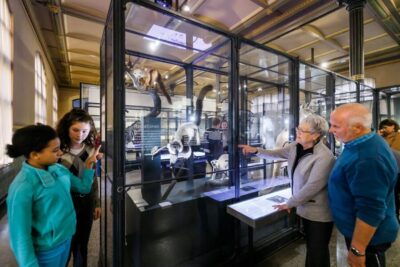

Browse the lists this tour appears in