
Reviewed · GERMANY
Darmstadt: Mathildenhöhe UNESCO Site Guided Visit
Mathildenhöhe is not just one fine building. It is a complete artistic project, planned as a new kind of city where architecture, art, and daily life worked together. This 90-minute tour explains how the studio building, exhibition building, artists’ homes, and park form one UNESCO World Heritage site.
I like the clear focus on the whole ensemble, rather than a quick look at one landmark. I also like the human stories: guide Frau Gerhardt has been praised for explaining the artists’ personal relationships and the forces behind their work. The main drawback is practical: the tour is generally in German, with English offered only on Saturdays at 2pm.
Key points to know before you book
- A complete Mathildenhöhe story: The tour links the studio, exhibition building, artists’ homes, and park.
- A turning point in modern art: You learn how the Darmstadt project helped move architecture and art toward the 20th century.
- Strong guide-led storytelling: Frau Gerhardt has been praised for lively explanations and personal details about the artists.
- English is limited: Only the Saturday 2pm tour is advertised as English-speaking.
- Short and focused: The visit lasts 90 minutes, enough for context without taking over your day.
- Good value at $17: That is a modest price for a guided explanation of an entire UNESCO site.
Why Mathildenhöhe matters
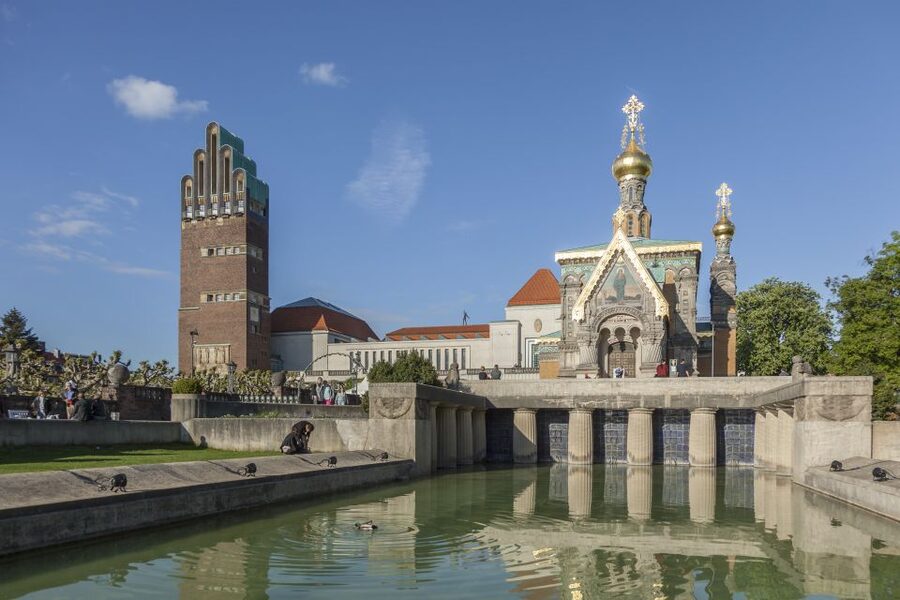
Mathildenhöhe Darmstadt was created at a moment when artists and architects were searching for a new direction. Older artistic rules no longer seemed enough, yet modern architecture had not fully taken shape. The result was an ambitious attempt to bring art into the design of buildings, interiors, public spaces, and everyday life.
The guiding idea was not simply to construct attractive houses. It was to create a complete artistic setting. That is why this tour matters: you are not looking at isolated monuments. You are following a connected project that includes places for artists to work, buildings for exhibitions, homes designed as part of the artistic program, and a park that belongs to the same vision.
The site marks a turning point on the threshold of the 20th century. You can expect the guide to explain how Mathildenhöhe relates to the move toward modern art and architecture, while also showing how unusual the project was for its time.
I find this context especially useful if you are not already an architecture enthusiast. Without an explanation, the site can appear to be a collection of unusual buildings. With a guide, the connections become easier to see. The buildings are part of one idea, not simply a set of separate sights.
A few more things to do in Germany worth a look
- Berlin: Reichstag, Dome and Government District Guided Tour
★ 4.7 · 18,288 reviews - Dresden: Semperoper Tickets and Guided Tour
★ 4.7 · 12,102 reviews - Berlin: Government District around the Reichstag Guided Tour
★ 4.7 · 8,447 reviews
Meeting the guide at Olbrichweg 13A
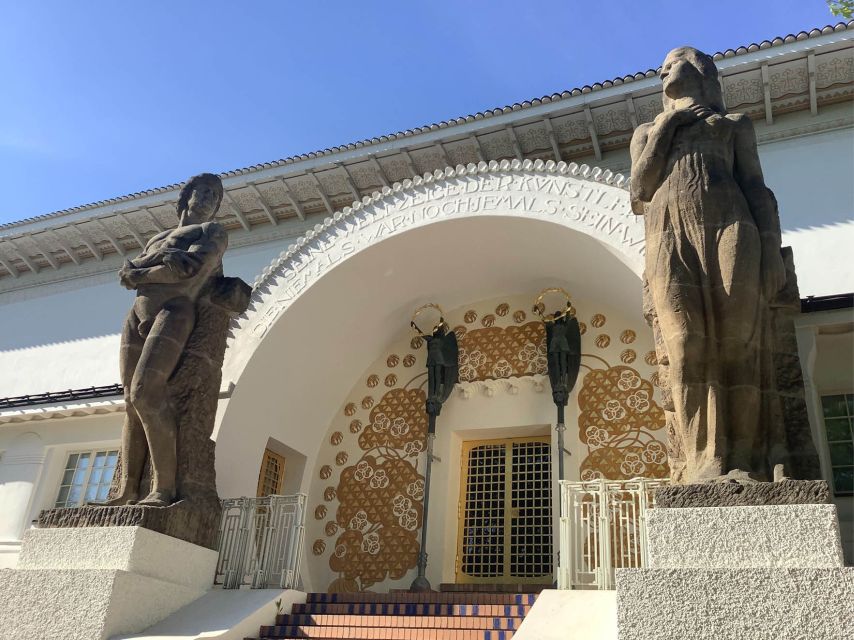
The tour begins at the north entrance of the Museum Artists’ Colony Darmstadt, at Olbrichweg 13A. That precise meeting point matters because Mathildenhöhe contains several important buildings and open areas. You will want to arrive with enough time to find the north entrance rather than search for the group at the last minute.
The location also puts you directly into the subject of the tour. You are not starting at a distant city-center office and then being transported to the site. The meeting point is at the Museum Artists’ Colony, one of the places tied to the story of Mathildenhöhe.
A live guide leads the visit. The strongest praise has focused on guides who explain the architecture clearly while adding human details about the artists. Frau Gerhardt, in particular, has been described as highly engaging, professional, and effective at connecting the buildings with the personal stories behind their creation.
That combination is important. A purely technical architecture walk can become a list of dates and styles. A purely personal story can lose sight of the buildings. The best version of this tour links both, showing how relationships, ambitions, and artistic beliefs shaped the site.
The studio building and the birth of an artists’ colony
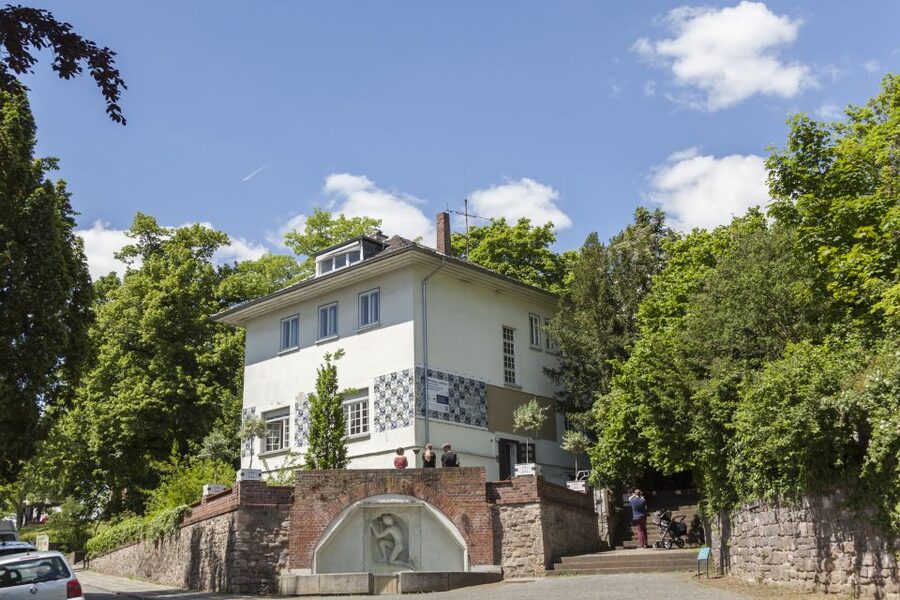
The studio building is one of the core parts of the ensemble. It represents Mathildenhöhe as a working artistic community, not just an exhibition area. The tour uses it to explain the role of artists in the project and the idea of creating a place where new work could be developed and presented.
This is where the larger ambition begins to make sense. The artists’ colony was not designed as a conventional residential quarter. It was meant to bring creative work into public view and to present a new approach to architecture and design.
You should listen for the difference between a building made for practical use and a building also intended to express an artistic program. At Mathildenhöhe, the studio is part of that program. Its presence helps you understand why the whole site was planned as an ensemble.
The tour does not treat the studio building as a quick photo stop. It places it within the development of Mathildenhöhe and explains its connection to the other buildings. That broader explanation is one reason the 90-minute format works well. You get a framework instead of a series of disconnected facts.
The exhibition building and the turn toward modernity
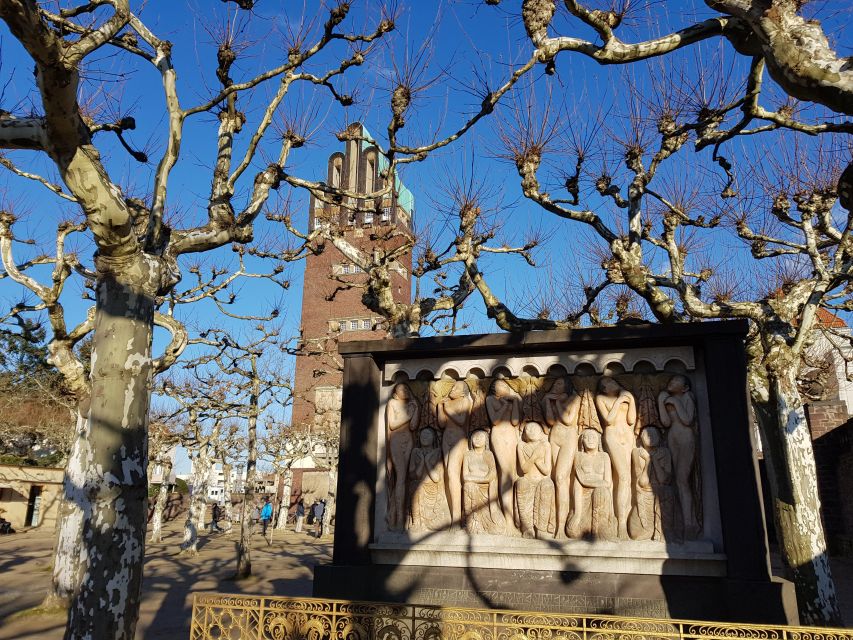
The exhibition building gives the tour another key piece of the story. It shows how the artists’ work was meant to be presented and shared, and it helps explain the title Aufbruch in die Moderne, or the move toward modernity.
This period was about change. Artists and architects were looking for fresh forms and a new relationship between art and life. Mathildenhöhe became a place where those ideas could be expressed through buildings as well as displayed through exhibitions.
I like this part of the experience because it gives the site a wider meaning. You are not only learning about Darmstadt. You are seeing how one local project reflected a broad shift in European art and architecture at the start of the modern era.
The guide’s role is especially useful here. Architectural forms can be difficult to interpret if you are seeing them without background. A clear explanation can show why the exhibition building belongs to the same artistic experiment as the homes and studio. The point is not just that the building looks different. The point is what that difference represented.
Same base, a different kind of day out:
- Berlin: 1-Hour City Tour by Boat with Guaranteed Seating
★ 4.3 · 16,993 reviews - Hamburg: Sex and Crime in St. Pauli Tour for Ages 18+
★ 4.7 · 15,447 reviews - Hamburg: 1.5-Hour Harbor and Speicherstadt Day Cruise
★ 4.6 · 14,200 reviews - From Munich: Neuschwanstein & Linderhof Castle Full-Day Trip
★ 4.5 · 12,494 reviews
The artists’ homes and the personal side of the site
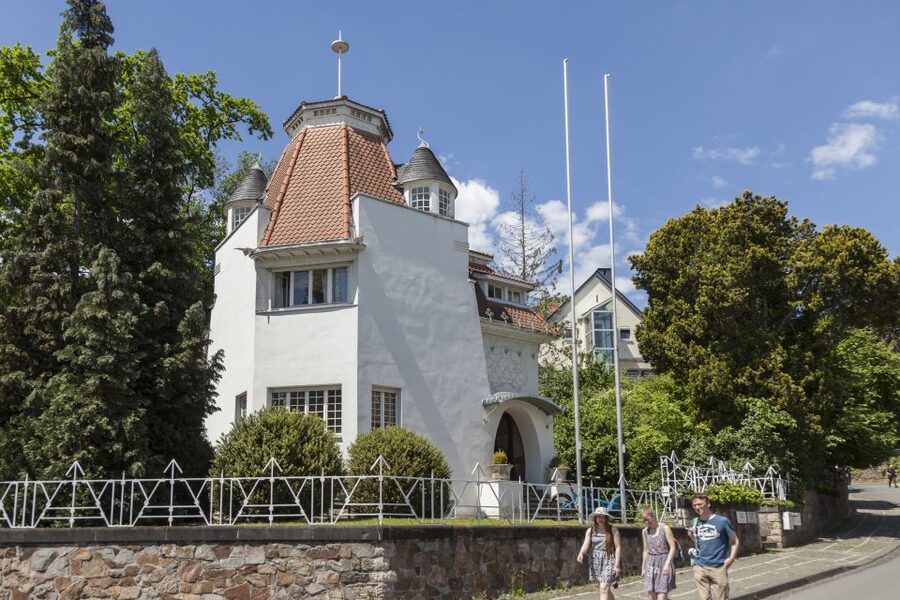
The artists’ homes add a more personal layer. They show that the Mathildenhöhe project extended beyond public exhibition spaces and working studios. Private homes were also part of the artistic setting.
This is where stories about the artists’ relationships and personal circumstances can make the architecture easier to understand. Frau Gerhardt has been praised for explaining these human details and for showing how personal backgrounds affected the artists’ work. Those details give the buildings more meaning without reducing them to gossip.
You should expect the guide to connect the houses to the wider ensemble rather than treat each one as an isolated residence. The houses help reveal how Mathildenhöhe aimed to shape an entire artistic environment.
For me, this is likely to be one of the most rewarding sections for anyone who does not normally seek out architecture tours. You do not need to know the names of every architect before arriving. The personal stories provide an entry point, while the buildings provide the visual evidence.
There is also a useful lesson here about the period itself. The artists were not simply decorating existing homes. Their work treated architecture as part of a complete way of life. That idea helps explain why Mathildenhöhe became important enough to receive UNESCO World Heritage status.
The park as part of the architectural idea
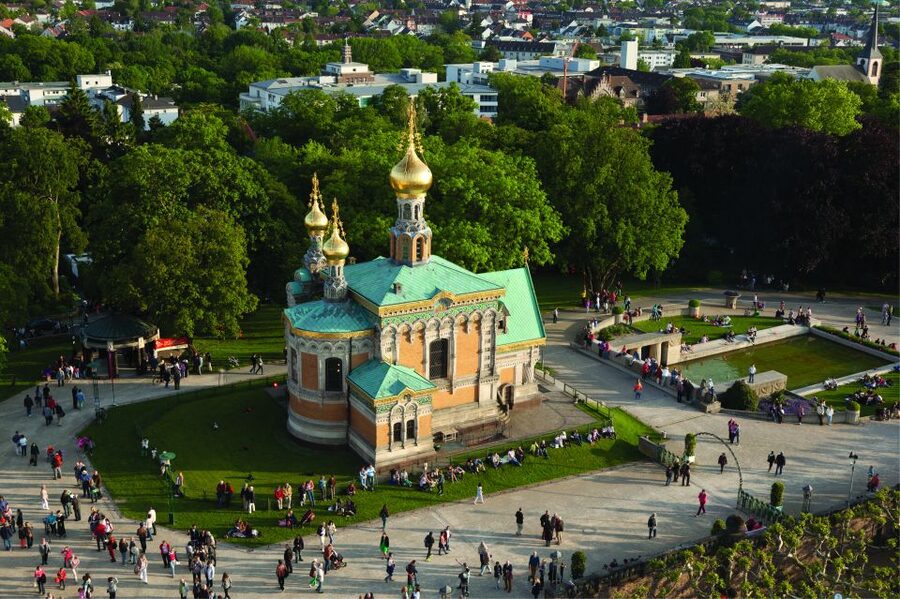
The park completes the tour’s view of the site. It is included as part of the ensemble, not treated as spare space between the buildings. Its presence shows that Mathildenhöhe was planned through buildings and open space together.
A park can be easy to overlook when you are focused on architecture. Here, the guide helps you see how the open setting belongs to the project. The tour’s value comes partly from making these relationships visible.
Because the experience includes the studio building, exhibition building, artists’ homes, and park, you get a fuller sense of the site than you would from visiting one building alone. The 90-minute length also keeps the visit manageable. You have time to understand the arrangement without committing half a day to a single neighborhood.
The information provided does not promise a specific amount of time inside each location, so you should think of this as a guided overview of the complete ensemble. That is a strength if you want orientation and context. If you prefer a slow, highly detailed study of one building, you may want extra independent time afterward.
What the 90-minute schedule feels like
Ninety minutes is a sensible length for this type of visit. It is long enough to cover the main parts of Mathildenhöhe and short enough to fit beside other plans in Darmstadt.
You should expect a focused walk through the UNESCO site rather than a full-day cultural program. The guide’s job is to connect the main buildings and explain the artistic project behind them. The route includes the studio building, exhibition building, artists’ homes, and park.
That format suits you if you want a strong introduction before exploring on your own. It also suits architecture fans who want a clear structure instead of wandering between buildings without context.
The short length does require a little discipline. You will not be able to linger over every architectural detail during the guided portion. If one building catches your attention, note it and return later if your schedule allows. The guided visit gives you the story; your own follow-up visit can give you more time with the details.
Language is the key booking decision
Language is the most important issue to settle before you reserve. The tour is generally conducted in German. The only English-speaking departure specified is Saturday at 2pm.
If you need English, do not assume that another departure will switch languages. Check availability for the Saturday 2pm tour and confirm that this is the English option when booking.
For German speakers, the language limitation is not a problem. The praise for Frau Gerhardt and other guides centers on clear, lively explanations, professional delivery, and stories that make the artists easier to understand.
For everyone else, the choice is simple: book the English Saturday departure if it fits your plans, or treat a German tour as an option only if you are comfortable following a guided explanation in German. The site itself can still be seen independently, but the main value of this activity comes from understanding the connections between its parts.
Is $17 a fair price?
At $17 per person, this is a good-value guided visit if you want context rather than just access to a place. The price covers a 90-minute explanation of a full UNESCO ensemble, including the studio building, exhibition building, artists’ homes, and park.
You are paying for the guide’s interpretation. That matters at Mathildenhöhe because the site’s importance lies in how its parts relate to one another. A quick self-guided walk may show you the buildings, but it may not make clear why the ensemble represents a turning point in architecture and art.
The value is strongest for first-time visitors, architecture fans, and anyone interested in the development of modern art. It is also useful if you have only a short stay in Darmstadt and want an efficient introduction.
The price is less compelling if you already know the site well or prefer to study architecture alone. In that case, the fixed 90-minute schedule and guide’s route may feel less flexible than an independent visit.
Still, the cost is modest, and the central benefit is clear. You get a guided explanation of the entire Mathildenhöhe concept for less than the price of many longer city tours.
Who should book this Darmstadt tour?
I would recommend it to you if you enjoy architecture, art, design, or the story of how modern Europe took shape. You do not need specialist knowledge. The guide’s explanations and personal stories are meant to make the subject approachable.
It also suits anyone who prefers a compact cultural activity. The 90-minute duration leaves room for other plans, while the site’s UNESCO status gives the visit a clear purpose.
Families and mixed-interest groups may find the personal stories helpful. Architecture can be a tough sell for a group that expects only technical detail, but stories about the artists and the reasons behind their work provide a more accessible way in.
German speakers have the widest choice of departure times. English speakers need to plan around Saturday at 2pm. That single scheduling point may decide the booking for you.
The tour is wheelchair accessible, which makes it a practical choice for visitors who need an accessible guided activity. The available information does not provide further route details, so you may still want to confirm any specific access needs before booking.
Final verdict: book it for the story behind the buildings
Book this Mathildenhöhe tour if you want to understand why the site matters, not simply take photographs of unusual architecture. The guide-led format ties together the studio building, exhibition building, artists’ homes, and park, while the strongest guide style adds personal stories about the people behind the project.
At $17, the visit offers solid value. The main caution is language. English is limited to Saturday at 2pm, while most tours are in German.
If that English departure works for you, I would choose this tour over wandering through the ensemble without context. If it does not, book only if you can follow German comfortably. Either way, allow a little extra time after the 90-minute visit to revisit the building or part of the park that interests you most.
FAQ
Where does the tour begin?
The meeting point is the north entrance of the Museum Artists’ Colony Darmstadt, at Olbrichweg 13A.
How long does the tour last?
The guided visit lasts 90 minutes, or one and a half hours.
What language is the tour in?
The tour is generally conducted in German.
Is there an English-speaking tour?
Yes. The Saturday tour at 2pm is the English-speaking departure specified for this experience.
What does the tour cover?
The tour explains the Mathildenhöhe UNESCO World Heritage ensemble, including the studio building, exhibition building, artists’ homes, and park.
How much does the tour cost?
The listed price is $17 per person.
Is the tour wheelchair accessible?
Yes. The activity is described as wheelchair accessible.
Can I cancel for a full refund?
Yes. You can cancel up to 24 hours in advance for a full refund.
Just added in Germany
- Private One way Airport Transfer Berlin Airport To Berlin★ 3.5 · 17 reviews
- Private Walking Tour: Berlin Wall, Cold War and Checkpoint Charlie★ 5.0 · 37 reviews
- Modern Berlin Private Walking Tour: Diverse, Vibrant and Exciting German Capital★ 5.0 · 13 reviews
- Private Day Trip to Potsdam from Berlin by Train★ 4.5 · 27 reviews
- City Explorer: Potsdam Private Day Trip★ 4.5 · 10 reviews
- Berlin Private Custom 5-Hour Tour by Car★ 5.0 · 30 reviews
- Private Half-Day Sightseeing Tour in Berlin★ 3.5 · 6 reviews
- Berlin Private Custom Tour in a Minivan, East and West★ 5.0 · 123 reviews