
Reviewed · WALKING TOURS
Cologne classic walking tour
Cologne’s story is unusually easy to read on foot. In two hours, this Italian-language walking tour moves from Roman foundations and the soaring cathedral to medieval merchant squares, Rhine-side houses, wartime destruction, and the city’s famous perfumes. Sara, the guide, uses historical images to show how much Cologne has changed.
I like the route’s clear sweep through 2,000 years of history, and I like its mix of major sights and small details. You get the cathedral and Town Hall, but also Salzgasse, colourful houses, old breweries, and the surprising story behind Cologne’s perfumes. The main consideration is pace: two hours is enough for orientation, not for long interior visits.
- Roman beginnings: Start near the cathedral with Cologne’s ancient colony and Roman Arch.
- Cathedral and medieval power: See the cathedral, Old Market, Town Hall tower, and Groß Sankt Martin.
- Rhine-side Cologne: Walk past historic breweries, colourful houses, Fischmarkt, and the river promenade.
- Perfume with a local name: Learn about Eau de Cologne Farina and 4711.
- War and rebuilding: Use historical photographs to compare prewar Cologne with today’s city.
- Italian-speaking guidance: Sara leads the tour in Italian and welcomes questions along the way.
A fast way to read Cologne’s long story
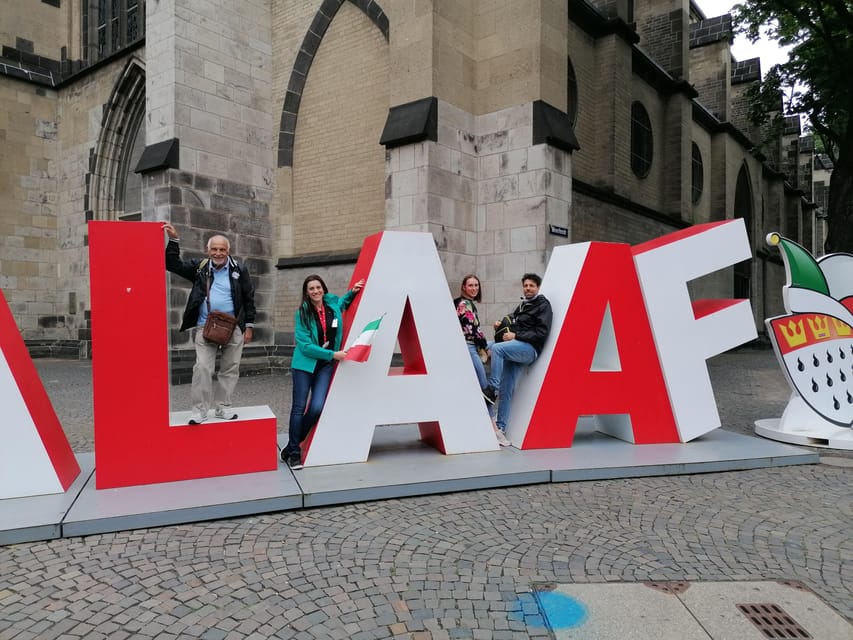
This walk works because Cologne’s major chapters sit close together. You begin by the cathedral, move through the old town, reach the Rhine, then turn toward places linked with reconstruction, modern architecture, and perfume. There is little wasted time getting from one sight to the next.
The route is not just a procession of famous buildings. Its value comes from the connections. Roman Cologne explains the city’s early importance. The medieval squares show how church power and merchant wealth shaped the old center. The Rhine explains trade and daily life. The wartime and postwar sections remind you that much of what you see today is rebuilt rather than untouched.
I would use this as a first introduction to Cologne, especially if you have only a short stay. It gives you a mental map before you explore the cathedral, museums, breweries, or riverfront on your own.
Meeting beneath the cathedral’s copied pinnacle
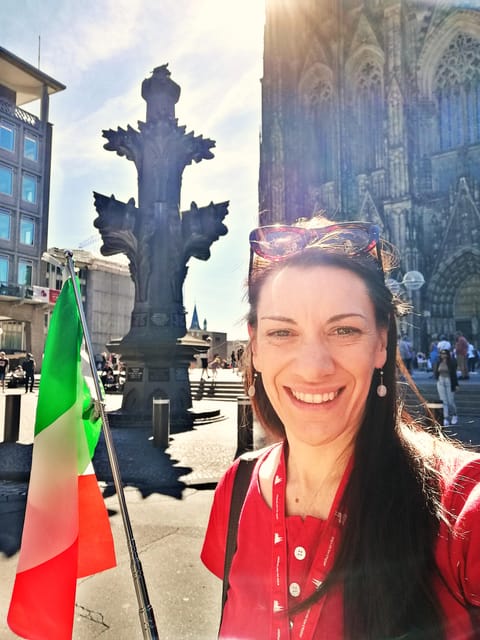
The meeting point is by a copy of the cathedral’s large pinnacle. That detail matters because the cathedral square can feel confusing when you first arrive. Look for the replica rather than simply waiting somewhere near the cathedral entrance.
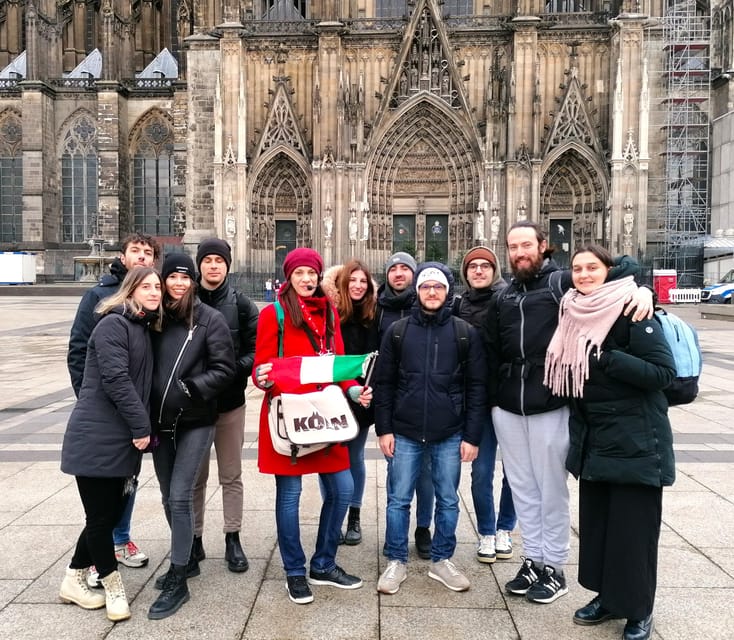
The square is a strong starting point. Cologne Cathedral immediately gives the tour a sense of scale, with its dizzying Gothic height and long place in the city’s identity. The walk looks at the cathedral from outside as part of the wider story, so you should not expect a full cathedral visit or an extended explanation inside.
From here, the guide introduces the Roman origins of the ancient colony. Cologne’s present streets sit over a much older city, and the Roman Arch helps make that early period visible. This opening gives you useful context before the route shifts into medieval Cologne.
Other walks around Cologne:
- Cologne: The Night Watchman Old Town Walking Tour in German
★ 4.6 · 1,395 reviews - Cologne: Old Town Highlights Walking Tour
★ 4.6 · 1,093 reviews - Cologne: Südstadt Guided Foodie Walking Tour
★ 4.6 · 624 reviews
Roman Cologne before the medieval city
The Roman section is brief but important. Cologne did not begin with its cathedral or its medieval guilds. Its foundations reach back to the Roman colony, and the remains and street pattern help explain why this location beside the Rhine mattered.
I like this kind of introduction because it prevents the old town from becoming a collection of attractive façades with no connection. You begin to see Cologne as a city repeatedly rebuilt on the same important ground.
The guide’s use of historical facts, small stories, and trivia should suit you if you prefer history in manageable portions. This is not a lecture-heavy archaeology tour. It is an orientation walk, so the Roman material supports the route rather than taking over the whole morning or afternoon.
The cathedral, Old Market, and Town Hall tower
After the cathedral square, the route heads through the old center toward the medieval heart of Cologne. At Alter Markt, or Old Market, the mood changes. Here you get a feel for the city of archbishops and independent merchants, a tension that shaped Cologne’s political and commercial life.
The Town Hall tower is one of the route’s main visual markers. Its decoration reflects the pride of a wealthy merchant city. This is a good place to pay attention to the contrast between religious authority and civic ambition, a theme that helps explain why Cologne has such a strong collection of public and church buildings close together.
Groß Sankt Martin adds another major church to the route, while nearby alleys make the city feel smaller and more intimate than the cathedral square. The walk does not treat the old town as a frozen medieval set. Instead, you see how later changes, damage, and rebuilding are part of its present appearance.
Fischmarkt and the Rhine promenade
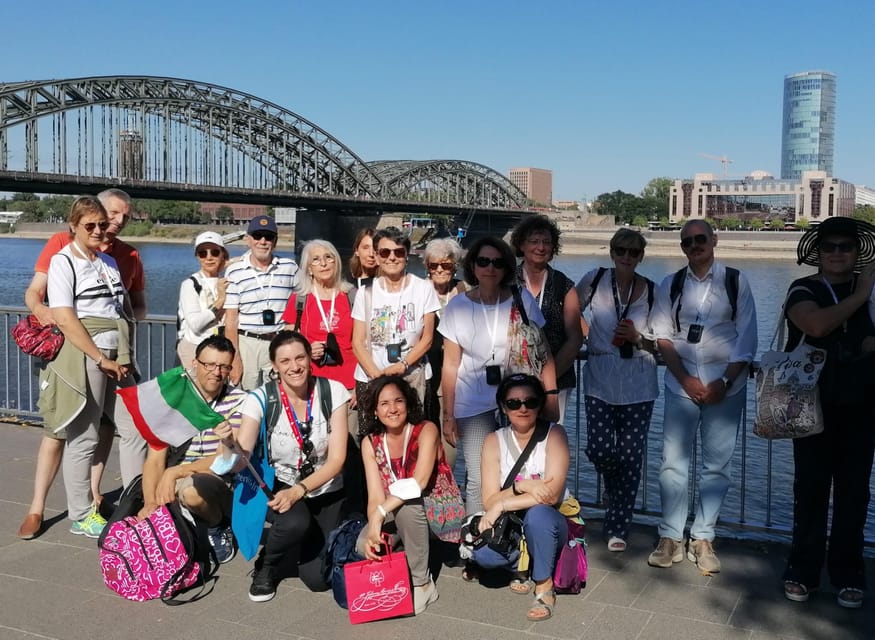
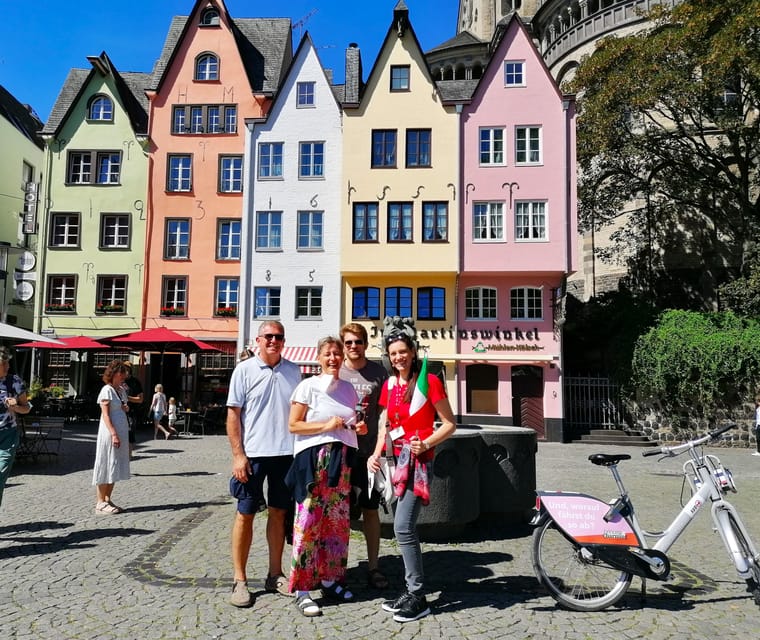
At Fischmarkt, the route reaches one of Cologne’s most picturesque stretches. Colourful houses and the Rhine-side setting give you the classic old-town view, with historic breweries nearby and the river opening the city toward trade and travel.
The Rhine promenade is also a useful pause in the historical sequence. The river is not just scenery. It helps explain Cologne’s economic life and why the city grew into a major center. You can connect the old houses and breweries with the practical business of moving goods and serving people who lived and worked along the river.
The route includes Salzgasse and Heumarkt as well. These places help you move beyond the postcard view. You get a sense of streets and squares that supported ordinary city life, commerce, and public gatherings.
Because the full tour lasts two hours, this part is about seeing and understanding rather than stopping for a drink. If you want to sit in a brewery or linger for photographs, save that for after the walk. The route gives you the best starting points for returning later.
Same base, a different kind of day out:
- Cologne: Panoramic City Cruise
★ 4.3 · 5,698 reviews - Cologne: Brewery Tour with 3 Kölsch Beer Tastings
★ 4.7 · 3,108 reviews - Cologne: Top Sights Rhine River Cruise – Skyline Tour
★ 4.4 · 3,030 reviews - Cologne: Chocolate Museum Entrance Ticket
★ 4.4 · 2,790 reviews
Cologne’s famous perfume story
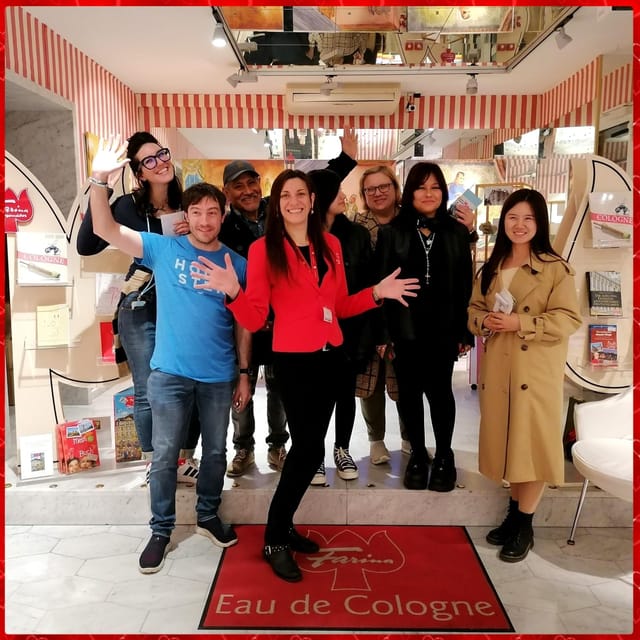
One of the tour’s most distinctive turns is the move from church towers and medieval squares to perfume. Cologne’s name is tied around the world to Eau de Cologne, and the route includes both Eau de Cologne Farina and Eau de Cologne 4711.
This is more than a shopping stop. It shows how a city’s identity can travel through a product. The perfume story adds a commercial and social chapter to the tour, balancing the earlier focus on bishops, merchants, war, and architecture.
You will encounter the famous water that made Cologne widely known beyond Germany. The two perfume names also give you a useful point of comparison. The tour’s strength is that it treats fragrance as part of the city’s history rather than as an unrelated retail subject.
Do not expect a long perfume workshop or a guaranteed tasting experience. The stated focus is on discovering the city’s most famous water and its history. That makes this section a good fit for curious first-time visitors, especially if you like unusual details that help a place stick in your memory.
Historical photographs and the city’s wartime scars
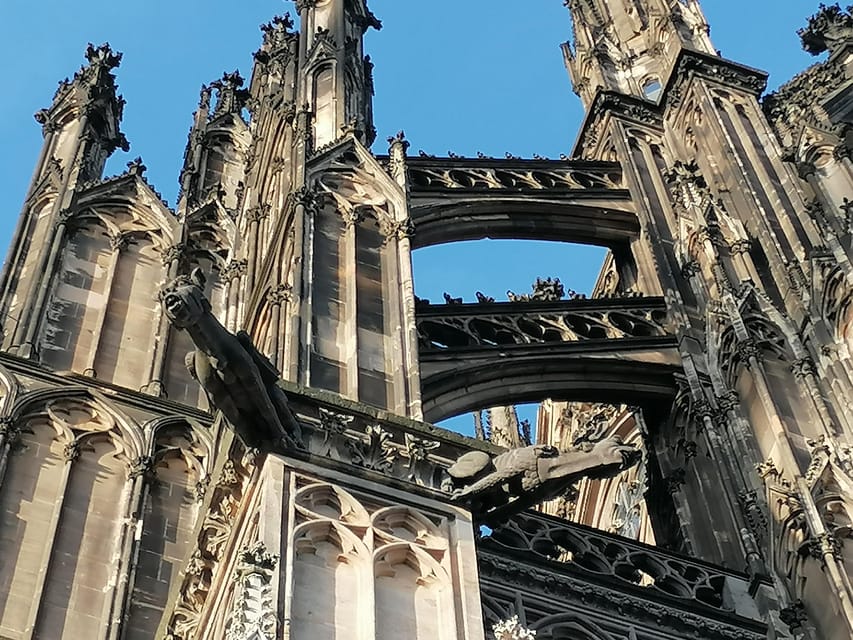
The most serious part of the walk comes when the route addresses the Second World War and Cologne’s reconstruction. Historical images let you compare past and present, making the destruction easier to understand than a simple sentence about wartime damage.
This matters because much of central Cologne reflects rebuilding and adaptation. The old town may look historic, but its current appearance also carries the marks of loss, repair, and postwar decisions. Seeing images alongside the present streets gives you a sharper sense of what survived, what disappeared, and what was recreated.
I value this part of the tour because it keeps the experience from becoming a simple parade of pretty buildings. Cologne’s history includes beauty, power, trade, and pleasure, but also destruction and difficult memory. The route gives those subjects a place without turning the entire walk into a war-history program.
If you prefer only light sightseeing, this section may feel more sobering. That is also why it makes the tour more useful. You leave with a more honest understanding of the city.
Opera and Kolumba: rebuilding and modern Cologne
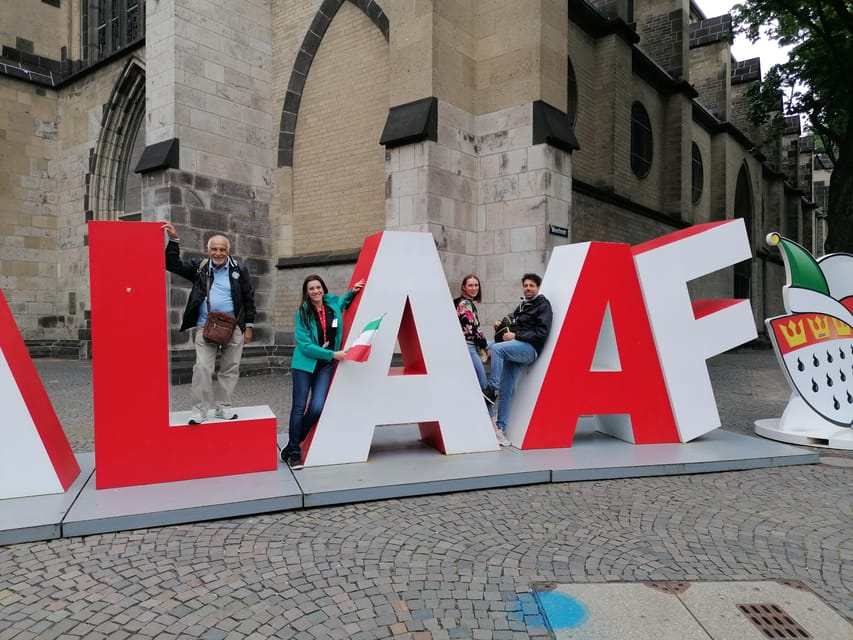
The Opera and Kolumba districts show another side of Cologne. Here the focus shifts toward reconstruction, postwar memory, and the development of the modern metropolis.
The point is not simply to label buildings as old or new. You are encouraged to notice how different periods sit beside one another. Cologne’s identity comes from that mixture: Roman remains, medieval churches, rebuilt streets, modern cultural buildings, and public spaces shaped by recent choices.
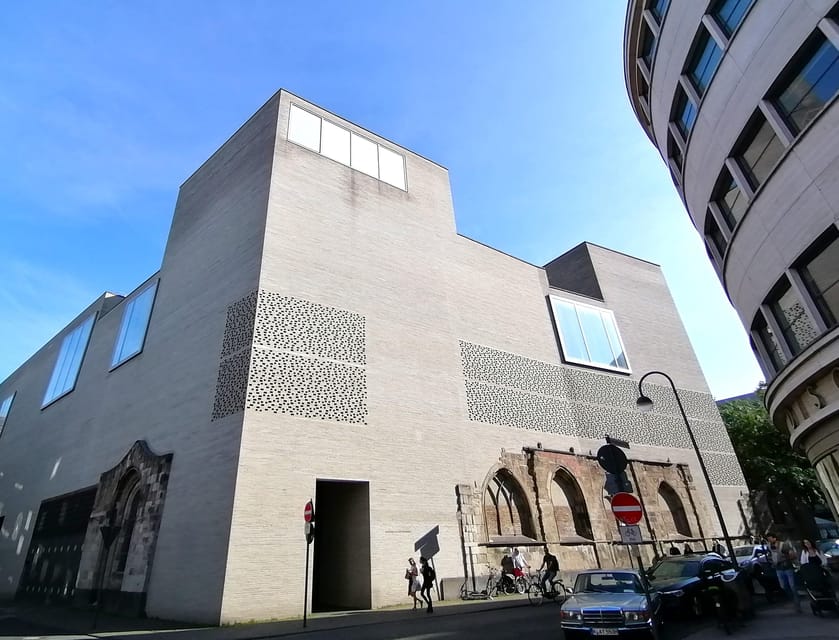
Kolumba is especially useful as a marker of the city’s changing approach to memory and architecture. The route includes it as part of the larger story of rebuilding and remembrance. You should see this as an outside orientation rather than a museum visit, unless you return independently after the tour.
The Opera district adds a modern urban note near the end of the route. It helps complete the timeline, bringing you from the ancient colony to the present-day city rather than ending with the Middle Ages.
How Sara’s guiding style shapes the walk
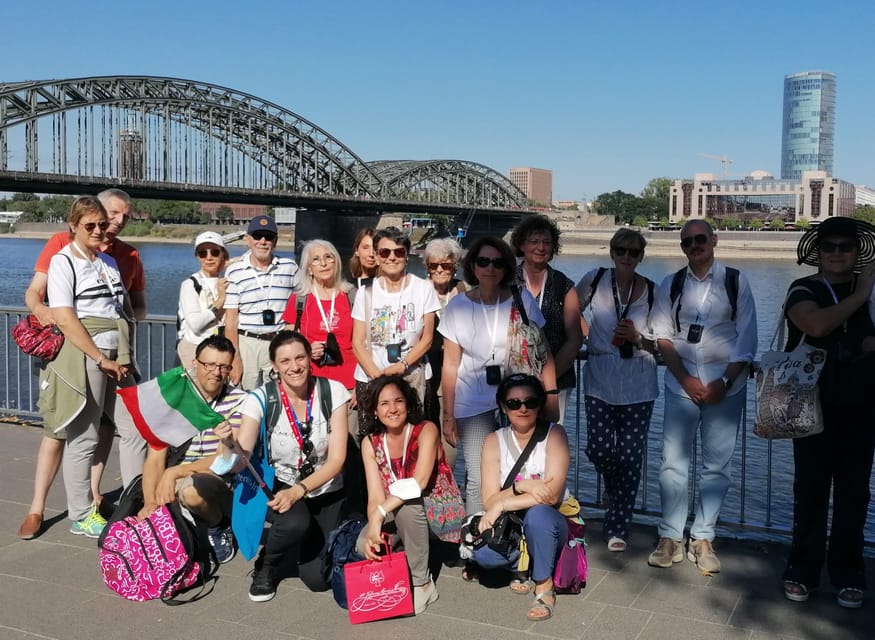
Sara is a native Italian-speaking guide and is certified by the tourist board. The most praised qualities connected with her guiding are preparation, friendliness, availability, and the ability to answer questions.
That last point is important on a compact tour. A fixed script can give you dates and names, but a good guide also responds when you wonder about a building, a local custom, or a detail that catches your eye. The walk is designed to include anecdotes, trivia, and insider tips, so you have room to ask about the subjects that interest you most.
Historical photographs are another useful tool. They turn abstract claims about wartime destruction and reconstruction into something you can compare directly with the street in front of you.
The tour is in Italian only. That makes it a natural choice for Italian-speaking visitors who want more than a basic sightseeing route. If you need English, German, or another language, this experience may not suit you.
What the two-hour format means for value
At $23 per person, the tour offers a reasonable way to get a guided introduction to central Cologne. The value is strongest if you plan to use the walk as your first orientation, then return to the cathedral, museums, Rhine, or brewery areas on your own.
You are paying for a compact route, a certified guide, historical context, old images, and practical local suggestions. You are not paying for museum admission, a meal, a perfume workshop, or long stops inside monuments. Knowing that helps set fair expectations.
Two hours is long enough to cover the main sequence without making the walk feel like an all-day commitment. It is also short enough to fit before or after another city activity. The tradeoff is that each stop receives an introduction rather than a full examination.
The tour is wheelchair accessible, which makes the route more useful for many visitors. Exact starting times vary, so check availability when you choose a date. You can cancel up to 24 hours before the start for a full refund, and the reserve-now, pay-later option keeps your plans flexible.
Who should book this Cologne walk?
I would choose this tour if you want Cologne explained in Italian, if you like history in a clear chronological order, or if you have limited time in the city. It is also a good match for anyone who enjoys small facts, old photographs, and connections between famous monuments and everyday city life.
Families and mixed-interest groups may find the range helpful. The cathedral appeals to architecture fans, the Roman material suits history lovers, the Rhine and breweries add a local flavor, and the perfume story gives the route an unexpected change of subject.
You should think twice if you want lengthy visits inside the cathedral or museums. You should also choose another format if you prefer a very small specialist tour devoted only to Roman archaeology, wartime history, architecture, or perfume.
The strongest reason to book is Sara’s style: prepared, approachable, and willing to answer questions. The walk is built to give you a useful first reading of Cologne, not to overwhelm you with every date and detail.
Should you book the Classic Cologne Walking Tour?
Book it if you want a well-paced Italian introduction to Cologne’s center and appreciate a guide who adds anecdotes and historical images to the obvious sights. The route covers an impressive range in two hours, from Roman Cologne and the cathedral to the Rhine, perfume houses, wartime memory, and modern districts.
Skip it if you need extended indoor sightseeing or a tour in a language other than Italian. For most Italian-speaking visitors arriving in Cologne for the first time, $23 is a sensible price for a clear city overview and a practical base for exploring the rest of your stay.
FAQ
How long does the Cologne Classic Walking Tour last?
The tour lasts two hours.
What language is the tour conducted in?
The live tour is conducted in Italian.
Who guides the tour?
The guide is Sara, a native Italian-speaking guide certified by the tourist board.
Where is the meeting point?
Meet by the copy of the big pinnacle of Cologne Cathedral.
Is Cologne Cathedral included in the route?
Yes. Cologne Cathedral is one of the sights visited on the walking route.
What other main sights are included?
The route includes the Roman Arch, Town Hall, Alter Markt, Groß Sankt Martin, Fischmarkt, the Rhine promenade, Salzgasse, Heumarkt, Eau de Cologne Farina, Kolumba, the Opera, Eau de Cologne 4711, and Wallrafplatz.
Is the tour wheelchair accessible?
Yes, the activity is listed as wheelchair accessible.
How much does the tour cost?
The price is $23 per person.
Can I cancel the tour for a refund?
Yes. You can cancel up to 24 hours in advance for a full refund.
Just added in Cologne
- The rather unknown Melaten★ 4.9 · 26 reviews
- Rickshaw Glühwein Ride★ 4.6 · 24 reviews
- Informative and fun brewery tour in German, public★ 4.9 · 47 reviews
- Public brewhouse tour Cologne in English★ 4.9 · 154 reviews
- Private photoshoot in Cologne★ 5.0 · 5 reviews
- Cologne: Old City Guided Walking Tour★ 4.9 · 63 reviews
- Cologne-Nippes: wine hopping (wine trip)★ 4.9 · 7 reviews
- Cologne-Nippes: Gourmet wine tasting with cheese platter★ 4.6 · 26 reviews
Walking Tours, compared.

Third Reich Berlin: Hitler and WWII Walking Tour
Read our review →
Browse the lists this tour appears in