
Reviewed · GERMANY
City tour Chemnitz
Chemnitz is a city of sharp changes. In 90 minutes, this small-group minibus tour links the giant Karl Marx head, old factory districts, elegant Kaßberg, GDR housing, and the castle quarter. You get a quick look at a place that moved from textile power to car production, wartime industry, socialism, and a new cultural identity.
I like the compact route, which makes sense if you have only a short time in Saxony. I also like the contrast between Wilhelminian buildings on Kaßberg and the broad residential planning of Heckert. The trade-off is clear: this is an overview, not a slow walking tour with long stops inside museums or historic buildings.
Key points at a glance
- Karl Marx head: Begin with Chemnitz’s most famous public landmark and the city’s complicated name change.
- Industrial Chemnitz: See the streets tied to textile machines, locomotives, bicycles, cars, and armaments production.
- Kaßberg architecture: Pass through a Wilhelminian-style district that offers a very different view of the city.
- Heckert housing: Learn how GDR-era planning shaped daily life and the city’s outer districts.
- Castle quarter: Connect today’s city center with Chemnitz’s early beginnings.
- Small-group format: The minibus carries up to eight people, with live guiding in English or German.
Why Chemnitz makes a good short city tour
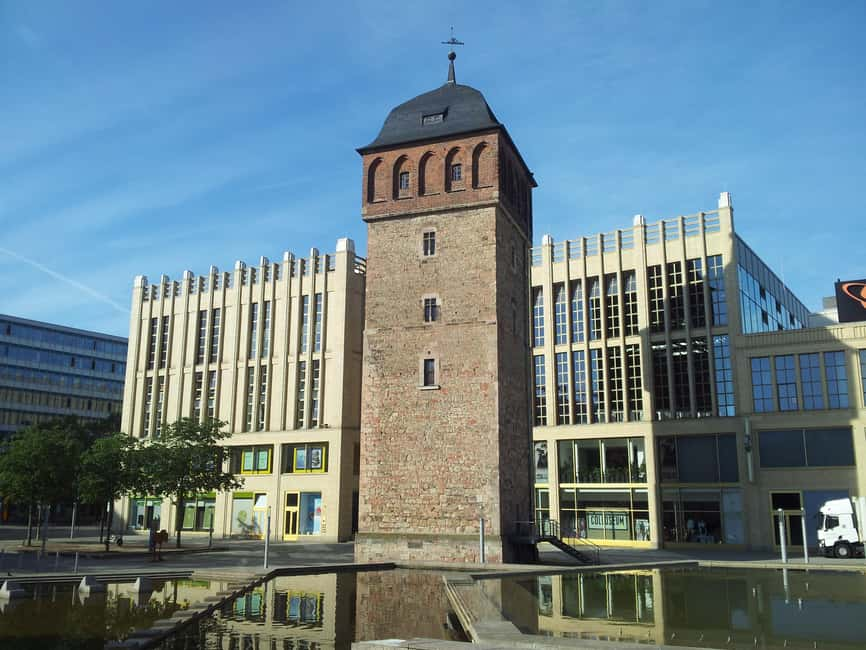
Chemnitz is not a city you understand from one pretty square. Its story is spread across different districts and building styles. A minibus helps you connect those pieces without spending your limited time figuring out tram routes or walking long distances between them.
The tour is also useful because Chemnitz can feel unfamiliar even to people who know Germany well. It was once one of the country’s major industrial cities, then became Karl-Marx-Stadt during the GDR period, and later returned to the name Chemnitz. That change is not just a sign on a map. It reflects the city’s ongoing debate about what it wants to remember and how it wants to present itself.
In 2025, Chemnitz is European Capital of Culture. This gives the tour extra relevance. You are not only looking at old factories or socialist apartment blocks. You are seeing the physical setting for a city trying to write a new chapter through culture while keeping its industrial character.
The tone is likely brisk and practical. One short assessment describes the experience as a good overview that stays entertaining. That is exactly the right way to think about it: a fast introduction that helps you decide which parts of Chemnitz deserve more of your own time.
A few more things to do in Germany worth a look
- Berlin: 1-Hour City Tour by Boat with Guaranteed Seating
★ 4.3 · 16,993 reviews - Leipzig: City History Canal Sightseeing Tour on a Motorboat
★ 4.7 · 6,232 reviews - Cologne: Panoramic City Cruise
★ 4.3 · 5,698 reviews
The Karl Marx head and the modern center
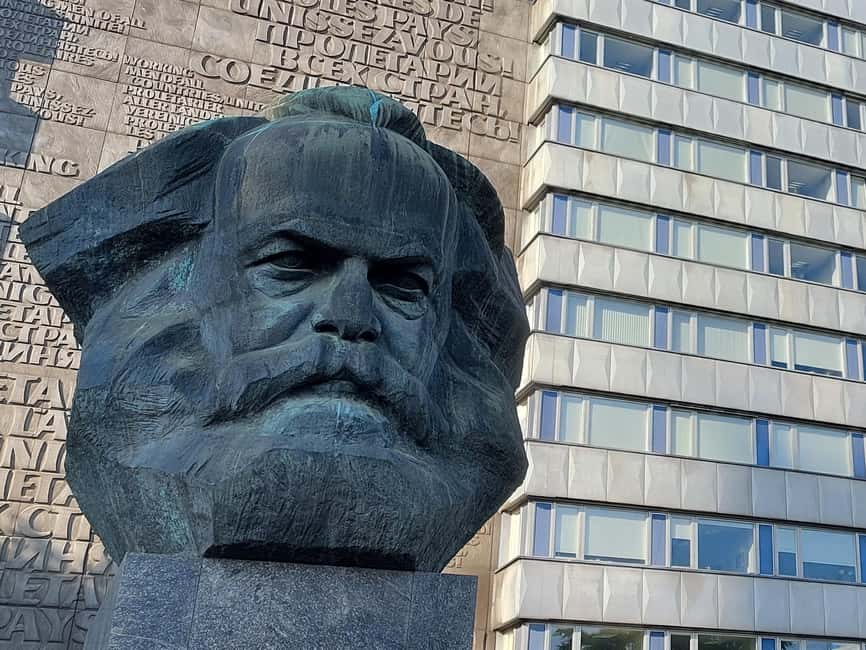
The tour’s central landmark is the Karl Marx head, one of Chemnitz’s most recognizable sights. It is large, direct, and hard to miss. The sculpture gives you an immediate entry point into the city’s GDR past and its former name, Karl-Marx-Stadt.
This is not simply a stop for a photograph. The monument raises the question of how Chemnitz handles its socialist heritage. The city no longer carries the Karl-Marx-Stadt name, but the head remains in the center as a visible reminder of that period.
From here, the minibus helps you read the modern city around it. Chemnitz has a mixture of newer buildings, open spaces, and surviving older districts. The center does not present one tidy architectural style. That unevenness is part of the point. You are looking at a city rebuilt, renamed, and reshaped more than once.
A guide can provide the connecting story while you watch the streets pass by. Since the tour is live and available in English or German, you can ask about the city’s changes as you go. The supplied details do not name a specific guide, so you should choose your language when booking rather than expect a particular person.
From textile mills to Auto-Union
Chemnitz grew from a Slavic settlement into one of Germany’s largest and wealthiest industrial cities. The change happened with striking speed. The city had an early advantage from Saxony’s linen-bleaching monopoly and its location near the mining areas of the Ore Mountains.
Then new machinery changed the scale of production. The spinning jenny and the steam engine arrived from England, and Chemnitz became a place where nearly anything industrial seemed possible. Textile machines, locomotives, bicycles, and cars were produced here.
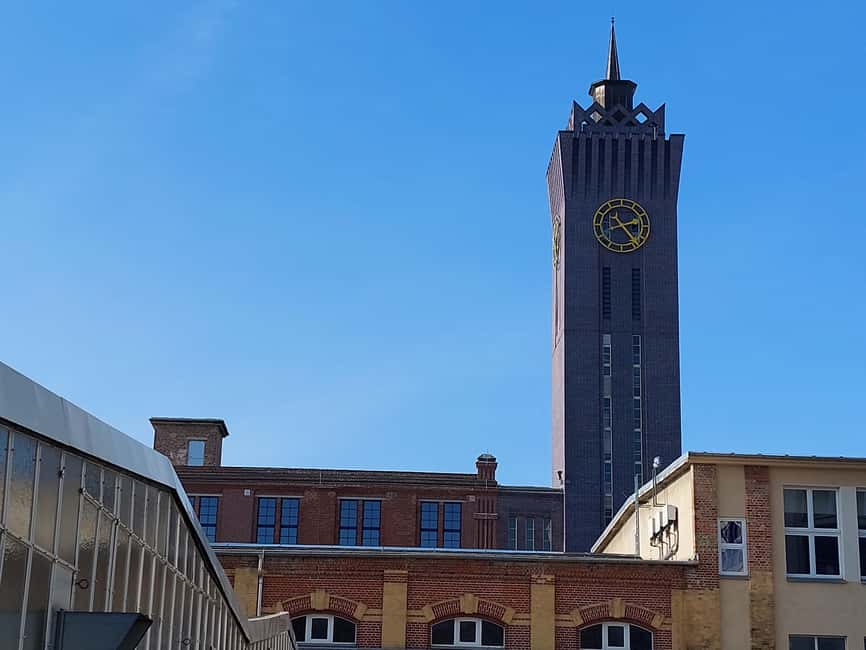
The city earned names such as the Manchester of Saxony and Rußchamtz, a nickname tied to its smoke-filled industrial character. Those names tell you that Chemnitz was not a quiet workshop town. It was a hard-working manufacturing center, with chimneys and factories shaping both its economy and its appearance.
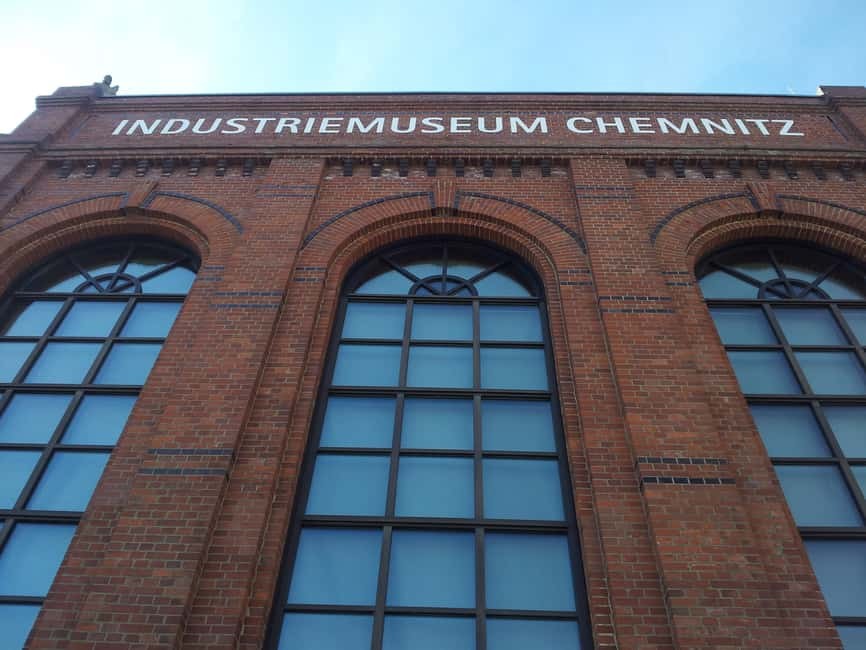
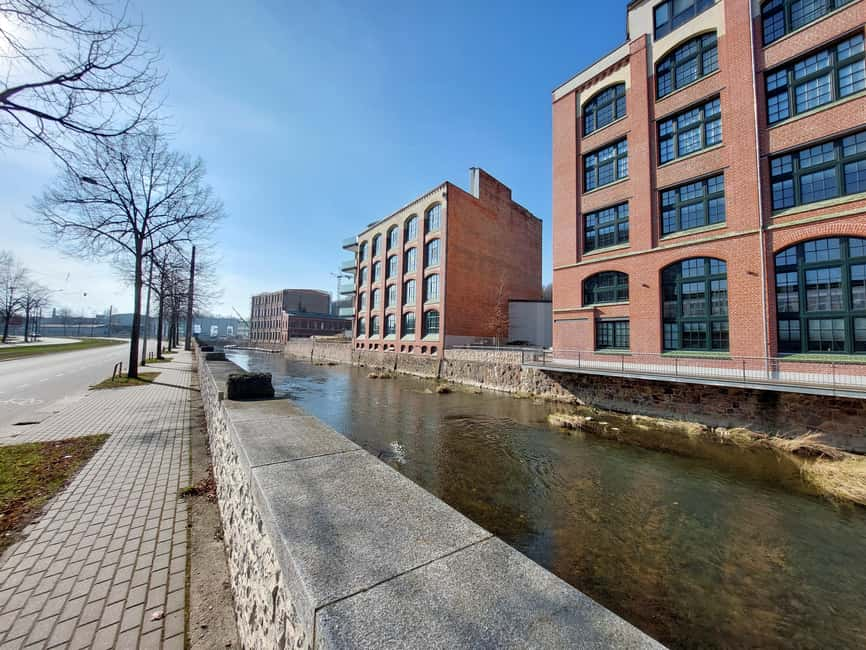
The route between Zwickauer Straße and Annaberger Straße focuses on this industrial culture. From the minibus, you can see how production was tied to the city’s main corridors. You should not expect every factory building to be presented as a polished monument. The value lies in seeing industry as part of the urban fabric, not as an isolated museum display.
Chemnitz was also the former home of Auto-Union, the company that later became associated with Audi. That connection makes the car industry an important part of the city’s identity. If you are interested in German engineering or industrial design, this part of the route will be especially useful.
The city’s industrial rise had a darker side as well. The German armaments industry was strongly represented here until the end of the Second World War. The war marked the end of Chemnitz’s earlier rise and helps explain why the city’s story is not simply one of invention and prosperity.
Kaßberg and the city’s Wilhelminian side
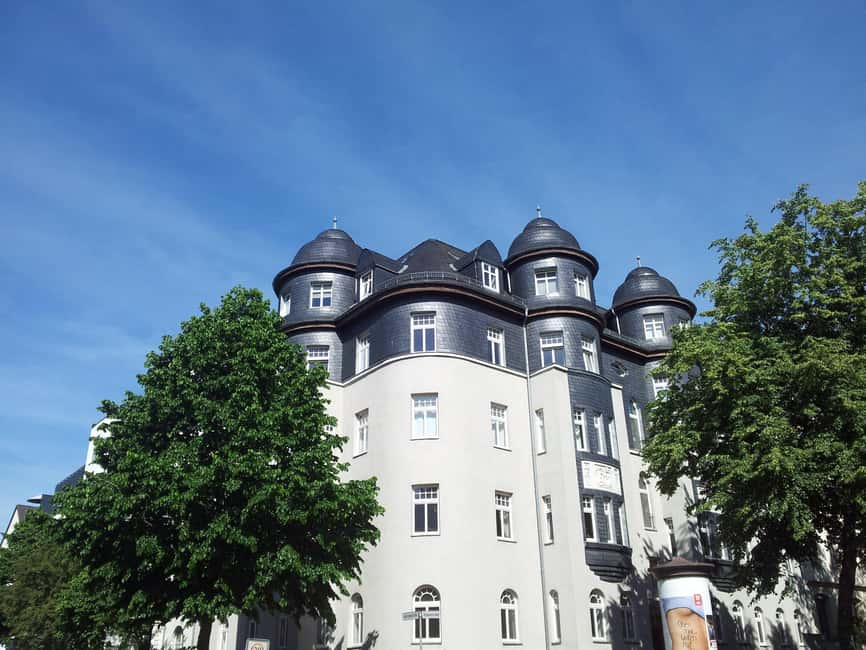
Kaßberg gives you a change of pace. The district is known for Wilhelminian-style buildings, the urban architecture associated with Germany’s late nineteenth-century imperial period. Look for the visual contrast between this neighborhood and the more functional forms found in industrial and GDR-era areas.
The district matters because it shows how industrial wealth shaped private life. As Chemnitz grew richer, the city developed residential areas with a more formal and decorative character. The buildings on Kaßberg offer a reminder that industry did not only produce machines. It also funded homes, streets, and neighborhoods for the growing population.
You will see Kaßberg from the vehicle rather than explore it block by block. That limits the chance to study doorways, courtyards, and details at walking speed. Still, the minibus format lets you place the district within the larger city story. You can compare its housing pattern with the factories and the later socialist estates in the same tour.
If architecture is your main interest, make a note of Kaßberg and consider returning on foot after the tour. The city tour gives you the context and orientation. A separate walk would give you the slower look.
Same base, a different kind of day out:
- Berlin: Reichstag, Dome and Government District Guided Tour
★ 4.7 · 18,288 reviews - Hamburg: Sex and Crime in St. Pauli Tour for Ages 18+
★ 4.7 · 15,447 reviews - Hamburg: 1.5-Hour Harbor and Speicherstadt Day Cruise
★ 4.6 · 14,200 reviews - From Munich: Neuschwanstein & Linderhof Castle Full-Day Trip
★ 4.5 · 12,494 reviews
Heckert and the GDR-era city
The stop or drive through Heckert introduces another major layer of Chemnitz. This residential area was shaped during the GDR period, when large housing projects were used to provide homes for an expanding industrial population.
Heckert is valuable because it takes the tour beyond the postcard version of Germany. Large apartment districts can seem plain at first glance, but they reveal how governments planned work, housing, and daily life. In Chemnitz, such housing was closely tied to the city’s industrial role.
The contrast with Kaßberg is the main lesson. Kaßberg reflects private urban development from the era of imperial industrial growth. Heckert reflects state-led planning under socialism. Seeing both in one short route helps you understand that Chemnitz was built in layers, with each political and economic period leaving a different mark.
You should keep your expectations realistic. This is not a detailed social-history seminar, and the tour does not promise entry into residential buildings. The value is visual and comparative. You see the scale of the district and learn how it fits into Chemnitz’s industrial and political past.
For visitors who want only old-town architecture, Heckert may be the least obvious highlight. For anyone interested in twentieth-century Germany, it may be one of the more useful parts of the route.
The castle quarter and Chemnitz’s beginnings
The castle quarter brings the tour back to the city’s earlier roots. Here, the modern center gives way to the area associated with Chemnitz’s beginnings. The shift helps show that the city did not start as an industrial giant. Its industrial strength came later.
This part of the route balances the heavy factory story. After seeing roads shaped by production and housing areas shaped by state planning, you get a reminder of the older settlement from which Chemnitz grew.
The tour does not present the castle quarter as a long architectural walk. Instead, it uses the district as one piece in a wider map of the city. That is a smart approach for a 90-minute introduction. You see where the city began, how it expanded, and how its modern center now connects different eras.
What the minibus format changes
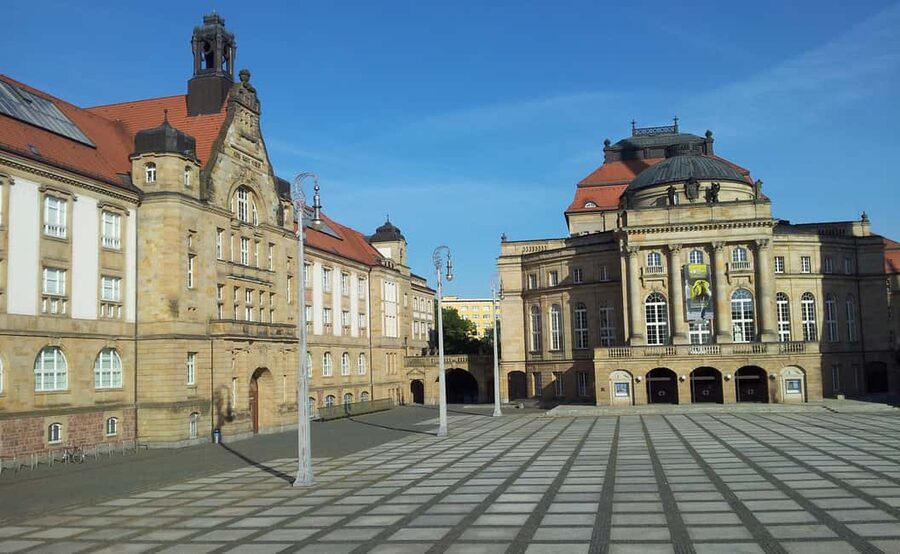
The minibus carries up to eight people, so this is more personal than a large coach outing. A small group also makes it easier to hear the guide and ask a short question without turning the experience into a formal lecture.
The vehicle is the main practical advantage. Chemnitz’s attractions are spread across central streets, industrial corridors, Kaßberg, Heckert, and the castle quarter. Walking the full route would take much longer, while public transport would require planning. The minibus gives you a citywide view in one sitting.
The limitation is equally simple: you spend much of the tour looking through windows. You may pause at key points, but the activity is not designed for long independent exploration at each location. Wear comfortable clothing, keep your camera ready, and listen for the places you want to revisit on foot.
The tour starts at one of two options on Straße der Nationen or at Hotel Chemnitzer Hof. It ends back at one of those locations, which is helpful if you are staying nearby or want a clear starting point for the rest of your day. Check the available departure time when booking because the starting time is not fixed in the information provided.
Is $23 a fair price?
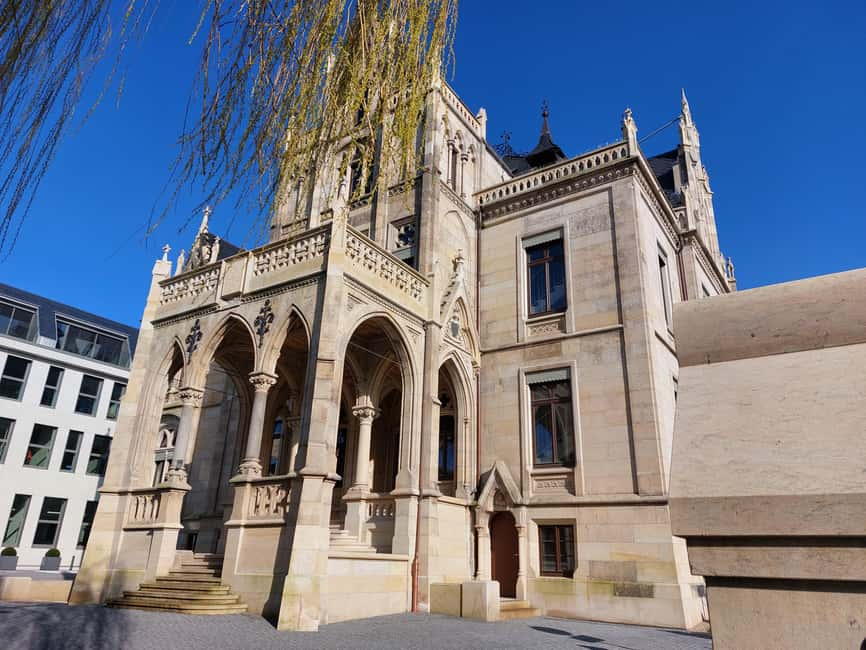
At $23 per person, the tour offers solid value if you want orientation rather than an in-depth museum experience. You are paying for 90 minutes of transport, a live certified local guide, and a route that covers several districts you would struggle to connect on foot in the same amount of time.
The value improves if you are new to Chemnitz, visiting for a short stay, or curious about the city’s industrial and GDR past. A private or small-group option can also make the price worthwhile if you prefer a more focused experience.
It is less useful for someone who already knows the city well or wants to spend the whole afternoon inside historic buildings. The tour is broad by design. You receive many connections in a short period, but not long stops at each sight.
Free cancellation up to 24 hours before the activity and the reserve-now, pay-later option give you some planning room. Those terms matter if your Saxony schedule is still shifting. They do not change the nature of the experience, which remains a quick city survey rather than a full-day tour.
Who should book this Chemnitz tour?
I would choose this tour if you want to understand Chemnitz before exploring it on your own. It suits first-time visitors, people with limited time, and anyone interested in how German cities changed through industrialization, war, socialism, and reunification.
It is also a good fit for travelers comparing Chemnitz with other Saxon cities. You will not get the same old-town focus associated with more heavily preserved destinations. Instead, you get factories, housing schemes, modern buildings, and a city still working out its public identity.
Families and mixed-interest groups may find the minibus format practical because the route keeps moving. Architecture fans will appreciate Kaßberg and the city contrasts. Car and engineering enthusiasts should pay attention to the Auto-Union connection and the industrial corridors.
I would skip it if your priority is a slow walking tour, detailed interior visits, or a tightly focused architectural study. In that case, use the tour only as an introduction and plan a second outing on foot.
Final call: book it for context, not depth
Book this $23 tour if you want a clear, entertaining introduction to Chemnitz in 90 minutes. The best reason to go is the range: one route brings together the Karl Marx head, industrial culture, Kaßberg’s Wilhelminian buildings, Heckert’s GDR housing, and the castle quarter.
Go in knowing that the minibus provides breadth rather than long stops. For a city with such sharp changes in name, politics, architecture, and industry, that broad view is useful. It gives you the map in your head, then leaves you free to return to the places that catch your interest.
FAQ
How long does the Chemnitz city tour last?
The tour lasts 1.5 hours, or 90 minutes.
What languages are available?
The live tour guide can conduct the experience in English or German.
How many people can join the minibus?
The minibus accommodates up to eight people. Private or small-group options are available.
Where does the tour start?
The available starting locations are on Straße der Nationen and at Hotel Chemnitzer Hof. The exact meeting point depends on the option booked.
Where does the tour end?
The activity ends back at the meeting point, with drop-off options at Hotel Chemnitzer Hof or on Straße der Nationen.
What parts of Chemnitz does the tour cover?
The route includes the modern center, the Karl Marx head, industrial areas between Zwickauer and Annaberger Straße, the Wilhelminian-style Kaßberg district, the GDR residential area Heckert, and the castle quarter.
Can I cancel the booking?
You can cancel up to 24 hours in advance for a full refund. A reserve-now, pay-later option is also available.
Just added in Germany
- Private One way Airport Transfer Berlin Airport To Berlin★ 3.5 · 17 reviews
- Private Walking Tour: Berlin Wall, Cold War and Checkpoint Charlie★ 5.0 · 37 reviews
- Modern Berlin Private Walking Tour: Diverse, Vibrant and Exciting German Capital★ 5.0 · 13 reviews
- Private Day Trip to Potsdam from Berlin by Train★ 4.5 · 27 reviews
- City Explorer: Potsdam Private Day Trip★ 4.5 · 10 reviews
- Berlin Private Custom 5-Hour Tour by Car★ 5.0 · 30 reviews
- Private Half-Day Sightseeing Tour in Berlin★ 3.5 · 6 reviews
- Berlin Private Custom Tour in a Minivan, East and West★ 5.0 · 123 reviews