Reviewed · TOURS IN BRUNSWICK
City tour Braunschweig: diverse and full of surprises.
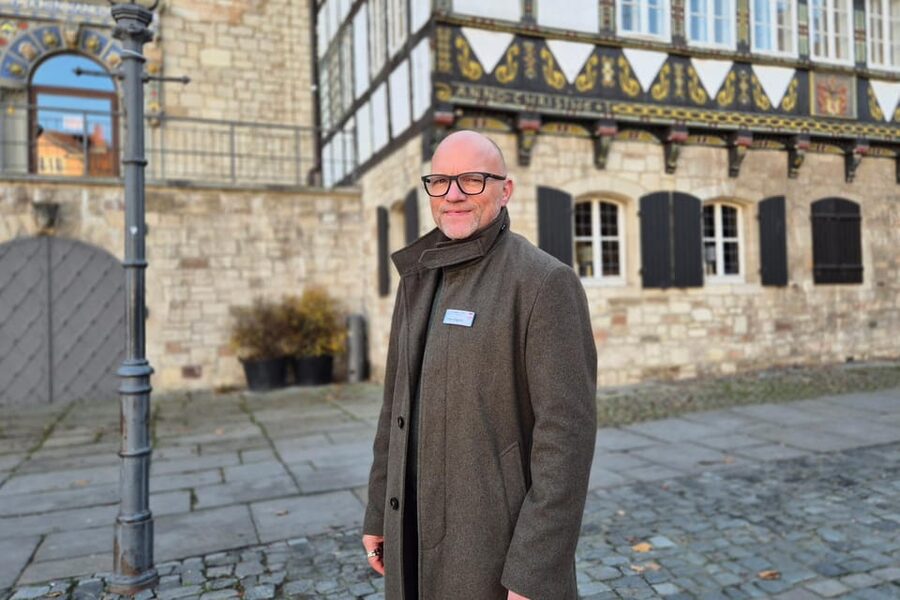
Braunschweig’s appeal is the way its past and present sit side by side. In two hours, you move from Henry the Lion and the Guelph dukes to war damage, half-timbered buildings, bold modern art, and a city known for science and research. Tom Ahlgrim and Tobi Volkmer lead the walk in English or German, keeping it personal rather than turning it into a school lecture.
I like the route’s clear shape, from the Magniviertel to the old town market, and I like that the guides point out small details you can use later in other German towns, such as decorative friezes on historic buildings. The private group format also gives you room to ask questions, and Tom has a reputation for using gentle humor without losing the thread of the story.
The main point to check before booking is mobility. The activity is described as wheelchair accessible, but it is also marked as unsuitable for people with mobility impairments. This contradiction deserves a direct question to BraunschweigTeam before you reserve, especially since the walk covers several historic streets and squares.
Key points at a glance
- A thousand years in two hours: Follow Braunschweig from medieval ducal power to a modern center for research.
- A compact central route: Start at Magnikirchenplatz and finish near the Altstadtrathaus, with no hotel transfer needed.
- Eight meaningful stops: See the Rizzi House, Brunswick Palace, Burgplatz, cathedral, Kohlmarkt, Martinikirche, and old town market.
- Two certified guides: Tom Ahlgrim and Tobi Volkmer are BVGD-certified and offer the tour in English or German.
- Private pricing: At $88 for a group of up to two people, the cost is strongest for couples or anyone who values a tailored walk.
- A good question-and-answer tour: The guides leave space for questions, and the pace can include pauses at benches when needed.
Why Braunschweig makes a good walking-tour city
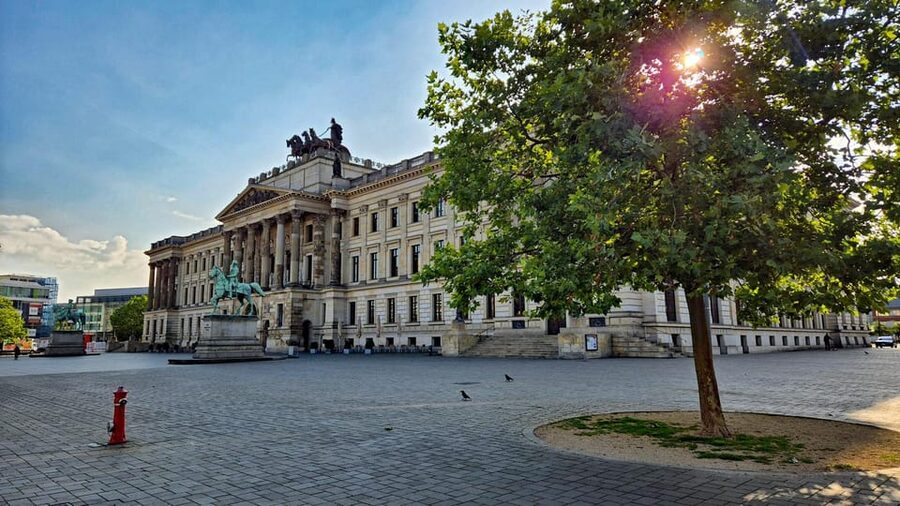
Braunschweig is the second largest city in Lower Saxony, but its historic center feels manageable on foot. The old core gathers important sights into a fairly tight area, making this a useful first look if you have only part of a day.
The city’s story has several distinct chapters. It was first recorded almost 1,000 years ago, then grew in importance when Henry the Lion, Duke of Saxony and Bavaria, and his wife Mathilde of England made it their residence about 850 years ago. Later, Hanseatic merchants and the Guelph dynasty shaped its trade, politics, and buildings.
You also get a clear reminder that old cities do not survive unchanged. Braunschweig suffered heavy war destruction, yet historic buildings and carefully rebuilt areas still reveal its earlier character. The result is not one perfectly preserved medieval town. It is a city where old stone, reconstructed streets, half-timbered houses, modern art, and research institutions share the same center.
That mix gives the tour a useful purpose. You are not only checking off the lion and the cathedral. You are learning how to read the city, including the signs of power, trade, destruction, rebuilding, and modern civic life.
A few more things to do in Germany worth a look
- Berlin: 1-Hour City Tour by Boat with Guaranteed Seating
★ 4.3 · 16,993 reviews - Leipzig: City History Canal Sightseeing Tour on a Motorboat
★ 4.7 · 6,232 reviews - Cologne: Panoramic City Cruise
★ 4.3 · 5,698 reviews
Starting in the Magniviertel
The walk begins at Magnikirchenplatz, on the corner of the Magni Boutique Hotel. This is a practical meeting point in the central area, and the nearby Schlossarkaden car park at Ritterbrunnen 1 is about 200 meters away.
The Magniviertel sets the right tone. It is one of the parts of Braunschweig where historic streets and traditional buildings help you picture the city before moving on to the larger civic spaces. Starting here also keeps the tour from opening with a dry list of dates. You begin in a district with character, then build the story outward.
Tom or Tobi can explain how this part of town fits into the larger history of Braunschweig. If you are staying nearby, the starting point is easy to reach on foot. If you are driving, allow time to park and walk over. The tour does not include hotel pickup or return transport.
Rizzi House and the surprise outside Brunswick Palace
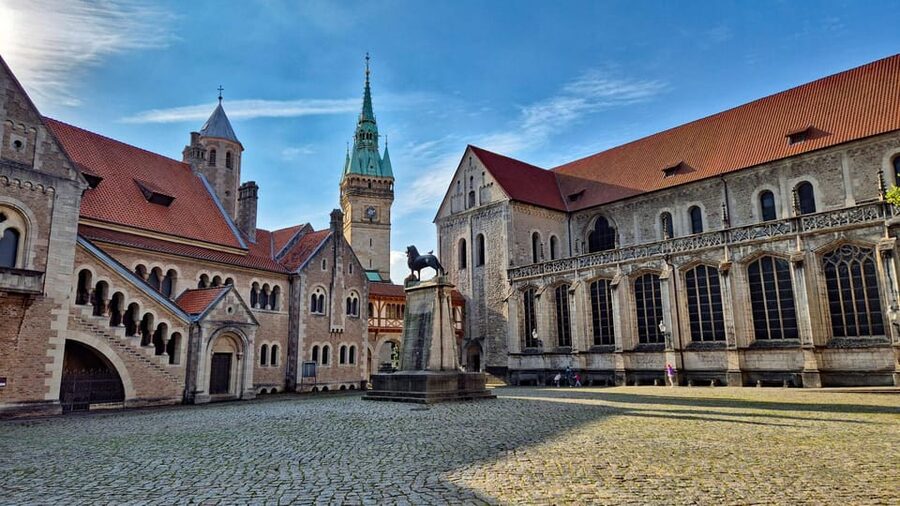
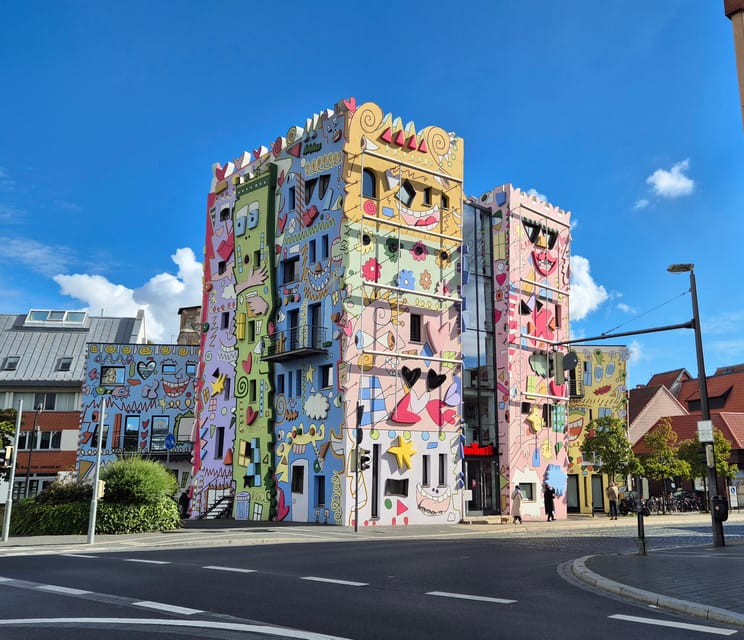
The first formal stop is the Happy Rizzi House, with about 15 minutes for a guided explanation. This colorful, highly individual building is a useful jolt after the older streets of the Magniviertel.
Its playful design shows that Braunschweig is not trying to present only a solemn medieval face. The building adds a modern visual note before the route reaches the more formal Brunswick Palace. I like this contrast because it helps you see the city as a living place, not a museum display.
From there, the walk continues to Brunswick Palace, also known as the Residenzschloss. This stop brings the Guelph story into focus. The palace represents the ruling families and court life that gave Braunschweig political weight over the centuries.
The route does not simply pile one grand building on another. The Rizzi House and palace work as a pair: one playful and contemporary, the other tied to dynastic power. You get a quick lesson in how public spaces can carry very different messages.
Platz der Deutschen Einheit and the city’s modern identity
The next stop is Platz der Deutschen Einheit, or German Unity Square. Its name points to a later chapter in German history and gives the tour a chance to move beyond medieval rulers.
This square also helps connect Braunschweig’s historic center with its present-day identity. The city is now an important European location for science and research, so the tour is not frozen in the age of dukes and merchants. Tom and Tobi frame the old city as part of a place that continues to change.
Expect roughly 15 minutes here. That may sound brief, but short stops are one reason the route can cover so much ground in two hours. You get a focused explanation, then move before the walk becomes tiring or the information starts to blur.
Same base, a different kind of day out:
- Berlin: Reichstag, Dome and Government District Guided Tour
★ 4.7 · 18,288 reviews - Hamburg: Sex and Crime in St. Pauli Tour for Ages 18+
★ 4.7 · 15,447 reviews - Hamburg: 1.5-Hour Harbor and Speicherstadt Day Cruise
★ 4.6 · 14,200 reviews - From Munich: Neuschwanstein & Linderhof Castle Full-Day Trip
★ 4.5 · 12,494 reviews
Burgplatz, the lion, Dankwarderode Castle, and the cathedral
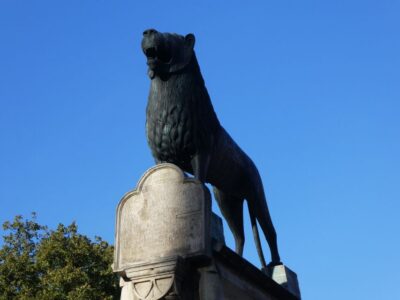
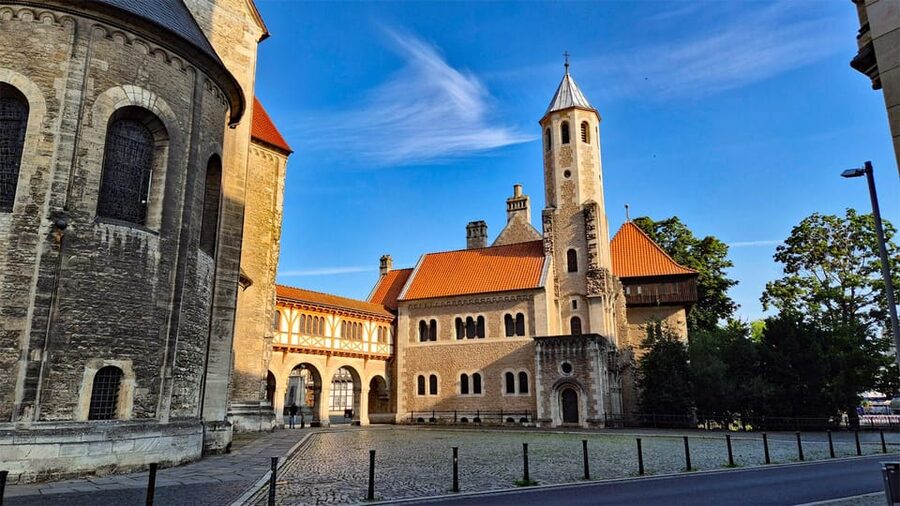
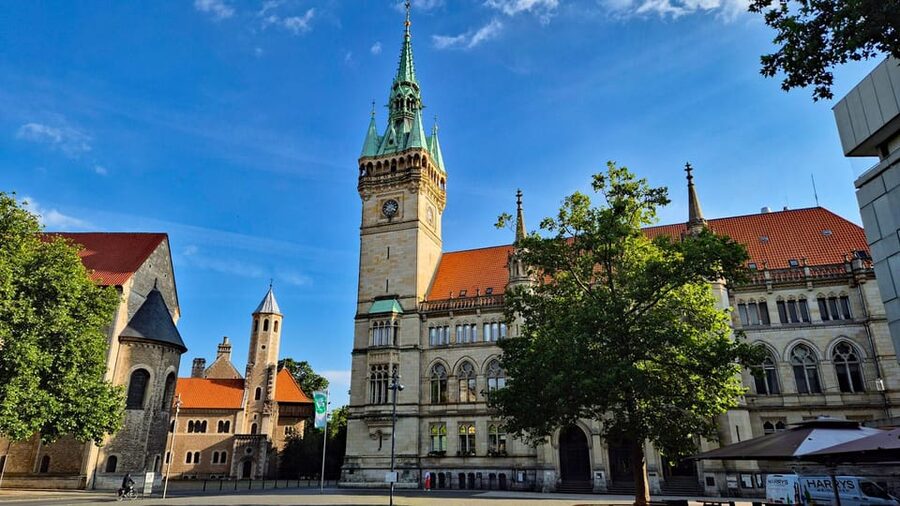
Burgplatz is the dramatic center of the tour. Here you see Braunschweig’s famous lion, Dankwarderode Castle, and St. Blasii Cathedral together.
The lion is the city’s best-known symbol and ties directly to Henry the Lion. This is the place where the medieval story becomes easy to picture: a powerful duke, a chosen residence, and a public statement of authority. The castle and cathedral add two more parts of that picture, linking secular rule with religious power.
St. Blasii Cathedral is especially important for understanding the city’s medieval role. You are not only looking at an attractive church. You are standing in a space connected to the Guelph dynasty and to the ambitions of Henry the Lion.
Burgplatz is also where the city’s layers can feel most concentrated. Medieval authority, later rebuilding, and modern city life all meet here. Allow time to look around between explanations. The guide’s talk gives the structure, but the square itself rewards a slow glance.
The Ringerbrunnen and the route to Kohlmarkt
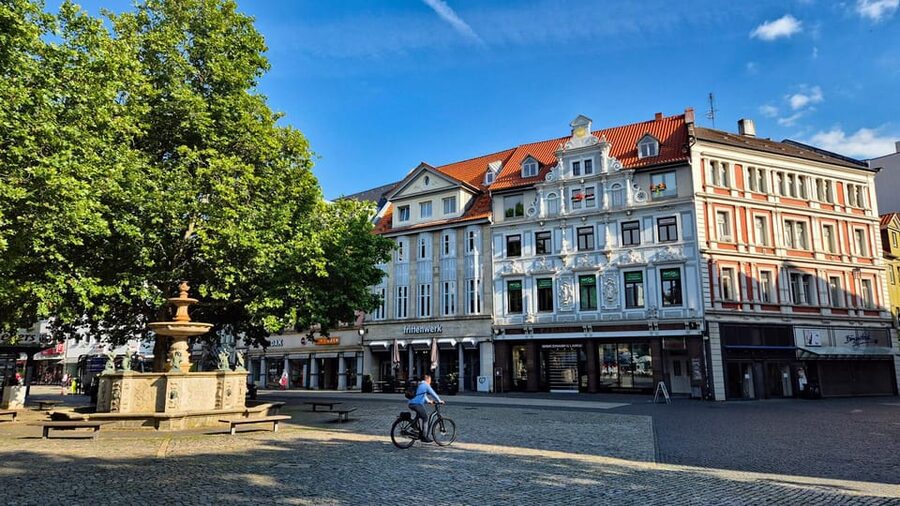
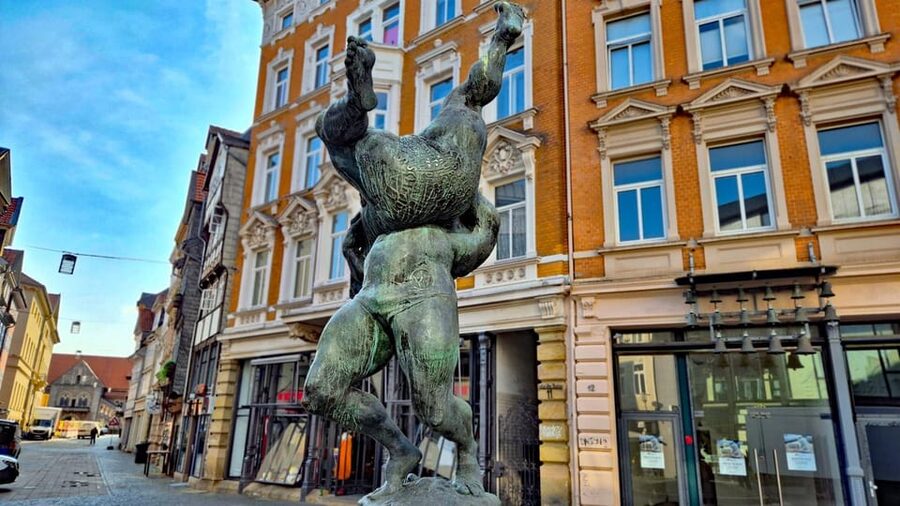
After Burgplatz, the walk passes the Ringerbrunnen. This stop offers a smaller-scale counterpoint to the palace, castle, and cathedral.
A fountain or public sculpture can seem easy to skip when major buildings are nearby, but these details help you understand how a city decorates and uses its shared spaces. The guide can place the fountain within the route’s broader story, giving you another example of how Braunschweig expresses its identity in the center.
The tour then reaches Kohlmarkt, a lively central square and a natural place to think about commerce. Braunschweig’s history includes Hanseatic merchants, and Kohlmarkt helps shift the focus from dukes and bishops to trade and daily urban life.
I find this sort of stop valuable because it keeps the story from becoming too top-heavy. A city is shaped by rulers, but also by markets, shopkeepers, workers, residents, and people passing through. The guide’s job here is to connect the square to that wider picture.
Martinikirche and the historic old town market
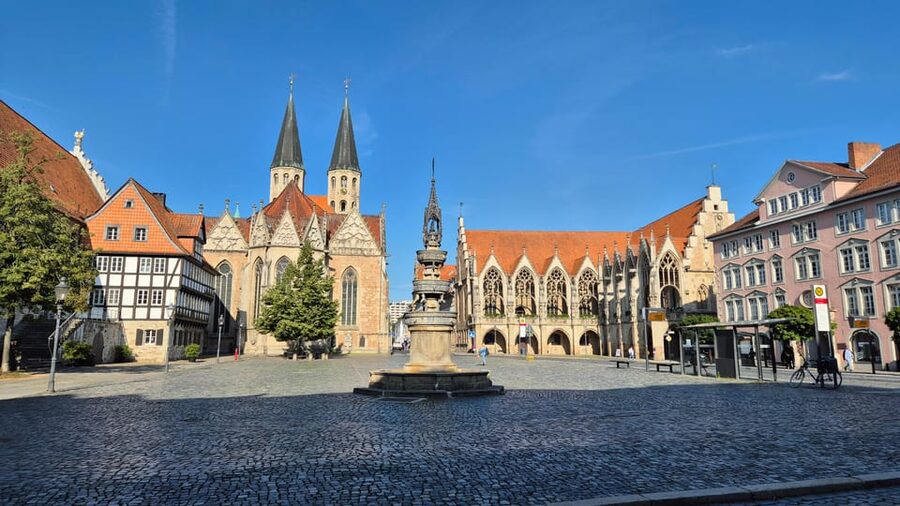
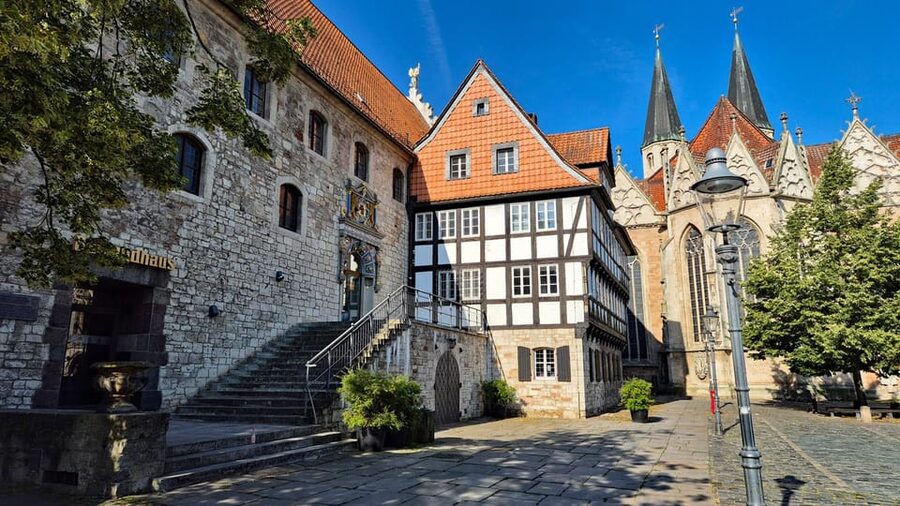
The final stretch leads to An der Martinikirche and then the old town market. Martinikirche gives you another historic church setting, while the surrounding square helps bring together the city’s architectural and civic history.
The old town market is the closing scene, ending near the Altstadtrathaus. This is a fitting finish because the route returns to public life and the old urban center rather than ending at a single isolated monument.
The walk has covered medieval power, Guelph rulers, trade, war destruction, rebuilding, modern art, and contemporary research. The final squares give those subjects a physical setting. You can look back at the route and understand how the pieces fit together.
The published timing allows about 15 minutes at each of eight points, although the full experience is described as lasting 1.5 to 2 hours. The exact pace will depend on questions, walking speed, and how much time the guide spends at each site.
How Tom and Tobi shape the experience
Both guides are BVGD-certified, which matters if you want a structured city walk rather than a casual orientation stroll. The tour is available in English or German, and the format is private for your group.
Tom Ahlgrim receives especially strong praise for his friendly English, local knowledge, calm presentation, and ability to answer questions without making the walk feel formal. He has also shown care in preparing for individual groups, including researching a visitor’s connection to New Zealand. That suggests a guide who pays attention before the meeting, not only during it.
His style seems to suit people who want substance without a flood of dates. One useful detail from the feedback is that he explains building decorations, including friezes, in a way that helps you notice similar features in other German towns.
Tom has also handled poor weather well. If rain is in the forecast, bring proper outdoor clothing rather than assuming the tour will move indoors. A wet day will not erase the value of the route, but much of the experience takes place in open squares.
The guides also appear attentive to pacing. A group of older adults found the walk informative and easy to follow, with benches pointed out for anyone who wanted to pause. That is helpful, but it does not remove the need to ask about accessibility if you have a mobility, vision, or hearing concern.
Price, timing, and who gets the best value
The price is $88 per group of up to two people. For a couple, that works out to $44 each. The price includes the guide, explanations at the points of interest, and booking fees. It does not include food, drinks, tips, or transport to and from your hotel.
That is a fair price if you want a private introduction and plan to ask questions. You are paying for the guide’s time, not merely a walk between landmarks. The value is less obvious for a solo visitor, since the same group price is not listed per person, but the private format still gives you a focused experience.
Two hours is enough for orientation without consuming your whole day. I would take this tour near the start of a Braunschweig stay, then use the route to decide which buildings, squares, or museums deserve a longer look.
You can cancel up to 24 hours ahead for a full refund, and the reserve-now, pay-later option keeps your plans flexible. If you arrive late, the guide waits 15 minutes at the agreed meeting point. After that, more waiting is possible only if you contact the provider by phone, so arrive on time.
Accessibility and practical limits
The activity information needs careful reading. It is marked wheelchair accessible, but it also says it is not suitable for people with mobility impairments, visually impaired people, or hearing-impaired people. It is also listed as unsuitable for people over 95 years old.
Those labels do not explain the exact problem. The safest approach is to contact BraunschweigTeam before booking and describe your needs clearly. Ask about pavement, steps, seating, sight lines, hearing support, and the route between the eight stops.
Audio recording is not allowed. You can take notes if useful, but plan to listen rather than record the talk.
The tour does not include food or drinks. Since the walk takes two hours, you may want to carry water, especially in warm weather. The itinerary finishes at the Altstadtrathaus, so you can plan your next meal or sightseeing stop from there.
Who should book this Braunschweig walk
I would choose this tour if you want a broad first look at the city with a human guide and a private setting. It suits couples, families, and small groups who prefer to ask questions rather than follow a large crowd.
It is also a good match for history fans who want more than medieval architecture. The route covers Henry the Lion and the Guelphs, but it also explains war damage, half-timbered buildings, modern art, trade, and the city’s role in research.
English-speaking visitors should feel comfortable booking with Tom or Tobi. The tour is offered in English, and Tom’s clear presentation has been especially useful for people visiting from outside Germany.
I would skip it if you want a museum-heavy experience, a food tour, or a long look inside every major building. This is a central walking tour, with about 15 minutes at each main stop. It gives you context and orientation rather than extended interior visits.
Should you book it?
Book this Braunschweig tour if you want the city’s main story in a compact, personal format. The route is well chosen: it starts with the charm of the Magniviertel, moves through the palace and Burgplatz, then finishes with markets and civic squares.
The strongest reasons to book are the private group, the English or German choice, and the guides’ ability to connect large events with small details. At $88 for two people, it offers good value for couples who want an informed start to their visit.
Before paying, settle the accessibility question directly with the provider. If the route suits your walking needs, this is a smart way to meet Braunschweig through its rulers, merchants, buildings, scars, and surprises.
FAQ
How long does the Braunschweig city tour last?
The tour lasts about two hours, with the full round tour described as taking 1.5 to 2 hours.
What languages are available?
You can take the tour in English or German.
Who leads the tour?
The walk is led by Tom Ahlgrim or Tobi Volkmer. Both are BVGD-certified tour guides.
Where does the tour begin?
The meeting point is Magnikirchenplatz, on the corner of the Magni Boutique Hotel.
Where does the tour finish?
The tour finishes at the Altstadtrathaus, after visiting the historic old town market.
What places does the tour visit?
The route includes the Happy Rizzi House, Brunswick Palace, Platz der Deutschen Einheit, Burgplatz, Ringerbrunnen, Kohlmarkt, An der Martinikirche, and Altstadtmarkt.
How much does the tour cost?
The price is $88 for a private group of up to two people.
Is the tour wheelchair accessible?
The activity is marked as wheelchair accessible, but it is also listed as unsuitable for people with mobility impairments. Contact BraunschweigTeam before booking to confirm whether the route fits your needs.
Just added in Germany
- Berchtesgaden: Via Ferrata Beginner Tour of Schützensteig★ 4.7 · 15 reviews
- Berlin: Energizing 2-Hour Morning Segway Tour★ 4.7 · 35 reviews
- Berlin: Thrilling E-Scooter Adventure Tour★ 4.4 · 66 reviews
- Bayreuth: German City Walking Tour (Tourist Info)★ 4.7 · 202 reviews
- Beelitz-Heilstätten: Baum&Zeit Tree Top Walk Entry Ticket★ 4.9 · 7 reviews
- Beer Bike & Party Bike: Unforgettable Berlin City Tour incl. pickup★ 5.0 · 5 reviews
- Bavaria: Beginner Canyoning Tour★ 4.5 · 10 reviews
- Bayreuth: Christmas city tour in German★ 4.9 · 12 reviews
Tours in Brunswick, compared.

Braunschweig: Guided Walking Tour with Food Tastings
Read our review →