
Reviewed · HISTORICAL TOURS
Charité Hospital Walking Tour: Exploring Berlin’s Medical History
Berlin’s Charité is more than a hospital. It is a place where medical breakthroughs, cruel mistakes, social change, and Berlin’s divided past all meet on the same short walk. You’ll move from Robert Koch’s monument to a neoclassical anatomy theater, then on to red-brick hospital buildings and a canal tied to escape attempts from East Berlin.
I like the small group of no more than 15 people, which gives a guide room to explain complicated subjects without turning the walk into a lecture. I also like the strong storytelling focus, especially the way medical science is linked to the Nazi period, socialism, and the Cold War. The main drawback is that you won’t enter the working hospital or university buildings, so this is an outdoor history walk rather than a museum visit.
Key points to know before booking
- Six stops in about two hours: Each stop receives roughly 20 minutes, keeping the pace brisk and focused.
- Medical history with a human cost: The tour covers breakthroughs, pharmaceutical mistakes, Nazi abuses, and ethical choices.
- A small English-speaking group: The maximum group size is 15 people.
- Mostly outdoor sightseeing: You see monuments, historic exteriors, and public spaces, but not active clinical or university interiors.
- A useful central Berlin finish: The walk ends near Humboldthafen, about 10 minutes from Berlin Central Station.
- Good value for a focused history walk: At $30.12 per person, the price is reasonable if you want context rather than a long museum visit.
Why Charité makes an unusual Berlin walking tour
Berlin has no shortage of tours about kings, walls, spies, and war. Charité offers a different route through the city. Its subject is medicine, but the story quickly grows wider. You hear how institutions were founded, how doctors changed what people understood about disease, and how medical power could be used for public good or terrible harm.
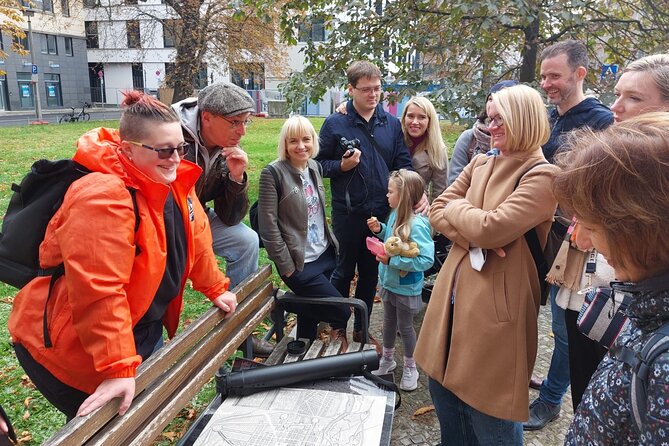
The tour lasts about two hours, with six stops arranged around the Charité area. That length works well for a busy day in Berlin. You get a concentrated look at a major institution without giving up half a day to a large museum.
I would choose this walk if you enjoy history with a clear theme. It is not designed to give you a full tour of hospital wards, laboratories, or medical collections. Instead, the guide uses the streets, monuments, and buildings around you as evidence, then supplies the stories that make them meaningful.
The strongest part of the experience is the guide’s storytelling. The subject includes technical discoveries, but the route does not depend on you having a science background. You can follow the broad human story: illness before modern medicine, the rise of scientific diagnosis, the responsibilities of doctors, and the way political systems shaped health care.
Other history to see in Berlin:
- Berlin: Natural History Museum Entrance Ticket
★ 4.6 · 3,382 reviews - Berlin: World Heritage Cruise to Potsdam
★ 4.5 · 1,435 reviews - Berlin Historical Highlights Walking Tour
★ 4.9 · 657 reviews
Robert Koch Denkmal and the birth of Charité
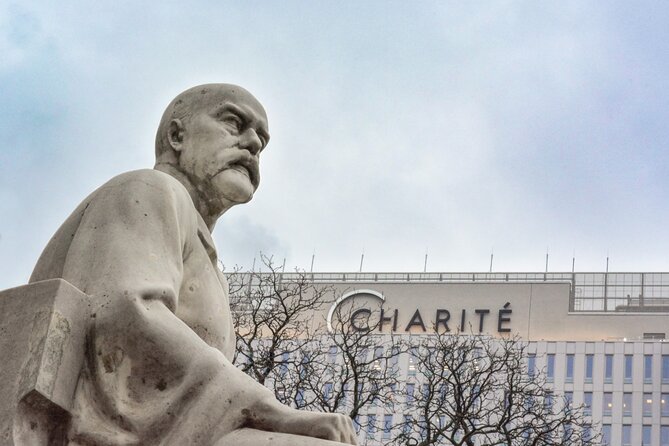
The walk begins at Robert-Koch-Platz, at the monument to Robert Koch. This is a good starting point because it introduces both the hospital and the wider history of modern medicine.
Charité was established in the 18th century and is described as Berlin’s oldest hospital. At the Koch monument, you learn why the institution was created and how its role developed over time. The stop also introduces Koch as a major figure in the study of disease.
Koch is associated with identifying the causes of tuberculosis, anthrax, and cholera. Those discoveries helped shift medicine away from guesswork and toward the study of specific disease organisms. For you, the useful point is not simply memorizing three illnesses. It is seeing how a doctor’s work could change the way entire societies understood infection.
The story has a darker wrinkle. Koch was also connected to the first pharmaceutical scandal in medical history. That detail gives the stop balance. Medical progress is not presented as a straight march from ignorance to success. New treatments and theories can bring hope, money, error, and harm at the same time.
Plan on about 20 minutes here. Admission is free, and the monument is outdoors. If you arrive early, the starting point gives you a simple place to get organized before the group moves on.
Tieranatomisches Theater, an 18th-century teaching space
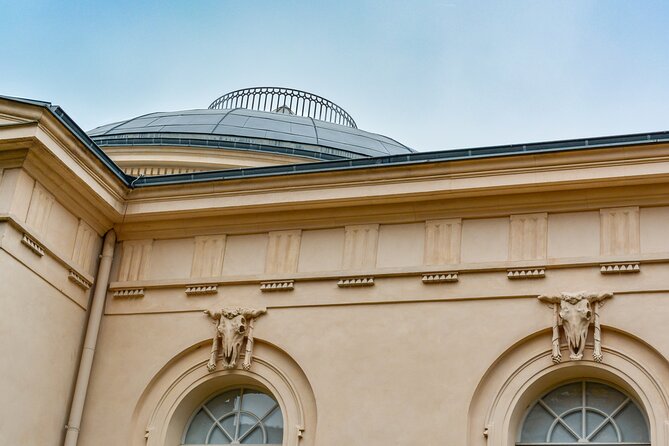
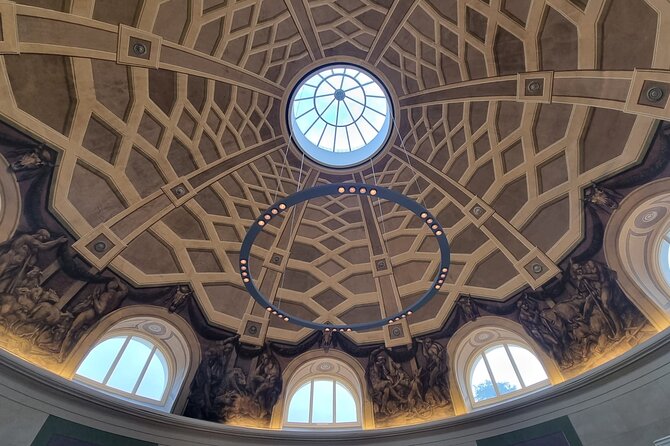
The second stop is the Tieranatomisches Theater, an 18th-century neoclassical building described as Berlin’s oldest surviving academic building. The name can be confusing at first. This was not a theater for performances in the usual sense. It was connected with the study of animal anatomy and disease.
The building helps explain medicine before modern science had taken hold. At this point, the guide discusses how animal diseases were treated before doctors had the methods and evidence that later transformed medical care.
This is one of the more unusual stops because it gives you a physical setting for a period when medical knowledge was limited and uneven. A handsome academic building can hide a very uncertain world of diagnosis and treatment. The contrast between the architecture and the early medical practices makes the stop memorable.
You should not expect a long interior visit here. The listed experience includes the site and its story, with admission free. The value comes from seeing the building in its institutional setting and hearing how medical thinking changed around it.
For me, this is the kind of stop that makes a walking tour useful. A fact in a book can feel remote. A building tied to teaching and disease treatment gives the subject a place and scale.
Rudolf Virchow and the idea that medicine is social
At the monument to Rudolf Virchow, the focus shifts from disease discovery to the structure of modern medicine. Virchow is presented as the father of modern pathology and the founder of social medicine.
Pathology examines disease through the body’s organs and tissues. That work helped doctors understand what illness does inside the body, not just what symptoms appear on the outside. Social medicine widens the frame again by asking how living conditions and society affect health.
This stop matters because it links medicine to public life. Health is not only about individual treatment. It can also reflect poverty, housing, work, sanitation, and access to care. The tour uses Virchow to show how a hospital’s story reaches beyond its walls.
The stop lasts about 20 minutes. That is enough time for a clear introduction, but not enough for a full biography or detailed discussion of every medical theory. I see that as a benefit for most people. You get the main idea and keep moving before the tour becomes too academic.
Other walks around Berlin:
- Discover Berlin Half-Day Walking Tour
★ 5.0 · 9,624 reviews - Berlin: Third Reich and Cold War 2 Hour Walking Tour
★ 4.9 · 6,830 reviews - Berlin: Discover Berlin Walking Tour
★ 4.9 · 5,998 reviews - Berlin’s Best: 2 Hour Walking Tour Third Reich and the Cold War
★ 5.0 · 5,486 reviews
Albrecht von Graefe and the rise of specialist medicine
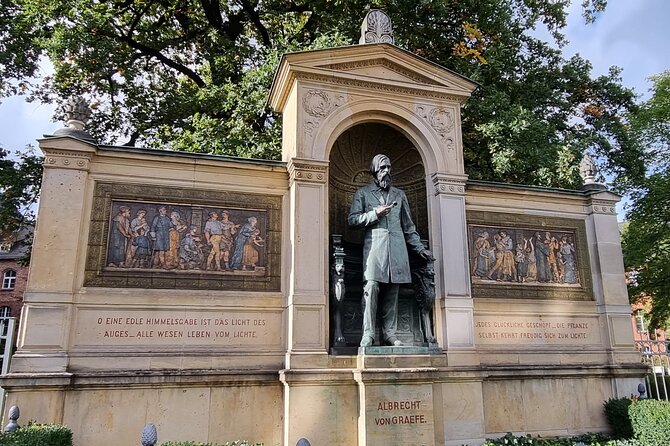
The monument to Albrecht von Graefe brings ophthalmology into the story. He was a groundbreaking eye doctor, and his monument was the first in Berlin dedicated to a scientist.
That detail gives the stop two layers. You learn about von Graefe’s work in eye medicine, while also seeing how Berlin began to publicly honor scientists. Monuments are not neutral decorations. They show which achievements a city thought deserved a permanent place in public space.
This is a useful stop for anyone interested in how medicine became more specialized. The walk does not treat doctors as one large group. It shows different fields developing through different figures, from infectious disease to pathology to eye care.
Again, expect about 20 minutes outdoors. The tour is built around explanation, not entry into a specialist clinic or medical exhibit. If you want detailed information about eye surgery or equipment, this may feel brief. If you want a compact account of how one field gained importance, the format works well.
Charité Campus Mitte and medicine under dictatorship
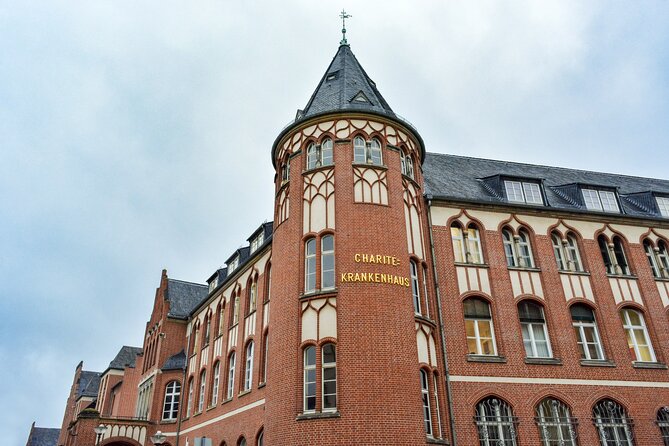
Charité Campus Mitte is likely the most emotionally serious part of the walk. The campus includes beautiful neo-Gothic red-brick buildings, but the guide also addresses how some doctors abused medicine during the Third Reich.
That contrast is important. Attractive architecture can make an institution look noble, but buildings do not tell the whole story. The tour asks you to consider how medicine can be used when professional authority is placed at the service of a dictatorship.
You also hear about doctors who helped everyone without discrimination until the final days of the Second World War. This keeps the discussion from becoming too simple. The history includes people who abused medical power and people who continued to treat patients across political or social lines.
This section gives the tour its moral weight. You are not just learning dates or names. You are considering what professional duty means when a government demands obedience, and what courage can look like inside an institution.
The buildings are viewed from outside, since clinical and university operations are not part of the tour. That limitation matters. You will not be walking through hospital corridors or seeing active medical facilities. Still, the exterior setting provides a strong backdrop for the guide’s account.
Humboldthafen and the Cold War stories by the canal
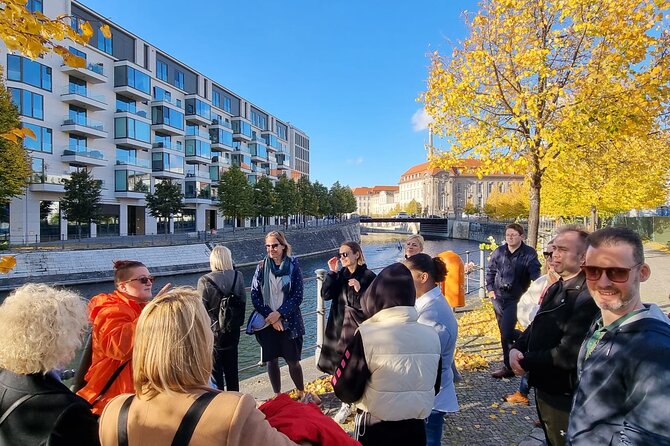
The final stop moves to the area near Humboldthafen, ending on Alexanderufer. This location adds Berlin’s divided history to the medical story.
Several East Berliners attempted to escape to the West by swimming across the city canal just outside the Charité campus. The canal is not only a scenic endpoint. It becomes a reminder that the hospital operated within a city split by political systems and a dangerous border.
You also hear about life at the hospital during the socialist era and after the fall of the Berlin Wall. This gives the walk a more recent ending than many medical history tours. Charité is not treated as a sealed institution from the past. Its story continues through changing governments, ideologies, and public expectations.
The end point is near Design Offices Berlin Humboldthafen, about a 10-minute walk from Berlin Central Station. That makes the tour easy to add before or after a train journey. You could also use the ending as a starting point for exploring the area around the canal, though the tour itself finishes there.
What $30.12 buys you
The price is $30.12 per person. For a two-hour guided walk, that is fair if you value interpretation and a small group. The fee includes the guide and all taxes and fees, while the stops themselves have no admission charge.
You are paying for the connections between the places. Without a guide, you could see the monuments and red-brick campus but miss why they matter. The difficult parts of the story, especially medical abuse during the Third Reich and the Cold War escape attempts, benefit from careful explanation.
The price is less attractive if you expect entry into hospital buildings or a collection of medical objects. This is not an indoor museum tour. You are buying a guided route through public spaces and historic exteriors.
The group limit of 15 helps protect the value. A guide can speak to a small crowd more naturally than to a large queue of people. It also makes it easier to hear the stories at monuments and on the canal path.
Timing, meeting point, and practical details
The meeting point is Robert-Koch-Platz, 10115 Berlin. The walk ends at Alexanderufer, 10117 Berlin, near Humboldthafen. The finish is around a 10-minute walk from Berlin Central Station, which is useful if you are fitting the experience around rail travel.
The tour is offered in English and uses a mobile ticket. Confirmation is sent at booking. It is near public transportation, and most people can take part. Service animals are allowed.
This is an outdoor activity, so weather matters. The experience requires good weather. If poor weather causes a cancellation, you are offered another date or a full refund.
You can cancel for a full refund up to 24 hours before the start time. Cancellations or changes made less than 24 hours before the start are not refunded or accepted. Keep the local time in mind when making changes.
Wear shoes suited to a two-hour city walk. The supplied details do not specify the walking distance or the availability of seating, so you should be prepared to remain on your feet for much of the experience.
Who will get the most from this walk
I would recommend this tour to you if you enjoy:
- Medical and scientific history presented through real places
- Berlin’s Nazi-era and Cold War history
- Small-group walks with a strong guide-led story
- Short activities that fit around a larger city itinerary
- Serious subjects handled with context rather than simple hero worship
It suits adults and older children who can follow a discussion of disease, medical abuse, war, and escape attempts. The tour is also useful for repeat visitors who have already seen Berlin’s main landmarks and want a less familiar subject.
I would be more cautious if your main goal is to tour the inside of Charité. Active clinical and university buildings are not included. You should also choose another activity if you want a broad overview of Berlin, since this walk stays focused on one institution and its surrounding area.
Should you book the Charité Hospital Walking Tour?
Book it if you want a compact, serious, well-told look at Berlin through medicine. The route covers Robert Koch, animal disease research, Virchow, ophthalmology, Nazi-era ethics, socialist hospital life, and Cold War escape attempts in about two hours. That is a lot of ground, but the 20-minute stops keep the story moving.
The best reason to go is the guide’s storytelling. The tour turns monuments and buildings you might otherwise pass into clues about science, politics, and personal choices. At $30.12, it offers solid value for a small-group experience, as long as you are comfortable staying outdoors and not entering hospital interiors.
FAQ
How long does the Charité Hospital Walking Tour last?
The tour lasts approximately two hours.
What language is the tour offered in?
The tour is offered in English.
How much does the tour cost?
The listed price is $30.12 per person.
Where does the tour begin?
It begins at Robert-Koch-Platz, 10115 Berlin, Germany.
Where does the tour end?
It ends at Alexanderufer, 10117 Berlin, by the Humboldthafen canal.
How far is the ending from Berlin Central Station?
The ending point is about a 10-minute walk from Berlin Central Station.
Does the tour enter Charité hospital buildings?
No. Buildings with active clinical or university operations are not visited.
How many people can join the tour?
The maximum group size is 15 people.
What is the cancellation policy?
You can cancel up to 24 hours before the start time for a full refund. Cancellations and changes made less than 24 hours before the start are not accepted, and the amount paid is not refunded. If poor weather causes the tour to be canceled, you are offered a different date or a full refund.
Just added in Berlin
- Private One way Airport Transfer Berlin Airport To Berlin★ 3.5 · 17 reviews
- Private Walking Tour: Berlin Wall, Cold War and Checkpoint Charlie★ 5.0 · 37 reviews
- Modern Berlin Private Walking Tour: Diverse, Vibrant and Exciting German Capital★ 5.0 · 13 reviews
- Private Day Trip to Potsdam from Berlin by Train★ 4.5 · 27 reviews
- City Explorer: Potsdam Private Day Trip★ 4.5 · 10 reviews
- Berlin Private Custom 5-Hour Tour by Car★ 5.0 · 30 reviews
- Private Half-Day Sightseeing Tour in Berlin★ 3.5 · 6 reviews
- Berlin Private Custom Tour in a Minivan, East and West★ 5.0 · 123 reviews
Historical Tours, compared.
City History Canal Sightseeing Tour on a Motorboat
Read our review →




Browse the lists this tour appears in