
Reviewed · WALKING TOURS
Bonn: Private City Highlights Walking Tour
Bonn’s story comes into focus on foot, moving from the old Electoral Palace to Beethoven’s birthplace and the Rhine. I like the way this private 90-minute route connects political power, music, and city life without asking you to spend half a day indoors.
I also like the personal format and the chance to adjust the pace. Herr Schreckenberg is praised for being friendly, clear, and flexible, even shortening a walk to fit a train schedule. The main drawback is simple: the tour is in German, enters no buildings, and is not suited to children under 16 or people with mobility limits.
Key points at a glance
- Private route for up to two people: You get a guide focused on your group rather than a large crowd.
- A strong Bonn introduction: The walk ties the Kurfürsten, Beethoven, the cathedral, and the Rhine together.
- No indoor admissions: You see the exteriors, with interior images or exhibit photos used when helpful.
- Several major photo stops: Expect the Electoral Palace, Beethoven Monument, Sterntor, Alter Zoll, and Münster.
- A brisk city walk: Comfortable clothing matters, with many short walks between stops.
- German-language guiding: Herr Schreckenberg is the named guide praised for warm, capable explanations.
Bonn in 90 minutes: a useful first look
This tour works best as a city orientation with substance. You are not simply ticking off statues and facades. The guide explains how Bonn grew under the Kurfürsten, why Beethoven matters far beyond the city, and how the old center relates to the Rhine.
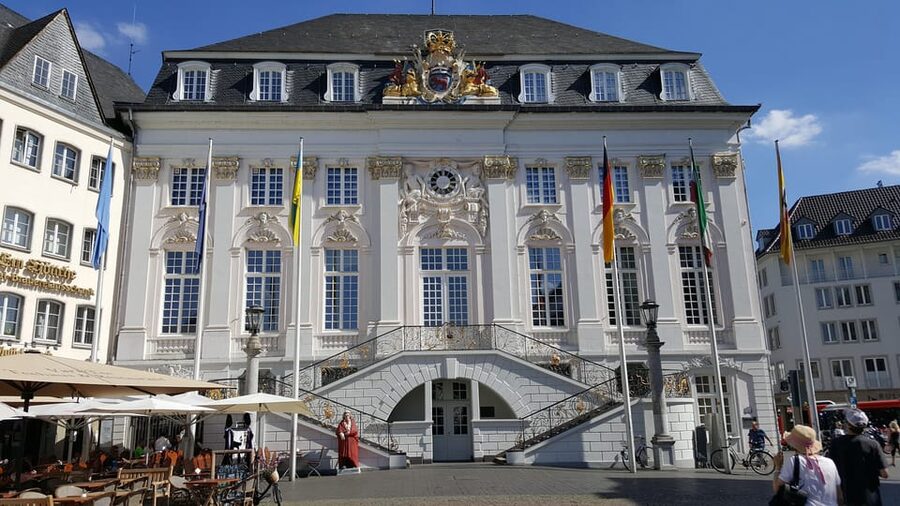
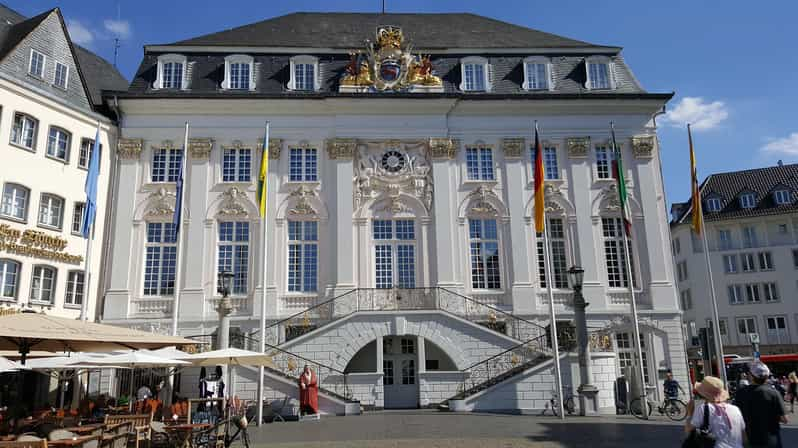
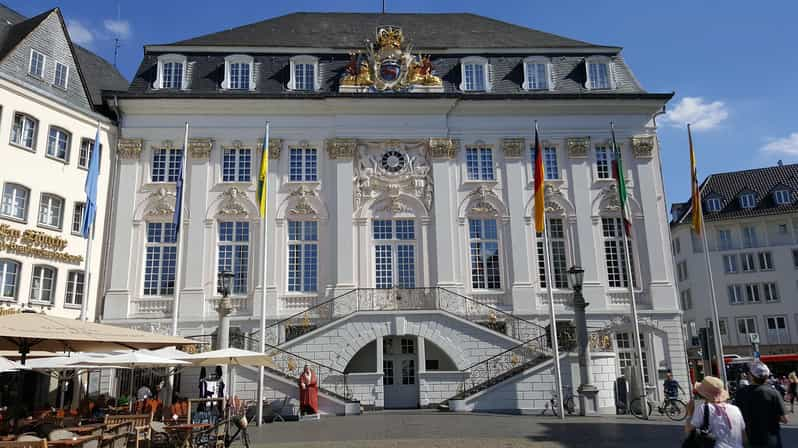
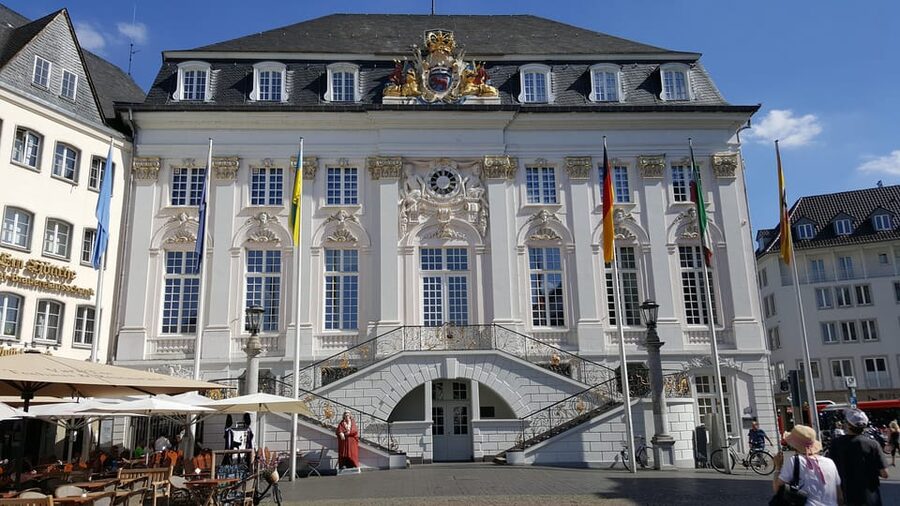
The route begins at Markt 2, beside the stairs of Bonn’s historic Old Town Hall. Look for the small Beethoven figure next to the stairs. There is no pickup area, so arrive at the exact meeting point rather than waiting beside the street.
From there, you walk through central Bonn at a steady pace. The route includes short stops of one to 15 minutes, with most connections taking one to five minutes. That design gives you a good range of sights in limited time, but it also means you should expect to keep moving.
The tour is private for your group, up to two people at the listed price of $117. That works out to $58.50 per person if two people join. For a solo visitor, the same group price is less of a bargain, but the one-to-one attention can be useful if you want to ask many questions or need the guide to shape the pace around your interests.
Other walks around Bonn:
- Bonn: Private Guided Walking Tour
★ 4.3 · 15 reviews - Bonn : Private Walking Tour With A Guide ( Private Tour )
★ 4.5 · 9 reviews - Discover Berlin Half-Day Walking Tour
★ 5.0 · 9,624 reviews
Starting beside Bonn’s Old Town Hall
The Old Town Hall is more than a convenient meeting place. It puts you in the middle of Bonn’s civic center, where the city’s public life has long gathered around the market square.
You receive about 10 minutes here, enough time for the guide to explain the building and set up the larger story of Bonn. This is a good opening because the tour begins with the city itself before moving into the more famous Beethoven material.
I would arrive a little early. Finding a small meeting figure beside historic stairs is easier when you are not searching under time pressure. The meeting instructions are precise, and there is no vehicle collection point to confuse matters.
The next few stops are brief. Some are described as special corners or lesser-known places, with one or two minutes for each. Their value depends on the guide’s explanation rather than on a long visual visit. These quick pauses help connect the main square with the Rhine and palace areas.
Alter Zoll and the Rhine connection
The 15-minute stop at Alter Zoll is one of the most substantial pauses on the walk. This old riverside fortification area gives the tour room to breathe after the short central-city stops.
You get a guided visit and time to take in the Rhine setting. The views here help explain Bonn’s position as a river city, not just a place of palaces and musicians. The tour also includes a wider Rhine panorama, so this part should appeal to anyone who wants a sense of Bonn’s geography as well as its monuments.
The Alter Zoll is especially useful early in a visit because it gives you a mental map. Afterward, you can better understand where the central streets sit in relation to the river. The guide also places the city’s political past into that setting, rather than treating each attraction as an isolated stop.
Do not expect a long riverside stroll. The tour moves on after 15 minutes, and the full route is built around several landmarks. If your priority is sitting by the Rhine or taking an extended walk along the water, you will need extra time before or after the tour.
The Electoral Palace and the Kurfürsten
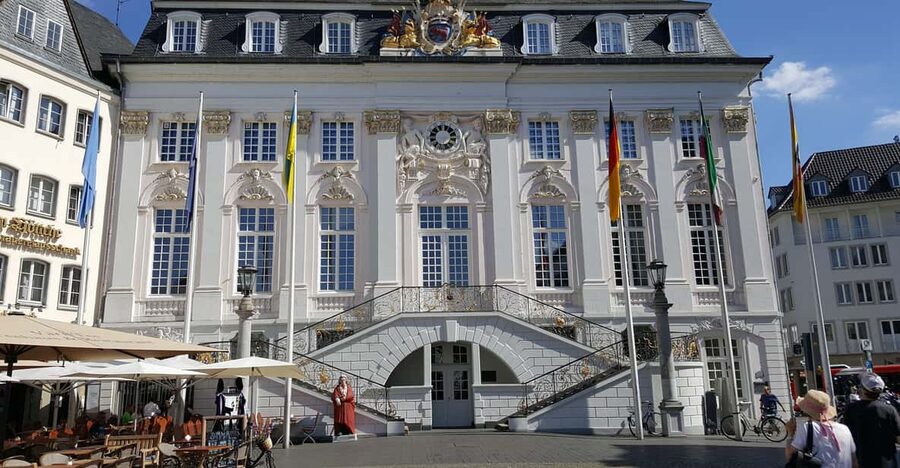
The Electoral Palace, or Kurfürstliches Schloss, receives a seven-minute photo stop and guided explanation. This is one of Bonn’s central historical anchors.
The Kurfürsten shaped Bonn’s political and architectural character, and the guide uses the palace to explain their influence. You see how power was displayed through grand buildings and formal urban spaces. The route also includes views connected with the Baroque Mile, giving you a wider sense of that design period.
Because the tour does not enter buildings, the palace visit is about the exterior and the story attached to it. That is an important point when deciding to book. You will not tour palace rooms or see original interiors firsthand. The guide may show images of notable interiors or exhibits, which helps fill in what the short outdoor visit cannot provide.
I like this approach for a first visit. You get the essential context without committing to a long museum program. If palace interiors are your main reason for coming to Bonn, pair this walk with a separate indoor visit.
A few more things to do in Bonn worth a look
- Bonn: Former Government District Private Tour
★ 5.0 · 127 reviews - Berlin: Private Reichstag and Glass Dome Tour
★ 4.8 · 2,226 reviews - Berlin Private Complete History All Day Walking Tour
★ 5.0 · 474 reviews - Munich Private Tour with a Local – Highlights & Hidden Gems
★ 5.0 · 469 reviews
Münsterkirche, Münsterplatz, and the heart of old Bonn
The route then brings you to Bonn Minster, one of the city’s most important landmarks. The guided stop lasts about eight minutes, with a short walk from the palace area.
The church helps shift the story from princely power to Bonn’s older religious and civic identity. You also hear about Münsterplatz, another key city space, and catch views of the church during the walk. The exact angle depends on the time of day and conditions, but the guide includes it as part of the city’s visual story.
This is a good example of the tour’s efficient format. You receive a pointed explanation and a chance to see the building, but not an extended architectural study. Eight minutes is enough to get your bearings and note details for a later return.
Daylight matters for photography. The tour information specifically notes that the best photo opportunities come during daylight hours. If you have a choice of starting times, a daytime departure makes sense for the palace, church, monument, and Rhine views.
Beethoven’s public monument and private birthplace
Beethoven appears in two different forms on the route. First comes the Beethoven Monument, with a 10-minute photo stop and explanation. This is the public Beethoven, the figure Bonn presents to the world.
The guide explains his international importance and why his name is so closely tied to the city. You do not need to be a serious classical music fan to benefit from this stop. It shows how a local connection became part of a global cultural identity.
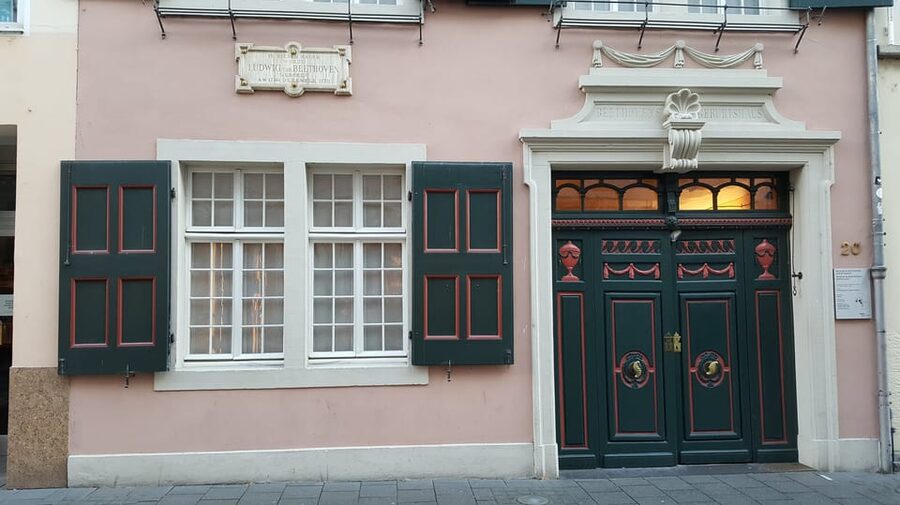
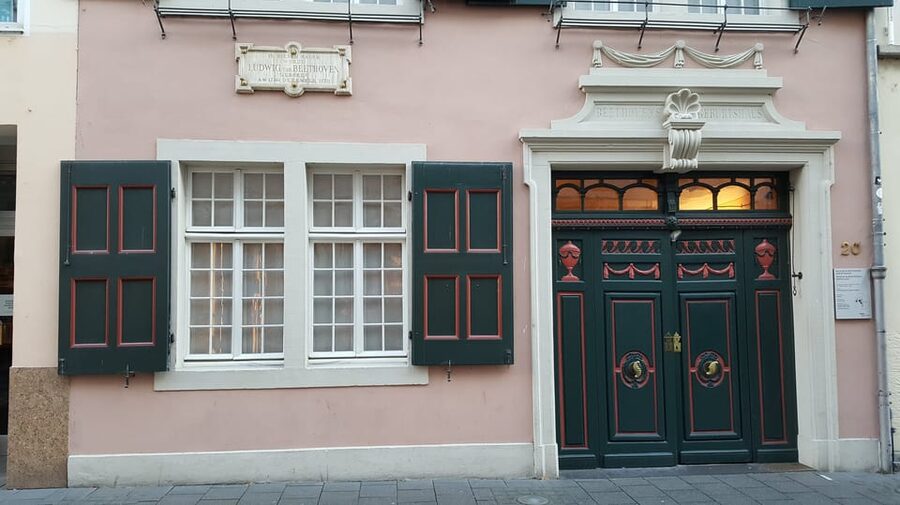
Later, the route reaches Beethoven-Haus, the composer’s birthplace. The stop lasts about four minutes and remains outside. You are shown the building and given context, but you do not go inside to see the museum rooms or collection.
That distinction matters. Beethoven-Haus is a major reason many people visit Bonn, and an exterior view may leave you wanting more. I would treat this tour as a preview if the museum interests you. The walk tells you where it is and why it matters, then lets you decide if a separate indoor visit fits your plans.
The pair of Beethoven stops is still one of the route’s best features. The monument presents public memory, while Beethoven-Haus points to the personal and local side of the story. In a short time, you see how Bonn uses both places to explain Beethoven’s lasting connection to the city.
Sterntor and Bonn’s old city edge
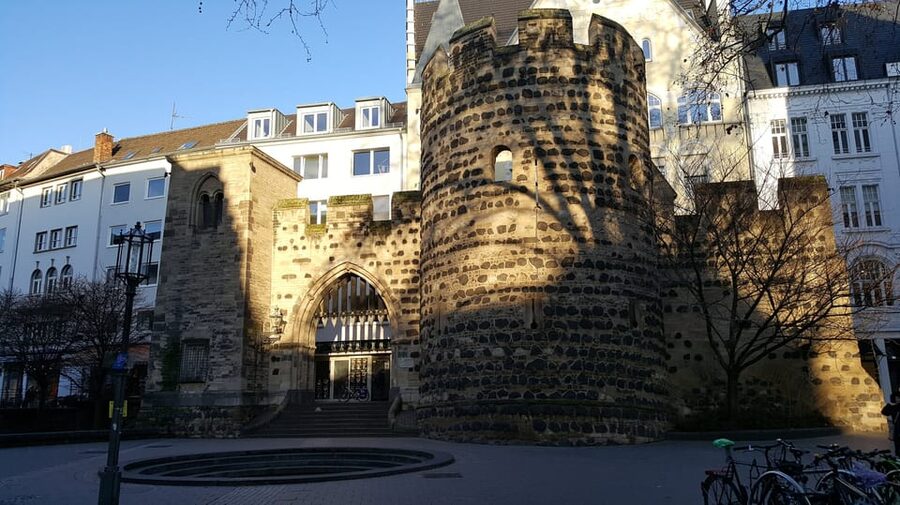
Sterntor receives about five minutes for a photo stop and guided explanation. This reconstructed city gate gives the route a compact look at Bonn’s former defenses and old-town identity.
It is a photogenic pause, but it is not a large site. The value comes from knowing what you are looking at and how it fits into Bonn’s past. Without that context, you might walk by quickly. With a guide, the gate becomes part of the city’s transition from enclosed historic town to modern urban center.
The route includes a few more short pauses before returning to Markt 2. These one-minute stops are not designed for long exploration. They are there to point out details you might otherwise miss and keep the walk moving toward its starting point.
What you see from a distance
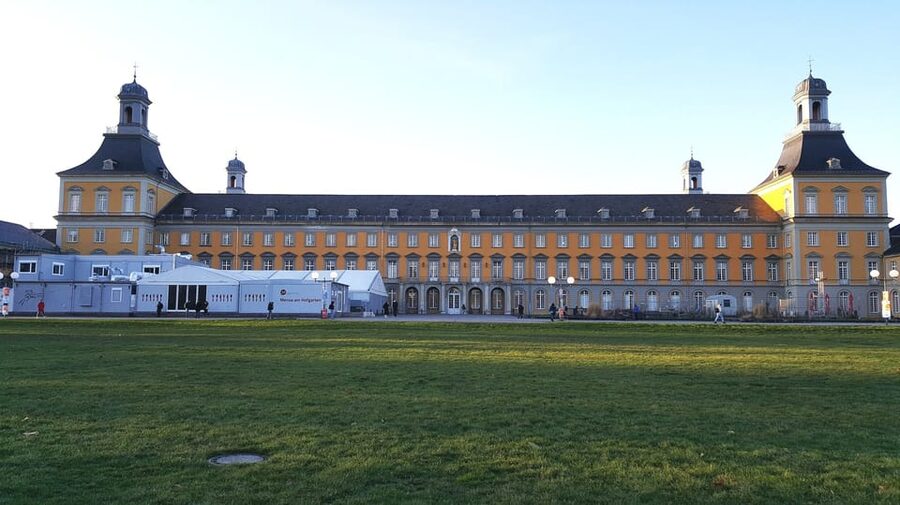
Not every important Bonn sight is a full stop. The walk includes distant views of Münsterkirche, the Baroque Mile, Poppelsdorfer Schloss, Münsterplatz, and the Rhine panorama.
This is a useful feature if you are new to the city. You get a sense of what deserves a return visit, even when the 90-minute route cannot reach every entrance. Poppelsdorfer Schloss, in particular, is presented as part of the wider city picture rather than as a separate visit.
Keep your expectations clear. A distant view is not the same as touring a building or walking through its grounds. The guide’s explanations make these glimpses worthwhile, but you should plan additional time if one of these sights is high on your list.
The guide and the private format
The strongest praise centers on the guide’s manner. Herr Schreckenberg is described as friendly, highly capable, and generous with explanations. The comments also point to an appealing mix of facts and approachable conversation, rather than a dry recital of dates.
That personal quality matters more on a short tour. With only 90 minutes, the guide has to choose what to explain and what to pass by. A good guide makes those choices feel connected instead of rushed.
The private setup also gives you more room to ask questions. If you want to know more about Beethoven, the Kurfürsten, or a particular building, you can focus the conversation without waiting for a group of strangers. One especially practical example is the guide’s ability to shorten the walk when a train schedule required it.
Still, private does not mean fully custom-built. The route has a defined sequence, and the advertised language is German. If you need English or another language, this is not the right choice based on the available information.
Walking effort, timing, and practical limits
The activity lasts 90 minutes and includes repeated short walks. The itinerary shows connections of one to five minutes between many stops, with the largest guided pauses at Alter Zoll, the Old Town Hall, Bonn Minster, and the Beethoven Monument.
Wear comfortable clothes and shoes. The route is not suitable for people with mobility impairments, and the activity is not suitable for children under 16. Those limits are worth taking seriously because the experience moves through city streets rather than staying in one accessible venue.
The exact sights can change with the time of day and availability. That means you should view the route as a well-planned Bonn introduction, not a guarantee that every listed point will receive the same amount of attention.
No indoor spaces are entered. You may see images of important interiors or exhibits, but the main experience is outdoor sightseeing and guided interpretation. This also means daylight affects how much you get from the visit, especially if photography matters to you.
Cancellation is flexible up to 24 hours before the start for a full refund, and you can reserve while paying later. Those terms are useful if your Bonn plans depend on train connections or changing weather, but they should not replace checking the available start times before booking.
Is $117 good value?
For two people, $117 is a reasonable price for a private introduction to Bonn, especially if you value direct attention and a guide who can adjust the conversation. The price covers the professional guide and exclusive use of the tour for your group.
The value is less obvious for one person because the group rate does not appear to drop below $117. Even then, a solo visitor who wants a quick orientation may prefer this to piecing together several short stops alone.
There are no indoor admissions listed, so you are paying for the guide’s time, local interpretation, and the convenience of a focused route. That is fair if you want context and efficient sightseeing. It is not the best choice if you mainly want museum access or a slow, unstructured walk.
Who should book this Bonn walk?
I would recommend it to first-time visitors with a short stay, couples who want a private introduction, and anyone who wants Bonn’s major themes explained in a compact route. It also suits visitors arriving or departing by train, since the guide has shown flexibility around timing.
It is a good fit for German speakers who enjoy history, city architecture, Beethoven, and river views. The route gives you enough information to plan what to revisit later.
I would skip it if you need an English-language tour, want indoor access to Beethoven-Haus or palace rooms, travel with children under 16, or have difficulty with city walking. I would also choose a longer or more specialized tour if you already know central Bonn and want detailed treatment of one subject.
Final verdict: book it for orientation and context
Book this tour if you want Bonn explained by a personal guide rather than collected as a list of buildings. The combination of Alter Zoll, the Electoral Palace, Münster, Sterntor, and two Beethoven sites gives you a clear first picture of the city.
The best reason to choose it is the guide-led connection between those places. The main caution is that 90 minutes passes quickly, and the tour stays outdoors. If those limits suit your plans, this is a practical, personable way to get Bonn under your feet before exploring further.
FAQ
How long does the Bonn walking tour last?
The tour lasts 90 minutes.
Where does the tour start?
It starts at Markt 2, beside the stairs of Bonn’s historic Old Town Hall. Look for the small Beethoven figure next to the stairs.
Is there a pickup area?
No. The meeting point is at the Old Town Hall, and there is no pickup area.
What language is the tour conducted in?
The live tour guide speaks German.
Is the tour private?
Yes. It is a private group experience for your group, with the listed price covering up to two people.
Does the tour enter buildings?
No indoor spaces are entered. The guide may show images of notable interiors or exhibits.
Is the tour suitable for children or people with mobility impairments?
It is not suitable for children under 16 or people with mobility impairments.
Just added in Bonn
- Panorama tour between Bonn and Königswinter★ 4.7 · 63 reviews
- RhineRiverBoatTour from Bonn to Königswinter with Live Guide★ 4.3 · 13 reviews
- Bonn: Sunday Brunch Buffet with Cologne live music★ 5.0 · 5 reviews
- Bonn: Sunset Boat Tour on the Rhine★ 4.7 · 11 reviews
- Bonn Regio WelcomeCard with Guidebook★ 4.3 · 15 reviews
- Bonn : Private Walking Tour With A Guide ( Private Tour )★ 4.5 · 9 reviews
- Bonn: Private Guided Walking Tour★ 4.3 · 15 reviews
- Bonn: 3,5 hours Guided Bike Tour★ 4.4 · 8 reviews
Walking Tours, compared.

Third Reich Berlin: Hitler and WWII Walking Tour
Read our review →
Browse the lists this tour appears in