
Reviewed · CAR FACTORY TOURS
Berlin: Sightseeing Tour in Classic Volkswagen T1 Samba Bus
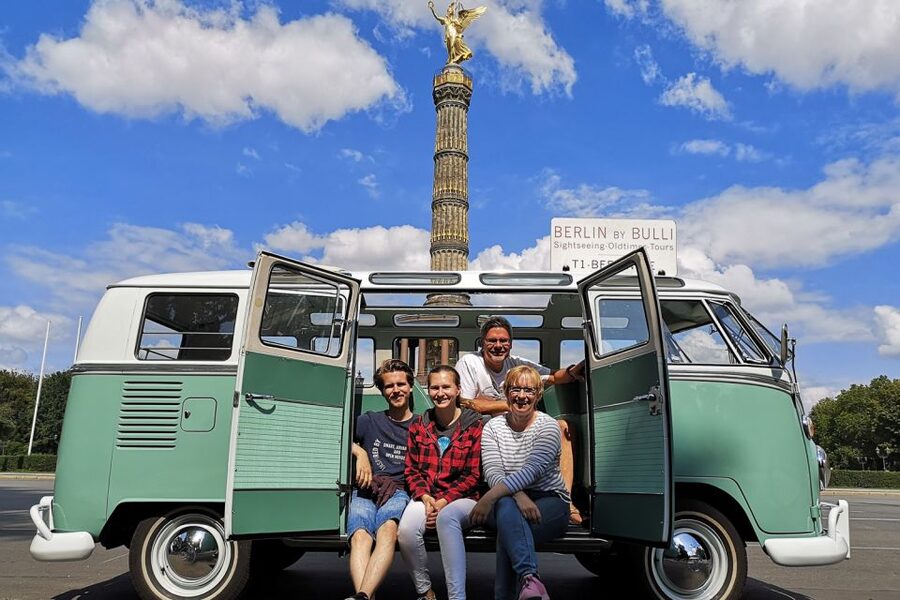
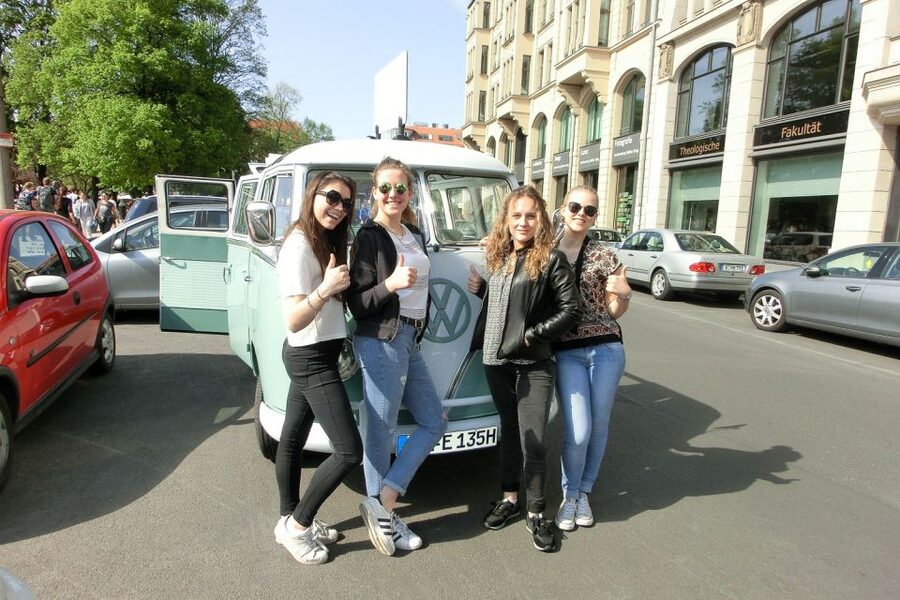
Berlin’s most memorable sightseeing vehicle may be its smallest. This 1965 Volkswagen T1 Samba bus carries no more than seven people, giving you a close look at Berlin through 21 windows while your guide handles the driving and storytelling. The route covers nearly 50 sights, from Museum Island to the Berlin Wall and Charlottenburg’s grand avenues.
I like two things in particular: the bus takes small side roads that ordinary sightseeing coaches cannot use, and the photo booklet helps you picture buildings and streets as they looked in earlier decades. The main drawback is simple: this is a panoramic drive, not a walking tour. You pass most sights without getting out, and commentary may take longer when English and German are used together.
Key points
- A genuinely small group: The bus is limited to seven participants, so you can ask questions and see the guide’s photo booklet without fighting for attention.
- A restored 1965 Samba bus: The vehicle is part of the attraction, not just a way to get around. It is kept in very good condition and has heating when needed.
- A broad Berlin route: In two hours, you pass Museum Island, the Brandenburg Gate, the government district, West Berlin shopping streets, Potsdamer Platz, Checkpoint Charlie, and the old center.
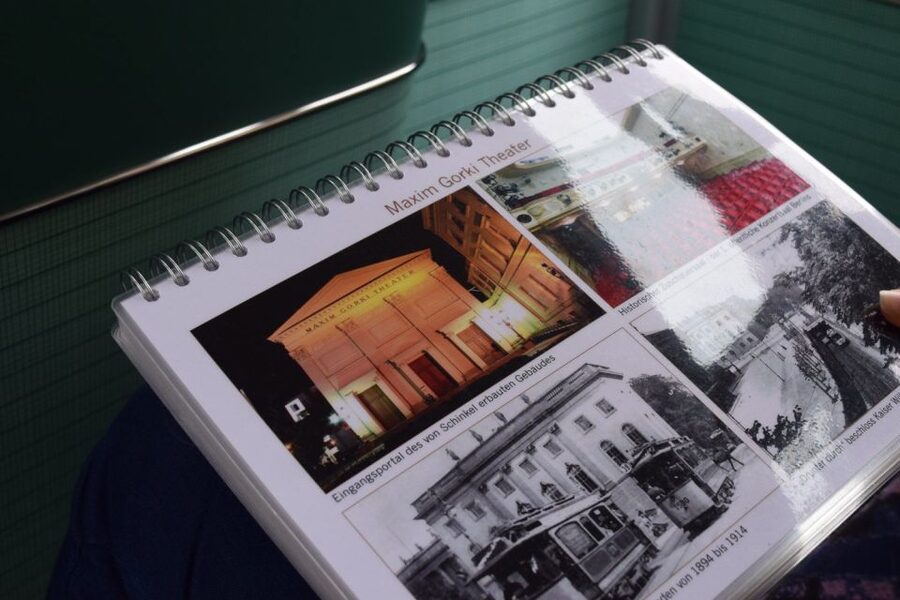
- Useful historical comparisons: The photo booklet shows earlier views and interiors connected to the places outside your window.
- Guides with local character: Guides such as Rajko and Michael are praised for warm delivery, personal Berlin stories, and clear explanations of the city’s difficult past.
- Best as an opening tour: Take it early in your visit if you want a quick map of Berlin and ideas for places to explore later.
Why the VW Samba bus changes the sightseeing experience
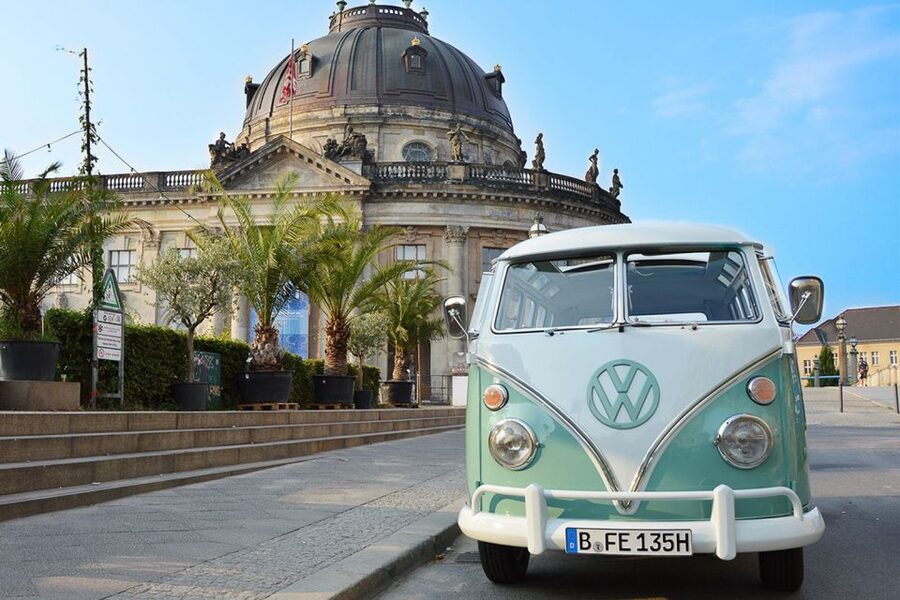
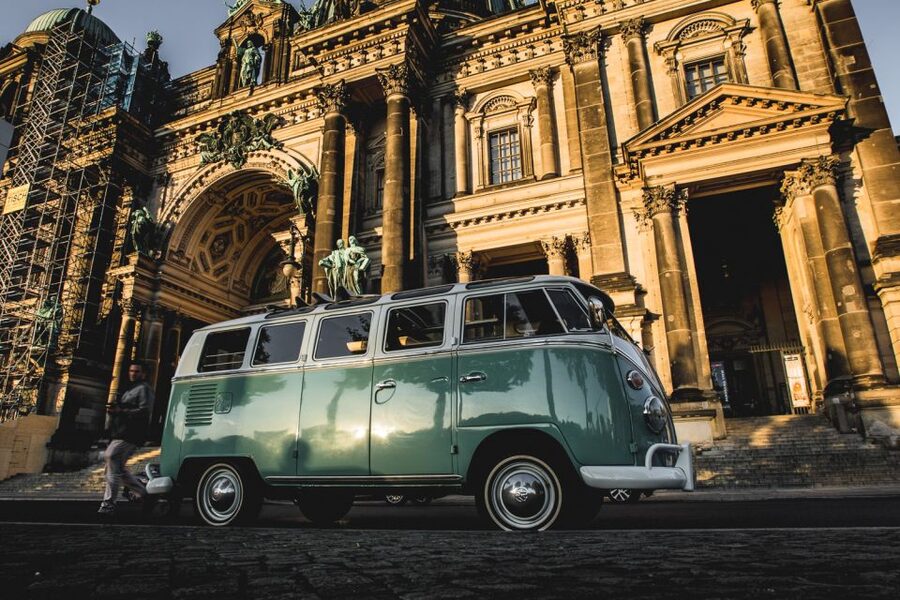
A standard sightseeing coach gets you around Berlin. This little Volkswagen gives the outing a different feel. Its rounded body, split-window design, polished finish, and rows of windows attract smiles from people on the pavement. You are not simply riding between monuments. The vehicle itself becomes part of your introduction to the city.
The bus was built in 1965, a useful detail in a city shaped by the postwar years, the Berlin Wall, and the division between East and West. That does not mean the tour turns into a vehicle history lesson. The focus remains Berlin, but the old van suits a city where layers of time sit close together.
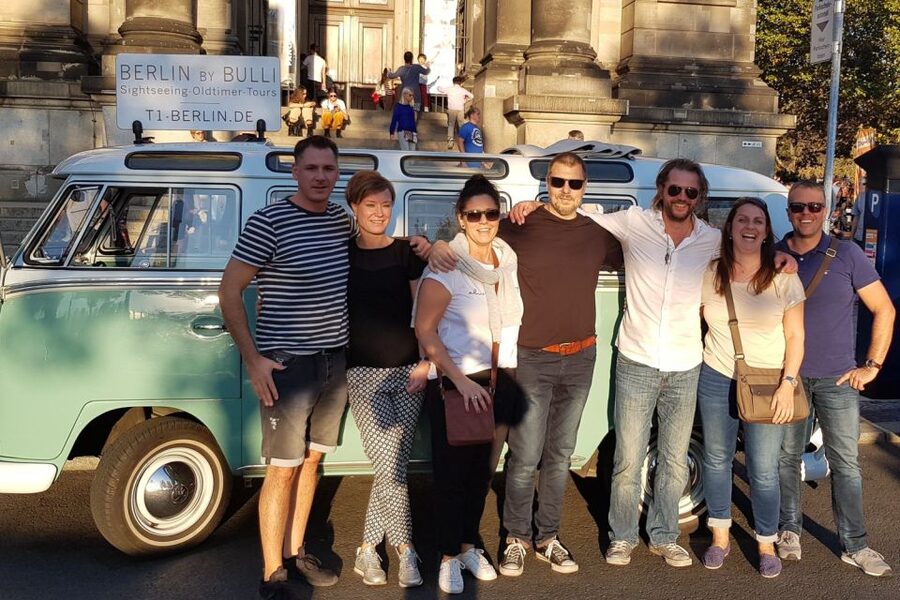
With a maximum of seven participants, the atmosphere is more personal than on a double-decker bus. You can ask about a building, request clarification, or follow the guide’s images as the modern street appears outside. The seating is compact, so I would not choose this for a large group that wants lots of room. For a couple, family, or small party, the scale is a real advantage.
The bus has heating when necessary, which matters in Berlin’s colder months. Winter outings have been especially comfortable for some groups, though an older vehicle will not offer the same spacious interior or modern climate control as a new coach. Dress sensibly and expect a snug, old-fashioned ride.
Other factory and works visits near Berlin:
- Berlin: BMW Motorrad Production – See How Bikes Are Built
★ 4.6 · 93 reviews - Stuttgart: Mercedes-Benz Museum Entry Ticket
★ 4.8 · 1,400 reviews - Leipzig: Exclusive BMW & MINI Behind-the-Scenes Factory Tour
★ 4.6 · 289 reviews
Starting at Berlin Cathedral and Museum Island

The tour begins beside Berlin Cathedral, a strong place to start. From here, you are immediately surrounded by the old center, with the cathedral, Lustgarten, and Museum Island close together. The route passes the Alte Nationalgalerie, Neues Museum, Pergamon Museum, and Bode Museum, along with the Old Museum.
You will not get time to enter the museums, so think of this stretch as orientation rather than a museum visit. The advantage is breadth. In a few minutes, you see how Berlin’s cultural center is arranged and can decide which buildings deserve a return visit on foot.
The German Historical Museum, Neue Wache, Crown Prince’s Palace, Humboldt University, Berlin State Opera, and Bebelplatz follow. This is one of the tour’s strongest runs because the sights are close together but represent different parts of Berlin’s story.
Bebelplatz also carries a sobering connection to Nazi book burning. The tour then moves along Unter den Linden, the city’s grand historic boulevard, toward Pariser Platz. A good guide can help you read this route as more than a parade of handsome façades. It is a line through royal Berlin, wartime destruction, division, and reunification.
Brandenburg Gate, the Reichstag, and the government district
At Pariser Platz, the Brandenburg Gate provides one of Berlin’s essential views. The bus passes the gate and continues toward the Reichstag, the government district, the Federal Chancellery, and Berlin Hauptbahnhof.
This section helps you connect famous symbols with the working capital around them. The Reichstag represents modern democratic Germany, while the nearby government buildings and central station show how much of Berlin has been rebuilt and reshaped since reunification.
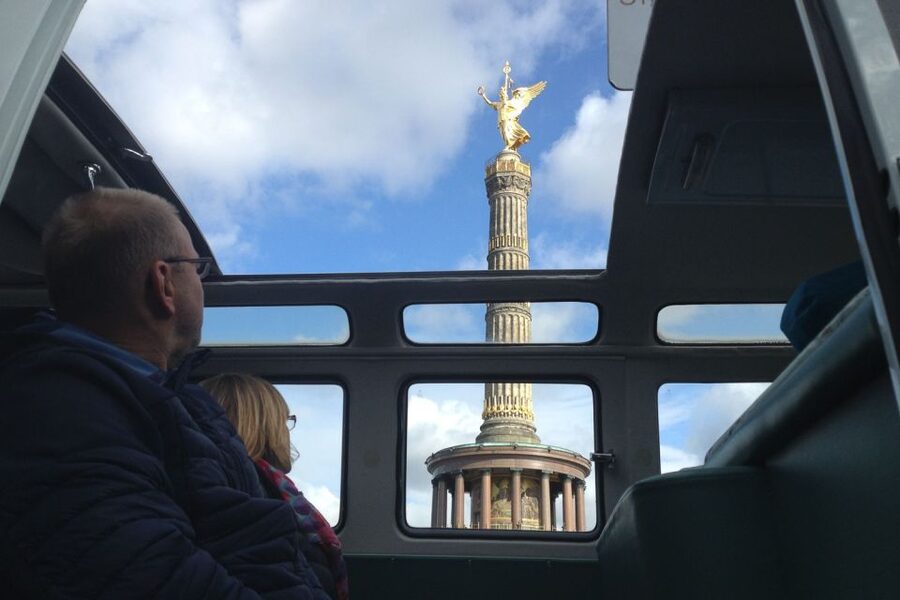
The bus also passes the Moltke Bridge and the Congress Hall, then Bellevue Palace and the Victory Column. This is a useful contrast: formal government spaces give way to monumental avenues and open views around the Tiergarten area.
Because the tour does not stop for a full visit, you should not expect time to enter the Reichstag or climb the Victory Column. Still, seeing them in sequence helps you understand Berlin’s layout quickly. You get the broad picture first, then you can return to the places that catch your interest.
From Bellevue Palace to Kurfürstendamm
The route shifts west through Berlin Zoo, Theater des Westens, Savignyplatz, Kurfürstendamm, Kaiser Wilhelm Memorial Church, and Tauentzienstraße. This is where the city’s West Berlin identity becomes clearer.
Kurfürstendamm is a major shopping and café boulevard. Nearby, the Kaiser Wilhelm Memorial Church remains one of Berlin’s most striking reminders of wartime damage. The damaged tower and later church building tell a different story from the restored façades on Unter den Linden.
The tour also passes KaDeWe, the famous department store, and the embassy district. You get a quick sense of the western center’s commercial and diplomatic character without spending the whole day crossing Berlin on foot.
The windows are important here. You can watch the city change from formal historic center to shopping streets and postwar West Berlin. The guide’s commentary gives meaning to that shift, while the small bus lets you look out from several angles instead of peering through a high coach window.
Same base, a different kind of day out:
- Berlin: Reichstag, Dome and Government District Guided Tour
★ 4.7 · 18,288 reviews - Berlin: 1-Hour City Tour by Boat with Guaranteed Seating
★ 4.3 · 16,993 reviews - Berlin: Boat Tour Along the River Spree
★ 4.4 · 11,252 reviews - Discover Berlin Half-Day Walking Tour
★ 5.0 · 9,624 reviews
Philharmonie, Kulturforum, and Potsdamer Platz
Next comes the Berliner Philharmonie and Kulturforum, an important cultural area near Potsdamer Platz. The route shows how Berlin’s cultural institutions are spread across former boundaries and rebuilt districts.
Potsdamer Platz offers one of the clearest examples of modern Berlin. Once divided and heavily altered by the Wall, it became a major redevelopment zone after reunification. From the bus, you see the contrast between new architecture and the older traces that still shape the city.
This part of the route is especially helpful if you are trying to understand why Berlin can feel visually uneven. The mixture is not accidental. War, division, empty border zones, and rapid rebuilding all left their mark.
The photo booklet adds something here that a passing view cannot. It lets you compare the present street with earlier photographs, helping you picture what disappeared and what was rebuilt. It is described as an analog iPad, a playful term for a paper-style visual aid rather than a digital screen.
Berlin Wall, Anhalter Bahnhof, and difficult history
The bus then passes sections and markers connected with the Berlin Wall, Niederkirchnerstraße, Anhalter Bahnhof, the Holocaust Memorial, the Führer Bunker site, and the former Reich Chancellery area.
This is a serious portion of the tour. Berlin’s 20th-century history is not confined to one museum. It appears in ordinary streets, vacant spaces, plaques, fragments of wall, and modern buildings occupying sites that once held Nazi government offices.
Anhalter Bahnhof is especially telling. The former station’s surviving façade hints at the scale of the old railway terminal, while the surrounding area reflects war damage and later change. The route also passes the Holocaust Memorial, where you may want to return on foot for a slower visit and the information center beneath it.
The bus can introduce these places, but two hours cannot give each one the attention it deserves. I see that as a strength if you use the tour as a first pass. It gives you a framework without pretending that a quick drive replaces a museum, memorial, or guided walk.
Friedrichstraße, Checkpoint Charlie, and Gendarmenmarkt
The route continues along Friedrichstraße to Checkpoint Charlie, one of Berlin’s most recognizable Cold War sites. Today, the area is busy and commercial, but the name still points to the former border between East and West Berlin.
Your guide can help separate the real history from the postcard image. Checkpoint Charlie is worth seeing, but it is also one of the places where a short explanation matters most. The sign, guardhouse replica, and surrounding streets do not tell the full story by themselves.
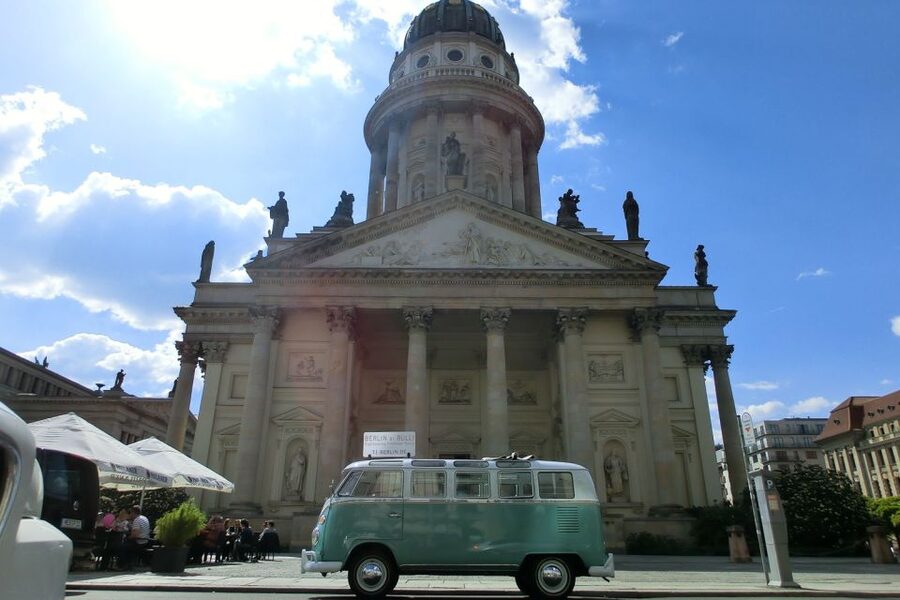
Gendarmenmarkt follows, with its grand square and landmark buildings. The bus then heads toward Berlin Palace, the Jungfern Bridge, the Galgenhaus, Rotes Rathaus, Neptune Fountain, and St. Mary’s Church.
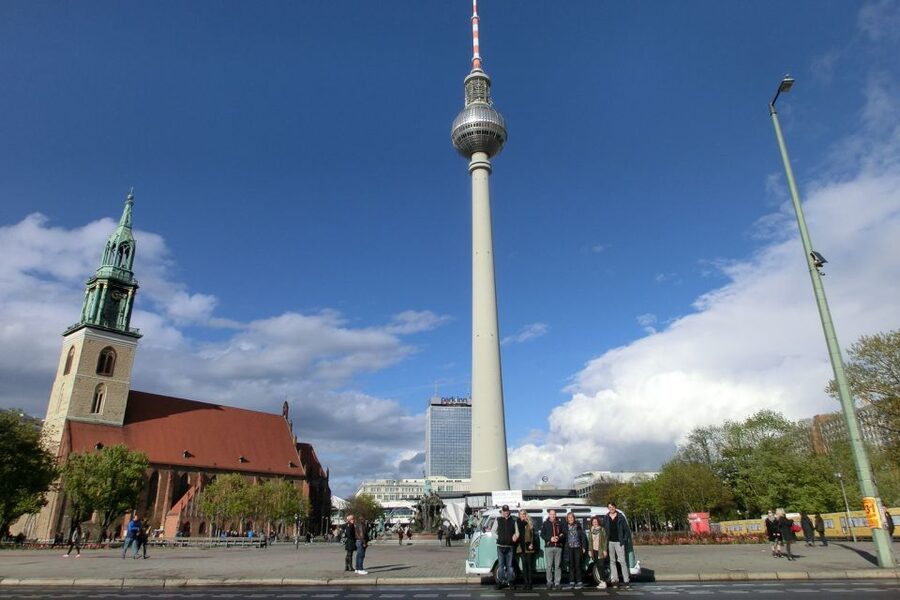
This final stretch returns you to Berlin’s oldest core. Rotes Rathaus and the TV Tower help show the character of East Berlin, while the palace area reflects the city’s long debate over restoration, reconstruction, and national identity.
The TV Tower and return to the cathedral
The TV Tower is one of Berlin’s easiest landmarks to spot, and seeing it from street level helps you understand its place in the former East German center. Nearby Neptune Fountain and St. Mary’s Church add older details to an area often associated with socialist-era planning and modern redevelopment.
The bus returns to Berlin Cathedral after about two hours. You finish close to the starting point, which is handy for continuing on foot around Museum Island, the river, or Unter den Linden.
Do not expect a stop at every listed sight. Most are viewed from the bus, and traffic or the pace of commentary can affect how long each place receives. The payoff is range: you cover a surprising portion of Berlin without spending the day transferring between public transport lines.
How the guide and photo booklet shape the tour
The driver is also the guide, so the quality of the experience depends heavily on the person at the wheel. Guides such as Rajko and Michael have been singled out for friendly presentation, strong local knowledge, humor, and personal stories about Berlin.
The best part of this format is the ability to connect facts to what sits outside the window. A good explanation of a street, bridge, or building can turn an ordinary drive into a useful piece of orientation. You are also encouraged to ask questions rather than listen to a fixed recording.
Tours are offered in English and German, and a mixed-language group may hear both. One visitor noted that switching languages can slow the pace slightly, though the guide handled it well. If every minute of commentary matters to you, check the language arrangement when booking.
The photo booklet is more useful than a simple souvenir. At selected locations, it shows older views and interiors, making it easier to see how Berlin changed through war, division, and rebuilding. I would pay close attention to it during the first half of the tour, then use the route as a list of places to revisit.
Price, comfort, and practical limits
At $51 per person, this is not the cheapest way to see Berlin. Public transport costs far less, and walking between central sights costs nothing. You are paying for the restored classic vehicle, a tiny group, a dedicated driver-guide, and a carefully planned route that links distant parts of the city.
The value is strongest if you are visiting Berlin for a short stay, want a broad first look, or prefer not to organize a complicated route yourself. It is also a good choice in cold or wet weather, when a heated historic bus is more appealing than a long outdoor walk.
The value is weaker if you want to enter monuments, stop for photographs, or study one neighborhood at a time. This is a sightseeing circuit, not a hop-on, hop-off service. You remain aboard for the route, and most landmarks are viewed in passing.
The bus is wheelchair accessible, but non-folding wheelchairs are not allowed. The experience is not suitable for people with epilepsy, a cold, or a body weight over 275 pounds, or 125 kilograms. Glass objects and intoxication are also not permitted.
Free cancellation is available up to 24 hours before departure, and you can reserve now and pay later. Starting times vary, so check availability for your date.
Who should book the VW T1 tour?
I would choose this tour for first-time visitors who want to get their bearings fast. It is also a fine match for families, couples, small groups, vehicle enthusiasts, and anyone who prefers a personal guide to a recorded announcement.
History fans will appreciate the way the route links royal Berlin, Nazi-era sites, the Berlin Wall, Cold War checkpoints, East Berlin, and the reunited capital. Architecture lovers get a broad survey of museums, churches, government buildings, shopping streets, and modern construction.
I would think twice if you dislike compact seating, need frequent breaks, or want to walk inside every major attraction. The bus is comfortable for a vintage vehicle, but it is still a small 1965 van. Its charm comes with limited space.
Should you book this Berlin VW Samba tour?
Yes, if you want a lively introduction to Berlin rather than a checklist of photo stops. The combination of a beautifully maintained T1 Samba, a seven-person group, live commentary, and historical photo comparisons gives the tour more personality than a standard city circuit.
Book it near the start of your stay if you want a map of the city and ideas for later visits. Book it near the end if you want to connect places you have already seen and add background details. Either way, keep your expectations clear: you will see many sights from the windows, not tour them from inside.
FAQ
Where does the Berlin VW Samba bus tour start?
The tour starts at Berlin Cathedral and returns there after approximately two hours.
How long does the tour last?
The sightseeing tour lasts two hours.
How many people can join the tour?
The group is limited to seven participants.
Which languages are available?
Live commentary is available in English and German. The tour may use more than one language, depending on the group.
Does the tour stop at the main sights?
The route passes nearly 50 sights, including the Brandenburg Gate, Reichstag, Berlin Wall, Checkpoint Charlie, and TV Tower. The supplied details describe a sightseeing drive, so most locations are viewed from the bus rather than visited with extended stops.
Is the vintage bus heated?
Heating is provided when necessary.
Is the tour wheelchair accessible?
The tour is wheelchair accessible, but non-folding wheelchairs are not allowed.
Can I cancel the booking?
You can cancel up to 24 hours in advance for a full refund. Reserve now and pay later is also available.
Just added in Berlin
- Berlin: Energizing 2-Hour Morning Segway Tour★ 4.7 · 35 reviews
- Berlin: Thrilling E-Scooter Adventure Tour★ 4.4 · 66 reviews
- Beelitz-Heilstätten: Baum&Zeit Tree Top Walk Entry Ticket★ 4.9 · 7 reviews
- Beer Bike & Party Bike: Unforgettable Berlin City Tour incl. pickup★ 5.0 · 5 reviews
- AXE THROWING EXPERIENCE IN BERLIN★ 4.7 · 24 reviews
- Alternative Berlin / Street art tour – Private group★ 5.0 · 6 reviews
- Berlin: Alternative & Street Art Tour★ 4.5 · 6 reviews
- Berlin: 2.5-Hour Beer & Sunset Sightseeing Boat Cruise★ 4.6 · 61 reviews
Car Factory Tours, compared.
Exclusive BMW & MINI Behind-the-Scenes Factory Tour
Read our review →
BMW Motorrad Production – See How Bikes Are Built
Read our review →Browse the lists this tour appears in