
Reviewed · HISTORICAL TOURS
Berlin: Historic Jewish walking tour through the city center
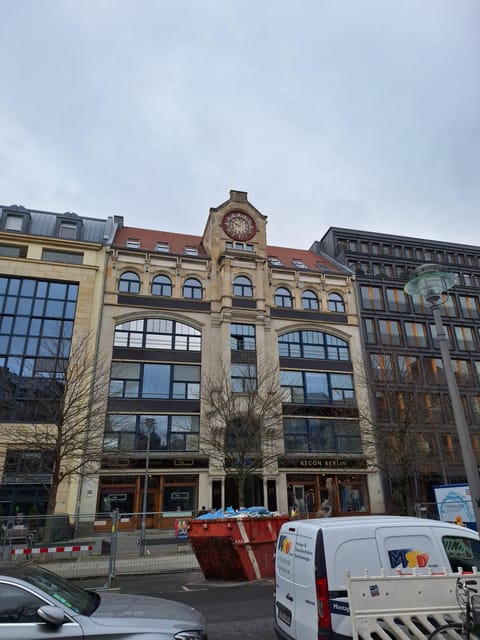
Berlin’s former Jewish tailoring district tells a sharp, human story about money, fashion, politics, and survival. This one-hour walk follows that story from Hausvogteiplatz to Werderscher Markt and Jägerstraße, showing how a major part of Berlin’s economy grew, flourished, and was crushed by political extremism.
I like the tight one-hour route, which fits neatly into a busy day, and the focus on the lost Konfektion industry rather than only the city’s best-known memorials. I also like that the walk connects Prussian Berlin, the Roaring Twenties, the years before the Wall fell, and the present city.
The main drawback is that this is a short, story-led walk, not a full tour of Berlin’s Jewish history. You will see historic areas and buildings from the outside, but the experience may feel too brief if you want museum interiors or a longer look at individual sites.
Key points at a glance
- Hausvogteiplatz begins and ends the one-hour walk, close to the U2 station and its water fountain.
- The lost Jewish tailoring industry is the central theme, offering a look at Berlin’s former economic powerhouse.
- Werderscher Markt and Jägerstraße add historic setting, linking business, fashion, and city change.
- The route reaches from Prussian rule to the Roaring Twenties, the Wall era, and today.
- An English-speaking live guide leads the walk, with a map and ordered activity list provided.
- The price is listed at about $1.70 per person, while donation-based bookings are also available by contacting the provider.
Why Berlin’s tailoring story matters
Berlin’s Jewish history is often approached through persecution, memorials, and loss. Those subjects matter, but this walk adds an important economic chapter. It looks at the Jewish families and businesses that helped create Berlin’s tailoring and ready-made clothing trade, known as the Konfektion industry.
That focus gives you a different way to understand the city. You are not only hearing about people who lived in Berlin. You are learning how they worked, traded, dressed the city, and helped shape its economic life.
The tour also follows the industry through several political periods. You move from the Prussian Empire to the glamour of the 1920s, then toward the destruction caused by extremist regimes, the division of Berlin, and the changes that followed the fall of the Wall.
I find this approach useful because it links grand political events to ordinary streets. A square, market, or former commercial address becomes easier to understand when you know what once happened there. The route asks you to picture a district filled with work, style, ambition, and commerce, then consider what happens when a government targets the people and businesses that made that district thrive.
Other history to see in Berlin:
- Berlin: Natural History Museum Entrance Ticket
★ 4.6 · 3,382 reviews - Berlin: World Heritage Cruise to Potsdam
★ 4.5 · 1,435 reviews - Berlin Historical Highlights Walking Tour
★ 4.9 · 657 reviews
Hausvogteiplatz: a practical starting point with a major story
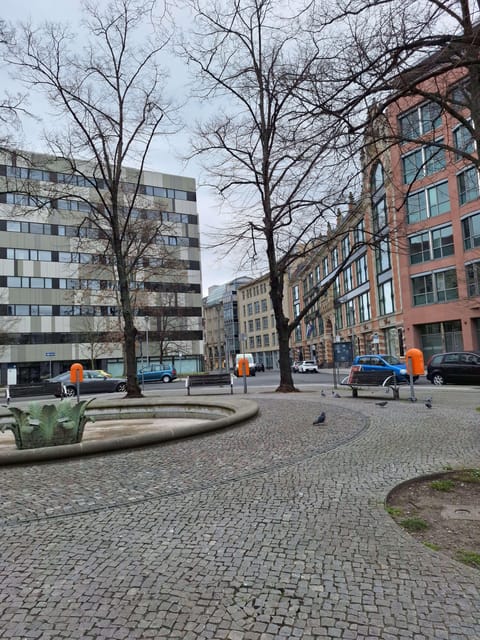
The walk starts at Hausvogteiplatz, near the U2 station and the water fountain. Look for the guide carrying a white side bag. The tour returns to this same square at the end, which keeps the logistics simple and makes it easy to continue sightseeing afterward.
Hausvogteiplatz receives about 30 minutes of guided attention, making it the main storytelling stop. Here, the guide introduces the former economic center of Jewish Berlin and explains the role of the Konfektion trade.
You should expect a talk that places the square within several periods of Berlin’s past. The emphasis is not simply on what a building looks like today. It is on what the area represented when Jewish merchants, designers, manufacturers, and traders helped drive the capital’s clothing industry.
That makes the opening stop more than a meeting point. It gives you the framework for the rest of the route. Once you understand why the district mattered, the shorter visits at Werderscher Markt and Jägerstraße have more meaning.
Because the tour takes place outdoors, the experience depends on the guide’s spoken explanation and your ability to look closely at the urban setting. Bring your attention to architectural details and street layout, since the full story is not presented as a museum display with objects and rooms.
Werderscher Markt: a shorter stop with useful context
The walk continues to Werderscher Markt for about 15 minutes. This is a visit rather than the main lecture, so the pace changes. You get another piece of the district and a chance to connect the first explanation to a second historic setting.
The value here lies in the route itself. Berlin’s past is spread across ordinary-looking streets, and walking between sites helps you see that the tailoring industry was not an isolated business tucked into one building. It was part of the city center’s working life.
You may find this stop less satisfying if you prefer long visits at each location. Fifteen minutes is enough for a focused explanation, but not enough for a full architectural study or an extended personal exploration. Still, the short format keeps the hour moving and prevents the tour from becoming a long lecture in one place.
The guide also uses this part of the walk to show how Berlin has changed. The city center has passed through imperial rule, the energy of the 1920s, dictatorship, war, division, and reunification. Werderscher Markt becomes part of that larger sequence.
Jägerstraße: the final historic stop
The last stop is Jägerstraße, also scheduled for about 15 minutes. By this point, you have heard the basic story of Jewish economic life in the district and followed the route through more than one period of Berlin’s development.
Jägerstraße works as a closing chapter before the walk returns to Hausvogteiplatz. The guide brings together the themes of commerce, fashion, political change, and survival. The experience is not just about admiring old streets. It is about asking what changed, who was forced out, and how the city’s economic identity was damaged by persecution and war.
This is also where the tour’s limits become clear. The supplied details do not promise entry into historic buildings, exhibitions, or memorial sites. If you want indoor collections or a longer account of individual families, you will need to add another attraction to your Berlin plans.
For a short city-center walk, though, the final stop gives the route a clear shape. You begin at the former economic center, visit two related areas, and return to the starting square with a better sense of how the district fitted together.
Other walks around Berlin:
- Discover Berlin Half-Day Walking Tour
★ 5.0 · 9,624 reviews - Berlin: Third Reich and Cold War 2 Hour Walking Tour
★ 4.9 · 6,830 reviews - Berlin: Discover Berlin Walking Tour
★ 4.9 · 5,998 reviews - Berlin’s Best: 2 Hour Walking Tour Third Reich and the Cold War
★ 5.0 · 5,486 reviews
A compact route through several Berlins
The tour covers an unusually broad time span in only one hour. The guide discusses Berlin during the Prussian Empire, the Roaring Twenties, the period before the fall of the Wall, and the city today.
That does not mean each period receives equal attention. The time is limited, and the main subject remains the Jewish tailoring industry. You should think of the walk as an introduction that connects major chapters rather than a detailed course in Berlin history.
I like this structure for a first visit. You get a quick way to place the city center in time, and you can use the route to decide which subjects deserve more attention later. The walk may also appeal to repeat visitors who have already seen Berlin’s major landmarks and want a more specific economic and social story.
The focus on the fall of the Wall and the changes afterward is useful, too. Berlin is not presented as a city frozen in the past. The guide considers how the area progressed and how the modern capital differs from the district that once supported a powerful clothing trade.
What the donation-based price means for value
The price is listed at about $1.70 per person, which makes this one of the least expensive guided activities you can add to a Berlin itinerary. At that rate, the walk offers strong value if you want a focused introduction and do not need a long museum-style visit.
There is also a donation-based booking option. If you want to arrange the tour on that basis, contact Stitching The Past – Tour Berlin directly. The provider asks you to verify your arrival by email or phone, including calls, messages, or WhatsApp.
The low cost should shape your expectations. You are paying for a live explanation and a carefully chosen route, not a large production with transport, entry tickets, or a private museum collection. The included map and ordered activity list are practical extras, but the main value comes from the guide’s storytelling.
I would consider this a smart add-on for travelers who want historical context without spending half a day. It is less suitable as your only Jewish history experience in Berlin. Pair it with a museum or memorial visit if you want a fuller understanding of the people and events discussed.
Timing, meeting details, and comfort
The walk lasts one hour, and you should check the available starting times before booking. Since the route begins and ends at Hausvogteiplatz, you do not need to arrange a second pickup or find your way across town at the end.
The square is close to the U2 station, making public transport straightforward. Meet near the water fountain and look for the guide’s white side bag. Verify your arrival in advance by email or phone, since that confirmation is required for the booking.
The tour is conducted in English with a live guide. A map and a list of the activities in order are included, which can help you follow the route and remember the main stops afterward.
The activity is wheelchair accessible. Children under six are not suitable for the tour, so families should take that age restriction seriously when planning. Because the walk is short but still takes place outdoors, comfortable shoes and weather-appropriate clothing are sensible, even though the supplied details do not specify the walking distance or conditions.
Cancellation is free up to 24 hours before the start for a full refund. You can also reserve and pay later, which is useful if your Berlin schedule is still shifting.
Who will get the most from this walk
This experience suits you best if you enjoy city history told through streets and businesses. It is a good match for travelers who want to understand Berlin beyond famous political landmarks and who are curious about fashion, trade, and urban change.
It also suits repeat visitors. If you have already seen the central monuments, this route adds a more specific story to familiar surroundings. The Jewish tailoring industry is an unusual subject, and the walk offers a way to see the city’s commercial past rather than only its palaces, museums, and memorials.
History-minded families with children over six may appreciate the short duration, though the subject is serious and the walk is built around spoken explanation. Children who need constant visual activity may find it less engaging than a museum with displays or interactive exhibits.
I would be more cautious if you want a tour with many interiors, extensive detail about individual people, or a large number of stops. The route has only three named locations, and two of them receive about 15 minutes each. Its strength is focus, not breadth.
A thoughtful way to see Berlin’s lost economic center
The best part of this tour is its basic question: what did Berlin lose when political extremism attacked its Jewish population and the businesses connected to it? That question gives the walk more weight than a simple sightseeing loop.
You will see scenic and historic areas, but the guide’s job is to help you imagine the activity that once filled them. The story includes achievement as well as destruction. Jewish residents developed businesses, helped build the city’s fashion economy, and in some cases survived the regimes that tried to erase them.
That balance matters. Berlin’s past is not only a story of buildings and dates. It is also a story of work, ambition, style, fear, and survival. A short walk cannot cover every part of it, but this one points you toward a side of the city that is easy to miss.
The high rating of 4.4 from five submitted ratings, along with two detailed five-star comments, supports the tour’s main strength: it gives people new insight into Berlin and the lost Jewish tailoring industry. I would place particular value on that praise because it matches the experience’s stated purpose, rather than promising attractions the walk does not provide.
Should you book the Hausvogteiplatz walk?
Book it if you want an inexpensive, English-language introduction to Berlin’s former Jewish tailoring district, especially if you like short walks with a clear historical theme. The route is easy to reach, lasts only an hour, and connects business history with the Prussian era, the Roaring Twenties, the Wall period, and modern Berlin.
Skip it if you need a long museum visit, detailed family histories, or extensive indoor sightseeing. In that case, use this walk as a starting point and add a separate Jewish history attraction to your day.
For most visitors with room in their schedule, the low listed price and focused subject make it a worthwhile addition. Just arrive with realistic expectations: this is a compact street lesson about a lost industry and the people who built it, not a full survey of Berlin’s Jewish past.
FAQ
Where does the tour start?
The tour starts at Hausvogteiplatz square, near the water fountain and close to the U2 train station. Look for the guide carrying a white side bag.
Where does the tour end?
The walk ends back at Hausvogteiplatz, the same location where it begins.
How long does the tour last?
The activity lasts one hour. Check availability for the specific starting times.
What language is the tour in?
The tour is conducted in English by a live guide.
Is the tour wheelchair accessible?
Yes, the activity is wheelchair accessible.
Can children join the tour?
Children under six are not suitable for this activity.
Can I cancel or pay later?
You can cancel up to 24 hours before the tour for a full refund. Reserve now and pay later is available, and donation-based bookings can be arranged by contacting the provider.
Just added in Berlin
- Private One way Airport Transfer Berlin Airport To Berlin★ 3.5 · 17 reviews
- Private Walking Tour: Berlin Wall, Cold War and Checkpoint Charlie★ 5.0 · 37 reviews
- Modern Berlin Private Walking Tour: Diverse, Vibrant and Exciting German Capital★ 5.0 · 13 reviews
- Private Day Trip to Potsdam from Berlin by Train★ 4.5 · 27 reviews
- City Explorer: Potsdam Private Day Trip★ 4.5 · 10 reviews
- Berlin Private Custom 5-Hour Tour by Car★ 5.0 · 30 reviews
- Private Half-Day Sightseeing Tour in Berlin★ 3.5 · 6 reviews
- Berlin Private Custom Tour in a Minivan, East and West★ 5.0 · 123 reviews
Historical Tours, compared.
City History Canal Sightseeing Tour on a Motorboat
Read our review →

Browse the lists this tour appears in