
Reviewed · LOCAL LIFE & HIDDEN GEMS
Berlin: Hidden gems around the Gendarmenmarkt – Guided walking tour
Gendarmenmarkt looks polished at first glance: grand domes, the Konzerthaus, and a broad square in the middle of Berlin-Mitte. The real interest comes when you move beyond the postcard view and follow the side streets to the place where freedom of travel was proclaimed in 1989, the former fashion center at Hausvogteiplatz, and Jägerstraße’s links to banking and Enlightenment thought.
I like the tour’s wide cast of characters, from E.T.A. Hoffmann and Josephine Baker to Marlene Dietrich, Claire Waldoff, and the Mendelssohn family. I also like the small group size of 15, which should make it easier to hear the guide and ask questions. The main limitation is that the tour is conducted in German, and it is not suitable for people with visual or hearing impairments.
Key points to know before you book
- Gendarmenmarkt is only the starting point: The route also reaches Mohrenstraße, Hausvogteiplatz, and Jägerstraße.
- The 1989 stop adds modern history: You visit the place connected with the proclamation of freedom of travel.
- The architecture comes with stories: The German Cathedral, French Cathedral, and Konzerthaus are explained as part of Berlin’s changing identity.
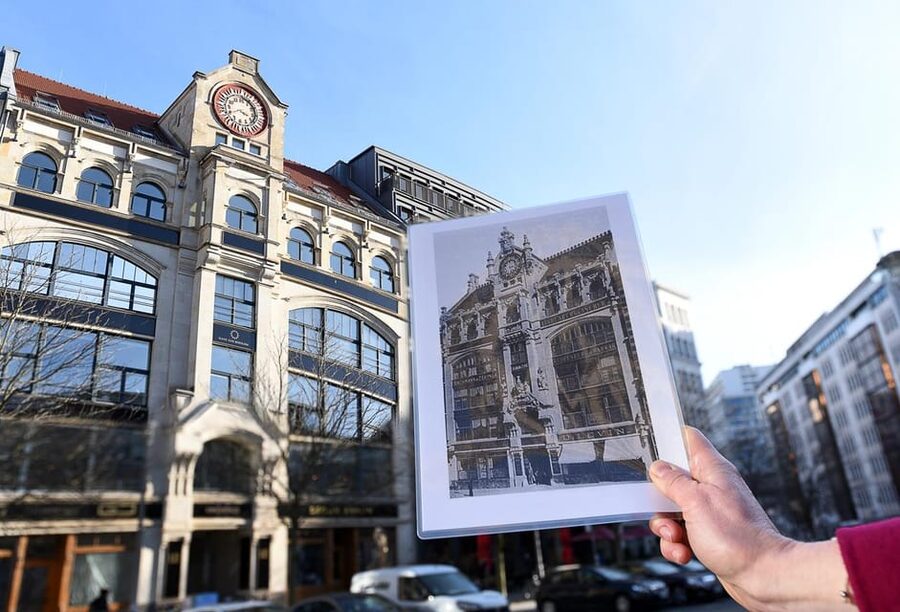
- Berlin’s fashion past gets its own chapter: Hausvogteiplatz recalls the city’s former clothing and design industry.
- The walk is people-focused: Cultural figures, bankers, writers, performers, and political events all enter the story.
- The practical setup is simple: It lasts two hours, costs $20 per person, starts and ends near Gendarmenmarkt, and is offered in German.
Why Gendarmenmarkt rewards a closer look
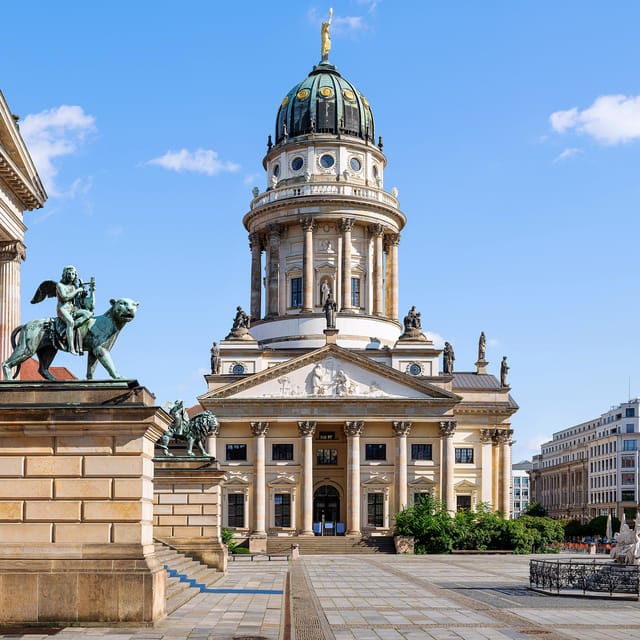
Gendarmenmarkt is often treated as a place for a quick photograph. That would be a mistake. Its three main buildings create one of Berlin’s most carefully arranged urban scenes, but the square also reflects war, political change, cultural life, and long periods of rebuilding.
The walking tour begins opposite the house at Französische Straße 44. From there, you are positioned close to the square without being dropped into a large crowd at a major museum entrance. The route returns to this same meeting point, so you do not need to plan a separate trip back across Berlin.
The opening focus is the German Cathedral, the French Cathedral, and the Konzerthaus. These buildings are more than attractive façades. Their different roles and architectural details help explain how Berlin developed as a city shaped by religious communities, royal planning, music, and public life.
You should expect the guide to spend time helping you read the buildings rather than simply naming them. Look for the way the two cathedrals frame the central concert hall. The arrangement gives the square its famous balance, while the details reveal that the buildings have not all served the same purpose or emerged from the same story.
Other trips with a local in Berlin:
- Explore Berlin: See All The Iconic Sights & Some Hidden Gems
★ 5.0 · 4,429 reviews - Berlin: Sights and Highlights Bike Tour with a Local Guide
★ 4.8 · 2,698 reviews - Private Berlin: Iconic Sights and Hidden Gems Walking Tour
★ 5.0 · 292 reviews
The three buildings around the square
The French Cathedral points to Berlin’s French Protestant community and the city’s long connection with French immigrants. The German Cathedral represents another side of Berlin’s religious and civic story. Between them, the Konzerthaus gives the square its musical identity.
The value here is the comparison. You are not seeing three unrelated monuments. You are seeing a planned setting in which architecture, religion, music, and state power meet. A guide can also point out facts that are easy to miss when you are looking only for the best angle for a photograph.
The square has been a place of change, not a frozen historic set. Its current appearance can make the past seem tidy, but the tour brings back the eventful periods that shaped it. You will hear about former glory, political shifts, and the way Berlin repeatedly changed its public spaces.
Since 2023, Gendarmenmarkt has been a major construction site. That matters when you choose this experience. Parts of the square may be affected by building work, and the classic view may not look exactly as it does in older photographs. Still, the construction gives the guide a useful way to discuss how Berlin preserves, repairs, and updates important places.
From E.T.A. Hoffmann to Marlene Dietrich
One of the tour’s best features is its use of people to make the streets easier to remember. E.T.A. Hoffmann brings literature and music into the story. Josephine Baker adds dance, performance, and the international energy of Berlin’s cultural life. Marlene Dietrich and Claire Waldoff connect the area to stage and cabaret traditions.
These names are not presented as a random list of famous Berliners. They help show that the quarter around Gendarmenmarkt was tied to performance, writing, fashion, and public debate. You get a broader view of Berlin than a standard monument tour provides.
The Mendelssohn family appears in several ways, especially around Jägerstraße. Their connection to banking and culture helps explain how business families also shaped intellectual and artistic life. This is a useful reminder that Berlin’s story is not divided neatly into separate boxes labeled architecture, politics, music, and finance.
If Susanne is leading your walk, expect a warm, story-driven presentation. Her approach has been praised for linking people, personalities, and the development of the area across several centuries. That style should suit you if you prefer a guide who connects details instead of delivering a string of dates.
The 1989 location and the meaning of travel
The tour visits the place where freedom of travel was proclaimed in 1989. This is one of the most important stops because it shifts the walk from older architecture to living German history.
The phrase freedom of travel carries special weight in Berlin. In 1989, the right to move more freely became part of the dramatic chain of events that changed East Germany and soon altered the whole country. Standing at the location helps connect that major political moment to an ordinary city street.
Do not expect a long museum-style presentation with displays and objects. This is a walking tour, so the guide’s explanation and the setting do most of the work. That makes the stop compact but meaningful. You will get the best value from it if you already know a little about the division of Germany, though the guide’s story is meant to make the place understandable on its own.
This stop also gives the tour a useful time range. The route does not treat Berlin as a medieval or imperial city only. It reaches into the late twentieth century and shows that political history happened in the same central streets where people now shop, work, and walk.
Other walks around Berlin:
- Discover Berlin Half-Day Walking Tour
★ 5.0 · 9,624 reviews - Berlin: Third Reich and Cold War 2 Hour Walking Tour
★ 4.9 · 6,830 reviews - Berlin: Discover Berlin Walking Tour
★ 4.9 · 5,998 reviews - Berlin’s Best: 2 Hour Walking Tour Third Reich and the Cold War
★ 5.0 · 5,486 reviews
Hausvogteiplatz and Berlin’s fashion industry
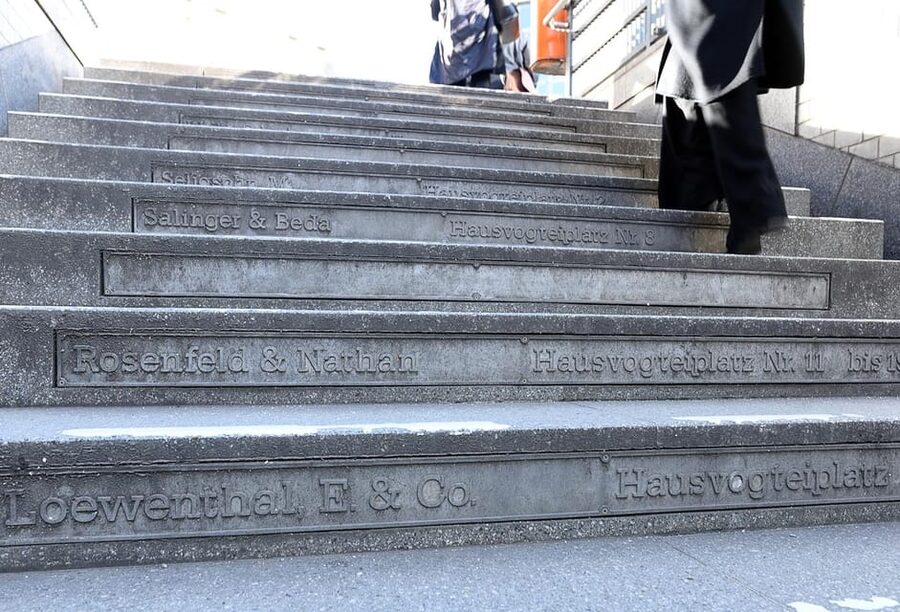
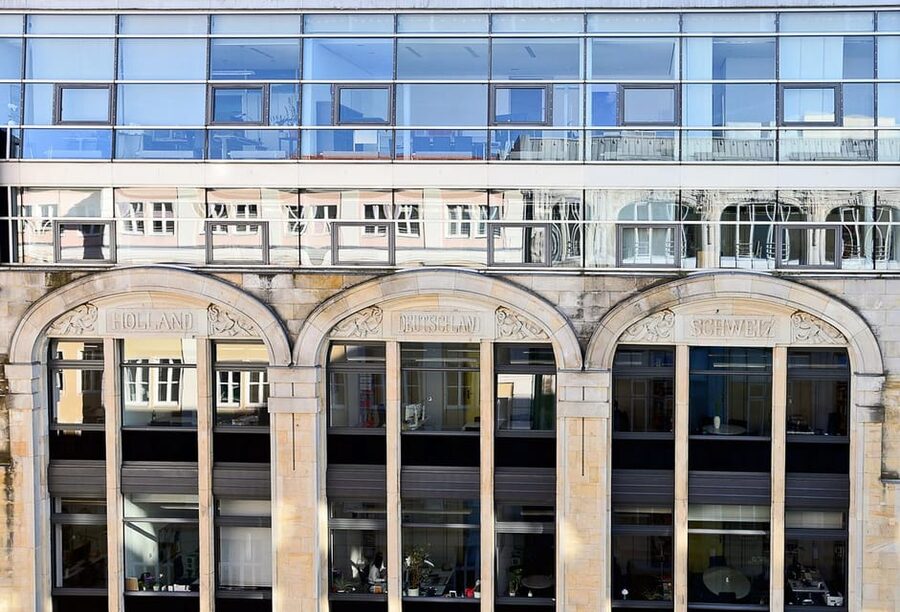
A short distance from Gendarmenmarkt, Hausvogteiplatz recalls a chapter of Berlin’s past that many visitors miss. This area was once the center of the city’s fashion industry. The tour explains how Berlin developed into a fashion metropolis and introduces the creative people who helped shape that world.
This is a smart addition to a Gendarmenmarkt walk. Many tours stop after the grand buildings, but fashion gives you a different way to understand Berlin’s growth. Clothing production, design, business, and urban identity all meet here.
The story also adds social and economic depth. A city’s fashion industry depends on more than designers. It needs shops, manufacturers, investors, skilled workers, and customers. You might come away with a clearer picture of how Berlin functioned as a commercial center, not just a capital filled with government buildings.
Hausvogteiplatz is especially useful for repeat visitors. If you have already seen the major monuments, this stop gives you a new reason to explore the same central district. It is also a good reminder that many important places leave few obvious clues on their façades. Without a guide, you might walk through without realizing what once happened there.
Jägerstraße, banking, and the Mendelssohns
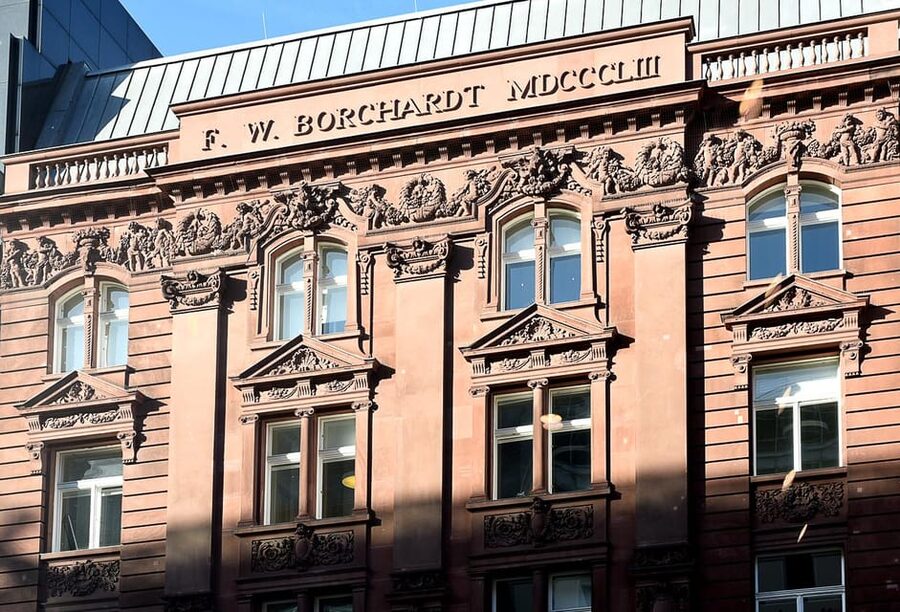
Jägerstraße brings a different mood. The street was once connected with Berlin’s financial world and the Mendelssohn Bank. It also served as a meeting point for intellectual life.
The tour connects Jägerstraße with Alexander von Humboldt, Rahel Varnhagen van Ense, and Moses Mendelssohn. These figures represent scientific curiosity, salon culture, philosophy, and Jewish intellectual life. Their presence broadens the story again, showing how ideas circulated through homes, businesses, and social gatherings.
Moses Mendelssohn is particularly important to the area’s story because he links philosophy with Berlin’s Jewish community and the Enlightenment. Rahel Varnhagen van Ense adds the world of literary salons and conversation. Alexander von Humboldt brings science and exploration into the same streets.
You will not be touring a bank interior or visiting a dedicated fashion museum on this walk. The attraction is the setting and the explanation. Some stops may seem ordinary until the guide gives them a name and a connection. That is the central strength of this experience: it teaches you how to look at a street that might otherwise appear to be just another part of Mitte.
A two-hour walk for curious Berlin visitors
Two hours is a sensible length for this route. It gives the guide enough time to cover the main square and the nearby streets without turning the outing into an exhausting half-day commitment.
The walk is in a small group of no more than 15 people. That is a meaningful advantage in a central district where traffic, construction, and city noise can make a large group difficult to manage. You should have a better chance of staying close to the guide and following the stories at each stop.
The tour is wheelchair accessible, which makes the basic format useful for people who need an accessible walking option. Still, the activity is not suitable for people with visual or hearing impairments, so check your needs carefully before reserving.
The only listed language is German. If you do not understand German well, this is not the right tour for you, even if the locations interest you. For German speakers, the language may be part of the appeal, especially if you want a local presentation rather than a translated script.
Wear comfortable shoes and allow the full two hours. The route is urban, with several stops and changes of location. Since the square has been under construction since 2023, conditions can change, so keep your expectations focused on the stories and buildings rather than on a perfectly clear view from every angle.
Is $20 a fair price?
At $20 per person, this is a reasonable price for a guided two-hour walk in central Berlin. You are paying for interpretation, not entry to a museum or a special interior. That distinction matters.
If you simply want to photograph Gendarmenmarkt, you can visit the square on your own for free. The tour earns its price by adding context that is difficult to gather quickly on your own, especially around the 1989 travel announcement, Hausvogteiplatz’s fashion past, and Jägerstraße’s links to finance and intellectual life.
The value is strongest for you if you enjoy layered city stories and want more than famous façades. It is also a good choice early in a Berlin stay because the route gives you useful bearings in Mitte and points out streets you may want to revisit.
The tour includes the guide and the small-group walk. Tips are not included, so plan to tip separately if you feel the guide gave you a good afternoon. Free cancellation is available up to 24 hours before the start, and you can reserve now while paying later, which gives you some flexibility when your schedule is still changing.
Who should book this Gendarmenmarkt walk?
I would recommend it to first-time visitors who want a compact introduction to Berlin’s central architecture and to repeat visitors who have already seen the major sights. The mix of buildings, fashion, music, banking, literature, and 1989 history keeps the route from feeling like a standard monument checklist.
It is particularly well suited to German speakers who enjoy personal stories and cultural connections. The walk also fits travelers with a spare afternoon, since it lasts only two hours and begins and ends in the same area.
I would skip it if you need an English-language tour, dislike walking between outdoor stops, or want access to the interiors of the cathedrals and concert hall. The construction at Gendarmenmarkt may also reduce the visual payoff for anyone seeking a flawless architectural view.
My recommendation
Book this tour if you want Berlin to feel less like a collection of grand buildings and more like a city shaped by artists, bankers, philosophers, fashion makers, performers, and political events. At $20, the cost is modest for two hours of focused local context.
The strongest reason to go is the route beyond the square. Gendarmenmarkt provides the headline view, but the stories at Hausvogteiplatz, Jägerstraße, and the 1989 site give the experience its purpose. Just confirm that German works for you, and remember that the tour is about outdoor storytelling rather than museum admission.
FAQ
How long does the Gendarmenmarkt walking tour last?
The tour lasts two hours. Check availability for the specific starting times offered on your chosen date.
How much does the tour cost?
The price is $20 per person. Tips are not included.
Where does the tour start?
The meeting point is at Gendarmenmarkt, opposite the building at Französische Straße 44.
Where does the tour end?
The tour ends back at the same meeting point near Gendarmenmarkt.
What language is the tour in?
The live tour guide speaks German. German is the only listed tour language.
What places does the route cover?
The route begins around Gendarmenmarkt and also includes nearby areas such as Mohrenstraße, Hausvogteiplatz, and Jägerstraße.
Is the walking tour wheelchair accessible?
Yes, the activity is listed as wheelchair accessible. It is not suitable for people with visual or hearing impairments.
Can I cancel the booking?
You can cancel up to 24 hours in advance for a full refund. Reserve now and pay later is also available.
Just added in Berlin
- Private One way Airport Transfer Berlin Airport To Berlin★ 3.5 · 17 reviews
- Private Walking Tour: Berlin Wall, Cold War and Checkpoint Charlie★ 5.0 · 37 reviews
- Modern Berlin Private Walking Tour: Diverse, Vibrant and Exciting German Capital★ 5.0 · 13 reviews
- Private Day Trip to Potsdam from Berlin by Train★ 4.5 · 27 reviews
- City Explorer: Potsdam Private Day Trip★ 4.5 · 10 reviews
- Berlin Private Custom 5-Hour Tour by Car★ 5.0 · 30 reviews
- Private Half-Day Sightseeing Tour in Berlin★ 3.5 · 6 reviews
- Berlin Private Custom Tour in a Minivan, East and West★ 5.0 · 123 reviews
Local Life & Hidden Gems, compared.

Explore Berlin: See All The Iconic Sights & Some Hidden Gems
Read our review →
Sights and Highlights Bike Tour with a Local Guide
Read our review →

Munich Private Tour with a Local – Highlights & Hidden Gems
Read our review →
Lunch Like a Local: Munich’s ORIGINAL Viktualienmarkt Food Tour
Read our review →
Private Berlin: Iconic Sights and Hidden Gems Walking Tour
Read our review →
Browse the lists this tour appears in