
Reviewed · NEUSCHWANSTEIN & CASTLE TOURS
Berlin: Decolonial Berlin Castle/ Humboldt Forum Guided Tour
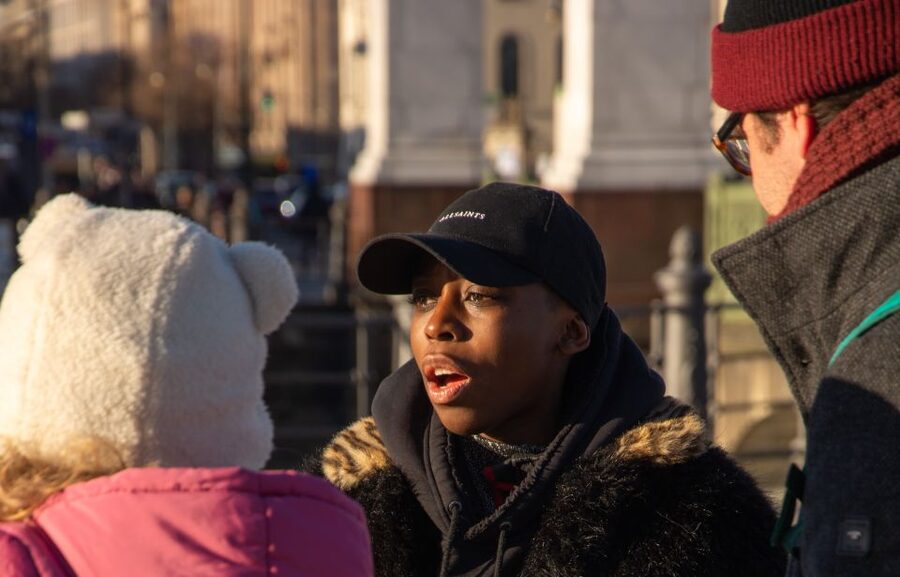
The most unusual part of this Humboldt Forum tour happens before you enter the museum. You spend about an hour seated outside, discussing Berlin Palace, colonial power, missionaries, and the meaning of the cross on the roof. I like that the tour asks you to examine the building itself, not just admire its grand reconstruction.
I also like the Afrocentric viewpoint and the guided look at the ethnological collection. You get historical facts, but also a lesson in how museums label, display, and explain objects. The main drawback is clear: if you want two hours of room-by-room museum sightseeing, this may feel too focused on discussion and the palace’s wider history.
Key points at a glance
- Start beside the reconstructed Sanchi Gate: Meet your English-speaking guide near the white chairs outside the Humboldt Forum.
- Spend about one hour outdoors first: Dress for the weather and be ready for a seated discussion before entering the museum.
- Study the palace through colonial history: The tour connects the Berlin castle, missionaries, and the symbolism of the cross on the roof.
- Look at the Humboldt brothers in context: Their importance as German scientists forms part of the tour’s wider story.
- Question the ethnological collection: An audio walk helps you read the displays from a critical, Afrocentric perspective.
- Allow time for ideas, not just objects: The museum portion may feel shorter because the historical discussion takes center stage.
Why this Berlin tour begins outside the museum

Most people approach the Humboldt Forum as a grand cultural building in the middle of Berlin. This tour asks you to pause before going in. The first hour takes place outdoors, near the reconstructed Sanchi Gate, with seating on white chairs.
That setup tells you what kind of experience this is. You are not rushing from one exhibit to the next. You are listening, discussing, and placing the building in a wider story about power, colonialism, science, religion, and cultural ownership.
I find that useful because the Humboldt Forum can seem like a collection of separate institutions under one roof. This introduction gives you a framework for understanding why the palace was rebuilt, why its name matters, and why the museum’s collections raise difficult questions.
The outdoor setting is also the tour’s practical weak point. Berlin weather can change quickly, and you may be seated outside for roughly an hour before entering. Wear weather-appropriate clothing and comfortable shoes. If cold, rain, or strong sun will make it hard for you to concentrate, check the forecast before booking.
Other castles within reach of Berlin:
- From Munich: Neuschwanstein & Linderhof Castle Full-Day Trip
★ 4.5 · 12,494 reviews - Neuschwanstein & Linderhof Castle-Fairytale Day Tour from Munich
★ 4.5 · 7,275 reviews - Neuschwanstein Castle Tour from Munich
★ 4.5 · 5,117 reviews
The Berlin Palace story behind the reconstructed facade

The tour covers about 500 years of Berlin Palace history from a decolonial point of view. That means the building is treated as more than a decorative backdrop or royal address.
You look at how the palace has been used, remembered, rebuilt, and presented in modern Berlin. The reconstructed exterior can suggest continuity with the past, but the tour encourages you to ask which past is being revived and which stories have been left out.
This is where the experience differs from a standard architecture tour. You will not simply hear dates and building names. You will consider the relationship between royal power, German national identity, overseas colonial structures, and the museum now occupying the site.
The discussion also gives meaning to the cross on the roof. Its presence is not treated as a minor design detail. Instead, it becomes a symbol to question, especially when set beside the museum’s ethnological collections and the history of Christian missions.
If you enjoy learning how buildings communicate political ideas, this section should be especially useful. If you mainly want photographs of the facade or a quick explanation of its architecture, the pace may feel more reflective than expected.
Missionaries, colonial structures, and the meaning of the cross
One of the tour’s strongest subjects is the role of missionaries in the development of colonial structures. You learn how religious work could connect with wider systems of power, administration, and cultural control.
The point is not simply to label missionaries as good or bad. The tour examines how institutions and individuals helped create the conditions in which colonial systems operated. That gives you a more useful way to think about the museum’s objects and the records attached to them.
The cross on the roof becomes part of this conversation. You are encouraged to consider what a Christian symbol communicates on a building connected with ethnological collections from many parts of the world.
This can be challenging material, and the tour presents it openly rather than smoothing away the conflict. I would recommend it to anyone who wants to understand why debates about the Humboldt Forum are not only about museum design. They are also about memory, religion, authority, and who gets to explain the past.
The tone may not suit everyone. One low rating describes strong disagreement with the tour’s modern interpretation of history. That reaction is worth taking seriously if you prefer a traditional, less argumentative presentation. This is an interpretive tour, not a neutral list of dates.
The Humboldt brothers and German science
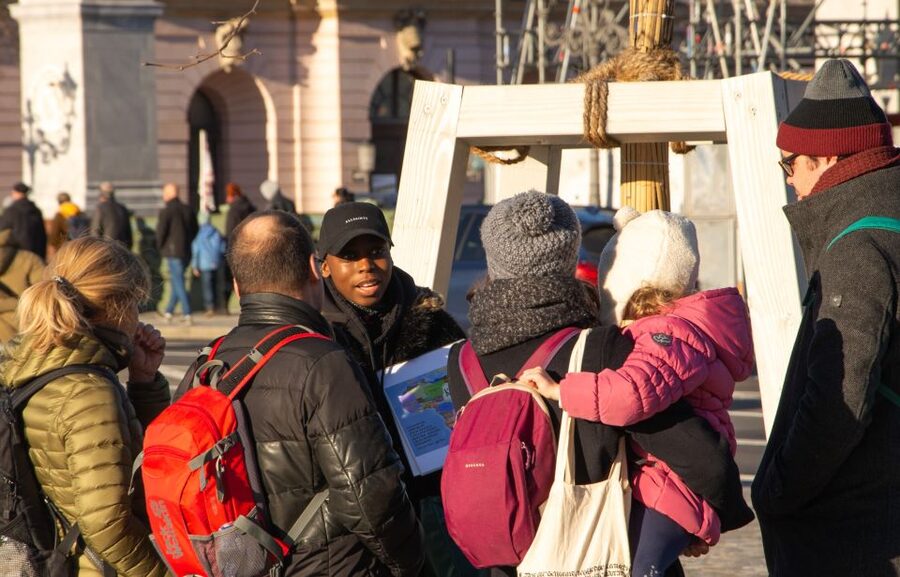
The Humboldt brothers are another part of the tour. You learn why they remain important figures in German history as scientists and how their legacy relates to the Humboldt Forum.
The supplied information does not give the guide’s name or specify which brother receives more attention, so you should not expect a biography-heavy lecture on every stage of their lives. Instead, their importance fits into the museum’s larger story about knowledge, classification, collecting, and the way European institutions have described the world.
That connection matters. Museums often present scientific systems as objective and complete. A decolonial reading asks how knowledge was gathered, who had the authority to classify it, and what happened to the people and cultures being studied.
I like this part because it helps connect the palace and museum to modern ideas about education and science. You are not looking at colonial history as a closed chapter. You are considering how older systems of knowledge still influence displays and public institutions today.
A few more things to do in Berlin worth a look
- Berlin: Reichstag, Dome and Government District Guided Tour
★ 4.7 · 18,288 reviews - Berlin: Government District around the Reichstag Guided Tour
★ 4.7 · 8,447 reviews - Berlin: Hidden Backyards Guided Walking Tour
★ 4.8 · 5,360 reviews - Berlin: 1-Hour Boat Tour with Bilingual Live Guide
★ 4.7 · 3,629 reviews
Entering the ethnological collection
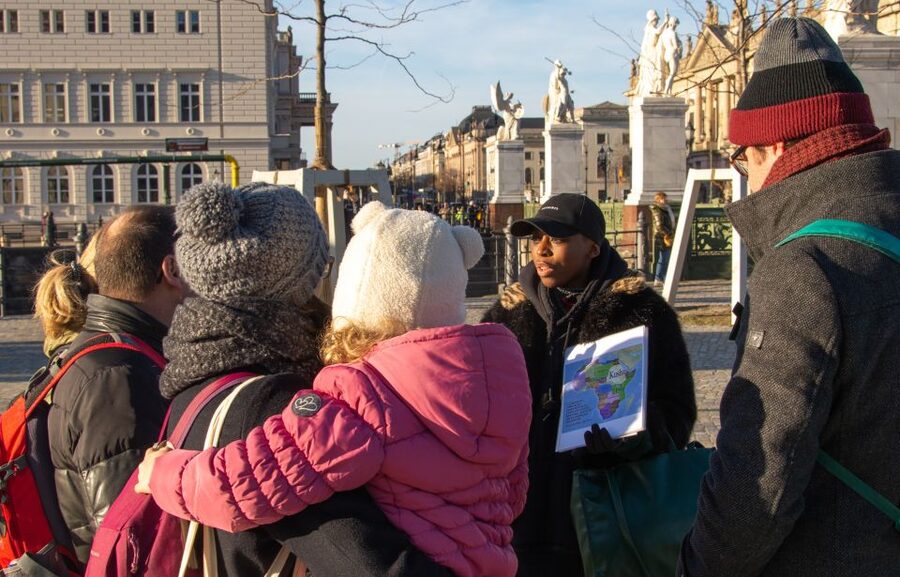
After the outdoor discussion, you go inside the Humboldt Forum and visit the ethnological collection. Museum entry is included in the tour price.
The collection is not presented as a simple parade of fascinating objects. Your guide asks you to examine how these items came into the museum, how they are described, and what may be missing from the official story.
An audio walk forms part of this section. It gives you another way to consider the objects from a critical perspective. The supplied information does not identify the individual objects or promise access to every gallery, so you should think of this as a focused interpretive visit rather than a complete museum tour.
That distinction is important. One rating praised the historical background but noted that the actual Forum portion felt shorter. I would treat that as a fair expectation-setting point. The tour spends substantial time outside, and the museum visit is shaped by discussion rather than a full survey of every exhibit.
Still, the format can be valuable. A large collection can overwhelm you with names, dates, and unfamiliar cultural references. This approach gives you questions to carry from one display to the next:
- Who collected this object?
- Under what political conditions did it leave its original setting?
- How does the museum describe its meaning?
- Whose voice is missing?
- What does the display ask you to accept as fact?
You may not leave with a complete picture of the collection. You should leave with a sharper sense of how museum collections are built and interpreted.
What the Afrocentric approach adds
The tour describes itself as Afrocentric and aims to create new narratives. In practice, that means the guide gives greater attention to perspectives that are often pushed to the edge of European museum storytelling.
You are asked to look beyond the viewpoint of collectors, scientists, missionaries, and royal institutions. The goal is to consider how colonial history looked and felt from the side of the people whose cultures were collected, classified, or controlled.
That approach can make familiar Berlin subjects feel different. The palace is no longer only a symbol of German history. The Humboldt brothers are no longer only celebrated scientists. The collection is no longer only a group of old objects behind glass.
I value this because it helps you notice what ordinary sightseeing can miss. Museums make choices about labels, room design, names, and context. A guide who points out those choices can change the way you see the rest of Berlin’s museums and monuments.
At the same time, this is not a relaxed entertainment tour. The material can be direct, and the guide may defend a clear interpretation of history. If you want an easy afternoon with light facts and plenty of free time, choose another activity. If you are willing to question familiar narratives, this tour offers more to think about.
Time, comfort, and the $41 price
At $41 per person, this is not the cheapest way to enter the Humboldt Forum. The value depends on what you want from your visit.
The price includes a live English-speaking guide and entry to the ethnological collection. You are paying mainly for the guided interpretation, not for a large number of attractions or a long museum stay.
I think the cost makes sense if you want help understanding the political and historical issues around the palace and collection. Reading labels on your own will not necessarily explain the relationship between colonialism, missionaries, the Humboldt brothers, and the building’s symbols.
The price is harder to justify if you only want to see the Forum’s interiors. In that case, the outdoor hour may feel like time taken away from the museum. You could prefer an independent visit, giving yourself more control over which galleries to see and how long to stay.
The tour lasts two hours. No group size is provided, so do not book expecting a private experience. The activity is wheelchair accessible, but because the first part is outdoors, you should consider the seating arrangement and weather when deciding if the format suits you.
Food and drinks are not allowed, and large bags or luggage are not permitted. Bring comfortable shoes, even though much of the opening discussion is seated.
The meeting point near the Sanchi Gate

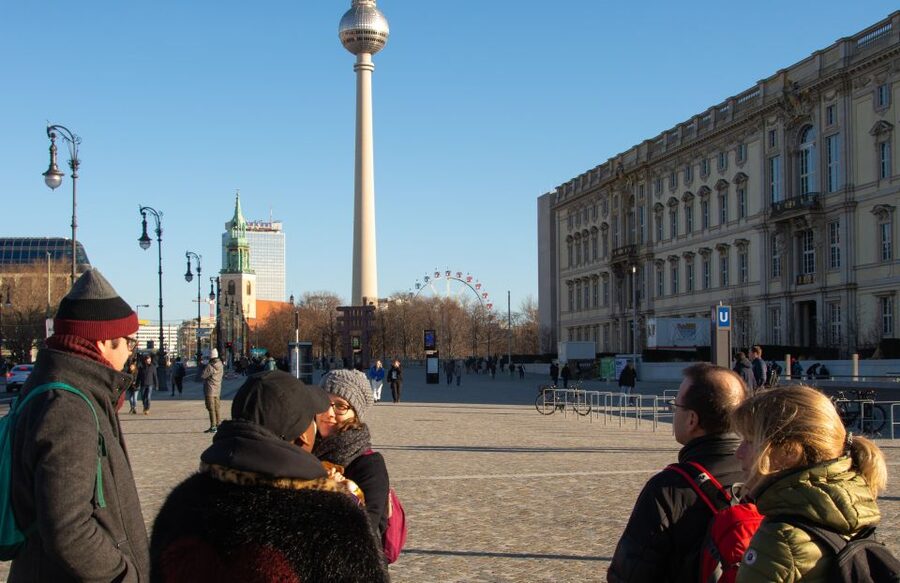
You meet near the reconstructed Sanchi Gate. Look for the white chairs, which serve as the practical meeting area.
The location connects neatly with the tour’s wider concerns. The Sanchi Gate is itself a reconstruction associated with the presentation of culture in a museum setting. Beginning there gives the guide a useful visual starting point before the group moves toward the Humboldt Forum.
Because there are two listed starting-location entries for the Sanchi Gate, check your booking details carefully and arrive with enough time to identify the exact meeting spot. The guide is expected to lead the group from there, but one poor rating reports that a guide did not appear at the agreed time or place. That seems to be an isolated service failure rather than the normal experience, yet it is a reason to save the meeting details and confirm them before setting out.
Another booking issue is worth noting. One person arrived expecting a different type of event because the actual provider was not noticed during booking. Read the activity title and provider information carefully so you know you are choosing the deSta-Dekoloniale Stadtführung experience, not another Humboldt Forum event.
Who will get the most from this experience
I would choose this tour if you:
- Want a critical introduction to Berlin’s colonial past
- Are interested in Afrocentric and decolonial interpretations
- Prefer guided discussion to silent museum browsing
- Want context for the Humboldt Forum before examining its collection
- Have an interest in missionaries, science, museums, and cultural ownership
- Are comfortable with a direct discussion of disputed historical interpretation
I would look elsewhere if you:
- Want a traditional palace tour
- Prefer a guide to avoid present-day debates
- Need to spend most of the two hours inside the museum
- Dislike sitting outdoors for a lengthy opening session
- Want a tour in a language other than English
The strongest praise focuses on the guide’s ability to make the subject interesting and informative. Several high ratings describe the tour as engaging, relevant, and well led. That matters here because the material could easily become abstract or academic. A good guide has to connect large ideas with the actual building and displays in front of you.
Should you book the decolonial Humboldt Forum tour?
Book it if you want to question how Berlin presents its royal, scientific, religious, and colonial past. The tour offers something that a standard museum visit usually does not: a clear set of questions about power, ownership, language, and historical memory.
Do not book it expecting a full guided sweep of the Humboldt Forum. The outdoor discussion takes about an hour, and the museum portion may feel brief. At $41, the experience is best value for a visitor who wants interpretation and debate rather than maximum time inside the galleries.
I would consider it a strong choice for students, history-minded visitors, museum professionals, and anyone trying to understand current debates about German colonial memory. Bring suitable clothing, arrive at the Sanchi Gate with the meeting details in hand, and come ready to listen to a firm point of view.
FAQ
How long does the Berlin decolonial Humboldt Forum tour last?
The tour lasts two hours.
What language is the tour conducted in?
The live guided tour is conducted in English.
Where do I meet the guide?
Meet near the reconstructed Sanchi Gate. The white chairs mark the area where the group is expected to sit.
Do I enter the Humboldt Forum during the tour?
Yes. The tour includes entry to the ethnological collection after the opening discussion outside.
How long is the outdoor portion?
You will be seated outside for approximately one hour before heading into the museum.
Is museum entry included in the price?
Yes. Entry to the ethnological collection and the tour guide are included.
Is the tour wheelchair accessible?
Yes, the activity is listed as wheelchair accessible.
Can I cancel the booking for a refund?
You can cancel up to 24 hours in advance for a full refund. A reserve-now, pay-later option is also available.
Just added in Berlin
- Private One way Airport Transfer Berlin Airport To Berlin★ 3.5 · 17 reviews
- Private Walking Tour: Berlin Wall, Cold War and Checkpoint Charlie★ 5.0 · 37 reviews
- Modern Berlin Private Walking Tour: Diverse, Vibrant and Exciting German Capital★ 5.0 · 13 reviews
- Private Day Trip to Potsdam from Berlin by Train★ 4.5 · 27 reviews
- City Explorer: Potsdam Private Day Trip★ 4.5 · 10 reviews
- Berlin Private Custom Tour in a Minivan, East and West★ 5.0 · 123 reviews
- Berlin Private Custom 5-Hour Tour by Car★ 5.0 · 30 reviews
- Private Half-Day Sightseeing Tour in Berlin★ 3.5 · 6 reviews
Neuschwanstein & Castle Tours, compared.

Neuschwanstein & Linderhof Castle-Fairytale Day Tour from Munich
Read our review →
Premium Neuschwanstein Castle and Linderhof VIP Tour from Munich
Read our review →

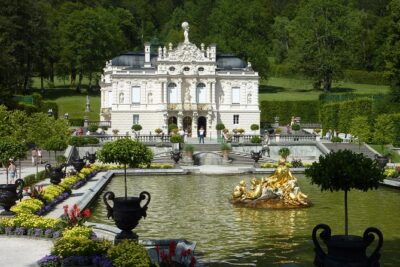
Neuschwanstein Castle and Linderhof Palace Day Trip from Munich
Read our review →
Rhine Valley Castles: 1.5-Hour Boat Tour from Rüdesheim
Read our review →Browse the lists this tour appears in