
Reviewed · HISTORICAL TOURS
Augsburg: Historical Highlights Private Walking Tour
Augsburg packs Roman origins, merchant wealth, religious conflict, and German cultural history into a compact old-city walk. This private tour links the city’s biggest sights, from the Fuggerei to the grand Town Hall, while giving you a guide who can shape the conversation around your interests. I like the two-hour length and the chance to see both Augsburg’s famous buildings and the homes of Mozart’s father and Berthold Brecht. The main caution is price: at $362 per group, it makes better financial sense for a larger party than for one or two people.
I especially like the private format, which lets you ask questions instead of following a fixed script. I also like the broad time span, beginning with Augsburg’s founding as a Roman colony in 15 B.C. and ending with its role as the capital of Swabia today. You should know that entrance fees are not included, and the walking route is not suitable for wheelchair users.
Key points at a glance
- Roman Augsburg in 15 B.C.: Learn how a provincial Roman settlement grew into one of Germany’s oldest cities.
- A private guide for up to 15 people: Your group can adjust the emphasis and ask questions as you go.
- The Fuggerei: See the world’s oldest social settlement, founded by the Fugger family.
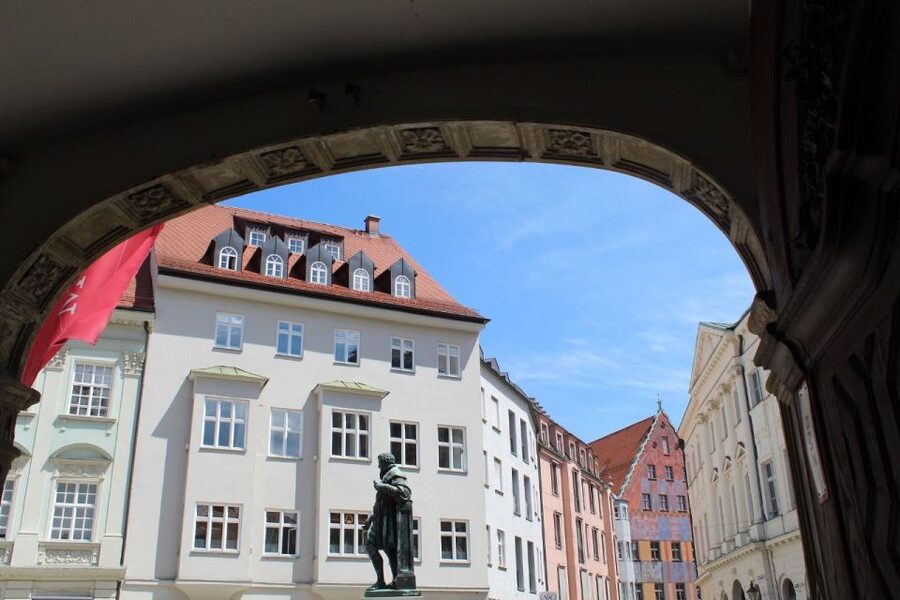
- The Town Hall: Admire the celebrated six-floor building at the center of Augsburg’s civic story.
- Mozart and Brecht connections: Visit the birthplaces of Mozart’s father and writer Berthold Brecht.
- A strong finish at SchaezlerPalais: End near a palace that survived World War II without damage.
Why Augsburg makes a good two-hour walking tour
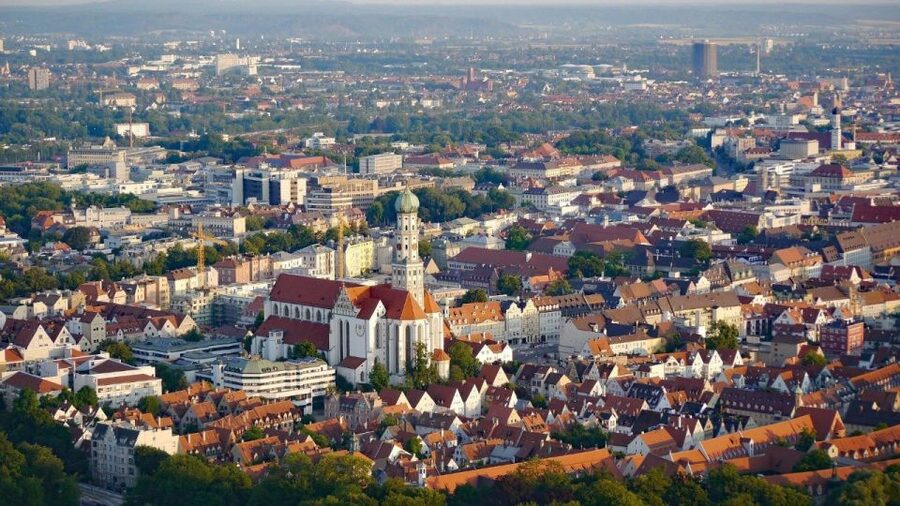
Augsburg is easy to underestimate. It is not as famous internationally as Munich or Nuremberg, yet it carries more than two millennia of political, commercial, religious, and artistic stories. The city began as a Roman colony in 15 B.C., became the capital of a Roman province, and now serves as the capital of Swabia in Bavaria.
That long timeline is the real strength of this experience. You are not looking at isolated monuments with disconnected facts. The route gives you a way to understand how a Roman foundation developed into a wealthy trading center, how powerful families shaped daily life, and how the city’s cultural life reached from Mozart’s family to Berthold Brecht.
The two-hour schedule is useful if you have limited time. You can get a strong first look at the old city without giving up an entire morning or afternoon. I would treat it as an orientation walk, not a full study of every interior and museum. The guide can point out the main places and explain their importance, but you will need extra time if you want to enter everything.
More Historical Tours across Germany
- Leipzig: City History Canal Sightseeing Tour on a Motorboat
★ 4.7 · 6,232 reviews - Berlin: Natural History Museum Entrance Ticket
★ 4.6 · 3,382 reviews - Leipzig: 1.5-Hour Historical Walking Tour in German
★ 4.7 · 2,217 reviews
Starting at the Fuggerei
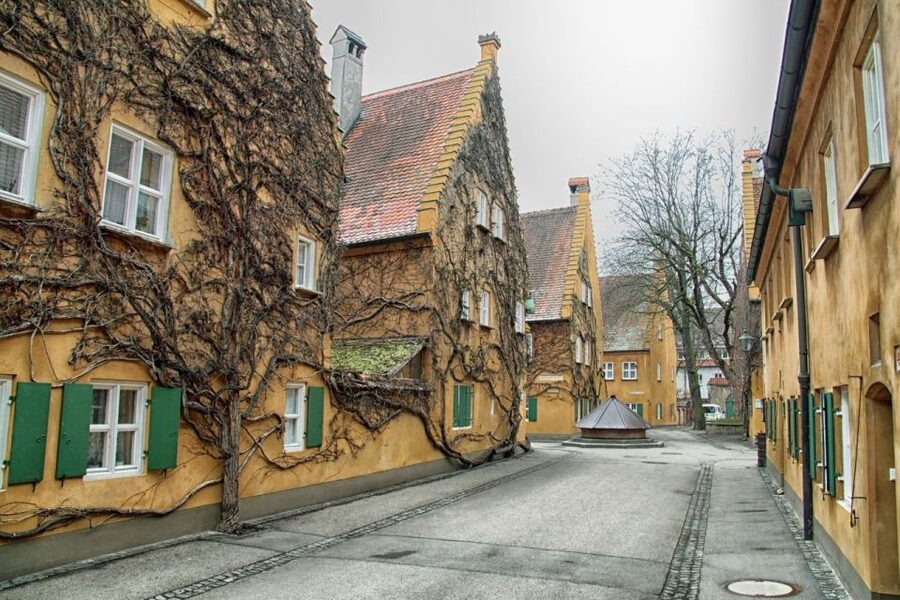
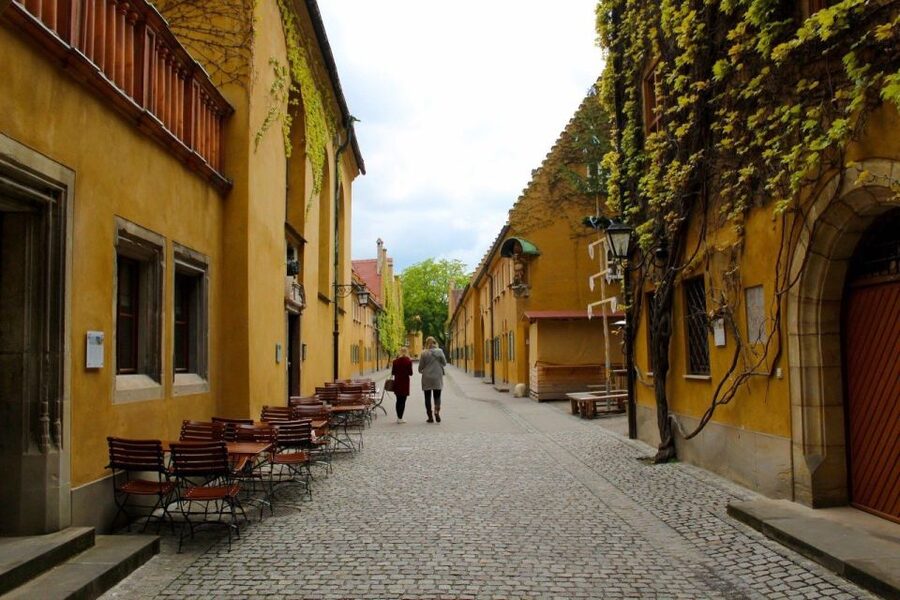
The meeting point is the Fuggerei, a practical choice because it begins the tour with one of Augsburg’s most distinctive sights. Founded by the Fugger family, the settlement is recognized as the oldest social settlement in world history.
The Fuggers were a major merchant and banking family, and their influence is central to Augsburg’s story. Here, social history becomes easier to grasp than it might in a museum display. Instead of hearing only about wealth and trade, you begin with a place connected to housing and community life.
The tour includes seeing the Fuggerei, but entrance fees are not included. That distinction matters. If you want to go inside a paid attraction, confirm the plan with your guide and budget separately. The private format should make it easier to decide how much time to spend here, though a two-hour route means every extra stop affects the rest of the walk.
Starting here also gives you an immediate sense of Augsburg’s character. The city’s past is not only about rulers, battles, and grand halls. It is also about how private wealth was used to create a lasting social institution.
Roman foundations and the growth of a provincial capital
The Roman chapter comes early in the story, even if the tour’s exact stopping points depend on the guide and your group’s preferences. Augsburg was founded as a Roman colony in 15 B.C., giving it a place among Germany’s oldest cities.
Your guide can explain what allowed the settlement to grow from a Roman colony into the capital of a province in the Roman Empire. That context is more useful than a list of dates. It shows why Augsburg developed lasting importance and why its location mattered to the wider region.
I like this part of the walk because it gives the later sights a frame. The Town Hall, the Fugger legacy, and the city’s role in Swabia are easier to understand once you know that Augsburg was important long before its medieval and early modern landmarks appeared.
The supplied information does not name specific Roman ruins or archaeological stops, so you should not book this expecting a dedicated Roman archaeology tour. The Roman material is best understood as historical background woven into the walking route.
The Town Hall and Augsburg’s civic confidence
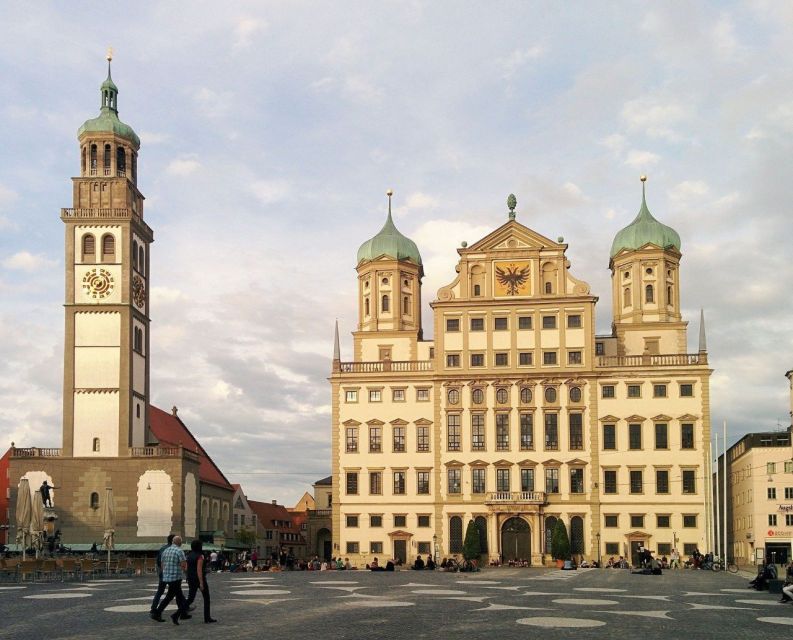
The Town Hall is one of the tour’s main highlights. It is presented as the first building in the world to have six floors, a detail that captures Augsburg’s ambition and its place in architectural history.
This is the sort of stop where a guide adds real value. A quick photograph can show you the exterior, but a local explanation can connect the building to Augsburg’s civic identity and commercial power. You can ask about the city’s growth, the building’s role, and how it fits into the larger story of Swabia.
The Town Hall also gives the tour a useful change of mood. The Fuggerei focuses on social support and private responsibility. The Town Hall turns your attention to public power, administration, and the confidence of a prosperous city.
Because this is a private tour, you can ask the guide to spend more time here if architecture or city government interests you. If your group is more interested in literature or music, you can shift the balance toward the Mozart and Brecht connections instead.
More Walking Tours across Germany
- Discover Berlin Half-Day Walking Tour
★ 5.0 · 9,624 reviews - Berlin: Third Reich and Cold War 2 Hour Walking Tour
★ 4.9 · 6,830 reviews - Munich: Third Reich & WWII Walking Tour
★ 4.6 · 6,181 reviews - Berlin: Discover Berlin Walking Tour
★ 4.9 · 5,998 reviews
The Fugger family and the making of Augsburg
The Fugger family appears as a major thread through the walk. Their influence helps explain why Augsburg became more than a provincial city. Trade, finance, and philanthropy all shaped its public face.
The Fuggerei is the clearest expression of that story, but the wider discussion of the Fugger family adds useful context. You learn how one family could influence the city’s buildings, reputation, and social institutions.
I find this kind of stop more rewarding when the guide avoids treating the Fuggers as simple heroes. The important point is that great wealth can create both power and public benefit. The Fuggerei makes that tension visible in a way that a purely financial history would not.
The tour does not promise a full Fugger museum visit, and entrance fees are extra. You are paying primarily for the guide’s interpretation and for a private route through the city, not for admission to every site.
Mozart’s father and Augsburg’s musical link
Augsburg also has a family connection to Wolfgang Amadeus Mozart. The tour takes you to the birthplace of Mozart’s father, Leopold Mozart.
This is a pleasant surprise for people who associate Mozart mainly with Salzburg or Vienna. The stop broadens the musical story and gives you a personal link to Augsburg’s past. Instead of hearing only about a famous composer, you see where an important member of his family began life.
The birthplace is especially useful for visitors who enjoy cultural history but do not want a full music-focused tour. It is one of several short, memorable connections along the route.
The available details do not specify whether the tour enters the birthplace or simply visits the location. Since entrance fees are not included, ask your guide what is possible during your time. With only two hours, the guide may keep the stop brief unless your group asks for more musical context.
Berthold Brecht’s birthplace
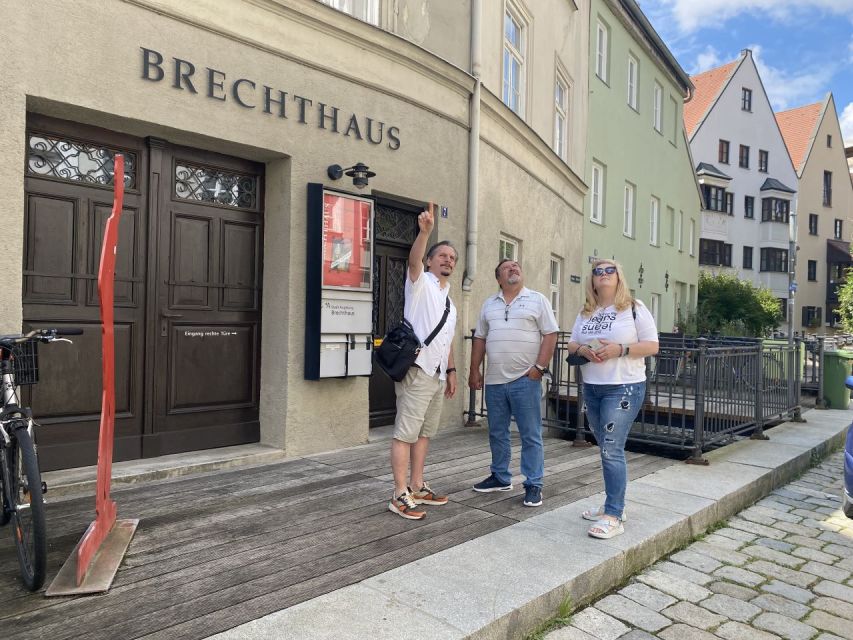
The walk also reaches the birthplace of Berthold Brecht, the acclaimed German writer and artist. This gives the route a modern literary edge and prevents the tour from becoming only a parade of medieval and imperial stories.
Brecht’s connection is valuable because it shows Augsburg as a place that continued to produce important cultural figures long after its Roman and mercantile peak. His birthplace adds a human scale to the city. You are not only looking at grand institutions. You are also tracing the early setting of a major creative life.
The Brecht stop works well for mixed groups. One person may care most about architecture, another about Mozart, and another about literature. Since your guide can adjust the focus, you can ask for more attention to the people and subjects that interest your group.
As with the other cultural sites, the information provided does not confirm interior access. Plan on seeing the birthplace as part of the walking route, and treat any entrance as something to check separately.
Finishing at SchaezlerPalais
The tour ends at SchaezlerPalais, an elegant closing point with a remarkable wartime story. The palace survived World War II without a scratch.
That fact gives the final stop a particular weight. Augsburg suffered the effects of the war, yet this building remained intact. A guide can help you think about the contrast between the palace’s survival and the destruction that affected many European cities.
SchaezlerPalais also provides a calm change after the busy sequence of Roman, civic, commercial, musical, and literary subjects. It is a fitting place to finish because it brings together art, architecture, and the city’s modern past.
The itinerary does not state that palace admission is included. Since entrance fees are excluded, ask whether your visit ends outside or whether you want to arrange an interior visit on your own.
What the private format adds
The private group can include up to 15 people, and that changes the feel of the experience. You are not sharing the guide’s attention with a large public group, so it is easier to ask for clarification or request a shift in emphasis.
The guide can customize the highlights on the spot. That does not mean you can turn a two-hour walk into a full-day tour, but it does let you make sensible choices. You might give extra time to the Fuggerei and Fugger family, focus on architecture at the Town Hall and SchaezlerPalais, or ask for more about Mozart and Brecht.
The service is offered in German or English. No individual guide names are provided, so you cannot choose a particular guide in advance. The strongest feedback concerns the quality of the guiding itself: the walk is described as highly informative, lively, and led by an experienced city guide. One German-language assessment praised the guide for responding closely to the group’s wishes and sharing broad knowledge of the city.
That flexibility is a real advantage for families, couples, or small groups with different interests. It is less valuable if you simply want the cheapest possible introduction to Augsburg.
Is $362 good value for your group?
At $362 per group of up to 15, the price needs careful thought. For a full group, the cost works out to about $24 per person. For six people, it is about $60 each. For two people, it becomes $181 per person, which is a much harder value argument for a two-hour walk.
One German customer specifically considered the price too high compared with a similar tour costing 115 euros. That is a fair warning. The private format, local guide, and ability to customize the walk explain part of the premium, but they do not make it automatically good value for every booking.
I would consider it worthwhile for a family, school group, reunion, or group of friends that can spread the cost. It is also useful if you want a private conversation in English or German and do not want to fit into a fixed public tour.
For one or two people, compare this price with other Augsburg walking tours before booking. If the main goal is simply to see the Town Hall and hear a few key stories, a shared tour may cost less. If your group values flexibility and personal attention, the private rate becomes easier to defend.
Timing, walking comfort, and practical limits
The tour lasts two hours, with starting times subject to availability. That makes it easy to fit around other Augsburg plans, but the short duration also means the route must keep moving.
Wear comfortable shoes. The activity is a walking tour through the old city, and the route is specifically not suitable for wheelchair users. No further details about terrain or step-free access are provided, so anyone with mobility concerns should ask the provider for current route information before booking.
Entrance fees are not included. Build that into your budget if you want to enter attractions rather than view them from the route. The guide service itself includes a local professional guide and private guiding.
Free cancellation is available up to 24 hours before the start for a full refund. You can also reserve now and pay later, which helps if your Augsburg plans may change.
Who will enjoy this Augsburg walk most?
I would recommend this experience to you if you want a clear introduction to Augsburg rather than a narrow tour of one period. It suits people who enjoy seeing how Roman origins, merchant wealth, civic architecture, music, literature, and wartime survival connect.
It is a good fit for families and small private groups because the guide can adjust the emphasis. It also works for history-minded visitors who want to ask questions and avoid the fixed pace of a large group.
You may want to skip it if you are looking for extensive interior visits, a dedicated Roman archaeology tour, or the lowest-cost way to see the city. Two hours gives you a smart overview, but not a complete examination of Augsburg’s museums and monuments.
Should you book the Historical Highlights Private Walking Tour?
Book it if you have a group large enough to share the cost and you want a flexible overview led in English or German. The mix of the Fuggerei, Town Hall, Roman origins, Mozart’s family, Brecht, and SchaezlerPalais gives you a far better sense of Augsburg than a quick photo stop between larger Bavarian cities.
For one or two people, compare prices first. The tour’s best assets are the private guide, personal questions, and adjustable route, not included admissions or a long list of interiors. If those benefits matter to you, this is a useful and focused way to meet Augsburg. If price is your main concern, a shared alternative may be the wiser choice.
FAQ
How long does the Augsburg Historical Highlights Private Walking Tour last?
The tour lasts two hours.
Where does the tour meet?
The meeting point is the Fuggerei in Augsburg.
What languages are available?
The tour is available in German and English.
Is this a private tour?
Yes. It is a private group tour for up to 15 people.
Which major sights are included?
The tour covers the Fuggerei, Augsburg Town Hall, the birthplace of Mozart’s father, the birthplace of Berthold Brecht, and SchaezlerPalais, along with Augsburg’s Roman origins and Fugger family history.
Are entrance fees included?
No. Entrance fees are not included in the tour price.
Is the tour suitable for wheelchair users?
No. The activity is not suitable for wheelchair users.
Can the tour focus be adjusted?
Yes. You can customize the highlights with your local guide during the tour.
Just added in Germany
- Berlin: Energizing 2-Hour Morning Segway Tour★ 4.7 · 35 reviews
- Berlin: Thrilling E-Scooter Adventure Tour★ 4.4 · 66 reviews
- Berchtesgaden: Via Ferrata Beginner Tour of Schützensteig★ 4.7 · 15 reviews
- Bayreuth: German City Walking Tour (Tourist Info)★ 4.7 · 202 reviews
- Beelitz-Heilstätten: Baum&Zeit Tree Top Walk Entry Ticket★ 4.9 · 7 reviews
- Beer Bike & Party Bike: Unforgettable Berlin City Tour incl. pickup★ 5.0 · 5 reviews
- Bavaria: Beginner Canyoning Tour★ 4.5 · 10 reviews
- Bayreuth: Christmas city tour in German★ 4.9 · 12 reviews
Historical Tours, compared.
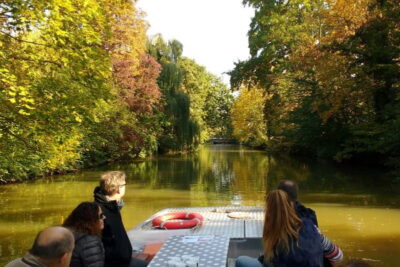
City History Canal Sightseeing Tour on a Motorboat
Read our review →


Browse the lists this tour appears in