
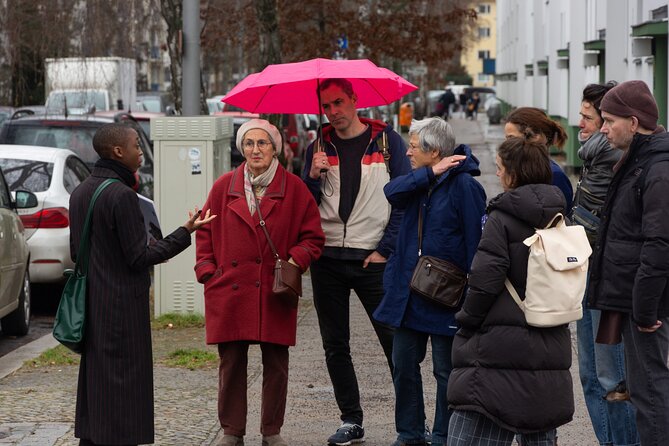
Reviewed · HISTORICAL TOURS
Historical city tour in the African Quarter in Berlin
Berlin’s African Quarter is not just a collection of streets with faraway names. It is an open-air record of German colonial rule, and this two-hour walking tour uses those names to explain what Germany had to do with Namibia, the Congo, and other parts of Africa. At Kongostraße, you’ll look at maps showing Africa before and after the 1884 conference held in Berlin.
I like the clear route through four meaningful stops and the way each street name opens a different question. I also like the small maximum group of 20, which should make it easier to follow the guide and ask questions. The main drawback is that the tour has a 3.7 rating from six published ratings, so the experience may depend heavily on the individual guide and the day’s conditions.
Key points to know before you go
- Four stops, one connected story: Swakopmunder Straße, Anna-Mungunda-Allee, Manga-Bell-Platz, and Kongostraße form the core of the walk.
- Colonial history in plain sight: Street names connect Berlin to Namibia, Gustav Nachtigal, Petersallee, and the Congo Conference.
- A two-hour walking experience: You get a focused introduction rather than a full-day history program.
- Small group limit: The tour accepts a maximum of 20 people.
- Convenient start and finish: Meet at Swakopmunder Str. 44 and finish near Rehberge.
- Flexible booking terms: Free cancellation is available up to 24 hours before the start time, subject to weather and minimum group requirements.
Why Berlin’s African Quarter deserves your attention
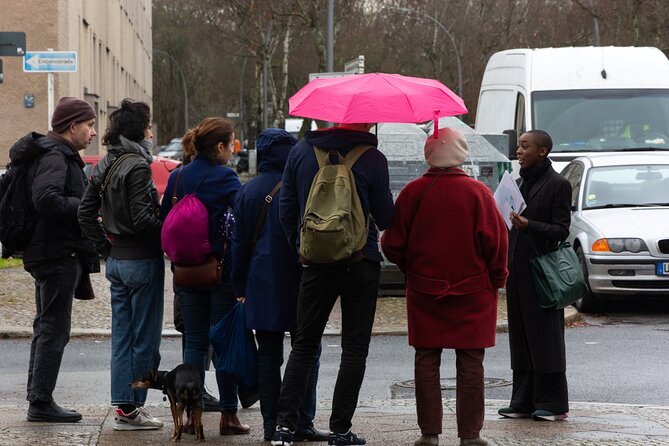
The African Quarter, known in German as the Afrikanisches Viertel, is an area monument made up of 22 streets. Many carry the names of African countries, European cities, or figures linked to German colonial rule.
That makes the neighborhood useful for learning because the history is built into the route. You are not only hearing a lecture in a room. You are looking at the names on actual street signs and asking why they were chosen, what they meant at the time, and how Berlin now deals with them.
The tour takes a change-of-perspective approach. That matters here. Colonial history is often treated as a distant subject, separate from ordinary city life. In this neighborhood, it is tied to addresses, public spaces, maps, and daily routines.
I would not book this walk expecting a standard sightseeing tour of Berlin. You will not be ticking off the Brandenburg Gate or Museum Island. Instead, you will spend two hours examining a less discussed part of German-African history and the way public memory changes over time.
Other history to see in Berlin:
- Berlin: Natural History Museum Entrance Ticket
★ 4.6 · 3,382 reviews - Berlin: World Heritage Cruise to Potsdam
★ 4.5 · 1,435 reviews - Berlin Historical Highlights Walking Tour
★ 4.9 · 657 reviews
Starting at Swakopmunder Straße
The tour begins at Swakopmunder Str. 44, 13351 Berlin. The first stop asks a simple but useful question: what does Swakopmund have to do with Berlin?
The answer leads to Namibia and Germany’s role there during the colonial period. Swakopmund is a coastal city in Namibia, and the street name gives the guide a direct way to connect a Berlin neighborhood with German involvement in southern Africa.
This is a strong opening because it starts with something you can see immediately. Rather than beginning with a long list of dates, the guide can point to the street and explain how a place name carries political meaning.
You should allow a little time to reach the meeting point and arrive ready to walk. The tour is outdoors and requires good weather, so comfortable clothing and sensible shoes will make the two hours easier. The supplied information does not give a detailed accessibility description, but it says most people can participate and that service animals are allowed.
Anna-Mungunda-Allee and the question of Petersallee
The second stop is Anna-Mungunda-Allee. The discussion turns to Petersallee and the question of renaming the street.
This is where the tour moves from past events to public debate. Naming a street after a historical figure is never only about the past. It also tells you who a city once chose to honor. Asking if a street should be renamed forces a useful question: should public places continue to honor people connected with colonial rule?
The stop is listed as a short five-minute point, but the subject can lead to more thought than the clock suggests. You may want to listen for the explanation of who Peters was, why the street received that name, and what arguments support changing it.
The current name, Anna-Mungunda-Allee, also signals a shift in how the area presents its history. The supplied information does not provide further biographical detail about Anna Mungunda, so I would treat this stop mainly as a conversation about naming, memory, and responsibility rather than expect a full biography.
Manga-Bell-Platz and Gustav Nachtigal
At Manga-Bell-Platz, the guide introduces Gustav Nachtigal and explains why the central square of the African Quarter was named after him.
This stop brings the tour back to the people who shaped Germany’s colonial era. The question is not only who Nachtigal was, but why a central public space received his name. That distinction is important. A street sign can quietly preserve an old point of view, while a square gives that memory a more prominent place in the neighborhood.
The tour’s value here comes from connecting a person, a place, and a political period. You are encouraged to think about how public spaces select certain stories and leave out others.
The stop is brief, like the others. That keeps the walking tour moving, but it also limits how much background the guide can provide. If you want a full study of German colonial administration or Gustav Nachtigal’s life, this experience will be an introduction rather than a complete course.
A few more things to do in Berlin worth a look
- Berlin: 1-Hour City Tour by Boat with Guaranteed Seating
★ 4.3 · 16,993 reviews - Berlin: City Sightseeing Hop-On Hop-Off Bus Tour
★ 4.1 · 4,233 reviews - Berlin: 1-Hour City Sightseeing Cruise
★ 4.4 · 2,210 reviews - Berlin City Hop-on Hop-off Tour with Optional Cruise
★ 3.5 · 1,155 reviews
Kongostraße and the 1884 conference
The final listed stop is Kongostraße. Here the tour asks what happened in Berlin in 1884 and explains the Congo Conference.
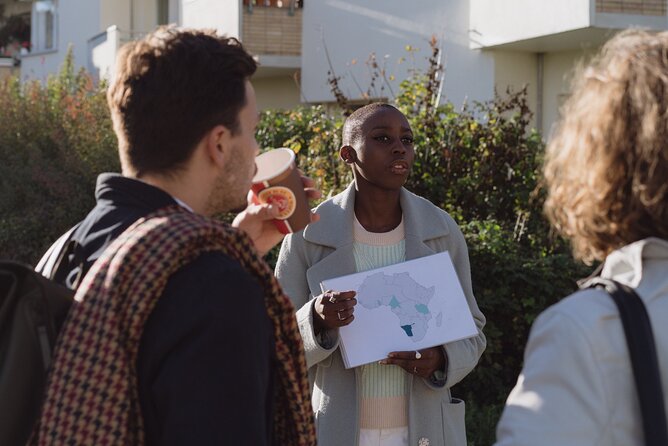
This is likely the most important stop for understanding Germany’s place in European colonial expansion. You will see a map of Africa before and after the Berlin conference and discuss why no African representatives were present.
The map gives the subject a visual focus. It can help you understand that the conference was not an abstract diplomatic event. Decisions made by European powers affected African territories and borders, despite the absence of African voices from the meeting.
I especially like the choice to end with this stop. The earlier locations establish the local clues, while Kongostraße widens the view to an international event. You begin with one street in Berlin and finish by considering how European powers handled African territory.
The tour description does not provide a full account of the conference, so do not expect every later consequence to be covered. What you should expect is a focused explanation of the event, its connection to Berlin, and the problem of European decision-making without African participation.
What the two-hour format means for you
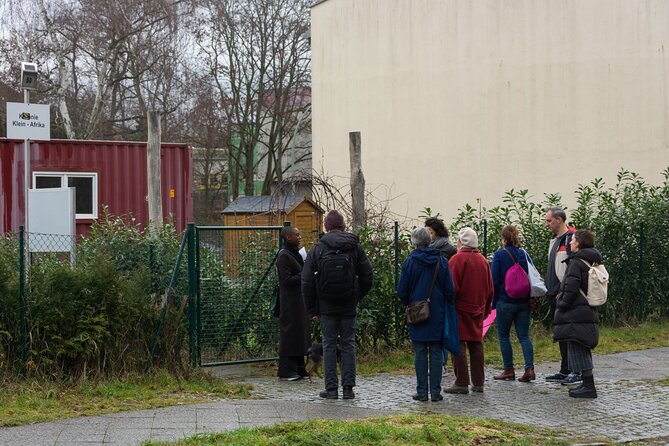
Two hours is a sensible length for this subject. It gives the guide enough time to explain four locations without turning the walk into a full-day commitment.
The itinerary lists about five minutes at each named stop, but the experience also includes walking between them and connecting the points into one story. The short stop times mean you should expect concise explanations, not long talks at every corner.
I see this as a good first encounter with Berlin’s colonial past. You get enough structure to understand why the neighborhood matters, while still having time afterward to read more or visit other parts of Berlin.
The format will suit you best if you enjoy guided interpretation and public history. It may feel too brief if you already know a great deal about German colonialism and want detailed academic discussion.
Group size, transport, and meeting details
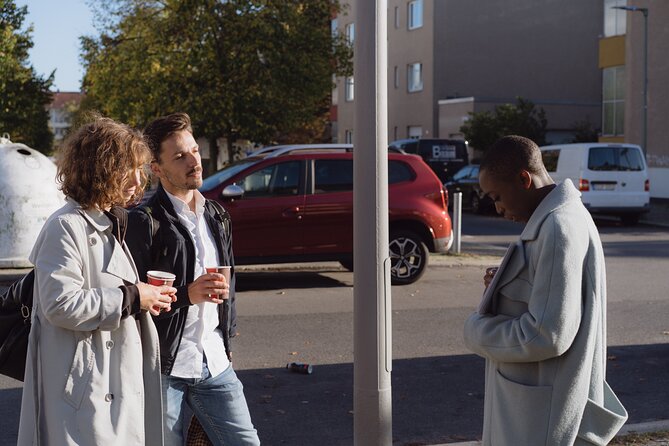
The maximum group size is 20 people. That is small enough to keep the guide within earshot on city streets and gives you a reasonable chance to ask a question. It is not a private walk, though, so the pace and discussion will still be shared with the group.
The tour starts at Swakopmunder Str. 44, 13351 Berlin, and ends in the Rehberge area at 13349 Berlin. The route therefore does not return to the starting point. You should plan your next trip from the finish rather than assume you will end where you began.
The area is near public transportation, which helps with both arrival and departure. A mobile ticket keeps the booking simple, and confirmation is provided when you book.
Service animals are allowed, and the experience states that most people can participate. Since the tour is outdoors and involves walking, you should still consider your own comfort with standing and moving through city streets.
Is $33.57 a fair price?
At $33.57 per person, this is not the cheapest way to spend two hours in Berlin. The value depends on what you want from a tour.
You are paying for a guided interpretation of a specific neighborhood, not for transport, museum admission, or a long list of major attractions. The four stops themselves have no admission fee, so the cost mainly covers the guide’s time, research, and explanation.
I think the price can make sense if you want context that would be difficult to piece together from street signs alone. Without a guide, you might notice African place names but miss the questions behind them: why these names were chosen, who they honor, and how colonial memory is being reconsidered.
The value is weaker if you only want a general introduction to Berlin or prefer to explore independently. In that case, a free walk through the neighborhood may be enough for you. This tour earns its price through discussion and interpretation, not through expensive entrances or included extras.
The average booking point is 21 days in advance. That suggests you should reserve ahead if your Berlin dates are fixed, although the information does not say that every departure sells out.
What the guide’s approach can add
The experience is operated by Dekoloniale Stadtführung. The supplied details do not name individual guides, so I cannot tell you who will lead your departure.
What is clear is the intended approach: the guide presents a part of German-African history that is rarely discussed and asks you to reconsider familiar public spaces. One published assessment describes the guide as engaging and calls the tour a must-do historical experience. That praise points to the strongest part of the format: a good guide can make street names feel like open questions rather than background decoration.
At the same time, the overall rating is 3.7 from six ratings. I would read that as a reason to keep expectations balanced. The subject is worthwhile, but the quality of a short walking tour can vary with the guide, group, pace, and weather.
Weather and cancellation rules
This experience requires good weather. If poor weather causes a cancellation, you are offered another date or a full refund.
You can cancel for a full refund up to 24 hours before the start time. Cancellations or changes made less than 24 hours before the start are not refunded or accepted. The same 24-hour rule uses the local time in Berlin.
The tour also needs a minimum number of participants. If that minimum is not reached, you can choose another date or experience, or receive a full refund.
These rules are fairly clear, but the weather condition matters. Keep a little flexibility in your Berlin schedule if you book this walk during a season with unsettled weather.
Who should book this Berlin walking tour?
I would recommend it to you if you want to:
- Understand why Berlin streets carry African place names
- Learn about Germany’s role in Namibia
- Discuss the renaming of streets linked to colonial figures
- See how the 1884 Congo Conference connects to Berlin
- Take a serious, focused walk away from the city’s usual headline sights
- Join a group capped at 20 people
You may want to skip it if you are looking for royal palaces, art museums, major landmarks, or a relaxed photo walk. The material is historical and political, and the tour asks you to think about how colonial power is remembered in public spaces.
Should you book the African Quarter tour?
Book this tour if you want a short, focused way to understand Berlin’s colonial connections through the streets themselves. The strongest reasons are the four carefully chosen locations, the map-based explanation of the Congo Conference, and the direct discussion of renaming streets such as Petersallee.
At $33.57, the experience is worth it for readers who value context more than sightseeing quantity. I would keep your expectations realistic because the tour is only two hours, the group is shared, and the overall rating is mixed. Still, if you are willing to spend part of your Berlin visit asking difficult questions about public memory, this is a useful and unusual choice.
FAQ
How long does the African Quarter walking tour last?
The tour lasts approximately two hours.
How much does the tour cost?
The listed price is $33.57 per person.
Where does the tour begin?
The meeting point is Swakopmunder Str. 44, 13351 Berlin, Germany.
Where does the tour finish?
The tour ends in the Rehberge area at 13349 Berlin, Germany.
What places are covered during the tour?
The listed stops are Swakopmunder Straße, Anna-Mungunda-Allee, Manga-Bell-Platz, and Kongostraße.
What historical subjects are discussed?
The tour covers Germany’s role in Namibia, colonial street names, Gustav Nachtigal, Petersallee, and the 1884 Congo Conference.
How large can the group be?
The experience has a maximum group size of 20 people.
Is a mobile ticket available?
Yes. The experience includes a mobile ticket.
Are service animals allowed?
Yes. Service animals are allowed.
Can I cancel for a full refund?
Yes. You can cancel up to 24 hours before the experience starts for a full refund.
What happens if bad weather cancels the tour?
You will be offered a different date or a full refund if poor weather causes the cancellation.
Just added in Berlin
- Private One way Airport Transfer Berlin Airport To Berlin★ 3.5 · 17 reviews
- Private Walking Tour: Berlin Wall, Cold War and Checkpoint Charlie★ 5.0 · 37 reviews
- Modern Berlin Private Walking Tour: Diverse, Vibrant and Exciting German Capital★ 5.0 · 13 reviews
- Private Day Trip to Potsdam from Berlin by Train★ 4.5 · 27 reviews
- City Explorer: Potsdam Private Day Trip★ 4.5 · 10 reviews
- Berlin Private Custom 5-Hour Tour by Car★ 5.0 · 30 reviews
- Private Half-Day Sightseeing Tour in Berlin★ 3.5 · 6 reviews
- Berlin Private Custom Tour in a Minivan, East and West★ 5.0 · 123 reviews
Historical Tours, compared.
City History Canal Sightseeing Tour on a Motorboat
Read our review →
Browse the lists this tour appears in