
Reviewed · CYCLING TOURS
3-Hour Bike Tour of Tiergarten and Berlin’s Hidden Places
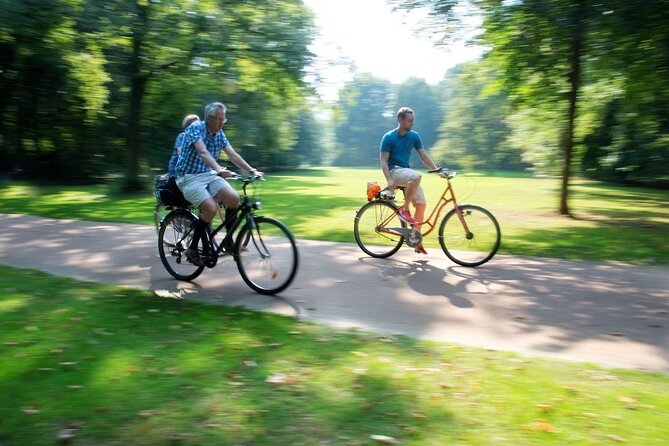
Berlin makes most sense from a bicycle seat, especially when your route leaves the grand avenues for Tiergarten’s leafy paths, medieval remnants, rebuilt churches, odd monuments, and quiet courtyards. This three-hour ride connects places that are easy to miss when you stick to the Brandenburg Gate and Museum Island.
I like the mix of green space and city stories, and I like the small group size of five to 15 people. Guide David is described as both a true Berliner and a sharp, funny storyteller. The main drawback is that the tour is German-only, and three hours without a planned drink or food stop may feel long for some people.
Key points to know before you book
- Tiergarten gives the tour breathing room: You spend time on garden paths and bike lanes rather than threading through traffic all day.
- The stops reach beyond standard Berlin sightseeing: Nikolaiviertel, Parochialkirche, the Franziskaner Klosterkirche, and Hansaviertel each show a different side of the city.
- David is one named guide to look for: His style combines Berlin character, humor, and solid subject knowledge.
- The tour is active but not a race: It is built around leisurely riding, frequent stops, and short explanations.
- You need German to get the full experience: An English version is available only as a private tour.
- Bring water and dress for the forecast: The tour runs in all weather, and no food or drinks are included.
Why Berlin works so well by bicycle
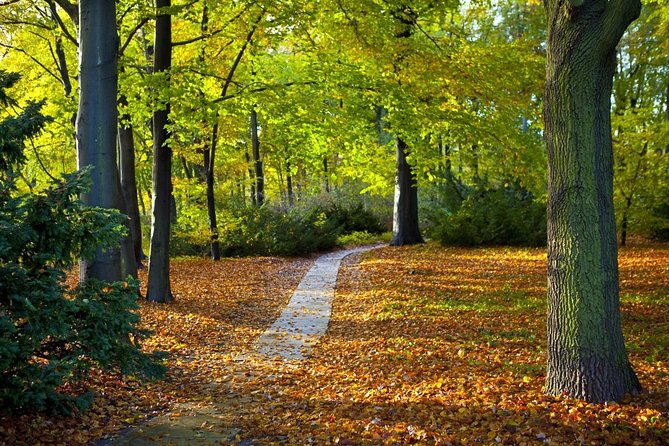
Berlin is broad, flat, and spread across many districts. Walking between its major sights can take more time than you expect, while a bus often keeps you at street level without letting you stop at the places that give the city its character.
A bicycle solves much of that problem. You can cover ground without rushing, use bike lanes and garden paths, and stop whenever a church ruin or strange monument catches your attention. The route also avoids the feeling of simply moving from one famous photo stop to another.
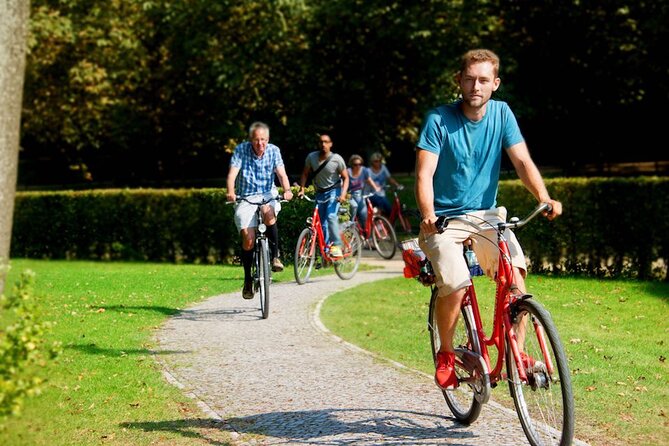
The pace matters. This is not a sports ride or a citywide endurance test. You use a comfortable urban cruiser, with a helmet included, and pause often for stories. The bike lets you see Berlin as a collection of changing neighborhoods rather than one tidy historic center.
The group size is limited to 15 people, with a minimum of five required for the tour to run. That is large enough to provide a social feel but small enough for the guide to keep the group together at stops. It also gives the guide a better chance to answer questions than on a large coach excursion.
Other rides around Berlin:
- Berlin: Sights and Highlights Bike Tour with a Local Guide
★ 4.8 · 2,698 reviews - Berlin Highlights 3-Hour Bike Tour
★ 5.0 · 948 reviews - Berlin City Bike Tour with Beer Garden Stop
★ 5.0 · 917 reviews
Starting at Poststraße in Berlin’s old center
The tour begins and ends at Poststraße 11, 10178 Berlin. This puts you in the central area near public transportation, which makes the meeting point fairly practical for a day of sightseeing.
The first 15 minutes are devoted to the departure point and bike rental. You receive your bicycle and helmet, meet the guide, and prepare for the ride. Since the activity ends at the same place, you do not need to plan a separate return journey or arrange a taxi from a distant neighborhood.
Use the meeting time to settle your clothing and water before you set off. The tour does not include food or drinks, and one direct piece of advice from the experience is worth taking seriously: three hours can be a long stretch without a pause to buy something. Have water with you before departure.
Tiergarten: Berlin’s green center
Tiergarten is the first major stop, with about 30 minutes set aside for Berlin’s central park. This is where the ride shifts from an ordinary city tour to something more relaxed.
You pedal through leafy lanes and garden paths, gaining a sense of how much open space Berlin has inside its central districts. The park also gives your legs a gentle start before the route turns toward more built-up areas.
I like this part because it shows why a bicycle is such a good fit for Berlin. You are not trapped on a main road, and you are not forced to choose between walking slowly and taking a vehicle that cannot stop easily. The park section is also a useful break from dense urban scenery.
The drawback is that Tiergarten is a broad area, so the experience depends heavily on the guide’s stories and route choices. If you want nonstop famous monuments, this section may seem too quiet. If you want a calmer look at the city, it is a strong opening.
Nikolaiviertel and Berlin’s point of origin
The ride then reaches Nikolaiviertel, described as the place where Berlin began. You get about 10 minutes here, enough for a concise explanation and a look around the quiet quarter.
Much of what you see today was remodeled after wartime destruction, including major reconstruction work during the 1980s. That makes Nikolaiviertel useful for understanding one of Berlin’s recurring themes: what looks old may be a modern recreation, and what looks modern may preserve an older street plan or memory.
Do not expect a long museum visit. This is an outdoor stop, and the value comes from placing Berlin’s beginnings within the present-day city. The quarter is also a good contrast with the open paths of Tiergarten, moving you from greenery into a compact historic setting.
Other three-hour trips in Berlin:
- Berlin Highlights: 3-Hour Bike Tour
★ 4.9 · 809 reviews - Berlin: 3-Hour Street Art Tour
★ 4.7 · 778 reviews - Berlin: 3-Hour Secret Food Tour
★ 4.8 · 269 reviews - Berlin: 3-Hour Segway Tour
★ 4.7 · 112 reviews
Märkisches Museum and the 3D city models
Near the Märkisches Museum, the group pauses for around 15 minutes to look at large three-dimensional models of Berlin. These models help explain how the city keeps changing.
This is one of the more useful stops for first-time visitors because Berlin can be hard to picture as a whole. The city’s districts often feel separate, and its past layers are not always easy to read from street level. A model gives you a visual framework for the neighborhoods you are passing through.
The stop also points to Berlin’s constant rebuilding. Destruction, division, new housing, cultural changes, and fresh construction have all altered the city. Instead of treating Berlin as a finished historic display, the tour presents it as a place still being revised.
Bears, churches, and medieval traces
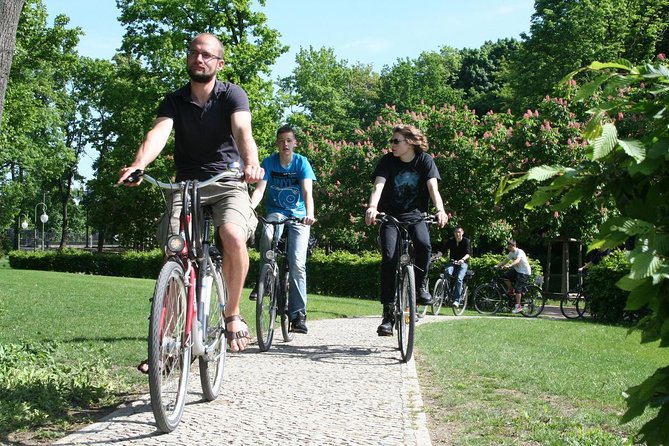
Several short stops follow, each offering a different piece of Berlin’s story.
At the Bärenzwinger Berlin, you spend about 10 minutes exploring the connection between bears and the city’s name. It is the kind of small, curious stop that gives the ride its personality. You are not just ticking off major attractions. You are asking why a city uses the symbols it does and how those symbols become part of everyday identity.
Parochialkirche adds a more serious theme: religion, destruction, rebuilding, and the buildings or fragments that survived. The stop lasts around 10 minutes, so expect an explanation from outside rather than an extended church visit.
Another 10-minute pause takes you to the Franziskaner Klosterkirche. This abandoned church is a rare reminder of Berlin’s medieval past. It may appeal most to people who enjoy ruins and incomplete places, especially because it does not fit the polished image of a capital city.
These stops are short, but their variety keeps the ride moving. You see that Berlin’s story is not only about twentieth-century conflict or modern art. It also includes medieval religious buildings, wartime loss, reconstruction, and the uneasy presence of ruins within a living city.
The Global Stone Project and Berlin’s stranger side
The Global Stone Project receives about 15 minutes. It is presented as Berlin’s version of Stonehenge, with a playful link to the idea that love can be difficult.
This is exactly the sort of stop that can be hard to find on your own. It may not be a must-see monument in the usual sense, but it gives the tour a welcome change of tone after the churches and historical explanations.
You should approach this part with curiosity rather than a checklist mentality. The route includes places chosen because they are odd, overlooked, or thought-provoking. That is the appeal, but it also means the experience is less predictable than a standard landmarks tour.
Hansaviertel and the housing ideas of 1957
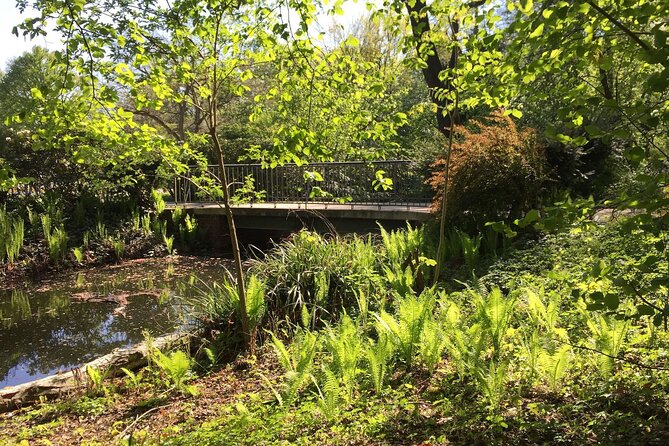
Hansaviertel gets around 15 minutes and shifts the focus toward architecture and city planning. The theme is the future of housing, at least from the perspective of 1957.
This stop helps you see that Berlin’s identity is not limited to old buildings. The city has repeatedly used housing projects and new architectural ideas to imagine a better urban life. Hansaviertel lets you consider how those ideas looked when they were new and how they read today.
For anyone interested in twentieth-century architecture, this may be one of the strongest stops. It also gives the tour a broader purpose. You are not only hearing stories about what Berlin was. You are looking at the way Berlin tried to decide what it should become.
The short time here means you should not expect an architectural lecture or an interior visit. The benefit is a clear introduction to the area while you are already moving through it by bicycle.
Clärchens Ballroom and the charm of age
The stop at Clärchens Ballroom lasts about 10 minutes. This famous dance venue is associated with a long life of dancing and a slightly morbid sense of charm.
It adds human energy to a route otherwise filled with ruins, models, housing schemes, and urban symbols. You get a glimpse of Berlin as a city of nightlife and social rituals, not just memorials and political history.
The brief pause is enough to understand why the place belongs on this route, though it is not designed as a full evening at the ballroom. If you want to dance there, you would need to make separate plans outside the tour.
Scheunenviertel and the final neighborhood ride
The final listed stop is Scheunenviertel, with about 15 minutes to explore its mix of courtyards, shopping, restaurants, culture, art, and nightlife.
This is a strong finish because the district brings many of Berlin’s present-day pleasures into one area. You move away from the city’s older ruins and into a part of Berlin associated with polished urban life and creative activity.
The courtyards are especially useful for understanding how Berlin’s blocks can hide quieter spaces behind busy streets. You may find the area more commercial and social than earlier stops, but that contrast is part of the point. Berlin can change mood within a few minutes of riding.
From here, the route returns to Poststraße. The precise riding time between stops is not listed, so the overall three-hour duration includes both cycling and explanations. You should expect a steady sequence of short stops rather than long visits at any one site.
What the $45.10 price covers
At $45.10 per person, the cost is reasonable if you want more than a bicycle rental. The price includes the bike, helmet, and professional guide, so you are paying for both transport and interpretation.
A rental alone would give you freedom but not the route or the stories. A standard walking tour might explain the city well but cover less ground and require more time on foot. This ride sits between the two: active enough to move across central Berlin, but guided enough to give the places meaning.
The value is strongest if you are new to Berlin or have already seen the headline sights and want a different angle. It is less compelling if you already know the city well, speak limited German, or mainly want a fast ride with no stops.
The tour is booked an average of 13 days ahead, so it is sensible to reserve early if your dates are fixed. Confirmation is normally provided at booking. If you book within two days of departure, confirmation can take up to 48 hours and depends on availability.
Language, weather, and who will enjoy the ride
The experience is available in German. If you need English, you must choose a private tour instead. This is the single most important booking detail, since the stories are central to the experience and are not something you can easily replace with a translated handout.
Children must be accompanied by an adult. Most people can participate, but the activity still requires you to ride for about three hours and manage city paths and streets. No special fitness level is stated, so you should judge the ride by your own comfort on a bicycle.
The tour operates in all weather. Dress for the forecast, and plan for rain or cooler conditions rather than assuming Berlin will provide a perfect cycling day. Comfortable clothing, shoes suited to riding, and your own water are practical choices.
Free cancellation is available up to 24 hours before the start time for a full refund. Changes or cancellations within 24 hours are not accepted for a refund. The activity also requires a minimum of five people, so if that number is not reached, you are offered another date or experience, or a full refund.
Should you book this Berlin bike tour?
Book it if you want Berlin explained through its odd corners, rebuilt quarters, churches, housing experiments, and park paths. It suits people who enjoy history but do not want three hours of formal museum commentary, and it works well for anyone who wants to cover ground without sitting on a bus.
I would especially choose it if you speak German and like a guide with a strong local personality. David’s blend of humor and Berlin character sounds like a major part of the appeal, and the route gives him plenty of unusual material.
Think twice if you need English, dislike cycling in uncertain weather, or expect a food break and long visits inside attractions. Bring water, arrive ready to ride, and treat the tour as a moving introduction to Berlin rather than a complete sightseeing program. For the right person, the $45.10 price buys a fresh view of a city that rewards looking past its famous postcard sights.
FAQ
How long does the Berlin bike tour last?
The tour lasts approximately three hours, including cycling and stops at the listed sites.
Where does the tour start and finish?
It starts at Poststraße 11, 10178 Berlin, Germany, and ends back at the same meeting point.
Is the bicycle included?
Yes. Bicycle use and a helmet are included in the tour price.
Is the tour available in English?
The standard tour is available only in German. An English version is available as a private tour.
What happens if the weather is poor?
The tour operates in all weather conditions, so you should dress appropriately for the forecast.
Can I cancel for a full refund?
Yes. You can cancel at least 24 hours before the start time for a full refund. Cancellations or changes made within 24 hours are not refunded or accepted.
Just added in Berlin
- Private One way Airport Transfer Berlin Airport To Berlin★ 3.5 · 17 reviews
- Private Walking Tour: Berlin Wall, Cold War and Checkpoint Charlie★ 5.0 · 37 reviews
- Modern Berlin Private Walking Tour: Diverse, Vibrant and Exciting German Capital★ 5.0 · 13 reviews
- City Explorer: Potsdam Private Day Trip★ 4.5 · 10 reviews
- Private Day Trip to Potsdam from Berlin by Train★ 4.5 · 27 reviews
- Berlin Private Custom 5-Hour Tour by Car★ 5.0 · 30 reviews
- Private Half-Day Sightseeing Tour in Berlin★ 3.5 · 6 reviews
- Berlin Private Custom Tour in a Minivan, East and West★ 5.0 · 123 reviews
Cycling Tours, compared.
Sights and Highlights Bike Tour with a Local Guide
Read our review →
Classic Mike’s Bike Tour daily @ 11.30 incl Beer Garden & Surfers
Read our review →
Berlin Highlights Sightseeing Bike Tour in Small Groups
Read our review →
Browse the lists this tour appears in