
Reviewed · HISTORICAL TOURS
Berlin Uncensored: A History of Sex & Freedom
Berlin’s story of sex and freedom is far more serious, political, and surprising than a tour of nightlife clubs. With sociologist and certified sex educator Jeff, you’ll trace Berlin from early nudist movements and pioneering sexual science to queer cabaret, Nazi persecution, divided-city politics, and today’s club culture.
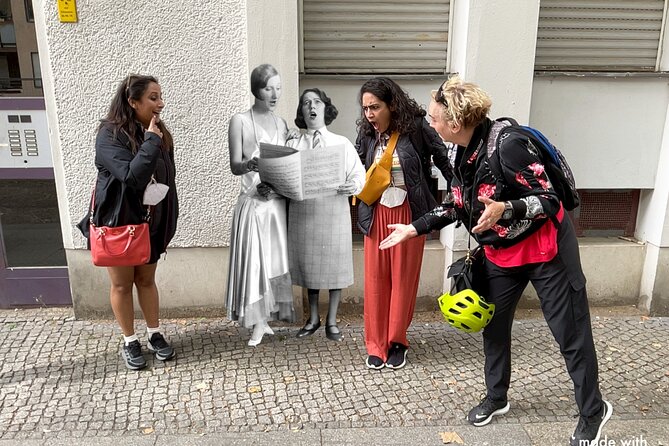
I especially like the small group of no more than 10, which gives you room to ask direct questions, and the use of 200-plus historical photos, videos, and augmented reality to show places that no longer look as they once did. The main drawback is that this is an adult history tour, not a sightseeing walk with major indoor attractions, and some subjects require a thoughtful, mature approach.
Key points to know before booking
- Magnus Hirschfeld’s pioneering work gives the tour a serious historical core, far beyond modern club gossip.
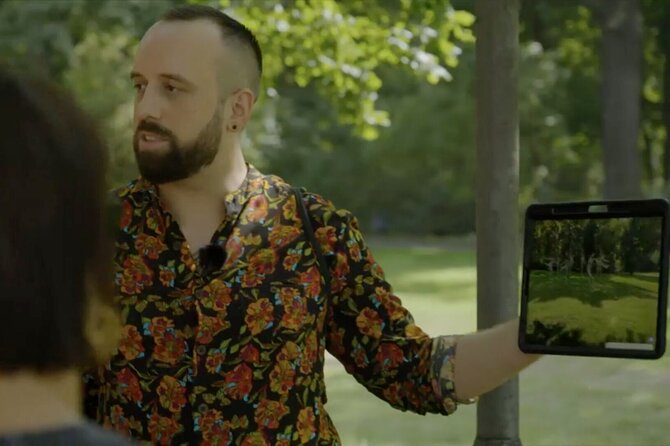
- Jeff combines sociology, sex education, and personal storytelling, with time for questions throughout the walk.
- The route links queer Berlin to Nazi persecution, including the pink triangle and the destruction of the Institute for Sexual Science.
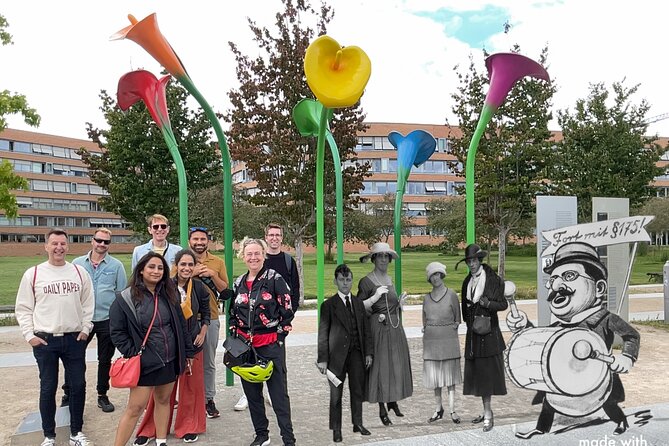
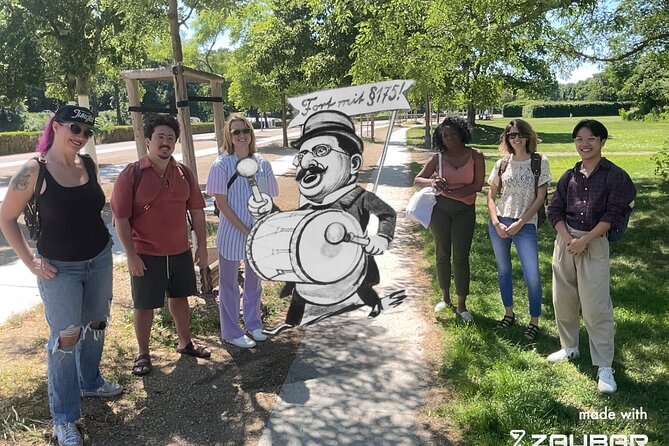
- Archival images and AR tools help you picture lost clubs, performers, and political movements.
- The 3.5-hour walk is adults-only, conducted in English, and returns to the starting point.
- The $82.90 price is fair for a very small, specialist tour, though it is higher than a standard city walking tour.
Why Berlin’s sexual history belongs in your sightseeing plans
Berlin’s sexual culture did not appear overnight with Berghain or the KitKat Club. This tour shows how ideas about the body, gender, desire, relationships, and personal freedom have shaped the city for more than a century.
That makes the experience different from a simple tour of famous bars. You’ll learn how nudism became part of everyday life around Berlin’s lakes and parks, how lesbian and gay communities built social worlds in the early 20th century, and how sexual research once placed Germany at the front of international medical and social debate.
You’ll also see how quickly freedom can disappear. The Nazi regime closed erotic clubs, attacked sexual minorities, destroyed research, and sent people to concentration camps. After World War II, East and West Berlin developed different attitudes toward sexuality, even as both sides used the subject in their own political ways.
I like this wider frame. It treats sex not as a novelty but as a window into power, science, art, prejudice, politics, and daily life. You’ll leave with a better sense of why Berlin feels so open today, and why that openness was never guaranteed.
Other history to see in Berlin:
- Berlin: Natural History Museum Entrance Ticket
★ 4.6 · 3,382 reviews - Berlin: World Heritage Cruise to Potsdam
★ 4.5 · 1,435 reviews - Berlin Historical Highlights Walking Tour
★ 4.9 · 657 reviews
Starting at Nollendorfplatz with FKK and body freedom
The tour begins at the Alnatura Super Natur Markt on Else-Lasker-Schüler-Straße at 2 p.m. From there, you meet Jeff and start near Nollendorfplatz, one of Berlin’s most important queer districts.
The first stop introduces FKK, the German tradition of Freikörperkultur, or free-body culture. You’ll hear how nudism developed from the 19th century onward and why it became linked with health, nature, social equality, and freedom from restrictive clothing.
This opening is useful because it corrects a common misunderstanding. Berlin’s relaxed attitude toward the body is not only about erotic life. It also connects to parks, lakes, recreation, and ideas about living naturally. Even today, public nudism remains part of the culture around some German outdoor spaces.
The first stop takes about 10 minutes, so do not expect a long visit or a formal presentation. Think of it as the starting idea for the rest of the walk: who controls the body, and what happens when society changes its answer?
Magnus Hirschfeld and the lost Institute for Sexual Science
At Magnus-Apotheke, the tour turns to Magnus Hirschfeld and the Institute for Sexual Science. This is one of the most important sections because it gives the walk a scientific and social foundation.
Hirschfeld was a pioneer in the study of sexuality, relationships, contraception, and gender identity. The institute became a place where people could seek information and support at a time when many subjects were ignored, punished, or treated as shameful.
You’ll hear about early work in sexual health, the development of the rubber condom, early research connected with drugs that anticipated Viagra, and the first gender affirmation surgeries. The stories of Dora Richter, Lili Elbe, and Karl M. Baer show that gender transition was not invented by modern media or recent medicine. People were seeking medical recognition and bodily change long before today’s language became common.
This stop lasts about 20 minutes. The physical location does not replace the institute, so much of the power comes from Jeff’s explanation and the visual material. The AR elements and archival images are particularly helpful here. They give you a way to picture the research center and the people connected with it.
The institute was destroyed by the Nazis in 1933. That loss matters not only because books and records disappeared, but because a whole network of research, care, and public education was broken apart. For me, this is where the tour moves from unusual social history into a lesson about what authoritarian governments fear.
The pink triangle and Nazi persecution
At the Monument to Homosexuals Persecuted Under National Socialist Regime, you’ll examine the Nazi attack on sexual freedom and sexual minorities.
The discussion includes the closure of erotic clubs, the suppression of sexual diversity, and the execution of Ernst Röhm during the Night of the Long Knives. Röhm had been a high-ranking Nazi and was known to be homosexual, a grim reminder that political usefulness did not protect people from persecution.
The tour also covers the treatment of LGBTQIA+ people, sex workers, and others labeled degenerate by the regime. Many were arrested and sent to concentration camps. Prisoners marked with pink triangles suffered under a system that reduced human beings to categories created by the state.
The pink triangle was later reclaimed by the LGBTQ rights movement. That shift from a mark of persecution to a symbol of protest is a powerful example of how communities can take control of a painful past.
This stop is short, about 10 minutes, but the subject is heavy. Jeff’s trauma-informed approach is important here. You can ask questions, but you should also expect the tone to change. This is not a cheeky sex tour from start to finish.
Same base, a different kind of day out:
- Berlin: Reichstag, Dome and Government District Guided Tour
★ 4.7 · 18,288 reviews - Berlin: 1-Hour City Tour by Boat with Guaranteed Seating
★ 4.3 · 16,993 reviews - Berlin: Boat Tour Along the River Spree
★ 4.4 · 11,252 reviews - Discover Berlin Half-Day Walking Tour
★ 5.0 · 9,624 reviews
Kurfürstenstrasse and Berlin’s prewar nightlife
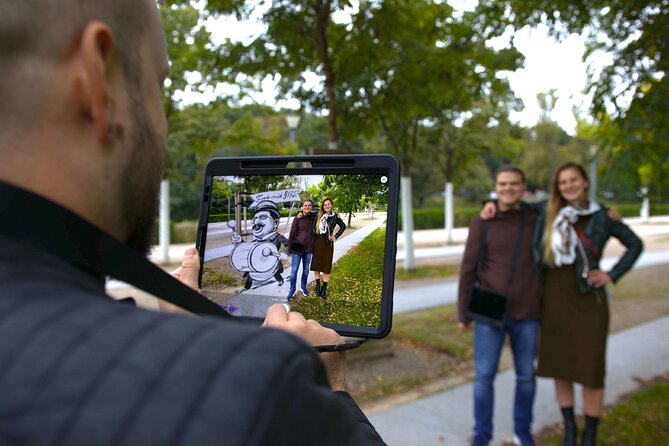
At Kurfürstenstrasse, you’ll return to Berlin’s pre-Nazi nightlife. The area was associated with open prostitution, brothels, and forms of fetish and kink culture that were far ahead of their time.
The tour presents Berlin as a place where many kinds of desire could find a public or semi-public outlet. That did not mean life was easy or safe for everyone. Openness existed alongside exploitation, unequal power, police control, and social stigma. Still, the range of sexual subcultures helps explain why Berlin later became known for experimentation.
This portion is around 15 minutes and takes place on city streets rather than inside historic clubs. You’ll need to use your imagination, with Jeff’s photos and stories filling in the gaps. The neighborhood’s current appearance cannot fully show what once took place there.
I appreciate that the route does not treat the past as a simple golden age. Berlin’s permissiveness was real, but it was uneven. The tour is strongest when it lets you hold both truths at once.
Lesbian Berlin at Schwerinstrasse 9
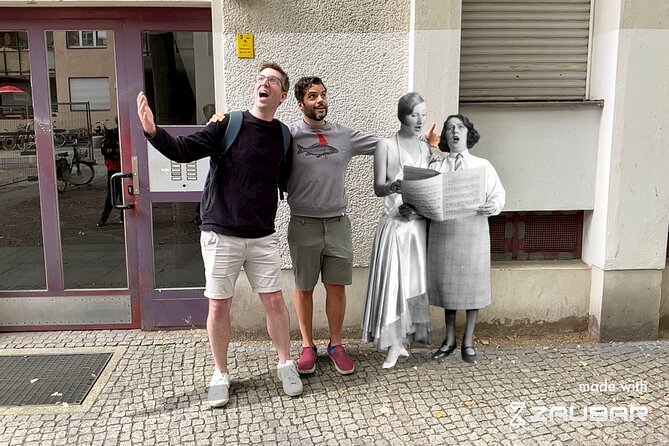
Schwerinstrasse 9 introduces the lesbian communities that flourished in early 20th-century Berlin. At a time when women had fewer public spaces and fewer routes to independence, clubs and cabarets could offer connection, identity, and a measure of freedom.
You’ll hear about the Toppkeller, a meeting place for women who challenged social expectations, and Claire Waldoff, a cabaret singer associated with a lesbian identity. Music mattered here. The Lavender Song shows how popular performance could carry coded or open messages about queer life.
The story of Josephine Baker adds another layer. She was a celebrated Black performer who attracted admiration in Berlin while also facing racial discrimination. Her presence helps show that sexual openness did not erase racism or other forms of prejudice.
This stop lasts about 10 minutes. It is brief, but it gives needed attention to women and performers who can disappear from city histories focused mainly on gay men and famous clubs.
Christopher Isherwood’s Berlin and the making of Cabaret
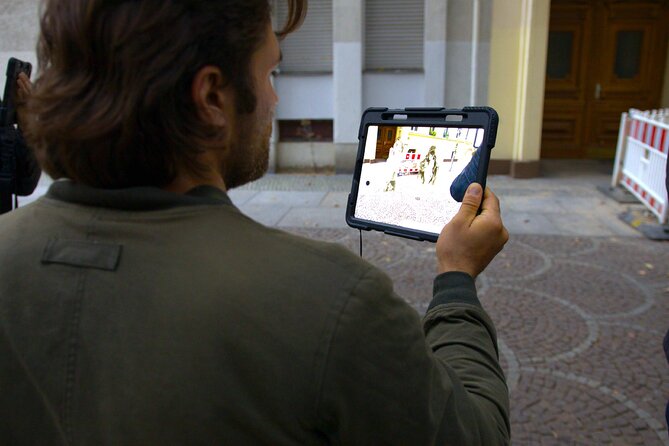
The residential building associated with Christopher Isherwood offers a literary way into Berlin’s nightlife. Isherwood lived and socialized in the city during the 1920s and early 1930s, and his writing later inspired works adapted into Cabaret.
You’ll use his memoirs as a guide to the social world around him: clubs, friendships, sexual encounters, and the sense that Berlin offered possibilities unavailable elsewhere in Europe. His writing is valuable because it captures atmosphere through individual experience rather than only through laws and institutions.
It is also worth remembering that one writer’s view is never the whole city. Isherwood’s Berlin was shaped by his own position, social circle, and time. Jeff uses the material as a doorway into the period, not as a complete record of everyone’s life.
The stop takes about 10 minutes. It is a good moment for anyone interested in literature, film, or the connection between private lives and public history.
The Eldorado Club and Berlin’s drag culture
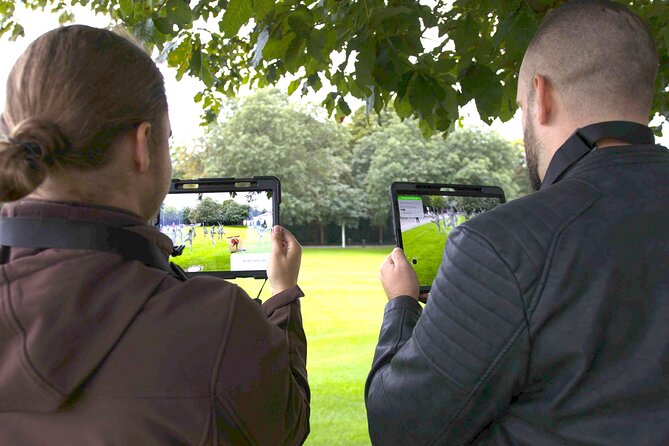
Near Denns BioMarkt, the tour discusses the former Eldorado Club, one of the best-known nightlife sites of 1920s Berlin.
Eldorado attracted drag performers and people seeking a sexually open social world. It also drew some powerful men who later helped enforce the Nazi crackdown on so-called degeneracy. Ernst Röhm is part of that complicated story, having been known to visit the club before the regime turned against many of the people and spaces associated with it.
You’ll also hear about a journalist from Vogue who visited Eldorado and called a drag queen the most beautiful woman in Berlin. Details like this show how drag could be both sensational entertainment and a serious form of public self-expression.
Again, the club itself is gone. The value comes from reconstructing its role through images and stories. If you expect to walk into a preserved nightclub, you may be disappointed. If you enjoy seeing how a vanished place shaped a city’s identity, this stop works well.
Divided Berlin, FKK, and the AIDS crisis
At the Internationale Stele Gegen das Vergessen, the tour moves into the postwar period. After 1945, Berlin was split between East and West, and the two sides developed different approaches to sexuality.
West Berlin became associated with the sexual revolution, more open attitudes toward relationships, pornography, and alternative lifestyles. East Berlin offered fewer freedoms in many areas, yet public nudism became highly popular. The contrast is one of the tour’s most interesting themes: a government could restrict political life while allowing certain forms of body culture.
You’ll hear why the Berlin Wall was nicknamed the condom of the GDR, a phrase that captures how the border limited movement and contact. The tour also discusses a conservative politician who helped save thousands of lives during the AIDS crisis. That story complicates easy political labels and shows how public health sometimes crosses ideological lines.
This section takes about 15 minutes. It is especially useful if you know Berlin mainly through the Cold War and want to understand how private life was affected by the city’s division.
From Eldorado to Berghain and Folsom Europe
The route returns to Nollendorfplatz for a look at present-day Berlin. Here, the discussion reaches Berghain, KitKat Club, Insomnia, Lab.Oratory, and Folsom Europe.
You’ll hear how Berghain became famous for its no-photo policy and intense parties, while other venues connect electronic music with sexual exploration. Folsom Europe, described as the world’s largest fetish festival, brings thousands of people to Berlin each year.
This final section is useful for planning an evening, but do not treat it as a club-entry guarantee. The tour gives insider tips on sex-positive nightlife and events, not admission to the venues themselves.
I like ending here because modern Berlin makes more sense after you have seen the earlier chapters. Today’s clubs are not isolated curiosities. They belong to a long chain that includes cabaret, queer organizing, sexual science, body freedom, persecution, and protest.
Group size, technology, and the guide’s approach
Jeff is the central reason this experience works. As a sociologist and certified sex educator, he can connect personal stories with social forces, and the small group makes the discussion feel more like a guided conversation than a speech.
The cap of 10 people matters. You can ask about terminology, historical context, or modern nightlife without trying to interrupt a crowd. Several parts of the walk cover sensitive material, so the chance to clarify what you hear is a real benefit.
The AR material adds another layer. You may see historical photos, videos, and digital elements while standing in places that have changed or disappeared. The technology is not needed for every explanation, and it can occasionally feel like an extra layer rather than the main event, but it often makes lost clubs and vanished institutions easier to picture.
The tour is offered in English. Jeff’s English is described as easy to understand, which helps when the subject includes medical, political, and historical terms.
Is $82.90 good value for three and a half hours?
At $82.90 per person, this is more expensive than a basic Berlin walking tour. The price makes sense if you value a specialist guide, a maximum group of 10, visual research material, and a subject that is not covered by ordinary sightseeing routes.
You are paying for interpretation rather than entry tickets. Admission to the stops is free, and the walk does not include a drink, though the group might pause at a café. The value is in Jeff’s research, the conversation, and the careful connection between places.
Group discounts may help if you are booking for several people. The tour is also booked around 38 days ahead on average, so plan early if your Berlin dates are fixed.
Wear comfortable shoes and prepare for about three and a half hours on foot. The tour runs in most conditions but can be canceled in heavy rain or storms. It begins at 2 p.m., ends back at the meeting point, and stays near public transportation.
Who should book Berlin Uncensored?
Book this if you want Berlin history told through sexuality, gender, nightlife, science, and politics. It is a particularly good choice for adults interested in LGBTQ history, queer culture, social science, modern Germany, or the background behind Berlin’s club scene.
It also suits solo visitors and small groups who enjoy asking questions. The format is less suitable if you want major museum interiors, a conventional list of monuments, or a light entertainment outing with no difficult material.
The tour is for ages 18 and older. Service animals are allowed, and most people can participate, but you should be ready for a walking route and serious discussion.
Final verdict: book it for context, not just nightlife tips
I recommend Berlin Uncensored if you want to understand how Berlin became Berlin. The most valuable parts are not only the stories about clubs and performers, but the links between sexual science, Nazi repression, divided-city politics, public health, and present-day freedom.
Book it before a night out if you want more context for the city’s famous clubs and festivals. Book it after seeing Berlin’s major museums if you want a different way to read the city. Skip it only if the subject feels outside your interests or if you prefer indoor attractions and a shorter walk.
The small group, Jeff’s open teaching style, and the visual material make the $82.90 worthwhile for the right audience. This is an adult history lesson with street-level settings, a few lively stories, and a serious warning about how quickly freedom can be lost.
FAQ
How long does Berlin Uncensored last?
The tour lasts approximately 3 hours and 30 minutes.
Where does the tour start?
It starts at Alnatura Super Natur Markt, Else-Lasker-Schüler-Straße 18, 10783 Berlin, Germany.
What time does the tour begin?
The start time is 2 p.m.
Where does the tour end?
The experience ends back at the meeting point.
Is the tour offered in English?
Yes. The tour is offered in English.
What is the maximum group size?
The group has a maximum of 10 people.
What happens if bad weather cancels the tour?
In extreme weather, such as heavy rain or a storm, the tour may be canceled. You will be offered another date or a full refund.
Can I cancel for a full refund?
Yes. You must cancel at least 24 hours before the local start time for a full refund. Changes or cancellations made less than 24 hours in advance are not accepted for a refund.
Just added in Berlin
- Modern Berlin Private Walking Tour: Diverse, Vibrant and Exciting German Capital★ 5.0 · 13 reviews
- Private One way Airport Transfer Berlin Airport To Berlin★ 3.5 · 17 reviews
- Private Walking Tour: Berlin Wall, Cold War and Checkpoint Charlie★ 5.0 · 37 reviews
- Private Day Trip to Potsdam from Berlin by Train★ 4.5 · 27 reviews
- City Explorer: Potsdam Private Day Trip★ 4.5 · 10 reviews
- Berlin Private Custom 5-Hour Tour by Car★ 5.0 · 30 reviews
- Private Half-Day Sightseeing Tour in Berlin★ 3.5 · 6 reviews
- Berlin Private Custom Tour in a Minivan, East and West★ 5.0 · 123 reviews
Historical Tours, compared.
City History Canal Sightseeing Tour on a Motorboat
Read our review →
Browse the lists this tour appears in