
Reviewed · HISTORICAL TOURS
Private Berlin Top Historical Sites Tour with Black Van
Berlin’s past is packed into this four-hour private tour, from the Prussian capital around Unter den Linden to the Nazi era, the divided city, and the Berlin of today. A black van links the major sights, so you can cover far more ground than on foot.
I like the private format, which lets your guide adjust the pace and explain what matters to your group. I also like the all-in-one route: you see the Brandenburg Gate, Museum Island, Checkpoint Charlie, the Holocaust Memorial, and several less obvious sites without working out the transport yourself.
The main drawback is the price, listed at $681.49 per person. That can make sense for a private group sharing the guide and van, especially in cold or wet weather, but it is a serious cost for one or two people.
Key points to know before booking
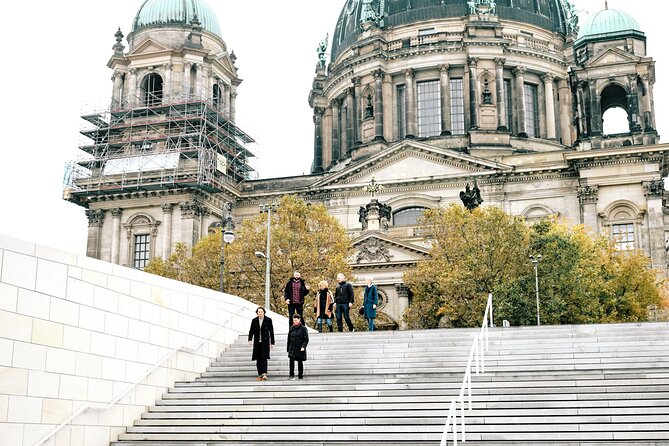
- Thirteen central Berlin stops: The route covers the Reichstag, Brandenburg Gate, Museum Island, Bebelplatz, Checkpoint Charlie, the Berlin Wall Memorial, and more.
- A private black van: You spend less time crossing the city on foot and more time hearing the story behind each place.
- Hotel pickup and drop-off: Meet your guide in the lobby, with a sign showing your name.
- Guides can shape the experience: Stephanie, also called Steffi, is noted for a fun approach, while Manfred is praised for city insight and local food suggestions.
- A strong first-day orientation: The tour connects Berlin’s major eras and helps you decide what deserves a longer visit later.
- Rain or shine: Bring an umbrella or raincoat, and add a warm layer in winter.
Why this private Berlin tour works as a first look
Berlin is not a city that explains itself in one tidy historic center. Its main sights are spread across several districts, and the story changes every few blocks. A royal boulevard leads to Nazi-era memorials, Cold War checkpoints, new government buildings, and open spaces once split by a wall.
This tour gives you that broad picture quickly. The stated duration is about four hours, and each listed stop is planned for roughly ten minutes. That means you should expect short visits and outdoor explanations rather than long museum sessions. You will see a great deal, but the purpose is orientation, not a deep visit inside every attraction.
That distinction matters. If you want to study the Pergamon Museum, spend quiet time at the Holocaust Memorial, or read every panel at the Topography of Terror, you need a separate visit. If you want to understand how Berlin fits together before exploring on your own, this format is useful.
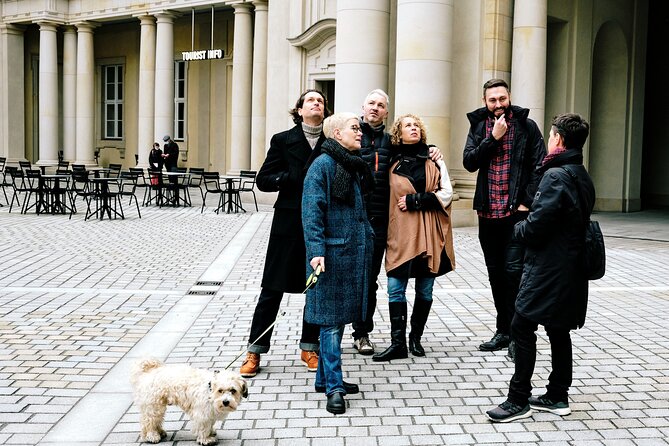
The private setup also changes the feel of the outing. You are not tied to a large group or a fixed public schedule. Your guide can answer your questions directly, explain a point again, or adjust the emphasis toward architecture, wartime history, the Berlin Wall, or local life.
Other history to see in Berlin:
- Berlin: Natural History Museum Entrance Ticket
★ 4.6 · 3,382 reviews - Berlin: World Heritage Cruise to Potsdam
★ 4.5 · 1,435 reviews - Berlin Historical Highlights Walking Tour
★ 4.9 · 657 reviews
Reichstag and Brandenburg Gate: Berlin’s political stage
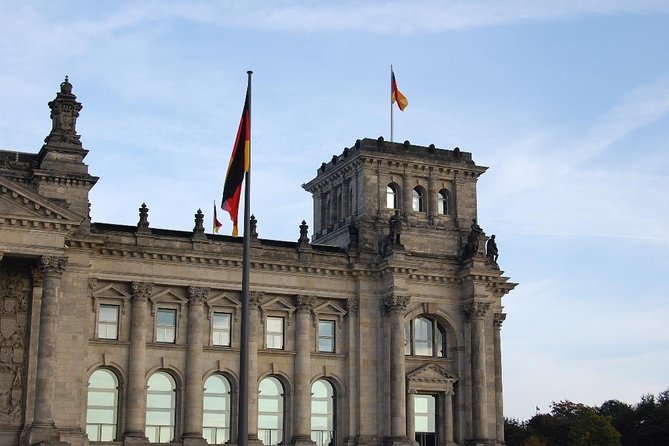
The Reichstag Building is an efficient place to begin. It brings together the German Empire, the damage of war, the years when Berlin was divided, and the country’s present political life. The stop is listed as ten minutes, so expect an exterior introduction rather than a full parliamentary visit.
Your guide can use the building to explain how Berlin changed from the capital of Prussia and imperial Germany into the capital of a divided country, then into the seat of reunified Germany. That broad timeline gives the rest of the tour a useful frame.
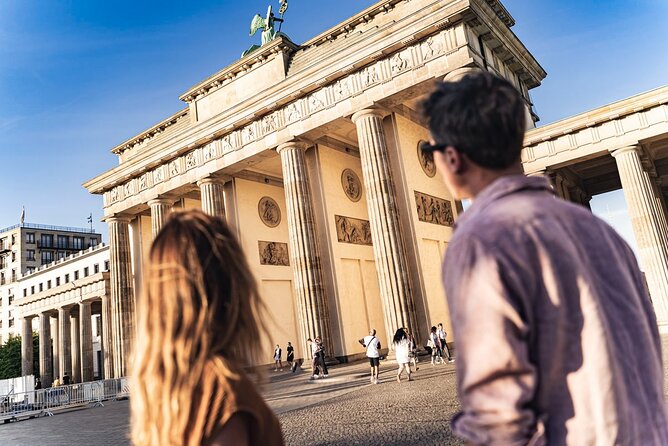
A short ride or walk connects this area with the Brandenburg Gate. The gate once marked the edge of the city, later became a Cold War symbol, and now serves as one of Berlin’s most familiar meeting points. It is worth looking at the surrounding space as well as the gate itself, since the open square helps you understand how public power and political theater have been staged here.
These first stops are easy to photograph and easy to grasp. They are also popular, so a guide who can keep the explanation focused is helpful. Do not expect a quiet, private monument experience. Expect a clear introduction to the city’s best-known symbol.
Museum Island and Unter den Linden: royal Berlin in a few blocks
Museum Island is one of the tour’s major cultural stops and is listed as a UNESCO World Heritage site. The island holds several major museums, but this four-hour outing does not include time for a full museum visit or an admission ticket.
Instead, you get a sense of the setting and its role in Berlin’s development. The museum buildings reflect the city’s ambition to present art, archaeology, and scholarship on a grand scale. If one museum catches your eye, make a note and return later with several hours to spare.
Unter den Linden provides a useful link between the royal center, Museum Island, the Brandenburg Gate, and Bebelplatz. The broad avenue carries layers of Berlin’s past, with grand buildings and major institutions along its route. A guide can help you notice how the street connects places that might otherwise feel like separate stops on a map.
This is one part of the tour where the van is valuable. You can cover the central route without spending your limited time navigating crossings, public transport, or long stretches between monuments. You will still get out and walk at the stops, but the vehicle keeps the whole half-day moving.
Bebelplatz and the Holocaust Memorial: confronting difficult history
Bebelplatz is a small but powerful stop. It is associated with the Nazi book burning of 1933, and its memorial uses an underground room of empty bookshelves, visible through a pane in the square. The setting can be easy to pass without context, which is exactly why a guide adds value here.
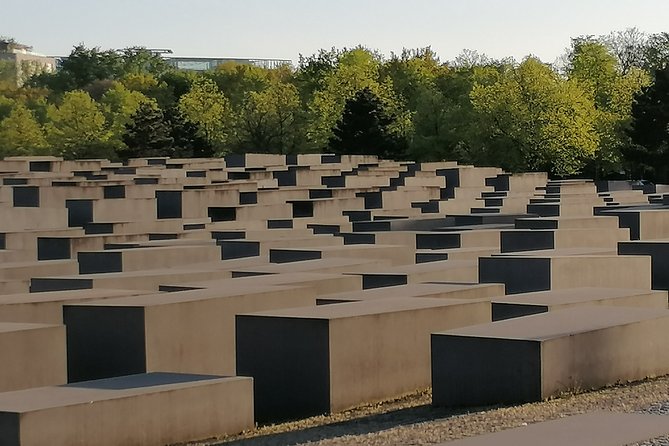
The Holocaust Memorial, officially the Memorial to the Murdered Jews of Europe, offers a different kind of experience. Its field of concrete slabs invites you to walk among changing heights and sightlines. The tour lists a short stop, so your guide will likely explain the purpose and setting rather than give you time for a long, private visit.
These sites call for a measured approach. Berlin does not hide the hardest parts of its past, and a good guide should explain them plainly without turning the visit into a rushed list of dates. The private format lets you ask questions that might not fit into a large group setting.
You should also know that these memorials are not entertainment stops. They are serious places. The route includes them because understanding Berlin means facing what happened here, not just admiring the city’s handsome buildings.
A few more things to do in Berlin worth a look
- Berlin: Private Reichstag and Glass Dome Tour
★ 4.8 · 2,226 reviews - Berlin Private Complete History All Day Walking Tour
★ 5.0 · 474 reviews - Private Walking Tour Berlin Third Reich Hitler and World War II
★ 5.0 · 360 reviews - Private Berlin: Iconic Sights and Hidden Gems Walking Tour
★ 5.0 · 292 reviews
Topography of Terror and the Führerbunker site
The Topography of Terror stands on the former site of major Nazi institutions. Its documentation center focuses on the machinery of persecution and the people who operated it. The stop is listed as free, but the schedule allows only about ten minutes, so you should treat this as an introduction rather than a full exhibition visit.
If the subject matters to you, return later for more time with the displays. The strength of the tour is the location and the explanation of why it matters. The limitation is the clock.
The Führerbunker site is another brief but important stop. The bunker itself is not presented as a grand attraction, and the location is marked at street level. That modest treatment is appropriate. Your guide can explain the site’s final role in the Nazi regime while also pointing out how ordinary the surroundings look today.
That contrast is part of Berlin’s character. Some of the most important sites are not monumental. You may see a parking area, a street, or an information panel rather than a preserved building. Without context, these places can seem unremarkable. With a guide, they become part of the city’s difficult record.
Potsdamer Platz and the Berlin Wall Memorial
Potsdamer Platz shows Berlin’s postwar reinvention in a different way. Once cut apart by the Wall and left as a stark border zone, it became a major redevelopment area after reunification. The modern buildings and broad public spaces make more sense when you know what occupied the site before them.
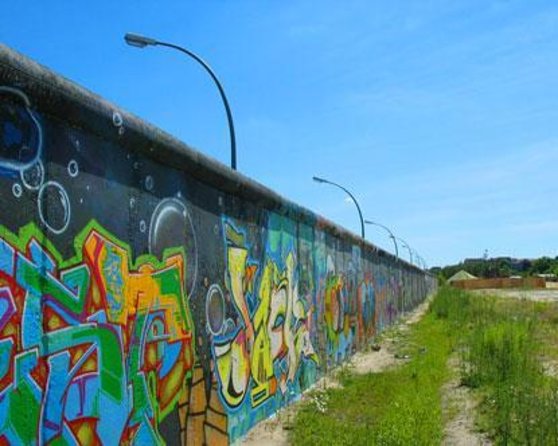
This is a good place to ask your guide about the physical shape of divided Berlin. The Wall was not simply one barrier through a city. It created border strips, blocked streets, separated neighborhoods, and changed how people moved through daily life.
The Berlin Wall Memorial adds a more direct look at that division. The site preserves sections of the former border and explains how the barrier worked. A ten-minute visit cannot cover every detail, but it gives you a clear reason to return if Cold War history is a major interest.
The route’s strength here is the contrast between Potsdamer Platz and the Wall Memorial. One shows rapid rebuilding and a new urban identity. The other keeps the division visible. Together, they help you see that reunification did not erase the city’s past, even as Berlin changed quickly.
Checkpoint Charlie: useful history, busy setting
Checkpoint Charlie is one of Berlin’s best-known Cold War sites. It was a crossing point between East and West Berlin, and its name still carries the tension of a divided city.
The modern setting can feel busy and commercial. The famous guardhouse and sign are important symbols, but the area is not preserved as a quiet historical district. That is why the guide’s explanation matters. You need context to separate the real history from the souvenir shops and photo opportunities nearby.
This stop works well in a vehicle-based city tour because it fits naturally into a larger story. You see the former border crossing after visiting sites connected to the Nazi period and before or after other places shaped by reunification. The sequence helps you track Berlin’s rapid changes instead of viewing each monument as an isolated attraction.
If you want a more detailed understanding of the Wall, ask your guide where to continue after the tour. The Memorial site usually offers a more sustained historical visit, while Checkpoint Charlie is best understood as a symbolic and highly visible marker.
Gendarmenmarkt and Tiergarten: architecture and breathing room
Gendarmenmarkt gives the tour a change of pace. The square is known for its grand urban design and elegant buildings, including the French Cathedral and German Cathedral. It offers a glimpse of Berlin as a planned European capital, with architecture meant to impress.
The stop is also a reminder that Berlin is not only a city of war memorials and political borders. Its older streets and squares have their own story, shaped by monarchy, religion, music, and public life. Your guide can connect the square to the wider history of central Berlin.
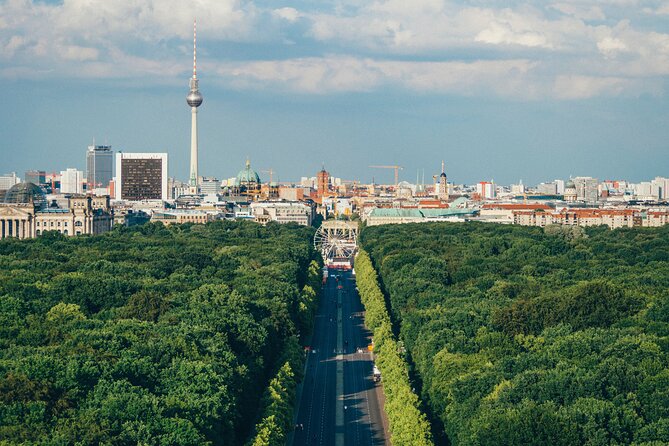
Tiergarten provides another shift. This large central park gives the city room to breathe and offers a different view of Berlin’s scale. A brief stop will not turn into a long park walk, but it helps you see why the green space matters between the government quarter and the central monuments.
The combination of Gendarmenmarkt and Tiergarten keeps the tour from becoming a nonstop procession of grim historical sites. Berlin’s story includes beauty, civic planning, open space, and ordinary city life too.
What the guide and van add
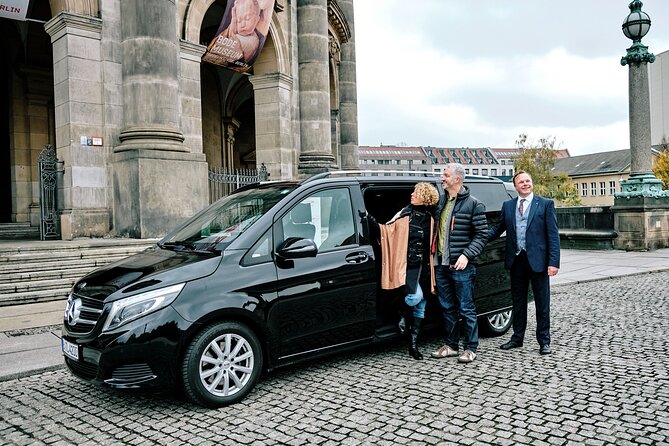
The tour includes a private local guide, a private black van, and a driver. Hotel pickup and drop-off are included, with the guide meeting you in the lobby while holding a sign with your name.
For a family or small group, this setup can be much easier than piecing together several subway rides and walks. One published experience describes the modern minivan as especially helpful on a cold winter day. That is a practical advantage in Berlin, where rain and low temperatures can make long outdoor transfers unpleasant.
The guide is the heart of the experience. Stephanie, also called Steffi, is known for a lively approach and for showing both requested sights and places the group had not expected. Manfred is praised for explaining the city clearly and suggesting good local places to eat. Those details point to the kind of service you should seek: a guide who does more than repeat dates and names.
The tour is offered in English. The operator also received French-language praise, but the listed offering is English, so ask at booking if you need another language.
Price, group size, and value
At $681.49 per person, this is not a budget sightseeing ride. The value depends heavily on how many people share the private activity and how much you value time, comfort, and personal attention. Group discounts are offered, but the exact reduced price is not provided.
For a larger family or group, dividing the cost can make the private van and guide more reasonable. For one or two people, you should compare the price with a standard walking tour, public transport, or a smaller shared tour.
The tour is best value when you have only a short time in Berlin, want hotel pickup, or prefer not to manage transport in cold or wet weather. It also helps if different people in your group have different interests, since a private guide can adjust the conversation.
The cost does not include food, drinks, or gratuity. If the guide gives you strong service, budget for a tip. That is optional, but it is an established part of the local tourism trade.
Practical details for a smooth four hours
You receive confirmation when you book. Meet in your hotel lobby, and the guide will have a sign with your name. Since the tour runs rain or shine, wear shoes suited to short walks and bring an umbrella or raincoat.
Winter deserves extra planning. Add a warm sweater to your bag, even if the day looks mild at breakfast. The guide can help you find a nearby cafe if you need to warm up, but you will enjoy the route more if you dress for outdoor stops.
Service animals are allowed, and the experience is near public transportation. The supplied information says most people can participate, though the exact vehicle and walking arrangements are not described in detail. Ask the operator directly if your group has specific mobility needs.
Free cancellation is available if you cancel at least 24 hours before the start time. Changes or cancellations made less than 24 hours ahead are not refunded.
Who should book this Berlin tour?
I would choose this tour for a first visit, a family group, or anyone with limited time who wants the city’s main historical markers connected by one clear story. It is also a sensible choice for a winter visit, when a private van saves energy between outdoor stops.
I would not choose it as my only Berlin history experience if I wanted long museum visits or quiet time at memorials. The route gives you ten-minute introductions at many places, so plan follow-up visits to the sites that catch your interest.
The strongest reason to book is the combination of personal attention and broad coverage. The biggest reason to hesitate is the cost. If your group can share that cost and you want an efficient first look, it can be a smart start to Berlin. If you are traveling alone on a tight budget, a less expensive shared tour may serve you better.
FAQ
How long does the private Berlin tour last?
The tour lasts approximately four hours.
What sights are included?
Stops include the Reichstag Building, Brandenburg Gate, Museum Island, Topography of Terror, Potsdamer Platz, Unter den Linden, Gendarmenmarkt, Tiergarten, the Berlin Wall Memorial, Bebelplatz, the Holocaust Memorial, Checkpoint Charlie, and the Führerbunker site.
Is hotel pickup included?
Yes. The guide meets you in your hotel lobby with a sign showing your name, and hotel drop-off is also included.
Is transportation provided during the tour?
Yes. The experience includes a private black van and driver.
Is this a private activity?
Yes. Only your group participates.
Is the tour offered in English?
Yes. English is the listed tour language.
Are food and drinks included?
No. Food and drinks are not included in the price.
What is the cancellation policy?
You can cancel for a full refund up to 24 hours before the experience starts. Cancellations or changes made less than 24 hours before the start time are not accepted for a refund.
Just added in Berlin
- Private One way Airport Transfer Berlin Airport To Berlin★ 3.5 · 17 reviews
- Private Walking Tour: Berlin Wall, Cold War and Checkpoint Charlie★ 5.0 · 37 reviews
- Modern Berlin Private Walking Tour: Diverse, Vibrant and Exciting German Capital★ 5.0 · 13 reviews
- Private Day Trip to Potsdam from Berlin by Train★ 4.5 · 27 reviews
- City Explorer: Potsdam Private Day Trip★ 4.5 · 10 reviews
- Berlin Private Custom Tour in a Minivan, East and West★ 5.0 · 123 reviews
- Berlin Private Custom 5-Hour Tour by Car★ 5.0 · 30 reviews
- Private Half-Day Sightseeing Tour in Berlin★ 3.5 · 6 reviews
Historical Tours, compared.
City History Canal Sightseeing Tour on a Motorboat
Read our review →

Browse the lists this tour appears in