
Reviewed · CYCLING TOURS
Berlin: Guided Bike Tour to Explore the Highlights
Berlin makes sense quickly from a bicycle. In three hours, you can connect Nikolaiviertel, Checkpoint Charlie, Brandenburg Gate, and Museum Island without spending your first day underground or walking between widely separated sights. The ride also gives you a useful first look at how Berlin’s royal past, Nazi crimes, Cold War division, and modern government district fit together.
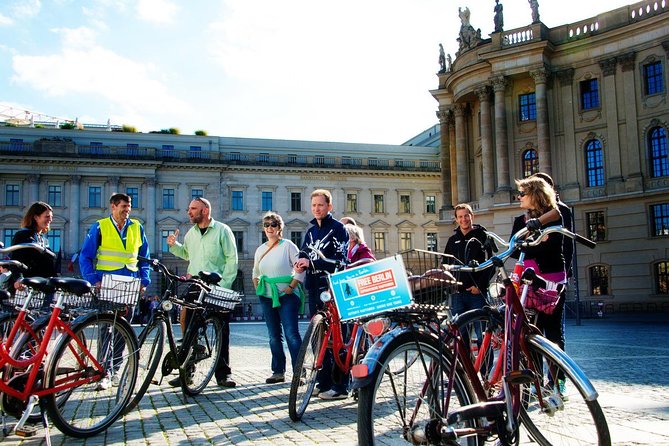
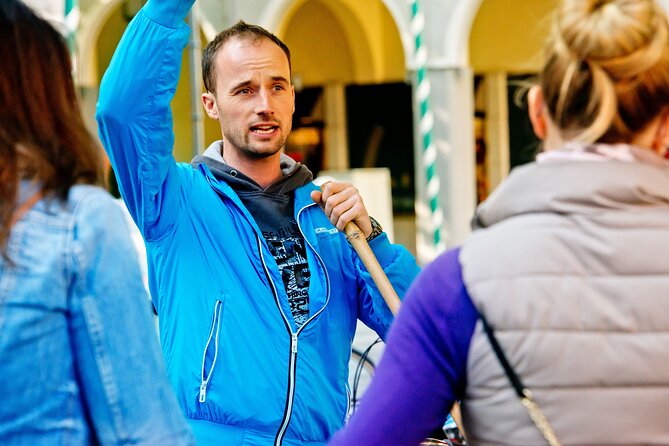
I like the comfortable pace and sturdy bikes, which make this more of a sightseeing ride than a test of fitness. I also like the guide-led storytelling, especially when guides such as Jake, Simone, Marius, and Simon turn a list of monuments into a readable story about the city.
The main caution is that the quality of the commentary can depend on the guide and language option. One English-language participant found the guide difficult to understand, while another felt there was too little time for photographs. The route also gives history more attention than art or neighborhood life.
Key points to know before you book
- Three hours covers a useful first look: You reach many of central Berlin’s major sights in one outing.
- English tours include Checkpoint Charlie: Prenzlauer Berg is listed only for the German version.
- The pace is relaxed, not sporty: You get exercise, but the ride is designed for sightseeing.
- Routes vary by guide: Each guide designs the route, so no two tours need be exactly alike.
- Groups stay fairly small: The tour accepts between 4 and 15 people.
- Children can join: Infant seats are available on request, and children must ride with an adult.
Why a bicycle works so well in central Berlin
Berlin is spread out. Its main sights are not packed into one compact old town, and the city’s twentieth-century story is scattered across broad avenues, former border zones, government buildings, memorials, and rebuilt squares. A bicycle lets you cover those distances without turning the day into a march.
The ride begins at Free Berlin Bike Tours & Rental on Poststraße 11, near Nikolaiviertel. You receive a bicycle, helmet, and guide, then return to the same meeting point at the end. The group size is capped at 15, with a minimum of four, so you should get more direct contact than on a large coach tour.
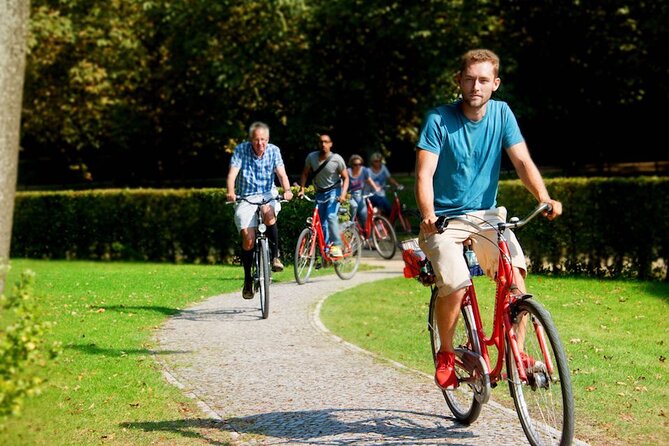
I would call the pace easy to moderate. Several participants described the bikes as light, sturdy, and comfortable, with enough movement to feel active but not worn out. You still need to be comfortable riding in a city, paying attention to the guide, and following the group through Berlin streets.
The company’s Free-Berlin concept matters here. Guides create their own routes, which gives the ride a personal feel, but it also means the exact order and emphasis can change. If you want a fixed script with every stop handled in the same way, this may feel less predictable. If you enjoy a guide responding to the group, it is a plus.
Other rides around Berlin:
- Berlin: Sights and Highlights Bike Tour with a Local Guide
★ 4.8 · 2,698 reviews - Berlin Highlights 3-Hour Bike Tour
★ 5.0 · 948 reviews - Berlin City Bike Tour with Beer Garden Stop
★ 5.0 · 917 reviews
Nikolaiviertel and Berlin’s earliest roots
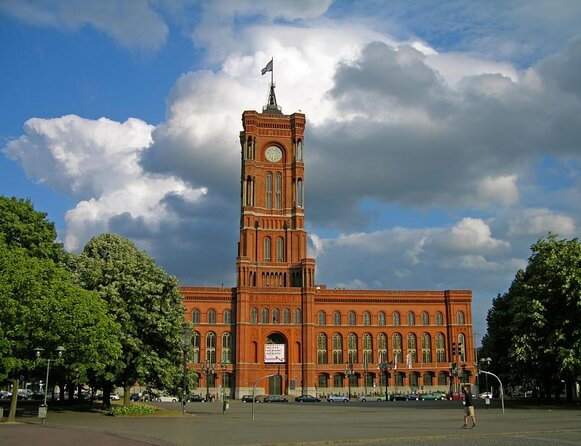
Nikolaiviertel provides a fitting starting point. This reconstructed old-town quarter offers a small-scale contrast to the broad streets and modern buildings you will see later. It was created in the late 1980s, so it is not an untouched medieval district, but it gives you a sense of the area where Berlin began.
The stop is brief, about 10 minutes. That is enough for an introduction and a few photographs, but not enough for a detailed visit. Think of it as a starting marker rather than a major sightseeing session.
From here, the route may bring Berlin’s TV Tower into view. The tower opened in 1969 and was then the second tallest in the world. It remains one of the clearest symbols of East Berlin, and its height helps you understand the city’s changing skyline. The tour does not include admission to the tower, so you see it as part of the city rather than visiting the observation deck.
Bebelplatz, books, and Berlin’s intellectual center
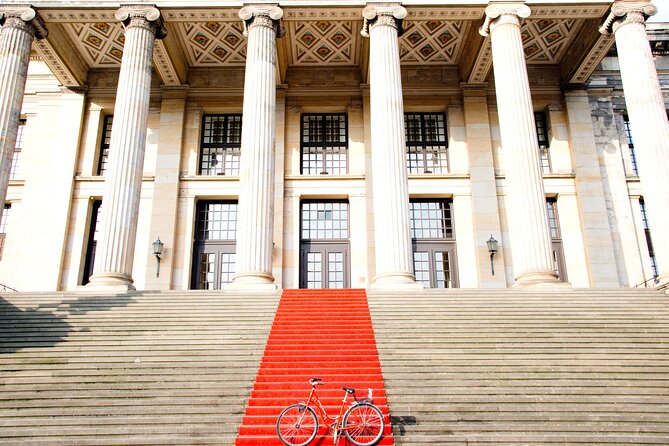
Bebelplatz is one of the most important stops for understanding Berlin’s Nazi past. The square is framed by the old opera, a Catholic cathedral, Berlin’s oldest university, a former bank building now used as a hotel, and a guardhouse with a temple-like design. In a few steps, you see a striking piece of historic Berlin architecture.
The square also marks the Nazi book burning of 1933. The memorial is set into the pavement, and its underground empty library gives the site a quiet, unsettling quality. The guide’s explanation is important because the memorial can be easy to miss if you are simply cycling past.
The stop lasts around 10 minutes. That works for a focused explanation, though you may want to return later if you prefer time for reflection or photographs. The nearby university has been connected with major intellectual figures, including Albert Einstein and Karl Marx, and some guides have studied there. That detail can add a personal note to the setting.
Checkpoint Charlie and the Cold War story
On the English version, Checkpoint Charlie is included as a 10-minute stop. This was the best-known crossing point between East and West Berlin during the Cold War, and its name is now familiar around the world.
The value of seeing it with a guide is context. On your own, you see a famous sign, a guardhouse display, and a busy central street. The guide can explain what the checkpoint meant, how Berlin functioned as a divided city, and why this particular crossing became so famous.
Do not expect a long museum visit here. The stop is short and the experience is about orientation and storytelling. If Cold War Berlin is your main interest, you will need extra time elsewhere in the city. For a first ride, though, this stop helps connect the political story to the streets around you.
The language detail matters. Checkpoint Charlie is specifically included in the English version, while Prenzlauer Berg is listed only for the German version. Check your selected option carefully before booking if either stop is important to you.
A few more things to do in Berlin worth a look
- Berlin: Reichstag, Dome and Government District Guided Tour
★ 4.7 · 18,288 reviews - Berlin: Government District around the Reichstag Guided Tour
★ 4.7 · 8,447 reviews - Berlin: Hidden Backyards Guided Walking Tour
★ 4.8 · 5,360 reviews - Berlin: 1-Hour Boat Tour with Bilingual Live Guide
★ 4.7 · 3,629 reviews
Potsdamer Platz, from nightlife to empty border zone
Potsdamer Platz gives the tour one of its clearest lessons in urban change. Before the Second World War, it was associated with heavy traffic and the nightlife of Berlin’s Roaring Twenties. During the city’s division, it became part of the no-man’s-land between East and West.
After reunification, the area turned into one of Europe’s largest construction sites. Modern buildings now fill a space that once represented separation and neglect. The contrast is especially useful on a bicycle because you can sense how quickly the surroundings change as you ride.
You stop for about 10 minutes. The site is better for a guide’s explanation than for old-fashioned charm. If you want historic facades or museum interiors, Potsdamer Platz may feel less rewarding. If you want to understand Berlin’s difficult attempt to reconnect itself, it is an essential pause.
The Holocaust Memorial and the weight of the route
The Memorial to the Murdered Jews of Europe is one of the tour’s most serious stops. Its field of concrete blocks creates a physical experience that is difficult to reduce to a quick photograph. The memorial’s design leaves room for personal response, while the guide provides the historical frame.
The tour gives this part of Berlin real attention. That is a strength if you want an introduction to the crimes of Nazi Germany and to the way modern Germany confronts that past. Several participants particularly valued the treatment of Holocaust and Berlin Wall history.
It is also the point where you should understand the tone of the ride. This is not only a cheerful city spin. The route deals directly with persecution, dictatorship, war, and division. One participant felt the tour focused too much on World War II and not enough on art. That is a fair warning: choose this ride for serious historical context, not for a light tour of cafés and galleries.
The stop is listed at roughly 10 minutes, so you may want to return independently if you want to walk among the blocks at greater length. The guide can introduce the memorial, but a brief stop cannot replace a slower personal visit.
Brandenburg Gate and the Reichstag
Brandenburg Gate is the symbolic center of the ride. It has served as a royal entrance, a Nazi parade backdrop, a Cold War symbol, and a powerful image of reunified Germany. You get a short stop of about 10 minutes, enough to hear the main story and take photographs.
The nearby Reichstag adds the modern political chapter. Germany’s parliament sits beside the government quarter, and its glass dome represents openness and public access. The tour does not include a dome visit, but seeing the building in its surrounding district helps you understand how the capital was reorganized after reunification.
Guides often use this stretch for stories and questions. The Reichstag has inspired plenty of jokes and myths, so a good guide can separate fact from city folklore. The route description refers to Germany’s equivalent of a White House, though the comparison is not exact. The important point is that you see the institutions of present-day Germany after passing through the places that shaped its darkest decades.
Museum Island and Berlin’s Spree Athens
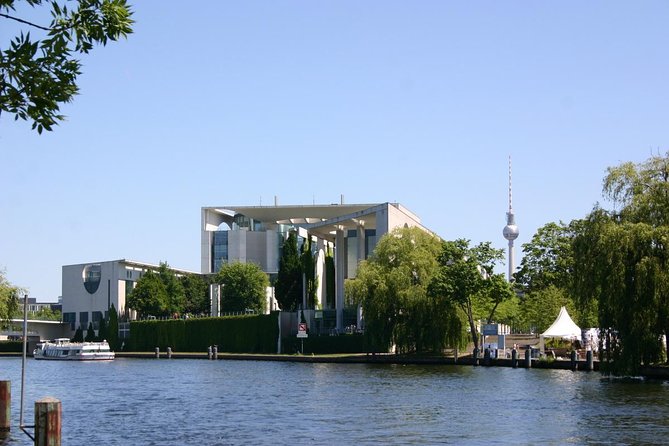
Museum Island closes the central sightseeing loop. Its monumental buildings line the Spree and form one of Berlin’s most impressive architectural groups. The nickname Spree Athens reflects the ambition behind the museum complex and its classical appearance.
You get around 10 minutes here, which is enough to admire the exteriors and learn how the island fits into Berlin’s cultural center. It is not enough for an interior museum visit, and no museum admission is included.
That limitation is easy to accept because a three-hour bicycle tour cannot also be a museum tour. I would use this stop to decide which institution deserves a longer return visit. The route also helps you see how close the cultural center is to the political and historical sites covered earlier.
The German-only Prenzlauer Berg option
The German version includes Prenzlauer Berg for about 30 minutes. This district is known for its bohemian character and for showing how Berlin changed after reunification. It adds neighborhood life to a route otherwise centered on major monuments and national history.
If you are booking in English, do not assume this stop will be included. The supplied details specifically mark Prenzlauer Berg as German-only. English-language riders instead get Checkpoint Charlie, which makes the English route more focused on the Cold War and central historic sights.
Guides, group size, and the human side of the ride
The guide can make or break this experience. The strongest feedback highlights guides who tell stories well, answer questions, add practical suggestions, and adjust the ride to the group. Jake is repeatedly praised for being funny, approachable, and willing to add an extra stop based on group interests. Simone is described as especially passionate about Berlin and German history. Marius, Luka, Rufus, Reiko, Giuletta, and Simon are also singled out for clear, engaging guidance.
There is a less positive side. One English-language rider had trouble following the guide’s English, and another felt the guide lacked experience. A separate complaint concerned smoking during the ride. These appear to be guide-specific concerns, but they are worth keeping in mind because the tour’s value depends heavily on clear commentary.
The group limit of 15 helps. A small group makes it easier to hear, ask questions, and stay together. Still, you may not get unlimited time at each monument. If photography is your priority, tell the guide early and use the stops wisely.
Price, practical details, and who will enjoy it
At $42.34 per person, the tour offers solid value if you want transport, a bicycle, a helmet, and a three-hour introduction in one package. You are paying for the guide’s route and interpretation as much as for the bike itself. Compared with arranging bicycles and finding your own way between distant sights, it is a convenient first-day choice.
Food and drinks are not included. The tour runs in all weather, so bring clothing suited to the forecast. Confirmation arrives at booking, and most people can participate. Children must be accompanied by an adult, and infant seats can be provided on request.
The tour suits first-time visitors, couples, families with older children, and anyone who wants to get oriented before choosing which museums or memorials to revisit. It is also useful if you have only one day in Berlin and want to cover a lot of ground.
I would be more cautious if you dislike cycling in city traffic, need long uninterrupted stops, or want a tour devoted mainly to art and architecture. The history is central, the route changes by guide, and the short stop lengths mean you will often see a place rather than fully visit it.
Free cancellation is available up to 24 hours before the start time. If the minimum group size is not reached and the operator cancels, you are offered another date or experience, or a full refund.
Should you book this Berlin bike tour?
Book it if you want a fast, thoughtful introduction to central Berlin and like the idea of connecting the city’s major chapters by bicycle. The strongest reason to choose it is the combination of relaxed riding and serious commentary, especially on Nazi Germany, the Berlin Wall, reunification, and modern government.
Choose another format if your main goal is museum interiors, neighborhood food, or long photography stops. For most first-time visitors, though, this is a practical way to get your bearings, see the essential sights, and leave with a clear list of places to explore on foot later.
FAQ
How long does the Berlin bike tour last?
The tour lasts approximately three hours.
Where does the tour begin and end?
It begins and ends at Free Berlin Bike Tours & Rental, Poststraße 11, 10178 Berlin, Germany.
What is included in the price?
The price includes use of a bicycle, a helmet, and a professional guide. Infant seats can be provided on request.
Is Checkpoint Charlie included on the English tour?
Yes. Checkpoint Charlie is specifically included in the English version of the tour.
Is Prenzlauer Berg included on the English tour?
No. Prenzlauer Berg is listed as included only in the German version.
What happens if I need to cancel?
You can cancel for a full refund up to 24 hours before the experience start time. Cancellations or changes made less than 24 hours before the start are not refunded.
Just added in Berlin
- Private Walking Tour: Berlin Wall, Cold War and Checkpoint Charlie★ 5.0 · 37 reviews
- Modern Berlin Private Walking Tour: Diverse, Vibrant and Exciting German Capital★ 5.0 · 13 reviews
- Private One way Airport Transfer Berlin Airport To Berlin★ 3.5 · 17 reviews
- Private Day Trip to Potsdam from Berlin by Train★ 4.5 · 27 reviews
- City Explorer: Potsdam Private Day Trip★ 4.5 · 10 reviews
- Berlin Private Custom 5-Hour Tour by Car★ 5.0 · 30 reviews
- Private Half-Day Sightseeing Tour in Berlin★ 3.5 · 6 reviews
- Berlin Private Custom Tour in a Minivan, East and West★ 5.0 · 123 reviews
Cycling Tours, compared.
Sights and Highlights Bike Tour with a Local Guide
Read our review →
Classic Mike’s Bike Tour daily @ 11.30 incl Beer Garden & Surfers
Read our review →

Berlin Highlights Sightseeing Bike Tour in Small Groups
Read our review →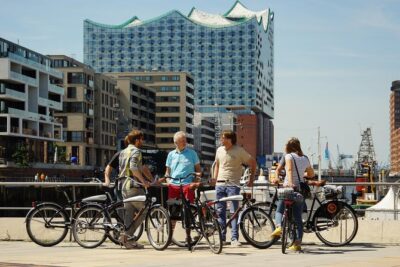
Browse the lists this tour appears in