
Reviewed · CYCLING TOURS
Berlin: Experience the Alternative Kreuzberg on a Bike Tour
Berlin’s alternative character comes into focus once you leave the grand boulevards. This three-hour ride moves through Kreuzberg, Kreuzkölln, and Friedrichshain, linking street art, former borderland, immigrant neighborhoods, artists’ spaces, and riverside views.
I like the route’s mix of history and everyday city life, and I like that every guide can shape the ride rather than follow one rigid script. Guides including Jake, Bjorn, Karl, Rico, Rufus, and Vincent have each been praised for humor, personal stories, and clear explanations. The main drawback is that this is not a fast cycling tour. You stop often, and one rider found the bike chain could dirty loose trousers.
Key points to know before you book
- Kreuzberg takes center stage: See Görlitzer Park, Falckensteinstraße, Admiralbrücke, Kottbusser Tor, and other corners that rarely appear on a first-time Berlin sightseeing route.
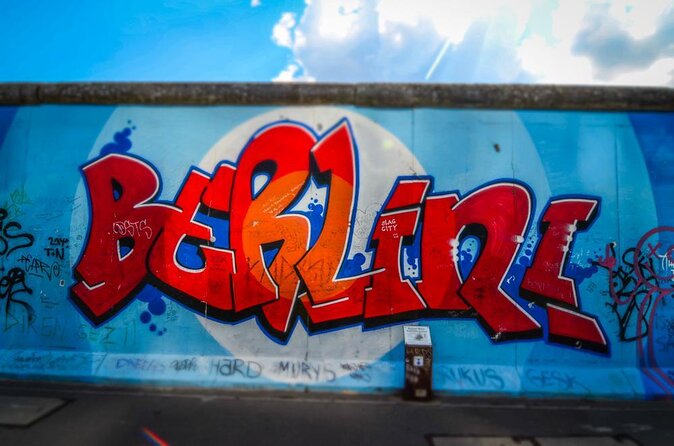
- Cold War history feels close: The East Side Gallery, Oberbaum Bridge, Osthafen, and the former Wall zone show how Berlin’s border shaped daily life.
- The pace is gentle: You ride for about three hours, with frequent stops for stories, photos, and explanations.
- Every guide brings a different route: The Free Berlin concept lets guides design their own version, so no two rides need to feel exactly alike.
- The price includes the essentials: At about $42.33, your bicycle, helmet, and professional guide are included. Food and drinks are not.
- Prepare for real city conditions: The ride operates in all weather, begins at 2:24 pm, and requires at least four participants.
Why this ride shows a different Berlin
Berlin’s postcard sights tell only part of the story. The Brandenburg Gate, Museum Island, and Reichstag explain the capital’s public face. This ride looks at the city from street level, where old factories, immigrant life, political activism, artists’ projects, new developments, and rough edges sit side by side.
That makes the tour useful early in a Berlin visit. You get a broad sense of how the city changed after reunification, especially around the former Wall. You also see why Kreuzberg remains so strongly associated with alternative culture, even as investment and new buildings continue to reshape it.
The route crosses several districts, but Kreuzberg is its heart. You will hear about the people who made the neighborhood what it is, including guest workers, artists, squatters, political activists, and residents who used creativity and nerve to make space for themselves.
The guides add a personal layer. Jake has been praised for lively stories and detailed explanations. Bjorn brings strong insight into Berlin’s alternative culture. Karl is described as articulate and funny, while Rico has been singled out for making the ride safe and enjoyable. The exact guide depends on the date, but the format leaves room for a human, conversational experience.
Other rides around Berlin:
- Berlin: Sights and Highlights Bike Tour with a Local Guide
★ 4.8 · 2,698 reviews - Berlin Highlights 3-Hour Bike Tour
★ 5.0 · 948 reviews - Berlin City Bike Tour with Beer Garden Stop
★ 5.0 · 917 reviews
From Nikolaiviertel to the city’s rougher edges
The ride begins at Free Berlin Bike Tours & Rental on Poststraße 11, near Nikolaiviertel. This opening stop is brief, about five minutes, and acts as a contrast point. Nikolaiviertel presents a more established, polished version of Berlin before the route heads toward neighborhoods that feel less arranged for sightseeing.
That contrast matters. You begin by orienting yourself in the historic center, then move into districts shaped more by twentieth-century upheaval and local communities than by monumental architecture.
The route then reaches Kreuzberg, where you spend about half an hour. This is not a single-style neighborhood. You might see prewar buildings, postwar housing, modern construction, immigrant-owned businesses, street art, and traces of political struggle within a short ride.
The guide’s commentary is especially useful here. Instead of treating Kreuzberg as a costume of graffiti and nightlife, the tour explains how its reputation developed. Stories about migration, housing, protest, and alternative lifestyles give the streets more meaning than a quick photo stop can provide.
Engelbecken and the Treehouse by the Wall
Engelbecken offers a quiet pause among prefabricated buildings, older blocks, and newer architecture. The setting helps you read Kreuzberg as a layered district rather than a simple counterculture quarter.
This is one of the route’s more reflective moments. The water and open space create a break from traffic, while the surrounding buildings show how different periods of Berlin’s growth occupy the same area. You stop for roughly ten minutes, enough time to listen and take in the setting without turning the tour into a long walking visit.
Next comes Das Baumhaus, or the Treehouse by the Wall. The story centers on a guest worker who adapted quickly to Kreuzberg’s bold, do-it-yourself spirit and built a garden structure beside the Wall.
The stop captures a particular Berlin quality: private initiative that borders on cheeky defiance. It also shows how the Wall was not only a geopolitical line. It cut through ordinary neighborhoods, shaping what people could build, see, access, and claim as their own.
Artists, squats, and the view from YAAM
The route includes a former squatting site that became a place for artists. Multiple squats helped shape the building, first during the alternative scene’s high point in the 1980s and again through activity in the early 2000s.
You do not need to be deeply interested in Berlin’s art world to find this useful. The stop explains how vacant or contested buildings could become working spaces for artists of many kinds. It also gives context for the city’s continuing debate over housing, ownership, cultural space, and redevelopment.
Near YAAM, the view opens toward the TV Tower, Holzmarkt, Oberbaum Bridge, and the Spree. YAAM itself is known as a club, but the panorama is the reason to pause. This is a strong photo point, especially if you want to see how entertainment venues, riverside development, and older industrial areas fit together.
One review described a relaxing ride by the river with architecture, stories, and even a cold beer on board. Do not treat that as a guaranteed feature of this specific tour, since food and drinks are not included. Still, the riverside section is clearly designed to slow the pace and let you absorb the city.
Same base, a different kind of day out:
- Berlin: Reichstag, Dome and Government District Guided Tour
★ 4.7 · 18,288 reviews - Berlin: 1-Hour City Tour by Boat with Guaranteed Seating
★ 4.3 · 16,993 reviews - Berlin: Boat Tour Along the River Spree
★ 4.4 · 11,252 reviews - Discover Berlin Half-Day Walking Tour
★ 5.0 · 9,624 reviews
East Side Gallery and Oberbaum Bridge
The East Side Gallery is the longest remaining section of the Berlin Wall. Its painted panels turn a former barrier into an open-air art site, but the setting is changing fast. The Wall runs beside a newly designed business quarter, creating a sharp contrast between political memory and modern commercial construction.
The stop lasts about ten minutes. That is enough for an introduction and some photos, but not enough for a careful look at every mural. If you want to study the artwork in detail, plan a separate visit.
Oberbaum Bridge follows, linking the districts across the Spree. Its red-brick towers and double-level structure make it one of Berlin’s most recognizable bridges. More important here is its meaning as a crossing point. The guide connects the bridge to the many borders Berlin has created, removed, and redefined.
This section works well because you are not only hearing about the Wall in a museum. You are moving through the places where division, surveillance, crossing, and reunification affected the shape of the city.
Osthafen and Berlin’s former borderland
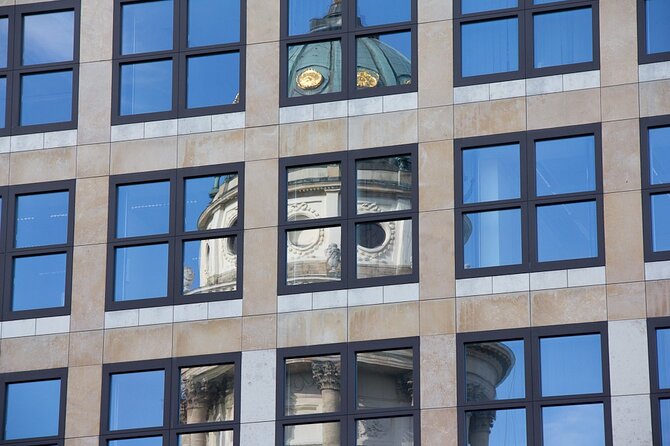
At Osthafen, the former restricted border zone has become a place associated with young urban creatives. The river offers another short pause, and the area makes the old East German border system easier to understand.
The point is not to suggest that every former industrial or border site has become charming. Instead, you see the uneven way Berlin changed after the Wall fell. Some spaces gained cultural uses, some attracted new development, and some still carry a rough, unfinished quality.
The route also includes a distinctive sculpture with several possible interpretations. The official explanation is presented as the least convincing one, which fits the tour’s playful attitude. This is the kind of small stop that can make a ride memorable, especially if you enjoy odd public art and local arguments about what it means.
Falckensteinstraße and Görlitzer Park
Falckensteinstraße is a good place to understand Kreuzberg’s mix of buildings, people, and lifestyles. It combines the feel of a dense city street with a sense of escape, and the guide uses it to challenge simple ideas about Kreuzberg as only anarchist, scruffy, or bohemian.
That balance is important. The district has plenty of contradictions. You may see political activism beside ordinary family life, nightlife near quiet residential corners, and new wealth close to long-established communities. The tour does not reduce these differences to a single slogan.
Görlitzer Park occupies the site of a former railway station. Its conversion into a park reflects the area’s long line between alternative living and disorder. The stop lasts about ten minutes and helps explain why open spaces matter so much in a dense neighborhood.
The park can feel very different from Berlin’s formal gardens. It is tied to local life, leisure, social problems, and public debate. You should expect an urban park with rough edges, not a manicured attraction.
Liegnitzer Straße, the Turkish market, and neighborhood life
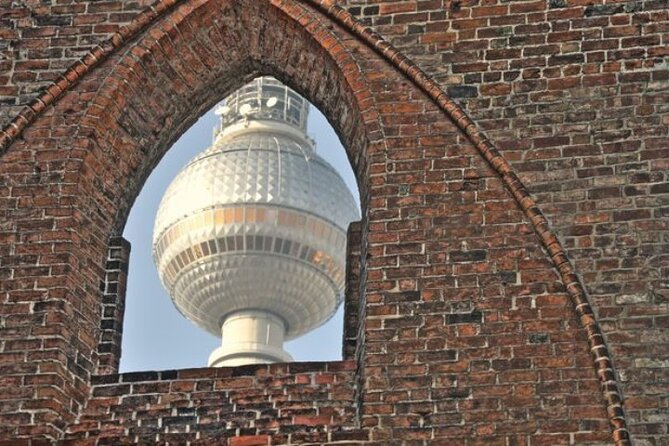
Liegnitzer Straße offers one of the route’s strangest contrasts. Hidden within a mixed Kreuzberg setting is a car loft, a building where people can take a car up to a balcony. It is an unusual example of luxury and private convenience in a neighborhood associated with activism and low-key street life.
The tour then moves toward the waterfront, where you can hear about the Turkish market held on Tuesdays and Fridays. The market adds a social and commercial side to Kreuzberg that is easy to miss if you focus only on murals and nightlife.
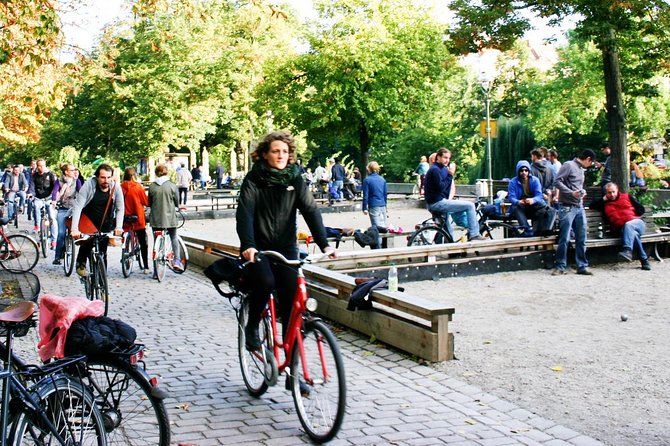
Another pause offers a quieter view of local life, including people playing boule. These stops help correct the idea that alternative Berlin is only about protest or late-night clubs. You also see residents enjoying ordinary pleasures, meeting friends, and making a neighborhood feel lived in.
Admiralbrücke is one of the route’s most relaxed stops. You might imagine beginning an evening at a bar nearby, or watching the summer sunset with other people gathered around the bridge. The advice here is simple: come as you are. The place is informal and social rather than polished.
Kottbusser Tor ends the story on a harder note
Kottbusser Tor, often called Kotti, provides a strong final contrast. After the waterfront, markets, gardens, and bridge views, you encounter heavy traffic, stark 1970s architecture, and a visible drug scene.
This is not presented as a prettified Berlin. That honesty is part of the route’s value, but it also means the stop may feel confronting. Kotti is a place to understand the pressure points of a major city, including poverty, public space, housing, transport, and addiction.
The route returns to the original meeting point after about three hours. Since the tour includes frequent stops, you are not expected to pedal hard for the entire time. One French-language review described it as suitable for most people and not overly demanding, while also noting that it involved more explanation and less continuous cycling than expected.
That is the right way to set your expectations. Think of this as a moving neighborhood lesson with a bicycle, not a sporty ride.
Is $42.33 a fair price?
At about $42.33 per person, the tour is reasonably priced for a three-hour guided experience in Berlin. The bicycle, helmet, and professional guide are included, so you do not need to arrange equipment separately.
The value depends on how you like to explore. If you want a fast overview of famous sights, a conventional city highlights tour may suit you better. If you want context for Kreuzberg, the former Wall districts, and Berlin’s alternative culture, the price pays for access to places you might not think to visit on your own, plus the explanations that connect them.
The group size is limited to 15 people, with a minimum of four. That is small enough for questions and conversation without promising a private tour. Food and drinks are extra, and the tour operates in all weather, so bring clothing that suits the forecast.
You can cancel for a full refund up to 24 hours before the start time. If the minimum number is not reached, the operator offers another date or experience, or a full refund.
Who should book this Kreuzberg bike tour?
I would choose this ride if you have already seen Berlin’s central monuments, or if you want to understand the city beyond its official history. It suits people who enjoy street art, architecture, political stories, migration, urban change, and local anecdotes.
Families can join, children must be accompanied by an adult, and infant seats can be provided on request. The route is also a good option for anyone who wants a broad introduction to several neighborhoods without walking long distances between them.
You should think twice if you dislike city cycling, frequent stops, rougher public spaces, or discussions of drug use and political conflict. You should also wear practical trousers, since a loose pair can pick up grease from the bike chain.
The tour is offered in English or German, depending on the option selected. It begins at 2:24 pm from Poststraße 11 and ends back there. Because guides design their own routes, the exact balance of stops and stories can vary.
My verdict on the alternative Berlin ride
Book this tour if you want Berlin’s contradictions rather than a polished greatest-hits reel. You will see Wall art, riverside views, old railway land, artists’ spaces, immigrant neighborhoods, public parks, unusual buildings, and some of the city’s rougher corners.
The strongest part is the guide-led interpretation. Jake, Bjorn, Karl, Rico, Rufus, and Vincent have each been praised for bringing humor, safety, personal stories, and thoughtful history to the ride. The route gives those voices room to shape the experience.
At 4.8 out of 5, with 97 percent of participants recommending it, the overall record is strong. The one serious caution is scheduling in low season, when the minimum group size can affect whether a particular departure runs. Confirm your plans and arrive at the stated time.
For an easy-paced, story-heavy introduction to Kreuzberg and Berlin’s alternative side, this is a smart choice. Just do not book it expecting three hours of uninterrupted cycling.
FAQ
Where does the bike tour begin?
The tour begins at Free Berlin Bike Tours & Rental, Poststraße 11, 10178 Berlin, Germany.
Where does the tour end?
The activity ends back at the original meeting point.
How long does the experience last?
The tour lasts approximately three hours.
What time does the tour start?
The stated start time is 2:24 pm.
Is the tour offered in English?
Yes. The experience is offered in English. German may also be available, depending on the option selected.
What equipment is included?
A bicycle and helmet are included. Infant seats can be provided on request.
Are children allowed to join?
Yes. Children are welcome, but they must be accompanied by an adult.
Is food or drink included?
No. Food and drinks are not included unless specifically stated.
What happens if the tour does not reach the minimum group size?
If the minimum number of four participants is not reached, you will be offered another date or experience, or a full refund.
Just added in Berlin
- Private Walking Tour: Berlin Wall, Cold War and Checkpoint Charlie★ 5.0 · 37 reviews
- Modern Berlin Private Walking Tour: Diverse, Vibrant and Exciting German Capital★ 5.0 · 13 reviews
- Private One way Airport Transfer Berlin Airport To Berlin★ 3.5 · 17 reviews
- Private Day Trip to Potsdam from Berlin by Train★ 4.5 · 27 reviews
- City Explorer: Potsdam Private Day Trip★ 4.5 · 10 reviews
- Berlin Private Custom 5-Hour Tour by Car★ 5.0 · 30 reviews
- Private Half-Day Sightseeing Tour in Berlin★ 3.5 · 6 reviews
- Berlin Private Custom Tour in a Minivan, East and West★ 5.0 · 123 reviews
Cycling Tours, compared.
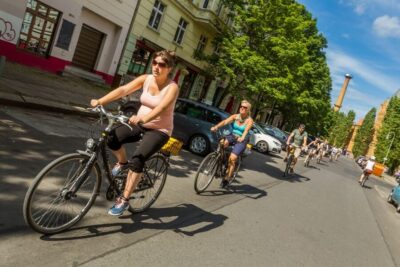
Sights and Highlights Bike Tour with a Local Guide
Read our review →
Classic Mike’s Bike Tour daily @ 11.30 incl Beer Garden & Surfers
Read our review →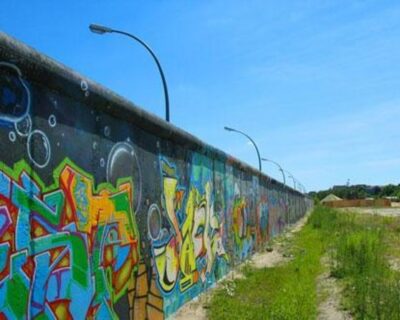

Berlin Highlights Sightseeing Bike Tour in Small Groups
Read our review →
Browse the lists this tour appears in