
Reviewed · HISTORICAL TOURS
Classic city tour in the World Heritage City of Augsburg
Augsburg’s most unusual sight is the Fuggerei, a 500-year-old housing complex still known for its low-cost homes. This tour builds toward it while showing you the city’s grand town hall, Augustus Fountain, and quiet Lechviertel canals. I like the route because it combines public monuments with everyday streets, and I like that the Fuggerei entrance is included rather than left as an extra expense.
The price is modest for a two-hour guided walk with two admissions. The main caution is language and sound: some tours run in German and English, and a soft-spoken guide can be difficult to hear outdoors. Arrive early, and consider using the free smartphone audio system if it is offered.
Key points at a glance
- Fuggerei included: Walk through the world’s oldest existing social housing complex, founded more than 500 years ago.
- Augsburg’s water story: See the Lechviertel canals and learn how water helped the city grow in wealth and importance.
- Town hall access: The interior visit changes by date, with the Golden Hall offered through July 2024 and the Roman Camp or Brecht House used from August 2024.
- Small public group: The tour is limited to 25 people, a manageable size for a city walk.
- Useful two-hour route: Begin at Rathausplatz and finish at the Fuggerei, leaving you in a good position to continue exploring on foot.
- Good value: At $16.20 per person, the price includes the guided walk and stated admission fees.
Why Augsburg works well in two hours
Augsburg is easy to underestimate. It is not just a stop between Munich and another Bavarian town. Its story reaches back to Roman settlement, the rise of merchant families, the Reformation, industrial craft, and a carefully managed water system.
This tour gives you a useful first look without asking for a full day. The route moves from the formal center at Rathausplatz into smaller streets and canals before ending at the Fuggerei. That change of mood is the walk’s strength. You begin with monumental architecture and finish in a place built around ordinary life.
You should not expect every chapter of Augsburg’s past. Two hours goes quickly, especially when the guide explains in both German and English. The walk is best seen as an orientation tour, one that helps you decide which places deserve a longer visit later.
The group limit of 25 matters. A large crowd can make a walking tour feel like a parade, especially in narrow streets. This cap should keep the group reasonably manageable, though good listening still depends on where you stand and how clearly the guide speaks.
More Historical Tours across Germany
- Leipzig: City History Canal Sightseeing Tour on a Motorboat
★ 4.7 · 6,232 reviews - Berlin: Natural History Museum Entrance Ticket
★ 4.6 · 3,382 reviews - Leipzig: 1.5-Hour Historical Walking Tour in German
★ 4.7 · 2,217 reviews
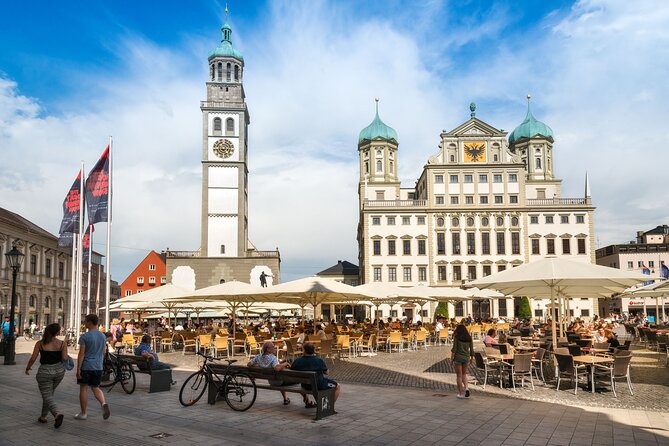
Starting at Rathausplatz and the Town Hall
Meet at the Tourist Information office at Rathausplatz 1 for the 2:00 pm start. This is a central, practical meeting point near public transportation, and the location is easy to identify.
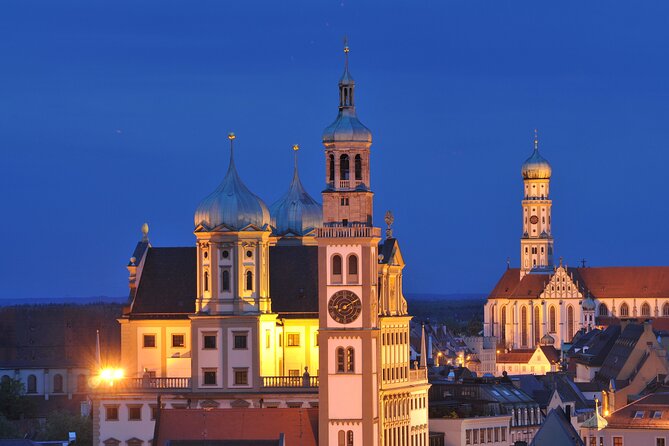
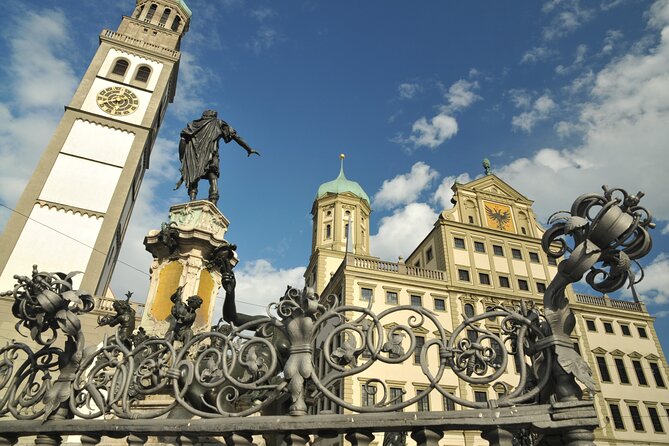
The first major stop is Augsburg Town Hall. The building and square provide the right opening because they introduce the city’s civic pride and its long commercial past. The town hall is not simply a photo stop. The guided explanation gives you a framework for understanding how Augsburg’s wealthy families shaped the city.
The interior visit depends on the date of your tour. Through the end of July 2024, the schedule included the Golden Hall, the richly decorated ceremonial room inside the town hall. From August 2024, the visit changes: Tuesday through Friday includes the Roman Camp, while Saturday and Sunday include the Brecht House.
This date-based change is important when you book. If the Golden Hall is your main reason for joining, check the current schedule rather than assuming it remains part of the route. The Roman Camp and Brecht House offer different angles on Augsburg, so the experience is not identical across the week.
You receive about 30 minutes at this first stop, with admission included. That is enough time for an introduction and a focused look, but not for a slow architectural study. If you want to examine every detail, plan to return independently.
A practical issue comes here: the tour can be bilingual. When a guide explains each point first in German and then in English, the English portion may feel shorter. This is not necessarily a problem if you already know some German, but English-only participants should be prepared for a slightly slower rhythm and less detail than on a dedicated English tour.
Augustus Fountain and the city’s public face
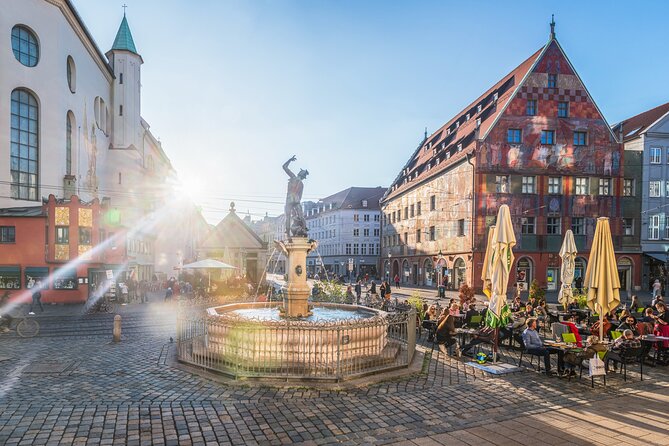
From the town hall, the route continues to Augustus Fountain on Rathausplatz. This is one of Augsburg’s three grand fountains and an important part of the city center.
The stop lasts about 15 minutes and is free of charge. That sounds brief, but it works well as a pause between the town hall and the quieter streets ahead. The fountain gives the guide a chance to connect Augsburg’s Roman name and civic identity with the city’s later wealth.
This is also a good place to orient yourself. The square is broad and visually clear, while later portions of the walk become more intimate. I like the change because you get both the official Augsburg and the lived-in Augsburg, not only a chain of grand buildings.
Do not expect a long historical lecture at the fountain. Some people find that the walk could include more background about Augsburg’s early settlement, Protestant role, and cultural figures such as the Mozart family. If those subjects matter to you, note the names and ask questions while you have the guide beside you.
Walking the Lechviertel canals
The Lechviertel is the route’s most distinctive outdoor section. Here, small alleys and canals replace the broad town hall square. The waterways are not decorative additions. They help explain how Augsburg developed as a center of craft, trade, and urban power.
This part of the tour usually feels more personal than the monumental opening. You see the old craftsman’s quarter and get a sense of how water shaped work and daily life. The canals are a strong reason to choose a guided walk rather than simply following a city map. A guide can point out the connection between the waterways and the city’s growth, rather than leaving you with attractive but disconnected views.
The Lechviertel stop lasts about 15 minutes, though the walk between sites also contributes to the experience. Wear shoes suited to city streets, and keep your attention on the guide rather than only on the canals. Narrow lanes can make a soft voice hard to follow.
The free elysium sound amplifier system may help. You use your own smartphone, headphones, and an internet connection. Because the system is optional and free, it is worth arriving with your phone charged and headphones ready. This is especially useful if the group is spread out or the guide is speaking outdoors.
Weather matters here. One account describes a tour held in cold, snowy conditions, with parts of the commentary difficult to hear. The route still worked, but winter conditions made the walk less comfortable. Bring a coat and shoes with good grip in colder months, and do not assume the short duration means you can ignore the weather.
A few more things to do in Germany worth a look
- Berlin: 1-Hour City Tour by Boat with Guaranteed Seating
★ 4.3 · 16,993 reviews - Cologne: Panoramic City Cruise
★ 4.3 · 5,698 reviews - Berlin: City Sightseeing Hop-On Hop-Off Bus Tour
★ 4.1 · 4,233 reviews - Potsdam: City and Castles Tour
★ 4.7 · 3,721 reviews
Entering the Fuggerei after 500 years
The final major stop is the Fuggerei, reached at Jakoberstraße 26. The tour ends here, and the entrance is included.
The Fuggerei is the emotional center of the route. Founded more than 500 years ago, it was created as housing for people in need and continues to function as a residential complex. The visit gives you something more useful than a quick view of a famous name. You can consider how charity, religion, family wealth, and social control worked together in an earlier period.
The Fuggerei also gives the tour a practical human scale. The town hall represents civic power. The fountain represents public display. The canals represent work and infrastructure. The Fuggerei shows how wealth was directed into a specific social system.
Allow roughly 30 minutes here. For some people, that is the right amount of time. For others, it may feel long compared with the shorter Lechviertel and fountain stops. If you are most interested in Augsburg’s water system, Roman origins, Protestant story, or the Mozart family connection, you might want less time at the Fuggerei and more stops elsewhere.
Still, skipping this section would weaken the route. The Fuggerei is one of Augsburg’s most distinctive places, and the included admission improves the value of the tour. You can return later if you want a slower look, but seeing it with context first makes the visit more meaningful.
How the guiding and language work
The guides are local and cover a lot in a short time. The strongest tours use clear explanations, historical connections, and occasional humor. The material can range from the families who built Augsburg’s wealth to the water system that helped the city prosper.
The experience is not identical from one departure to another. Some guides speak clearly and handle German and English well. Others may speak mainly German with English following, which can leave English explanations shorter. A few visitors have also found a guide too quiet to hear.
You can improve your chances of following the commentary:
- Stand near the guide, especially in open squares.
- Use headphones with the elysium system if available.
- Ask at the start whether the tour will be bilingual.
- Tell the guide politely if you cannot hear.
- Keep your phone charged and bring your own headphones.
The small group limit helps, but it cannot solve every sound problem. If you have hearing concerns, the optional audio system is more than a minor extra. It may determine how much you take away from the tour.
Price, timing, and value
At $16.20 per person, this is a reasonably priced introduction to Augsburg. You are paying for about two hours of guiding plus admission to the Fuggerei and the scheduled second site. The value is strongest if you would otherwise pay separately to enter the Fuggerei and want an organized route.
The tour begins at 2:00 pm, which leaves the morning free for arrival or independent sightseeing. Because it ends at the Fuggerei rather than returning to Rathausplatz, you should plan your next stop from there. That one-way format is useful if you want to continue through the eastern part of the center, but less convenient if you left belongings near the starting point.
Punctuality is essential. The group may leave at the stated start time, and arriving even one minute late can mean missing the tour without a refund. I would arrive 10 to 15 minutes early, especially if you are unfamiliar with Rathausplatz.
Free cancellation is available up to 24 hours before the start time. Inside that window, changes and cancellations are not accepted and the payment is not refunded. The operator also requires a minimum number of participants, so a cancellation by the operator can result in another date or a full refund.
Who should book this Augsburg walk
I would choose this tour if you have only a short time in Augsburg and want a clear introduction to the city. It suits first-time visitors who prefer a guide to connect the town hall, waterways, merchant families, and Fuggerei rather than visiting each place without context.
It also works well for people who value included admissions and a small public group. The route is short enough for most participants, and service animals are allowed. The activity is near public transportation, which makes the start practical.
You may want another option if you need a dedicated English-only tour, expect extensive Roman or Reformation history, or prefer a faster walk with many brief photo stops. The Fuggerei receives a large portion of the attention, and the bilingual format can reduce the amount of English detail.
Families and older participants may appreciate the two-hour length, but the experience remains a walking tour through streets and canals. Check the weather before leaving, and wear suitable shoes.
Should you book the Classic City Tour of Augsburg?
Yes, if you want an affordable first look at Augsburg that includes the Fuggerei and the city’s canals. The route has a strong shape, moving from civic grandeur to working waterways and finally to one of Europe’s oldest social housing projects.
Book with realistic expectations. You may receive a bilingual tour, the English commentary may be shorter, and sound quality depends on the guide and conditions. Confirm which town hall-related site is scheduled for your day, arrive early, and bring headphones for the free smartphone system.
For a first visit, this is a sensible two-hour investment. It gives you the basic map, several memorable places, and enough context to explore Augsburg on your own afterward.
FAQ
How long does the Augsburg city tour last?
The tour lasts approximately two hours.
What time does the tour start?
The scheduled start time is 2:00 pm.
Where does the tour begin?
It begins at Tourist Information Augsburg, Rathausplatz 1, 86150 Augsburg, Germany.
Where does the tour end?
The tour ends at the Fuggerei, Jakoberstraße 26, 86152 Augsburg, Germany.
Is admission to the Fuggerei included?
Yes. Admission to the Fuggerei is included in the tour price.
Which town hall attraction is included?
Through July 2024, the visit included the Golden Hall in Augsburg Town Hall. From August 2024, Tuesday through Friday includes the Roman Camp, while Saturday and Sunday includes the Brecht House.
Is the tour available in English?
The tour may be conducted in German and English. The amount of English explanation can vary, so ask at the start if you need English commentary.
Is an audio system available?
Yes. The optional elysium sound amplifier system is free. You need your own smartphone, headphones, and internet connection.
What is the cancellation policy?
You can cancel at least 24 hours before the start time for a full refund. Cancellations or changes made within 24 hours are not refunded or accepted.
Just added in Germany
- Berchtesgaden: Via Ferrata Beginner Tour of Schützensteig★ 4.7 · 15 reviews
- Berlin: Energizing 2-Hour Morning Segway Tour★ 4.7 · 35 reviews
- Berlin: Thrilling E-Scooter Adventure Tour★ 4.4 · 66 reviews
- Beelitz-Heilstätten: Baum&Zeit Tree Top Walk Entry Ticket★ 4.9 · 7 reviews
- Beer Bike & Party Bike: Unforgettable Berlin City Tour incl. pickup★ 5.0 · 5 reviews
- Bayreuth: German City Walking Tour (Tourist Info)★ 4.7 · 202 reviews
- Bavaria: Beginner Canyoning Tour★ 4.5 · 10 reviews
- Bayreuth: Christmas city tour in German★ 4.9 · 12 reviews
Historical Tours, compared.
City History Canal Sightseeing Tour on a Motorboat
Read our review →




Browse the lists this tour appears in